Interpreting the Wisdom Books: An Exegetical Handbook

book int wis

This book is the latest entry in Kregel’s series entitled “Handbooks for Old Testament Exegesis”, edited by David M. Howard, Jr. If you have already used the earlier volumes on the Pentateuch, the historical books, the Psalms, the prophetic books, and apocalyptic literature, you know what to expect. This entry is equal in value to its predecessors. It tackles only Job, Proverbs, Ecclesiastes, and the Song of Solomon since the Book of Psalms has its own volume. The series is geared for graduate-level exegesis courses, but any pastor or Bible student could glean from its contents.

The first chapter overviews the task of interpreting Old Testament Wisdom literature. That requires explaining Wisdom’s perspective in the biblical sense. The author discusses what he calls the pedagogy of the sages and thoroughly reviews the genres of Wisdom: poetry and proverb.

The next chapter tackles primary themes in the Wisdom books. Each of the four books being studied are discussed one at a time. Outstanding theological themes are shared in this lengthy chapter. Whether you agree with all of them are not, you will be given much food for thought that will advance understanding.

Chapter 3 turns more toward the hermeneutical task. In this chapter, you will learn the importance of the ANE background, textual criticism, and context. This chapter also gives a detailed list of hermeneutical resources that can be consulted. Chapter 4 extends the process by diving into exegesis. Chapter 5 guides the reader into taking that exegesis and turning it into a sermon. Since some portions of these Wisdom writings are the trickiest to turn into sermons, this guidance will be greatly appreciated. Chapter 6 continues the process of sermon building to organizing the material and applying the text. Chapter 7 serves as an appendix of computer and Internet resources.

There is a helpful glossary of terms in the back of the book that defines carefully important highlighted words from the text of the book.

Mr. Curtis has done good work here. It’s thorough enough for deep study, yet short and the succinct enough to be used widely. This book can do you a lot of good and I recommend it.

I received this book free from the publisher. I was not required to write a positive review. The opinions I have expressed are my own. I am disclosing this in accordance with the Federal Trade Commission’s 16 CFR, Part 255.
1, 2, & 3 John (EEC) by Derickson

book eec e jn

This book is my new favorite exegetical commentary on the Epistles of John. It’s yet another notch in the belt for the trending Evangelical Exegetical Commentary (EEC) series. This volume compares favorably to other major series in the exegetical category while exceeding many of those same volumes in the evangelical category. Gary Derickson was an unknown author to me, but he makes a splash here with an outstanding commentary.

The Introduction given here on the Epistles of John is one of the better that I’ve read in a while. The author doesn’t beat around the bush. I loved that his first sentence read: “the author of this epistle is John, the beloved apostle”. That is not to say that he fails to thoroughly survey the scholarly landscape, but that he with equal adeptness evaluates it. As you would expect, he reviews both internal and external evidence in defending the conservative conclusion that he originally stated.

Next, he discusses recipients and date of I John, and after arriving at a conservative date, he smashes the scholarly idea of a “Johannine school”. Further, he works his way through the occasion and setting and deals with the proto-Gnosticism found in the epistle just as you would imagine. After discussing the order of composition of the writings of the Apostle John, he jumps into the purposes of the book of I John. This is yet another place the author turns out superior work. For years I have been disappointed with so many authors following Robert Laws’ tests-of-life view that ties everything we read in I John to salvation. The author is correct in seeing it a test of fellowship rather than that of relationship with God. He further discusses genre, theological emphases, literary design, and John’s love of dualism, before he dives into an outline.

The commentary section is impeccable. He shares both the Greek and English of each phrase and thoroughly exegetes it. There are ample textual notes and quality commentary for every passage. He provides the same quality Introduction and commentary for both II and III John.

I’m such a fan of this commentary that to me it could be offered as a prototype for commentary writing. If you plan to invest in only one quality commentary on the Epistles of John, without question this must be it!

I received this book free from the publisher. I was not required to write a positive review. The opinions I have expressed are my own. I am disclosing this in accordance with the Federal Trade Commission’s 16 CFR, Part 255.

Preaching the Farewell Discourse by L. Scott Kellum

book fare

This book by Scott Kellum has many good things. It’s a hybrid of sorts, and so is quite hard to categorize. I can’t decide if it’s best to put on my shelves of books on preaching or on the one with my books on the Gospel of John. I finally leaned toward gleaning what I can from it regarding expository preaching, but then keeping it with the commentaries on the Farewell Discourse in John 13-17.

I don’t think I could do his exact method, but probably that would not matter to him. There’s just several careless mistakes made that he felt strongly that preachers should correct. In his first chapter, he tries to develop an expository theory and touches on all the important things. He does run slightly aground, as is so common in these type of books, to presenting a narrowness that more or less conforms to his own style. No one could disagree with the need of arriving at the proper interpretation, but he almost seemed to feel that the application (singular, it appeared he felt) was just as obvious. I’m not quite sure that’s true.

In the next chapter, he covers the analyzing of literary structure and flow of thought. He gives you an in-depth structure for John 13-17 such as you might find in a good commentary, but uses it as a teaching tool to say that that kind of depth is required of a book’s full context to preach one passage. Of course, a preacher must have an idea of the overall theme of the Bible book, but his method might never work for someone who has weekly sermons to produce. Still, what he shares is many of the things that we ought to be thinking about.

What follows is a lot of great information, sermon sketches, background information, and outlines for this important prayer of Jesus. How he presented all this information was a design that could have been more straightforward, but was helpful. Though the book is clearly useful overall, it’s final rating for you may depend on your own style of sermon preparation. As help on this portion of the Gospel of John itself, it rates even higher. Check it out.


I received this book free from the publisher. I was not required to write a positive review. The opinions I have expressed are my own. I am disclosing this in accordance with the Federal Trade Commission’s 16 CFR, Part 255.
Some Pastors and Teachers by Sinclair Ferguson (Books on Ministry #20)

book p t

This book is not at all what I expected when I first picked it up and began reading. In fact, I felt at times that the title did not match the contents. On most occasions, when a book does not live up to its title or the expectation the title produced, it fails. In this case, I may surprise you by saying that this book is Five-Star plus!

It turns out that it’s actually a compilation of many articles that Sinclair Ferguson has written over his long pastoral career. That approach often lands with a thud in many books that I’ve seen, but somehow those articles again made a magical whole here. Mr. Ferguson brings three incredible traits to the table that make this book a success: he’s an astute historian, a probing theologian, and an engaging writer. I offer that praise even though I don’t always agree with his theological conclusions. A book that can get me thinking as deeply as this one does is my friend.

The first 18 chapters are primarily a deep dive into three of Mr. Ferguson’s heroes: John Calvin, John Owen, and John Murray (I guess only those named John need apply!) In each of these three pastor/theologian’s cases he highlights their passion for preaching and pastoring coupled with an explanation of their theology. The theology never bogs down what is quite interesting biographical writing.

Chapters 19-31 are deep theology. Though he uses some of the explanations of his heroes mentioned above, Mr. Ferguson often wrote with more clarity, verve, and accessibility than they did. Again, I didn’t agree with all of his conclusions as I am not a reformed Presbyterian as he is, but with great warmth he laid the issues clearly on the table.

The final section is a bit more of a hodgepodge, but is in the category the book’s title led you to believe the whole book is about. He covers exegetical preaching, preaching Christ from the Old Testament, the preacher as a theologian, preaching the atonement, preaching to the heart, preaching and the Reformed theological tradition, followed by a preacher’s Decalogue, which was a very interesting list of things that he wishes he had heard earlier in his ministry. Only in his epilogue did the author leave off the emphasis on Christ and replace it with his own passion for reformed theology.

When you finally finish this book, you will then realize why perhaps the author felt comfortable with his title after all. Quite frankly, he thinks a pastor is not worth his salt who can’t ply theology. After I’ve thought about it, he’s correct.

This book is best done as a slow read. It’s thick and so will take an investment of time. Take it. You won’t regret it.

I received this book free from the publisher. I was not required to write a positive review. The opinions I have expressed are my own. I am disclosing this in accordance with the Federal Trade Commission’s 16 CFR, Part 255.
The Epistles to the Thessalonians (NIGTC) by Wanamaker

book nictc thess.jpg

Charles Wanamaker contributes this volume on the Thessalonian Epistles in the reputed New International Greek Commentary (NIGTC) series. My own perusal of the book backs up what I’ve heard. Wanamaker has provided dependable evangelical work on these epistles with a lot of rhetorical and social scientific analysis while providing less theological insights. You might say, that he hits a home run for the scholars, but provides a little less value for pastors. In any event, this volume is going to be in the discussion for quality work with the Greek.

After a thorough bibliography, Wanamaker gives us an Introduction that is broken down in what appears to be three chapters. He first discusses the historical background for Paul and Thessalonica. My impression was that he excelled in highlighting Thessalonica’s relations to Rome. In that section, he explains why he believes Paul addresses the Parousia to such a significant degree.

The next section of the Introduction discusses literary questions. There’s a thorough overview of what the scholarly world has thought on the subject, including questions of authenticity. I didn’t find his conclusions very plausible, particularly on this ordering of the letters. Rhetoric must be one of his specialties. The depth of thinking on the subject is obvious. The final section of the Introduction that is entitled “historical setting” deals less with the political environment and more with the Thessalonian church issues. It is well researched. All in all, the Introduction runs to 63 pages.

The commentary proper is where this commentary gets its high reviews. The exegesis is very thorough. The English rendering is always near enough to the Greek that I feel it can help a larger audience than most anticipate. If I had to summarize this commentary in a word, it would be: important. I recommend this volume to anyone trying to build a quality exegetical library.

I received this book free from the publisher. I was not required to write a positive review. The opinions I have expressed are my own. I am disclosing this in accordance with the Federal Trade Commission’s 16 CFR, Part 255.

Proverbs (TOTC) by Lindsay Wilson

book proverbs totc

Lindsay Wilson has produced this replacement volume in the Tyndale Old Testament Commentary (TOTC) series. It replaces the much-beloved volume by Derek Kidner. Since IVP is reprinting most of Kidner’s volumes as classic commentaries, we can embrace this new volume by Wilson without forsaking the old Kidner standby. Lindsay has turned out a well-written, up-to-date commentary that will explain the Book of Proverbs. In case you’re wondering, it’s substantially thicker than the Kidner volume.

The Introduction is as substantial as any that you will find in the highly respected TOTC Series. After a bibliography of several pages, Wilson jumps into historical issues. In that section, he succinctly discusses authorship, date of writing, and its relation to ANE literature. In the section on literary issues, he answers the question of what kind of literature we have in a proverb, and delves into parallelism. I thought that section covered the bases well, but got straight to the point. The next section was on structure. As you would expect, he looked at the structure in chapters 1-9, then in chapters 10-22, followed by chapters 22-31. The conclusions in all these sections were thoroughly conservative.

Wilson gave several pages to discussing theological issues. He began by making a case for Proverbs being a very theological book. Then he discussed subjects like retribution, the fear of the Lord, God’s active kingly rule in everyday life, and Proverb’s connection to biblical theology. The theological emphasis continued in the section about thematic issues. There he discussed wealth and poverty, family and marriage, friends, speech and words, work and laziness, the good life, and the heart. The Introduction ended with an interesting section entitled ministry issues. That whole section was an attempt to offer suggestions for teaching and preaching the book of Proverbs. It was helpful.

The commentary proper was both thorough and enlightening. It can take its place beside Kidner without shame. To my mind, it’s one of the better volumes in the already highly- rated TOTC Series. Make a point to look this one up!

I received this book free from the publisher. I was not required to write a positive review. The opinions I have expressed are my own. I am disclosing this in accordance with the Federal Trade Commission’s 16 CFR, Part 255.
Bible Matters by Tim Chester

book bible matters

Tim Chester has written the perfect book to help people approach the Bible. Though it would help Christians at any point in their journey, it’s especially instructive to those who are new at wrestling with the Bible. Along the way, Mr. Chester will both enlighten the reader on the doctrine of the Bible and give some guidance on how to properly study the Bible. Through quality writing and timely illustrations, he helps you see that the Bible is no mere book, but a word from God to us.

Though he covers a lot of ground that you also find in other books about the Bible, he certainly traces out his own path. Still, he begins by explaining that the Bible is from a God who speaks. Next, he gives us a particularly helpful chapter on how God spoke in the Bible. This chapter will answer a lot of questions. In the third chapter on God speaking in the Bible, he explains the Holy Spirit’s role. In chapter 4, he sees Jesus as a key theme of Scripture.

Though it is often overlooked by other writers, Mr. Chester explains how the Bible is relational. This chapter really helps you to get your head on straight about the Bible. Likewise, the chapter on the Bible being intentional proves what many critics deny. I enjoyed the chapter explaining that the Bible is enough too. You wouldn’t think that would have to be explained, but many Christians need to hear that message.

In chapter 8, he finally gets to the chapter that’s going to be in any book on the Bible – one discussing its reliability. He does a fine job with that subject, but appropriately uses Spurgeon’s analogy that a lion doesn’t need defending! The chapter on the Bible being accessible will help those who are always looking for some message in code. Hint: it’s not there. He rounds out the book with a chapter about reading the Bible, and a short conclusion on why he loves it.

There’s a substantial study guide at the end of the book. With that resource, every chapter could be turned into a study group discussion.

This book is profitable and is worthy of a wide audience. I highly recommend it.

I received this book free from the publisher. I was not required to write a positive review. The opinions I have expressed are my own. I am disclosing this in accordance with the Federal Trade Commission’s 16 CFR, Part 255.
An Introduction to Christian Worldview–A Fine New Textbook

book int chr worldview

It’s great to see this outstanding textbook come down the pike on Christian worldview. Tawa J. Anderson, W. Michael Clark, and David K. Naugle have teamed to produce an eminently readable book on understanding worldview as it presents itself in a pluralistic age. Teachers will love it for its accuracy while students will appreciate it for its clarity.

The book is divided into three main parts. In Part 1 three chapters introduce worldview, in Part 2 three chapters explain the contours of a Christian worldview, and in Part 3 two chapters analyze various worldviews.

Part 1 succeeds in explaining the overall concept of worldview. Philosophy and logic are expertly brought in while up-to-date examples are provided. For example, it was amazing how one of the author’s love of TV detectives could be brought in on a few occasions to make a great point. I loved it.

When Part 2 transitioned to explaining a Christian worldview, the book continued to deliver. In this case, I was amazed at how well theology, and I mean in-depth theology, was worked into the discussion in a perceptive way.

Part 3 was somewhat less interesting to me but had to be discussed in a book of this nature. Western philosophical alternatives, as well as global religious alternatives, were reviewed. The conclusion tied the parts together in a meaningful way.

You will appreciate, as well, how the book is laid out. In each chapter, you will find reflection questions, illustrations entitled “scenic view”, as well as some charts that really advance understanding. Every chapter ended with a list of things that you should be able to do if you mastered the chapter, a glossary of terms for that chapter, and even a list of possible term paper topics.

This book exceeded my expectations. I’m convinced I will be pulling it down from the shelf with profit in the future. It deserves an A+ rating.

I received this book free from the publisher. I was not required to write a positive review. The opinions I have expressed are my own. I am disclosing this in accordance with the Federal Trade Commission’s 16 CFR, Part 255.
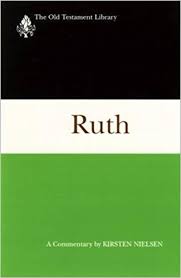
Ruth (OTL) by Neilsen

book otl ruth

The Book of Ruth gets its own small volume in the Old Testament Library (OTL) series. Written by Kirsten Nielsen, this commentary meets the aims of the series in providing a critical take in a mid-length commentary. Though I do not hold to the author’s viewpoint, I did appreciate its thorough presentation of a critical position as well as several reflections that you won’t find anywhere else.

In the Introduction, the author first discusses contents and structure. The author seems impressed with the outstanding, tight structure of this little book. Though a short section, I found the comments on structure helpful. Next, there’s the typical discussion of genre found in most commentaries on Ruth. The rest of the Introduction focuses intensely on inter-textual reading. In other words, the author loves tracing out connections to other parts of Scripture. Some seem more plausible to me than others, but this is clearly an area where the author has carved out a niche. I couldn’t follow the thinking presented in the historical context, but it matches what you would expect in a critical commentary. Much better is a discussion of theological themes. Finally, there’s a short discussion about the text of Ruth.

The commentary well matches what I’ve come to expect from the OTL series. In several places, you will glean much food for thought. I appreciated the emphasis of hesed not being overlooked. On the downside, the discussion of Ruth’s behavior at the threshing floor that included a confidence of sexual activity and of that sexual activity being praiseworthy was more than I could take! Fortunately, the commentary on other parts of the narrative is much more reasonable.

This book is one of the best to gain the perspective of the critical camp. It’s not prolix, it’s easy to follow, and it will stretch your mind in places. If you can overlook that one offensive section, you will find this a nice book to add to your library.

I received this book free from the publisher. I was not required to write a positive review. The opinions I have expressed are my own. I am disclosing this in accordance with the Federal Trade Commission’s 16 CFR, Part 255.

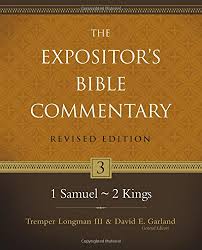
The Expositor’s Bible Commentary (Rev. Ed.)- Volume 3, Samuel-Kings


book ebc 3.jpg

Volume 3 of the Expositor’s Bible Commentary (EBC revised) covers the books of Samuel and Kings. In this case, the original commentators were given the opportunity to update their material. I had used the original editions extensively on these four books of the Bible, and I’m glad to see their usefulness extended by this revision. Just think, you get over 950 quality pages on Samuel and Kings!

The books of Samuel were handled by the respected scholar Ronald Youngblood. His work on Samuel was one of the highest rated volumes in the original set, and it appears he will be able to keep that designation. His introduction is not extensively revised, but is well done.

In the introduction, he covers the title of the book, authorship and date, historical context, literary context and unity, purpose, literary form, canonicity and text, and theological values. His conclusions are wonderfully conservative, particularly on dating. He feels that Edwin Thiele is quite accurate in the chronology he developed. The bibliography is extensively updated.

The commentary is outstanding. In every section, he gives an overview, a translation, commentary on the verses, and exegetical notes. It is truly one of the better commentaries on Samuel that we have available today.

The commentary on Kings is a joint effort by Richard Patterson and Hermann Austel. It was never rated quite is highly as the work on Samuel, and was somewhat briefer, but I always found it a solid help. I always checked it when I was working in Kings. In any event, it did receive more of a revision in the commentary section.

As was the case with Samuel, the introduction is not extensively revised either. It covers historical background, unity, authorship, and date, origin, occasion, and purpose, literary form, theological values, canonicity, text, and chronology. You will notice several conservatives quoted in the introduction, and though no one really knows who the author of Kings is, you find some pretty conservative conclusions here.

The commentary section mirrors the style found in Samuel. It’s really good at drawing out the details of the story itself. You can glean much from its pages.

I grow ever more impressed with the EBC series. Here’s another outstanding, economical value for the pastor or Bible student. It would not be wise to be without it.

I received this book free from the publisher. I was not required to write a positive review. The opinions I have expressed are my own. I am disclosing this in accordance with the Federal Trade Commission’s 16 CFR, Part 255.