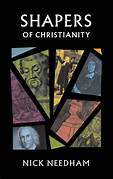
What an interesting little book! I love books that take several faith heroes and in a chapter try to pique our interest. Mr. Needham aced that assignment. How or why he picked these twelve men is beyond me. I think he tried to pick from various epochs of church history, but beyond that I have no idea. I guess he picked mostly theologians, but then he threw in John Wesley who is remembered more for piety and revival. He even alternated the well known with the not so well known. The unusual setup notwithstanding, this book was a joy to read.
Mr. Needham is well equipped to write this book since he has produced the much larger “2000 Years of Christ’s Power”. I have not seen that work, but judging by this book, it must be a good one.
One little icing on the cake that I noticed is that he often surveyed their writings. That was especially helpful when covering someone not known to you. The only problem is that it might add many listings to your buy list.
While he judged every biographical subject by their adherence to Reformation thinking, he did dip outside those actual boundaries. That made for some of the most interesting chapters in the book. Theophylact (completely unknown to me) was one of the most engaging in this volume. It was so good that it made you wonder, why have I never heard of this guy?
He had some of the usual suspects as well. There was Jonathan Edwards, B. B. Warfield, and J. Gresham Machen among others.
He did really well in a short space of showing why these men are compelling to know, and to know more about. This book will not take you long to read, but mark it down in the pleasant category. 
I received this book free from the publisher. I was not required to write a positive review. The opinions I have expressed are my own. I am disclosing this in accordance with the Federal Trade Commission’s 16 CFR, Part 255.
Here’s the latest in the popular TOTC series. This 380-page commentary is quite hefty for this series. Joint authors are not as common either, but it did the volume no harm. The Preface tells which author wrote which part, but it was seamless enough to make you forget that there are two writers at work. Some concessions are made to higher critical theories, but no more than some earlier volumes in this series. The authors no matter your level of agreement were excellent writers and could hold your attention well.
The Introduction was thoroughly interesting even if I disagreed with whole paragraphs. The section on “from impurity to holiness” was easily the most captivating. It made more sense than some larger works on the subject. Some of the most far fetched ideas were its explanation of ritual practices as “embodied experiences” or those of the Offerings. Its discussions of the Christian application of the book were unique. I’m not saying they were off, only that they on their on track.
A question you have to discuss in every commentary on this book is how you take the numbers given. In other words, are they literal? Here the authors say no. They do not say they are in error, but only that they are hyperbolic.
The commentary is well done along the lines of this series. As usual, it’s mid-level in depth while providing an economical option that will be enough for most Bible students. For others with larger libraries it’s a fine secondary resource.
I received this book free from the publisher. I was not required to write a positive review. The opinions I have expressed are my own. I am disclosing this in accordance with the Federal Trade Commission’s 16 CFR, Part 255.
This is one of the best volumes I’ve seen in this series. Jeff Fisher did a great job editing. Choices in this type volume are of necessity almost arbitrary, but he chooses well. Isaiah, called by some the gospel of the OT, probably helped. Isaiah 1-39 is not as popular as the rest of the book because of its somber tone, but there are many great passages here that would be right up the alley of the Reformers.
Fisher also wrote an excellent Introduction. I loved his chart of all the major commentaries on Isaiah from those days, which made you aware of what he had to work with right off the bat. Besides Calvin and a few others the list is from those unknown to me. That doesn’t hurt the book, but all the usual suspects aren’t there. Even more helpful is his discussion of these commentator’s key themes. Don’t miss that section for sure.
The selections are what you’d expect compared to previous volumes in the series. There are jewels abounding with just a few where you ask, so what?
To borrow Spurgeon’s language, this volume isn’t the main dish but it a fine condiment to spice it up.
I received this book free from the publisher. I was not required to write a positive review. The opinions I have expressed are my own. I am disclosing this in accordance with the Federal Trade Commission’s 16 CFR, Part 255.
The Herman Bavinck body of work keeps growing! As every new title drops, our stores become fuller. To my mind, he’s one of the real master intellectuals out there. If he’s written on a subject, it was be a crime not to consult it if that’s the subject you’re working through.
You have surely heard of his Reformed Dogmatics. There are scholars who are devoting their career, like editor John Bolt here, to uncovering and freshly translating his work. I’ve only recently heard of a new set called Reformed Ethics and it looks like many are considering this work on Social Ethics as part of that set. Still, it’s unique enough to have this separate title.
We must commend the editors for taking mere notes, filling them out with careful honesty to make sure they’re authentic Bavinck, and even pulling in his other writings to fill the gaps. Your ideas must be valuable to get a group of editors to invest that kind of time to bring them to light.
The first section talks society. It approaches issues that dominate on some level political debate today. Its gift is its utterly dispassionate portrayal of politics as if what God said is all that matters. His argument that Jesus is not a social reformer, that is, He doesn’t work directly through larger social structures, is profound.
Next, he addresses art and scholarship. The section on art is less interesting to me, but others will appreciate it. Scholarship would do well to fall in line with him today.
When he next turns to the state, we find something desperately lacking today. He speaks calmly about issues that should be informed biblically rather than with our flavor of politics. The caldron of public debate today is so toxic that this book seems as if it comes from a distant time. The views explained, however, have more of a timeless quality. He is so judicious in his comments, yet so true to principle.
The next section on “the church” is stated to be different that his ecclesiology one in his Reformed Dogmatics. Here it’s more missions and its social impact. Perhaps we could say he’s arguing for the gospel over a mere social gospel.
When he approaches humanity and the kingdom of God, he defines the Kingdom as the highest good. Your views of prophecy might lead you away from him, but there are nuggets here for any viewpoint.
This completes what will likely be the last set of books by Bavinck to come out. His name is sufficient to suggest you will want it.
I received this book free from the publisher. I was not required to write a positive review. The opinions I have expressed are my own. I am disclosing this in accordance with the Federal Trade Commission’s 16 CFR, Part 255.
Though I’m a conservative Bible student, I have long given a look at a more critical commentary to have a better overall view. The OTL and NLT are most likely the ones I choose (sometimes the Interpretation series). I know going in that I’m not going to agree on most background or historical issues and am prepared for it. Often there’s some theological thoughts worth feeding into a more orthodox view and I’m glad to have them. With my specific expectations made clear, I have often given a good rating to such works; that is, it provided what I was looking for in the volume. Let me stay upfront, I’m really struggling to give that good recommendation to this volume.
What’s the problem? It’s the entire premise of the commentary itself. The author takes favorite subjects of our day and squeezes them into the text and then passes them off as this is what we ought to think about in arriving at an interpretation. The problem is that in so doing the author has squeezed the very life itself out of the text. For example, she loves to talk about a postcolonial interpretation. That is such a loaded term whose meaning really comes from politics, not Christianity. (I would not want this in a commentary even it more closely resembled my own views). Had she only suggested that the wounds Jonah or Israel felt from Assyria impacted them in many ways, I could at least entertain it. In fact, I’m sure the geopolitics of that era had profound effects. But it seemed to me, that she meant it in a way that it retained all of its 2025 political implications. I’m sorry, but I don’t think 2025 defines the book of Jonah. Believe it or not, the postcolonial viewpoint was the least controversial one of those she chose to be the prism to view Jonah through.
From that muddied rubric, she weaved the overall theme that this is a trauma-informed book. I’m sure Jonah would have found many things that happened in this little book as very traumatic, but this book is not about rubbing his brow and helping him through his trauma. This book was about showing him where he was wrong, and from that vantage point working through the things that he was finding painful, even if he shouldn’t have found them so. Again, had the author only offered that as an application after arriving at an interpretation, I could’ve bought into it. Life brings trauma, and sometimes I bring trauma into my own life, but the Lord will help me work through it and it most likely will involve showing me where I am wrong.
In the introduction, when she really goes big picture, notice how she writes about the divine paradox. There is something of a paradox when we think about theodicy, but I wonder if the biggest paradox is the corner that she herself has backed this little book into through a novel approach that obscures far more than it brings to light. 
There’s even a problem on the scholarship side. Look at the bibliography. It is an echo chamber. She only brought those fringe works in which turned her writing into a self-fulfilling prophecy. If scholarship at large were consulted, I don’t think the top five or ten works that would be voted for even appeared.
The author can write from whichever perspective she chooses, but when it is this far out, it is quite over-the-top to tell the rest of us that that’s the way it should be viewed by everyone. That would be better offered in her memoirs than in a major, reputable series like the OTL. I think if we could bring Jonah back, he wouldn’t understand what this commentary is even talking about.
My bias is clear in this review, but I think as someone who has found value in other volumes in this series, it’s fair to say that there is something more going on here than simply being a more critical offering. 
I received this book free from the publisher. I was not required to write a positive review. The opinions I have expressed are my own. I am disclosing this in accordance with the Federal Trade Commission’s 16 CFR, Part 255.
It’s amazing how many volumes Banner of Truth has given us of Calvin sermons in new translations. When Calvin gets freshly translated, you can see easily what a spectacular expository preacher he was. I know it’s debatable to say, but I think it’s his best gift. In any event, this book of sermons on Isaiah 53 continues that tradition of great sermons that I have enjoyed in previous volumes.
This collection of sermons has long been highly valued. It’s been printed several times, and as the Introduction shows, has received English translation a few times too. Those translations are already a bit stale, so this volume is welcomed.
Perhaps this set of sermons by Calvin is, if you can believe it, even more on themes of Soteriology than some of the others I’ve encountered. Credit Isaiah 52:13-53:12 as the reason. That exquisite picture of our suffering Savior naturally leads to those great theological themes.
This may sound odd, or maybe it’s just me, but I thought the sermons got better as they went. Let’s call it building to a crescendo. I know many have access to Calvin’s commentary on Isaiah, but this a different resource entirely. I vote for using them both.
I received this book free from the publisher. I was not required to write a positive review. The opinions I have expressed are my own. I am disclosing this in accordance with the Federal Trade Commission’s 16 CFR, Part 255.
This series has found a niche—seeing the Old Testament’s influence upon the book being studied. That’s going to be, obviously, a bigger deal in some NT books than others, but it’s still a rich vein to mine. The main flow of the argument is always advanced in this series even if the OT is not as prevalent in the present passage. In that sense, it serves as a helpful commentary even if it has its unique vantage point.
In this volume on John, which has plenty of connections to the OT, we have another successful entry. Karen Jobes has major experience in both exegetical work and Johannine literature. She is well equipped to write this volume.
The Introduction is fairly brief, but is fully in line with all I’ve seen so far in the series. She showed scholarly awareness and was quite sympathetic to conservative conclusions. I thought her connection to the OT as John’s “verbal artistry” was interesting. That’s a good angle.
The commentary was well done, thorough for its commentary style, and insightful. I loved the blurbs on going deeper as well as those on structure. It’s a nice secondary help as you study John that will add tangibly to your understanding. Mark’s Gospel is my favorite in this series, but this is a good one.
I received this book free from the publisher. I was not required to write a positive review. The opinions I have expressed are my own. I am disclosing this in accordance with the Federal Trade Commission’s 16 CFR, Part 255.
More and more I find the ESBT my favorite theological series. Yes, it takes a slice of biblical theology in each volume, but not so narrow a one as most such series. Somehow these swaths of theology always take in the broad horizon as its spectrum. Other series often are one tree on that vast horizon. In this volume its wisdom that becomes the scaffolding to see the Bible at large. I love looking at theology that way.
A few prominent scholars actually say wisdom is the main organizing focus of Scripture. That’s multiple fields too far for me, but that is not at all the vibe Mitchell Chase gave as I read this book. It was more an attitude of you will find the fascinating theme of wisdom, particularly in terms of a path of life, all across the Bible. He shows that wisdom is not only to be found in Wisdom Literature in Scripture, but lurking throughout. I felt both his premise and wisdom’s place in theology overall as well reasoned and proven.
He finds the theme of wisdom in Eden in the first paragraphs of Scripture. For that matter, most all the books in this series begin there. Genesis 1-3 is rich beyond description for sure and obviously foundational to a level many overlook. Its essentiality would make theology not beginning there a bit suspect.
When he finally got to Wisdom Literature, he handled it well. Why more scholars don’t see Song of Solomon the way he does is beyond me. Perhaps wisdom is not quite as prominent in the NT, but he held my interest to the end. Ending the book with where wisdom ends was the perfect ending.
What really put this book over the top was its warmth. Here passion for theology met exegetical competence and blended beautifully. One sentence might be a theological nugget while the next might be a devotional one. I recommend the series and this fine, new book.
I received this book free from the publisher. I was not required to write a positive review. The opinions I have expressed are my own. I am disclosing this in accordance with the Federal Trade Commission’s 16 CFR, Part 255.
Don’t let the clunky title fool you. This is a great book. I’d come to believe that molinism was the way out of the conundrum of sorting divine sovereignty and human responsibility, but it was this book that led me fully to the invigorating air of clarity. Stratton’s gift is logical argumentation that guides you by the hand to conclusions.
So persuasive was his logical arguments that I went online and watched debates he had with others. It was as if others brought their knives to his gunfight. Strangely enough, some he debated were even more polished in the art of debate, but he just seemed to have them where it counted—actual arguments. It didn’t hurt that he was gracious either. Fortunately, that gracious spirit is also found in this book, though he is relentless in marshaling arguments and looking at the subject from all different angles.
The first two chapters are foundational and I suggest you take your time with them. Here is where you will make a quick observation. This is not casual reading. Make sure you notice that there is no fault in Stratton’s writing, but just that this is a deep subject. I think if you read an occasional paragraph over, and read slowly at all times, you will find this work quite lucid. In my judgment, we have for so long talked in broad generalities about things, and have just not followed through on what they mean. I think there’s a lot of layers inside us that have to be worked through. For example, he will explain what he calls exhaustive divine determinism (EDD), which he wisely defines as “all events are casually determined by God”. When I say there are many things that we have not thought through, you will see the profound implications if God has truly caused every single thing that happens, including every choice that’s ever made.
You probably already know, and it’s an argument that Stratton makes, that a lot of people can kind of agree with libertarian freedom until we touch upon salvation. Then we enter old battlegrounds where we must stay true to our alma mater, so to speak. Then, the focus shifts from merely seeking the truth to the propping up of the home team. I am being a bit vague on purpose here because a lot of people predetermine what they’re going to think about a book like this before they ever read the first word. This book is such a great one and it deserves better.
Chapters 3-10 survey historical periods successively to see how the debates crystallized. Sometimes I think this is not always helpful for a theological work, but in this case, it really is essential. Quite simply, many things, including definitions and categories, have all sprung from debates rather than a direct study of scripture.
Chapters 12-13 bring us back to direct theological issues. What libertarian freedom and its logical necessity simply must be addressed. I thought Stratton was masterful in showing that there logically must be some level of libertarian freedom.
The next chapter introduces us to Luis de Molina. He was a guy who made a brilliant observation that God must possess middle knowledge. Far more than anything about the guy himself, is the scriptural and logical weight of what he said. To my mind, it is profound.
Chapter 15 is the capstone of the book. Here he makes his arguments for middle knowledge and molinism. It is hard for me to see how someone coming with an open mind and a desire for truth could walk away without agreeing with what is presented here.
Chapter 16 is something of an icing-on-the-cake type of chapter. There is some apologetic ways that this teaching can help us. It’s not the heart of the book, but it is very interesting.
I rarely use the term “tour de force ” because it can be so cliche, but it fits here. Another thing I rarely say for the same reason is that I wish this book were so much better known, but I can hardly think of when I meant it more. 
I received this book free from the publisher. I was not required to write a positive review. The opinions I have expressed are my own. I am disclosing this in accordance with the Federal Trade Commission’s 16 CFR, Part 255.
A book on the theology of Revelation likely makes you ask, what is the author’s approach to prophecy, followed by you deciding if you find it interesting all based on that approach being in your lane. What would you think if I told you that you could have a fantastic book on Revelation’s theology and it made no difference at all what your interpretive preferences were? This volume is that book!
In fact, I’m sure Mr. Duvall and I do not agree in our approaches to prophecy and I love this book. I hardly can describe all I found that enlightened me and opened avenues that I will want to travel in future studies. All the volumes in this series so far are impressive, but this is one of the best. Perhaps it is the intense coverage of a smaller portion of Scripture. Perhaps it’s just the fascination of the Revelation. Whatever it is, it’s simply the case.
By the end of chapter 6 you have mostly covered areas typically found in a traditional introduction of a major commentary. When chapter 7 addresses grammar it delves into symbolic language. Some of us might believe not everything he finds symbolic actually is, but he gives nice coverage. The next chapter covers the prevalent use of the OT found in Revelation. Chapter 10 overviews the major interpretive systems that so often dominate discussions and he is gentle in his presentation.
Chapter 11 entitled “A Literary Theological Reading of Revelation” is a lengthy chapter of over 100 pages that gives what I guess we’d call a streamlined commentary. The learning and help in this compact section is impressive.
This work saves the best for last as the final section gives nine extraordinary chapters on the major theological themes. Again, no matter the interpretive grid you filter through, these themes are both profound and undeniable. If I had to pick a favorite, I guess I’d go with the one on worship. If you think about it, how pervasive worship is in Revelation.
I’ll be using this book for years to come. If you give this one a try, I think you might join me.
I received this book free from the publisher. I was not required to write a positive review. The opinions I have expressed are my own. I am disclosing this in accordance with the Federal Trade Commission’s 16 CFR, Part 255.

 The Reagan Review