Luke 2 (Hermeneia) by Bovon

book luke 2

Francois Bovon continues the high standard of commentary that he began in the first volume of this three-volume set in the Hermeneia series. The level of scholarship and probing theological reflection remains at its commendable level. This volume is huge as it is actually one combined volume of what was two volumes in the original German and French. The translation is so well done you would never know it was originally in another language.

This volume covers Luke 9:51-19:27. That section is known as the Travel Narrative and is Luke’s most unique section. Bovon continues with the same format as we found in volume 1. In each section of commentary, he begins with a bibliography and translation. From there, he provides a section he calls “analysis” that discusses sources. That is, to my mind, the least valuable section and his certainty when he discusses sources is somewhat grating.  Next, he moves into commentary verse-by-verse of a most outstanding quality. A final section of the history of interpretation really moves this commentary into a special category.

Maybe the best way I can illustrate why this book is such a jewel is to refer you to some great passages of Luke that are favorites of many of us. In the section on The Good Samaritan, Bovon goes through the story seeing details others miss as well as their theological significance. Both in his own analysis and his discussion of the history of interpretation he allows for the allegorical interpretation of Christ being the Good Samaritan. Most modern exegetical commentaries run right by that possibility.

Then there’s his discussion of the Parable of the Prodical Son, which he wisely calls the Parable of Two Sons. He explains inheritance in those days as well as I’ve seen. He shares so many theological nuggets that most miss. It was truly an exciting section to read. There are many other such passages in this commentary.

This commentary is truly special and unique, and I highly recommend it.

I received this book free from the publisher. I was not required to write a positive review. The opinions I have expressed are my own. I am disclosing this in accordance with the Federal Trade Commission’s 16 CFR, Part 255.

Daniel (NAC) by Stephen Miller

book daniel nac

Are you looking for a quality exegetical work on Daniel that holds to a premillennial or dispensational viewpoint? This fine volume in the pastor-friendly New American Commentary (NAC) series has no real rival for you then. If you see it ranked average, it is usually downgraded for its prophetic outlook, not for the quality of its scholarship. That bias will erase if you read it for yourself. In fact, several amillennial reviewers reluctantly admit that the scholarship is superb. Yes, I’m very high on this book.

The Introduction is conservative, helpful, and warm. He begins with the prophet Daniel and the authorship and date of the book. He explains how the radical theories are very recent and the conservative conclusion on Daniel and its date has long been believed and for good reason. He’s helpful on historical setting and genre as well.

Commentaries on Daniel tend to be good on either the thrilling historical stories or the prophecy, but not both. Mark this one down as excelling on each one. It offered real help and insight in both categories.

This series is always your best bet for a premillennial outlook. (Check out the equally magnificent volume on Revelation in the series). Miller has given the volume that many of us have been looking for on Daniel!

I received this book free from the publisher. I was not required to write a positive review. The opinions I have expressed are my own. I am disclosing this in accordance with the Federal Trade Commission’s 16 CFR, Part 255.
I & II Chronicles (OTL) by Japhet

book chron otl

Japhet’s volume is the most massive exegetical commentary on I and II Chronicles that I am aware of. It’s actually fatter (1077 pages) than most volumes in the Old Testament Library (OTL) that I’ve seen as well. In addition to its size, I’ve only seen great praise from the entire scholarly world for this highly-respected book. It’s fair to call it an influential volume.

I’d agree with those who would call it “conservatively critical”. In truth, it’s going to appeal to the more scholarly types (that’s another thing that sets this book in a different vein than some others in the series). Still, it’s quite readable.

The Introduction tracks its own course. It jumps in at the name and place in the cannon. She concludes that Chronicles is “one work, composed essentially by a single author, with a very distinct and peculiar literary method.” She looks in depth at the structure of the books. She goes far on sources, but much of it is just about which books of the Bible influenced the Chronicler. She has some conclusions I could never agree with, but there is careful explanation throughout. She summarizes the theology as a constant appeal to the past.

In the vast commentary we find helpful philology and exegetical detail. There’s more work on theology here than in the Introduction, which is a plus to most users. There’s more reference to sources than I like to see, but there’s plenty of helpful history. It’s hard to find anything missing across the pages of the commentary proper. Students will appreciate it.

This book is likely the book to have on Chronicles on the heavy exegesis side of the spectrum. I recommend it.

I received this book free from the publisher. I was not required to write a positive review. The opinions I have expressed are my own. I am disclosing this in accordance with the Federal Trade Commission’s 16 CFR, Part 255.

The Bully Pulpit by Doris Kearns Goodwin (Presidential Bio. Series)

book bully pulpit

You would have thought the design of this book would have caused it to collapse under its own weight. I mean how could a biography of two presidents along with the most influential journalists of the age possibly work? I mean the word that comes to mind is–unfocused! Believe it or not, Doris Kearns Goodwin pulled it off. Count this as one of the really enjoyable presidential biographies out there.

Having Teddy Roosevelt didn’t hurt its chances of holding interest with his colorful life. I’ve read a few books on him and would summarize him as larger-than-life, principled, but egotistical. His zeal was legendary, but his pride was too. Though he was agreeable to Christian moral principles (perhaps more than several that held the office), he was not a man with faith in anyone other than himself.

My biggest surprise was how likable Taft was. A gentleman that was a perfect candidate for best friend. Not really a Christian, but a fine moral, upstanding man is how I would describe him. Over the course of a deep, yet turbulent friendship, Taft was much the better friend to Roosevelt than the other way around. Goodwin did a great job in bringing their relationship alive.

At first I didn’t enjoy the biography space given to key journalists, though I did grow to appreciate it. They really had an impact on that time period–so much so that I wonder if Roosevelt could have risen as far as he did in another epoch.

Goodwin has turned out an enjoyable read here. I feel like I know both men so much better.

The Counselor by A. W. Tozer

book tozer coun

Here’s another Tozer title that elicits soul searching. Moody Publishers now prints several of his titles and this one is slightly longer than some of the others I have seen. As you can imagine, this is another volume on the Holy Spirit. That was always a favorite subject for Tozer and he doesn’t disappoint here.  He reminds us of the Person of the Holy Spirit and entices us to be filled with the Spirit. If you are a Tozer reader, that will come as no surprise. Though he returned to this theme again and again in his writings, this one is the best I’ve seen from him on the subject so far.

He begins by explaining the Holy Spirit comes only when Jesus Christ is glorified. That entire chapter was outstanding and a great springboard for the book. He is in no way trite when he argues that the Holy Spirit doesn’t come through the intellect. In chapter 3 he comes at our churches. He says, “The Holy Spirit can be absent and the pastor goes on turning the crank, and nobody finds it out for years and years.” Ouch!

He is very sensible in what can be replicated from Pentecost and what cannot. He believes that the filling of the Spirit always arrives in an instant. In chapter 6 he turns the spotlight on we readers and how to evaluate. In the next chapter he explains spiritual gifts followed by the probing chapter on what we really need. The last chapter is a plea to be holy and not block the fullness of the Spirit.

Add this title to the string of pearls known as Tozer’s writings. It’s another winner.

I received this book free from the publisher. I was not required to write a positive review. The opinions I have expressed are my own. I am disclosing this in accordance with the Federal Trade Commission’s 16 CFR, Part 255.
Interpreting Old Testament Wisdom Literature–A Book Review

book ot wisdom

Here’s a scholarly book designed to really get at what OT wisdom literature is and what scholarship has thought it to be. Edited by David Firth and Lindsay Wilson, this book highlights the work of eleven scholars on the oft-debated issues of wisdom literature.

Part 1 is one chapter by Craig Bartholomew that introduces where the study of OT wisdom is today. That provides a fine overview, including some of the more bizarre things out there.

Part 2 gives chapters on the four main wisdom books of Proverbs, Job, Ecclesiastes, and the Song by Ernest Lucas, Lindsay Wilson, Katherine Dell, and Rosalind Clarke respectively. All of the chapters were worthwhile providing the reader learning each time.

Part 3 branches out on themes including seeing Ruth as Wisdom literature, retribution, wisdom, the connection of wisdom and biblical theology, voicing, and a really profound discussion of divine absence.   Gregory Goswell, Lennart Bostrom, David Firth, Christopher Ansberry (he was a really good writer), Simon Stocks, and Brittany Melton provided these chapters.

The book was a solid effort. If you like this type of book, I suggest you check out “Five Festal Garments” by Barry Webb from the same publisher as well. I predict you will see this volume quoted often in future scholarly works. It would be a worthy addition to your library.

I received this book free from the publisher. I was not required to write a positive review. The opinions I have expressed are my own. I am disclosing this in accordance with the Federal Trade Commission’s 16 CFR, Part 255.
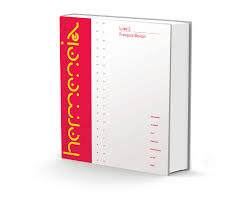
Luke 1 (Hermeneia) by Bovon

book luke bovon

This commentary is one where I’ve heard so many tidbits of praise that I have long wanted to see what all the hoopla was about. With this review I’ve had my opportunity to look over this commentary from the Hermeneia series that I’ve had little interaction with. Since the series is geared more to scholars while my needs are that of a pastor, perhaps that was to be expected. Having now looked at this first volume of the three-volume set, I’m ready to admit that it is as special as its press clippings say.

Even though I have some caveats to my glowing review, I’m so glad to have it at my disposal. I must confess that the Introduction is rather brief, and misses what most introductions of an exegetical commentary discuss. That reason, I’ve heard, is because Bovon has written a full volume on introductory matters of Luke’s Gospel and feels no need of repetition. Further, I have no sympathy with his conclusions about sources, dating, or the historical integrity of what Luke’s Gospel says. Why with such caveats do I offer such a high ranking?

He is savvy with exegetical or philological insights. Even better, his theological help is profound. In the passages I reviewed, after I read past matters I couldn’t agree with, I’d find sparkling nuggets that enabled whole new lines of thought. I don’t know about you, but that’s what I’m looking for in a commentary. He’d often pull in incredibly interesting references from other parts of Scripture. I find that kind of help stimulating.

Aimed at scholars or not, I still recommend this book as a fine resource for pastors!

I received this book free from the publisher. I was not required to write a positive review. The opinions I have expressed are my own. I am disclosing this in accordance with the Federal Trade Commission’s 16 CFR, Part 255.

Seven Leaders by Iain Murray

book seven leaders

Iain Murray continues his impressive output of biographies in this latest volume published by Banner of Truth. Though some are more known than others, his 7 mini-biographies on John Elias, Andrew Bonar, Archie Brown, Kenneth MacRae, Martin Lloyd-Jones, W. J. Grier and John MacArthur makes for enjoyable reading. He intends to show that the Lord uses different individuals to similarly do a mighty work. Still, you might not see the connection in the seven here, and even surmise that a better list could have been assembled, yet that doesn’t hinder the book from being a good one.

Murray is chatty. He at times falls into the minutia of a doctrinal debate, he over-emphasizes election, and can jump around a lot. While being casual would sink most biographers, Murray comes out on top again. I’ve never failed to be blessed by his biographies. It’s the perceptive spiritual and devotional content he draws out of the lives of those he writes about that makes his books as edifying as they are enjoyable.

Any preacher will get a double blessing from this book. He has striking conversations about what we do as preachers from the words and actions of those whose story he tells. He refers several times to the difference in varying texts and the consecutive method and concludes both have a place. It’s only preaching devoid of doctrine that misses the mark.

The three he has already written biographies on were the ones he seemed to purposefully not give as much biographic details. He preferred to make more wry observations instead. I’ve always loved Lloyd-Jones and that chapter was what you’d expect. Of those I knew little, I especially enjoyed John Elias, Archie Brown, and Kenneth MacRae. Though I was familiar with Bonar, his chapter was enlightening and outstanding.

As an added bonus, Banner always provides beautiful volumes with its hardbacks. This book is a worthy choice to find its place on your biography shelves and to provide several hours of reading pleasure.

I received this book free from the publisher. I was not required to write a positive review. The opinions I have expressed are my own. I am disclosing this in accordance with the Federal Trade Commission’s 16 CFR, Part 255.
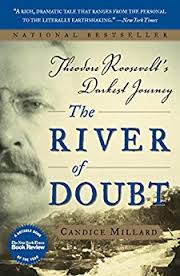
River of Doubt by Candice Millard (Presidential Bio. series)

book doubt

This thrilling book could only be classified a presidential biography in the loosest sense. Actually, it’s one episode in life of a man who happened to be a president of the United States earlier. Think high adventure rather than biography and you will come closer to the mark.

Candace Millard provides here one of the most exciting reads I’ve had in a while. There’s drama, there’s suspense, there’s all the things that make a book hard to put down to find between the covers of this page turner.

Still, much of Teddy Roosevelt’s character, good and bad, comes to light in this book. The River of Doubt is a microcosm of his larger-than-life story. There’s his indomitable will, his legendary zeal, his unfailing chivalry, his rock-solid code, his infectious personality all stacked up beside his ugly, outrageous ego.

Millard is such a fine writer that even the preparation of the trip was completely interesting. The drama of those traveling with Roosevelt and crossing rough country to even begin the dissent of the river ratcheted up with each page. Then her description of the actual journey down the River of Doubt is an experience not to be missed. I knew Roosevelt did not die in Brazil, but still wondered if he would make it page after page.

Not since Washington’s frontier experiences have I seen any president go through things that TR did here. Though his ego was embarrassing at many junctures (as in all of his life), you couldn’t help but love him as you read this story. For the record, those around him on this journey came to love him too.

Whether you love presidential biographies, or prefer captivating stories, you’ll be a winner either way in this extraordinary tale.

Ephesians (ZECNT) by Clint Arnold

book ephesians z

Clinton Arnold, who also happens to be the editor, contributes this volume on the wonderful Book of Ephesians in the Zondervan Exegetical Commentary (ZECNT) series. Mr. Arnold is a scholar highly qualified to comment on this book, one of the most important in the Bible. It’s obvious that Ephesians has been area of expertise for him. As with several volumes in the series, Mr. Arnold holds conservative viewpoints and defends them in a magisterial fashion. His bold proclamation of a belief in the inerrancy of Scripture was much appreciated by this reviewer.

He begins his Introduction by relating his awe of the Book of Ephesians. He believes the destination of the letter is Ephesus and shows the recent scholarly rejection of it to be built on a foundation of sand. He draws a vibrant portrait of the setting in Ephesus including its diverse religious and cultural background. He traces where Judaism stood there. I found it easy to agree with his four main themes of Ephesians too.

On authorship he remains convinced of Paul and explains why we should as well. He sifts through the scholarly debate over Ephesians similarity to Colossians to good advantage. He doesn’t have as much to say about structure as some, but doesn’t believe rhetoric is as in play as some have argued. After an outline and bibliography, he jumps into the commentary of the text.

The commentary is in the pastor-friendly ZECNT style. I read through some of what I believe to be the harder passages and loved what I found. There’s great presentation of options and clear reasoning about what he feels to be the right conclusion. I thought his section on the household code was balanced and firmly complementarian.

There’s a lot of competition in the Ephesians commentary category. He’s much more succinct than Hoehner and up near the staus of O’Brien. The writing flows well and the content is top notch. This volume is clearly in the must-have category.

I received this book free from the publisher. I was not required to write a positive review. The opinions I have expressed are my own. I am disclosing this in accordance with the Federal Trade Commission’s 16 CFR, Part 255.