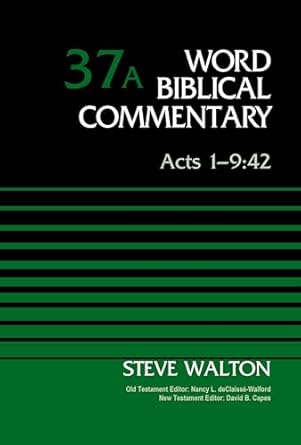
Galatians (CCF) by N. T. Wright

This was the inaugural volume of the new Commentaries for Christian Formation (CCF) series. I’m sure they were pleased to snag N. T. Wright since he is such a major scholar. To be sure, he is controversial because he is one of the proponents of the New Perspective on Paul. Because I especially liked the new volume on Hebrews in this series, I backed up to check out this one. Since I’m not a NPP guy and because Wright isn’t in any of the main series I’ve consistently reviewed, this was my first foray into Wright’s writing.

By the end of the Introduction here, I felt I understood Wright and could see what all the hoopla was about. He is an engaging, even provocative writer. Rather than an academic work, I felt I was reading a captivating essay. The more I read, the more I wondered if it would help a lot of works to adopt that style. It is much more gripping and makes for more of what we might call a real reading experience. I must give Wright all the props for his writing.

Still, I wasn’t fully persuaded by his arguments. They had enough going for them that I could find places for caution in running mindlessly to our usual conclusions, but not enough to just overthrow them. (You can decide if I was too biased a reader). For example, he is convinced that the Reformation oriented New Testament studies away from what they were in the First Century (that will never do in some circles! ). Again, I think he gives us enough to consider more carefully earlier concerns, but no where near enough to think the Reformation recreated Christianity in its own image. From there his comments had value mostly in regard to when he was not trying to advance his scheme because, as I said before, the man unquestionably possesses advanced writing skills.

His work still has value in the commentary section. I see him as a guy standing at a different vantage point. Sometimes it’s too far away to see through all the bushes, but where he has a clear line of sight, it’s something else.

He’s probably geared quite nicely for Christian formation, probably more so than for theological precision for sure too. Based on what I’ve said, you’ll know how many stars to give this work.

I received this book free from the publisher. I was not required to write a positive review. The opinions I have expressed are my own. I am disclosing this in accordance with the Federal Trade Commission’s 16 CFR, Part 255.
Galatians (EEC) by Michael Burer

Galatians gets its turn in the outstanding EEC series. The series is one of my favorites in the major exegetical commentary category. In that vein, many releases are coincidentally coming out on Galatians (probably not the timing publishers really wanted), but this is easily one of the best.

The Introduction is well done and pretty conservative. It’s engagingly written and touches all the needed places. He takes the South Galatia View and lays out his case well. I wish he would have more directly addressed structure beyond his simple outline.

Even better than the Introduction is the Commentary proper. Exegesis fills his wheel house from wall to wall. In each passage, he gives some very detailed textual notes followed by his own translation. From there, he offers his most helpful work in the commentary section. It’s detailed, copiously footnoted, and hits the sweet spot on depth. After that, he gives theological comments of varying lengths. Pastors will appreciate the application and devotional implications section. Most sections have an additional exegetical comments, though I couldn’t quite gauge what determined if it went here or the earlier section. Each passage had its own selected bibliography.

If you’re building a theological library, you could start here. I’m pleased with this offering in this series I admire.

I received this book free from the publisher. I was not required to write a positive review. The opinions I have expressed are my own. I am disclosing this in accordance with the Federal Trade Commission’s 16 CFR, Part 255.
All the Genealogies of the Bible by Nancy Dawson

Here’s is one of the most unique resources I’ve seen. When I say there’s nothing quite like it, I mean there is NOTHING quite like it. This is not a coffee table book even if it looks just like one. The research behind this book is off the charts. Made for real work, it was still quite fun anyway.

If you think about it, there are a substantial number of genealogies in the Bible. My experience has been that I naturally know very little about them, and only the most complete commentaries dig into them. Actually, some of them even fail to. None are given short shift here.

Besides the appealing layout, it’s the exegetical help that is so impressive. The book isn’t big because of pictures, but because of the voluminous exegesis and research.

I have already cleared up a few matters in my mind here. If my question is specifically about a genealogy in the Bible, I will forgo the commentary and come straight here going forward. Hardly do we ever get a research volume that can make such a distinct contribution and fill in such a cavernous lacuna as this outstanding book does.

I received this book free from the publisher. I was not required to write a positive review. The opinions I have expressed are my own. I am disclosing this in accordance with the Federal Trade Commission’s 16 CFR, Part 255.
Creator by Peter Leithart

Wow! What a book! It was fascinating, enlightening, challenging, and it taught me. I must admit there were times I struggled. There were times I had to lay it aside and come back later. A few times I wondered if I were too dense and were in over my head. But I kept coming back and I am so glad did.

Where I kept running into problems was when I needed a bit more philosophy background than I had. If that describes you, do as I did and persevere. He’s going somewhere and will get back to the more comfortable surroundings of theology soon enough. If you will hang on, he will show that we have had a bit too much Greek influence on our theology and that has put us in scriptural quandaries. I was convinced.

Before I say more, I must admit Leithart is a brilliant writer. I do feel he pitched this volume to professional theologians (untranslated words are a dead giveaway). I wish he had veered toward about 20% more popular in writing style (I mean, how many professional theologians are there?), but the denseness was worth it still. I’ve read some of his more popular works and he is great whether you agree or not. He has original thinking in his works and he is profoundly and pleasingly provocative.

I’m not going to rehash the book here. Just experience it. For me, he tweaked my thinking on some of the attributes, particularly accommodation. Further, he opened my eyes to how crucial the idea of Creator is and made me understand my God even more. Finally, he blew me away in his discussion of time.

I tend to be a bit liberal with praise in my book reviews, but there’s no grading on a curve here. This is a great one.

I received this book free from the publisher. I was not required to write a positive review. The opinions I have expressed are my own. I am disclosing this in accordance with the Federal Trade Commission’s 16 CFR, Part 255.
The Hope of Life After Death (ESBT) by Jeff Brannon

This series is exciting! Had I been planning this series I might have overlooked resurrection getting one of the slots in it, but after seeing this title it makes perfect sense. Brannon makes his case for Resurrection being one of the “essential” themes of biblical theology. His fleshing out the link to Creation and Redemption only strengthen his case.

The book is clear and clear-headed. He is quite convincing in driving home his premise. Besides his love of quoting obscure lyrics of (popular?…I guess) music, he succeeds across the board.

To grasp resurrection he grapples with life and death. Relating that to Creation and the Fall was the proper foundation while building with redemption (New Creation) and Resurrection (Eternal Life) was the right edifice to build upon it. A lot has been written on these themes but his niche is a clarity that comes from a careful presentation.

He also traces his theme to good effect in biblical order. Watching a doctrine develop progressively is one of the best ways to take it in.

As you can imagine, he address Christ’s resurrection and does so by building into his rich tapestry. From there he weaves in the church before reaching our final resurrection.

What’s amazing in a book like this is taking one doctrine to examine them all. Biblical theology is really rocking when that really happens. It happens here.

I received this book free from the publisher. I was not required to write a positive review. The opinions I have expressed are my own. I am disclosing this in accordance with the Federal Trade Commission’s 16 CFR, Part 255.
Treasuring the Psalms by Vaillancourt

A treasure itself! Vaillancount is expert in biblical theology and the Psalms are indeed rich in that way. For some reason, I see this as a fine addendum to James Hamilton’s fine commentary on the Psalms in the EBTC series.

His Introduction whets the appetite for more and more is what we get. His chapters on reading Psalms canonically, as are what follows, are outstanding as they abound in both Structure and Theology. Throughout the text, specific psalms pop up and though he writes on a perceptible track you might not anticipate which psalm comes next. Fortunately, the scriptural index at the back of the book opens up this work to a whole additional approach. There’s good exegesis wherever he comments. You just can’t lose here.

Really, he opens up many pathways that you can begin and go even farther. When I do deep study on the Psalms, in addition to some favorite commentaries, I assure you this book will be in my “special” pile. This is the kind of book you don’t want to be without.

I received this book free from the publisher. I was not required to write a positive review. The opinions I have expressed are my own. I am disclosing this in accordance with the Federal Trade Commission’s 16 CFR, Part 255.
Revelation Through Old Testament Eyes by Tremper Longman

Tremper Longman in the New Testament? That was a surprise! With a little more thought I can guess why. There are many OT allusions in Revelation as well as the fact that Daniel is especially related to Revelation and Longman has written on it.

I must admit up front that I don’t share Longman’s overall prophetic position, but I expected it before I began. The final product is also what I expected.

While this work cannot serve as a main commentary choice, it is useful as an additional resource. Longman is clearly an OT expert and it shows. I often disagree with him even in his OT content, but there’s always good stuff to find as well. That ends up being true in this book too. Beyond some speculative material is solid OT insights.

The style of the work matches previous volumes in this series. Here the OT nuggets and comments on structure are far and away the best features here. No matter one’s perspective on prophecy, nuggets on structure are delightful to the Bible student.

Where I’d use this commentary is narrow (more so than others in series), but in those places it is rich.

I received this book free from the publisher. I was not required to write a positive review. The opinions I have expressed are my own. I am disclosing this in accordance with the Federal Trade Commission’s 16 CFR, Part 255.
A Guide to the Puritans by Robert P. Martin

Here is a beautiful resource. It’s strikes me as both one of a kind and all you would need of its kind. The Puritans are quite a resource, but I’m in that number of those who wouldn’t know exactly where to turn to tap it. Now I have it!

The first two sections make up the bulk of the book. The first, topical index, shows what workers those Puritans were. I can hardly find a subject they didn’t cover (except some unneeded modern junk). This is a treasure trove. The second, the Scripture index, opens up the Puritans for sermon prep as well.

The ten other shorter sections are simply fun. They are for when your interest grows and you want to get to know the Puritans.

I can’t imagine the amount of labor Mr. Martin put into this resource, but we are all richer for. Tracking down just one thing that would only take a few seconds to find in this book that would have taken you hours shows you just what a treat we have here. We need this one. And then for icing on the cake, we have it in this beautiful hardback edition.

received this book free from the publisher. I was not required to write a positive review. The opinions I have expressed are my own. I am disclosing this in accordance with the Federal Trade Commission’s 16 CFR, Part 255.
Malachi (ZECOT) by W. Dennis Tucker, Jr.

This latest entry in the Zondervan Exegetical Commentary (ZECOT) series continues to deliver the goods. Additionally, the series continues to provide us these nice volumes on individual books in the collection of Minor Prophets. The author of this one on Malachi, Dennis Tucker, has a nice collection of successful writings, though a bit more in the Psalms. He has worked on Jonah as well, though I’ve not used that one.

Immediately in the Introduction, he establishes what he feels is Malachi’s theme—“fidelity to the great King”. He gives conclusions that he well works out on things like author and date. I notice he is quite thorough in listing all the main opinions before his conclusions, which might be the concern of some. Far more important is calling balls and strikes on these plethora of scholarly opinions and that he does.

His historical analysis was succinct, but clear. When he tackled literary analysis, he especially highlighted “direct discourse (DD)” and saw it as a key to unearthing structure. He’s probably on to something there. This series has high expectations for structure, and I think he came through. it made sense, though other possibilities exist.

Somewhat related is the theological message of Malachi, and he gave us what he felt were the three most important things in that regard. Perhaps that section could have been longer, but it was still helpful. Next, he gave an outline of the style we have come to expect in this series.

The commentary was good throughout. The exegesis was sound and thorough. If you are looking for a single volume on Malachi, here’s you a great option. Many of these shorter prophetic books are packaged in commentaries, so this is a nice asset to have at hand. Perhaps I liked the volume on Nahum better, but this one can stand along side the other existing ZECOT volumes on Minor Prophets.

I received this book free from the publisher. I was not required to write a positive review. The opinions I have expressed are my own. I am disclosing this in accordance with the Federal Trade Commission’s 16 CFR, Part 255.

Hebrews (CCF) by Amy Peeler

Here’s a nice commentary on what many would agree is one of the most challenging books of the New Testament. Thoughtfulness and tone are its two most prominent strengths. Its weaknesses are few, especially if you consider the aims of the series. I don’t see how you couldn’t consider this volume a success for faith formation.

If you read Peeler’s preface you will get a feel for her writing. She’s got quite a humble knack for self reflection. She’s tenacious in her digging for exegesis while remaining gracious to opposing viewpoints throughout. She might be a bit left of me theologically, but not nearly as much as I expected.

The Introduction was delightful. With the needed depth, it read so well. It led with probing, on-target theology. Hebrews’ place in the canon transitioned nicely to the always thorny issue of authority. While so much has been written on authorship, Peeler was surprisingly lucid in less pages than most major commentaries who rarely escape the fog. The other outstanding feature of the Introduction was her contribution to the discussion of Hebrews’ Warning Passages. From there I delved into her commentary on those passages and they were original without being strangely speculative. I’m not sure I fully agree with her line of reasoning, but that was the most new, interesting material that I’ve had to process on them in a long time.

All of the commentary was consistently good. Most of us have two or three of our favorite big exegetical commentaries as our go-to, but I’ll likely add this one to my short list.

I received this book free from the publisher. I was not required to write a positive review. The opinions I have expressed are my own. I am disclosing this in accordance with the Federal Trade Commission’s 16 CFR, Part 255.