A Christian Looks At The ISIS Attack In Paris

paris

It is surreal to watch the television tonight. The attack in Paris, verified to be ISIS related, is large in scope and clearly takes us to a new level of danger in our world with its broad Islamic threat.

I have flashbacks to 9/11. People were dying at that moment and I remember when that was true on our soil. There is a huge difference even if the death toll is actually much lower in Paris. 9/11 was the days before heightened security and, of course, the cause of it. That is no longer the case.

Paris was attacked in January and was under the highest security alert possible. ISIS has become sophisticated enough to pull off a highly detailed attack now. That is bad for us all. With politicians finding controlling guns among law-abiding a bigger threat than ISIS, we can’t look to our leaders for actual leadership. In fact, our President just this morning proclaimed ISIS largely “contained”.

Another difference this time is that two of my sons are watching with me and are old enough to take it in. I can’t help but think of their future in this twisted world. A few friends on Facebook have already mentioned this scaring them. We won’t even know all the details for a while.

It seems to have come up a lot lately–a time to remind oneself that the Lord remains securely on the throne. My sons are in His hands, not mine! So I am reminding myself tonight. I am sitting here grateful for the salvation He gives and the constant watch care of me and mine. It’s good to know the Lord Jesus Christ. How about you?

Safe, but I will be praying too. Prayer will ever be better than panic. Again, how about you?

Joshua (Apollos Old Testament Commentary) by Pitkanen

joshua apollos

The Apollos Old Testament Commentary series continues to develop into an important, major commentary series. This entry is a 450 page contribution on the sometimes controversial book of Joshua is another worthwhile contribution. Though it might not be as in-depth as the new 2-volume set in WBC, I imagine pastors will find it more useful. Don’t misunderstand, though, as it will still be in scholarly discussions.

The first 100 pages are an Introduction. I must confess that he has uniquely organized introductory matters. He is kind almost to a fault with liberal authors, but he well shows the plausibility of conservative conclusions on issues like the text and dating. I do not think this Introduction is as good as, say, Firth on Samuel or Petterson on the last three Minor Prophets in the same series, but it is still a valuable contribution.

I loved his explanation that the NT also discusses that unbelievers are punished, and so Joshua is not out of sympathy with the rest of the Bible. After sharing that fine observation, though, he runs amok in the next 15 or so pages. He gets completely sidetracked on current political issues. I will not as a reviewer penalize him for having a different political persuasion than me, but I do highly question why he would bring it in at all.

After that diversion, he settles back in to delivering a fine commentary in the Apollos style. I recommend it as a real help in the study of Joshua.

I received this book free from the publisher. I was not required to write a positive review. The opinions I have expressed are my own. I am disclosing this in accordance with the Federal Trade Commission’s 16 CFR, Part 255.

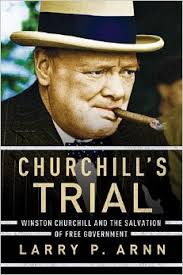
Churchill’s Trial by Larry Arnn

churchill

Here is a book designed to take history and teach today vital lessons. Winston Churchill and his nuanced life is the fodder for those lessons. Larry Arnn, one of the most informed scholars on Churchill, writes from the reservoir of his deep understanding of Churchill.

The book is divided in three parts: war, empire, and peace. The idea is to take what Churchill said, and to a lesser extent, did, and apply it to free government. That approach entails Churchill facing Nazism, communism, and finally socialism in his own country. Arnn views Churchill as statesmen and guide for us in these troubling days for freedom.

Churchill truly was a once-in-a-generation statesman. What he has to say is so worth listening to, is unique and enjoyable, and so Arnn often lets Churchill do the talking. Arnn succeeds in making the case for free government through the lens of Churchill’s life. He believes that Churchill was a success because we would be much worse off were it not for the contribution he made. My miss is that we a statesman like Churchill today who could as effectively make the case–it’s sorely needed.
I received this book free from the publisher. I was not required to write a positive review. The opinions I have expressed are my own. I am disclosing this in accordance with the Federal Trade Commission’s 16 CFR, Part 255.

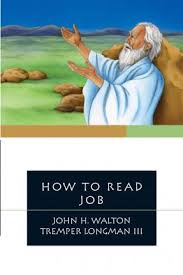
How To Read Job by Walton and Longman

read job

Here is a volume designed to help one get more out of reading the Book of Job. Scholars John Walton and Tremper Longman, both authors of larger commentaries on Job, team to make sense of what the Book of Job is means to us.

The earlier part of the book covers issues that you might find in a commentary introduction. Part 1 discusses Job as literature in four chapters. There are interesting things like the structure breakdown (check out the chart on page 21) and a discussion of tensions in Job. I felt the chapter “Is Job A Real Person?” a dud and overlooking the information that would demand him to be a real person.

Part Two gives six chapters on the characters in Job. Despite some interesting observations, the literary angle (characters as devices) was overdone. I could not follow the chapter on Satan at all.

Part Three is where the book blossoms. Explaining the retributive principle, how it could be misunderstood, and the true theological message of Job, all give us much to think about.  Trusting God is far more the point than getting answers in this life. The final part on reading Job as a Christian is not, in my judgment, as  good as the preceding theological section.

Still, I do not see how you could not be helped by reading this volume before you begin a study of Job. Whether you would agree or not with their conclusions, you would at least know well what the questions are. That is, of course, exactly what a book of this type should do.

I received this book free from the publisher. I was not required to write a positive review. The opinions I have expressed are my own. I am disclosing this in accordance with the Federal Trade Commission’s 16 CFR, Part 255.

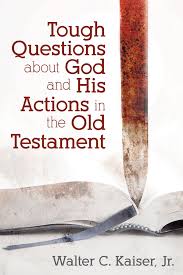
Tough Questions about God and His Actions in the Old Testament by Walter Kaiser

walter kaiser

This book lives up to its title. When it says it addresses tough questions, it actually tackles the toughest questions possible to hurl at the OT. The answers are not superficial, but show the deft hand of a seasoned scholar. Walter Kaiser, writing at the twilight of his career, shows his expertise in the OT. 

The book is a jewel. I found chapters two, three, and six on ethnic cleansing, truth or deception by God, and polygamy respectively to be the most profound. He completely educated me on polygamy. I actually have a firm conclusion on polygamy unlike I had before. I imagine you will learn much you didn’t know there too.

That is not to say all chapters are equally good. I personally found chapter nine on women quite a stretch. Still, as a whole I have never seen a book just like this one.

It will help you apologetically with questioners, it will help you shore up your own thoughts, and it will help you never denigrate the OT. The OT works with the NT and never against it. God is the same in both testaments. This book is a grand reminder.

Pastors, teachers, interested Christians, and even seekers will be blessed by this volume. I would recommend it to everyone!

I received this book free from the publisher. I was not required to write a positive review. The opinions I have expressed are my own. I am disclosing this in accordance with the Federal Trade Commission’s 16 CFR, Part 255.

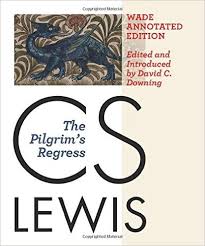
The Pilgrim’s Regress by C. S. Lewis–New Wade Annotated Edition

cs lewis

Although Lewis wrote this volume years ago, and Lewis needs no recommendation from me, this is a publishing milestone in this freshly annotated edition by David C. Downing. The Lewis volume, perhaps his toughest to penetrate, is opened up to us in such a greater way.

As for the book itself, it is an allegory in the vein of John Bunyan, yet in the style of Lewis. His Pilgrim takes quite a journey! Puritania captures legalism quite profoundly. Lewis fans will love it while new readers will enjoy taking in on.

The thing that stands out to me is how much I would have missed without Downing’s notes. I must confess that I would not have known most of what he shared had he not given this help. Downing has successfully taken a book that sounds well but would likely lose the reader and makes it more able to stand on the shelves as an equal to his other volumes. I imagine even Lewis himself would appreciate this edition.

It comes in a lovely hardback and includes original illustrations. All in all, this is a keepsake that I highly recommend.

I received this book free from the publisher. I was not required to write a positive review. The opinions I have expressed are my own. I am disclosing this in accordance with the Federal Trade Commission’s 16 CFR, Part 255.

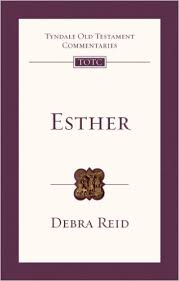
Esther by Reid (TOTC)

esther

This is the first volume in the latest round of revisions in the outstanding Tyndale Old Testament Commentary (TOTC) series. The editorship has fallen into the capable hands of David Firth. Debra Reid supplies this replacement of the well-respected Baldwin volume in a winning way.

The Introduction, in 55 pages, covers the bases well for a volume of this size. If you are like me, you do not the excessive discussion on the literary style of the book as it often appears a charade to attack the historicity of Esther. Still, Reid covers what one must know to realize what scholars debate here. Canonization issues are sufficiently covered too.

I gleaned more when Reid turned to a discussion of style. She taught me several things I had not noticed before. Thinks like there is little direct speech in Esther, or how key the narrator is as compared to, say, Ruth, and character discussions are all very fascinating.

The commentary proper is even better still. The unique thing was the female perspective. There was no capitulation to feminism, but deep insights throughout. All in all, this is a fine, economical volume and I recommend it.

I received this book free from the publisher. I was not required to write a positive review. The opinions I have expressed are my own. I am disclosing this in accordance with the Federal Trade Commission’s 16 CFR, Part 255.

Choosing A Sermon Subject

sermon

Do you ever have that sinking feeling as Sunday draws ever closer that comes when you can’t decide what to preach on? I have had some tell me that this problem is the hardest they face in the pastorate. If they preach three times a week, that pressure can be strong. What can be done about it?

Some grow to believe that there must be something wrong with them since ideas don’t come easily at a rate of three a week. Some just change pastorates often so they can just use the same sermons. While there is a place for the use of an old sermon, it ought not be simply because I can’t think of a new one. Some wonder if they just aren’t close enough to the Lord anymore!

Could the problem be more the whole approach than a lack of creativity? Could the normal method be doomed from the start? The normal method is first I chose a subject or idea, then I select a text to highlight my subject or idea. From there I may chose to go the topical route. That presents quite a problem in a long pastorate. Just how many good topical sermons can one person come up with on a specific subject?

I heard one famous preacher once claim he really only had 20 topics he preached on and he just rotated them. He had quite a following. His sermons varied from topical to loosely textual. I suspect that would not be effective for most of us.

The problem is that we would likely try to make a connection with our “found” text and our topic. After we make that connection to our satisfaction, we likely will fall into the same old platitudes we said the last time we preached on the subject. Imagine the topic is prayer–you’ll just start saying we need to pray more with no new reason from last time. If you’re not careful, you’ll even use the same illustrations. (We’re talking about the preacher’s problem today, but maybe the discussion should be on the congregation’s problem!)

Even if we went the textual or expository route, which is far preferable, we have to find the text that really matches our subject. What will we do if we start deeply studying and finally figure out that our text in its context is not really talking about our subject? Sunday will be even closer! That seems living on the edge.

So what do I suggest? You would never guess it from my misleading blog title. Give up choosing a sermon subject! Just choose a text! See where it takes you and just preach it.

I keep a sermon seed plot that is nothing but a list of texts that jumped off the page at me. In reading or studying you will be all across the Bible, so there will be many opportunities. You may be reading books and the author mentions a text in passing, and there’s another one for the seed plot. I probably never have less than thirty of these in my seed plot, so it’s just a quick prayer of “Which one, Lord?”, and I am on my way. No agonizing over a subject for me. I may not even know my subject till I’ve studied for a few hours.

You may ask, How does that allow for trying to address perceived needs in the congregation? Of course, a text may come because I am thinking about a perceived need, but not necessarily. This is hard for me to prove, but I have often been amazed at how the text addressed these needs. As for me, I believe I would be far less likely to address needs were I to try to pick that first. I’ll offer the flimsy evidence that I have on occasion thought a text would address issues only to find a careful study of the passage led me somewhere else and was far better than where I thought I was going.

This doesn’t only refer to preaching through a Bible book or a series. In my ministry, I have settled into not doing a series on Sunday morning. We may be anywhere in the Bible at that service. By the way, this is how Spurgeon did most of his services.

This method has other advantages. Remember our discussing how our topical preaching may fall into triteness? If you preach topically on prayer, for example, you will run out of things to say quickly. But the Bible is full of passages on prayer that approaches the subject freshly and creatively in every case. What you can do, then, is tap your preaching into the Bible’s natural creativity. You’ll never have to be dull or trite again! Plus you won’t waste all that time just trying to pick a subject any more. Happy preaching!

The Faithful Creator by Ron HighfieldHighlights

faithful

This volume tackles the tough questions, as the subtitle “Affirming Creation And Providence In An Age Of Anxiety” suggests. It is scholarly (I would guess graduate level), yet highly readable even if this is not your specialty. Dr. Highfield gives evidence of deeply thinking on everything involving these issues.

The book is in three parts: Creation, Providence, and the Problem of Evil. By the time you finish you will see that the problem of evil is where your beliefs on creation and providence are tested. I was genuinely impressed with the author’s presentation, logic, and fairness. Though he was a strong Bible believer and conservative in theology, he did not write to support one theological persuasion as much as addressing the hardest questions we Christians will ever hear or think.

Highlights include his explanation of the glory of God (pg. 111), his interaction with evolutionary biology (pg. 159), his description of reading the OT christologically (pg. 206), his phenomenal discussion of foreknowledge (pg. 226 ff), and his majestic handling of the problem of evil.

This volume will get the most prominent place on my shelves for this subject. I highly recommend it!

I received this book free from the publisher. I was not required to write a positive review. The opinions I have expressed are my own. I am disclosing this in accordance with the Federal Trade Commission’s 16 CFR, Part 255.

The Foolishness Of Preaching Podcast–Encouraging Bible Preaching!

photo

I hope you have heard of Ryan Hayden’s new podcast–The Foolishness of Preaching. Ryan did a lot of blogging in the past and chose to try a new avenue to champion the cause of expository preaching. He believes, as I do, that the dearth of preaching the Bible is the cause of many of the problems we have today. We have too much in pulpits of what man says–we need to hear what God says!

Ryan takes preachers who love expository preaching and interviews them on philosophy of preaching and ministry, study methods, favorite books, and then personal elements of the preacher. Ryan is quite the interviewer and puts a lot of time in this weekly project. This is a positive, wonderful attempt to help the cause of preaching.

Check out his website for the podcast to sign up on iTunes or other devices here:

The Foolishness of Preaching

I was honored to be one of the ones interviewed and it came out this week and you can find it here:

Reagan Episode

Maybe it will be an OK episode. I have a face that only audio could love!

In any event, I am honored that Ryan would put me on his fine podcast.