A False Liberation (IBTR #77)

liberation

Have you ever seen someone run from such a bad, or legalistic, church or family that they ran headlong into some other oppressive situation? Have you, by chance, been that person? Have you seen someone who now loves to hear Bible criticism, or bad news of Christian’s failing, or approval of things clearly defined as sin in the Bible? I wonder if it is now epidemic to see such things.

C. S. Lewis says for some “it can be liberating to lose a faith based upon guilt, not grace.” For some that is such the case they can actually be glad to hear information apparently discrediting of Christianity.  This fact suggests three important things to us that affects differently across the spectrum:

1. It is truly liberating to leave a faith based on guilt.

Bondage forces us to crave freedom. It is quite perplexing when you are convinced that God demands the guilt as the way to Him. When you realize, however, that religious men have hoisted that system upon your back, you will likely run like a small child to a freshly-cleaned room to pull all the toys back out. It is liberating as grace delivers where nothing else will and it only dwells in the calming, safe region of the Lord.

If you have ever stumbled into the dark world of performance-based Christianity with its heavy, guilt-laden load, you will feel like you walked from the shivering cold into warm sunrays when you make your escape. It will be one of the greatest things that ever happened to you. The only danger is where you run to in your escape.

2. You don’t want to be a pastor, church, or Christian who puts people in this position.

Why be a recipient of grace and peddle bondage? Why pile burdens on people’s backs when you were called to proclaim a gospel of deliverance? It could be that we have drunk the Koolaid ourselves and are only passing it on because that is what the one who passed the Koolaid to us said to do.

We should want to see people run from the bondage of sin, but we should be horrified when their liberation came when they ran from us! This is simpler than we think. People will run to us if all we have is Jesus to give, but they will sprint away when we offer the cumbersome package of Jesus plus something else. We will hate to come to the end of the way thinking we propagated Christianity only to find we sold the cheap substitute of religion.

3. You don’t want to be the person who runs from legalism to some other bondage.

Some have their epiphany and run from a faith based on guilt, but they run the wrong way. It’s like they are attracted to grace but run right by it. In fleeing the grasp of legalism they fall in the clutches of licentiousness. We were not given grace that sin might abound. Some in casting off the legalistic rules men added to God’s Word throw out His actual commands too. Talk about throwing out the proverbial baby with the bath water!

You see it so often. One throws out the man-made regulations on clothing, but throws out God’s command for modesty too. One leaves a pharisaical rule that you can’t go to a movie, but then goes and watches one that is truly vile. The list goes on and on and stretches the meaning of “grace” past recognizable forms.

Faith based on guilt should be replaced by one based on love of Christ. That is more than a hairsplitting, far more.  To be compelled by love rather than guilt is a polar opposite. To believe that grace rendered God morally neutral is a mistake. Grace is the loving path God brought me around the mess of my sin, not the path that brought my Lord into the sin with me.

This error of thought can spiral to taking people away from the Lord. When we run by grace rather than into it, we will find our new Christianity as unfulfilling as our old one. Then in a second foray into warped Christianity we want little to do with Christianity altogether.

So praise the Lord if you escaped legalism! But don’t run into another oppression. If you do, you will only have a false liberation.

Find all articles in the series here.
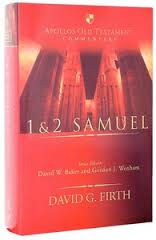
1 & 2 Samuel (Apollos Old Testament Commentary) by David Firth

samuel firth

This commentary on two of the more exciting books of the Bible is a real asset to pastors and Bible students. Firth is becoming quite the prolific commentator of late and tackles here another historical book of the Bible (since he rightfully argues the two are one book).

His Introduction is sufficient, and at 48 pages for a larger Bible book, it is quite succinct. While he writes well on genre and purpose, I couldn’t follow his thinking on authorship or sources–in fairness, it wasn’t radical. His explanation on narrative was insightful, but his discussion on central themes were spot on and the best the Introduction had to offer.

The commentary was by the far the best value in the book. He followed the standard Apollos setup with translation, notes on the text (just the right coverage for pastors), form and structure (with enough detail to explain its short discussion in the Introduction), comment (thought-provoking), and explanation (where he well ties it together).

I looked at several passages and enjoyed what he shared. He took extra care in the most famous passages (David and Goliath, for example). I had read criticism before I received this volume on his analysis of David with Bathsheba, and while I might fully agree with him there, he argued his point well. David did, as he said, not completely hide his sin from those he sent to get Bathsheba. He feels that David was more interested in getting Uriah out of the way to get the child than to hide his sin. I doubt that is true, but it does make you think!

This is a fine volume. As a point of comparison, this volume is fair superior to the well known Word Biblical Commentary volumes covering the same material. I highly recommend it.

I received this book free from the publisher. I was not required to write a positive review. The opinions I have expressed are my own. I am disclosing this in accordance with the Federal Trade Commission’s 16 CFR, Part 255.

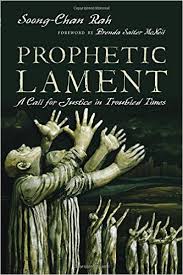
Prophetic Lament By Rah

rah

Here is the latest volume in the Resonate series of unique commentaries published by IVP. Song-Chang Rah brings different perspective to the Book of Lamentations than you would get in other volumes. He highlights the Biblical genre of lament that is clearly a dynamic part of Lamentations. He attempts modern application as well as the subtitle “A Call for Justice in Troubled Times” suggests.

The volume succeeds when he discusses lament in the Bible. He reminds us that lament is much more prevalent in the Bible than in our theological understanding today. His chapter on the historical context of Lamentations is well done. He explains how the funeral dirge is classic lament. When he exegetes the text, he does well. His writing skills are engaging and good enough to make commentary reading pleasant. 

The volumes stumbles in some of his modern application and even a few historical theological conclusions. His comparison of a theology of suffering versus a theology of celebration will really make you think. His modern example of slavery in the earlier days of our country as he made you feel their plight and heartfelt lament was superb. But when he credited (?) dispensational theology for giving us “an individualistic soul-saving soteriology”, which was actually akin to revival, and discusses it as a bad thing–that is hard to swallow.

His focus on race problems in our country today as an application of his theme is marred by his unquestioned acceptance of the most liberal recounting of events. Had he been more balanced there, he would have been easier to follow. He seems so obsessed on race that I wondered as I read if he had been the victim of some particularly ugly racism in his own life. I found no value in his epilogue on Ferguson.

If you look past racial politics and focus on his commentary, you will find value here. For me, it is not a first-line resource, but a fine secondary resource to gain additional, helpful insights.

I received this book free from the publisher. I was not required to write a positive review. The opinions I have expressed are my own. I am disclosing this in accordance with the Federal Trade Commission’s 16 CFR, Part 255.

Last Act: The Final Years And Emerging Legacy of Ronald Reagan by Shirley

reaganlastact

What a book! If you admire Ronald Reagan, you will find this book fascinating. If you, as I did, watched for every story about him after he announced his Alzheimer’s and watched every part of his funeral with several tears along the way, this book will fill in all those questions you probably had.

Craig Shirley writes the story in a way that is gripping. When I began reading his method of jumping between the first days of President Reagan leaving office and the days just before he died, I thought it would undermine the book, but it simply did not.

So many insights into the fine character and honest makeup that defined Reagan are here. Actually, I must warn you–you will have waves of deeply missing him again as you read. You will more deeply opine the lack of people like him today too. I believe you will see that Mrs. Reagan is far better than the witch the media unfairly made her to be as well.

Those who served under him, for the most part, adored him. He forced no cynicism on those who served him as many do. Even burly Secret Service men were reduced to heavy tears when he died. Even after Alzheimer’s did its ugly work on him, he was still the man who wanted to stop and help a who man had a flat.

For the most incredible contrast, a story of Nixon ignoring his ailing wife one day and Clinton making a pass at one of Reagan’s young interns and making himself a nuisance by relentlessly begging to speak at Reagan’s funeral were told. Thanks Nancy for holding a firm “no” on that point!

There’s so much more. I love this book. I can’t think of anyone who has lived in my lifetime for whom I would want this kind of information, but Ronald Reagan was for me just such a man. This book is a treasure for those who love the Gipper and would be a great help to those who don’t, but should.

I received this book free from the publisher. I was not required to write a positive review. The opinions I have expressed are my own. I am disclosing this in accordance with the Federal Trade Commission’s 16 CFR, Part 255.

Other Presidential Biographies

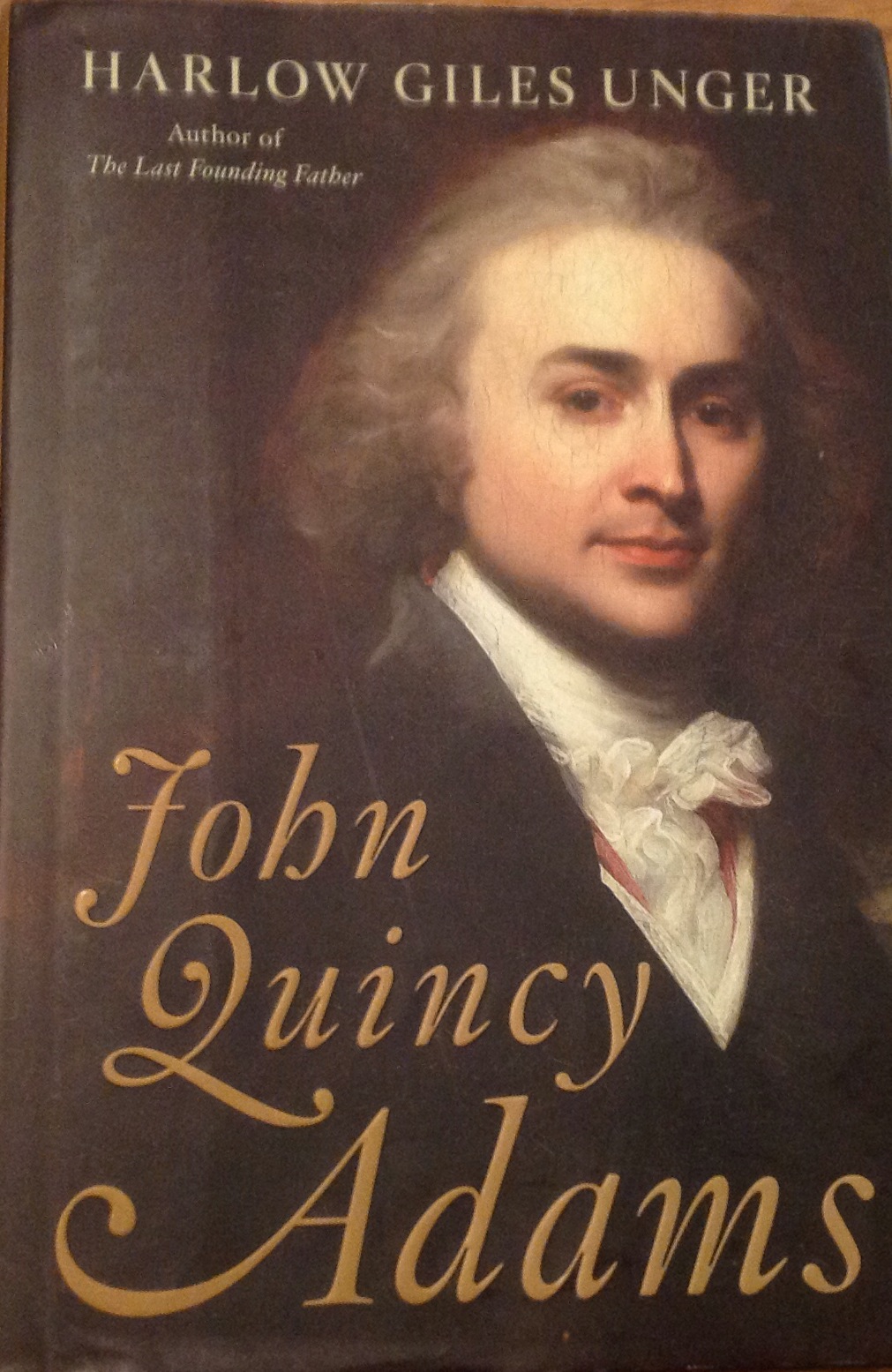
John Quincy Adams by Unger (Presidential Bio Series)

Harlow Giles Unger gives us another enjoyable presidential biography. This time it is on the underrated John Quincy Adams. Perhaps JQA gets overshadowed by his famous father, or perhaps it is because his actual term in office was a dud, but his long public career is in some ways unparalleled in our nation’s history. His life, without question, makes for sterling biography. He met George Washington and Abraham Lincoln!

Unger wells presents his early days and educational opportunities as well as getting to go on diplomatic missions with his father. His experiences were incredible and before long he was on his own diplomatic missions. 

His family life was interesting. He had a close relationship with his parents. He married a British lady and though he seemed fond of her, their marriage suffered deeply on several occasions. His leaving her at times while on political conquests surely contributed greatly to his problems. As a parent, he suffered both the deaths of some of his children, he watched others turn out as alcoholics. He knew something of suffering. Ha was, without a doubt, a believing Christian.

After a successful time as Monroe’s Secretary of State, he finally ran for President. He actually lost the popular vote to Andrew Jackson and was voted in finally by the House of Representatives. He took on several enemies at that time and he was never able to do anything as President. He was quite a discouraged man in those days and was an unpleasant and grumpy man.

Then he hit his stride. For years he became a Representative from Massachusetts where he saw himself representing the whole country. And represent he did! Many Southerners hated him but his skill in legislative procedure and constitutional law made him THE force to be reckoned with. He was the greatest champion of abolition from the founding of the nation till the eve of the Civil War. He knew before he died that the Civil War would come and, to his mind it was probably needed.

Unger draws a fine portrait of this man who lived his life on principle. How refreshing to read in these days. I learned that JQA was one of the really great ones in our nation’s history even if his term as President was largely forgettable.

Presidential biographies in the series.


What Mohler Said About Reading

  
Here’s a fantastic article on reading by Albert Mohler (link below).  I really could not say it any better than he did. Notice how he describes how he encourages reading in several areas. Of course he reads Bible study materials (this is particularly true for pastors), but other categories are helpful for our reading diet. He specifically adds history and literature, which I agree is a great idea. 

He have several other good points on reading including marking up your books. That practice has been a help to me as well. 

I love reading. It is more than a hobby. It is an enrichment of life. It is a lens to make more sense out of life. It is a way to define you and make you a better person. Happy reading.

Albert Mohler’s Article

The Mystery Solved On Why Republicans Failed a To Stop The Iran Deal

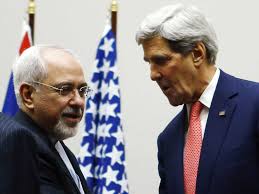
iranThough I am learning to continually lower my expectations, I have been mystified on why the Republicans were so inept at fighting the warped Iran Deal.  I mean, we have an unpopular President and the public seems fairly skeptical. Even in purely political terms, what a chance for the opposition party (Republicans) to land a blow on the President. Politicians rarely miss such opportunities. So again, I have been totally unable to figure this one out.

Finally, I came across an article from National Review (Shared below). Though they are known famously as a conservative magazine, they are much more reputable than many others that might, for example, show up on your Facebook news feed. The answer to the mystery is sad, though, perhaps, not a shock.

Read there about how companies like Boeing, which would profit enormously from the Iran Deal, makes hefty contributions regularly to Republican senators. Then see how they months ago passed a bill that gave President Obama the authority to lift sanctions unless the Senate passes a Resolution against it. Of course they knew they couldn’t. Here is the sick part–they set up a way to appear to be against it now publicly by voting for the Resolution now knowing it wouldn’t pass. They can even gripe about what they helped put it place to appease the folks at home.

This deal is one of the worst in our nation’s history. It helps a rouge nation get nuclear weapons. It puts Israel, our ally, in grave danger. As a Christian, I believe God frowns on it. This shows the low place where our country is spiritually. Corruption runs deep.

I encourage you to read the article for yourself:

National Review Article

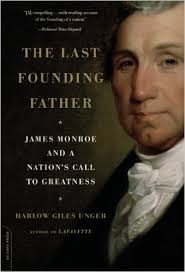
The Last Founding Father (James Monroe) (Presidential Bio Series)

james monroe

Harlow Giles Unger gives us a lively easy-to-read volume on President James Monroe here. His subtitle “James Monroe and a Nation’s Call To Greatness” shows his belief that Monroe’s presidency was great times for our nation. That Monroe was our last Founding Father is open to debate and may depend on how you define it. Had Mr. Monroe died before 1800, I doubt he would have been thought a Founder.

In any event, he was the first Revolutionary War veteran since Washington, and for that matter, the last. A young man in Washington’s army, and one with close experiences with Lafayette, he was even seriously wounded in the line of duty.  He loved Washington but came under the spell of Jefferson and became one of his protegees. To be fair, he was protegee number two after Madison.

He had the same Virginia background as three of his four predecessors, including money problems, the typical troubles of one trying to be somebody in Virginia, and being a slave owner. Like them too he had some troubled family members. The difference was that he was not really born into this life and aspired to it, including the slavery. He left nothing for us to know his religious beliefs.

He career as Virginia’s governor and his time in France was productive. He showed initiative and had to make decisions in those days where communication across the Atlantic was so slow. Unger well highlighted his many accomplishments.

The flaws of the book were usually to do with getting carried away praising Monroe. He paints an inaccurate picture of James Madison being incompetent and Monroe carrying him the last two years of his presidency. Besides Monroe he seemed to praise only Washington and even suggested Monroe was another Washington in many ways. A biography where the biographer comes to really respect his subject is often a good read, but this one got carried away.

On the plus side, I left this volume feeling I had underestimated Monroe. He actually was one of the good ones. His time in office was greatly prosperous and he greatly aided the expansion of our country. His end in poverty and ill health was sad.

There must be a better biography of Monroe somewhere, but it would likely have to work hard to be as entertaining as this one. Here is a pleasant read.

Find other review in the series here.

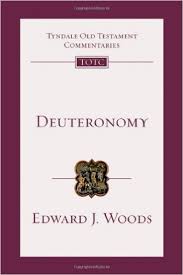
Deuteronomy (TOTC) by Edward Woods

deuteronomy

Here is another replacement volume in the venerable Tyndale Commentary series. This volume replaces the 1974 volume by Thompson and is superior to it. This bodes well for the Tyndale series holding its high place among commentaries.

Woods gives a lengthy, for this type series at least, Introduction. My favorite part is that the author’s love for Deuteronomy shines throughout. These type make the best commentary reading. His case for Deuteronomy being pivotal is well done and convincing. His discussion on authorship touches the scholarly bases without falling for their excesses.

His description of literary features is illuminating. His comparison to law codes may seem a little overdone, but too many scholars discuss it for him not to mention it. His expansion of comparing Deuteronomy, and particularly the Ten Commandments in Deuteronomy, to the rest of the Pentateuch was helpful. Finally, his discussion of theology was the best part of the Introduction. It really helped put Deuteronomy in perspective.

The Commentary proper was helpful, thoughtful, and never trite. This will be a fine volume to consult for years to come. I highly recommend it.

I received this book free from the publisher. I was not required to write a positive review. The opinions I have expressed are my own. I am disclosing this in accordance with the Federal Trade Commission’s 16 CFR, Part 255.

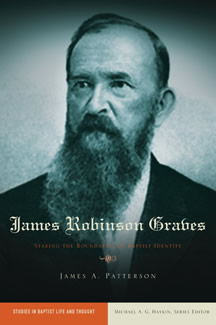
James Robinson Graves by James Patterson

j r graves

Here is a man probably not known by many today, but who had an incredible impact on Baptist thought in America. This biography tells us of the man and we see the development of Baptists clearly as well. He particularly molded the early Southern Baptist Convention. His career was mostly as a Baptist editor and he spent his life battling for his views.

Mr. Patterson, a Baptist professor, dug deep to make this scholarly contribution. Though the scholarly style may repel some, his contribution is likely to always be the definitive volume.

He also traces the actual viewpoints that still show up in some circles that are called Landmarkism. Though Graves picked up thoughts in several places, it was his writings that put Lankmarkism on the map. Very few people believed his view on Baptist succession and rigid church and baptism beliefs before he popularized them.

Patterson shows that these beliefs matched the political thinking of the times. As a biographer, he went to great pains to be fair to Mr. Graves. The problem was, however, that Mr. Graves makes that hard to do. Mr. Graves was so rigid and harsh he failed to keep the testimony he should have held to have the ear of so many.

Frankly, the book is fascinating if you have ever been part of the Baptist world. In fact, I don’t know how we could understand Baptists accurately today if we did not know what this biography told us. I highly recommend it.

I received this book free from the publisher. I was not required to write a positive review. The opinions I have expressed are my own. I am disclosing this in accordance with the Federal Trade Commission’s 16 CFR, Part 255.