The Scariest Book I Ever Read And What It Taught Me!

third reich

It was beyond belief. The story of Nazi Germany and its maniac leader, Adolf Hitler, is more than history; it is a parable of what can happen. It is the ultimate lens through which to view current events. It is the worst case scenario of the proverbial history repeating itself. The Rise and Fall of the Third Reich will grip you in unexpected ways.

Strangely enough, it was not the war itself, or even the bloody terror before and during it, that was most horrifying in this episode of history. No, it was that an Adolph Hitler could rise from where he did, have such complete control over a people, and go on to get away with all he did with the masses following like deranged sheep.

Hitler was nothing. He had no track record of anything other than finding ways to bluff or manipulate his way to power. This proponent of the superior German race was actually an Austrian. This great warmonger had only been an undistinguished corporal in WWI. He failed at all he did and kept going forward as if he had greatly succeeded. (It kind of reminds you of other leaders who were only community organizers). He came out of no where and seized power by effective propaganda and shrewd political moves. During his whole career he habitually told lies and so effectively that you wondered if he grew to believe them himself.

He was consistent in some things. He never wavered on who was subhuman–Jews first and foremost, then Poles and Russians. (Like some see the inferiority of Christians today). He always believed the state was supreme and people dispensable to uphold the state. Of course, it took a while to realize that he was the state! Any amount of blood was legitimate to shed in propelling the state and its aims forward. (For him I suppose it took a village to raise a child).

Nothing he said was too ludicrous for the masses to swallow. There was a sizable number of Christians in pre-WWII Germany, but they made no outcry. Somehow he convinced them that what he said fit Christianity, at least until it was too late to do anything about it. He rewrote history (the circumstances of the end of WWI) until he convinced people who had actually lived through it! (American history is not matching what I remember when it is told today either).

He incredibly manipulated other countries. His first two major conquests of territory were bloodless. He simply made baboons out of other European leaders. He never kept his word in any deal he made and yet spoke as if he had the greatest moral authority when it was time to discuss the next one.

He mastered the art of controlling the conversation. He developed methods to stop the mouths of those who disagreed. (Christians, do you feel our mouths being silenced?) He realized that getting the minds and hearts of the younger people was essential and so started the Hitler Youth. (Do you feel like we just woke up and found a generation that finds things like gay marriage perfectly acceptable?)

As I read I kept trying to tell myself that in America we have more background in freedom and would never get sucked in to this extent. We have many who could not be forced into silence. Yet this tale shows just how far things can go. It is a horrifying portrait of people closing their eyes along with the exceeding depravity of men.

Actual Book Review

An actual masterpiece! No novel could ever hold your attention to a greater degree. William Shirer was the perfect man to write this book. As a reporter who reported from Germany until the war and again after in the Nuremberg trials, he saw many things firsthand including appearances by Hitler and his associates. In addition to that familiarity, he did extensive and effective research. Finally, he brings the skills of a gifted writer. It is a page turner.

The two criticisms that are most often leveled against this book take nothing from it. Some say he was taken in by Hitler’s charms before the war and denies it in the book, but I read several humble admissions that he believed Hitler when he should not have. He also writes of homosexuality as a perversion in a few references. That was his belief and the prevalent belief of those times, and for a few of us still today. I appreciate a volume without the baggage of political correctness.

I believe this book will never be superseded. It is simply that good.

Two Great New Carta Titles

carta

Carta continues offering great titles to Bible students! Here are their latest two titles (distributed by Hendrickson):

Understanding Early Christianity: An Introductory Atlas by Franklin Littell

In 40 oversized pages you get an outstanding Introduction from the First to Fifth Centuries of Christianity. Setting Palestine in its proper context from just before Jesus, and discussing the influence of Judaism on early Christianity, the volume exposes us to the greater Greek influence of the times. From rising Hellenism to the evolving influence of Roman Rule, this work delves into the major influences of those times. Even the heresies that had such an effect are discussed.

Equally valuable are the profuse illustrations throughout coupled with fine Carta maps. This volume is excerpted from the large Carta’s Illustrated History of History and so provides a more economical way to study this critical time period.

This volume would be effective for many uses: Bible classes, homeschool, personal study, or a refresher for pastors. I recommend this volume.

Understanding Great People of the Bible: An Introductory Atlas to Biblical Biography by Paul H. Wright

This attractive, oversized-paged volume is a treat for the eyes. Mr. Wright brings much expertise to the table to make this volume valuable. Its unique approach of giving atlas information on Bible characters is helpful in that many study the Bible in character studies. Perhaps not every character is here, but those that are can have their study enriched.

Profusely illustrated in full color, this book is one you will enjoy. The greatest feature is that several of Carta’s very best maps are here. I personally find Carta’s maps the best we have today. Any one studying the Bible will be pleased to get this volume. I highly recommend it.

I received this book free from the publisher. I was not required to write a positive review. The opinions I have expressed are my own. I am disclosing this in accordance with the Federal Trade Commission’s 16 CFR, Part 255.

Do You Have Your Own Spiritual Litmus Test? (IBTR #74)

litmus

Sometimes we must turn around the things we despise in others and see if we are likewise guilty. We all hate people forcing their preferences on us. Even the most strident legalist hates seeing judgmental barbs flying his way.

Earlier in this series, I wrote on Spiritual Profiling and that we are so quick to size up others based on some crude criteria. Beyond the pain of others unfairly sizing us up, and beyond the crime of us sizing up others, there remains one other similar error that may greatly affect us–using a litmus test to size up ourselves.

Such lists are easy to throw together–attend church, read my Bible, wear the right clothes, avoid certain activities, only listen to approved music, and –Presto– I am a good Christian. At this point, the issue is not even if the Lord actually asks for everything on the list, though we often have the Pharisee’s penchant for going beyond Him, but our underlying thinking that says these things make me spiritual.

Am I the aggregate of what good things I do plus the sum of the bad things I do not do? Is it really that simple to gauge spirituality? Or is this even the gauge at all?

I am far enough in this journey that there appears to me to be little help for the dyed-in-the-wool legalist–his litmus tests will always be with us. I join you in disliking when someone foists his litmus test upon me. But I must ask: how is it any better when I forge a litmus test to prop myself up?

Could this be me creating my own smokescreen before the Lord? If I rapidly throw my fine little list together perhaps I can drown out what He really might want to talk to me about. It might not be something I can proudly point to on my list to you. It might be something so deep inside that you could never know. The ultimate point of my litmus test is, I suppose, that I simply don’t want to go there with the Lord. If that is the case, then my pretty little spiritual litmus test might just be one of the most unspiritual things in my life. It’s worth thinking about, wouldn’t you agree?

Find all articles in the series here.

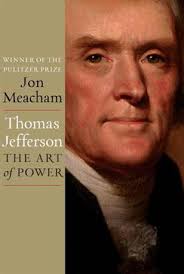
Thomas Jefferson by Jon Meacham (Presidential Bio Series)

jefferson

This fine biography by Pulitzer-Prize winning author Jon Meacham draws a vivid picture of Jefferson. Mr. Meacham clearly admires Jefferson, but as the subtitle “The Art of Power” shows, he was not blind to his weaknesses. Jefferson was charming, yet he knew how to manipulate situations to stay in control. He was never satisfied unless in control and was exceptionally good at gaining it. His compensating trait was that he genuinely liked people and beyond control he really wished no harm.

Many consider him the most intelligent President we have ever had, and that could likely be the case. He was brilliant, a voracious reader, a student, a thinker, and had a naturally inquiring mind. Despite wanting to be liked by people, he was ever true to himself. Give him a chance at personal contact and he could disarm most critics, except, of course, Alexander Hamilton. As you read you will discover a man you can’t help but like despite his bewildering moral inconsistencies.

Jefferson was the most articulate spokesman of the liberties that were the battle cry of the Founders. His writing of the Declaration of Independence was epic, though he wrote little else besides personal letters the rest of his days. He was in Paris when the Constitution was drafted, yet his influence was there in the person of his protegee, James Madison.

He served in Washington’s administration, but that was often difficult as he ever battled Hamilton. The parties of Federalist (Hamilton) and Republican (Jefferson) developed in spite of Washington’s disdain of them. Washington sided more often with the Federalists as that matched his thinking. He still respected Jefferson and always listened to what he had to say. I was saddened to see that though Jefferson respected Washington in many ways, he did not love him and was rather happy when he retired. Maybe that control thing blinded him.

After Adams term and the straining of that friendship, Jefferson finally got the control he wished in his two terms as President. He actually kicked off the Virginia Dynasty where his protegees followed him for the longest run in American politics (24 years). His term in office was a success. The Louisiana Purchase was a masterstroke.

Despite these successes, there was his lifelong approval of slavery. I fully understand that he was a product of his times and surroundings (Virginia), but for someone to so clearly see the value of liberty and freedom how did he justify it in his time? Perhaps he knew it wouldn’t last, but that it wouldn’t go away in his lifetime, so he just enjoyed things as they were. Washington was at least haunted by it while we find nothing to prove it upset Jefferson.

Then there is Sally Hemmings. Meacham is convinced that Jefferson fathered children with this slave. It was complicated in that she was actually his deceased wife’s half sister. It seems his father-in-law was a bad boy too. They say she looked a lot like her sister, whom Jefferson adored. Her death was one of the dark spots of his life. There has been long debate about this with many saying Jefferson is innocent. DNA tests prove that a Jefferson got into the Hemmings family, but there is no way to prove it was Thomas Jefferson. My own thoughts are that it is likely true. Human nature being what it is, and having the power a master has over a slave, it was bound to happen in many cases in a setting of slavery. If it is true, that Jefferson would allow his own children to be slaves in his lifetime would have to be the darkest stain on his life.

The Meacham volume is good reading and truly brings Jefferson alive. It is a winner.

Find all articles in the series here.

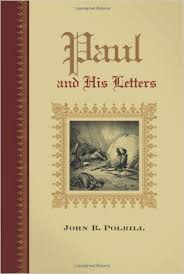
Paul And His Letters by John Polhill

paul

Are you looking for a book that digs into who Paul is and then naturally works its way to the 13 books conservative scholarship attributes to Paul’s hand? You will want to check out this accessible volume that is widely used by seminarians and pastors alike. Polhill is a highly respected Pauline scholar, having also produced a commentary on Acts, who is the perfect choice for this volume.

He first fleshes out Paul with penetrating insight. You get an idea of the key elements of Paul’s early history that molded him for the work God had for him. Roman citizen, Jew, and Pharisee, Paul was a complex person. His zeal was legendary, first for the bad and then the good. His meeting with Christ, which Polhill devotes a whole chapter, changed everything.

As the book develops, Polhill traces Paul through Acts and begins tying his letters to the narrative. Some reviewers, who feel that he offers too brief a commentary of these books, miss the point entirely. It is not a commentary at all, but a description of introductory and background issues from Paul’s life. The point is showing the essence of each letter, and what, humanly speaking, brought about the need of the letter. For its actual goal, the volume wonderfully succeeded. It occasionally traced rabbit trails of more eccentric scholarship, but usually sided on the conservative side.

This book will find its home next to F.F. Bruce and Conybeare and Howson on my shelves. Plus, it is the most recent of the three. I highly recommend it!

I received this book free from the publisher. I was not required to write a positive review. The opinions I have expressed are my own. I am disclosing this in accordance with the Federal Trade Commission’s 16 CFR, Part 255.

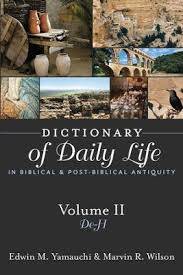
Dictionary Of Daily Life: Volume 2–A Review

dictDL

Here is volume 2 in the planned three-volume set (correction: now planned four-volume set) from Hendrickson that continues the promising start we found in volume one. This volume continues to live up to its stated aim of giving us insight into the daily life of Bible times with articles that cover what is often missed in other Bible dictionary or reference volumes. As one who owns several Bible Dictionary or Bible Encyclopedia sets, I found things covered well here that were little covered in larger volumes.

Written on a level that any Bible student could comprehend, this book is still backed by impeccable scholarship. Looking at every subject in the chronological order of OT, NT, the Near Eastern World, the Greco-Roman, the Jewish World, and the Christian World is especially ideal and enlightening.

Some of the most fascinating subjects in this volume include dentistry and teeth, divorce, dwellings, hair, and heating and lighting. In the article on divorce, for example, you will find information that may not match everything that you have heard. In the one on dentistry and teeth, you will simply be glad you did not live in Bible times!

There are even a handful of color pictures at the end. This practical resource will be a blessing to any Bible student or pastor, and I highly recommend it and eagerly anticipate the final volume.

I received this book free from the publisher. I was not required to write a positive review. The opinions I have expressed are my own. I am disclosing this in accordance with the Federal Trade Commission’s 16 CFR, Part 255.

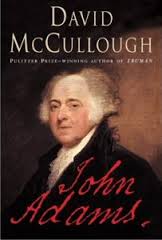
John Adams by David McCullough (Presidential Bio Series)

adams MMC

Here is a superb presidential biography by master writer David McCullough. Mr. McCullough could not be dull if he tried and this is one of his most popular books. This volume brought him his second Pulitzer Prize and I can see why. This biography has the distinction of rescuing a stalwart founding father from the oblivion he was sinking into. It was an undeserved retreat, which McCullough likely realized, and Adams has a 200-year history of competing with Jefferson and coming up a little short. It took McCullough to put Jefferson on the defense!

McCullough did not create something from nothing. Adams is the real deal. He is no Washington, but who is? He need not feel inferior to any other of our Founders. Perhaps a better Founder than a President, but he did as well as any one could following Washington. He had a few blunders, but some successes too.

He could be quite crusty, but he had an honest foundation that never let him down. He was far more moral in his private life than Jefferson. He was not into intrigue or political maneuvers, even to the detriment of his career, but I found myself appreciating it as I read. He wouldn’t just lie when he hit a rough spot either. That it is not to say he didn’t have his flaws. Vanity, and at times ambition, damaged his career. In his defense he realized it to some degree and even made a few attempts to improve.

This volume does a particularly good job at tracing the ups and downs of his relationship with Jefferson. As you read, you will actually rejoice to see the two improve the relationship in old age.

This volume also well explains that the seeds of the Civil War were sown at the very beginning. Adams hated slavery.

It is clear too that Adams was a believing Christian. He is not one of the Founders like Jefferson or Franklin who can be put in the Deist camp. Seeing him as a father was instructive too. Two of his children did not turn out well and his neglect was probably a contributing factor. He put much more input into John Quincy Adams’ life to better results.

This book is simply one of the great ones.

Find all articles in the series here.

Sola Scriptura–Is The Bible Our Only Guide? (IBTR #73)

sola

Sola Scriptura–By Scripture alone! That has a nice ring to it, doesn’t it? To that I give a hearty Amen! In Baptist churches that I have been around we have worded the same idea a little differently–The Bible is the final authority in all matters of faith and practice. To my ear that has a nice ring as well. Sign me up–It’s what I believe.

Sometimes what we profess to believe is not what we actually believe. That is called hypocrisy. But that does not exhaust our error. Sometimes what we think we believe is not what we actually practice. That is misunderstanding that requires we face it so our heads can catch up to what we thought our hearts championed.

Early in this series I wrote on “We Preach The Word Of God! Really?” and went hard after something I feel passionate about: Biblical (Expository) Preaching. As I argued there, despite our claims, there is a dearth of it in the Independent Baptist world.

Strangely enough, I had an unusual experience preaching last Sunday. I preached on “He Added No More” from Deuteronomy 5:22. It was an exciting passage to study and preach. It was Moses recounting the giving of the 10 Commandments 38 years after the event happened in Exodus 20. The phrase is key because had it only meant “He was finished talking” it would not have even needed to be said. Whether it be the 10 Commandments, the Law of God, the plan of salvation, or the Bible itself, He gave all we need. It is complete and permanent. He gave it and “He added no more”.

A lovely couple was visiting from out-of-town and as they were leaving they were complimenting how much they enjoyed that Scripture. The lady told me that she had spent her life in Independent Baptist churches and it had been her experience that the sermons so often added more. So much, in fact, that she could not find what she heard in Scripture! The Lord may have added no more, but the preacher sure did in many experiences she had apparently had.

I need not rehash that refrain so common from my lips. Yes, we who preach God’s Word must hold the high standard of preaching God’s actual Word. Oops, there I go again!

But it does suggest another issue as well. Whether the preacher we are listening to actually sticks to the text or not, we are still responsible to the text. Sola Scriptura is not lived by proxy. The Bible is not only the final authority in matters of faith and practice for a congregation, but for me individually.

What does that mean? I can not turn over my understanding of God’s Word to someone else. If it works like it is supposed to, your pastor can be a great aid to digging out God’s Word. But if he fails, you are not off the hook. You are responsible.

It goes farther. You can not allow some man to make all the decisions for your life for you; not while you hold that wonderful Bible in your hand and have the Almighty God waiting to be sought by you so as to guide you.

There are some preachers who are a shame to the ministry, and others who are an embarrassment to those who love the Bible, but they do not absolve me from letting the Bible be my guide. This is the other side of the truth we must all remember.

Find all articles in the series here.

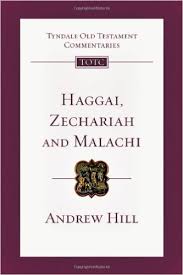
Haggai, Zechariah and Malachi (TOTC) by Andrew Hill

totc hill

Here is another fine entry in the highly respected Tyndale Old Testament Commentary series. This is a replacement volume for Baldwin, so this title has big shoes to fill. I was immediately surprised by the size of the volume coming in at 368 pages. Apparently the series editors felt comfortable giving Mr. Hill the space he felt he needed.

Since Mr. Hill already has written a volume on Malachi in the Anchor Bible series, a series known to revel in minutiae, I feared that this volume might have trouble sticking to the target audience of Bible students and pastors. While it does read slightly more academic than some in the series, that was not a problem.

He begins by discussing the three together, even seeing some measure or connections between them. He sees a unity in The Day Of The Lord found in each. He was at his best when he sees a parallel to many in our day being jaded by religion. Historical context is given first, which is crucial in my judgment. We also get a clear, succinct Introduction for each book separately.

The commentary itself is of sufficient quantity to help you get to the bottom of what the text is saying. I noticed real insights on many occasions. It is a real asset for studying this portion of Scripture. As a added bonus, it is quite economical for a serious commentary. I recommend it.

I received this book free from the publisher. I was not required to write a positive review. The opinions I have expressed are my own. I am disclosing this in accordance with the Federal Trade Commission’s 16 CFR, Part 255.

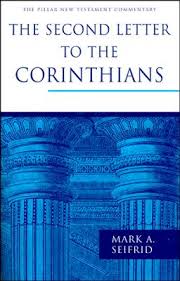
Second Corinthians (PNTC) by Mark Seifrid

pillar

This volume faithfully extends the respect afforded the prestigious Pillar New Testament Commentary series published by Eerdmans and edited by D. A. Carson. It has several features to commend itself to pastors, perhaps even more than for scholars, though it is without question a scholarly volume.

He has an unusually short Introduction. It is clear and penetrating, but much shorter than we are used to. That is not, however, a liability as he just works the discussion into the commentary. He also just ignores the more ridiculous and unfounded discussions that clutter many commentaries. I find that refreshing as some of those discussions do not merit one drop of ink.

Some have criticized Seifrid for not interacting enough with other scholars. His focus was clearly more on expounding the text than esoteric scholarly rabbit trails. Again, that is a plus too! It seems to me that he was only sticking to the design of the series he was contributing to. I have heard others criticize him for some “Lutheran” theology. I am not a Lutheran, but hearing viewpoints that don’t exactly match every other commentary is not a bad thing either.

Taking the commentary here on its own, you will find well written and helpful exegesis to help get at the meaning of the text. I predict pastors will actually prefer it, as I do, over some of the other volumes out there. He gives us more insight into Paul and to what is going on in this second letter. I appreciate his taking this letter as a unified whole as well.

The positives here are many and I highly recommend this volume for teaching and preaching Second Corinthians.

I received this book free from the publisher. I was not required to write a positive review. The opinions I have expressed are my own. I am disclosing this in accordance with the Federal Trade Commission’s 16 CFR, Part 255.

Find my reviews of other commentaries here.