Cookie Cutter Christians (IBTR #55)

It is easy, so easy, to mix up the true goal of Christian discipleship. If the goal is missed, apparent success is worthless. I speak of Cookie Cutter Christians. Perhaps every group in Christianity struggles here, and Independent Baptists are, perhaps, masters of the art.

Perhaps you have taken part in a cookie making event. As a father of six, I have had at least a few Christmas opportunities (though I could in no way walk in the kitchen at this moment and make a batch of cookies). The first thing you will notice is how much they all look alike as you use you little cookie cutter.

Strangely, that is how some view disciplining new Christians. The great doctrines that define Christianity are mentioned to some degree, but no more than how we ought to look, exactly how a worship service should look, and what we are allowed to do or not do. Some of those discipled are shocked to learn later, if they actually become Bible students, that the emphasis does not match what the pages of Scripture show. If they never do, they will more likely become what their trainers hope they will.

It is not if they have a theological grasp on salvation by grace, but that they commit to memory all standards and never slip on any of them. It is not if they have the big picture comprehended, but if they have the rules down. If you doubt this to be the case, just let the Christian in question miss the doctrinal point (real doctrine) or miss the standard. Watch what happens, and you will see for yourself.

The other thing about making cookies is that if I remove the cookie cutter and some part of the little snowman falls off, I grab it and roll it back into the batter. That cookie doesn’t make it.

So it is for some new Christians. They get a little time to conform, but then they better get with the program; or else. I have seen more than one broke little Christian thrown back into the batter.

Perhaps if we saw the goal as Christians being conformed into the image of Christ, we would not be so concerned if they were not conformed into the image of us!

2015/01/img_2277.png

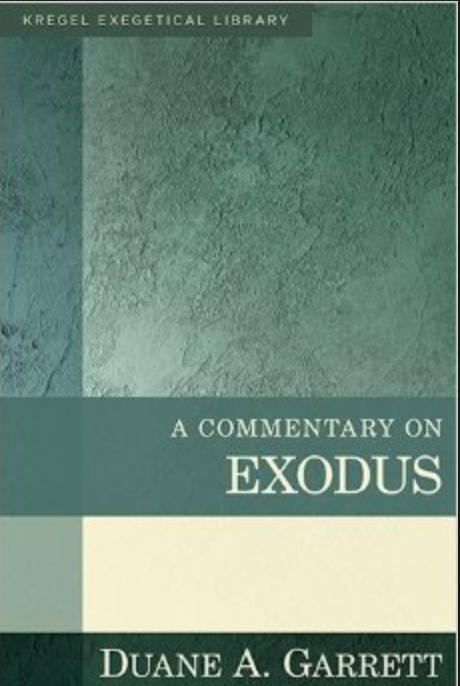
Exodus by Duane Garrett (Kregel Exegetical Commentary)

Exodus by Duane Garrett, the latest of the emerging Kregel Exegetical Commentary series, is a winner. As pastor-friendly as the earlier volumes, this commentary can stand without embarrassment beside the most scholarly of volumes.

The Introduction was a joy to read. He approaches the unfortunate waste of time in the study of source criticism and concludes it as having “contradictory conclusions and a general lack of clarity.” In further discussion of the documentary hypothesis, he speaks of some of the so-called varying sources and says, “That path is a dead end.” I love his approach!

He gives good background on Egypt as he feels that is one of the most glaring deficiencies of Bible students today. Finally, he approaches the hotly-debated subject of the date of the Exodus. I appreciate how he fairly represented all sides. He then ventured into the equally controversial discussion of the location of the Red Sea crossing and Mt. Sinai. I don’t actually agree with his conclusions, but what a wealth of information he marshals for us to decide for ourselves.

The commentary is helpful. It is always thought provoking. He seeks out natural explanations for the Plagues (though he believes in a supernatural God) that I feel does not do justice to how supernatural they seemed to Pharaoh himself. Nothing natural could have surprised him.

Check out the chart and Excurses on “The Hardness of Pharaoh’s Heart”. I have never read better.

All in all, this volume is a great commentary to secure.

I received this book free from the publisher. I was not required to write a positive review. The opinions I have expressed are my own. I am disclosing this in accordance with the Federal Trade Commission’s 16 CFR, Part 255.

/home/wpcom/public_html/wp-content/blogs.dir/39c/34718138/files/2015/01/img_2270.png

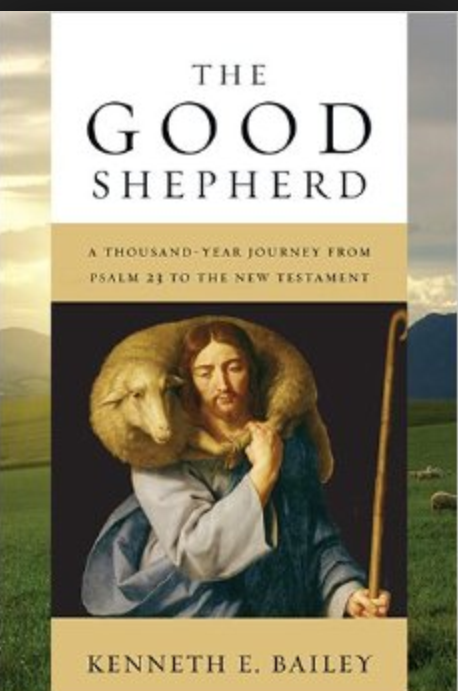
The Good Shepherd by Kenneth Bailey

The idea of the Good Shepherd is one of my personal favorites of Scripture. Here is a volume that really fleshes out that concept. The subtitle “A Thousand Year Journey From Psalm 23 To The New Testament” really captures what Kenneth Bailey has to say in this book published by IVP.

Mr. Bailey spent 40 years living and working in the Middle East including Egypt and Lebanon. Though he taught the Bible, he had plenty of opportunity to see culture not that far removed from Bible times. Merging those two–teaching and observation–has made this book a success.

His approach on the technical side is one where you will have to decide for yourself. His ideas of sequence and “step parallelism” are explained and traced in every passage he deals with. His ten themes well represent the items that we will find in shepherd passages, though all ten are rarely present in any one passage. In any event, I don’t find that the strength of the book.

The real value in this volume is the light it sheds on each passage it tackles. For example, as much as has been written on Psalm 23, he still had something to say. Check out the illustration he shares on page 42! How this shows God’s love and care for us is well drawn out.

Others passages include all the chief ones on the Shepherd theme. Jeremiah 23:1-8, Ezekiel 34, Zechariah 10:2-12, Luke 15:1-10, Mark 6:7-52, Matthew 18:10-14, John 10:1-18, and I Peter 5:1-4. They were all helpful, but the New Testament passages were especially rich. The last two were my favorites.

I recommend this volume.

I received this book free from the publisher. I was not required to write a positive review. The opinions I have expressed are my own. I am disclosing this in accordance with the Federal Trade Commission’s 16 CFR, Part 255.

/home/wpcom/public_html/wp-content/blogs.dir/39c/34718138/files/2014/12/img_2258.png

The BJU Probe (IBTR #54)

Perhaps you have heard the news that Bob Jones University has received the findings from an independent firm involving problems the university had regarding dealing with sexual abuse allegations. The findings showed systemic problems dealing with these issues over many years. Since I have discussed many problems in this series, I want to take this opportunity to applaud BJU for allowing this independent probe to take place and mention a few lessons we might learn.

I realize they fired the firm at one point of the investigation, but I will still give credit for regaining composure and rehiring the firm they fired. They had to know some measure of unpleasant findings would come out, so no matter how it all went down, at the end of the day the probe was done. The study uncovered some embarrassing situations, but the positive I see is that steps of correction are much more likely to happen. Accountability has come and that is a good thing.

This situation teaches us that dealing with issues is the best, and only way, to regain respect. Too many churches and Bible colleges have felt that coverup is the better way. In the long run, that approach is doomed to failure as the Lord Himself instituted the law that sin cannot be effectively hidden. I am not suggesting that every sin has to be confessed to every person, but a direct dealing with the situation that handles all parties involved honestly and fairly is essential.

What this study of BJU is going to require is that who can counsel and the credentials they should have had better have a more sensible criteria. Apparently, one man with dubious credentials handled the bulk of their counseling of students with these serious problems.

The probe also uncovered an attitude that victims must suffer silently so as not to hurt the “man of God”. That is wrong on every level. Besides being a most unbiblical way to address an issue (At what point is he no longer a man of God?), it makes those who hold to it a party to the sin. Sadly, a public university would do a better job on that score, which is a shame for anything with the name Christian on it. Again, BJU has subjected itself to accountability in this critical area and I congratulate them for it. Those of us who point out these things have never wanted to destroy anyone, just see these egregious errors corrected.

Another thing we must learn is that some things are crimes and not involving the law is criminal itself. That is a liberty that some have imagined they possess when they actually do not. In other words, there are situations where our first step must be to call the police. Until we reach that point, we are going to face a deserved lack of trust.

My prayer is that BJU’s situation will usher in a new day of accountability and real Christian leadership. May God help us.

[I am breaking my habit of not naming names of those associated with the Independent Baptist world in this series because,ultimately, I am offering BJU praise.]

Find all articles in the series here.

IMG_2255.PNG

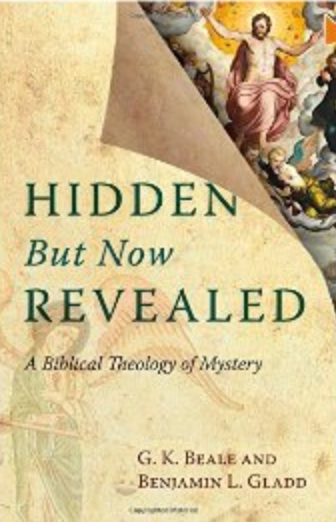
Hidden But Now Revealed by Beale and Gladd

Are you fascinated by the concept of mystery as you encounter it in Scripture? It is important, vitally important, to understanding the big picture of Scripture itself. As I see it, mystery as a concept is the nuts and bolts of how progressive revelation works. G. K. Beale and Benjamin Gladd delve deeply into this subject in this book published by IVP, subtitled aptly “A Biblical Theology Of Mystery”. Technical enough to be the scholarly touchstone on the subject, it still is profitable for pastors to grasp how the words of God progressively came to us.

This answers difficult questions like why was Jesus so misunderstood when He talked about His Kingdom or His mission. It even affects how we, for example, read the Old Testament today–how we see things they did not see then.

They define “mystery” as “the revelation of God’s partially hidden wisdom, particularly as it concerns events occurring in the ‘latter days'”. In the Introduction the authors establish the meaning of mystery and in the first chapter discuss how Daniel’s use of mystery is truly the foundation of the concept. Before coming to the New Testament they discuss the use of “mystery” in early Judiasm. That was not as helpful to me, yet I see why they included it.

Next we have a chapter each for mystery in Matthew, Romans, 1 Corinthians, Ephesians, Colossians, 2 Thessalonians, 1 Timothy, and Revelation–all the places the New Testament discusses mystery. Because of a good scriptural index, you have a lexical/commentary reference on your shelf after you read it.

It is slow to read through, at least for me, yet I doubt it will even be superseded as an authority on the use of “mystery” in the Bible. I recommend it.

I received this book free from the publisher. I was not required to write a positive review. The opinions I have expressed are my own. I am disclosing this in accordance with the Federal Trade Commission’s 16 CFR, Part 255.

IMG_2251.PNG

Children’s Ministry Leadership by Andrew Knight

Dr. Knight did research on Children’s Ministry, particularly within the Independent Baptist world. This volume gives the results of that research.

He begins with a fine chapter on the importance of reaching children as well as the struggles we face in getting it accomplished. Too often we minister with little discernible results.

He then describes the project he did within a large Independent Baptist church to assess what improvements we might glean. It seems the project faced several obstacles.

He also interviewed several pastors with large churches to gain their insights. He concludes with materials for teaching children for more lasting results. At times it almost seemed like a catechism.

If you are giving thought to children’s ministry today, you might want to check out this volume.

I received this book free from the publisher. I was not required to write a positive review. The opinions I have expressed are my own. I am disclosing this in accordance with the Federal Trade Commission’s 16 CFR, Part 255.

IMG_2211.JPG

The Inverted Spiritual Gift Of Griping (IBTR #53)

Sometimes the most trumpeted spiritual gifts are the ones that are not spiritual at all. One example is the snooping around done that leads to griping. We sit there griping about someone as if the words out of our mouths were new nuggets in our accumulating treasure in Heaven.

We read articles to see who has messed up. We ask around for the juiciest gossip of who has fallen just so we can wax eloquent on how upset we are about it. Strangely, it is not common to be really upset about what you go seeking to find. Usually, that is a source of joy. Could that be the case here? You can answer for you, but I must ask: O Lord, help me.

Sometimes we are looking for lesser things than someone falling. We scan Facebook newsfeeds with squinting eyes asking our spouse: does she have on pants? We have an in-depth conversation at church about whether so-and-so went to the movies. And on and on.

If that wasn’t bizarre enough behavior, we then talk about that person as if he or she has apostatized. We say, “Isn’t that so sad?” Now the emotion shown looks like something other than sadness. Gloating is, perhaps, a little more accurate. Then we gripe and gripe: “What is this world coming to?” “Isn’t there anyone left who loves and follows The Lord?”

There are people, I believe, who never have a week go by without engaging in this aberrant behavior. It is done with the pretense of spirituality, but how does The Lord view it?

On several occasions such people showed up to check on Jesus. Can you believe He eats with sinners? He ignores the Sabbath–He doesn’t love God. They would come finding what they were looking for and just gripe incessantly. What does Jesus think of that attitude?

Well, once John the Baptist answered the question. Matthew 3:7 says:
But when he saw many of the Pharisees and Sadducees come to his baptism, he said unto them, O generation of vipers, who hath warned you to flee from the wrath to come?

Read on–his words only got stronger!

It might be time to put this supposed spiritual gift on the shelf where it belongs much as you would poison when making a nutritious dish. We need no such spiritual griping.

Read all articles in the series here.

IMG_2207.PNG

Samuel Rutherford–A Bitesized Biography

A great Christian worth knowing, Samuel Rutherford, lived a life of devotion to Christ. Many Christians, sadly, know little of him. Personally, I knew of his famous letters and have even read some of them devotionally, but I knew little of the man. So this volume by Richard M. Hannula and published by EP did me a service by filling in my lack.

He had the heart of a pastor and the skill of a scholar. His gentle fellowship with Christ, frankly, challenged me. His grace under fire refined that devotion rather than curtailing it. He was tried and exiled from his beloved congregation. From that lonely place he wrote his letters.

The Crown in England was always a thorn for Rutherford and his fellow Presbyterians in Scotland. If that weren’t enough, his first wife and eight of his nine children died. He had some serious illnesses himself. He seemed only to draw closely to Christ in all these tragedies.

He found Independents and Baptists to be a major problem as he helped formulate the church policies of England in later life. This only serves to show that you can strongly disagree with someone on a few points and yet be moved by their love for your Savior.

Thanks Mr. Hannula for this quick, informative, and pleasant read. For what it strives to be, it could hardly be better. This is my first of the “Bitesize Biographies” series, but they are helpful. We could likely pass these on to our children to read after we have finished them.

I received this book free from the publisher. I was not required to write a positive review. The opinions I have expressed are my own. I am disclosing this in accordance with the Federal Trade Commission’s 16 CFR, Part 255.

IMG_2188.PNG

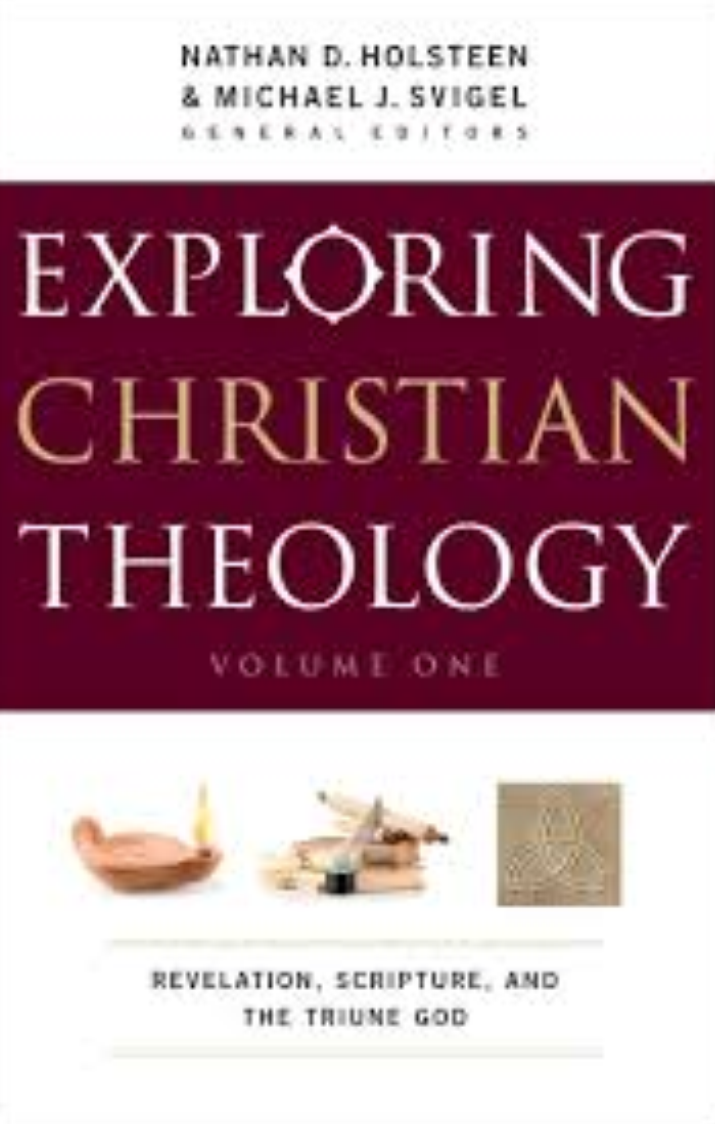
Exploring Christian Theology–a Fine New Volume

Are you intimidated by the ten-pound systematic theology volumes out there? Do you still want some real depth and genuine help? You should check out the first volume, then, of the projected three-volume series Exploring Christian Theology, edited by Nathan Holsteen and Michael Svigel, with this first volume written by the editors along with Douglas Blount and Glenn Krieder.

For some reason, I opened this volume with low expectations. I read those ten-pounders sometimes and enjoy it. Then in the first few pages I read language that I felt was trying too hard to engage modern readers. As I kept reading, however, I was won over. This volume is a treat.

The editors claim their perspective here “differs from other mini-theologies in that strives to present a broad consensus, not a condensed systematic model of one evangelical teacher or Protestant tradition.” To my mind, they succeeded. They may not have written from one narrow angle, but they stayed safely within the confines of conservative, Bible-believing parameters. Can you tell I liked it?

The first part covers Revelation, Scripture, and Truth. Their explanation of inspiration and inerrancy was choice. I might squabble over a detail here or there, but they provoked thought and explained the touchiest issues of our day well.

The next section on the Triune God was simply superb. The section on the kenosis of Christ and the debates of the Early Church on Christology was one of the best I have ever read. It rivals the ten-pound volumes!

Each section ends with quotes from all time periods of Christianity on the subject. You could see, for example, that full inspiration of Scripture has been the historic position. Newer positions are clearly deviations.

Get this book. Better yet, read it carefully. I highly recommend it.

I received this book free from the publisher. I was not required to write a positive review. The opinions I have expressed are my own. I am disclosing this in accordance with the Federal Trade Commission’s 16 CFR, Part 255.

IMG_2172-1.PNG

Straining At Gnats and Swallowing Camels (IBTR #52)

There are things that go on in religion as if perfectly normal, rational, and spiritual that are, to Christ’s eyes, the most ludicrous of actions. Whether it be the Pharisees of Jesus’s day, or the super spiritual ones of Independent Baptists or any current group of Christians today, the perverse lunacy is the same.

When Jesus preached His most scathing recorded sermon, to whom was it addressed? The Pharisees, or the spiritual forebears of those who trouble us today. That sermon in Matthew 23 is scorching. Jesus spoke so lovingly to adulterers and thieves, but blasted those who claimed a spiritual authority that they used to manipulate and abuse.

In Matthew 23:23 Jesus laid bare the unacceptable dichotomy that had developed among the Pharisees:

Woe unto you, scribes and Pharisees, hypocrites! for ye pay tithe of mint and anise and cummin, and have omitted the weightier matters of the law, judgment, mercy, and faith: these ought ye to have done, and not to leave the other undone.

Well, you could not accuse our Savior of mincing words! They had inverted priorities and missed by miles what was really important to the God they professed to love. The excelled where it was meaningless and grossly failed where it really mattered. That is not the life I want to live, how about you?

Then with an almost comic flair our Lord drew an unforgettable word picture. If you really can get the image in your mind, you will never forget it. In Matthew 23:24 He said:

Ye blind guides, which strain at a gnat, and swallow a camel.

If the thought of a blind guide wasn’t shocking enough (it is odd, you know, when one blind feels competent to lead you over the rough terrain of life), then He gave us a scene of one easily swallowing a camel but choking on a gnat! Stop and visualize that….it is quite amusing and, of course, ludicrous.

Camels are bigger than you and swallowing is out of the question for sane people. At the same time, no one likes a gnat, but you will survive swallowing them with relative ease, unless, again you are not sane. We have never actually seen this attempted. I guess we are all at least that intelligent, but in spiritual matters there are things Christ finds just as ludicrous.

What does our Lord think when He sees us hammering some poor believer over some little standard while His proscribed call for love is completely absent? Hey look, they have camels and gnats mixed up again!

It is just as crazy in us as that mental picture Jesus drew. I say let’s give up straining at gnats and swallowing camels.

Find all articles in the series here.

IMG_2166-0.PNG