Fake It Till You Make It (IBTR #41)

Have you ever been given this advice–fake it till you make it? Or have the words been unspoken, though the pressure just as real? On some level this problem runs rampant throughout Christianty, but my up close and personal experience, including my own forays into it, have been in the Independent Baptist world.

You do know what I am talking about, don’t you? This necessity that I appear to have it ALL together? To be human must not be admitted. The admission that my sanctification is not complete must never happen.

We have been led to believe that all good Christians have continually awesome Bible reading, an incredible prayer life, no personal struggles with any particular sin, and unbroken victory and joy. Then we are asked to believe that all the Christians around us (at least in the key group) are those type of good Christians. Finally we are told that for God to be happy with us we must be in that group. Since the first evidence that this is not true in us will mean our expulsion from the group, we figure we simply must fake it and hope we can spiritually catch up later.

The disaster of this approach is shown in the severity of the consequence–you don’t make it. You grow ever more the mere husk of a vibrant Christian. And ever more the fake! Appearances require all we have and there is nothing left for real growth.

The problem is that this approach is the very anthesis of Christianity. You have never had, and never will have, what it takes to make yourself a trophy Christian. If you could please God and man, why did you need Jesus the Savior in the first place? Your connection to real Christianity happened the very moment you realized you could never make it. Faking it now is a denial of Christ Himself. He never liked fake. It was when you were real about yourself that He got involved.

So you must be real. You must feel free to admit that what you want to be is not quite what you are. God’s workings on you are still very much in progress. Here is another secret. If you are real, Christ is there to help you go forward. You will actually get closer to what you want to be. Faking would never bring that to pass.

One more warning–don’t let the fakes make a fake out of you. They are not what they say. The feelings of inferiority that they pour on you are a farce. They hold up an insincere benchmark. And if you could ever get exactly what they have, you would have absolutely nothing. I started out there and so see no reason to fake my way to the same place. So the real advice is–cast yourself on Christ and make it when you make it. Leave the faking to the fakes.

Find all articles in the series here.

IMG_2056.PNG

Illustrated Life of Paul by Charles Quarles

Outside of Christ, who’s life is most critical in the big picture of the New Testament? I imagine we would all answer the Apostle Paul. In that case, we will need a composite description of his life. For that need enter this fine volume by Mr. Quarles and published by B & H Pubplishing.

There are several famous, yet thick scholarly volumes on the life of Paul, such as those by Conybeare and Howson, Farrar, Bruce, and Pohill, but perhaps this accessible volume will better serve most Bible students. It will definitely help to connect the Book of Acts with the Epistles of Paul in a most helpful way.

The work is biographical and chronological and pleasantly fits in each Epistle to events of Paul’s life. That really brings the text alive! We know something of Paul’s hardships but seeing what he faced where it happened is even better. You will read what scourging for Jewish people was like as well as Roman flogging. His details on life in a Roman prison were more horrifying than I ever thought.

The first chapters on Paul’s earlier days filled in many blanks for me. Explaining the routes, either sea or land, that Paul traveled made sense of many biblical statements. All in all, there is much helpful information and Mr. Quarles writes well.

The only suggestion I would offer is a comprehensive chart relating his
life and the Epistles.

The visual aspect of the book is icing on the cake. The pictures are outstanding as are the maps that may look familiar if you have the well-done Holman Atlas of the Bible. This is a valuable resource!

I received this book free from the publisher. I was not required to write a positive review. The opinions I have expressed are my own. I am disclosing this in accordance with the Federal Trade Commission’s 16 CFR, Part 255.

IMG_2055.PNG

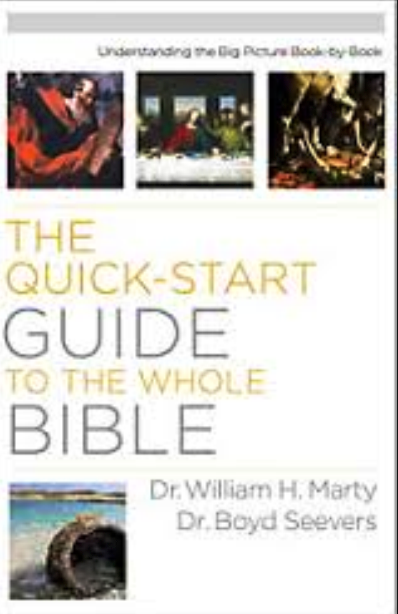
The Quick-Start Guide To The Whole Bible by Marty and Seevers

Have you ever looked for a book to give newer Christians, or those who are struggling with understanding in Bible reading, help with grasping the Bible? You might want to check out this volume by Drs. William H. Boyd and Boyd Seevers and published by Bethany House.

Their stated aim is illuminating the big picture in each of the 66 books of the Bible. Most of the books of the Bible get 3-6 pages to help you get oriented before you begin reading. Key books, like the Gospels, get a little extra coverage. The volume covers setting, summary, and significance for each book. Setting and summary are helpful while significance by necessity is selective.

Space constraints mean they are selective in what they share. Some aspect you feel should be discussed might be missing, but the most critical ones are mentioned usually.

I do not feel this is a volume pastors or experienced Bible students will consult as much as some others, but for its real audience–beginners in Bible study–it is quite valuable. As a pastor, I would gladly recommend this book to those who come for help in getting more out of personal Bible reading.

I received this book free from the publisher. I was not required to write a positive review. The opinions I have expressed are my own. I am disclosing this in accordance with the Federal Trade Commission’s 16 CFR, Part 255.

IMG_2049.PNG

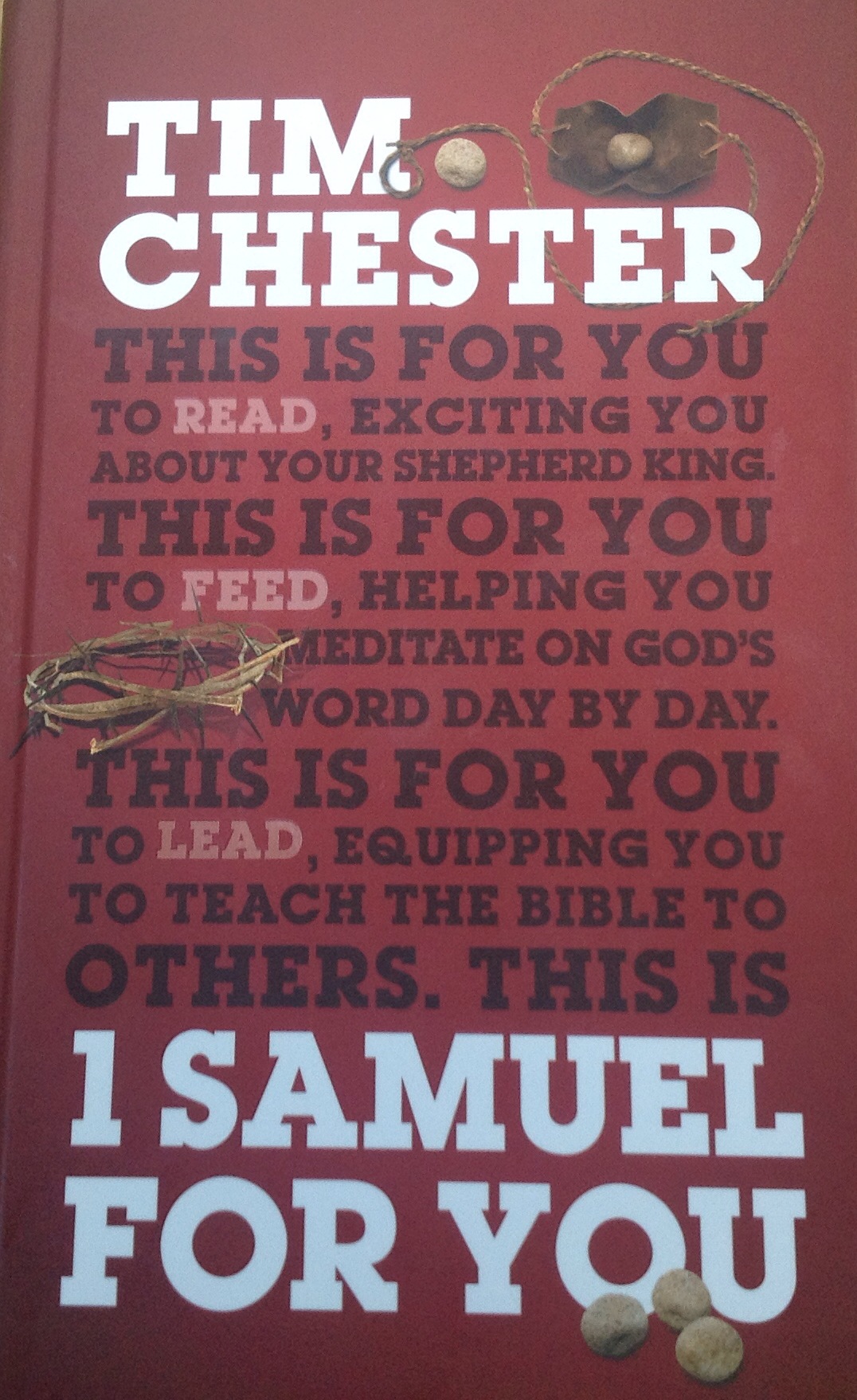
1 Samuel For You By Tim Chester (God’s Word For You Series)

Can 221 pages give us real help on a book the size of 1 Samuel? You better believe it! This volume by Tim Chester packs a punch that will aid the Bible student or the pastor preparing messages.

After a brief introduction, he dives into the familiar, but divine drama. He insists we not see these stories as told “to illustrate ordinary life”, but the bigger picture of God at work among His people.

For example, he describes Hannah’s story as Israel’s story. He provokes thinking by analyzing Hannah’s song as not at all what you would expect from a mother rejoicing over baby. Watch how deftly he shows Samuel as the coming prophet and compares it to the rarity of God’s Word in that day with it now coming.

His tying in the transition from the time of the Judges to the the developing Kingdom was particularly effective. He makes sense of Saul’s life from beginning to end. The importance of David and his difficult rise in spite of Saul is given due weight.

Some parts are brilliant. His comparison of Saul’s early and later life and how he became a parody of himself (page 139) is incredible. His description of Saul’s encounter with a medium was equally helpful. There are many other nuggets along the way.

Personally, I think he even surpassed his volume on Titus. Perhaps the thrilling nature of 1 Samuel was part of it, but this is a truly impressive work. The God’s Word For You series maintains its high standard here as well. You will want this volume!

I received this book free from the publisher. I was not required to write a positive review. The opinions I have expressed are my own. I am disclosing this in accordance with the Federal Trade Commission’s 16 CFR, Part 255.

IMG_2048.JPG

Spiritual Gestapos (IBTR #40)

Could there be a more terrifying modern-day nemesis than the Gestapo? Who hasn’t seen a movie or read a book on Nazi Germany? The tension ratchets up every time you see the long trench coat on the guy spying nearby. When the main character notices, you can see the panic in his eyes. To fall into the hands of the Gestapo is to have your life in jeopardy. There will be no acceptable explanations, no concern for the truth, just the deadly consequences of preconceived guilt.

Carry that mental image, if you will, to some Christian circles today. Although you may find it in many places, I have seen it rear its ugly head among Independent Baptists on several occasions.

There are those who watch. They also report. Then they become the enforcers who will see that consequences come. They scrutinize Facebook newsfeeds and pictures, they listen in on conversations or internet reports, they keep those eyes open. Then, in back corners of churches, or around the table at a preacher’s fellowship, or in emails, they report.

Perhaps you think the Gestapo analogy a little strong, or that childish tattle telling is a better description. Still, ministries have been ruined, individuals slandered, and division prevailed.

Here is where the analogy is strongest:

1. The Gestapo was blindly supportive of one group.

What Hiltler did was never analyzed by the Gestapo. Whether it was right or wrong was of no consequence. Their mantra was only supreme loyalty to Hitler and his Nazism. They blew off moral dilemmas like a child blows petals off a flower. How many today blindly follow their clique, even if it takes them over the cliff!

2. The Gestapo employed strong-arm measures.

The ends justified the means and so the means became brutal. In our day character assassination, getting a missionary to have support dropped, or sabotaging someone getting a new ministry are all fair game.

3. The Gestapo scared good soldiers.

Many Germans were just soldiers serving their country in the trenches of war. They were just trying to do the job they had been given. These soldiers, the real fighters, were scared of the Gestapo too. The Gestapo never helped win a battle, but sure kept their eyes on those who did. They punished some of the soldiers and took them out of the fight too. I submit that some real soldiers in the cause of Christ have been so treated too.

4. Gestapo used those who would play both sides.

Some did not agree with the Gestapo but would cooperate and report for them. To save their own hide they would throw others to the wolves. Today some have some of their own issues that the Gestapo would not agree with, but they are so good at reporting others they are overlooked. The saddest part was that this saved no one, but only empowered the Gestapo more for their dastardly work. To report one person for some supposed infraction to cover one of your own is treachery. We will never be rid of the Gestapo with those tactics!

Here Is Where The Analogy Ends

Spiritual Gestapos do not have their power unless we give it to them. When we no longer fear their threats, or care what they say, their weapons will turn to smoke and waft away. When we ignore them, they become surprisingly small. It is time spiritual Gestapos have the tables turned on them, and you and I should take control away from them. Let’s just say the Allies have arrived!

Find all articles in the series here.

IMG_2045.PNG

Hopeless Inconsistencies (IBTR #39)

Sometimes when we institutionalize rules that are not actually mentioned in the Bible, nor can be honestly inferred from its pages, we can fall into the most hopeless inconsistencies. Likely many Christian groups have their own set, but as an Independent Baptist, I can share several that I have seen in that group. None on the list apply to all, and we would hope they were only on the fringe. Some will ridicule some things on this list and hold vehemently to others.

While I realize the list might make us laugh, and that is one of the ways error can be broken down, it could really be sad if you thought about it. By the way, I am NOT criticizing you holding a position on any of these issues, but that you and I DO be careful to be consistent if you are holding it strongly enough to make an issue out of it with others.

In any event, here goes:

1. It is wrong to watch a movie at the theater but the same movie can be watched on a disc from Redbox.
2. It is wrong to wear a fireman costume on Halloween and go trick-or-treating but it may be worn in the church basement if called a harvest party.
3. It is wrong to listen to Christian music containing drums but you may listen to other music with drums.
4. It is wrong to go into a restaurant that sells alcohol but you may go to a gas station that does.
5. It is wrong for a woman to wear pants unless she cuts them off at the knees, shows her calves, and calls them culottes.
6. It is wrong for a man to wear shorts at the mall, but he may wear them at church athletic events.
7. It is wrong for a woman to wear man’s apparel unless it is shirts, socks, jackets, etc.
8. It is wrong to listen to contemporary Christian music but you may listen to Southern gospel.
9. It is wrong to have a non-independent Baptist in your church to minister unless they are part of a really good singing group.
10. It is wrong to have a guest preacher that some have labeled “liberal” unless approved by your favorite leader.
11. It is wrong to have a divorced man teach in your church, but you may have a divorced woman come and teach on Bible versions.
12. It is wrong to…

Would you who have seen such things in our Independent Baptist world offer your choice for what should be number 12 in the comment section below? I am asking my readers to finish this article for me!
While we laugh, however, let’s ask the Lord to deliver us from hopeless inconsistencies!

Find all articles in the series here.
20140804-235054-85854989.jpg

Win Them…To What? (IBTR #38)

Have you heard someone talk about how dearly they love souls and discuss their efforts to win folks? Well, that would have to be a good thing. Have you ever, though, thought that something was off? That the action, though intense, did not match a heart of love for the souls of others? It is possible in every corner of the Christian world that people may not be loved for themselves, or even really for Christ. It is within the Independent Baptist world, where some of the greatest soulwinning efforts have taken place, that I want to ask: win them…to what?

While it is impossible to know someone’s heart, it is at least possible to discuss what makes someone feel used. If the Gospel is a gift, and it certainly is, then being used is the most unnatural thing to ever show up if we share it with someone else.

Then why do we compete? Why, for example, as we have seen at times, would one bus route compete against another? Why would churches compete and the numbers reached get written up? Why would a soulwinner and his “string of fish” get publicized? And worst of all, why would the pastor with the most baptisms, or the biggest day, get fame in our papers?

Some have argued that these contests have actually produced great results. But a deeper question demands to be asked: if fame on whatever level, from national down to church level, is a naturally intoxicating result, then what is the real value of a soul in our hearts?

You say, well as long as they get saved what difference does it make. If they ever get to thinking that was your goal, and that they were a mere notch on your gun to bellow about on the street, it might make a great deal of difference. Their walk with God might be damaged along with all its residual blessings.

Sometimes it gets worse. Pastors can lose sight of the goal, as well as mar the work of the ministry. If that glorious calling to the ministry degenerates into building a personal kingdom, then souls are little more than pawns in a twisted game.

Some of the most hurt people, and a little put off with Christianity at that, come from the ranks of those who one day woke up and felt they were being used. Win them–seeing a soul saved is truly one of the greatest things in the world. Just be careful and ask…win them…to what?

Find all articles in the series here.
20140722-001805-1085228.jpg

Academic Inbreeding (IBTR #37)

academic inbreeding


Who can you read? Who can you learn from?

Have you ever had someone tell you who you may not read or learn from? Several groups within Christianity might have some strong suggestions, but as being an Independent Baptist myself, I have seen this attitude up close and personal. Some, as an imagined agent akin to the KGB, would like to scour your library for you.

Some say you can’t read from this group or that. For example, I have heard some say you can’t read after a Calvinist. So a John Piper would be out of the question according to them. Although I am not a Calvinist myself, I have been incredibly enriched by several Calvinistic writings. Some go even farther and say you should only read after Baptists. Others narrow it even farther to only those they fully agree with among Baptists. I once read a man brag that he only had books by John R. Rice and Jack Hyles in his library. Are these constraints valid?

First of all, it reminds me of a joke we used to tell in my college days at the University of Tennessee. Alabama was our most hated rival and we used to say “Did you hear about the fire in Alabama’s library last night? …yes, both books were lost.” Such pressure to not have unapproved authors makes for rather small libraries.

It is not the size of our libraries, however, that is the problem. Rather it is the breadth of our knowledge. Back in those same college days I heard several PhD students talk about where they would like to teach. They told me that they could not get their degree where they actually wanted to teach. When I asked why they explained that that was considered academic inbreeding. Bringing in professors from various business schools gave a greater breadth and made for a better all-around business school. You can see the logic.

You don’t want ideas to always come from the same small pool. Over time the good will be warped, the style be a caricature, and everyone will be a bizarre clone of each other. In such settings the abnormal becomes indistinguishable from the normal, and finally becomes the norm. That may describe the stranger anomalies in our Independent Baptist world better than anything else.

Because reading opens up our minds to clearer thinking, it often leads to those abnormalities finally being seen as what they are and changes take place. Those still caught up in it see the changes as dangerous and ungodly and so criticize. This is how book banning is born. Isn’t it repulsive when you see Muslims, Communists, or Nazis practice it? I say it is just as bad when we do it.

Every book must be weighed by the Bible. No thinking reader ever imagines that every line must be accepted as true, but it must be tested, sifted, and refined, the good extracted while the bad is tossed on the trash heap.

Academic inbreeding has as bad of deformed children as any other inbreeding, only the stakes are spiritual.

Find all articles in the series here.

Selfies (IBTR #36)


Selfies

They are all the rage these days–selfies. You wonder if they are a passing fad or a new, permanent addition to our lives since social media is here to stay. Perhaps they fall somewhere between harmless and a little vain. I don’t care personally for a solo selfie, but it is not really for a spiritual reason. I just don’t see myself as very photogenic. (I want my wife or kids in mine to bring in some level of pictorial quality!)  If we realized how people see these selfies on our Facebook news feed and think things like “He is putting on a little weight”, or “She is looking older”, etc., we would probably just dispense with them. Still, in the big picture of life, it is not that big a deal either way. But may I share where selfies are repulsive to the core?

In the pulpit. There they are verbal selfies rather than visual, though the picture is quite vivid. They, too, have been coming at us well before social media came along. I realize these selfies can be found in pulpits all around Christianity, but my personal experience in the Independent Baptist world has allowed me to witness an excessive number of them. At times, it becomes vanity on steroids.

Have you seen one of these pulpit selfies? You know, where we hear endless stories about the preacher’s life? Not regular stories where the preacher just saw something in his day-to-day living that well illustrated a biblical point, but a story where he is the hero. Such stories grow the legend, expand the franchise, and multiply the groupies. Instead of drawing the listener to Christ and His Word, such selfies tend to create a false dichotomy. It creates two categories–the super-spiritual giants and the regular Christians– where the speaker is in the first category and you are in the second. Besides the inherent insult in it, these categories don’t actually even exist!

This is not to vilify every story a preacher might tell from his life. In truth, there are many stories that are neutral–the preacher just happened to be there, or perhaps, it was something funny his children said or did. Then the stories that he is more directly involved in, as life goes,  are pretty much 50-50 on being the hero or the goat. Sometimes stories where we were more the goat put us with our listeners, where we should be, and the rawness really connects and teaches. The stories when the preacher made a good choice should be sparse at best. Why? We are not the hero, we are not the one who changes lives, our task is not mere inspiration. No, in actuality, it is the very antithesis of what preaching is.

Preaching is meant to proclaim Someone. His stories are heroic, His words true and life changing. The mantra of the earliest preachers was “we preach Christ crucified…”(1 Cor. 1:23). Forgive the prooftexting, but that was all that was known in the heady days of the early church (Acts 3:20, 5:42, 8:5, 8:12, 9:20, 10:36, 17:3, and 28:31). Could the ministry have ever been expressed better than in Philippians 2:16, “Holding forth the word of life; that I may rejoice in the day of Christ, that I have not run in vain, neither laboured in vain”?

Let’s look at those selfies a little more closely. Preacher, so you are the greatest soul winner we have ever known? Jesus saved them all! So you are the mightiest prayer warrior around, praying whole nights? Jesus prayed and fasted 40 days, later prayed till He sweat great drops of blood, and went from there to the cross! So you have suffered like no one else in the cause of Christ? Jesus suffered horrendously, even death, Hell, and the grave! So you have the best grasp of God’s Word? Jesus speaks and it is the Word of God! So you have had the most heroic and thrilling experiences? Jesus battled death and won, went into the grave and came back out on His Own, and that was after previously creating all that is! So you love me more than anyone loves me? Jesus loved me, pursued me, saved me, redeemed me, forgave me, rescued me, and keeps me day by day and forever! So I can count on you more than anyone else? Jesus promised to never leave or forsake me, even after you are dead and gone! Selfies in the pulpit? You have got to be kidding!

So when in the pulpit, just before you send out one of those irretrievable selfies, stop before you hit “post”. In preaching, keep selfies where they belong–inside yourself!

Find all articles in the series here.


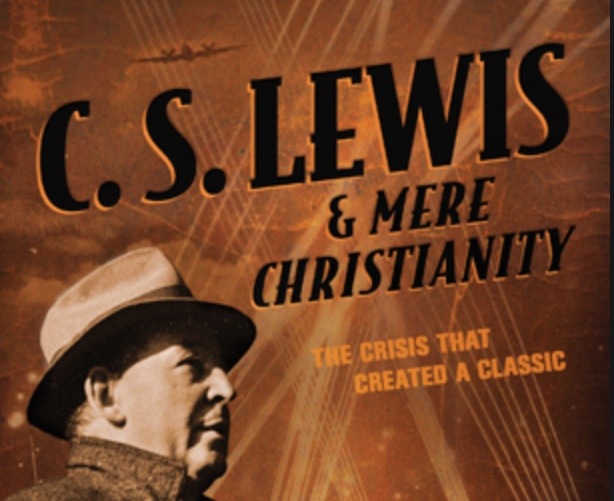
C. S. Lewis & Mere Christianity: The Crisis That Created A Classic by Paul McCusker

Have you, as I have, been blessed by the classic Mere Christianity? Probably the greatest apologetic book I know of, and certainly grist for the mill for your deepest thoughts, the story of the series of events that precipitated this volume is fascinating.

Can you imagine what this book proposal must have looked like laying on the publisher’s desk? A book not about the whole of C. S. Lewis’s life, but just the the particular years when this classic was birthed, as well as the horrors of war in the blitz on London. The background of the BBC is heavily worked into the story too. Believe it or not, this improbable volume works.

In short, Lewis gave several sets of talks on the BBC during the worst of the war in England that captured the attention of listeners at a time when religious broadcasting as a whole fell on bad times. In no time at all, Lewis had more correspondence than he could handle. Here were writings (broadcasts) that went beyond the trivial or any of the hokum that was simply insufficient in the carnage of war. It resonated in a time of great need.

Beyond the confluence of factors that made Mere Christianity so influential, this volume works on the level of biography as well. There is the war, its agonies, and impact on lives that is well described. Then there is C.S. Lewis the man: his industrious output, his tenderness, his family issues, and his humility. You like him better, even if, as me, he has a few beliefs you could not follow.

This book is a pleasant, worthwhile read!

em>I received this book free from the publisher. I was not required to write a positive review. The opinions I have expressed are my own. I am disclosing this in accordance with the Federal Trade Commission’s 16 CFR, Part 255.

20140705-194824-71304560.jpg