Fail by J. R. Briggs (Books on the Ministry #14)

Do you have any idea how to handle failure in the ministry? Do you have a “theology of failure”? Or a real biblical approach to combat feelings of failure? Are you aware that most every one in ministry struggles with feelings of failure? The air needs cleared, so enter this fine volume by Mr. Briggs and published by IVP.

In light of the mass discouragement of pastors in the wreckage of success-driven ministry, he asks, “Is this what Jesus had in mind for pastors–a life absent of joy and peace, and with omnipresent stress and emotional hardship?”

In some cases we are set up to fail and travail over it. Conferences often parade “successful” pastors before us that serve to show how we haven’t arrived rather than offering real encouragement. We are always looking for the next great program as the messiah for our ministries.

Mr. Briggs wrote from brokenness. On the track to success, it all blew up in his face. In his own painful, ugly journey he finally reached the place where he wanted to help us in ours. He began the improbable Epic Fail Pastors Conference, and strangely enough, it was wildly successful. From those gatherings of many other broken pastors, he learned even more and shares it with us. We must learn, he says, to preach the same grace to ourselves that we preach to others.

We pastors live with a nagging fear of failure. Though it is often a cultural deviation, we all know it is true. Sometimes this fuels a desire for a larger ministry that only stunts our current one. He quotes another and reminds us that “true freedom in Christ is when we have nothing to hide, nothing to lose, and nothing to prove.” Wow!

There are many other wonderful parts of this book. Tracing the grieving process through pastoral failure was greatly enlightening. Explaining how ministry is a process and not a product was spot on. His solutions for going past failure end the book on a hopeful note.

There were times I rolled my eyes on what he said, allowed, or did, but overall this is a keeper. Every pastor should make it a must-have in his library.

I received this book free from the publisher. I was not required to write a positive review. The opinions I have expressed are my own. I am disclosing this in accordance with the Federal Trade Commission’s 16 CFR, Part 255.

Find other articles in the series here.

20140703-104044-38444999.jpg

Crucifying Our Straw Men (IBTR # 35)

We line them up like mannequins in a store window when it suits our purposes, and then promptly turn on them. What do I speak of? That old standby in arguments gone awry–straw men. They show up wherever arguments are made, they find prolific life in Christian circles, and we in the Independent Baptist world have dolled up several in their Sunday best.

One of the most horrid that retains life after many years when the shirt is still but stuffed with straw is the tale that John MacArthur believes the Blood of Christ is of no effect. I can’t tell you how many times I have had it quoted as fact, though I never once was provided with documentation. I did come across a few dubious articles where a few obscure quotes went a long way, but no proof. Then I stumbled over an article written by MacArthur himself where he reiterated his belief on the subject. After reading that response you realize he was crucified by some before the evidence was even considered.

The point is not the value of MacArthur’s teaching, or the lack thereof (you can make your own opinion there). No, the issue is that some could concoct such a story and get such great numbers of people to believe it and requote it. It is sad that such a farce could have him labeled a heretic and so many not even care enough to see if it were true. I actually know of several such straw man arguments that have been widely accepted.

Why do some offer these type of arguments? Some may be thoughtlessly repeating what they have heard. But if you go back to the originators of such arguments, you must figure deeper motives; such as:

1. Inability to handle the legitimate argument.

When you have no good answer for your opponent’s good answer, and admitting defeat will never be a possibility for you, then coming up with some ugly charge to divert attention from your weak arguments is always a temptation.

2. A desire to tear down another voice so that only yours remains.

If a radio teacher like MacArthur is enjoyed by some you preach to, could it be that tearing him down means you can have all the love to yourself? I fear this is often the issue.

We can’t stop others from offering straw men arguments, but we are in control of our responses.

Remember this about straw man arguments:

1. They are insulting.

As one article said, “To be successful, a straw man argument requires that the audience be ignorant or uninformed of the original argument.” So they only work if we are ignorant! We, then, should be more thoughtful about accepting arguments without checking the facts. We have all done it before, but don’t you feel embarrassed when you figure it out?

2. They can not spread without our help.

Were we to be more careful, these type of arguments would not thrive. In fact, it would throw the embarrassment back where it belongs–on the backs of the perpetrators of straw man arguments.

Let’s stop crucifying those blindsided in a straw man attack. Instead let’s stop being gullible and value accuracy as a matter of integrity. Were we to do so, the real issues could be profitably discussed.

Find all articles in the series here.

20140701-005438-3278790.jpg

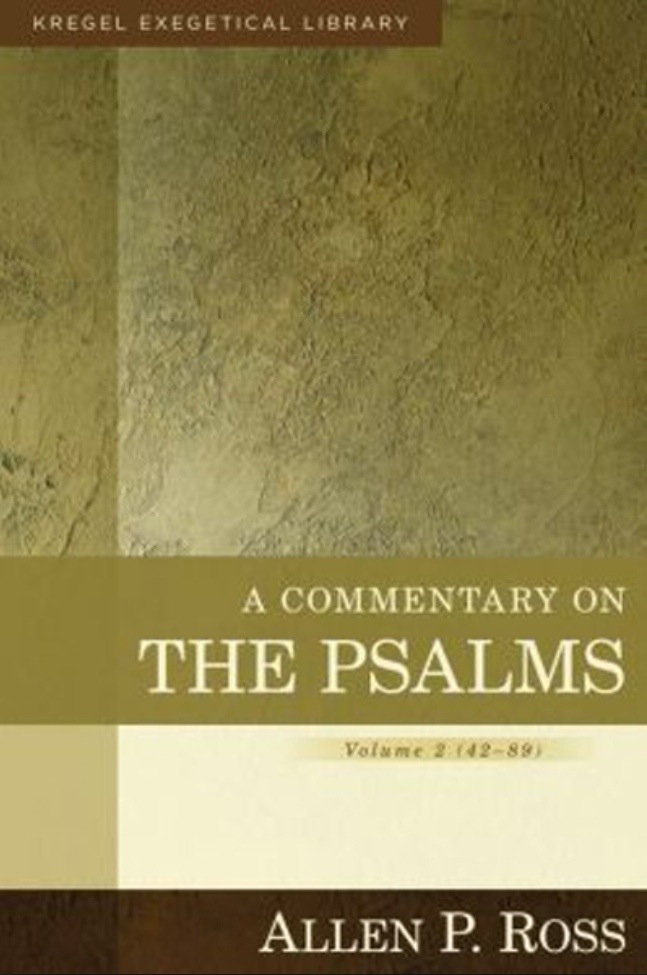
Kregel Exegetical Commentary on the Psalms, Vol. 2, by Allen Ross

Continuing the excellence we found in volume 1, this volume covers Psalms 42-89. Mr. Ross is a steady hand in the Psalms and provides a treasure trove for pastors and Bible students.

The format is ideal. First, you have the text with choice exegetical notes. Then you have a section entitled “Composition and Context.” This is especially helpful in the Psalms, and I notice Mr. Ross takes time to discuss the biblical background as well as how Christians used the Psalms in the past. He does a great job relating the New Testament as well.

He provides an exegetical analysis, which is really just a detailed outline, for those who think in terms of outlines. Finally, he gives a “Commentary In Expository Form” that is outstanding and contains copious footnotes. It is well done in a way that an expositor would have to love. He will bring out things you did not know.

This is a quality piece of work and we wish him well in delivering volume 3. I know I really want all the Psalms covered by this scholar who writes with a distinct warmth. This volume along with the few other released volumes bodes well for the Kregel Exegetical Commentary series as well.

I received this book free from the publisher. I was not required to write a positive review. The opinions I have expressed are my own. I am disclosing this in accordance with the Federal Trade Commission’s 16 CFR, Part 255.

Related Post:
Psalms Volume 1

20140626-113300-41580320.jpg

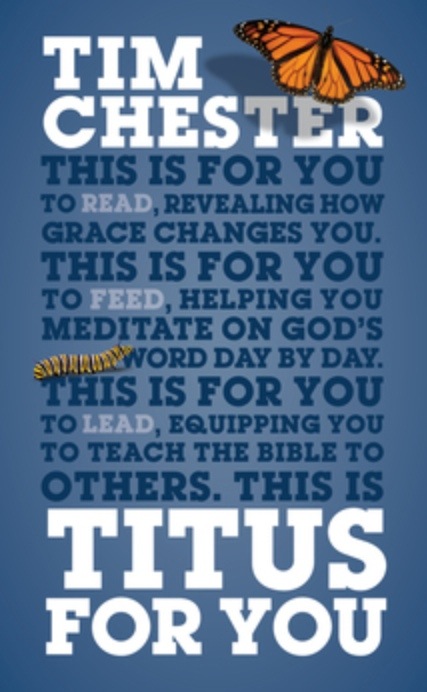
Titus For You by Tim Chester (God’s Word For You Series)

Do you need a vibrant guide to Titus in your studies? How about one that could actually span from the beginning Bible student to the seasoned pastor and offer real help? Look no further than Titus For You by Tim Chester.

Mr. Chester rescues this volume in the Pastorals from the bad rap of institutional rigidity. He challenges us not to write it off as boring, or inferior to the Book of Acts. Beyond his initial argument, he makes his best case by the lively exposition he provides. Nothing boring there!

In places he is simply outstanding. In discussing 1:5-9 he exposes the two great dangers for the pastor–Over-pastoring with its excessive control and under-pastoring with its denial of the core role of shepherding. Look up what he says drives us in either case. Spot on.

On 1:10-12 he shows how easily being godly can morph into being legalistic. Later he says, “And legalism is not a substitute fuel. Legalism does not work because it cannot work.” In the next several pages he dismantles legalism piece by piece.

His sections on the Christian home and pastoral qualifications are balanced and helpful. The church discipline passage (3:10-11) is well explained as corresponding to Matt. 18:15-17 as well.

It is a winner. This is my second volume in this series to review and I am impressed with its quality. Kind of special too that an upstart publishing group, The Good Book Company, could come out among the big boys with such a worthwhile series. I look forward to coming titles in the series!

I received this book free from the publisher. I was not required to write a positive review. The opinions I have expressed are my own. I am disclosing this in accordance with the Federal Trade Commission’s 16 CFR, Part 255.

Related review:
Romans 1-7 by Timothy Keller

20140625-123750-45470338.jpg

Cannibalization In The Independent Baptist World (IBTR #34)

If it weren’t hard enough to reach people with the Gospel message in our day, we often do the most exasperating things to complicate it. While I suppose every Christian group could conceivably falter here, I must relate what I have seen among Independent Baptists time and again. Worse than zeal without knowledge, it is zeal without understanding or integrity. We see it in both churches and colleges. Before I define or analyze, please allow me to simply describe cases of it.

Perhaps you have seen the interaction between two Independent Baptist churches in the same area. It is not always a mutual admiration society! In some cases, one church will actively attempt to lure members away from the other. Sometimes more energy is expended here than going after unchurched folks. Trumped up charges of the other church being more liberal is often thrown out, though differences in a few standards is the only noticeable difference. If you overheard either of them presenting the Gospel, it would really sound the same. Many feel this is perfectly legitimate.

Sometimes the same type of shenanigans appear in soliciting students to Bible college. In some cases it is not actually the college staff doing it, but some rouge supporters. Of course colleges must pursue young folks to come, but the issue is when we do it at the expense of other similar colleges. I have seen some colleges at its meetings allow other colleges to have a booth set up, and that is commendable, but that is not always the case.

Again, there are cases where the school is labeled so liberal that dishonesty is in play. It is ridiculous to paint something so similar as something so different. Every Bible college in the Independent Baptist world has more in common with each other than any other school outside of it. Majors or classes offered are a fair point of discussion, but to attack on minor issues is again a smokescreen for petty marketing. I once heard of a college staff member tell a pastor that he should come to their conference instead of another because it was the real deal. The other one wasn’t according to the staff member. In these type cases, urban legends of faults, like they aren’t really for soulwinning, etc., are passed around like bread. Sadly, it is rather moldy.

We so often lose sight of the big picture. What is our goal? Is it not to carry out the Great Commission and disciple believers and form local churches? My question is simple–are we pursuing the goal when we proselytize others who believe as we do? I think we all know the answer to that question.

It goes back to a concept I heard in business school years ago–the cannibalization of sales. It is bad business to come up with a product that steals from a current product in order to be successful. That is why the Coca-cola Company after creating the product Coca-Cola would not create and market another similar product, though they would create and market Diet Coke or Sprite. You might create Mello Yellow to compete with Mountain Dew, but after making Sprite you wouldn’t create and market another lemon-lime drink. See how it works?

We are giving the Gospel. You could argue that, in crude terms, we are marketing the Independent Baptist brand. In bottom-line language, we add nothing when we take from other Independent Baptist churches or schools. The only way that could be so were if our church or school were all that is important. I pray we are not so jaded as to think that! It is the Name of Jesus that is the big picture; there are so many that do not know Him that it is trivial at best, and criminal at worst, to give our lives to just repositioning what He already has. May God help us get on the right track and put a stop to this cannibalization within our ranks.

Find all articles in the series here.

20140623-222455-80695141.jpg

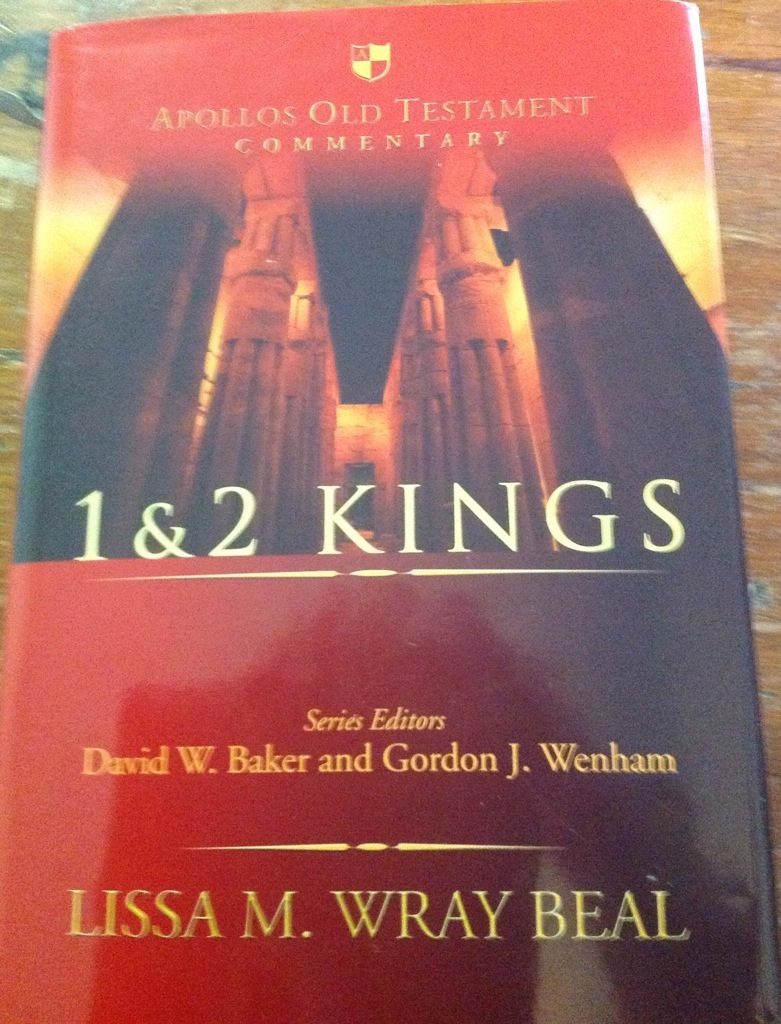
1 & 2 Kings– Apollos Old Testament Commentary

Do you need a quality exegetical commentary on an area of Scripture that is, comparatively, poorly served? You might, then, want to check out this newest title in the Apollos Old Testament Commentary series. Though this is my first title from the series, this volume on Kings by Lissa Wray Beal shows this series one to consider. On a technical level, it has some comparison to the World Biblical Commentary series in my view.

The commentary was actually more conservative than I expected. There wasn’t endless discussions about sources. The commentary focused on the text we have. The introduction was enlightening in many ways. I personally could not agree with the author’s chronological conclusions. Thiele is a truer guide in that area in my judgment.

Since I have especially studied the lives of Elijah and Elisha, I really focused on that area in this volume. The comments were helpful and at times spiritually insightful. The exegetical judgments were reasonable and the conclusions often sound. Of course there are points where I would disagree. For example, I don’t see the evidence in stating that the account of Elisha is compiled from all over his ministry and put in II Kings 4 rather than being true chronologically.

Pastors will find the “Comments” section superior to the “Form and Structure” one. Every verse is discussed, which is essential in a good exegetical commentary. As a pastor myself, if forced to have only two exegetical commentaries on Kings, I would choose the NAC volume by Paul House and this fine commentary. This commentary is worthy of your consideration.

I received this book free from the publisher. I was not required to write a positive review. The opinions I have expressed are my own. I am disclosing this in accordance with the Federal Trade Commission’s 16 CFR, Part 255.

20140617-150611-54371572.jpg

Would Jesus Like It? (IBTR #32)


jesus and woman at wellIt is the ultimate question. Do we ever ask it? The things we emphasize, the way we act, the things that have come to define us– here we should ask it. To Independent Baptists or any group within Christianity it is the necessary, but overlooked, question. Would Jesus like it?

His name is thrown around carelessly, even among contradictory opinions. We are not at the loss here that some feel because He came and lived among us and we have four Gospel records telling us how He acted in a multitude of situations. Great caution is needed. Our dogmatism may be suspect in light of what Jesus has actually said and done. The most religious of that day, the Pharisees, often found themselves on the wrong side of the issue when the dust settled and God the Son went on record. Are many of us in our actions doing the same thing? Does our spirituality suffer the same fate when subjected to the only real test–would Jesus like it?

Let’s put the question to the areas where it is seldom asked:

1. Would Jesus Like Our Emphasis On Standards And Preferences?
Was it ever His emphasis? Read the Gospels again and in the area of personal sin He greatly favored discussing sins of the spirit. Pride, hatred, a lack of love– these ever were discussed by Him. That is not to say He didn’t discuss the sins of the flesh. To a lesser degree He did. But how often did He discuss standards and preferences? Read and read and read and you just won’t find it. (Before you ask, you will fare little better in the Epistles either).

As you read you will find that it was actually the Pharisees that pushed standards and preferences. They had different ones then. Hand washing rituals, Sabbath standards, rules for who you could eat with–they had the highest standards imaginable. And guess what? Jesus made it clear He did not like it. Why would we think it would be different today?

2. Would Jesus Like It When We Shun Others

Let’s be clear–He never practiced it! I challenge you to find one case where He did. Everyone else shunned a woman at a well who finally just gave up and went to draw water when no one else was there. Then Jesus came by. Before you argue that He only took witnessing opportunities, find me one case where He shunned an erring believer. Not only did He never shun Judas who He always knew was a devil, but He never shunned Peter after his denial and complete backsliding. Jesus sought him out and then found him naked. Did any of that stop Him? Did He refuse to eat with Him? Who was that actually prepared breakfast? I think you know.

3. Would Jesus Like It When We Take His Word Out Of Context To Prove Our Point?

Jesus would often retort with “you do err not knowing the Scriptures.” You see it was not that they didn’t quote Scripture. The Pharisees quoted plenty of it in defense of their positions. The problem was that Jesus did not like how they misused it. He showed that He insists that we take His Word only in the context He has given it.

4. Would Jesus Like It When We Sacrifice Soul Liberty On The Altar Of Following The Party Line?

Like we see too often in our day, the Pharisees held complete conformance to their convoluted positions as essential. Jesus didn’t even pass their test! Actually from a whole different perspective, the Sadducees did too. Jesus constantly ignored their cries. He openly ignored them too. Jesus was perfectly transparent. If it was wrong He did not do it. If it was not wrong, He never spent one moment worrying about how the Pharisees would take it. I imagine if Jesus had a Facebook account He would gladly have shared pictures of eating with ceremonial unwashed hands, or sharing a meal with an unrepentant person. (I do not make that statement to slam anyone, just to encourage you to be free).

We could say more, but I pray you get the point. Have we so lost our way that we have forgotten the only One whose opinion counts? So let’s start asking: Would Jesus like it?


Find all Articles in the series here.


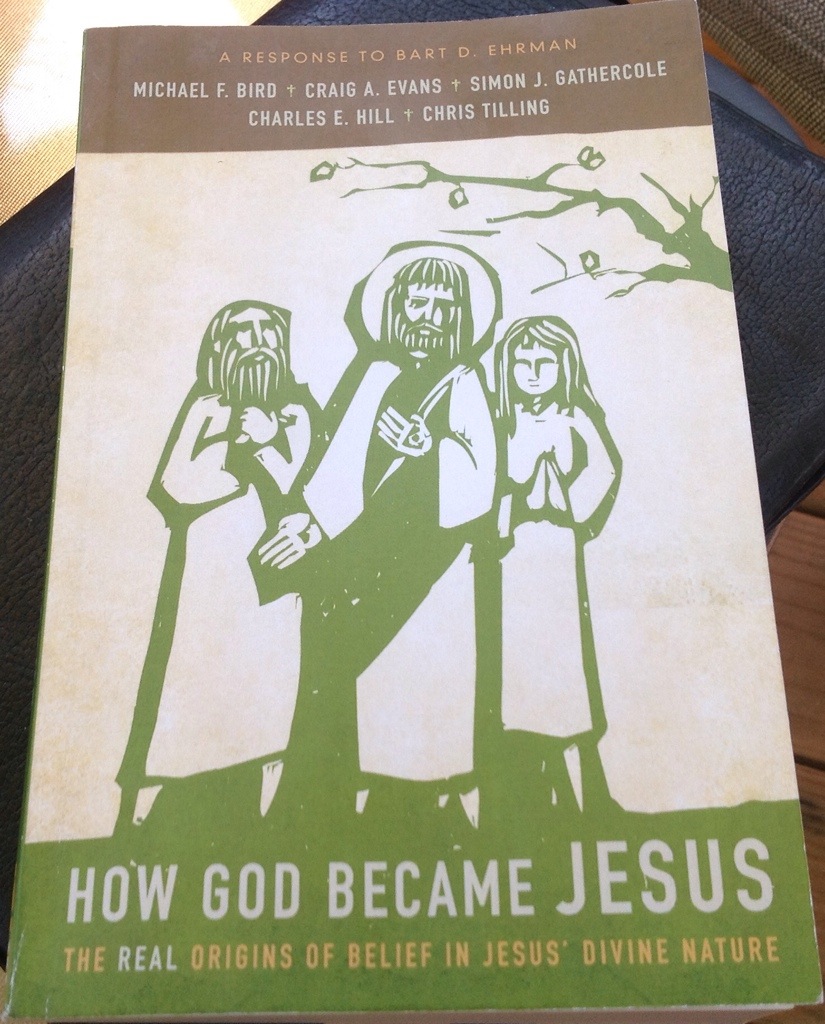
How Jesus Became God– Answering Bart Ehrman

It is hard to believe. That one rouge scholar could elicit such press is at least hard for me to believe. Still, that is the case and many are quoting Ehrman as if he actually spoke with authority. He speaks as if he has that unquestioning authority and some are at a loss at how to refute him, especially to someone who blindly accepts him. Enter this volume, subtitled “The Real Origins Of Belief In Jesus’ Divine Nature”, and published by Zondervan, that is written by five scholars. Michael Bird, Craig Evans, Simon J. Gathercole, Charles E. Hill, Chris Tilling contribute.

Ehrman’s positions are explained carefully and fairly before they are answered. The authors each hold the belief that Jesus is God in the full sense of the word.

They prove that Ehrman is guilty of “parallelomania” is describing what early Christians believed. That is, he finds something in one document and then demands it means the same in another. That is both arbitrary and illogical and alone refutes a big portion of Erhman’s work.

They also showed his interpretive categories were faulty. For example, he randomly picks Galatians 4:14 as his key, attaches a far fetched meaning, and then reads it into every Christological passage. That is reckless.

Ehrman wants us to believe that our current views on the deity of Christ developed slowly over time, but that is simply not the case. It sprang directly from Jesus’ personal followers.

The writers write as scholars and make a few concessions that I could not. Still, this is a real help at a time of need.

I received this book free from the publisher. I was not required to write a positive review. The opinions I have expressed are my own. I am disclosing this in accordance with the Federal Trade Commission’s 16 CFR, Part 255.

20140616-111333-40413410.jpg

What I Received And Learned From My Father

My father, Gerald Reagan, would never think of himself as a great father. While as with all of us he is not perfect, with every passing year I appreciate him even more. There were many things as a poor family he could not give me, but he managed to give me some incredibly wonderful things.

1. His Time
All of my growing up years when I was home from school and he from work, you would likely find us together. He has always been such a hard worker, and like any child I sometimes got tired of the work, but we were together. We have our memories too– copperheads, close calls with trees falling, me falling and sliding all the way down the mountain repeatedly during my clumsy teenage years. I never once in my life ever felt he was tired of me. It was never just a duty to him either. Years after I left home he told me how lonely he was when he went out to work without me. Sometimes when I go back to visit we go work–he runs the chainsaw and I pile the brush–just like always. Strangely, it refreshes me now.

2. His Support
He has always been on my side. He has always told me he believed in me. He told me to go to college when no one else in our family had ever been. He supported me later when the pastorate took me away and he wished I did not have to go. When I preach and he is there, or my kids sing, I usually see him crying. His support has always been so strong that I have always got the impression that my life is more important than his. It isn’t, of course, but he acts like it is. When I was growing up, I always felt safe as well. I knew if anyone ever tried to hurt me, they would have to deal with him. I never doubted for one second that he would lay his life down for mine.

3. His Unconditional Love

The best lesson for understanding our Heavenly Father’s love is an unconditional love from an earthly father. I have always found it easy to believe that God loved me because my Daddy did without fail. I truly believe that there is nothing I could do to erase that love. Others might be done with me, but his door, his table, and his love would always be there. That kind of love gives one a security and a strength that enriches your life beyond what words can express. If others’ love wavers, what a treasure to know of one whose will not.

Learning

I guess in receiving what I have from my father, I have learned what it takes to be a father. As I reflect on him, I feel that maybe I am not living up to his standard in these great categories. At least I know the way. May God help me to pass on to my children what my father did to me.

I love you Daddy. Happy Father’s Day.

20140614-131820-47900001.jpg

Dishonesty In Preaching (IBTR #33)

dishonesty in preachingIs it fair to say that preaching and truth go together? Is there any conceivable place where honesty is more important that the pulpit? These are rather obvious questions to answer. Would it be equally true to say that dishonesty in preaching is the worst lie of all? It is hard to argue otherwise. People are groping for answers and they must have the truth or we sully the names of preacher and pastor. If this analysis is true, and I believe it is, then dishonesty in the pulpit is a heinous crime. It is a crime that lurks in all the corridors of Christianity and Independent Baptists are no exception.

There is, on the one hand, calculated deception, and on the other, accidental deception.  There is little we can do for one who simply concocts a lie and tells it at the sacred desk. Just label them a charlatan and hireling and go on. But for those who don’t fully realize what they do, perhaps we can encourage and enlighten. In any event, let’s consider cases of dishonesty in preaching:

1. Telling an untrue story or illustration. 

This behavior is tragic because He Who is Truth, nor His Word that tells Truth, can ever be uplifted with lies. Sadly, these days this dishonesty is often given a wink and a nod. With a grin we are told, as if a real excuse, “I was only preaching.” Only preaching? May God help us!

2. Telling untrue information on other ministries.

Petty politics. Nothing more needs said.

3. Telling stories as if you were the hero.

Some get so carried away in the pulpit bolstering their own reputation that even if marginally true, they dishonestly obscure the fact that Jesus is the only hero when the Bible is preached. If the listener leaves impressed with you rather than Christ, a con job has been pulled. I realize the line could be subtle here, yet the stakes are so high that great caution is required.

4. Taking a Scripture out of context to prove your point.

You can pretty much prove any point with an out-of-context verse, but you can’t be honest in doing so. Perhaps it is an accidental lie, but it is one nonetheless. How do you feel when your words are taken out of context? Why do we imagine that our Lord wouldn’t mind just like we do?

5. Claiming your preferences are from God’s Word.

To say, when preaching on your own preferences, that you are just preaching the Bible is blatantly dishonest. How serious is this action? It is tantamount to substituting God’s Word for your own. What could be more counterfeit than that substitution? If could can’t find a clear Scripture for what you are saying, you are guilty.

Handling God’s Word is the greatest of privileges and so carries the greatest of responsibilities. Lives are shipwrecked when God’s Word is mishandled and Christ is dishonored. We who preach should not wait to be called out, or worse, answer at the Judgment Seat, but hold ourselves to strict account. Our task is that critical, and our God far too worthy for anything else!

FIND ALL ARTICLES IN THE SERIES HERE.