Dishonesty In Preaching (IBTR #33)

dishonesty in preachingIs it fair to say that preaching and truth go together? Is there any conceivable place where honesty is more important that the pulpit? These are rather obvious questions to answer. Would it be equally true to say that dishonesty in preaching is the worst lie of all? It is hard to argue otherwise. People are groping for answers and they must have the truth or we sully the names of preacher and pastor. If this analysis is true, and I believe it is, then dishonesty in the pulpit is a heinous crime. It is a crime that lurks in all the corridors of Christianity and Independent Baptists are no exception.

There is, on the one hand, calculated deception, and on the other, accidental deception.  There is little we can do for one who simply concocts a lie and tells it at the sacred desk. Just label them a charlatan and hireling and go on. But for those who don’t fully realize what they do, perhaps we can encourage and enlighten. In any event, let’s consider cases of dishonesty in preaching:

1. Telling an untrue story or illustration. 

This behavior is tragic because He Who is Truth, nor His Word that tells Truth, can ever be uplifted with lies. Sadly, these days this dishonesty is often given a wink and a nod. With a grin we are told, as if a real excuse, “I was only preaching.” Only preaching? May God help us!

2. Telling untrue information on other ministries.

Petty politics. Nothing more needs said.

3. Telling stories as if you were the hero.

Some get so carried away in the pulpit bolstering their own reputation that even if marginally true, they dishonestly obscure the fact that Jesus is the only hero when the Bible is preached. If the listener leaves impressed with you rather than Christ, a con job has been pulled. I realize the line could be subtle here, yet the stakes are so high that great caution is required.

4. Taking a Scripture out of context to prove your point.

You can pretty much prove any point with an out-of-context verse, but you can’t be honest in doing so. Perhaps it is an accidental lie, but it is one nonetheless. How do you feel when your words are taken out of context? Why do we imagine that our Lord wouldn’t mind just like we do?

5. Claiming your preferences are from God’s Word.

To say, when preaching on your own preferences, that you are just preaching the Bible is blatantly dishonest. How serious is this action? It is tantamount to substituting God’s Word for your own. What could be more counterfeit than that substitution? If could can’t find a clear Scripture for what you are saying, you are guilty.

Handling God’s Word is the greatest of privileges and so carries the greatest of responsibilities. Lives are shipwrecked when God’s Word is mishandled and Christ is dishonored. We who preach should not wait to be called out, or worse, answer at the Judgment Seat, but hold ourselves to strict account. Our task is that critical, and our God far too worthy for anything else!

FIND ALL ARTICLES IN THE SERIES HERE.


Books on the Ministry #13

photo (21)

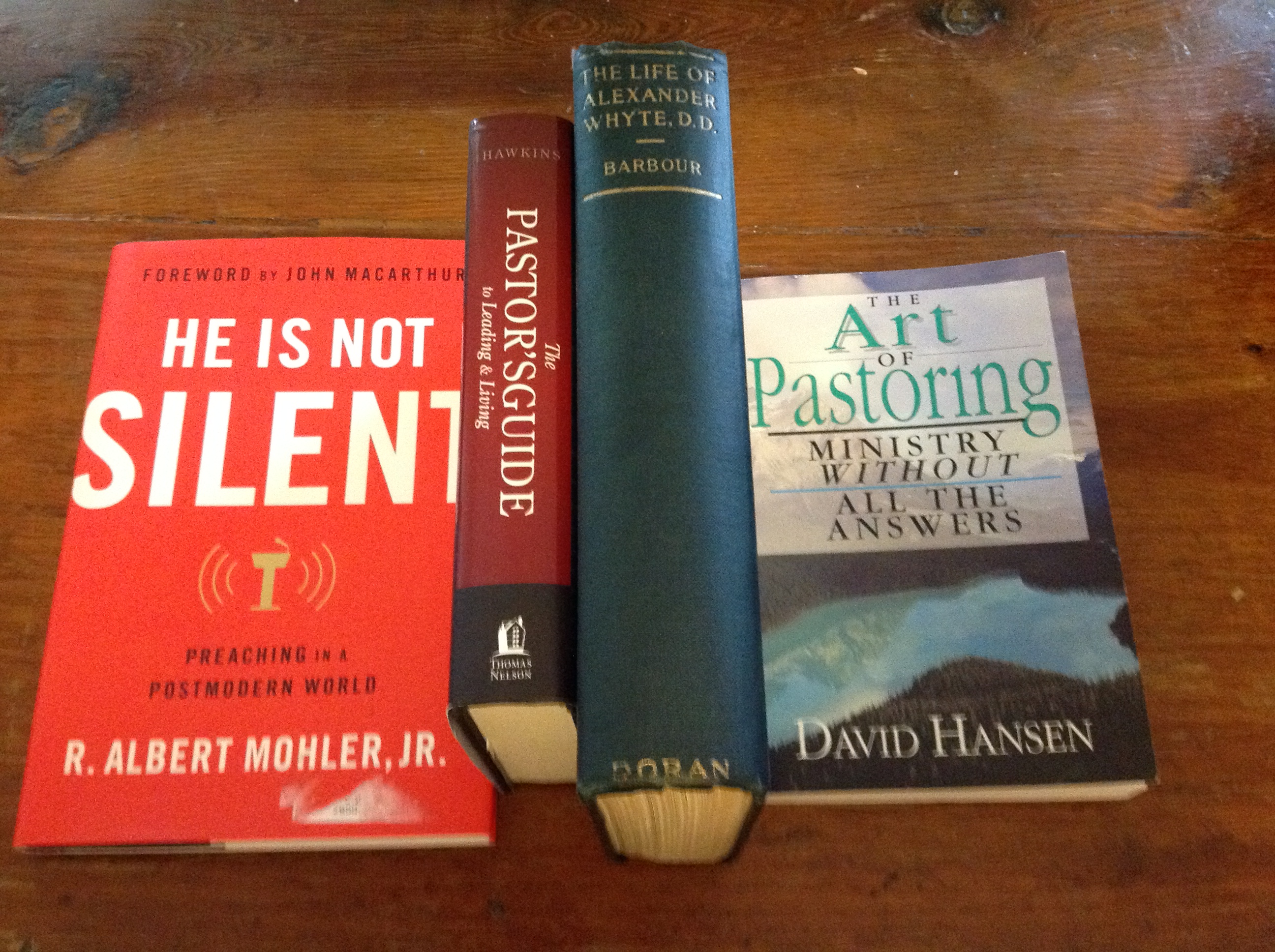
Here are four more excellent titles–two for preaching and two for pastoring; two newer titles, one about 20 years old, and one from the 1920s. This makes 40 reviewed in this series. Be sure to click on the link at the bottom to see the previous entries.

1. The Art Of Pastoring by David Hansen

I have enjoyed on occasion a good how-to book, but I am thrilled to read of “ministry without all the answers.” It is good to read that is how it really is, especially as it so matches my own experience. He shows how neither trend-driven ministry nor task-driven ministry are the same as the pastoral ministry given us by Christ. Read what he means when he says the pastor is a parable of Jesus Christ and you will both agree and be challenged. He says, “Jesus’ ministry is so simple that most pastors consider it naive. Word. Prayer. Friendship. Sacrament. Leadership. That’s all.” He’s right!

On our call he says, “Preparation for pastoral ministry involves two things: learning to listen to the Bible and learning to listen to a human being.” Some things are more simple than we have imagined, aren’t they? Further, he says, “At issue is self-denial. Those who will suffer self-denial are parables of Jesus and are pastors. Those who will not are hirelings and thieves.” Blunt? Yes. True? Yes.

He says too, “It is easy to confuse loving being around people with actually loving people. The two are very different. Love of the experience of people is a form of self-gratification.” Ouch! Or how about “Ministry without love is vanity”?

He is so honest, so real. He accurately describes the ministry as going through the wilderness unprotected. There is so much beyond our control. We must be led by the Holy Spirit.  There is so much more.

His chapter on preaching alone is worth the price of the book. I pretty much underlined the whole chapter.

We should all hear his discussion on though we can be a parable of Christ, we can’t be a symbol of God. That discussion would rescue many a misspent ministry.

How on earth did I just recently find this 20 year old book? It is pure gold!

2. The Life of Alexander Whyte by G. F. Barbour

Never overlook biography when seeking out great reading on the ministry. Particularly, as the case is here, if the ministry is the focal point of the biography. There is much to learn from those who simply gave their lives to the preaching of God’s Word. Alexander Whyte was such a man. Warren Wiersbe wrote of the value of this book and I am glad I took his recommendation. He warned that it starts a little a little slow and then becomes a joy to read. He is right.

Wiersbe also praised the chapter “Dr. Whyte In Study And Pulpit.” I agree with his commendation. Whyte said, “The pulpit is a jealous mistress, and will not brook a divided allegiance.” How seriously he took the arduous task of making worthwhile sermons! He felt laziness in study was the one “unpardonable sin” of the ministry. He, the pastor of a good-sized congregation, said we have time for study if we will be “Sufficiently jealous” of that time. You will be challenged!

At over 650 pages, this will not be read in an hour, but the time invested will yield great benefit.

3. He Is Not Silent by Albert Mohler, Jr.

Dr. Mohler is well-known for his perceptive analysis of Christianity in the postmodern era. Beyond the quirks of this generation that we preachers should understand, the timeless need remains: preaching. In trying to reach this culture we are robbing it of the answer: expository preaching. We are losing by giving felt-needs drivel instead of the life-changing Word of God!

Addressed from the angles of worship, theology, doctrine, and the mysteries, he makes a trenchant case for expository preaching. He contends that expository preaching is the only real preaching there is. The epilogue on Spurgeon is fine too.

This volume may or may not be a classic in 100 years, but it is spot on about our day.

4. The Pastor’s Guide to Leading & Living by O.S. Hawkins

Here is a real How-To book. It covers most aspects of the ministry quite well. It is like an updated Criswell Guidebook For Pastors will a little more big-picture perspective. In fact I call your attention to the chapter on perspective (5), the one on parenting (16), and especially the one on the prize (26).

Read it through, or keep handy for a reference, and you will be blessed either way.


Find all articles in the series here.


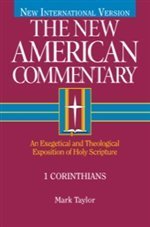
1 Corinthians by Mark Taylor (NAC)

1 corinthians Mark Taylor

Are you looking for an excellent exegetical commentary on I Corinthians? Are you a pastor or teacher who wants help without the scholarly side paths that mar many modern commentaries? Look no farther than the latest entry the New American Commentary series published by B & H Publishing.

The brief introduction helps get your orientation before he delves into quality commentary. Don’t let the size fool you. Spend some time in the footnotes and you will see Mr. Taylor needs feel no inferiority to authors of larger works. He has sifted much before he comes to conclusions.

As a test of this volume’s quality, I really analyzed his commentary on oft-debated passages. As you know, I Corinthians has no shortage of them. Chapter 5 with its incest and church discipline was well covered. Whether you would agree with him or not, you : a) knew what the issues were, b) knew the main opinions held, c) knew what Mr. Taylor concluded. That is what makes a good commentary in my judgment. He was equally good on marriage and divorce in chapter 7 and following.

This series is, perhaps, the best for the pastor. I have them all and use them. I am glad just a handful remain to be published before the entire Bible will be covered. As an added bonus, it has the best price structure of any series. I give this volume the highest recommendation!

I received this book free from the publisher. I was not required to write a positive review. The opinions I have expressed are my own. I am disclosing this in accordance with the Federal Trade Commission’s 16 CFR, Part 255.

Tradition Versus Truth (IBTR #31)

How many times have you heard someone boast that they were battling for the truth? How many times have you and I seen ourselves as great contenders for the faith? Though I have seen it in several groups, it would be hard to deny that it is oft-repeated around the Independent Baptist world. Is it as true as we imagine?

No doubt when you proclaim the Gospel with caution and clarity you are defending a much-attacked truth. I can think of no place more than the Gospel where error is thrown like mud against the wall to see what will stick. If you are a Baptist, you may spend a great deal of time clarifying Baptist distinctives that you believe to be thoroughly Bible based. Even though Christians may disagree, for example, on something like Baptism, at least there are a multitude of Scriptures that can be brought to bear on the subject. Surely there would be some justification on making a stand on a subject prolifically mentioned in the Bible!

What about, however, when we go beyond the foundational truths of Scripture? Or what is often mentioned in the Bible? Have you ever, as I have, heard standards, preferences, or worship styles mentioned with equal fervor? Is this defending truth?

I maintain that it is not truth at all, but tradition. I won’t even claim that there isn’t some place for tradition, but that is not the place to divide the sheep and the goats, or cull out the heretics.

I fear that we have even lost our way. We hardly even recognize a biblical criteria to determine core truths. We make a clod of dirt and a mountain of equal value. I have long since lost count of all the articles I have seen on some subject held up as of paramount importance biblically, and even be filled with endless scripture citations, that was merely someone’s preference. The strange thing about these articles is that if you actually check the references,they are not speaking of the subject at hand in any material way. One of the favorites is to call the discussed subject a critical doctrine and quote II Timothy 3:16 on “profitable for doctrine” when it is actually about the Word of God, not the pet topic under discussion.

The saddest thing is that type of teaching is either: a) deceptive, or what I believe to be much more likely, b) naive. The writer does not even realize just how ludicrous that line of reasoning is!

But that is the problem with tradition– to force it you must use strong handed methods. You must be ugly to propagate it with those who no longer want it. What else could you do?

Truth is altogether different. It only needs proclaimed. Unlike tradition, it loses nothing if some let it go. Tradition dies if we can’t prop it up, but truth is ever marching on.

Strangely, we are the group most often lambasting tradition in others while we are blinded to it in ourselves. Vestal garments aren’t the only traditions out there!

Let’s, then, learn the difference between tradition and truth as clearly as we would distinguish the temporal and the eternal. If we don’t, we may waste our lives fighting for the wrong things.

Find all articles in the series here.

20140602-211507-76507351.jpg

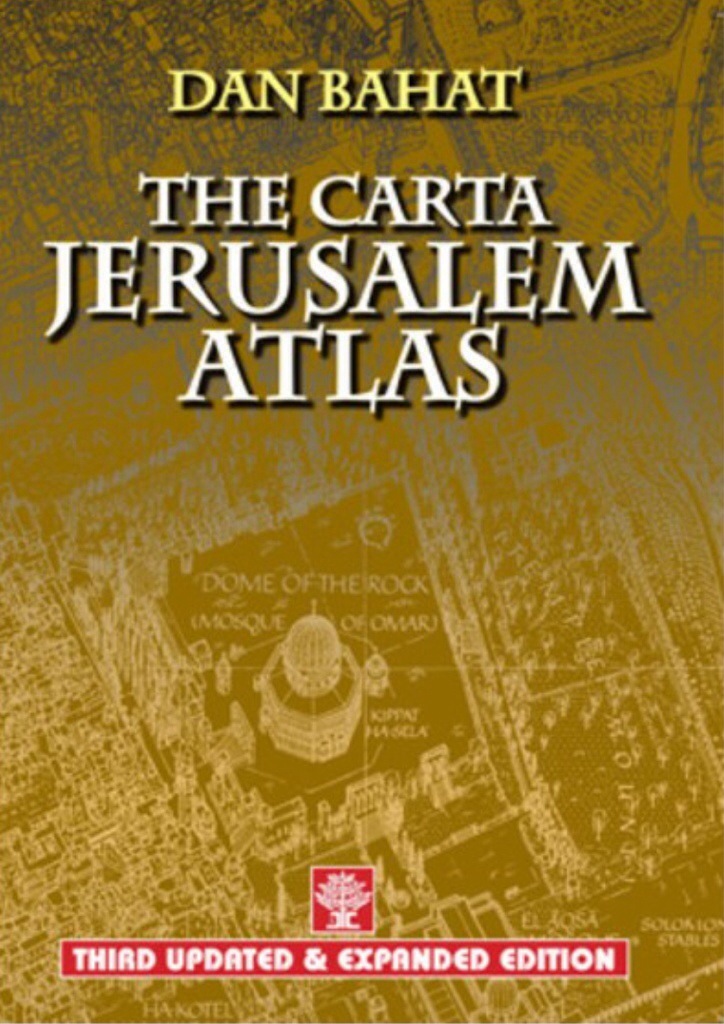
The Carta Jerusalem Atlas

What is the most important city in Bible history, or for that matter, all of human history? Jerusalem. You might say it is God’s own city. In every Bible student’s library there should be at least one volume that explains the city in terms of Biblical history, significant events, and geography. I suggest this volume by Dan Bahat and published by Carta as your first choice.

The author’s life has been dedicated to the history of Jerusalem and it shows on every page. In a responsible way, he has sifted all the reams of archaeological data and recreated a fine history. Though the author is Jewish, I feel he is fair to Christians in telling the story. I might squabble over a detail here and there, but overall it is the most thorough available.

He begins by sharing the topography of Jerusalem as it surely played a factor in many events. Then he reviews basic archaeological elements before launching into its historical beginning, at least in terms of importance, with the Time of David, or the First Temple Period.

He deftly takes time with especially important features like the city’s water supply. You would be surprised how prominently that fits into several Bible events. The discussion of Jerusalem in the times of Christ are particularly helpful.

In what I consider a bonus to the Bible study help, Jerusalem’s history on down to the present times is given. If you have a desire to know the events of the 1900s, which includes the history of the modern state of Israel, you will have all you need here.

The graphics are well done in the manner we expect from Carta. The overlapping over the map of the current city makes this an exceptional resource if you are planning a serious trip there. A fine map for a modern pilgrim as well as a good index concludes the volume. This book is a great resource!

I received this book free from the publisher. I was not required to write a positive review. The opinions I have expressed are my own. I am disclosing this in accordance with the Federal Trade Commission’s 16 CFR, Part 255.

Find this volume and many other fine Bible study helps here.

Related Post:
Bible Atlas–Finding The Right One

20140526-153554-56154078.jpg

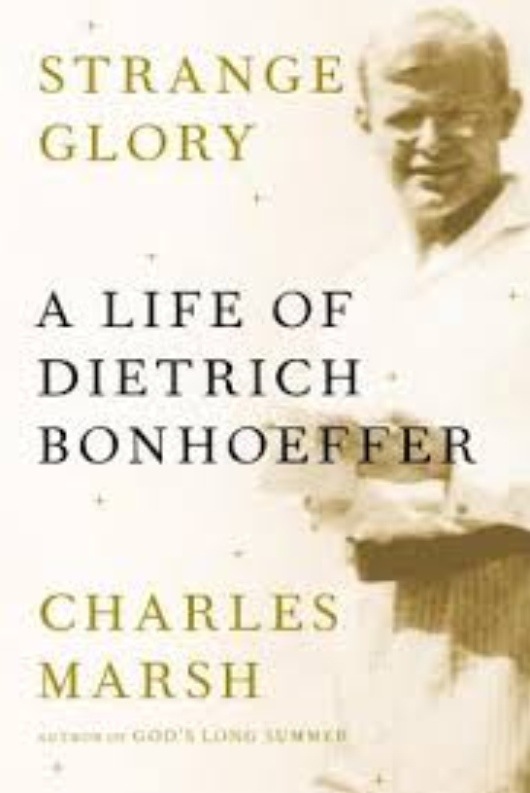
Strange Glory: A Life of Dietrich Bonhoeffer by Charles Marsh

A good biography will grip you, move you, and challenge you. In really getting to know someone in all the dynamics that make him or her the person he or she was, you find out things about yourself and, perhaps, what you would like to be. When Mr. Marsh takes pen in hand on Bonhoeffer that is exactly the experience you have.

Mr. Marsh can write–that is obvious. He delved into his subject until he had something to say. He took a multifaceted view and hid nothing. Even what could have been mundane information, like certain academic pursuits, was woven together to show us the man progressing to become what he finally became in magisterial prose.

As you go along you find Bonhoeffer to be a spoiled kid far into adulthood, indulgent, lazy in physical work, and a lover of extended travel, and at times, a man with a temper. Still, you could not help but admire him. There is duplicity in us all, yet Christ can raise us above it. Though his theology was a good bit to the left of mine, I firmly believe he was a believer who not only loved the Lord, but grew to love Him more.

As with any of us he wrestled with some of the hard choices of life. In the end, he far more came down on the right side, a side fraught with danger and pain. I do not know what he died thinking, but he died a victor.

The only negative of the book was the suggestion that, perhaps, there was a homosexual attraction for his dear friend Bethge. That seemed a cheap gimmick for our ages’ fascination of homosexuality. The friendship was as close as possible, but Bethge always clearly refuted this suggestion. With no compelling evidence given, and knowing what a painful charge it would have been to Bonhoeffer who lacks the privilege to be alive to refute it, I suggest you toss it out so this otherwise great book will not be marred.

Still, this page-turner you will enjoy reading!

I received this book free from the publisher. I was not required to write a positive review. The opinions I have expressed are my own. I am disclosing this in accordance with the Federal Trade Commission’s 16 CFR, Part 255.

20140526-222811-80891572.jpg

Soulwinning–The Good, The Bad, and The Ugly (IBTR #30)


soulwinning

If there is anything Independent Baptists can hang their hats on, surely it is their soulwinning efforts. It has seemingly always been an emphasis. Even if we must point out areas worthy of reform, we must give credit where credit is truly due. Independent Baptists have carried the Gospel all over the world. Even the problem areas worthy of concern are not an issue in most Independent Baptist churches as only in a few is it a serious issue.

The Good

Can you imagine the number of doors knocked, the tracts given, the Scriptures printed, collated, and given over the years? It is absolutely incalculable. I have seen some of the boldest people among us walk right up to some brawny, agitated guy and tell them that Jesus came to save.  I have seen so many times what I believe to be deep sincerity in one telling of the Blood of Christ that falls down as droplets of eternal life. I have seen the going and going, even when results were meager, all because Jesus is worthy.  This is praiseworthy, and in addition to saying to God be the glory, I must say it is a heritage I am happy to be part of.

The Bad

Sometimes, and I pray it grows rarer still, there is a pressure that spiritual people can always succeed in soulwinning efforts as long as proper (sales ?) methods are used. The teaching goes that the more spiritual you are, the more souls you will win. The Scriptural proof is quite dubious, but it is heralded as the Bible’s teaching no matter what. It is that old Gamaliel line of reasoning. Remember Gamaliel reasoned likewise before the Sanhedrin to deliver the Apostles in Acts 5:34-50. Though the Lord used it to get the Apostles out of jail, the logic of his argument was flawed to the core. If it were true, how would you explain the far greater growth of Islam over Christianity today?

Along those lines, how would you explain more souls being saved in the Book of Acts than during Jesus’ ministry? Most Bible students would answer “the Holy Spirit”, but if your belief is that it is the spirituality of the soulwinner that is key, then what have you just said about Jesus? Or what about that Christian we disagree with on many points, and therefore assume is less spiritual than we are, who wins more souls than we do? That is a tricky explanation to come up with, wouldn’t you agree? I guess when our thinking goes here we conveniently forget that we only plant and water, but there is Another Who gives the increase. I mean He exclusively gives the increase despite whatever illusions of grandeur we may become infected with.

The Ugly

The ugliest side of this involves the abuse of hungry souls in an effort to prove we possess the spirituality that only numbers can prove. I have heard church members and college students confess an intense pressure to deliver. A few crossed the ethical line in the sand to work in the barren fields of manipulative tactics. I have heard with my own ears the regret of some who more or less tricked someone into saying “the prayer” and ran back to the church to show the notches in the gun while Heaven shows nothing in its record book.

Then some people who do these things get elevated, they become the gurus. Some boast mind boggling numbers. Strangely, the attendance in their churches never really increase while baptisms run in the hundreds. Weird things happen like one child being baptized ten times, and of course counted in the statistics every time.

Since I believe this is a small majority of our churches, let’s not be intimidated when they dole out the spirituality awards. Let’s not allow ourselves to be ridiculed as long as we know we are faithful in giving out the Gospel. Giving the Gospel is, and always will be, a worthy activity. Let us be humble before the God Who gives the increase. That still is our mandate.

Find all articles in the series here.


Hey Preacher, You Just Never Know!

Sometimes you cross paths with a story that puts things in vivid perspective. It exposes your warped thinking and shames you for the energy you have invested in misspent emotion. Whether it be a pastor, or really anyone actively attempting to serve the Lord, we fall far short of four in calculating two plus two. The story, with a link for you to follow and read for yourself below, involves a missionary who left the field after some years of hard labor thinking he was a failure. Wait to you read what was recently discovered!

How often does it dog you? How often do you run from the nipping at your heels from a general sense of failure? How often do you size it all up and calculate it nothing? Besides the lunacy of forgetting that the Lord gives “the increase”, what makes you and I think we even know what we are talking about?

It seems to me we had better wait for the Lord to sort it all out. We ought not form opinions of ourselves, or others, until the Lord has added the final ingredient. To not wait on Him is like gathering all the ingredients for fried chicken except the chicken! It is time to wait on final grades now. But hey, in how it all turns out, you just never know.

Link to great story.
Picture is from that great blog post–hope you go read it!

Related article :
Success versus Victory

20140523-095810-35890182.jpg

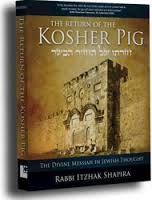
The Return of the Kosher Pig–A Book Review

kosherpig

Here is a definitive volume on the “Divine Messiah in Jewish thought” by Rabbi Itzhak Shapira. The candor of this volume comes from the author as a Rabbi deciding to delve into who the Messiah truly is. Trained to despise Christianity and Jesus Christ, his journey took is profound. These pages show the depths to which he dug and the thoroughness of his work. He went through all the documents that make up Jewish thought since Bible times. There is nothing superficial as you would usually find in such writings. What would satisfy one already a Christian will not satisfy an Orthodox Jewish person. He even explains why that is so when he goes at the heart of what Jewish writings actually say.

He begins by explaining why Christianity is so offensive to Jewish people. It is our belief of God becoming a man that they find complete idolatry. This he calls for a Jewish person “the ultimate uncleanness.” Hence, the pig, the ultimate unclean animal, is Christianity. He then sifts through, not only the Old Testament Scriptures, but the writings all through the centuries that define Jewish thought.

He finds extraordinary things in their writings. The pig (animal) will be kosher again when the Messiah comes.He finds that the midrash says the pig of Christianity will return when Messiah comes. You have to wade through a great deal of information, but you will be surprised on several occasions on what previous leaders and writings have said. It is clear–Jesus Christ fits perfectly into what their own writing say. It is not enough, as he says, to just quote Isaiah 53, but his findings, on the other hand, will give the most studious Jewish person pause. It may lead them to Christ as well.

This book is heavy and so is three stars to the uninitiated, but it is five stars plus for one immersed in Jewish thinking. I will then average it and give it four stars. It will make a fine reference tool as well.

I received this book free from the publisher. I was not required to write a positive review. The opinions I have expressed are my own. I am disclosing this in accordance with the Federal Trade Commission’s 16 CFR, Part 255.

Why I Am Remaining An Independent Baptist (IBTR #29)


Baptist01Recently, someone suggested that I quit being an Independent Baptist. Their reasoning was that since I no longer held to all positions that they personally felt defined an Independent Baptist I should leave. I have nothing to say about that person as they are certainly entitled to their own opinion, but I will say that I am still, and plan to continue for the forseeable future to be, an Independent Baptist.

At the same time, as this blog series shows, I do not want to be associated with some trends and practices held by those who call themselves Independent Baptists. For the record, even in those cases, it is the practices more than the people that I battle for change. Whether it be someone else’s standards or preferences, abusive practices, or an overall mindset that some call IFB, I feel perfect liberty to disagree without feeling the slightest need to remove the label Independent Baptist from myself. That some have chosen to leave (who I still love and respect) has no bearing on my choice either.

I can give you two good reasons:

1. Independent

As an adjective as I use it here, it means “free from outside control; not depending on another’s authority” (from first result on Google for “definition of independent”). Think what a lousy Independent Baptist I would be if I allowed any individual, periodical, or group tell me to stop being one! Really when someone purports to speak for all of us in narrow terms and particulars it is they who deny, by definition, what it means to be an Independent Baptist. They may have switched the adjective to a noun, but I never have.

2. Baptist

The Baptist heritage is one I embrace. I just added to my Klock & Klock collection the 2 volume The History of the Baptists by Thomas Armitage and I marvel as I peruse its pages and see our history. It is a history of Christ and His Word first and that is exactly what I want my life and ministry to be about. In fact, the distinctives of Baptist thought are still where I stand. There are a few of them that some disagree on though they dearly love our Lord, but my understanding of the biblical evidence brings me down firmly on the side of these distinctives. Someone came up with an acrostic in the 1900s that summarizes well where we stand out, and have stood for centuries, from other Christian groups.

———————————————————————————————————–

Biblical Authority

Autonomy of the Local Church

Priesthood of the Believer

Two Ordinances

Individual Soul Liberty

Saved Church Membership

Two Offices

Separation of Church and State

——————————————————————————————————————————-

That last one was added on a little later, but no matter what one may think of them, they are what Baptists have historically stood for. These things I believe.

Notice I bolded two of them because 1) I treasure them, and 2) they are so pertinent to this discussion. When I think of what Christ paid to make me a priest where I needed no other mediator with God but Him, and the corresponding soul liberty that sprang from it, I will never lightly give it up–especially just because some man or group told me to. They are not my priest. If fact, and I am not trying to be a smart alec, it would seem they would have less right, again by definition, to the name Independent Baptist than I would. At least that is what this Independent Baptist with all his soul liberty thinks!

Find all articles in the series here.