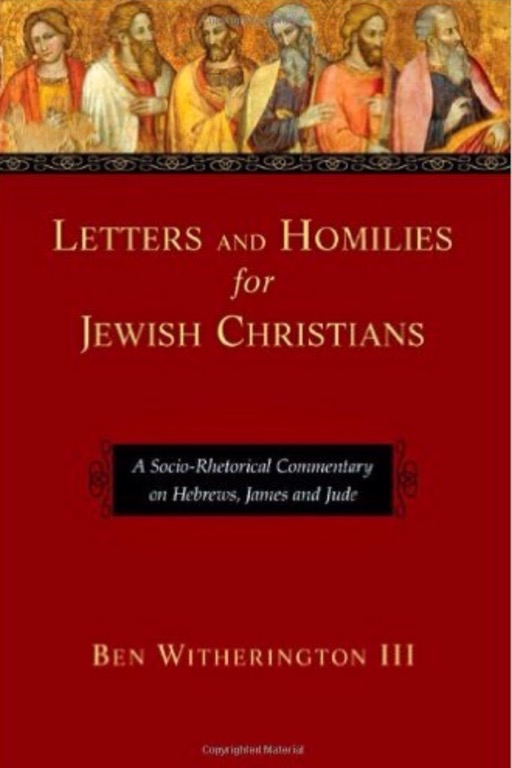
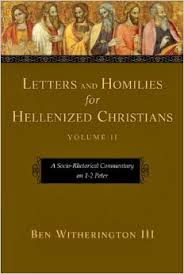
Letters and Homilies for Hellenized Christians: Vol. 1 by Ben Witherington III

commentaryben

This volume covers Titus, I and II Timothy and the Epistles of John in the socio-rhetorical commentary style that Witherington has become famous for. In fact, it is almost beyond belief that Witherington has had such an enormous output of commentaries on New Testament books. If you suspect he may have written too quickly to have covered such ground, you will see in this volume that he hasn’t cut any corners in the subjects he addresses.

He makes quite a distinction about some of these epistles being homilies, but I couldn’t help but think as I read, what real difference does it make for we who study God’s Word? In the Pastoral Epistles he had a lengthy and quite good Introduction on them as a whole. Then there was an Introduction for each individual book before the commentary. I felt it covered the same sort of issues a regular commentary would. I did not agree with some of his conclusions, and feel perhaps his socio-rhetorical method can be overdone, but I still felt it a solid contribution.

I was even less in agreement with his conclusions on the Epistles of John, especially about who the writer is, and wonder if his thoughts about a theme of “wisdom” are beyond what the text can bear. Still, I found it easier to read than many commentaries.

At times he can be a little dogmatic, but the fact that he is a superb writer makes that a small price to pay. He will force you to think about his viewpoint, and even if you disagree, you will be far richer for having done so. In short, though I disagree in places, I give this volume a high ranking as a volume that succeeds in its mission–helping the reader to formulate his or her own positions.

I received this book free from the publisher. I was not required to write a positive review. The opinions I have expressed are my own. I am disclosing this in accordance with the Federal Trade Commission’s 16 CFR, Part 255.
Revelation: A Shorter Commentary by Beale

beale

G. K. Beale’s Commentary on Revelation in the New International Greek Commentary  series has been highly esteemed since it was written. Unfortunately, most pastors because of the technical format and untranslated Greek found it too difficult to use. Assisted by David H. Campbell, Beale has responded to requests to make his contribution more accessible. This volume has succeeded on that score and becomes a lively read.

I should disclose that I subscribe to a premillennial interpretation rather than his “eclectic, redemptive-historical idealist view”. Though he is a brilliant author, and knows something about arguing well for his position, he in my opinion too casually addressed those of my persuasion by quoting the most radical he could find in our world. On page 22, he beautifully listed the reasons futurists hold the positions they do, but does not do as well countering them. In fairness to him, my bias may have been at work.

Whether I agreed or not on his overall prophetic approach, I must confess I learned much as I read. He is adept at seeing what is there–words, repetitions, and parallels. His Introduction was given in 34 pages and was outstanding.

I’m glad to have this volume for my studies as he has insights on every page. Like me, you might not agree with everything he says, but you will be enriched for having read it. I’m a pastor who doesn’t want all my commentaries on Revelation to agree with me.

This volume will be a go-to commentary on technical issues, but is far easier to read than the others I have used. This commentary is a solid effort.

I received this book free from the publisher. I was not required to write a positive review. The opinions I have expressed are my own. I am disclosing this in accordance with the Federal Trade Commission’s 16 CFR, Part 255.

Kregel Exegetical Commentary on the Psalms, Volume 3

psalms

The set is finally complete! Now we have a commentary on Psalms that will be a treasure for the rest of our lives. This isn’t hyperbole–it’s one of the best commentaries we have and certainly the best on the Psalms.

This final volume covers Psalms 90-150 in 1000 pages. If you already use the previous two volumes, you will be glad to know that the quality doesn’t waver as has been known to happen in some other large commentaries. His aim is pastors first and scholars second and he succeeds on both levels.

To see the value you will get in this volume just check out his commentary on Psalm 90. Most modern scholars place this Psalm claimed to be from Moses’ hand as post-exilic. He in just few words shows the shaky ground that claim is on while he argues for Moses. That takes guts in these days and I love it.

He always puts his psalms in the proper context and category. His commentary on Psalm 119 would make a fine book of its own. I might still believe the Pilgrim Psalms were pilgrims heading to worship opposite of his stance, but the commentary is outstanding.

The winning setup remains the same: text and textual footnotes, composition and context, exegetical analysis, commentary in expository form, and message and application. None of those sections are throwaway.

This is an incredible resource for pastors and teachers and I give it the highest possible recommendation.

I received this book free from the publisher. I was not required to write a positive review. The opinions I have expressed are my own. I am disclosing this in accordance with the Federal Trade Commission’s 16 CFR, Part 255.
RELATED POSTS:

Psalms Volume 1

Psalms Volume 2

Illustrated Bible Survey–A Great Resource!


IBS

This volume is one of the best of its kind released in a long time. Though aimed at college-level students, it is ideal for any studious laymen as well. As a pastor, I would love to see those I pastor use this volume in their studies.

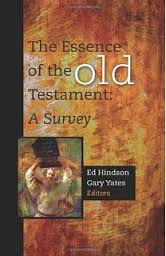
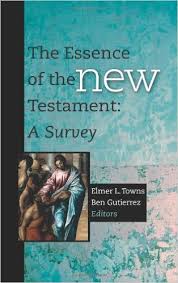
Written by Ed Hindson and Elmer Towns, both of whom are experienced at writing to this audience, the book begins with two helpful introductory chapters on how we got the Bible and how to read it. From there we get a chapter on a general introduction to the Old Testament, followed by individual book introductions. We get a similar New Testament introduction before individual NT books are introduced as well.

This book scores a home run on every level. The writing is good, the maps and other graphics are outstanding, and many exceptional charts are included too. Each book has a “Key Facts” graph, a background, an outline, a message of its contents, all followed by a practical application section.

If my guess is correct, this book will be highly successful. The book itself is beautiful and I highly recommend it.

I received this book free from the publisher. I was not required to write a positive review. The opinions I have expressed are my own. I am disclosing this in accordance with the Federal Trade Commission’s 16 CFR, Part 255.
Deuteronomy (Apollos Old Testament Commentary)

deut

This volume was the first in what is developing into a major commentary series. This entry has enjoyed a favorable reception in the scholarly world and so I looked forward to reviewing it. Now that I have used all the titles in the Apollos series, I personally think the first two volumes (this one and Daniel) has a different feel than later volumes.

I found the Introduction to be unhelpful. He tackled issues of composition that I couldn’t agree with, and more importantly, most pastors find irrelevant. Only when he gave some theological insights was I helped. He also did not accept Mosaic authorship. Though the Apollos is earning a conservative reputation, this one would have trouble earning that designation in places.

Still, the quality of the commentary proper is high. The writing is good, the scholarship mature, and the information helpful. It was engaging throughout. This alone will make for a great commentary volume. The layout is similar to all the volumes: translation, notes on the text, form and structure, comment, and explanation. Consistently, I enjoyed the last two the list the most.

When I said that the first two Apollos volumes had a different feel, it seemed to me they were more for the scholar while the later volumes were better for pastors. If you are a scholar, add a star! In any event, I still recommend this volume and the entire series.

I received this book free from the publisher. I was not required to write a positive review. The opinions I have expressed are my own. I am disclosing this in accordance with the Federal Trade Commission’s 16 CFR, Part 255.
Leviticus (Apollos Old Testament Commentary)

leviticus

Here is one of the most recent major commentaries on Leviticus. Nobuyoshi Kiuchi contributed this volume in the developing, scholarly, but pastor-friendly Apollos series by IVP. While this commentary is rather conservative in many ways, it has raised some controversy in its defining the Hebrew word usually rendered “sin” as “to hide oneself.” The harshest criticism I saw even called it “revisionist.” That will change interpretations in a few places, but does not shipwreck an otherwise fine production in my view.

If you overlook that one twist, you will have an excellent commentary to grapple with Leviticus. That will be clear in the Introduction. It is well written, easy to comprehend, and not sidetracked on esoteric sidewalks. He quickly dismisses, as is easily done, bizarre theories like the documentary hypothesis. He was at his best in the section on Structure. Whether you would agree or not, he really analyzes in a way that opens up Leviticus.

His analyses of key words and themes was equally helpful. I believe repeated words are always a clue to themes and he follows that line. At other points he presents original thinking and even writes as if symbolism (what some call “types”) is not far off the mark.

He had a few other peculiarities like calling the soul “one’s egocentric nature”, but was still helpful. He interacted well with the exegetical volumes most likely to compete for pastor’s attention: Wenham, Rooker, and Hartley.

The commentary proper was excellent and presented in the typical Apollos style: Translation, Form and Structure, Comment, and Explanation. This is a solid effort and worthy of purchase.

I received this book free from the publisher. I was not required to write a positive review. The opinions I have expressed are my own. I am disclosing this in accordance with the Federal Trade Commission’s 16 CFR, Part 255.
The Epistle to the Romans (NIGTC) by Longenecker

romans

This volume has been highly anticipated for some time as the magnum opus of highly-respected scholar Richard Longenecker. It appears to have lived up to its billing.

In a short Preface he spells out the greatness of Romans and the challenges of its study. In a relatively short Introduction for a work of this size, he shares more of the great issues of grasping Romans. In fact, his Introduction strikes me as rather different than most. He mostly raises the great issues. He brilliantly defines what they are, but only rarely in the Introduction does he state what premise he will argue in the commentary itself. Apparently, that is the place he feels that he should answer the great questions.

The commentary proper is massive, well written, and perceptive. I studied what he said on several major passages, focusing on those that I thought were harder for a commentator. What I found was outstanding commentary. In Romans 1 he argued beautifully without falling prey to political correctness. In Romans 7 he laid out fairly the various viewpoints and then maturely outlined his position. In Romans 9-11 he handled the theological minefield with dignity and grace. The quality of coverage was constant.

Though this volume is clearly aimed at scholars, he managed to keep it where pastors could glean immensely. That is not always well done in the commentary world. He even translated more Greek than is common with this series. Though I would not agree with every conclusion he made, I constantly felt in the hands of a master as I read. This book is an exceptional commentary.

I received this book free from the publisher. I was not required to write a positive review. The opinions I have expressed are my own. I am disclosing this in accordance with the Federal Trade Commission’s 16 CFR, Part 255.
Ecclesiastes & The Song of Songs (Apollos OT Commentary)

ecc apollos

This volume is the joint production of Daniel C. Fredericks on Ecclesiastes and Daniel J. Estes on the Song of Solomon in the excellent Apollos commentary series. The task of the commentator is a challenging one on these two books of the Bible and this book holds up well among the competition of other major commentaries.

Fredericks writes in a different vein than most because he sees “vanity” (“hebel”) as “transience.” I must admit that affects every conclusion he makes. Some who hold that “hebel” means “emptiness” criticize this volume. I still hold to the idea of vanity personally, but see a wide meaning that includes both emptiness and transience. For that reason, the commentary was enlightening to me. I would recommend owning another commentary  to explain the emptiness angle, but you will enjoy Fredericks.

He is conservative on other introductory matters and writes well. I rank it highly.

Estes sees the Song as almost every modern commentator does–as holding a natural meaning rather than a spiritual or typological meaning. To me, that comes out a little strange on a few passages particularly and makes its very inclusion in the Bible hard to explain, but again, that is true in every modern commentary.

Still, among those modern commentaries this volume is in the upper echelon out there. Like the Ecclesiastes portion, it is conservative and well written. It is also not as graphic as some.

I highly recommend this volume for a modern, exegetical commentary that gives you a two-for-one deal on these two fascinating books of the Bible.

I received this book free from the publisher. I was not required to write a positive review. The opinions I have expressed are my own. I am disclosing this in accordance with the Federal Trade Commission’s 16 CFR, Part 255.
The New Testament: Its Background and Message (2nd ed) by Lea and Black

nt 2

Are you looking for a fine, conservative New Testament background for your studies? This volume appears to me to be aimed more at pastors and Bible students than scholars, though you will be made familiar with more important scholarly questions.

Part One was exceptional in the big picture background of the NT. The history from the end of the OT to the beginning of the NT well sets the stage. Daily life and the unique religious background of the times are carefully explained. The chapter on the text illumined canonicity in a small compass.

Part Two combines a study of the background of Jesus’ ministry and of the Gospels themselves. The four chapters on Jesus’s ministry and its changing geographical emphasis are essential to properly understanding the New Testament.

The balance of the book covers Paul and the Epistles. It ends with a chapter on Revelation where various viewpoints are covered. Each NT book has its contents, unique features, themes, and an outline given.

There are helpful charts interspersed throughout the text. One of the best traits of this volume that is often missing in such volumes is that it reads well. I recommend it.

I received this book free from the publisher. I was not required to write a positive review. The opinions I have expressed are my own. I am disclosing this in accordance with the Federal Trade Commission’s 16 CFR, Part 255.

Zechariah by Mark Boda (NICOT)

zech

This is what an exhaustive commentary looks like. This commentary on the Minor Prophet of Zechariah is almost as large as the one on Psalms in this same New International Commentary series. I am not suggesting it is exhausting though. A judicious use of footnotes has made for a volume at once effective for scholarly pastors and academia. I can’t imagine the hours Boda must have put in here.

You would expect the Introduction to be massive in a volume so large, yet it is a manageable 45 pages. That means the bulk of the book is actual commentary on the text.

The Introduction contains a textual history as well as a competent historical background. A section called “Compositional History” overlapped with structure and was worthwhile. I couldn’t personally agree with some of his other conclusions on how the composition came together, but he still trusts the text. His section on the message of Zechariah was good as far as it went.

Again, it’s the actual commentary that will make this volume important for the next 50 years. It seems most every angle is discussed and it is almost encyclopedic. Still, as most will read it one text at a time, the depth will be appreciated. For that reason, I must give a strong recommendation.

I received this book free from the publisher. I was not required to write a positive review. The opinions I have expressed are my own. I am disclosing this in accordance with the Federal Trade Commission’s 16 CFR, Part 255.