The Gospel of St. John by Lightfoot

john lightfoot

Here is the second of IVP’s planned releases of recently-discovered commentaries by famous scholar J. B. Lightfoot. Ben Witherington , a reputable scholar himself, found the handwritten manuscripts in Durham. Though many of Lightfoot’s commentaries have been popular for over a century, these releases cover commentaries on parts of the Bible that he did pursue publishing because dear friends wrote on those same books of the Bible. Now with this publishing event, his work was not in vain.

This succinct commentary goes through John 12. There is some untranslated Greek, but an open interlinear Bible will allow you to work around it. You can tell what a thoughtful scholar he was as you read. There are many points where I could not agree with him, but I still find interacting with him profitable in any event.

Even more fascinating for me was his introduction on the authenticity of the Gospel of John, as well as Appendix A and B on the same subject. He has great points that are unlike what I have read in other places.  The context of his times and the negative onslaught of German scholarship he battled makes you appreciate it more. Appendix C by Martin Hengel will round out your understanding of German scholarship and its influence.

We have here both an interesting, historical commentary and something of a collector’s item. You will want to check it out.

I received this book free from the publisher. I was not required to write a positive review. The opinions I have expressed are my own. I am disclosing this in accordance with the Federal Trade Commission’s 16 CFR, Part 255.

Joshua (Apollos Old Testament Commentary) by Pitkanen

joshua apollos

The Apollos Old Testament Commentary series continues to develop into an important, major commentary series. This entry is a 450 page contribution on the sometimes controversial book of Joshua is another worthwhile contribution. Though it might not be as in-depth as the new 2-volume set in WBC, I imagine pastors will find it more useful. Don’t misunderstand, though, as it will still be in scholarly discussions.

The first 100 pages are an Introduction. I must confess that he has uniquely organized introductory matters. He is kind almost to a fault with liberal authors, but he well shows the plausibility of conservative conclusions on issues like the text and dating. I do not think this Introduction is as good as, say, Firth on Samuel or Petterson on the last three Minor Prophets in the same series, but it is still a valuable contribution.

I loved his explanation that the NT also discusses that unbelievers are punished, and so Joshua is not out of sympathy with the rest of the Bible. After sharing that fine observation, though, he runs amok in the next 15 or so pages. He gets completely sidetracked on current political issues. I will not as a reviewer penalize him for having a different political persuasion than me, but I do highly question why he would bring it in at all.

After that diversion, he settles back in to delivering a fine commentary in the Apollos style. I recommend it as a real help in the study of Joshua.

I received this book free from the publisher. I was not required to write a positive review. The opinions I have expressed are my own. I am disclosing this in accordance with the Federal Trade Commission’s 16 CFR, Part 255.
How To Read Job by Walton and Longman

read job

Here is a volume designed to help one get more out of reading the Book of Job. Scholars John Walton and Tremper Longman, both authors of larger commentaries on Job, team to make sense of what the Book of Job is means to us.

The earlier part of the book covers issues that you might find in a commentary introduction. Part 1 discusses Job as literature in four chapters. There are interesting things like the structure breakdown (check out the chart on page 21) and a discussion of tensions in Job. I felt the chapter “Is Job A Real Person?” a dud and overlooking the information that would demand him to be a real person.

Part Two gives six chapters on the characters in Job. Despite some interesting observations, the literary angle (characters as devices) was overdone. I could not follow the chapter on Satan at all.

Part Three is where the book blossoms. Explaining the retributive principle, how it could be misunderstood, and the true theological message of Job, all give us much to think about.  Trusting God is far more the point than getting answers in this life. The final part on reading Job as a Christian is not, in my judgment, as  good as the preceding theological section.

Still, I do not see how you could not be helped by reading this volume before you begin a study of Job. Whether you would agree or not with their conclusions, you would at least know well what the questions are. That is, of course, exactly what a book of this type should do.

I received this book free from the publisher. I was not required to write a positive review. The opinions I have expressed are my own. I am disclosing this in accordance with the Federal Trade Commission’s 16 CFR, Part 255.
Esther by Reid (TOTC)

esther

This is the first volume in the latest round of revisions in the outstanding Tyndale Old Testament Commentary (TOTC) series. The editorship has fallen into the capable hands of David Firth. Debra Reid supplies this replacement of the well-respected Baldwin volume in a winning way.

The Introduction, in 55 pages, covers the bases well for a volume of this size. If you are like me, you do not the excessive discussion on the literary style of the book as it often appears a charade to attack the historicity of Esther. Still, Reid covers what one must know to realize what scholars debate here. Canonization issues are sufficiently covered too.

I gleaned more when Reid turned to a discussion of style. She taught me several things I had not noticed before. Thinks like there is little direct speech in Esther, or how key the narrator is as compared to, say, Ruth, and character discussions are all very fascinating.

The commentary proper is even better still. The unique thing was the female perspective. There was no capitulation to feminism, but deep insights throughout. All in all, this is a fine, economical volume and I recommend it.

I received this book free from the publisher. I was not required to write a positive review. The opinions I have expressed are my own. I am disclosing this in accordance with the Federal Trade Commission’s 16 CFR, Part 255.
1 & 2 Samuel (Apollos Old Testament Commentary) by David Firth

samuel firth

This commentary on two of the more exciting books of the Bible is a real asset to pastors and Bible students. Firth is becoming quite the prolific commentator of late and tackles here another historical book of the Bible (since he rightfully argues the two are one book).

His Introduction is sufficient, and at 48 pages for a larger Bible book, it is quite succinct. While he writes well on genre and purpose, I couldn’t follow his thinking on authorship or sources–in fairness, it wasn’t radical. His explanation on narrative was insightful, but his discussion on central themes were spot on and the best the Introduction had to offer.

The commentary was by the far the best value in the book. He followed the standard Apollos setup with translation, notes on the text (just the right coverage for pastors), form and structure (with enough detail to explain its short discussion in the Introduction), comment (thought-provoking), and explanation (where he well ties it together).

I looked at several passages and enjoyed what he shared. He took extra care in the most famous passages (David and Goliath, for example). I had read criticism before I received this volume on his analysis of David with Bathsheba, and while I might fully agree with him there, he argued his point well. David did, as he said, not completely hide his sin from those he sent to get Bathsheba. He feels that David was more interested in getting Uriah out of the way to get the child than to hide his sin. I doubt that is true, but it does make you think!

This is a fine volume. As a point of comparison, this volume is fair superior to the well known Word Biblical Commentary volumes covering the same material. I highly recommend it.

I received this book free from the publisher. I was not required to write a positive review. The opinions I have expressed are my own. I am disclosing this in accordance with the Federal Trade Commission’s 16 CFR, Part 255.
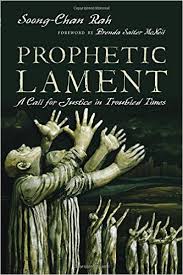
Prophetic Lament By Rah

rah

Here is the latest volume in the Resonate series of unique commentaries published by IVP. Song-Chang Rah brings different perspective to the Book of Lamentations than you would get in other volumes. He highlights the Biblical genre of lament that is clearly a dynamic part of Lamentations. He attempts modern application as well as the subtitle “A Call for Justice in Troubled Times” suggests.

The volume succeeds when he discusses lament in the Bible. He reminds us that lament is much more prevalent in the Bible than in our theological understanding today. His chapter on the historical context of Lamentations is well done. He explains how the funeral dirge is classic lament. When he exegetes the text, he does well. His writing skills are engaging and good enough to make commentary reading pleasant. 

The volumes stumbles in some of his modern application and even a few historical theological conclusions. His comparison of a theology of suffering versus a theology of celebration will really make you think. His modern example of slavery in the earlier days of our country as he made you feel their plight and heartfelt lament was superb. But when he credited (?) dispensational theology for giving us “an individualistic soul-saving soteriology”, which was actually akin to revival, and discusses it as a bad thing–that is hard to swallow.

His focus on race problems in our country today as an application of his theme is marred by his unquestioned acceptance of the most liberal recounting of events. Had he been more balanced there, he would have been easier to follow. He seems so obsessed on race that I wondered as I read if he had been the victim of some particularly ugly racism in his own life. I found no value in his epilogue on Ferguson.

If you look past racial politics and focus on his commentary, you will find value here. For me, it is not a first-line resource, but a fine secondary resource to gain additional, helpful insights.

I received this book free from the publisher. I was not required to write a positive review. The opinions I have expressed are my own. I am disclosing this in accordance with the Federal Trade Commission’s 16 CFR, Part 255.
Deuteronomy (TOTC) by Edward Woods

deuteronomy

Here is another replacement volume in the venerable Tyndale Commentary series. This volume replaces the 1974 volume by Thompson and is superior to it. This bodes well for the Tyndale series holding its high place among commentaries.

Woods gives a lengthy, for this type series at least, Introduction. My favorite part is that the author’s love for Deuteronomy shines throughout. These type make the best commentary reading. His case for Deuteronomy being pivotal is well done and convincing. His discussion on authorship touches the scholarly bases without falling for their excesses.

His description of literary features is illuminating. His comparison to law codes may seem a little overdone, but too many scholars discuss it for him not to mention it. His expansion of comparing Deuteronomy, and particularly the Ten Commandments in Deuteronomy, to the rest of the Pentateuch was helpful. Finally, his discussion of theology was the best part of the Introduction. It really helped put Deuteronomy in perspective.

The Commentary proper was helpful, thoughtful, and never trite. This will be a fine volume to consult for years to come. I highly recommend it.

I received this book free from the publisher. I was not required to write a positive review. The opinions I have expressed are my own. I am disclosing this in accordance with the Federal Trade Commission’s 16 CFR, Part 255.
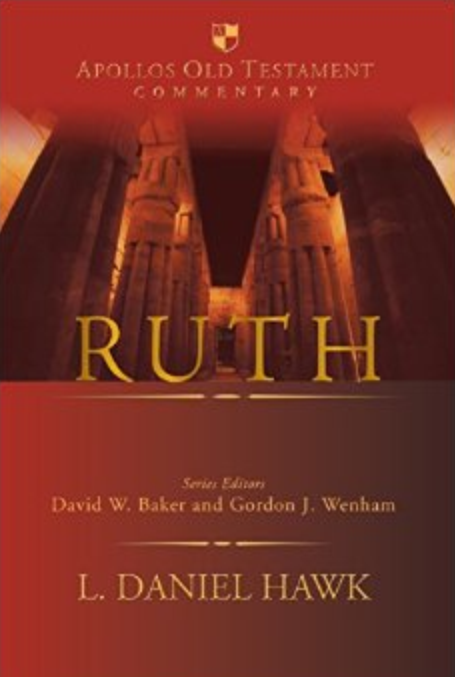
Ruth (Apollos Old Testament Commentary) by L. Daniel Hawk

Here in the latest of the fine Apollos Old Testament Commentary series published by IVP we find a surprising volume solely on the little book of Ruth. Though often attached to Judges in the commentary world, this book is often more loved and well known than its larger companions. Most Christians love studying Ruth. Daniel Hawk gives us a thoughtful volume on Ruth that, in my judgment, takes its own track. In analyzing structure he reads ethnicity as a key component to understanding Ruth. While there are theological points to the Israel versus Moab points of the story and the ironic turn of events, I cannot personally elevate that as highly as he does as the crux of understanding Ruth. Still, it highlights points other commentaries miss.

His Introduction covers the normal territory and he well summarizes what scholarship has so far thought. His discussion on how some classify the book—true story, idyll, novella, folk tale—only reminds me that such discussions would never have arisen had not scholarship decided to attack the historicity of the Bible in generations past. While I agree with his assessment that Ruth “resists classification”, I wish he had given a stronger word on its complete veracity.

What is valuable is the perceptive observations he often makes that you can use as a takeoff to study. For example, he says, “While the narrator begins and ends with males, the first and last characters to speak in the story are women.” I found myself underlining many such observations in both the Introduction and the Commentary itself.

This volume would not be my first choice on Ruth, but I count it a helpful additional resource and well worth having. The Apollos continues to shape up as a fine series.

I received this book free from the publisher. I was not required to write a positive review. The opinions I have expressed are my own. I am disclosing this in accordance with the Federal Trade Commission’s 16 CFR, Part 255.

Holman Illustrated Bible Commentary

holman

As a pastor I think I have found the perfect resource to recommend to folks serious about studying the Bible–this new whole Bible commentary by Holman Reference, edited by E. Ray Clendenen and Jeremy Royal Howard. This volume is perfect for the person trying to read the Bible but struggling with certain passages. Even if you have been studying the Bible for years, you will still find this a real asset.

You have some measure of commentary on every verse. It may not give all the detail you would want on that verse (no one-volume commentary can), but you can at least grasp the general idea. There are fine maps as you see in other Holman resources as well interesting pictures. It really has a nice look.

While I do not know the names of all the contributing scholars here, I see many that are known to be outstanding scholars. Each book gets a short background, themes (message and purpose), how it fits in the Bible as a whole (Contribution to the Bible), and Structure. These are well done.

The only thing missing is an Introduction to the Bible as a whole or of each Testament, but no volume can have everything.

I highly recommend this commentary!

I received this book free from the publisher. I was not required to write a positive review. The opinions I have expressed are my own. I am disclosing this in accordance with the Federal Trade Commission’s 16 CFR, Part 255.

The Message of Kings (BST) by John Olley

kings

Here is another fine, helpful title in The Bible Speaks Today series. The books of I and II KIngs are inexplicably overlooked by many, which is mind boggling considering how strong in thrills and high in theology those books are. This economical volume is ideal for teachers and pastors to get some real help.

The volume begins with a helpful Introduction of 38 pages. It gives sufficient historical background, but I felt its strengths were in identifying themes. When you read that section you will likely agree with his conclusions as he reasons well. Discussing “flawed heroes and failed reforms” was spot on. He addressed a few quirking scholarly rabbit trails, but fortunately never fell for them.

The Commentary section, comprising the bulk of the book, was good. Since I have done a great deal of study on Elijah and Elisha, I dug carefully in his comments there. They were filled with substance of the kind to help an expositor. He even threw in a further reflections section midway through Elijah’s life. Quality seemed consistent throughout.

374 pages on the two books of Kings seems just right for this series. I recommend this volume for those studying these two wonderful books of the Bible.

I received this book free from the publisher. I was not required to write a positive review. The opinions I have expressed are my own. I am disclosing this in accordance with the Federal Trade Commission’s 16 CFR, Part 255.