Leviticus (ZECOT) by Jay Skylar

Sometimes a trial run really helps. Jay Skylar already worked through Leviticus in the TOTC series. From there to here we traversed from good to really good. To be sure, the forest was even better than the impressive trees. I love commentaries that can see the grand vistas as well as they can examine a pebble on the trail. That’s what you get here. More impressive is that I’m saying that on Leviticus! Can you believe it? Leviticus. You know, the book where annual Bible reading plans come to die.

I’m really suggesting that you find life here where so many expect dust. Part of the credit goes to Leviticus. In one of the best-kept secrets of the Bible, Leviticus really is a fascinating, and even stimulating, book. Still, some of the credit goes to Mr. Sklar as well. Despite the treasure of Leviticus, whole commentaries have been written without finding even a particle of it. Rather than obscuring the light of Leviticus, Skylar opens the window for it to shine.

You see it right away in the Introduction. Immediately, he orients Leviticus into the big picture. For example, he says in Leviticus we have a “return to God’s Purpose in Creation.” It’s not a stretch. He concludes conservatively on authorship and date. He makes his case briefly, but convincingly. When he next turns to theology, he excels even more. I especially loved his explanation of holiness. Categories of sin are also a rich study. Finally, he provides real guidance on how to decide which are laws are still applicable. When he explains ritual, the discussion develops to the NT. There’s a little structure discussed and a detailed outline given, but structure is more developed in the commentary.

Having laid a grand foundation, the commentary is all you could want. In my opinion, the style of this series well matches Skylar as a writer.

We’ve used Ross, Hartley, and Wenham for a long time. This work is in their category, maybe even taking pride of place.

I received this book free from the publisher. I was not required to write a positive review. The opinions I have expressed are my own. I am disclosing this in accordance with the Federal Trade Commission’s 16 CFR, Part 255.
Revelation (BECNT) by Thomas Schreiner

I was surprised to see Schreiner in Revelation. I unfairly had him as a Paul guy only in my mind. It turned out those skills that he is well known for on Paul are found here.

This commentary is, without doubt, a major work on Revelation. It walks in the room and joins the big boys. But just like the other champions of the modern major academic, exegetical commentaries this one takes an “eclectic” viewpoint. That’s the rage of the hour. Doesn’t make anyone too happy, but then again not too angry either.

Like me, you may not take an eclectic approach but rather a specific viewpoint in one of the major categories. Will you still be helped by this commentary? I think you definitely will.

What are its strengths? Impeccable scholarship stands out. Sometimes that’s a pile of dry bones, but here it has life. Here the scholarly “interacting” pays off. It begins in the Introduction and continues in the commentary proper. Here the interaction necessarily involves the different perspectives and that enlightens no matter where you come from.

Another asset of this commentary is its tone. He fairly represents other viewpoints and humbly assesses and shares his own. I often don’t exactly agree, but he’s easy to follow. It’s easy for me to weigh as I’m looking at a fairly represented picture.

I wouldn’t call the structure of Revelation as a whole a strength here. Perhaps that’s the collateral damage of an eclectic position, though he gives a serviceable outline. He does give, however, some nice thoughts on structure in the smaller periscopes.

I’m convinced he sheds light in each passage no matter your overall prophetic outlook. Outside of one that lines up perfectly for you (rare), what more could you ask for?

I received this book free from the publisher. I was not required to write a positive review. The opinions I have expressed are my own. I am disclosing this in accordance with the Federal Trade Commission’s 16 CFR, Part 255.
Philippians (ZECNT) by George Guthrie

This latest volume in the ZECNT on Philippians is a work of mature scholarship that possesses all the warmth you could hope for. Guthrie particularly succeeds in taking rich detail and weaving a tapestry that displays an inviting picture of what’s really going on in Philippians.

Guthrie takes all the pieces that you look for in a commentary and actually fits them all together rather than offering us a collection of near unconnected parts, which describes many commentaries today. Some of those might be indispensable, but we can enjoy one like here where all the pieces do in fact make a whole.

You will see what I’m talking about in the Introduction. It’s masterfully done. Things that are dryly given in other works here are marshaled into a view of a wide horizon. It’s not just what Paul said, but why he said it. As a case in point, notice the section on crafting the letter, particularly “The Church in Philippi and Paul’s Reasons for Writing”. That was eye opening for what’s really going on in Philippians. Still, while I’m bragging on his forest, there are enough trees here to fill the appetite of the more rigorous types.

The Commentary proper carries on what the Introduction began. The rich details are woven into an incredible unveiling of structure. Structure, as you may recall, is an aim of this series. I might not have thought of structure as being so essential to Philippians, but Guthrie proved me wrong. I say that even as I admit that some parts of this letter’s structure are baffling.

Philippians is much loved by all of us, but writings on it can easily grow stale. They can drown in a nebulous sea of joy as if that is all this letter had to say. There’s no drowning here! This is a keeper.

I received this book free from the publisher. I was not required to write a positive review. The opinions I have expressed are my own. I am disclosing this in accordance with the Federal Trade Commission’s 16 CFR, Part 255.
Proverbs (CCF) by Goldingay

In the last 5 years I’ve reviewed 6 commentaries by Goldingay. The amazing thing is not that I reviewed them, but that he had that many I could review in that span. I recently learned that he has Ezekiel and Leviticus in the pipeline too. He will probably do the entire New Testament next year.

This one on Proverbs is slightly different than the others in a couple ways. First, this series, Commentaries for Faith Formation, is different. It’s new, it still wants exegesis, but some application too. I’m not suggesting it’s lightweight, just that its aims are wider.

Second, Proverbs does not have the same opportunities for going off the reservation that appears in spots with Goldingay that makes you want to strangle him. (Sorry, wild streaks of hyperbole come out of me when I encounter Goldingay). Strangely, still, is that despite his frustrating tendencies, I always want his next release. That either says something good about his writing or pathological about me.

To be more straightforward, the thing about Goldingay is that he writes well. Sometimes he’s provocative, sometimes even bombastic, but you want to read the next paragraph. I saw it over and over in these Proverbs. Perhaps I wouldn’t have thought that Proverbs best matched his skill set, but it sure turned out to match his writing style.

The Introduction is a little flimsy, but I suspect that’s by design for this series. Future volumes, I guess, will bear that out.

When I commend his writing style, I’m not even remotely saying its fluff. All the benchmarks of a seasoned, albeit hyperactive, commentator are on display here. This is a substantial volume as long as you understand the aims of the CCF. The advanced end of the spectrum will still appreciate it, but it might be more usable than some of his works on the other end. In that vein, I judge it a broad success.

I received this book free from the publisher. I was not required to write a positive review. The opinions I have expressed are my own. I am disclosing this in accordance with the Federal Trade Commission’s 16 CFR, Part 255.
Job (EBTC) by Barry Webb

I’ve read Barry Webb in other places and liked his work, especially in Five Festal Garments, so I was excited to see him in this EBTC series. The series itself has found its niche and is off to a good start.

The Introduction of 88 pages, quite lengthy for a commentary of this type, succeeds in theology while I just couldn’t get on with the Wisdom as the controlling theme rather than, say, theodicy. Read his arguments and decide for yourself, but that strikes me as making the secondary primary. His presentation of history and genre didn’t ring the bell for me either. His discussion of structure was good as far as it went. When he got to theology, his work grew much richer. These Introductory issues do not define this work for me, but they are its weakest features in an otherwise nice work.

The commentary proper struck me as thoughtful. Real wrestling with the text occurs and that’s why this work ends up being a good one. Strangely, those occasionally bizarre discussions between Job and his three friends is where he did his best work. He really contributes there. Maybe that stuck out to me because I always found those speeches the more bewildering part of Job.

This commentary is a fine one to have alongside the larger works. Make this one an additional resource to spice up the theology and gain additional insights with those speeches. For those contributions, I’ll give it a solid recommendation.

I received this book free from the publisher. I was not required to write a positive review. The opinions I have expressed are my own. I am disclosing this in accordance with the Federal Trade Commission’s 16 CFR, Part 255.
The Royal Priest (NSBT) by Matthew Emadi

Biblical Theology shines in this latest NSBT series. Every volume in this series flourishes with information for the Bible student, yet some of them sing. This one sings.

This volume is not a retread of God’s Mediators, an earlier entry in this series, but something that dives into the the idea of priesthood at its loftiest heights in Melchizedek, the divinely intertwined ideas of king and priest, its standing with the Levitical priesthood, and all coalescing in Psalm 110.

Pages 4-5 outline what Emadi is up to, so you shouldn’t go astray. It’s deep wading so read slowly. My only caveat is the sometimes overly academic language. There’s no need to hide treasure behind rocks. At times, I wonder if these authors are writing exclusively for Mr. D.A. Carson, the editor, or at least, only for colleagues. It’s us regular Jimmy and Joes who can most use a book like this to advantage. Still, the flow of argument is good and what is shared is golden.

In the middle of the book there’s a full-blown exegesis of Psalm 110 (it’s needed), but then he goes back (after a side trip to the intertestamental period) to the big picture again with the New Testament. Jesus in Mark’s Gospel and the Book of Hebrews serves as the framework.

As far as I’m concerned the NSBT series can keep entries like this one coming!

I received this book free from the publisher. I was not required to write a positive review. The opinions I have expressed are my own. I am disclosing this in accordance with the Federal Trade Commission’s 16 CFR, Part 255.
Isaiah (BCOT) by J. Gordan McConville

Here’s a major new commentary on the pivotal OT book of Isaiah in the newly emerging Baker Commentary on the Old Testament (BCOT) series. I had seen Mr. McConville’s names on some older works, but had not been immersed in his writings overall. I would judge this new work as a major commentary on Isaiah.

With 728 pages of text this is a thorough work, but not overly prolix as Isaiah gets two volumes in many series. The work itself is in-depth, scholarly, clearly written, and winsome. The only downside is that for me it’s simply too liberal in places. The discerning reader can still glean a great deal.

These traits become quickly obvious in the Introduction. On the one hand, there’s good background material and a sufficient discussion of structure. On the other hand, the obsession with redaction skews conclusions at times and can even read like old-style redaction. The Introduction also is a bit brief.

The commentary proper is much more valuable even if some underlying assumptions remain. It’s value is clearly its exegesis. On that score it’s excellent. The footnotes show careful scholarship too. Perhaps the theology is not the caliber of the exegesis, but it still has value.

This book will give an alternate viewpoint in some cases to, say, the NICOT, but it could easily be turned to profitable ends and so I recommend it.

I received this book free from the publisher. I was not required to write a positive review. The opinions I have expressed are my own. I am disclosing this in accordance with the Federal Trade Commission’s 16 CFR, Part 255.
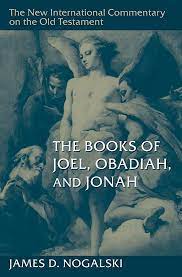
The Books of Joel, Obadiah, and Jonah (NICOT) by James Nogalski

The pace of NICOT volume releases has happily quickened. Here the work of Leslie Allen is replaced on Joel, Obadiah, and Jonah. Allen also wrote on Micah, but that omission will be remedied by a separate volume on Micah to be released next year. Personally, I like this new release better than the older Allen work, but both were quite scholarly proficient. Nogalski already has an impressive collection of writings, particularly on the Prophets. He is a clear writer, but his tone is scholarly. That’s a plus or minus, of course, depending on you.

In my view, his best work in the volume is on Joel, followed by Obadiah, and then his Jonah clearly brought up the rear. To be fair, I’m a very conservative reader/believer so I’m often disappointed with commentaries on Jonah. Making something allegorical only on the basis that it seems miraculously is quite the slippery slope, distinctly in the Bible.

So my caveat on a good review of this volume is in that way of viewing Jonah’s historicity (sorry it can’t be fixed for me by simply changing the genre label) and his overuse of “there’s scholarly consensus on this”. How is that verified? And even if it’s true, what does that prove? I digress.

Other than that, this volume has all the characteristics of a NICOT volume firmly in its grasp. Over the last few years the series has replaced its entire Minor Prophets offerings and this volume continues that successful run.

The worlds of Joel and Obadiah are well illustrated. I disagreed on I few points in Obadiah, but I’m picking now. The exegesis is top-notch. That’s where most want their help anyway. Overall, I will use this book in the future and I recommend it.

I received this book free from the publisher. I was not required to write a positive review. The opinions I have expressed are my own. I am disclosing this in accordance with the Federal Trade Commission’s 16 CFR, Part 255.
Genesis 1-11 (CSC) by Kenneth Mathews

I’m so glad that Kenneth Mathews’ work in the NAC series has been imported and updated here in the Christian Standard Commentary (CSC) series. I just happened to be doing some work in these early chapters of Genesis and found this volume a godsend. It gave me such tangible help, even providing that help at every point I needed without exception.

Just like the Isaiah entry in this series, we will have to wait on volume two. Don’t wait, though, to get volume 1. It’s that good. Genesis is so foundational to the entire Bible that we simply must get our bearings straight. That’s what this volume will do for you. Genesis 1-11 is a natural unit anyway.

To my point, this volume gives great help on structure. I would argue that structure is exceptionally vital here. Both in the Introduction and then throughout the text that aid is rendered. For what it’s worth I’d say the structure points are right on in this volume.

The Introduction is a success. For sure it addresses what I like to see rather than the speculative stuff that’s of no substantial value. The place of Genesis in the Pentateuch is thoroughly developed with even more structural insight. Finally, the theology section does what it’s supposed to and somehow summarizes everything else the Introduction suggested.

The commentary proper was outstanding, consistent, and never lost sight of the big picture. Again, it helped me on several tricky passages.

This one is a must-have!

I received this book free from the publisher. I was not required to write a positive review. The opinions I have expressed are my own. I am disclosing this in accordance with the Federal Trade Commission’s 16 CFR, Part 255.

Joshua (BCOT) by Goldingay

I can’t think of another witty statement for the speed at which Goldingay turns out commentaries since, apparently, I ran out of wit before he ran out of full-length major commentaries from his pen; but in any event, his latest here is on Joshua. Strangely enough, he admits in his preface that Joshua was not the book of the Bible that he wanted to write on next. As he tells it, he had a different book in mind, and the editors convinced him he needed to do Joshua. Kudos for transparency! He did, though, explain that he came around to enjoying the process of studying Joshua.

As I have so often said in other reviews, Goldingay is a living contradiction as a writer. He will make you angry in one paragraph and then grab your attention beautifully in the next. His consistency is amazing on that score. As usual, I so like his flashes of brilliance that I will put up with the other. It’s here again…in spades. Since he is so prolific as a commentary writer, I am sure you already have your opinion of him. So the first thing I can communicate to you in this review is that it will be exactly what you are accustomed to. And as usual, I must force myself to say I’m glad to have this volume.

The part I didn’t like came early in the introduction. though I overall like the lively way he approaches an introduction to one of his commentaries. He appeared in this one to too quickly fall into a defensive stance. In acknowledging critics, he came close to becoming one. As you probably know, scholars are engrossed with discussing the violence in Joshua. It wasn’t long before he was drowning with them. The problem with that whole discussion is that it presupposes that there is some higher morality or ethic than God Himself. That strikes me as quite disingenuous for a Christian commentary writer!

By page 22 perhaps he began anticipating what people like me would be thinking as he said, “In the context of modernity we assume that we can formulate views about the propriety of God’s action, and not just the other way around”. It was also grating in how he tied what might be wrong with Joshua with the failings of Western culture, and even American culture in particular. That struck me as an overexposed portrayal of Joshua thrown off by modern political pontifications of those he lives around. Or maybe the tunnel vision of the scholarly world he works in.

And just like that he gets a little deeper in the Introduction and starts pouring out that good stuff that he is equally known for. The section on theology particularly stands out.

The commentary proper continues the dichotomy pretty much along the same lines. If you are of his mind, I doubt you could find a better commentary. For those of us to his right, and who are discerning readers, the nuggets outweigh the mud enough to land a solid 4-star rating.

I received this book free from the publisher. I was not required to write a positive review. The opinions I have expressed are my own. I am disclosing this in accordance with the Federal Trade Commission’s 16 CFR, Part 255.