This is one of the best volumes I’ve seen in this series. Jeff Fisher did a great job editing. Choices in this type volume are of necessity almost arbitrary, but he chooses well. Isaiah, called by some the gospel of the OT, probably helped. Isaiah 1-39 is not as popular as the rest of the book because of its somber tone, but there are many great passages here that would be right up the alley of the Reformers.
Fisher also wrote an excellent Introduction. I loved his chart of all the major commentaries on Isaiah from those days, which made you aware of what he had to work with right off the bat. Besides Calvin and a few others the list is from those unknown to me. That doesn’t hurt the book, but all the usual suspects aren’t there. Even more helpful is his discussion of these commentator’s key themes. Don’t miss that section for sure.
The selections are what you’d expect compared to previous volumes in the series. There are jewels abounding with just a few where you ask, so what?
To borrow Spurgeon’s language, this volume isn’t the main dish but it a fine condiment to spice it up.
I received this book free from the publisher. I was not required to write a positive review. The opinions I have expressed are my own. I am disclosing this in accordance with the Federal Trade Commission’s 16 CFR, Part 255.
Though I’m a conservative Bible student, I have long given a look at a more critical commentary to have a better overall view. The OTL and NLT are most likely the ones I choose (sometimes the Interpretation series). I know going in that I’m not going to agree on most background or historical issues and am prepared for it. Often there’s some theological thoughts worth feeding into a more orthodox view and I’m glad to have them. With my specific expectations made clear, I have often given a good rating to such works; that is, it provided what I was looking for in the volume. Let me stay upfront, I’m really struggling to give that good recommendation to this volume.
What’s the problem? It’s the entire premise of the commentary itself. The author takes favorite subjects of our day and squeezes them into the text and then passes them off as this is what we ought to think about in arriving at an interpretation. The problem is that in so doing the author has squeezed the very life itself out of the text. For example, she loves to talk about a postcolonial interpretation. That is such a loaded term whose meaning really comes from politics, not Christianity. (I would not want this in a commentary even it more closely resembled my own views). Had she only suggested that the wounds Jonah or Israel felt from Assyria impacted them in many ways, I could at least entertain it. In fact, I’m sure the geopolitics of that era had profound effects. But it seemed to me, that she meant it in a way that it retained all of its 2025 political implications. I’m sorry, but I don’t think 2025 defines the book of Jonah. Believe it or not, the postcolonial viewpoint was the least controversial one of those she chose to be the prism to view Jonah through.
From that muddied rubric, she weaved the overall theme that this is a trauma-informed book. I’m sure Jonah would have found many things that happened in this little book as very traumatic, but this book is not about rubbing his brow and helping him through his trauma. This book was about showing him where he was wrong, and from that vantage point working through the things that he was finding painful, even if he shouldn’t have found them so. Again, had the author only offered that as an application after arriving at an interpretation, I could’ve bought into it. Life brings trauma, and sometimes I bring trauma into my own life, but the Lord will help me work through it and it most likely will involve showing me where I am wrong.
In the introduction, when she really goes big picture, notice how she writes about the divine paradox. There is something of a paradox when we think about theodicy, but I wonder if the biggest paradox is the corner that she herself has backed this little book into through a novel approach that obscures far more than it brings to light. 
There’s even a problem on the scholarship side. Look at the bibliography. It is an echo chamber. She only brought those fringe works in which turned her writing into a self-fulfilling prophecy. If scholarship at large were consulted, I don’t think the top five or ten works that would be voted for even appeared.
The author can write from whichever perspective she chooses, but when it is this far out, it is quite over-the-top to tell the rest of us that that’s the way it should be viewed by everyone. That would be better offered in her memoirs than in a major, reputable series like the OTL. I think if we could bring Jonah back, he wouldn’t understand what this commentary is even talking about.
My bias is clear in this review, but I think as someone who has found value in other volumes in this series, it’s fair to say that there is something more going on here than simply being a more critical offering. 
I received this book free from the publisher. I was not required to write a positive review. The opinions I have expressed are my own. I am disclosing this in accordance with the Federal Trade Commission’s 16 CFR, Part 255.
This series has found a niche—seeing the Old Testament’s influence upon the book being studied. That’s going to be, obviously, a bigger deal in some NT books than others, but it’s still a rich vein to mine. The main flow of the argument is always advanced in this series even if the OT is not as prevalent in the present passage. In that sense, it serves as a helpful commentary even if it has its unique vantage point.
In this volume on John, which has plenty of connections to the OT, we have another successful entry. Karen Jobes has major experience in both exegetical work and Johannine literature. She is well equipped to write this volume.
The Introduction is fairly brief, but is fully in line with all I’ve seen so far in the series. She showed scholarly awareness and was quite sympathetic to conservative conclusions. I thought her connection to the OT as John’s “verbal artistry” was interesting. That’s a good angle.
The commentary was well done, thorough for its commentary style, and insightful. I loved the blurbs on going deeper as well as those on structure. It’s a nice secondary help as you study John that will add tangibly to your understanding. Mark’s Gospel is my favorite in this series, but this is a good one.
I received this book free from the publisher. I was not required to write a positive review. The opinions I have expressed are my own. I am disclosing this in accordance with the Federal Trade Commission’s 16 CFR, Part 255.
Joel Green who has been connected to Luke for over 25 years in my mind on account of his popular commentary in another series here turns his attention to James. I’ve been hearing for some time that he also was preparing a major commentary on Acts, so this volume on James was a surprise for me. Apparently, his career has shifted to take on a lot of editorial work as well as he is now the main editor of the NICNT series. In any event, he seemed to enjoy James as he wrote this commentary. It’s as if key parts of James’ emphasis really resonated with him.
Perhaps another surprise is the length of this commentary. It barely comes in at 200 pages. That almost makes it comparable to a TNTC volume. I’ll confess that he makes good use of the pages he used, but clearly he felt no need to drone on and on. Taking it for what he clearly intended it to be, I will label it a success.
Yet another surprise about this commentary, that ultimately does it no harm, is the organization of the book. When you get to the end of the 15-page introduction, you will think to yourself, well, that was good; but where’s the rest of it? And just when you begin to think that he has cut it short, you will jump into the commentary proper and find that he has worked several other of the introductory issues into the text of the commentary.
For example, in explaining the first verse, he describes the authorship and audience of the book. He doesn’t argue for James, the Lord‘s brother, being the author, but he is ambivalent toward it. To his mind, more or less, it doesn’t matter either way. People would take it as if James wrote it according to his view. That seems bizarre to me, but at least we won’t have to hear him attack authorship the rest of the volume. My bias would be that he is more mediating in his theological position than I would be comfortable with, and I came with those expectations, but found that he did not really make those positions the focus of this work.
He covers structure in the commentary on 1:2-27. It made sense. From there, his commentary writing was a mature work. He even had helpful graphs at times. He would offer us an excursus at opportune times throughout the work. He perhaps came to James with his own bias, or at least his own pet subjects, but his professionalism kept him on track.
In an ultimate test of the work for me, I was up for studying a particular passage in James and really read slowly and carefully what he shared on that passage. To be honest, it was really helpful to me. It stretched my thinking and gave me new pathways of thought for interpretation. This volume would be a good secondary option for a commentary on the book of James.
I received this book free from the publisher. I was not required to write a positive review. The opinions I have expressed are my own. I am disclosing this in accordance with the Federal Trade Commission’s 16 CFR, Part 255.
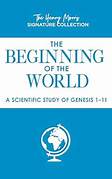
Some years ago, I read a few works by Henry Morris and always had warm feelings about them. He wrote on Creationism and Christianity, sometimes even commentating on books of Scripture. His forte was clearly laying science before Scripture. He always showed evidence of being studied and had no doubts of the validly of Scripture. Not really an exegete, so devotional is really the space he works in.
I’m excited to see the reprinting of several of his titles in a new series called The Henry Morris Signature Collection. They have a crisp look and are a good mixture of the familiar and the new. One of the titles that was new to me was this one that digs deep into the scientific aspects of the first 11 chapters of Genesis.
Obviously, this portion of Scripture is the battlefield of the war between Creation and Genesis. I’m amazed at what simple arguments he presents that absolutely obliterates evolution. For example, the two Laws of Thermodynamics as he well explains are simply insurmountable for evolution. Once after an incredible list he says, “The vaunted evidences of evolution are actually quite trivial”. Ouch! But after reading what went before you are thoroughly compelled to feel the same way.
This book will be helpful for a wide spectrum of users. Pastors and teachers will enjoy it beside a regular commentary to see the science boldly confronted in the text. Bible students, and even younger ones, can still follow the presentation and learn so much.
When you read this book you will wonder how it could possibly be such a minority position with both the Bible and science so clearly on its side. Warmly recommended.
I received this book free from the publisher. I was not required to write a positive review. The opinions I have expressed are my own. I am disclosing this in accordance with the Federal Trade Commission’s 16 CFR, Part 255.
A master exegete tackles the toughest book for exegesis in the New Testament. What could be better than that? I often think of Moo as a Pauline scholar, but he already has an excellent work on James to his credit. Hebrews is not for amateurs and this book is a win for us.
At first, I saw the 17-page introduction and I thought, you’ve got to be kidding! Silly exaggerations entered my mind—was he not going to give this the same level of intense work he gave other commentaries? Reading it run all that silliness right out of my mind. When he made the case with perfect clarity for all that we just can’t know about Hebrews, things that make up the bulk of many Introductions, you realize that there was no need for more pages. Perhaps a few pages more on structure would have been nice, but that is never going to dominate his writings.
On to the commentary of the text—wow! He is an exegete par excellence. Honestly, I felt like I was reading someone in awe of the text accompanied by a rock-ribbed determination to be true to it wherever it took him. I offer up the warning passage in Hebrews 6 as a case in point. It was the text first and his theological predilections second. It’s hard for me to fully express how much I respect that. I’m not sure I agreed with his final conclusions completely, but I am better for having read it. I’ll never study the passage again without reading it.
This may be the best commentary for exegesis on Hebrews available. Peter O’Brien’s commentary is the only one I felt that way about before, but it’s in a defunct status now anyway. Moo needs no commendation from me, but I offer it nonetheless.
I received this book free from the publisher. I was not required to write a positive review. The opinions I have expressed are my own. I am disclosing this in accordance with the Federal Trade Commission’s 16 CFR, Part 255.
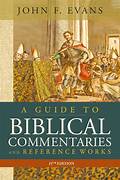
Here’s a book I love and use regularly, at least I have for over a decade with previous editions. So I deliciously devoured this new edition when it arrived. I have personally reviewed several of the new entries here that have been published since the last release, but I really value his assessments.
He’s the best in the field for these kinds of recommendations and it isn’t even close. And, yes, I’ve seen all the others. His presentation is the most logically organized and his evaluations, though a bit complex, can be followed to advantage if you read his explanation a time or two.
His work is what Spurgeon’s was long ago and Cyril Barber’s works were a generation ago. Strangely enough, he denigrates Barber for being too dispensational. Methinks a few reformed/covenantal theology titles got extra stars for that alone here just as Barber flipped it before. And let’s don’t even discuss what Spurgeon said of Plymouth Brethren writers. But it’s no problem in any of them. Find their bias and adjust accordingly. The bias is real enough that not holding Mr. Evans’ theology may get more negative comments than, say, a very critical or liberal volume. I’ll never understand that, but the world has passed me by in many ways anyway . Still, I wouldn’t even think of not having and using this book.
He tries to write for pastors, but he’s just as interested, and maybe more, for the scholarly volumes. Pastors, don’t worry about that as you’ll know inherently how to adjust. If you compensate for the few biases, you will I think find evaluations easy to line up with. At least I did. You might occasionally disagree. For me, he’s far too harsh on the EEC on the Epistles of John (Gary Derickson). He drowned on the differing theology and overlooked the impeccable exegesis. But that is mostly rare.
This can really help you plan and build a library. Even if like me you have a fair number of the books reviewed, you’ll see something you’ve just got to have. I’ve just got to grab Morales on Numbers after reading here. Grab this book, read it, and let the fun begin.
I received this book free from the publisher. I was not required to write a positive review. The opinions I have expressed are my own. I am disclosing this in accordance with the Federal Trade Commission’s 16 CFR, Part 255.
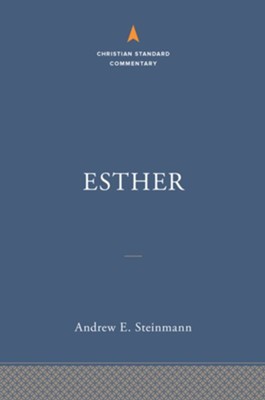
Esther gets its own volume now as the NAC morphs into the CSC. The old volume was combined with Ezra-Nehemiah, and though serviceable, this one improves the commentary on Esther. Andrew Steinmann has produced quite a body of work by this point and is getting a good reputation. He is pleasantly reliable in his approach to the text.
Esther is a challenge for some scholars and the result is that plenty of commentaries have been written on this lovely book that have the equivalent value of a mechanical pencil without lead. Here the pencil is stocked and writes again.
Steinmann marshals fine material and helpfully presents it even in areas that are often dull. In my estimation, he is better presenting the trees than the forest. To be sure, he beautifully presents the trees, picks the right trees to present, and leads us to being proficient spiritual arborists. I’m not saying he never presents the big picture, it just doesn’t seem he carries it over with the right oomph. In fairness, he discusses things like reversals and things that God is doing and so he doesn’t miss it. Fortunately, he gives you every thing you need so that if you are paying attention at all, you will arrive at the big picture on your own.
In the introduction, he covers everything well except structure. An outline is all he offers on that score.
The commentary is sufficiently detailed and is exactly what most people will need. If you need a massive exegetical commentary, check out the superb EEC volume on Esther. If you just need something for teaching and preaching or personal study, you will likely highly value this work. It would in my opinion substantially outrank the similarly styled TOTC volume on Esther.
I feel this commentary might be exactly what many are looking for.
I received this book free from the publisher. I was not required to write a positive review. The opinions I have expressed are my own. I am disclosing this in accordance with the Federal Trade Commission’s 16 CFR, Part 255
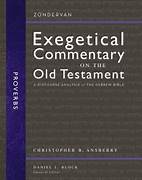
I’ve often not been satisfied with the newer exegetical commentaries on Proverbs. My complaints run from brevity on individual verses or even saying nothing meaningful to drowning in scholarly issues and still saying very little. To be sure, I cracked this book open with expectations. Were they met? You bet they were.
It took a few pages to figure out how much I liked it. The Introduction started slowly. Maybe he buried the lead for a bit. At length, I realized that he was giving me the pieces before he weaved them together. What I ended with was an articulate presentation of what’s really going on in the Book of Proverbs. Along the way, he obliterated the common criticism that Proverbs is either moralistic at best or boringly cliche at worst.
The discourse analysis that is the hallmark of this series was tangibly good. The scholarly minutiae was handled well without bogging down the periscopes. The exegesis was rich and the theology thoughtfully given.
And here’s the best thing: no verses are passed over or given a cursory, bland sentence or two. You can go to that specific verse and get real help. That’s what I was wanting and I got it.
I received this book free from the publisher. I was not required to write a positive review. The opinions I have expressed are my own. I am disclosing this in accordance with the Federal Trade Commission’s 16 CFR, Part 255.
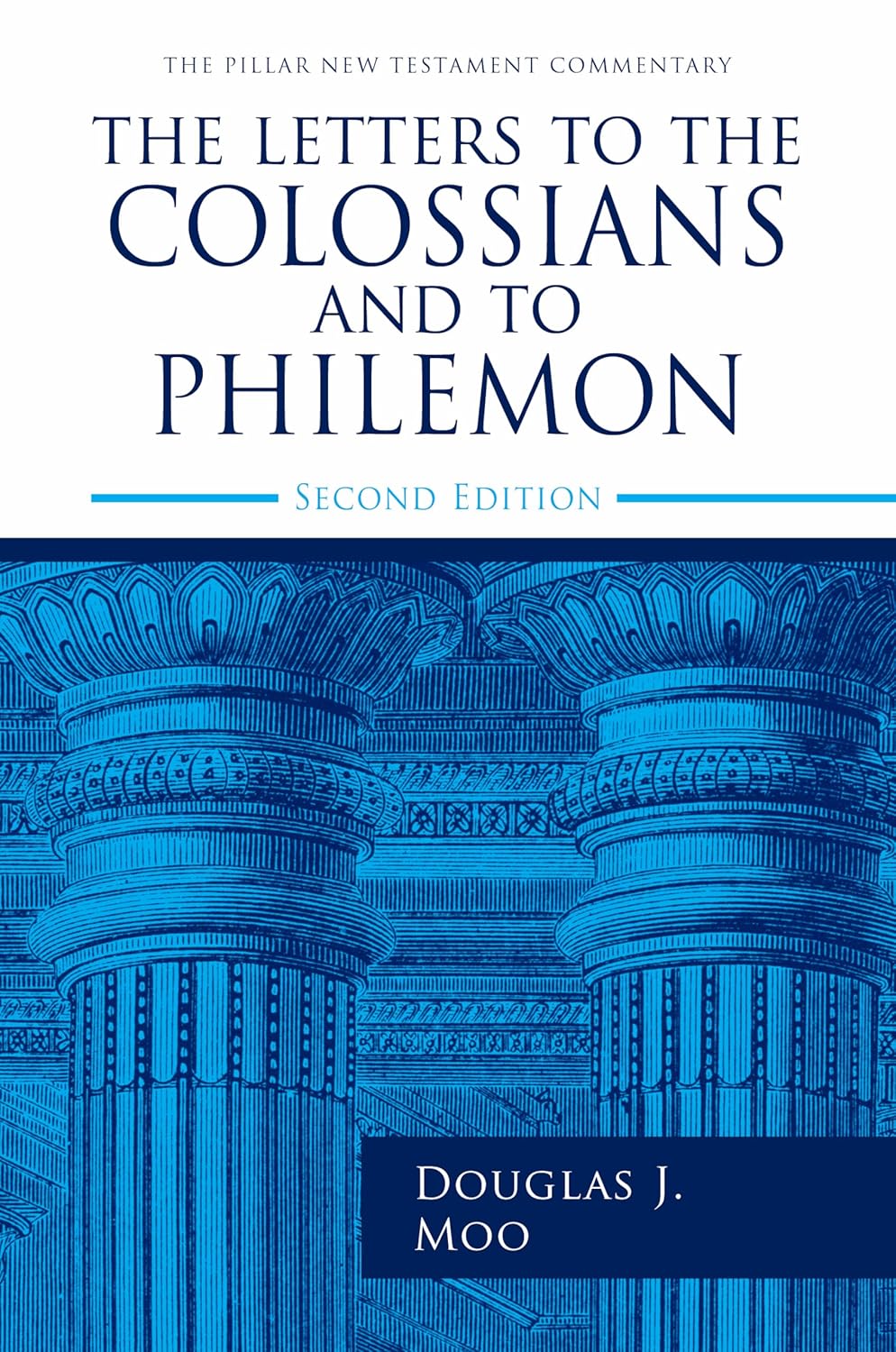
This is the kind of commentary that demands a second edition. Had the editors replaced it as is often the case in these major ongoing series they would have had a lot of explaining to do. This commentary went straight to the upper echelon sixteen years ago when it came out and Mr. Moo is still in his prime in commentary writing. Cliché yes, but nonetheless accurate, it was a “no-brainer” that this new edition arrived. It will not lose its lease in that upper echelon for at least a couple decades from now for sure either.
It’s specifically a blessing as well that he writes on Colossians. Many scholars today like to mug Paul and take Colossians away from him. In this work they were caught in the act and hauled to jail. Since Moo handles those critics with gentleness perhaps its surprising I’d use such a violent analogy; but then again his respectful tone does not make him any less lethal, so maybe it’s not surprising after all. Read the Introduction and you will see. When he ends the authorship section with “But Paul must be seen as the real author”, he’s in no way being condescending. His masterful analysis leaves him with nothing else possible to say.
Describing the false teaching addressed in Colossians is equally adept. His eleven points are balanced, biblical, and fog clearing. Scholars must have something against Colossians because they went quite rogue in this area as well. His theological overview was just right too. Perhaps only structure comes up short (as is usual with him) as it gets not one sentence beyond the outline.
Philemon is probably less a battleground than Colossians and ironically Moo is less certain about the big picture of the letter, though he slightly favors the traditional viewpoint. Still, he writes skillfully and mixes all the ingredients perfectly so you can make your own cake. To me, his work on Philemon is of immense value as well.
Moo needs no recommendation from me as an exegete. He has already attained something of legendary status. I can say, though, that that reputation is fully on display in this commentary. If you are studying Colossians and Philemon, avoid this commentary at your own peril.
I received this book free from the publisher. I was not required to write a positive review. The opinions I have expressed are my own. I am disclosing this in accordance with the Federal Trade Commission’s 16 CFR, Part 255.