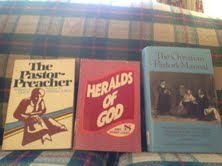
Books On The Ministry #7

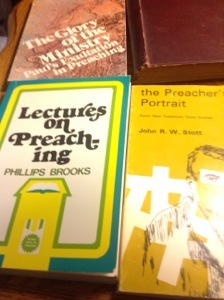
Among the many books written on the ministry, there are a few that simply have had a more enduring influence than others. Here are four titles that stand above the pack.

1. Lectures On Preaching by Phillips Brooks

Perhaps the most famous of the Yale Lectures and surprisingly good. Warren Wiersbe once said that “…every preacher ought to read (it) once a year for five years, and then once every other year for the rest of his life. What makes these lectures so valuable is that they deal with basic principles, not with transient methods. The preacher who is looking for shortcuts will not find them here.” Wiersbe was right!

His explanation that preaching is truth through personality is classic and accurate. Jewels abound from start to finish in this volume. In advising us he said, “No man ever yet thought whether he was preaching well without weakening his sermon.” Later he was speaking on courage and said, “Courage is good everywhere, but it is necessary here. If you are afraid of men and a slave to their opinion, go and do something else.” He followed that with: “Be independent.” He also spoke of self-conceit and dealing with failure. Here is an example of another sparkling statement: “Failure and success to really working ministers are only relative. Remember that no man wholly succeeds or wholly fails.” I could go on and on!

I could not follow Brooks in all his theology, but this volume could hardly be better.

2. The Preacher And His Models by James Stalker

Another of the great Yale Lectures on Preaching is this powerful volume. Mr. Stalker took a different track than his predecessors by looking at the ministry through the ministries of Isaiah and Paul.

He has many great things to say. For example, he said, “…the outer must be preceded by the inner; public life for God must be preceded by private life with God; unless God has first spoken to a man, it is vain for a man to attempt to speak for God.” He reminds us: “Preaching is not merely the speaking of a man. If it is, then it is certainly not worth coming to church for. Preaching, if it is of the right kind, is the voice of God.” He teaches us well.

The idea is that we find our models in men in the Bible. It really works and this volume is a help.

3. The Glory Of The Ministry by A.T. Robertson

Subtitled “Paul’s Exultation In Preaching” and based on Paul’s statements in II Corinthians 2:12–6:10, this volume has been loved by many, especially Baptists. What is amazing is how well this volume doubles as a commentary on that section of Scripture in addition to being such a help to we who are in the ministry.

He has so much to say that truly inspires. He tells us how essential our private walk with the Lord really is. He said, “The only way to have permanent glory is to continue beholding the glory of the Lord. If we cease looking at Him, we cease to reflect His glory.” That is a secret of ministry we need not miss!

He writes powerfully about legalism and the “attraction of Christ.” He reminds us: “It is just because Jesus can save the worst of men that the preacher has the heart and hope to go on with his work.” On the other side he reminds too: “The vessel of clay is very fragile and is easily broken and destroyed.” He reminds us that the biggest portion of our pay comes in the next world. Pleasing our Lord is the passion of ministry, and we must never forget the Judgement Seat of Christ.

He explains success in Paul. “God is the worker and Paul is the coworker. That is his glory and the secret of success in the ministry”, he says.

I favor this volume over Stalker myself. It is a must-have volume.

4. The Preacher’s Portrait by John Stott

You wouldn’t think a book subtitled “Some New Testament Word Studies” would not be so gripping, but it is! It is a small book of barely over 100 pages, and only has 5 chapters, but what chapters they are. He discusses 5 roles the preacher fulfills according to the Scripture: steward, herald, witness, father, and servant. In those 5 things you have a great overview of the ministry.

He lays it out so plainly, yet with power. In describing the steward and how he is not a prophet he says, “The essential characteristic of the prophet was neither that he foretold the future, nor that he interpreted the present activity of God, but that he spoke God’s word.” This alone would fix what ails the ministry in many circles today.

There is so much more. This is another of the really great ones.

I pray you can have your ministry blessed and in turn bless those to whom you minister by securing these volumes and mastering their contents!


Related Posts:

You can find all posts and books reviewed in this series here in the introductory post.

Introductory Post

Previous Post

Next Post

20130923-201626.jpg

Archaeology and Studying The Bible

samaria ruins

It’s not exactly Indiana Jones, but archaeology is a fantastic aid to Bible study. Much of the Bible customs we know today have been either verified or enlarged upon through archaeological findings. In addition we have more accurately labeled certain Bible sites, which is a wonderful thing if you get the chance to visit the Holy Land and stand and visualize the Bible.


Archaeology doesn’t trump the Bible at any point. When your archaeological findings come into conflict, you need further study and, of course, keep believing the Bible. As great as archaeology is, it is only as good as the presuppositions that the archaeologist holds. That can make for scandalous news stories. Personally, I have never once seen an unbiased archaeologist have findings that fully contradicted the Bible.

One famous case is the dig done at Jericho by the famous Kathleen Kenyon. She was, without question, an accomplished archaeologist. The problem was the miraculous tumbling of the walls of Jericho as recorded in Scripture. If you hold an anti-miracle position, it would be an embarrassment for your archaeological findings to match the Biblical record. She did good work except for dating the findings too far away to match Joshua’s account. It wasn’t the facts that required the dating, but her presuppositions and biases.

Interestingly enough, archaeologist Byrant Wood has done further work and reviewed the massive details of Ms. Kenyon’s work. His findings? The pottery would, in fact, match the time of Joshua. Even more amazing, there were burnt items and jars of stored food in the ruins. Likely there would have been fire in Joshua’s conquest. If the walls fell suddenly, then you would expect the food to be found in containers. Had Jericho been overthrown at the end of a siege as some claim, the food would have been all consumed. I didn’t need that to believe what the Bible said, but it is absolutely fascinating!

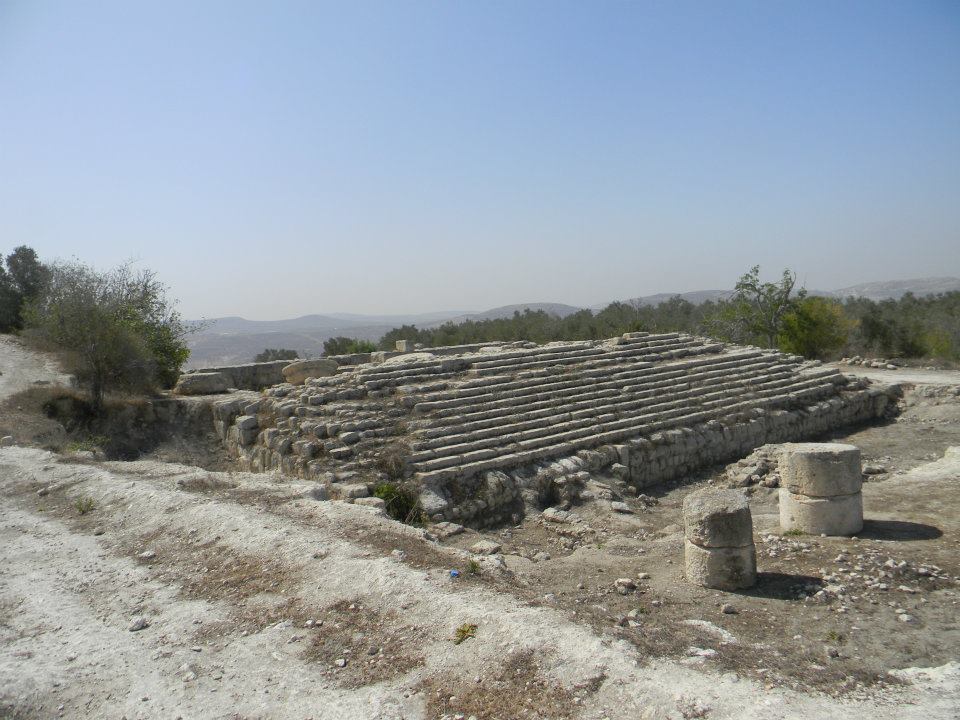
Time and time again, findings match exactly what the Bible said. In the first two pictures here, you are looking at Samaria. You can see what efforts are required to do this type of study. Herod built a palace here in Jesus’ day right where the Kings of the Northern Kingdom had their palace. Archaeological findings only backed up what the Bible said. Deep in the West Bank in the current day, it is a beautiful site that commands an impressive view. No wonder the palace was there. What a thrill it was for me to go there and imagine Ahab being visited by Elijah and Elisha, or daydream about the four lepers at the siege. I couldn’t help but notice the evidence of past archaeological work there too.


samaria ruins two

Archaeology isn’t the only element in identifying a Bible site in Biblical lands. Place names carried down through the years, what previous generations have believed, texts preserved, and a correlation to all the facts the Bible mentions are all essential. Now we just add archaeology to the list.

Sometimes all of these elements still fail to yield a conclusive answer. Take, for example, Sodom. There has always been debate. Some scholars I respect have suggested a place called Bab edh-Dhra. I am convinced by their evidence. Though difficult to find, I went there when I was in Jordan. In the picture below, you see it looks so God-forsaken. I fear presuppositions have hindered study of the site of Sodom too.

Archaeology can add a helpful level to our study of God’s Word. Some understanding of a process we don’t have to be part of (though being part of a dig would be awesome), can yield us great results.

sodom

Book Review:

doing archaeology

Doing Archaeology in the Land of the Bible by John Currid is a fine aid to grasping what archaeology is, how it is done, and what it brings to us. It is a basic guide and all most Bible students need. In 120 pages it gives a real overview that would make descriptions of archaeological results more meaningful to you. As a pastor, I would give it high marks.

Preachers and Preaching by Lloyd-Jones (Books on the Ministry # 6)

If you had to list the two or three greatest books on the ministry, you would have to consider Preaching and Preachers by Martyn Lloyd-Jones. Since it was published in 1972, it has perhaps been the most influential title on the subject.

Why has it been so popular? On the one hand, Lloyd-Jones clearly stands as one of the masters of the pulpit. He could open the Scriptures with a deftness most of us who preach could only dream of. Then there is the fact that he is a racy lecturer. This volume is a written record of his lectures on preaching near the end of his career. What he has to say is worth hearing! He gives life to what some call “the romance of preaching.”

He begins at the beginning–the primacy of preaching. As he says, “…the work of preaching is the highest and the greatest and the most glorious calling to which anyone can ever be called.” He laments the increase of entertainment in worship at the expense of preaching. That is only more true today. He disdains the shift from our great task–the exposition of God’s Word. His solution is to bring preaching back to its proper place. Actually, it is his answer to every issue that he will discuss. I suspect that he is exactly right!

Lloyd-Jones carefully unfolds what preaching is as well as what a sermon itself really is. Along the way he drops nuggets of gold as if he were dispensing cheap candy. For all the criticisms of preaching today, his explanation that preaching smashes pride, with our need of being humbled so real, preaching then is the avenue to reach people. He believes people with come to hear preaching if, and only if, it be real preaching.

To him real preaching must be expository. Though there can be an occasionally blessed topical message, he is right. The reason is that we need God’s Word, not our own creative message. It is the Bible first, not your sermon idea. How contrary to most preaching today, but perhaps a good explanation for preaching’s low standing in current times.

In the larger context of preaching, he elevates the importance of corporate public worship. He writes of the wonderful long term benefits of preaching in people’s lives. He explains what a call to the ministry really is. He is adamant that “the pew” not control “the pulpit.” He explains how people can pull the preacher away from what we are to do, but we must hold true for their good.

His chapter on “The Preparation of the Preacher” is incredibly good. It gives us so much on personal growth. He ends with a discussion on the necessity of the unction of the Holy Spirit in our preaching. That is a correct emphasis.

Some criticize how dogmatic he is in this volume. He is truly harsh on a few occasions and a little too picky on some minor matters. Still, if you just overlook a few such lapses, you will find incredible treasure throughout this volume.

Be sure to look for Zondervan’s 40th Anniversary Edition of this great classic. In addition to his text, six modern well-known preachers explain why this volume is so good. What they have to say is worthwhile too.

I love this book and I think you will too.

Related Posts:
You can find all posts and books reviewed in this series here in this introductory post.

Introductory Post

Previous Post

20130921-174531.jpg

Next Post

Books On The Ministry #5

photo (3)

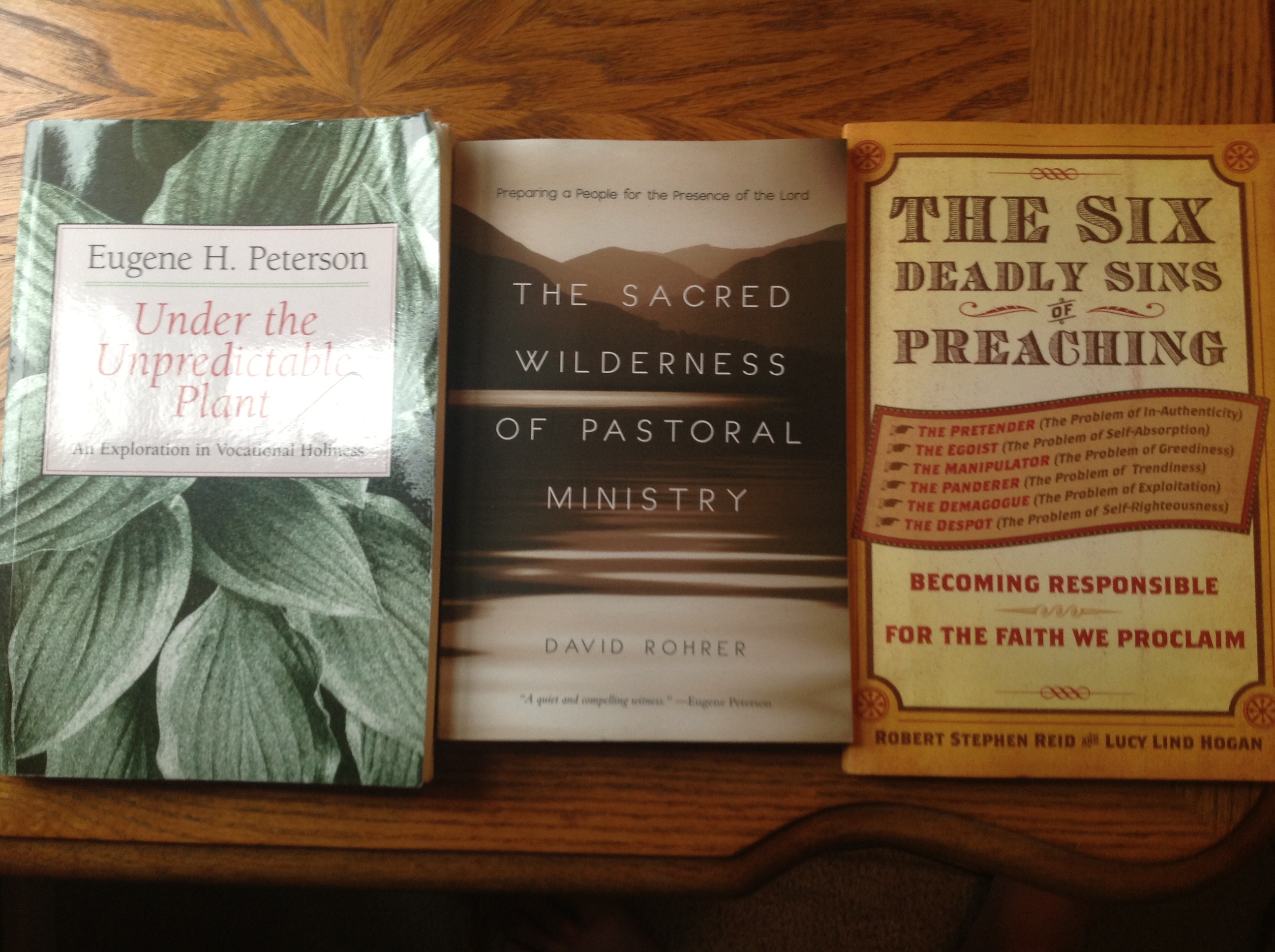
While so many older books offer classic, timeless help for those in the ministry, that in no way precludes the fact that some homerun volumes are still coming out today. I would like to share three that I have read recently plus two from last year:

1. Under The Predictable Plant by Eugene Peterson

His subtitle “An Exploration in Vocational Holiness” tells us where he is going in this incredible book. He uses the story of Jonah to chart a course for us where Jonah’s struggles show us the pitfalls before us today. He guides us to see that we have a well-defined vocation if we could cast off the fog of the world that would re-define it if we would allow. In a majority of pastors, sadly, this switch has already robbed us of our calling.

He nails it when he tells us our marketing mindset has run off the spiritual. We attempt a spiritual vocation without the spiritual and we were doomed from the start! Following modern trends he equates to idolatry. He says, “Our actual work takes shape under the pressure of the marketplace, not the truth of theology or the wisdom of spirituality.”

He takes needed shots at performance-based ministry. There he says, “The taste for God is debased into greed to be God. Being loved by God is twisted into a lust to God-performance.”

I love how he relates flashy Tarshish to the ministry of today as many perceive it. But he explains: “ …pastoral vocation is not glamorous vocation and that tarshish is a lie.” If this gets out, many may leave the ministry if they can’t squeeze glamour out of it! In fact, in every place possible he reminds us of how human congregations really are.

There is so much more and he relates how he learned some of this the hard way in his own pastorate. I plan on getting other Peterson books on the ministry!

  • 2. The Sacred Wilderness of Pastoral Ministry by David Rohrer

Here is a book that seeks to remind us what the pastorate is really all about as we live in a world where pastors have lost their way. As he says, “We have a gospel to preach.” He uses John the Baptist to share these concepts with us. He places an emphasis where it should be: we are “preparing a people for the presence of the Lord.”

He warns against turning into a pretender. He says, “… we occasionally fall prey to those insecure moments when we allow the approval and disdain of our congregations to define us. When this happens, our goal in ministry degrades into making people happy or avoiding their wrath.”

When he writes about conflict, he gives great help. He shows that we often blow it because we see the conflict as against us personally and not against the Lord. That error will greatly raise your stress level.

He ends asking us if we can be like John and let it be only about Christ. This is likely the worst mistake we could make to fail here. He also says, “Yet humility allows us to acknowledge that neither the complimentary accolades nor the derisive criticisms are ever the final evaluations of our ministry.”

This is a great book!

3. The Six Deadly Sins of Preaching by Robert Reid and Lucy Hogan

I’m amazed this book is so good. I imagine I would disagree with the theology of these two writers on many points. Still, it holds we who preach to account and is incredibly convicting.

It will be enough to entice you for me to list these six sins:

The Pretender (The Problem on In-Authenticity)

The Egoist (The Problem of Self-Absorption)

The Manipulator (The Problem of Greediness)

The Panderer (The Problem of Trendiness)

The Demagogue (The Problem of Exploitation)

The Despot (The Problem of Self-Righteousness)

The sad part was that I felt traces of myself in almost every one of these! I suspect churchgoers would love for all of we pastors to read this volume!

4. Dangerous Calling by Paul Tripp

Every pastor needs to read this book. He pierces us until he gets our hearts. This book brought major conviction to my life.

Read here for a fuller, earlier review I did.

5. Leading On Empty by Wayne Cordeiro

Here was another book that met a personal need for me. Read it to be prepared for burnout that may come, or run and buy it if you already feel it.

Again, read here for an earlier review.

More in Series:
You can find all posts and books reviewed in this series in the Introductory Post.
<a title="Books On The Ministry #1" href="http://reaganreview.wordpress
.com/2013/06/20/books-on-the-ministry-1/” target=”_blank”>Introductory Post

Previous Post

Next Post

Books on the Ministry #4

ministry books 4Here are 3 more classic books on the ministry.

1. The Cure of Souls by John Watson (Ian Maclaren)

This Scottish preacher wrote under the pen name John Watson and published several volumes of his sermons. He could be a little sloppy doctrinally, but his viewpoint on preaching was spot on. I can just hear his Scottish brogue as I read. This was the 1896 Yale Lecture.

“Cure” sounds like thick Scottish for “Care” ( I read it is actually Latin) and so he writes about the ministry. He begins with forming sermons and he gives good guidance. He explains how when we preach about everything, we really preach about nothing. He says these casual sermons come either from slackness or laziness.

Chapters 4 and 5 drag, but be sure to read on as chapters 6 through 9 are exceptionally good. You will smile as he tells about church members who are dissatisfied with everything. He calls them “mutineers” and says “…a ship may weather many storms from without, but mutiny among the crew is destruction.” His solution? Every church should refuse them and they could all get together and make their own church! Since no one would want to pastor them, a pastor who has wrecked two churches “by bad temper and overbearing conduct” could be sought for them. See why these old books can still be so valuable because so much of the ministry never changes!

When he speaks of being a prophet versus being an organizer, he sounds like he writes today. He respects and shows the value of small works too. Many ministry books today write that off as failure in these success-mad days we live in.

Whether it is call for confidentiality, or the egotism he hears in some public prayers, or the description of the good side of ministry, every preacher should read it.

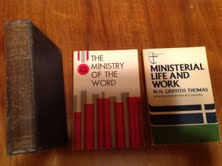
2. The Ministry of the Word by G. Campbell Morgan

Here is master preacher who gives us his thoughts on the ministry. He discusses the man in the “ministry of the word.” He begins by digging out the meaning of “ministry” and the “word” and describes them as the fundamental conceptions.

Then in 4 chapters he compares and contrasts the Apostle, Prophet, Evangelist, and Pastor/Teacher. He sees them as different gifts among those who preach, though there are no more Apostles today. He fills like no one will be gifted in all these areas. He does argue persuasively that pastor and teacher are the same office.

In the final four chapters he deals with modern application for these roles he dug out. They are really good. He says that he never asks someone to enter the ministry as the Lord calls Who He wills. Though that call appears different in different personalities, the call is there none the less. He feels the clearest evidence of a call is the gift for it. A Pastor, for example, should have a clear gift for teaching.

His epilogue on prayer keeps the true source of power before us. What a gifted preacher he was and it is worth hearing what he has to say.

Read more on Morgan here.

3. Ministerial Life and Work by W. H. Griffith Thomas

This title isn’t as known as some, but it should be. This is an abridgment of his The Work of the Ministry, but likely all we need is here. He was a popular author who had a profitable ministry.

He has six good chapters on we men in the ministry by reviewing the ministry of the prophets, the Twelve, Paul, and as described by certain epistles. It is well done.

In the second half of the book he writes about the work itself. It is very detailed on certain aspects of the ministry like worship, preaching, visiting, Sunday School, and even prayer meetings.

This is a very good volume.

More in this series on the ministry books:
You can find all posts and books in this series reviewed in the Introductory Post.
Introductory Post

Previous Post

Next Post

Books On The Ministry #3

ministry books 3

From the treasure trove of great books on ministry, we review three more classics.

1. The Pastor-Preacher by William Quayle

It is hard to relate how good this book really is. It is provocative in its description of the ministry. Every chapter is outstanding and many sentences make memorable quotes. When he first describes the preacher, you will be hooked. He says, “It takes more courage to be a preacher than to be a gladiator, or a stormer of fortresses, because the preacher’s battle is ever on, never ceases, and lacks the tonic of visible conquest.”

How about this perspective? “We are come to give ourselves. A preacher is to give himself…A man is an estate; and at death should any of that estate be left in hand the man is by so much a failure…Jesus had nothing left. Empty as a drained cask; that is Christ’s new program for life.” Or this of the preacher: “ He is not the trumpet, but the trumpeter; not the sword, but the soldier.”

This he says of what we preach: “So the preacher must know the way to the Hidden Source. He must trail tendencies. He must keep to the main stream; and the rivulets he must pass only giving them a glance….” How that would revolutionize preaching today!

He challenges us to be men of prayer or not be a man of God. He also explains that we must be a mystic. We must hear things from above. We must have wonder and imagination. He tells us be but not be consumed with the age we live in, but the ages.

He is as powerful in presenting our work with people as equal to our work in preaching. He ends with practical help with various types of visits.

This book should be on every pastor’s shelf.

2. Heralds of God by James Stewart

Mr. Stewart ministered in Scotland. This volume was originally a Warrick Lecture and is organized around five subjects for the preacher: his world, theme, study, technique, and inner life.

We are in this world as a herald of God to people who are disillusioned confused and need to hear of our Lord. We are to smash that disillusionment, he says, with the Cross of Christ.

He reminds us to be sure we worship as we lead worship. He is one of the best I have read in describing how the sermon itself is a key component or worship. That is so often forgotten today. He speaks to what I’ve heard many preachers talk about–running out of fresh ideas for sermons. He proclaims: “The longest ministry is too short by far to exhaust the treasures of the Word of God.”

He makes it beautifully clear that Christ must be our theme. We must be careful not to be swallowed by side issues.

When he speaks of our study, he encourages us to throw our all into it because of the importance of the message we have to preach. We work with treasure. To better know how to preach to men, better know God. He also makes a powerful plea for expository preaching. As he says, “Let the Bible speak for itself.” He says it will deliver us from monotony. He is right!

After giving practical advice on technique, he launches into our inner life. He argues that we must take heed to ourselves before we do so for the flock.

This is another winner!

3. The Christian Pastor’s Manual, compiled by John Brown

This is a reprint originally published in 1826. Soli Deo Gloria and Solid Ground have reprinted this fine volume. Every chapter is written by a different preacher of that era. Some are better than others, but all are good. The chapters may read slightly slower being from that period, but are worth the time. You might enjoy reading one chapter a day and then mulling it over.

I especially recommend the chapter on “Pastoral Cautions” by Abraham Booth. These and other chapters remind us again how so many facets of ministry never change through the centuries.

Young or old, you should ponder the chapter by Isaac Watts called “Questions Proper for Young Ministers Frequently to Put to Themselves.” I finished it only to pray: “Help me Lord.”

Hope you can get these great volumes.

MORE IN THIS SERIES ON MINISTRY BOOKS:
You can find all posts and books reviewed in this series in the Introductory Post.
Introductory Post

Previous Post

Next Post

Books On The Ministry #2

ministry books 2

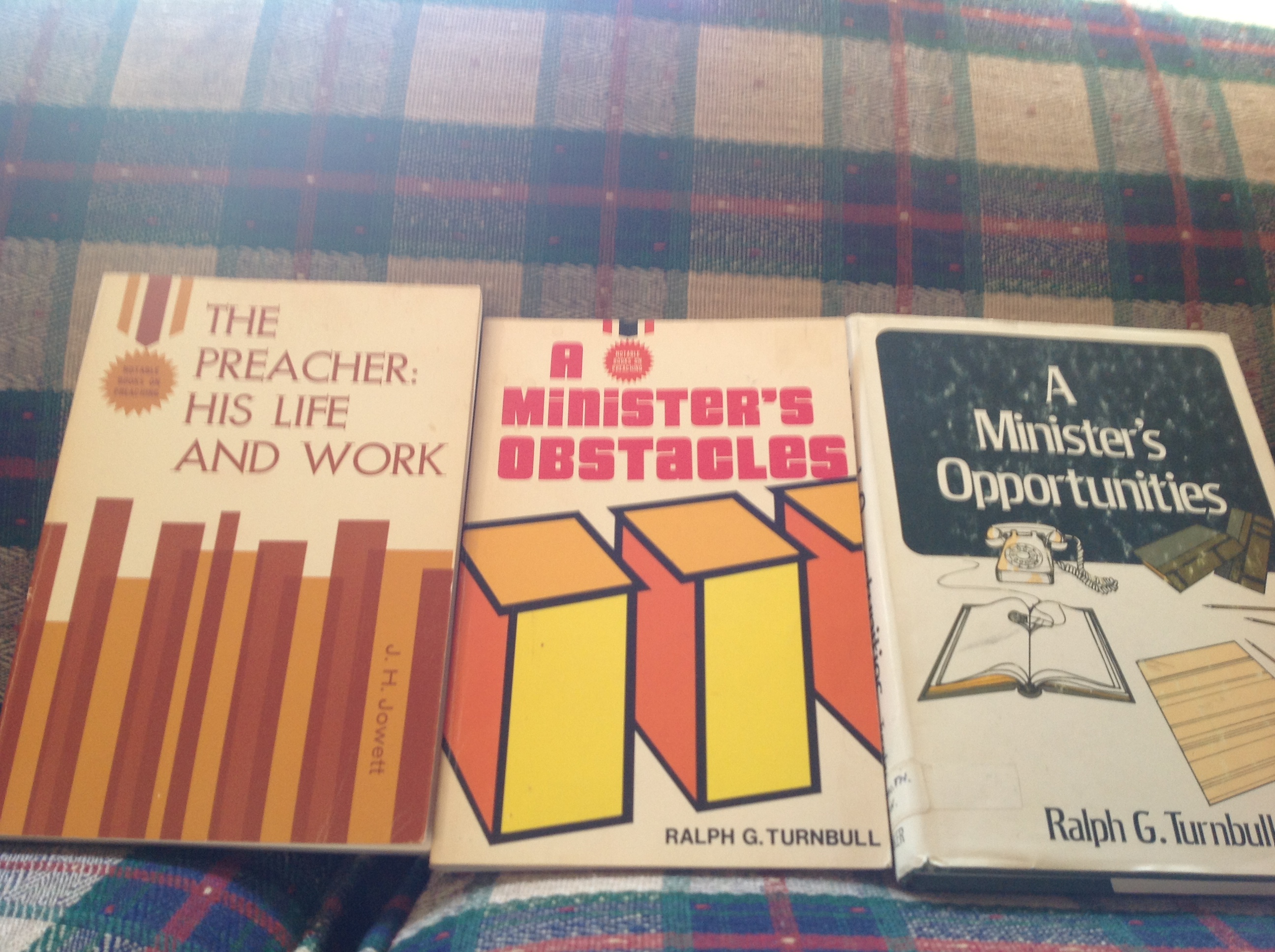
Here are three jewels on the ministry. Some are more well known than others, but all are 5-star volumes. Several of these were reprinted by Baker in a series called “Notable Books On Preaching.” If you ever see one of them at a used book sale, by all means pick it up.

1. The Preacher: His Life And Work by J.H. Jowett

Jowett was an incredible preacher and this volume made up one of the famous Yale Lectures On Preaching (1911). When I first read this over 10 years ago, the realization came to me just how truly the ministry was work. Particularly, he laid bare the vital truth that preaching is work. Sermon preparation should be intense work. Anything less is unbecoming our great task.

His opening chapter puts the importance of our calling in its proper place. Next, he tackles the perils of the preacher. Listen carefully as he speaks of “deadening familiarity with the sublime.” I personally believe this is one of our greatest dangers. In the next chapter on “The Preacher’s Themes” with its emphasis on “feed my sheep”, he points out that we are both responsible and accountable for this very thing. How honest and careful we must be in this task.

When he discusses “The Preacher In His Study” he said things like: “We must make the businessman in our congregation feel that we are his peer in labor.” He in no way meant that in show, but in reality. When he gets done you want to roll up your sleeves and run into your study and get going.

He goes on to cover our work in the pulpit itself as well as in the homes of our people. When you read these classic volumes on the ministry, you will find an emphasis on being in the homes and lives of the people you pastor. The idea that all visiting should be about getting new people in the church would horrify the old masters who took seriously their role as shepherd.

This is a must-have volume!

2. A Minister’s Obstacles by Ralph Turnbull

This volume is a perfect follow-up to Jowett’s The Preacher: His Life And Work. Mr. Turnbull wrote this book in 1964 and it was incredibly influential and for good reason. You will notice how widely read he was in the great books on preaching before him. It is no surprise that he edited Baker’s “Notable Books On Preaching” series.

His chapter titles alone will grab you. Consider “The Specter of Professionalism”, “The Vice of Sloth”, “The Dry Rot of Covetousness”, “The Bane of Jealousy”, and “The Paralysis of Pride” among others. The contents are as convicting as the titles.

He had so many great things to say. I marked in my copy how he even broached the subject of moodiness in preachers and how we must guard against it.

This is a great volume!

3. A Minister’s Opportunites by Ralph Turnbull

A worthy sequel to his A Minister’s Obstacles. It is set up the same way, but in positive terms. The titles are as riveting and the subject matter needed. He begins with “The Certitude of Vocation.” Again, he wants us to see the task before us. I love what he said here: “If the ministry degenerates to a ‘job’ with demands of monetary returns for services rendered and a tendency to unionize conditions and terms, then the peril of being the hireling and not the shepherd is obvious.” That still speaks to our day.

When he addresses “The Stewardship of Time”, he distinguishes the Father’s business and busyness. He challenges us to self discipline and hard work. I love his discussion of study and books, though not everyone gets into that subject as I do.

His chapter on “The Power of Ambition” is worth the price of the book. He coaches us to avoid “dreams of grandeur and aggrandizement.” He cautions against being “content with externals and to be careful as “success is a catchword of our secular age.” Thirty years has only deepened the problem.

Not quite as influential or good as his earlier volume, but it is worthy acquisition.

Happy hunting on the used book sites!

MORE IN THIS SERIES ON MINISTRY BOOKS:
You can find all posts and books reviewed in this series in the Introductory Post.
Introductory Post

Next Post
Books On The Ministry #1

ministry books

I have made it a point since I was called into the ministry to collect the best books on the subject and read them carefully. I scoured recommendation lists everywhere I could find them. Several volumes a year has been my standard fare. The value of these volumes is beyond calculation in their impact on my life.

As I have recently ended my first pastorate, and as I anticipate my next ministry, I find myself carefully reevaluating, rereading, and looking for new volumes to help me be what the Lord wants me to be. I remain convinced that the ministry is the highest calling. If that be so, then it is worthy of the greatest effort, the greatest care, and the most intense of study.

In the beginning I read the classics on the ministry. Hardly any of them were from after 1950. That they were so helpful only proves the timeless nature of the ministry. In recent years I took on newer volumes and found that wonderful things are still being written. The whole spectrum is needed.

Many pastors feel that a few good books on any subject or book of the Bible are all that are needed, and while that may work in other categories, it is a huge mistake in the area of the ministry. Gentlemen, it is what we do. Like any other life’s work we should be continuing our education and be aware of what has been said on the subject.

Then there is the obvious concern with our lack; our need glares as we go from one blunder to another. Many of these volumes were written by men in the twilight of their ministry as they had the reflection natural as the end is in sight. We readers have the value of their successes and failures forging the words on the page.

So I introduce a blog series writing about these great books. I will not be giving them in any particular order. (I can’t—they are boxed and in a mountain of boxes during this transition time in my life). I can only give them as I find them! I write this as I am trying to help myself and thought it might be a blessing to share on this blog. Books on preaching and pastoring will be reviewed. Some volumes push one at the expense of the other, but we can apply the needed balance as we read.

I so recommend that everyone in the ministry load up the shelf on ministry books and read carefully. I give it to you as a test. Try it and see if you aren’t helped and blessed immensely.

Let’s join together and buck the trend that is destroying the ministry as many are reshaping it as the world pleases. Let’s fight the pressure to change us into entertainers, promoters, and mere organizers when souls are still in the balance and God’s glory is on the line.

BOOKS REVIEWED: (Just Click on the link to see the reviews)
Books on the Ministry # 2

1. The Preacher: His Life And Work by J.H. Jewett, 2. A Minister’s Obstacles by Ralph Turnbull, 3. A Minister’s Opportunities by Ralph Turnbull

Books on the Ministery #3
4. The Pastor-Preacher by William Quayle, 5. Heralds of God by James Stewart, 6. The Christian Pastor, complied by John Brown

Books on the Ministry #4
7. The Cure of Souls by John Watson, 8. The Ministry of the Word by G. Campbell Morgan, 9. Ministerial Life and Word by W. H Griffith-Thomas

Books on the Ministry #5
10. Under the Predictable Plant by Eugene Peterson, 11. The Sacred Wilderness of Pastoral Ministry by David Rohrer, 12. The Six Deadly Sins of Preaching by Robert Reid and Lucy Hogan, 13. Dangerous Calling by Paul Tripp, 14. Leading On Empty by Wayne Cordeiro

Books on the Ministry #6
15. Preachers and Preachers by Martyn Lloyd-Jones

Books on the Ministry #7
16. Lectures on Preaching by Phillip Brooks, 17. The Preacher: His Life and Models by James Stalker, 18. The Glory of the Ministry by A.T. Robertson, 19. The Preacher’s Portrait by John Stott

Books on the Ministry #8
20. Famine in the Land by Stephen Lawson, 21. Pulpit Crimes by James White, 22. They Smell Like Sheep by Lynn Anderson, 23. A Portrait of Paul by Rob Ventura and Jeremy Walker, 24. How To Preach To People’s Needs by Edgar Jackson, 25. The Preacher and His Preacher by W. B. Riley, 26. The Elements of Preaching by Warren and Davis Wiersbe, 27. Preaching in the Holy Spirit by Albert Martin, 28. Mourning a Beloved Shepherd by Charles Hodge and John Hall

Books on the Ministry #9

29. Walking With The Giants by Warren Wiersbe, 30. Listening To The Giants by Warren Wiersbe, and 31. The Company of the Preachers by David Larsen. Several other volumes are mentioned here.

Books on the Ministry #10

32. The Expository Method of G. Campbell Morgan by Don Wagner, 33. The Sacred Anointing: The Preaching of Dr. Martyn Lloyd-Jones by Tony Sargent, and 34. Return To Worship by Ron Owens.

Books on the Ministry #11

35. Preaching? by Alec Motyer

Books on the Ministry #12

36. The Pastor: A Memoir by Eugene Peterson

Books on the Ministry #13

37. The Art of Pastoring by David Hansen, 38. The Life of Alexander Whyte by G. F. Barbour, 39. He Is Not Silent by Albert Mohler, Jr., 40. The Pastor’s Guide To Leading & Living by O. S. Hawkins

Books on the Ministry #14

Fail by J. R. Briggs

Books on the Ministry #15
42. The Minister As Shepherd by Charles Jefferson, 43. The Reformed Pastor by Richard Baxter, 44. Expository Preaching Plans And Methods by F. B. Meyer, 45. Master Preachers by Harold Calkins

Books on the Ministry #16
46. Persuasive Preaching by Overstreet

Book on the Ministry #17

47. Preaching With Accuracy by Pelton

Books on the Ministry #18

48. An Unhurried Leader by Fadling

Books on the Ministry #19

49. Spiritual Leadership by Sanders

Books On The Study Of Ecclesiology (Doctrine of the Church)

9415130_origHere’s a doctrine with a wide variety of viewpoints. For that reason, you will probably find fewer books that you agree with than in the study of other doctrines. Even among independent Baptists (like me) there is an incredible amount of debate. The debate, in my opinion, is hardly worth fighting over.

When did the church begin? What is the Church? Is it only local? Or is there a Universal Church that is the Body of Christ? Then as you spread out among Christian people, there is the issue of church government. How do we do baptism? The Lord’s Supper? Are denominations acceptable or should every local church be autonomous?

It often starts more fights than it answers questions, but there are places to read to decide what you believe.

Best place to start:

In this case I recommend beginning with the Systematic Theologies out there.

1. Systematic Theology Volume Four: Church/Last Things by Norm Geisler

He writes well and as a teacher of many years he is understandable. He fairly presents differing viewpoints and that is especially important on this subject. I love his 4 volume set.

2. Systematic Theology by Wayne Grudem 

He supports a form of church government I wouldn’t follow, but he presents it well and you will understand where they come from. I love to read him after Geisler.

3. Christian Theology by Millard Erickson

Presents in a way different from the above two and well worth having. I am glad to have it.

There are others like Charles Ryrie worth consulting too.

Baptism/Lord’s Supper

1.The Meaning And Use Of Baptizein by T. J. Conant

The nuts and bolts of why we immerse.

2. Baptism: Its Mode And Subjects by Alexander Carson

An influential classic.

3. Understanding Four Views On Baptism, edited by Armstrong and Engle

These Four Views books are awesome to really understand a concept.

4. Understanding Four Views On The Lord’s Supper

Another winner!

Local Church

There are some helpful material out there. I recently reviewed Believe and Belong by Clarence Sexton. Peter Masters has written some helpful pamphlets and books like Do We Have A Policy For Church Membership and Growth? We need more here.

Baptist Church

1. Principles and Practices For Baptist Churches by Edward Hiscox

The first place to look.

2. The Church: Its Polity and Ordinances by Hezekiah Harvey.

A good secondary source.

3. Baptist Church Manuel by J. M. Pendleton

I’ve seen some Baptist churches that made it a higher authority than the Bible! Still,  it lets you see what has been believed.

Happy studying!

Success Or Victory — Which Do You Want?

success or victoryAre you shooting for success or victory in your life? Do you actually know the difference? And if you really do, do you live for the noble one of the two? A book I read and recently reviewed got me thinking about this in my life. It really intersects with some other things the Lord has been pointing out to me.

Perhaps you have lined up with the world around you and think in terms of success. I know it has infected my thinking at times. Success is impressive. It woos the praise of those around us. It titillates our own emotions. But it bores Heaven.

Success is about achievement, not results. Particularly when the results are impossible to quantify, we fall back on those old standbys of the pats on the back. It’s like favoring the medal over strategic gain on the battlefield. Strategic gains do not, I might remind you, always take the shape of a superior number in some category.

Take the ministry as a prime example.  How do you decide if your ministry has meaning? The world tells you that it’s measured in success. That is, success defined by my number of choice: attendance, baptisms, visitors, budget, building projects. The key number for success is, of course, my best number at the moment. I’ll talk that up because I want you to think I am successful. I’ll never mention my bad numbers–I’m not stupid enough to mention those. Then you would know I’m unsuccessful, and my life would be meaningless. (Yes, that is just as ridiculous as it sounds and it is still how we feel).

Do you suppose the Lord really measures us in such a fashion? If I could improve any of those numbers, would the Lord love me more? A little thought and we know the answer to that question! The flip side must be answered by the same logic–will He love me less when some of my numbers decrease and I become proportionally more unsuccessful? Again, you know the answer, but this has still been the case of extreme discouragement for so many of us.

 The book I mentioned spoke of the cross. That’s a good reference point, wouldn’t you agree?  Jesus had success for a while. The crowds were impressive, even if a bit superficial and unruly. Impressive enough, in fact, that the religious establishment got so concerned about His numbers in regards to theirs that they decided to kill Him. Success, you know, has a dark side. As His ministry rolled along the crowds disappeared. By the cross, even the Twelve couldn’t be found! By our standards, that is anything but success. But was it victory?

I say it was the greatest of all victories that rose from the ashes of all that apparent failure. Such is the benchmark of success–it doesn’t know the difference between victory and defeat. Again, it might think the losing general of the battle, as long as his chest was decorated with rows of medals, quite the hero.

It plays out in our lives. We strive for success and care little for victory in the Christian life. As if the Lord cared more about what we do than who we are! Surely, you know better than that. And yet like me, at times, I bet you forget.

Remember that success fades while victory ever remains. Remember who topped the statistics 50 years ago? 200 years ago? I didn’t think so. Do you remember who invested in your life in a meaningful way? I thought so!

Living for success is a roller-coaster ride that most of us are ill-equipped to survive. There are so many factors beyond my control. People in the midst of success don’t want to mention the fact of how many things favorably fell their way, yet it is true. Noah had a lot of things stacked against him, and success eluded him. As the Ark door closed, and among the animals he could only count his own family after 120 years of preaching, I’d say he didn’t think of success. On the other hand, did he have victory? I’d say he thought so as he stepped out that same Ark door to a world reborn with life.

Success is complicated. Despite all my efforts, it may never come. Victory is simple. It is as easy as throwing my life into His life. If I live for Him and in fellowship with Him, I have victory. It will be as strenuous a life as working for success, but it will be so much more satisfying. And so much more attainable. Lord, help me not waste my life seeking success when victory is right in front of me in You!