Win Them…To What? (IBTR #38)

Have you heard someone talk about how dearly they love souls and discuss their efforts to win folks? Well, that would have to be a good thing. Have you ever, though, thought that something was off? That the action, though intense, did not match a heart of love for the souls of others? It is possible in every corner of the Christian world that people may not be loved for themselves, or even really for Christ. It is within the Independent Baptist world, where some of the greatest soulwinning efforts have taken place, that I want to ask: win them…to what?

While it is impossible to know someone’s heart, it is at least possible to discuss what makes someone feel used. If the Gospel is a gift, and it certainly is, then being used is the most unnatural thing to ever show up if we share it with someone else.

Then why do we compete? Why, for example, as we have seen at times, would one bus route compete against another? Why would churches compete and the numbers reached get written up? Why would a soulwinner and his “string of fish” get publicized? And worst of all, why would the pastor with the most baptisms, or the biggest day, get fame in our papers?

Some have argued that these contests have actually produced great results. But a deeper question demands to be asked: if fame on whatever level, from national down to church level, is a naturally intoxicating result, then what is the real value of a soul in our hearts?

You say, well as long as they get saved what difference does it make. If they ever get to thinking that was your goal, and that they were a mere notch on your gun to bellow about on the street, it might make a great deal of difference. Their walk with God might be damaged along with all its residual blessings.

Sometimes it gets worse. Pastors can lose sight of the goal, as well as mar the work of the ministry. If that glorious calling to the ministry degenerates into building a personal kingdom, then souls are little more than pawns in a twisted game.

Some of the most hurt people, and a little put off with Christianity at that, come from the ranks of those who one day woke up and felt they were being used. Win them–seeing a soul saved is truly one of the greatest things in the world. Just be careful and ask…win them…to what?

Find all articles in the series here.

20140722-001805-1085228.jpg

Academic Inbreeding (IBTR #37)

academic inbreeding


Who can you read? Who can you learn from?

Have you ever had someone tell you who you may not read or learn from? Several groups within Christianity might have some strong suggestions, but as being an Independent Baptist myself, I have seen this attitude up close and personal. Some, as an imagined agent akin to the KGB, would like to scour your library for you.

Some say you can’t read from this group or that. For example, I have heard some say you can’t read after a Calvinist. So a John Piper would be out of the question according to them. Although I am not a Calvinist myself, I have been incredibly enriched by several Calvinistic writings. Some go even farther and say you should only read after Baptists. Others narrow it even farther to only those they fully agree with among Baptists. I once read a man brag that he only had books by John R. Rice and Jack Hyles in his library. Are these constraints valid?

First of all, it reminds me of a joke we used to tell in my college days at the University of Tennessee. Alabama was our most hated rival and we used to say “Did you hear about the fire in Alabama’s library last night? …yes, both books were lost.” Such pressure to not have unapproved authors makes for rather small libraries.

It is not the size of our libraries, however, that is the problem. Rather it is the breadth of our knowledge. Back in those same college days I heard several PhD students talk about where they would like to teach. They told me that they could not get their degree where they actually wanted to teach. When I asked why they explained that that was considered academic inbreeding. Bringing in professors from various business schools gave a greater breadth and made for a better all-around business school. You can see the logic.

You don’t want ideas to always come from the same small pool. Over time the good will be warped, the style be a caricature, and everyone will be a bizarre clone of each other. In such settings the abnormal becomes indistinguishable from the normal, and finally becomes the norm. That may describe the stranger anomalies in our Independent Baptist world better than anything else.

Because reading opens up our minds to clearer thinking, it often leads to those abnormalities finally being seen as what they are and changes take place. Those still caught up in it see the changes as dangerous and ungodly and so criticize. This is how book banning is born. Isn’t it repulsive when you see Muslims, Communists, or Nazis practice it? I say it is just as bad when we do it.

Every book must be weighed by the Bible. No thinking reader ever imagines that every line must be accepted as true, but it must be tested, sifted, and refined, the good extracted while the bad is tossed on the trash heap.

Academic inbreeding has as bad of deformed children as any other inbreeding, only the stakes are spiritual.

Find all articles in the series here.

Selfies (IBTR #36)


Selfies

They are all the rage these days–selfies. You wonder if they are a passing fad or a new, permanent addition to our lives since social media is here to stay. Perhaps they fall somewhere between harmless and a little vain. I don’t care personally for a solo selfie, but it is not really for a spiritual reason. I just don’t see myself as very photogenic. (I want my wife or kids in mine to bring in some level of pictorial quality!)  If we realized how people see these selfies on our Facebook news feed and think things like “He is putting on a little weight”, or “She is looking older”, etc., we would probably just dispense with them. Still, in the big picture of life, it is not that big a deal either way. But may I share where selfies are repulsive to the core?

In the pulpit. There they are verbal selfies rather than visual, though the picture is quite vivid. They, too, have been coming at us well before social media came along. I realize these selfies can be found in pulpits all around Christianity, but my personal experience in the Independent Baptist world has allowed me to witness an excessive number of them. At times, it becomes vanity on steroids.

Have you seen one of these pulpit selfies? You know, where we hear endless stories about the preacher’s life? Not regular stories where the preacher just saw something in his day-to-day living that well illustrated a biblical point, but a story where he is the hero. Such stories grow the legend, expand the franchise, and multiply the groupies. Instead of drawing the listener to Christ and His Word, such selfies tend to create a false dichotomy. It creates two categories–the super-spiritual giants and the regular Christians– where the speaker is in the first category and you are in the second. Besides the inherent insult in it, these categories don’t actually even exist!

This is not to vilify every story a preacher might tell from his life. In truth, there are many stories that are neutral–the preacher just happened to be there, or perhaps, it was something funny his children said or did. Then the stories that he is more directly involved in, as life goes,  are pretty much 50-50 on being the hero or the goat. Sometimes stories where we were more the goat put us with our listeners, where we should be, and the rawness really connects and teaches. The stories when the preacher made a good choice should be sparse at best. Why? We are not the hero, we are not the one who changes lives, our task is not mere inspiration. No, in actuality, it is the very antithesis of what preaching is.

Preaching is meant to proclaim Someone. His stories are heroic, His words true and life changing. The mantra of the earliest preachers was “we preach Christ crucified…”(1 Cor. 1:23). Forgive the prooftexting, but that was all that was known in the heady days of the early church (Acts 3:20, 5:42, 8:5, 8:12, 9:20, 10:36, 17:3, and 28:31). Could the ministry have ever been expressed better than in Philippians 2:16, “Holding forth the word of life; that I may rejoice in the day of Christ, that I have not run in vain, neither laboured in vain”?

Let’s look at those selfies a little more closely. Preacher, so you are the greatest soul winner we have ever known? Jesus saved them all! So you are the mightiest prayer warrior around, praying whole nights? Jesus prayed and fasted 40 days, later prayed till He sweat great drops of blood, and went from there to the cross! So you have suffered like no one else in the cause of Christ? Jesus suffered horrendously, even death, Hell, and the grave! So you have the best grasp of God’s Word? Jesus speaks and it is the Word of God! So you have had the most heroic and thrilling experiences? Jesus battled death and won, went into the grave and came back out on His Own, and that was after previously creating all that is! So you love me more than anyone loves me? Jesus loved me, pursued me, saved me, redeemed me, forgave me, rescued me, and keeps me day by day and forever! So I can count on you more than anyone else? Jesus promised to never leave or forsake me, even after you are dead and gone! Selfies in the pulpit? You have got to be kidding!

So when in the pulpit, just before you send out one of those irretrievable selfies, stop before you hit “post”. In preaching, keep selfies where they belong–inside yourself!

Find all articles in the series here.



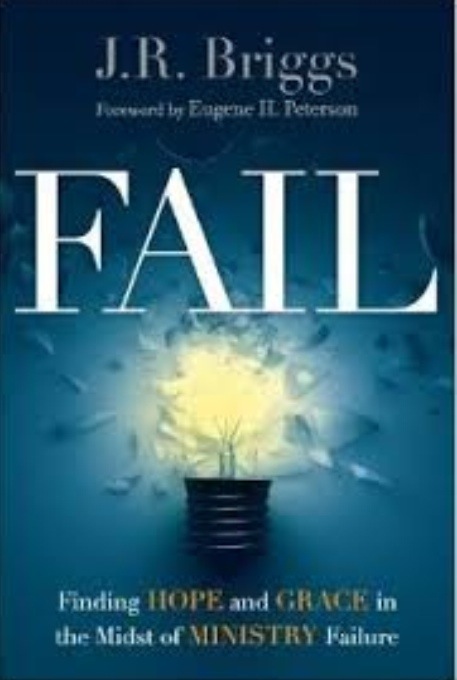
Fail by J. R. Briggs (Books on the Ministry #14)

Do you have any idea how to handle failure in the ministry? Do you have a “theology of failure”? Or a real biblical approach to combat feelings of failure? Are you aware that most every one in ministry struggles with feelings of failure? The air needs cleared, so enter this fine volume by Mr. Briggs and published by IVP.

In light of the mass discouragement of pastors in the wreckage of success-driven ministry, he asks, “Is this what Jesus had in mind for pastors–a life absent of joy and peace, and with omnipresent stress and emotional hardship?”

In some cases we are set up to fail and travail over it. Conferences often parade “successful” pastors before us that serve to show how we haven’t arrived rather than offering real encouragement. We are always looking for the next great program as the messiah for our ministries.

Mr. Briggs wrote from brokenness. On the track to success, it all blew up in his face. In his own painful, ugly journey he finally reached the place where he wanted to help us in ours. He began the improbable Epic Fail Pastors Conference, and strangely enough, it was wildly successful. From those gatherings of many other broken pastors, he learned even more and shares it with us. We must learn, he says, to preach the same grace to ourselves that we preach to others.

We pastors live with a nagging fear of failure. Though it is often a cultural deviation, we all know it is true. Sometimes this fuels a desire for a larger ministry that only stunts our current one. He quotes another and reminds us that “true freedom in Christ is when we have nothing to hide, nothing to lose, and nothing to prove.” Wow!

There are many other wonderful parts of this book. Tracing the grieving process through pastoral failure was greatly enlightening. Explaining how ministry is a process and not a product was spot on. His solutions for going past failure end the book on a hopeful note.

There were times I rolled my eyes on what he said, allowed, or did, but overall this is a keeper. Every pastor should make it a must-have in his library.

I received this book free from the publisher. I was not required to write a positive review. The opinions I have expressed are my own. I am disclosing this in accordance with the Federal Trade Commission’s 16 CFR, Part 255.

Find other articles in the series here.

20140703-104044-38444999.jpg

Dishonesty In Preaching (IBTR #33)

dishonesty in preachingIs it fair to say that preaching and truth go together? Is there any conceivable place where honesty is more important that the pulpit? These are rather obvious questions to answer. Would it be equally true to say that dishonesty in preaching is the worst lie of all? It is hard to argue otherwise. People are groping for answers and they must have the truth or we sully the names of preacher and pastor. If this analysis is true, and I believe it is, then dishonesty in the pulpit is a heinous crime. It is a crime that lurks in all the corridors of Christianity and Independent Baptists are no exception.

There is, on the one hand, calculated deception, and on the other, accidental deception.  There is little we can do for one who simply concocts a lie and tells it at the sacred desk. Just label them a charlatan and hireling and go on. But for those who don’t fully realize what they do, perhaps we can encourage and enlighten. In any event, let’s consider cases of dishonesty in preaching:

1. Telling an untrue story or illustration. 

This behavior is tragic because He Who is Truth, nor His Word that tells Truth, can ever be uplifted with lies. Sadly, these days this dishonesty is often given a wink and a nod. With a grin we are told, as if a real excuse, “I was only preaching.” Only preaching? May God help us!

2. Telling untrue information on other ministries.

Petty politics. Nothing more needs said.

3. Telling stories as if you were the hero.

Some get so carried away in the pulpit bolstering their own reputation that even if marginally true, they dishonestly obscure the fact that Jesus is the only hero when the Bible is preached. If the listener leaves impressed with you rather than Christ, a con job has been pulled. I realize the line could be subtle here, yet the stakes are so high that great caution is required.

4. Taking a Scripture out of context to prove your point.

You can pretty much prove any point with an out-of-context verse, but you can’t be honest in doing so. Perhaps it is an accidental lie, but it is one nonetheless. How do you feel when your words are taken out of context? Why do we imagine that our Lord wouldn’t mind just like we do?

5. Claiming your preferences are from God’s Word.

To say, when preaching on your own preferences, that you are just preaching the Bible is blatantly dishonest. How serious is this action? It is tantamount to substituting God’s Word for your own. What could be more counterfeit than that substitution? If could can’t find a clear Scripture for what you are saying, you are guilty.

Handling God’s Word is the greatest of privileges and so carries the greatest of responsibilities. Lives are shipwrecked when God’s Word is mishandled and Christ is dishonored. We who preach should not wait to be called out, or worse, answer at the Judgment Seat, but hold ourselves to strict account. Our task is that critical, and our God far too worthy for anything else!

FIND ALL ARTICLES IN THE SERIES HERE.


Books on the Ministry #13

photo (21)

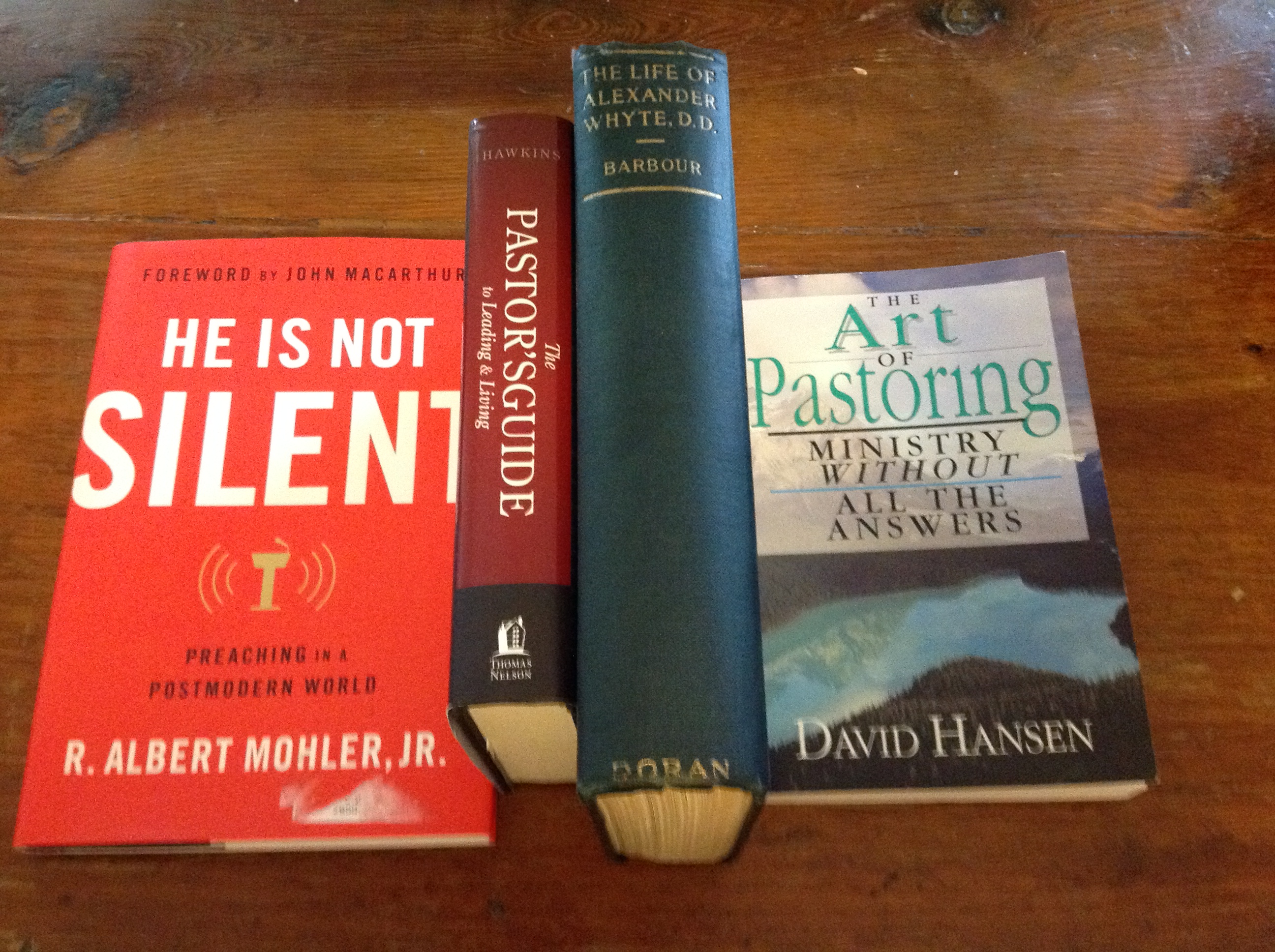
Here are four more excellent titles–two for preaching and two for pastoring; two newer titles, one about 20 years old, and one from the 1920s. This makes 40 reviewed in this series. Be sure to click on the link at the bottom to see the previous entries.

1. The Art Of Pastoring by David Hansen

I have enjoyed on occasion a good how-to book, but I am thrilled to read of “ministry without all the answers.” It is good to read that is how it really is, especially as it so matches my own experience. He shows how neither trend-driven ministry nor task-driven ministry are the same as the pastoral ministry given us by Christ. Read what he means when he says the pastor is a parable of Jesus Christ and you will both agree and be challenged. He says, “Jesus’ ministry is so simple that most pastors consider it naive. Word. Prayer. Friendship. Sacrament. Leadership. That’s all.” He’s right!

On our call he says, “Preparation for pastoral ministry involves two things: learning to listen to the Bible and learning to listen to a human being.” Some things are more simple than we have imagined, aren’t they? Further, he says, “At issue is self-denial. Those who will suffer self-denial are parables of Jesus and are pastors. Those who will not are hirelings and thieves.” Blunt? Yes. True? Yes.

He says too, “It is easy to confuse loving being around people with actually loving people. The two are very different. Love of the experience of people is a form of self-gratification.” Ouch! Or how about “Ministry without love is vanity”?

He is so honest, so real. He accurately describes the ministry as going through the wilderness unprotected. There is so much beyond our control. We must be led by the Holy Spirit.  There is so much more.

His chapter on preaching alone is worth the price of the book. I pretty much underlined the whole chapter.

We should all hear his discussion on though we can be a parable of Christ, we can’t be a symbol of God. That discussion would rescue many a misspent ministry.

How on earth did I just recently find this 20 year old book? It is pure gold!

2. The Life of Alexander Whyte by G. F. Barbour

Never overlook biography when seeking out great reading on the ministry. Particularly, as the case is here, if the ministry is the focal point of the biography. There is much to learn from those who simply gave their lives to the preaching of God’s Word. Alexander Whyte was such a man. Warren Wiersbe wrote of the value of this book and I am glad I took his recommendation. He warned that it starts a little a little slow and then becomes a joy to read. He is right.

Wiersbe also praised the chapter “Dr. Whyte In Study And Pulpit.” I agree with his commendation. Whyte said, “The pulpit is a jealous mistress, and will not brook a divided allegiance.” How seriously he took the arduous task of making worthwhile sermons! He felt laziness in study was the one “unpardonable sin” of the ministry. He, the pastor of a good-sized congregation, said we have time for study if we will be “Sufficiently jealous” of that time. You will be challenged!

At over 650 pages, this will not be read in an hour, but the time invested will yield great benefit.

3. He Is Not Silent by Albert Mohler, Jr.

Dr. Mohler is well-known for his perceptive analysis of Christianity in the postmodern era. Beyond the quirks of this generation that we preachers should understand, the timeless need remains: preaching. In trying to reach this culture we are robbing it of the answer: expository preaching. We are losing by giving felt-needs drivel instead of the life-changing Word of God!

Addressed from the angles of worship, theology, doctrine, and the mysteries, he makes a trenchant case for expository preaching. He contends that expository preaching is the only real preaching there is. The epilogue on Spurgeon is fine too.

This volume may or may not be a classic in 100 years, but it is spot on about our day.

4. The Pastor’s Guide to Leading & Living by O.S. Hawkins

Here is a real How-To book. It covers most aspects of the ministry quite well. It is like an updated Criswell Guidebook For Pastors will a little more big-picture perspective. In fact I call your attention to the chapter on perspective (5), the one on parenting (16), and especially the one on the prize (26).

Read it through, or keep handy for a reference, and you will be blessed either way.


Find all articles in the series here.


Hey Preacher, You Just Never Know!

Sometimes you cross paths with a story that puts things in vivid perspective. It exposes your warped thinking and shames you for the energy you have invested in misspent emotion. Whether it be a pastor, or really anyone actively attempting to serve the Lord, we fall far short of four in calculating two plus two. The story, with a link for you to follow and read for yourself below, involves a missionary who left the field after some years of hard labor thinking he was a failure. Wait to you read what was recently discovered!

How often does it dog you? How often do you run from the nipping at your heels from a general sense of failure? How often do you size it all up and calculate it nothing? Besides the lunacy of forgetting that the Lord gives “the increase”, what makes you and I think we even know what we are talking about?

It seems to me we had better wait for the Lord to sort it all out. We ought not form opinions of ourselves, or others, until the Lord has added the final ingredient. To not wait on Him is like gathering all the ingredients for fried chicken except the chicken! It is time to wait on final grades now. But hey, in how it all turns out, you just never know.

Link to great story.
Picture is from that great blog post–hope you go read it!

Related article :
Success versus Victory

20140523-095810-35890182.jpg

The Task Of Preaching The Bible

Imagine many years ahead (though not a certainty) and a Bible to find messages to preach three times a week. Several times I have heard pastors say that one of the biggest problems is always coming up with ideas to preach on. They say they really struggle with new sermons.

I have a different problem. So much so, that even the title of this post is misleading. I am sitting on my back deck, in near perfect temperatures, thinking about what I am going to preach on. You see I am soon to get my new building to make into a study and then I can bring all my books to South Carolina. (Thank you Jesus!) So, I now am thinking of which books of the Bible to preach through. I am overwhelmed!

Am I going to tackle Colossians, Philippians, or I Peter? Or what about the Minor Prophets I really have been thinking through? I have really had my eye on Micah, is that the one? Then I have always wanted to preach Ecclesiastes, and actually Nehemiah. There would be I Kings, but I Samuel really beckons.

Then there are the books I have preached through in the past that I would like another shot at. The craft of making my sermons, such as they are, is likely, for the better or the worse, fully developed. I would love to work through those books again in any event!

No doubt it is hard work, though I must confess that perhaps my sermon preparation methods are more cumbersome than most. But I relish the work as the most pleasant I have ever known!

There are texts to flesh out all over the Bible for textual sermons on Sunday morning, then all those books of the Bible to develop into a series of expository messages–not that running commentary thing that some do, but take it by natural units ands make a fully developed sermon. Notice I did not mention topical messages as even the best preachers, whoever they are, are really blessed if they can have even 30 great topical messages in one lifetime. ( I’d be lucky to have 3) No, I am speaking of this matter of preaching His Word. That privilege of being aided by the Holy Spirit to inject a little creativity into sharing only what is His Word–that task is one of ceaseless joy.

Overwhelmed? You bet! I will never live to get the whole thing preached! I will not have to scramble to find something to preach on, but be ever chasing the elusive dream of preaching every text. There is no hope of making it. But what a rich life to be called to preach and try.

20140516-152642.jpg

Spurgeon And A Lesson On Handling Critics

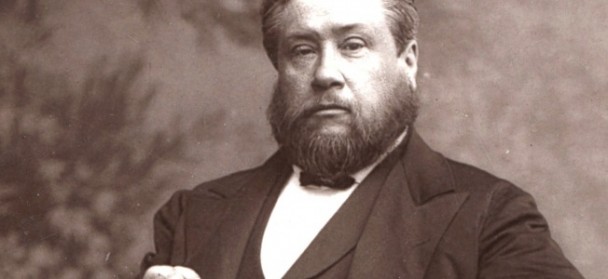
Spurgeon-608x279Having just read a story from the life of Spurgeon and being inspired by it (Link below to the short, but gripping story), I thought how difficult it really is to handle a critic. In that we can not live totally above being open to real criticism, nor is there ever a shortage of those peddling off-base criticism, we had better figure out how our Lord would have us handle it. For we who name the Name of Christ, that is all that matters, isn’t it? That is what you will see in Spurgeon’s advise to a fellow preacher if you will take the time to follow the link and I hope you do.

Spurgeon learned his lessons the hard way. When he was just starting out he faced a most ugly attack from the Right by extreme Hyper-Calvinists. Beyond theological disagreement, they were just ugly. (In fact, there is an example of it in the linked story). In his later years they came attacking from the Left in the Downgrade Movement. It was just as ugly.

Probably like Spurgeon, if we ever come down on a biblical position, we will find enemies coming from both directions. That is not to say that truth is just a middle-of-the-road proposition, but that every good road has a ditch on either side. Wreck in either and you will damage your car, but I digress…

Spurgeon, in my opinion, gives us quite the Christ-honoring example. He always spoke passionately about what the Scriptures taught, he confronted trends or ideas that ran against Scripture with equal earnestness, but he treated individuals with grace. Don’t think he couldn’t have said more! Spurgeon was one of the wittiest men who ever lived. He had the ability to filet you with words, but he chose not to.

It all came back to Christ. Please follow this link to read this story for yourself.


Related Post: Charles Spurgeon


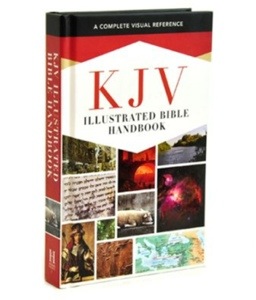
KJV Illustrated Bible Handbook–An Awesome Visual Reference!

As a pastor, I have discovered a book here I would love to see all church members have to use in their personal Bible study. There is a chapter on every book of the Bible to give an overview of what you will be reading. Those who are visual learners will find a feast in this attractive volume. This hardback volume by B & H Publishing meets a real need!

I congratulate the publishers for having the insight to see what some might call a niche market–KJV users. In light of World Magazine’s recent article stating the KJV was the preferred translation for 55% of Americans (April 5, 2014, pg. 68), perhaps it is more than a niche market after all. In any event, kudos to B & H Publishing.

This book not only gives a good overview, but it suggests lines of thought for Bible students. For example, a key text is given for each book. You might not agree with their choice, but that is a great thought process in studying a book of the Bible. Key terms are vital and those are discussed briefly too. Things like purpose and occasion give real insight and the section called “First Pass” launches us into our reading. The section on finding Christ in the book keeps us Gospel focused too. I enjoyed the smaller books of the Bible (we can need extra help on some of the smaller books like those in the Minor Prophets) getting equal time.

The section on reliability will be the least useful to many, but they usually come down on the conservative point of view. You might find a point to disagree on here and there, but overall the volume is really solid. There was a statement giving credence to “Q” in the formation of the Synoptic Gospels, but such statements are rare.

The maps in the book are taken from Holman maps and they are outstanding and sharp. The selection of photos and charts add real value as well. The claim “a complete visual reference” by the publishers is not an exaggeration.

As a bonus, you get two fascinating articles on the KJV. There are interesting ones on the Canon of the OT and the NT respectively as well. Each article is written on a level even beginning Bible students can grasp, but with real detail too.

My best recommendation for this book: I am a pastor and I am going to encourage the dear folks I pastor to get this volume and enrich their own personal Bible study.

I received this book free from the publisher. I was not required to write a positive review. The opinions I have expressed are my own. I am disclosing this in accordance with the Federal Trade Commission’s 16 CFR, Part 255.

20140331-110655.jpg