Faith and Reason by Henri Blocher

book faith reason

Henri Blocher is a respected theologian who delivers here what he calls “a primer on apologetics”. Though I would disagree with him on a few points, he gives much wonderful fodder for the tension between faith and reason. His style reminds me in some degree of C. S. Lewis. He has a knack for making some deep concepts understandable. This is my first encounter with Mr. Blocher, but rank him as a voice worth considering in the area of practical apologetics.

Chapter 1 is something of a historical survey that describes where we’ve come from and where we are today. He makes clear how reason has become in conflict with Scripture. He even explains that many of us feel fatigue because we are required to use reason every day. In chapter 2 he exposes rationalism to the light of Scripture. That entails explaining what rationalism is and how its use can never be free of assumptions. He ends the chapter with explicit explanation of what the Bible teaches on the subject.

Chapter 3 is outstanding as he tackles the rationalistic belief that the Bible is a nebulous book twisted to say whatever the current user wants it to say. That leads to a discussion of the biblical text itself and its trustworthiness. The middle of this chapter is extraordinary in its explanation of the rationalist’s presuppositions that are brought into their conclusions. They see redaction and other things that undermine the trustworthiness of the text because of their own presupposition to reject it. In other words, they present a self-fulfilling prophecy.

Chapter 4 discusses what modern science is, and how a misunderstanding of what it is partly explains why it is so antagonistic to faith. In chapter 5 he disallows the conclusion that scientific research has positively concluded the Bible to be in error. I can’t follow him in what appears to be his belief in theistic evolution, or in his explanation of the reality of miracles in how he still downplays a few of them himself, but still there is much food for thought even in that discussion. I can agree, though, with him and his conclusion that the believer is not to press for miracles because the Lord only uses them on occasion to confirm his message.

At only a little over 100 pages, I imagine this is just right for what many people may want to ponder the dilemma that divides faith and reason. I think everyone would be helped by interacting with what is said here, so I recommend this volume warmly.

I received this book free from the publisher. I was not required to write a positive review. The opinions I have expressed are my own. I am disclosing this in accordance with the Federal Trade Commission’s 16 CFR, Part 255.

Embodied Hope by Kelly Kapic

book e hope

Kelly Kapic dives deep into the theology of suffering in this fine volume. There’s nothing of glib, overly-generalized platitudes, or fluff to be found in its pages. There’s no attempt to dissect suffering in a dry academic way either. No, this book probes what the Bible actually teaches on the subject of suffering that interacts with all our lives in some way.

Though there is starting to be a sizable body of work on suffering in print today, this work can qualify as a theological work. That is not to say, however, that it lacks heart at all. In fact, the author was probably the perfect candidate to pen this book. On the one hand, he is a trained theologian, while on the other hand, his wife has faced incredible suffering. Having already survived cancer, she has also lived with connective tissue disease as well as Erythromelalgia, or “man on fire” syndrome. As you can imagine, the author struck the right balance between heart and head as he wrote here.

The book itself is divided into three main parts. In part one, he examines the struggle itself. He admits that we can have hard thoughts about God in times of profound suffering. Along the way, he explains how important lament is to suffering despite people’s preference for the stiff upper lip. In describing our questions that come with pain, he exposed our tendency to jump back and forth between self-praise and self-condemnation. Of course, neither are the sole answer. He also explained how we should be mindful of our mortality and how that might be tied up in the things we learn in suffering.

In part two, he tackles what he calls “the strangeness of God”. With skill, he takes us to Jesus Christ and His cross. In the final section, he makes worthwhile practical conclusions. I was enlightened as I read.

This book has already been recommended by several people who have our ear on the subject of suffering. For example, Joni Eareckson Tada, who herself has written much on pain, says she loves this book.

Whether to put on your theological shelves, or to help you wrestle in life’s dark moments, I recommend this book as a winning effort.

I received this book free from the publisher. I was not required to write a positive review. The opinions I have expressed are my own. I am disclosing this in accordance with the Federal Trade Commission’s 16 CFR, Part 255.

That Rough Patch Called Transitioning To Adulthood

blog adulthood

I’ve been reminded of late just how tough that period in life where you have to figure out what you’re going to do when you grow up really is. I can remember that in my own life, but it seems so long ago that the memories are in black and white. My oldest, Briley, is at that place where she has to decide, and her brother, Caleb, the meticulous planner, is engulfed in it as well. Sadly, if anything, it’s harder to figure out these days.

An article in National Review by Oren Cass entitled “Teaching to the Rest” highlighted just how tough it is. According to the author, the 3 million recent high school graduates can be divided into approximately five equal categories. The first group didn’t even make it to high school graduation (remember one fifth of 3 million is 600,000!). The second group will pursue no further education. The third group will enroll in college but never graduate. The fourth group will graduate college, but will never work in the field they got their degree in. Only the final group will go through college and work in a field that they studied for. I don’t know about you, but those statistics shock me.

As you can imagine in that particular magazine, the article goes on talking about the political changes that need to be made in our educational system. The author’s ideas were wonderful, but excuse my cynicism in thinking that either the government or teachers unions would give his thoughts the time of day.

He alludes to, and you’ve probably heard it from other quarters as well, that there is a dearth of young people going into trades. In other words, a college education may not be the best case scenario as was universally believed when I graduated high school. Besides the fact that many public universities have lost their way and are so out of the mainstream that they actually steer young people away from success, there’s the issue that you might be financially worse off to go to college. On the one hand, many college students today embark upon their career with a disastrous financial situation because of college debt. A trade could be learned for a fraction of the cost with a similar starting salary but without the oppressive debt.

It grieves me to say this, but even for my children who want to follow my steps into the ministry, the possibility of making a full-time income from it over the course of their whole working lives seems unlikely. The rapid decline of Christianity in our day means that all in ministry may be tentmakers like Paul in the years ahead. That likelihood means even young people considering ministry will need a trade or profession to fall back on. I haven’t lost faith that the Lord can provide what’s needed for our calling, just that He he may actually start calling more to a bi-vocational ministry.

I’m totally sympathetic to my children. The gravity with which they view their choices for the future is commensurate to current events. I never want to be guilty of calling my children to the ministry or any other profession.

I’ve decided this rough patch of transition into adulthood is tough for parents too. You’d like to make it easier for them. You’d like for them to be able to pick it without reservations and feel perfectly at peace with their choices, but the reality is they go through all kinds of options. You have to balance telling them the ideas they have that probably will not work out well to not being overly controlling and telling them what they have to do with their lives. It’s tough. It’s times like this that I’m so happy that my children know the same Lord that I do. I’ve had times of not knowing the way and being afraid, and had to learn to wait on the Lord.

I guess this post is not really instructional. I really can’t see that I gave any good advice. But I guess I’m just putting in writing a plea to my children to trust the Lord with an acknowledgment that Daddy loves you and has confidence in you. I’m tempted to close my eyes and hide until the Lord grows your faith and leads you through this, but by faith let’s just go through it together.

Born After Midnight by Tozer

book born mid tozer

Classic Tozer! Tozer never disappoints whether it be one of his famous titles, or one not quite as well known like this one. I’ve read most of his titles by this point and loved them all, but this one is even better than several others. This title is one where he seems a little less on edge, but as challenging as ever. The title is a reference to his belief that revivals are born after midnight because that’s the time most have already given up. He really aims at personal spiritual renewal in this book. He tackles several subjects in light of renewal in his indomitable style.

He writes of our now missing inner witness that should radiate from Christians. He explains the concept of spiritually living in times of crisis. He explains the hollowness of words without deeds. There’s far more chapters than I can relay in this review, but he tackles dealing with the devil, our thinking, failure, “sanctifying the ordinary”, and much more. The chapter on wealth was especially good.

Moody has a whole series of these fine paperback Tozer titles and it’s a great idea to secure them all. Get this one near the beginning of your acquisitions! It is a dandy!

I received this book free from the publisher. I was not required to write a positive review. The opinions I have expressed are my own. I am disclosing this in accordance with the Federal Trade Commission’s 16 CFR, Part 255.
An Unhurried Leader by Fadling (Books on the Ministry #18)

book unhurried

I needed this book. So many leadership books offer up the same, though slightly retreaded, message of so many others, but this book is food for the soul. It’s the best book for pastors, or any in a leadership position, that I’ve read in a long time. There’s no gimmicks here to manipulate people, just a call to commune with God to the point He imbibes your work with His grace.

In a day where so many speak of effectiveness, Fadling prefers that we look at fruitfulness instead. He unearths the often-buried scriptural truth that fruitfulness comes from abiding in Christ. If the Lord makes you fruitful, you will influence others and the task of leadership is fulfilled. He makes it all sound so simple while the work of communing with God is at once challenging and the very opposite of work. If that sounds confusing, just read the book.

He begins by asking us to be unhurried leaders who stop seeing activity as productivity. He exposes the subtle pride that we often present as spiritual leadership. He explains our blind spot of working for God instead of with God. He challenges us to lead from abundance–a concept we frankly don’t get. He gently scolds us to stop running from the thirst of our souls to unquenching activity.

There’s so much more. The chapter on prayer is the most insightful I’ve read in years. More than being condemned as most prayer treatises, I want to implement what he says.

Outstanding is an understatement for this book. 5-star plus gets a little closer. I hope many will read and follow and be helped as I was!

I received this book free from the publisher. I was not required to write a positive review. The opinions I have expressed are my own. I am disclosing this in accordance with the Federal Trade Commission’s 16 CFR, Part 255.

The Counselor by A. W. Tozer

book tozer coun

Here’s another Tozer title that elicits soul searching. Moody Publishers now prints several of his titles and this one is slightly longer than some of the others I have seen. As you can imagine, this is another volume on the Holy Spirit. That was always a favorite subject for Tozer and he doesn’t disappoint here.  He reminds us of the Person of the Holy Spirit and entices us to be filled with the Spirit. If you are a Tozer reader, that will come as no surprise. Though he returned to this theme again and again in his writings, this one is the best I’ve seen from him on the subject so far.

He begins by explaining the Holy Spirit comes only when Jesus Christ is glorified. That entire chapter was outstanding and a great springboard for the book. He is in no way trite when he argues that the Holy Spirit doesn’t come through the intellect. In chapter 3 he comes at our churches. He says, “The Holy Spirit can be absent and the pastor goes on turning the crank, and nobody finds it out for years and years.” Ouch!

He is very sensible in what can be replicated from Pentecost and what cannot. He believes that the filling of the Spirit always arrives in an instant. In chapter 6 he turns the spotlight on we readers and how to evaluate. In the next chapter he explains spiritual gifts followed by the probing chapter on what we really need. The last chapter is a plea to be holy and not block the fullness of the Spirit.

Add this title to the string of pearls known as Tozer’s writings. It’s another winner.

I received this book free from the publisher. I was not required to write a positive review. The opinions I have expressed are my own. I am disclosing this in accordance with the Federal Trade Commission’s 16 CFR, Part 255.
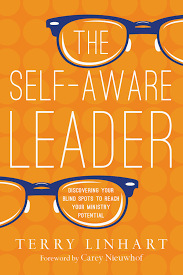
The Self-Aware Leader by Terry Linhart

book aware leader

Terry Linhart has written a book here that forces ministry leaders to take the inward look. With the current epidemic of ministers either falling by the wayside or succumbing to burnout, this book provides an important self check. Though we cover some of the same material found in similar books, his writing is perceptive, flows well, and issues a real challenge .

In his introduction, he is transparent in telling his own story and his own bumpy path that taught him to finally develop self-awareness. He explains self-deception that finally pushes us into a life of hypocrisy. Though self-awareness is a modern psychological term, he means it in the biblical sense of examining ourselves before God.

In chapter 1, he reminds us that most of us want to do our best in Christian ministry, yet we often fall short of our potential. He rips from the pages of the New Testament the analogy of a race to help us see life as it should be seen. (Be sure to note the Johari Window he shares). He exposes our allusions that we can bear fruit without being closely connected to Jesus Christ. In chapter 2 he goes after our blind spots and teaches us to learn to pass the smell test in our actions and reactions. In chapter 3 he encourages us to learn how to view our past appropriately.

When it comes to chapter 4, he tackles the sticky subject of our not being blind to our temptations. He hammers away at what he calls “the big five” of seeking prominence, holding on to control, valuing shiny stuff, pursuing inappropriate intimacy, and relishing resentment. He provides self checks and ways to build in personal safeguards in each category. In chapter 5 he tackles our emotions and surveys the damage they can cause and the emotional maturity we need. Chapter 7 guides us through the common ministry problem of conflicts. Again, he provides practical advice for being more mature in that area. The final chapter is about seeing your margins. He gives some really thoughtful help and encouragement here. His conclusion brings out the end goal to steady our perspective.

Mr. Linhart succeeds in helping us find our blind spots to reach our true ministry potential. The book reads well and is a real help. In our age of brokenness, this book has come along at a perfect time. I highly recommend it!

I received this book free from the publisher. I was not required to write a positive review. The opinions I have expressed are my own. I am disclosing this in accordance with the Federal Trade Commission’s 16 CFR, Part 255.

Of God and Men A.W. Tozer

book-tozer-god-men

This title is not as well-known as many of A.W. Tozer’s other volumes. Don’t let that lack of fame fool you as it has all the qualities that we have come to love in Mr. Tozer. In fact, even more than some of his other books he lived up to his title of modern-day prophet here. A few times he even sounded angry at our casual, carnal Christianity. He couldn’t suffer spiritual foolishness easily.

At 167 pages, this book is an easy, yet profound read. The chapters are short, but pack a punch. He knew God from the Scriptures and personal relationship and he knew men from his own heart and ministering to others. His clear perceptions sparkle on every page.

I’m sure what sticks out to me may not be the same thing that sticks out to you, but several things did stick out to me. I love his chapter on holiness before happiness. He compares Christians to soldiers who do not seek to be happy on the battlefield, but who seek to get the war over with so he can go home to his loved ones. Home is where you’ll find happiness. His point is that we be a good soldier no matter what as we have great happiness to come.

Another favorite chapter was on how not all faith pleases God. He said, “let us beware that the Jesus we ‘accept’ is not one we have created out of the dust of our imagination and formed after our own likeness”. I also loved the chapter on backing into our convictions. One other chapter that I especially appreciated was the one on cultivating simplicity and solitude. There he admonished us to avoid the “digest type of mind” that loves short facts. Wow, if he could see us now!

This is another great Tozer title that will bless your soul.

I received this book free from the publisher. I was not required to write a positive review. The opinions I have expressed are my own. I am disclosing this in accordance with the Federal Trade Commission’s 16 CFR, Part 255.

Following the Party Line

blog-party-line

Are you a faithful follower of the Word of God or are you a supporter of the party line? In the first case, you’re a pursuer of Christ, and in the other you’re a partisan following the group. I suppose I’ve never met a Christian who didn’t believe he or she followed was the former rather than the latter. But the far-ranging views out there today proves more are a hanger-on of a particular religious group than they would like to admit.

Though my background is in the Baptist world, I’ve seen this plague many denominations and groups. To make the problem even worse, many groups splinter into several smaller groups with their own unique set of beliefs. While we might find the presence of sin in our world as the cause of this problem, we should still pull ourselves away from it and go ever back to the Bible.

This problem begins innocently enough. At some point, we try to draw our beliefs from the Bible. Because the Lord has designed that we live in the local church setting as a group, we will also at some point decide what we believe together. So far, so good. But something changes after a time. We fall into the lazy habit of just believing what the group does. We reason that since they sought the Bible in the beginning they can always be trusted to follow the Bible now. Then, another problem arises. New issues arise that we hadn’t thought of, or at least hadn’t thought of how to make an application of the Scriptures to it, and so we specify exactly what we mean to keep our original set of beliefs.

Again, the whole process is one of well-intentioned purposes, and yet we get off track. Our current set of beliefs have been revised several times since our original digging into God’s Word. We now are 2 to 3 steps away from the Bible while thinking we are still firmly in its boundaries.

I’m quite the inferior carpenter, but have been around the process enough to know one mistake we shouldn’t make. If we are going to need several boards of the exact same dimension, we should carefully measure out the first one and cut from it. When I was a boy, I can recall my Daddy taking a pencil and making a mark on the carefully measured board to distinguish it from the others. I can remember from way back then that he told me not to pick up the boards cut from the original to cut other boards. Though it technically should have been the same dimension, he told me it’s easy to get off more and more by that process. I believe this is what we have done in our Christianity.

As you may have noticed, groups tend to get defined by their unique differences rather than what they have in common. That perspective incurs great cost for Christianity. If the error was not bad enough, the Christian divisiveness is catastrophic. Because of our warped egos and general depravity, we fight for those differences, at times, even more than we do for the great trues that we hold in common, such as, the death, the burial, and Resurrection of Jesus Christ.

As is often the case, we judge each other by the wrong board. We become quite bombastic, cry separation, and criticize our brothers or sisters in Christ relentlessly. In many cases, we are convinced that we are standing for the Word of God. Our motives likely began as a desire to faithfully follow the Bible, but now the results are far below the motives.

We would all do well to stop and ask ourselves when was the last time we checked the Bible for our deeply held beliefs. To be sure, we must carefully check those Bibles as our casual reading just regurgitates without thought was someone else decided we believe the long time ago. If you haven’t carefully verified the beliefs you loudly proclaim, then put yourself down in the category of one who spouts the party line. When you spout that party line, you are saying that where the belief came from doesn’t matter as long as the party says it is correct. Why does what scares us in politics not even phase us in our own Christianity?

If we allow ourselves to follow the party line, we are only sycophants carrying someone else’s opinions. Even worse, if we attack and criticize where they tell us to, we are their henchmen. I don’t know about you, but I don’t want to be a mere follower of the party line when I have the opportunity to be a devoted follower of Jesus Christ.

Knots Untied by J. C. Ryle

books-ku

Banner of Truth has brought most of J. C. Ryle’s works back into print. Though Mr. Ryle is from another century, his works still have something to say to our generation. Not only have they brought these works back into print, but they have done so with nice bindings and attractive covers that will make these works last for years. This title, Knots Untied, is made with the same design as several others that they print to make a beautiful collection. For the record, they have also recently published an outstanding biography as well as Mr. Ryle’s autobiography.

Mr. Ryle did not write this volume for scholars. You could tell that he aimed at regular Christians, and perhaps, even new Christians. Since almost everyone in his generation attended church, he did write with the assumption that people knew about the churches in England at least. Still, there is at once no superficiality and clear, accessible guidance.

Unlike some of his volumes, this is not a book of sermons. Or at least if they are, they are of the topical nature. He never wavers in loving Scripture, being conservative, and clearly and logically laying out his case.

A few of the chapters were not especially interesting to me as they were too tied to the Church of England. I’m referring to things like the Thirty-Nine Articles and the chapter on prayer book statements about regeneration. In a few other chapters I did not completely agree with him, particularly on the mode of baptism, but don’t let a few disagreements keep you away from this fine book.

And in so many other places he wrote the things we so badly need to hear today. I rejoice in the clarity of his teaching on there being only one way of salvation, or in the help he brings to the subject of private judgment. I assumed I would not like his chapter on the church, but found it a great encouragement. My favorite chapter of all was on the fallibility of ministers. It was the tonic needed in our days.

This is a fine book and I warmly recommend it.

I received this book free from the publisher. I was not required to write a positive review. The opinions I have expressed are my own. I am disclosing this in accordance with the Federal Trade Commission’s 16 CFR, Part 255.