Esther (Interpretation) by Bechtel

book i esther

This commentary in the Interpretation Bible Commentary series by Carol Bechtel is another option for those looking for a critical commentary on the Book of Esther. Strangely enough, it’s strongest competition is another book by the same publisher, WJK, in the OTL series by John Levenson. While not as astute or lengthy as the OTL volume, it does in some ways build upon it.

Bechtel begins her Introduction by examining what she calls the vital statistics of Esther. In that section, she discusses versions of Esther, date and historicity to which she is hostile, followed by discussion of form and structure. She summarizes well other scholar’s opinions and even shares Levenson’s fine chart on structure. She decides Esther is a work of historical fiction, and turns to theological themes without really developing her own exact structure. Her points on theological things are unique and interesting. She sees a discussion of “a healthy sense of proportion” as the main theological thrust of Esther. Next, she discusses the theological implications of the challenge of living a faithful life in an unfaithful culture, followed by one on the power of the written word. I found these insights to make a real contribution to our thinking about Esther. I didn’t, however, get as much out of her final section on reading, preaching, and teaching the book of Esther.

The commentary proper was well written. Though it didn’t have the theological punch of the Levenson volume, it would still serve as a fine backup volume to it if you are studying the point of view of the critical camp of scholarship.

I received this book free from the publisher. I was not required to write a positive review. The opinions I have expressed are my own. I am disclosing this in accordance with the Federal Trade Commission’s 16 CFR, Part 255.

Esther (OTL) by Levenson

book otl esther

Jon Levenson has written in the Old Testament Library (OTL) series one of the very best commentaries available from the critical camp on the exciting Book of Esther. As a conservative reviewer, any critical commentary on Esther grates on my nerves more than usual because of critical scholar’s disdain for Esther’s history, but if you are like me and want at least one of the better critical commentaries in your library on every book of the Bible, you should probably consider this one.

There’s no doubt that Mr. Levenson writes with skill. When he says in the first paragraph, “it is also a tale of the ascent of an orphan in exile to the rank of the most powerful woman – and perhaps even the most powerful person – in the Empire and, arguably, the world”, his writing prowess becomes clear.

He begins his discussion in the Introduction on the plot of the Book of Esther. I thought his comment that there’s more narration than quoted speech as compared to similar biblical stories as perceptive. He gives a great overview of the plot. Next, he tackles structure and style and after surveying various scholarly opinions, he gives an outstanding visual representation of his thought of the structure of the Book of Esther. I can’t follow him in all his thoughts about the messages of the book of Esther, but he does give much food for thought. I totally disagree with his discussion of historicity. He gives a fine summary of the textual history of the book of Esther, though he could be disagreed with at points.

Though it has some of the same critical conclusions as the Introduction, the commentary proper is illuminating and thought-provoking. Let’s just say that he provides what I’m looking for in this type of commentary. You might want to check it out.

I received this book free from the publisher. I was not required to write a positive review. The opinions I have expressed are my own. I am disclosing this in accordance with the Federal Trade Commission’s 16 CFR, Part 255.


Matthew (NIGTC) by Nolland

nigtc matt

John Nolland delivered this major, massive commentary on Matthew in the highly-respected New International Greek Testament Commentary (NIGTC) series. I’ve had his three-volume commentary on Luke in WBC for several years, and had heard that most scholars found this volume on Matthew more energetic and robust than the earlier one on Luke. After my own interaction with this commentary, I fully agree with that assessment. Further, though this is a Greek series, those who do not read Greek will find no problem as most every Greek phrase has its English counterpart nearby. For that reason, a wider range of readers than you might expect can check out this thoroughly scholarly volume.

The bibliographies in this book are gigantic. On the other hand, the Introduction is shorter than I expected. The commentary proper is the perfect length for the important Book of Matthew. If you want to know the author’s viewpoint, he defines it himself in the preface as a “redaction-critical” work that also uses narrative criticism.

He begins the Introduction with a discussion of the authorship of Matthew. Unfortunately, he finds it unlikely that Matthew wrote the book. In the next section, he wrote about the sources of Matthew with a grating certainty that I could not follow at all. In fairness, however, he’s no worse than many other scholars who write the major exegetical commentaries. In a surprising twist for one who doubts the authorship of Matthew as being Matthew, he still finds the book written fairly early, at least before 70 A.D. The Introduction became much more helpful when he wrote about the provenance of Matthew and other structural and unique features of Matthew. He managed to dip back into the unproductive conversation of sources at other points of the introduction, but was much more productive when he discussed the theology of Matthew. What you don’t want to miss his annotated structural outline of Matthew. That was an awesome way to present an outline!

In the commentary proper, each passage has his translation, brief textual notes, a bibliography for just that passage, and clearly marked off commentary of each verse. He is very thorough in what he addresses. While there are plenty of examples of some esoteric features that only appeals to scholars, there’s much productive, interesting, and helpful information to be gleaned from what he has written.

The competition is fierce among major exegetical commentaries on the Gospel of Matthew, but this volume cannot be overlooked because of the important contribution it makes to scholarship.

I received this book free from the publisher. I was not required to write a positive review. The opinions I have expressed are my own. I am disclosing this in accordance with the Federal Trade Commission’s 16 CFR, Part 255.
Sermons for the Sunday after Christmas, New Year’s Day, and Epiphany by Luther

book luther

Only recently have I been exposed to the sermons of Martin Luther, though I am well aware of his importance in church history. Hendrickson Publishers follows up their successful “Sermons for Advent and Christmas Day” with this fine book of sermons that picks up on the calendar exactly where the first volume ended. In three texts, we look at the Sunday after Christmas, New Year’s Day, and Epiphany. The only downside is that there is one less sermon in this book than the earlier one. The style and quality, however, remain the same.

The first sermon that is for the Sunday after Christmas is from Luke 2:33-40. In the first section of the sermon, Luther considers Simeon. Clearly, Luther is impressed with Simeon’s spiritual reaction. In the sermon, he next moves to the significance of the blessing that Simeon gave in the passage. Next, he looks at Anna, and probes her words for the same spiritual insights. Finally, he takes time with the return of Mary and Joseph to Nazareth, coupled with the little we know about the childhood of Christ. This sermon runs through page 40. It seems to me as if it would’ve been three sermons for most of us who preach today. I can’t fathom either Luther’s time for preparation or delivery for this sermon!

The second sermon is much shorter and only on one verse, Luke 2:21. With this text, he discusses the circumcision of Jesus. He approaches circumcision from its Old Testament origins, to what it meant in Jesus’ day,  and to the significance of how we should consider it today. In the second part of the sermon, he focuses on the naming of Jesus, which took place at the circumcision. I can’t recall ever seeing a sermon on this text alone, so it was particularly interesting.

The final sermon is on the visit of the Magi and takes Matthew 2:1-12 as its text. He begins this sermon by recalling the history of this story and drawing out its lessons. Under the second head, he examines Herod’s attitude. At times, he travels widely in Scripture even developing a section on Moses discussing knowledge. He also highlights the prophecy of Micah. The next two sections discuss the faith of the Wise Men that is quite beautiful in this passage. The fifth section covers the spiritual significance of the passage. There’s a final section on the true and false worship of God that could easily be its own sermon.

Luther’s sermons contain many points. For example, the last sermon has 344 points! That is handy for the reader, though, as you can bail on a point that you feel is irrelevant and jump onto the next one. No one would be wise to preach a sermon today just like Luther did here, but we can all learn from what he says. This is an attractive volume that is well worth adding to your library!

I received this book free from the publisher. I was not required to write a positive review. The opinions I have expressed are my own. I am disclosing this in accordance with the Federal Trade Commission’s 16 CFR, Part 255.
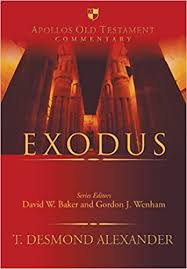
Exodus (Apollos Old Testament Commentary) by Alexander

book exodus apollos

Careful, detailed, cautious, seasoned, thorough – these are the first words that come to my mind after perusing this latest volume in the Apollos Old Testament Commentary series. Mr. Alexander has literally spent his career in the Book of Exodus. Beyond his background in Exodus, the author’s preface states: “I write from a position of believing that the book of Exodus carries an authority that is of divine origin, being more than simply the product of a human author.” In admitting his bias, he makes me feel that I’m in better hands.

For years I’ve been hearing that we should expect a major, conservative exegetical work for Mr. Alexander on Exodus. From what I can see, he has lived up to the hype. It seems that Exodus has been blessed with more pastor-friendly volumes than top exegetical works that the scholars would salivate over. Mr. Alexander has managed to write in the commentary sections material that will please pastors while his lengthy discussions of form and structure on every passage would give the scholars all they could hope for.

I genuinely enjoyed the Introduction. He began with a section on what he called the Exodus Story that exposed the big picture and showed the author particularly adept at theological observation. His discussion of the literary context of Exodus, the relation of Exodus to the rest of the Old Testament, and especially the section on relating Exodus to the New Testament were all brilliant. After that, he got more into the scholarly issues like structure, authorship and date, and criticism. I feel more comfortable with Moses having written Exodus than he does, and can’t be as generous to some critical scholars as he is, but he clearly describes the boundaries of the discussion. He seems to want to date the Exodus in the 15th century BC, but a few arguments that didn’t impress me pushed him into the 13th century BC. His section on the text of Exodus was short as he deals with so many things in the commentary itself.

Mr. Alexander well handles the Apollos commentary framework. Each passage has his own translation that focuses more on pointing out unique things in the text rather than flowing English, appropriate notes on the text, all followed by an extensive form and structure discussion that ranges from worthwhile information to interacting with esoteric, critical viewpoints. Next, we find a commentary section that is of great value followed by a shorter explanation section that is helpful to expositors.

There’s not many reviews out there before mine, so I will venture a prediction that this volume will be highly respected and important for decades to come. I highly recommend it.

I received this book free from the publisher. I was not required to write a positive review. The opinions I have expressed are my own. I am disclosing this in accordance with the Federal Trade Commission’s 16 CFR, Part 255.
The King James Study Bible (Thomas Nelson)

book kjv study

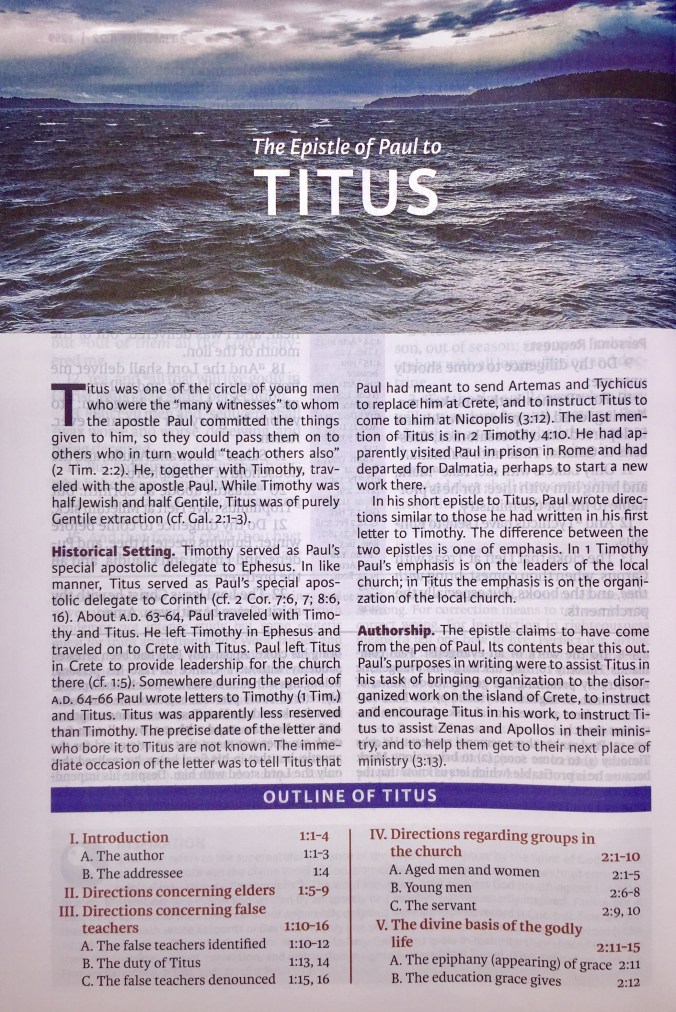
Thomas Nelson’s King James Study Bible in the full-color edition is a beautiful choice for those seeking a helpful, conservative study Bible. My teenage son is especially into study Bibles, so when I received this Bible for review I asked him first to take it and look at it. He loved it! My review copy was cloth over board, but he says now that this is the Bible he wants in a leather edition for his high school graduation present. He already owns some other nice study Bibles from different publishers, but in his view the notes were “deeper” and he felt he would get more out of it in his studies than from other such volumes.

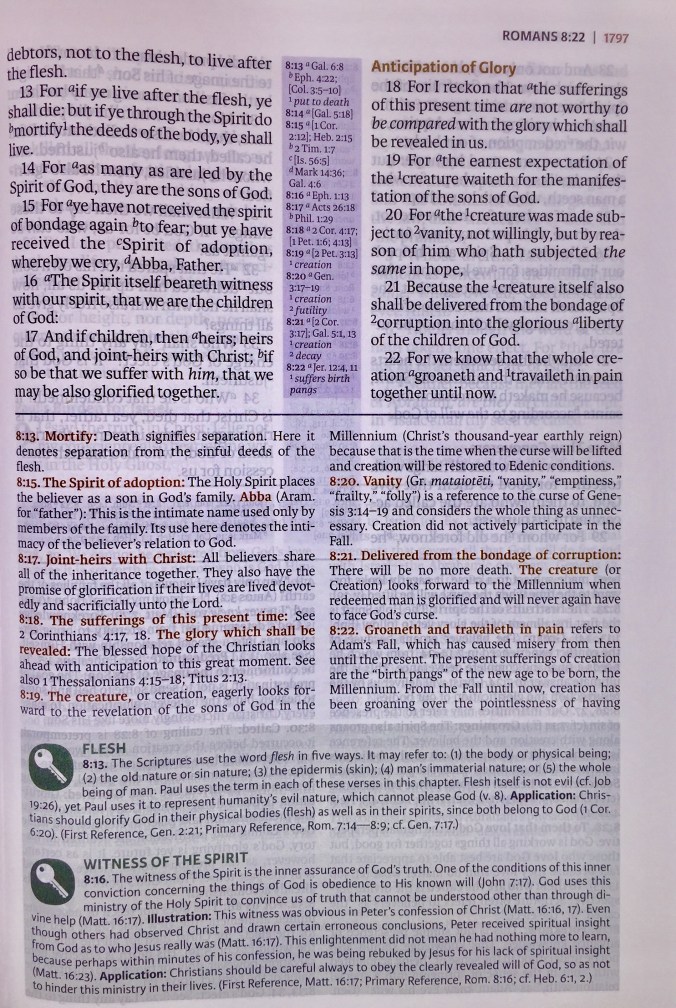
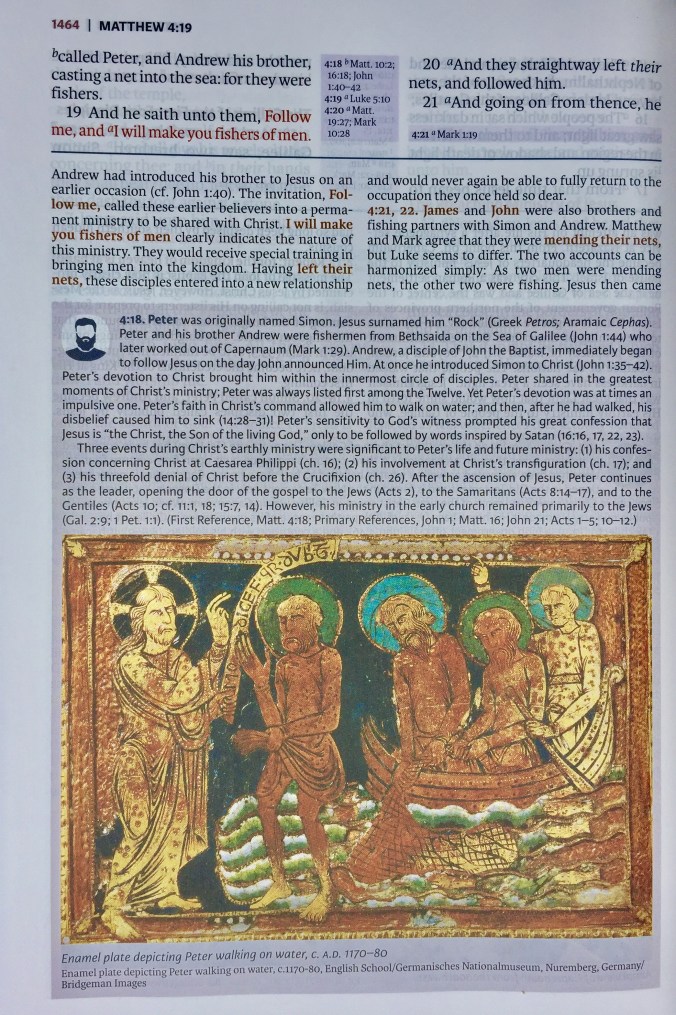
From my point of view, in addition to what my son appreciated, I also was impressed by the many full-color maps and charts. There were archaeological notes, personality profiles, and discussion of important Christian doctrines. Every book of the Bible had an introduction and outline and there were helpful indices and a concordance at the end. The pictures were beautiful and I agree that the notes were helpful.

I’ll have to agree with my son on ranking this volume at the top of KJV study Bibles. I can think of one other KJV study Bible that’s almost as attractive, but the notes put this volume over the top. You owe it to yourself to look over this volume if you are in the market for a KJV study Bible. You won’t be disappointed.

I received this book free from the publisher. I was not required to write a positive review. The opinions I have expressed are my own. I am disclosing this in accordance with the Federal Trade Commission’s 16 CFR, Part 255.
IMG_2111 (1)image1 (2)image1IMG_2110

A Week in the Fall of Jerusalem by Witherington

book week

Ben Witherington, scholar and prolific author, blazes a new trail in this work that’s quite a departure from what I’m used to by him. In this work, he still teaches as we would expect, but he uses a combination of historic fiction and scholarly sidebars into a wide array of subjects of Jerusalem at the time of its fall in 70 A.D. I would rate it as a success in its imaginative approach to that important background material.

The story begins in the smoke of Jerusalem. Though the story has fictional elements, some of the characters are actual characters from Scripture. They are older, of course, and look back on pleasant memories of the days of Christ that are already 35 years in the past. The story contained elements that I had never thought of, but that would make sense in that environment. Both the fear and the courage of the Jewish people affected are clearly displayed.

As you might imagine, the author must make some judgments on some things that are debated. His telling the story of Matthew wanting to write his gospel is a specific place where some of us might not agree. Still, this book takes material we often approach piecemeal and weaves it together in a story that makes it much more meaningful. The short blurbs, pictures, and maps dispersed throughout the text greatly enhance it.

There’s less of the horrors of Jerusalem’s destruction than I predicted, and the story ends more abruptly than most fiction works, but the book is still very interesting. I imagine it will be secondary reading in some Bible history classes, as well as a help to those doing individual Bible study. I’ve read that this book is one in a series of similar books being designed by IVP. It’s educational, not hard to read, and pleasant. I recommend it.

I received this book free from the publisher. I was not required to write a positive review. The opinions I have expressed are my own. I am disclosing this in accordance with the Federal Trade Commission’s 16 CFR, Part 255.
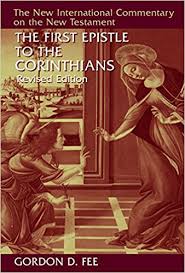
First Corinthians (NICNT) (Revised) by Fee

book corinth NICNT

This revised edition of Gordon Fee’s highly-respected commentary on First Corinthians in the New International Commentary on the New Testament (NICNT) series should be in every pastor’s library. I’ve used the old edition in my studies for some time, and I’m glad to see it revised to now extend its life several more decades. Fee is an acknowledged master of commentary writing. In other words, he knows how to argue his points and be interesting in every passage.

Though the bibliography is greatly expanded, the Introduction has not changed much since the original edition. I appreciate such an engaging Introduction in only 20 pages that really hits on what I’m looking for in the introductory material. He begins by describing the city and its people and transitions beautifully into the problem the Corinthian church faced. I’m not sure I fully reject, as he does, that this letter is a response to divisions becoming parties in the church. His proposed reconstruction that the problem is between Paul and the church itself is at least interesting, even if we can’t fully agree with it. There’s so much learning to be found whether you agree with that or not.

He covered critical questions in two paragraphs. I loved it! In one power-packed paragraph, he completely dismantles many of the critical theories floating around about the Corinthian letters today. From there, he dives into theological issues and begins with eschatology. He discusses the gospel and ethical life, and ends with the church itself. It’s good all around.

I found more editing and updating in the commentary proper. The overall conclusions are unchanged, but it is spiced up a bit. I still can’t agree with his extreme egalitarian viewpoint on some of the text (for example, check out page 545 for his somersaults on the idea of “head”). I can’t follow him in chapters 12 through 14 when he talks about his views on the Spirit, nor can I accept his excising of 14:34-35. That’s not a reasonable way to dodge a text you don’t like. Even with those caveats, this is a top-flight commentary.

At minimum, this is a top-three commentary among all commentaries on the Book of First Corinthians. Some of my friends say it’s number one. In any event, every pastor needs it at hand. You simply can’t do without it!

I received this book free from the publisher. I was not required to write a positive review. The opinions I have expressed are my own. I am disclosing this in accordance with the Federal Trade Commission’s 16 CFR, Part 255.
 

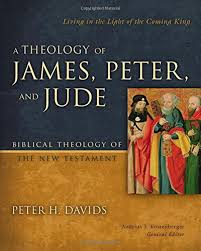
A Theology of James, Peter, and Jude by Davids

book theology j p j

Here’s another volume in the impressive Biblical Theology of the New Testament (BTNT) series by Zondervan that will include eight volumes when complete. This volume addresses between its covers James, Peter, and Jude. As you can imagine, this book covers the least addressed elements of theology in the New Testament. Peter Davids, the author, has spent his career in this portion of Scripture including two major exegetical commentaries on James and First Peter. He is the perfect author to tackle this subject.

Chapter 1 serves as an introduction that traces out common themes and issues among these New Testament epistles. He argues that the Greco-Roman background and educated writing style are true for each of these letters. Further, he sees a monotheistic outlook with a strong Christology. To his mind, all four letters put a strong emphasis on the the source of sin (desire or lust).

The other four chapters address each of these four letters individually. Issues commonly found in the introduction of an exegetical commentary are studied in each case, but its emphasis on theology is brought out in the latter part of every chapter. Mr. Davids wrote as one who greatly admired these four letters. He did agree with a few conclusions that I could not, particularly in the area of sources, but he has written a scholarly, predominantly conservative work.

Each chapter also gives an outline followed by a literary – theological reading of the book. I felt he covered well where commentary and theology meet. His tracing of the important theological themes in each of the letters was spot on in my opinion. As an added bonus, the book is attractive, well written, and contains a few charts where appropriate. Coming in at 300 pages, the author manages to neither dodge any important issue, nor become so prolix that he wearies the reader.

In my judgment, this book holds up well with the other fine volumes already released in this series. If you are beginning a study of James, Peter, or Jude, put this book in the must-buy category.

I received this book free from the publisher. I was not required to write a positive review. The opinions I have expressed are my own. I am disclosing this in accordance with the Federal Trade Commission’s 16 CFR, Part 255.
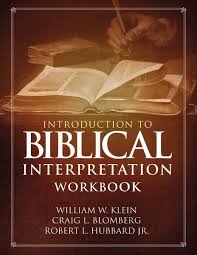
Introduction to Biblical Interpretation Workbook

book b i wb

I’ve already gone on record giving Introduction to Biblical Interpretation (3rd ed.) a high rating. Now the publishers have prepared an outstanding workbook to go along with that fine textbook by Klein, Blomberg, and Hubbard for those taking a hermeneutics class. As the cover states, a combination of study questions, practical exercises, and lab reports make this workbook the perfect complement to those using the textbook.

The workbook is flexible in that you wouldn’t have to do every exercise listed. Teachers can pick those they feel most appropriate. Some exercises are merely a template where the passage suggested could be substituted by the instructor for another passage.

This workbook increases the value of the already excellent textbook. I predict a wide usage of textbook and workbook and warmly recommend both.

I received this book free from the publisher. I was not required to write a positive review. The opinions I have expressed are my own. I am disclosing this in accordance with the Federal Trade Commission’s 16 CFR, Part 255.