Deuteronomy (Interpretation) by Miller

book deut i

This commentary is one of the best we have today on Deuteronomy from a critical perspective. Just as the Interpretation Bible Commentary series is known for, Mr. Miller scours Deuteronomy for all kinds of helpful theology. Though I could not agree with several of the critical views represented here, I found in this book many thoughtful, well-written insights.

The Introduction begins with the meaning of the name Deuteronomy. If you are like me, you may not enjoy the source criticism found in the section “how did Deuteronomy come to be?”, nor the section on authorship. When Mr. Miller turns to discussing the literary setting of Deuteronomy and explaining what Deuteronomy is about, he becomes much more helpful in my opinion. He covers material about structure in a helpful way. The final short section explaining why we should read Deuteronomy gives eight fine reasons why we should. I agree with all eight reasons he gave.

As you might have guessed, the real value of this book is in the commentary proper. You will continue to cross critical presuppositions with which you may not agree, but the probing theological nuggets that others miss is why you will likely enjoy this volume.

As a conservative pastor who likes to have a few commentaries on each book from the critical camp to be well-rounded in my studies, I find that this volume is one of the best of that kind of which I’m aware. Plus, as I said before, he really will bring out theological reflections worthy of pursuing that you won’t find anywhere else. In fact, I’d rate this volume as one of the better of the Interpretation Bible Commentary series of the several that I have seen. For these reasons, I recommend this book.

I received this book free from the publisher. I was not required to write a positive review. The opinions I have expressed are my own. I am disclosing this in accordance with the Federal Trade Commission’s 16 CFR, Part 255.
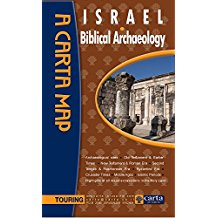
Israel Biblical Archaeology: A Carta Map

book archaeol israel

I wish I had had this map when I toured Israel! I can’t imagine a handier resource for either planning or touring Israel for one interested in Bible sites. With a quick glance, you can see all the archaeological sides of both the Old and New Testaments. As a bonus, you also see the sites of the Byzantine Era, crusader times, Middle Ages, and Islamic periods.

The map itself is well done in the usual Carta style. The legend used makes it obvious which period the site is from. Ancient main roads of Bible times are also added. Some modern roads are also given, but the map is never too busy. It’s eye pleasing in every detail. The areas of each of the Twelve Tribes is also highlighted with different colors, which adds another layer of information without detracting from the overall map. To the right and left of the map are columns of additional information about some of the most important archaeological sites. All of this is just side one!

Side two is a treasure trove of information for the Bible student or one touring Israel. There are several awesome Carta maps along with great information on the other side. There’s a map of the major archaeological sites in the old city of Jerusalem, one of Jerusalem at the time of Jesus, one describing the economy of the Roman province of Judah at the time of Jesus, one about Jesus’ ministry around the Sea of Galilee, one of the major routes in the holy land in ancient times (exceptional), one describing Masada, another describing Herodian, and one on Quran and the Essenes. Additionally, there’s one describing the Perfume Route, another on Caesarea, one on the exile of Judah, another on Jericho, one on the Roman provinces in the First Century, and one final map on the Crusader Kingdoms of the Middle Ages.

This map is one every traveler to the Bible lands should have. While you’re at it, look up the companion Jerusalem Biblical Archaeology: A Carta Map, which is in the same outstanding style. I’m so impressed with this map and I think you will be too.

I received this map free from the publisher. I was not required to write a positive review. The opinions I have expressed are my own. I am disclosing this in accordance with the Federal Trade Commission’s 16 CFR, Part 255.
Exodus (Interpretation) by Terence Fretheim

book exodus i

This book is one of the very best in the Interpretation Bible Commentary series. This series is one from the critical camp that is aimed at preachers and teachers and is best known for its theological help. Terence Fretheim has received several accolades for this work on Exodus.

The Introduction begins with the big picture of what we have in Exodus. He describes Exodus is both a Pre-Christian and a Christian book. He gives great insights on the correlation between Exodus and the New Testament. Further, he comments on how we might honor both in the interpretive process. Next, he tackles the critical perspective of Exodus. While I could never agree with most of his conclusions, he still noted things worthy of tracing like the key transitional sections. There is even less I could agree with him in terms of history – he’s much too skeptical there.

The Introduction turns itself back toward great helpfulness when it offers a discussion on the theological task that we will find in Exodus. His discussion of the leading theological issues is eye-opening even if you couldn’t agree with every conclusion he makes. Still, this section alone makes the Introduction worth reading.

The commentary itself would fall into the mid-length category, but is especially theologically perceptive. For example, I thought he made some brilliant comments about the interaction between Pharaoh’s own hardening of heart and the Lord’s hardening of his heart. Taken as a stimulus for ideas rather than a straightforward guide, the commentary section will be beneficial to you.

If you are a conservative Bible student like me, I would suggest that you will still enjoy this book on many levels although you will find some paragraphs completely subversive. Not only is this commentary well written, but the author pulls out thoughts that others miss. You will be the richer for interacting with it.

I received this book free from the publisher. I was not required to write a positive review. The opinions I have expressed are my own. I am disclosing this in accordance with the Federal Trade Commission’s 16 CFR, Part 255.

40 Questions About Church Membership and Discipline by Kimble

book 40 questions

This book provides a unique format to get you thinking deeply about church membership and discipline. You can read through the table of contents for a specific question on the subject, or you can as I did, read through the entire book and be blessed to think through the issues from a variety of vantage points. Mr. Kimble has provided a nice resource here. Though there are many new titles in the area of church membership and discipline published recently, this book carves out its own niche and will be appreciated by readers everywhere.

The author divides the questions into four main parts. Part One defines terms and gets us thinking in the right direction for the questions that follow. Part Two contains general questions about church membership. These questions cover theology, ministry, and practicality. I can’t think of a question he left out, nor of a question he answered carelessly.

Part Three contains general questions about church discipline. If anything, the subject of church discipline is even more bewildering to most Christians than that of the little-discussed subject of church membership. The author again divides the questions into theological, ministry, and practical questions. Part Four asked two concluding questions about the significance of these two interrelated subjects.

As a Baptist pastor, I find this volume biblical, well-written, and helpful. Its design makes it the ideal volume to have on the shelf to pull down when a question comes to mind. Even if you squabble about some conclusion the author makes, he writes succinctly and carefully lays the issue out for you. The reader cannot help but be blessed by this volume. I highly recommend it!

I received this book free from the publisher. I was not required to write a positive review. The opinions I have expressed are my own. I am disclosing this in accordance with the Federal Trade Commission’s 16 CFR, Part 255.
The Reformation in England (2-volume set) by D’Aubigne

book ref eng

What a classic! I’ve heard of this jewel for years and am excited to see this reprinting by Banner of Truth. D’Aubigne is an able historian who writes with spiritual fire. These volumes lived up to the hype I heard and I was not disappointed!

Volume 1 was made up of 4 books and took us all the way back to the earliest days of Christianity in England (2nd to 6th Centuries). I enjoyed the fine Introduction to the writer and this work. When we jump into the text, we hear of St. Patrick, the early infiltration of Rome, Wycliffe, the Lollards, and the very origin of the Reformation in England. There’s amazing, inspiring tales of martyrs for Christ. The latter part tells how the divorce of Henry and all that led up to it had an amazing impact on the Reformation. He won’t allow you to believe that the Reformation is a secular event, though, but rather the Lord working through amazing means.

Volume 2 was made up of 3 books and takes us on through Henry VIII’s death as the author sees that as the ultimate birth of the Reformation in England. Henry was a despicable, unstable man! His treatment of his wives was heinous. Still, it’s clear that the Lord works behind the scenes to free England from its religious darkness through these political events. It’s incredible how much blood was spilled along the way. If you’re a Baptist like me, you will love the respectful way he mentions the Anabaptists.

This 2-volume set is well-written, captivating, and illuminating. The author clearly knows what he’s talking about and knows how to tell us. He reads much better than some of the usual heavy reading of that time period. As with other Banner titles, the set is beautiful and bound to last. Frankly, I loved it. It’s THE title for those with an English background for the 500th anniversary of the Reformation.

I received this book free from the publisher. I was not required to write a positive review. The opinions I have expressed are my own. I am disclosing this in accordance with the Federal Trade Commission’s 16 CFR, Part 255.
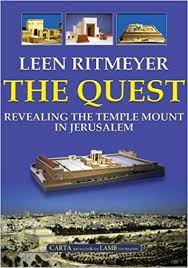
The Quest by Leen Ritmeyer

book quest temple

This book is without doubt the preeminent resource on the Temple Mount in Jerusalem available today. Whether you desire the historical or archaeological perspective, this is your book. This book’s success likely springs from the fact that no one but Leen Ritmeyer could have authored it. Both from his long years of working in this field and his work as the architect of the Temple Mount excavations, as well as his other work on the Temple Mount itself, demands that Ritmeyer produce this extraordinary resource.

This book is filled with pictures from the earliest scholarly explorations of Jerusalem, other helpful pictures on a range of issues, extraordinary reconstructions, and the wonderful, accurate Carta maps. It’s hard for me to effectively portray the visual treat the reader will have in this book. The text is the equal of the visuals and gives the most up-to-date, scholarly, detailed information that can be found on the Temple Mount.

The book begins covering the Herodian Temple Mount walls. Since archaeology digs down into older time periods, chapter 2 provides a lengthy chapter on the Temple of Nehemiah’s day. Some of the reconstruction models in that chapter were extraordinary. After a chapter on the Hasmonean Temple Mount, he turns to the interesting subject of the underground cisterns of the Temple Mount. I’ve never seen better on that subject. Chapter 5 examines how Herod extended the Temple Mount. That includes things like how he had to expand the drainage system and some of the gates he added. Chapter 6 nails down the location of the Temple on the Mount and has some great pictures of the inside of the Dome of the Rock.

In chapter 7 we find a reconstruction of the First Temple. Again, the graphics and reconstructions were eye-catching and instructive. In chapter 8 we follow that up with reconstructing the Second Temple and all the history behind it. The book goes full-circle with chapters on reconstructing the Herodian Temple Mount as well as Herod’s Temple itself.

Readers are going to love this book. I can’t imagine anyone finding something they thought was left out on the subject of the Temple Mount and its history. Helpful, beautiful, and thorough – what more could you ask for? I give this book the highest possible recommendation.

I received this book free from the publisher. I was not required to write a positive review. The opinions I have expressed are my own. I am disclosing this in accordance with the Federal Trade Commission’s 16 CFR, Part 255.

Acts (IVPNT) by William Larkin

book acts ivp

This book is one of the longer and higher-rated commentaries in the IVP New Testament Commentary (IVPNT) series. Mr. Larkin balanced scholarly concerns and pastoral needs quite handsomely. Pastors will further appreciate this volume because of how well he draws out missionary concerns. He never strays far from seeing salvation and its proclamation as the heart of the Book of Acts.

He approaches his Introduction from a different angle than many such volumes. He begins by getting us thinking about what’s at stake in preaching Acts today and drawing out its contemporary relevance. To grasp Mr. Larkin’s approach in stating that Acts is all about world evangelization, he says, “whether lulled into complacency by universalism or into indifference by viewing missions as the specialty of certain persons, the church will be awakened by Acts, which declares that being on the move with the gospel witness across cultural thresholds is the church’s number-one job.”

From there Mr. Larkin goes into bridging the cultural gap between the first century to our day and giving some insight into the way Acts ought to be applied today. Next, he discusses historical setting, which includes author, date, and audience. His conclusions are conservative. He treads quickly through scholarly opinions about the purpose of the Book of Acts and addresses historical reliability along the way. The highlight of the Introduction is his explanation of the theology of the book. I appreciated the way he highlighted the overwhelming importance of the Resurrection of Christ and how he further drew out salvation and witnessing.

The commentary section was well done, and as we said before, longer than several others the volumes in the series. In fact, the book itself runs to over 400 pages. Every passage that I reviewed in this book provided helpful commentary. Most importantly, he carried the aforementioned theme of world evangelization throughout the bulk of the commentary. That is, of course, in line with what the Book of Acts is doing.

If you are looking for a mid length commentary with real depth, yet without getting carried away in scholarly concerns, you ought to check this book out. I recommend it.

I received this book free from the publisher. I was not required to write a positive review. The opinions I have expressed are my own. I am disclosing this in accordance with the Federal Trade Commission’s 16 CFR, Part 255.

Philippians, Colossians, Philemon (NAC) by Melick

book phil col

Richard Melick. Jr. delivered this helpful commentary in the New American Commentary (NAC) series. It’s actually a three-for-one deal in the already economical series, this time on two of the more beloved of Paul’s epistles as well as his lesser-known personal letter to Philemon. At 375 pages, Melick strikes the perfect balance between helpfulness and succinctness.

Instead of writing one Introduction for all three letters, he writes standalone Introductions before the commentary of all three letters. I was impressed with the depth and quality of each of the Introductions provided here. In each case, he again struck the perfect balance between providing scholarly information and accessible understanding for pastors and teachers.

In his Introduction to Philippians, he first describes the background of the city and its people. Next, in a section entitled “the founding of the church”, he describes the level of Christianity to be found there. When he looked at authorship, he had little patience for the unfounded attacks on Pauline authorship. He feels the greater question is one of integrity of the text, and in his analysis, he explains the unity of the text. He reaches conservative conclusions on origin and date. In that same conservative vein, he outlines Paul’s opponents at Philippi and explains the theological structure of the epistle. His commentary on Philippians itself is thoughtful and well done.

His Introduction to Colossians follows the same pattern. He again reaches conservative conclusions and in section 7, “the problem at Colosse”, he breaks down the unique features of the book of Colossians. He again ends with the theological structure of the epistle and an outline of the book. He delivers commentary on Colossians at the same high level he did on Philippians.

Finally, he tackles Philemon in 35 pages. I have single exegetical commentary volumes on Philemon in my library, but this is all most will need. Again, he is the model of helpfulness while being compendious. He outlines the Introduction in the same winning way that worked in the other two epistles. As you can imagine, setting the stage and explaining slavery is especially important in this little epistle. The commentary itself is again very fine.

I’m surprised this volume isn’t more well-known and highly rated, so I guess we could label it a hidden jewel. Pastors, teachers, and Bible students will love this volume and I highly recommend it.

I received this book free from the publisher. I was not required to write a positive review. The opinions I have expressed are my own. I am disclosing this in accordance with the Federal Trade Commission’s 16 CFR, Part 255.

Job (NAC) by Robert Alden

book job nac

Here’s one of the most conservative, pastor friendly commentaries available on the book of Job today. It’s in the economical New American Commentary (NAC) series. It’s wonderful to read a commentary that approaches the text in such a reverent, believing way. That’s exactly the way Robert Alden discusses the Book of Job here.

He provides a thoughtful Introduction much more geared toward the pastor than the scholar. He begins by discussing structure and explains how the scholarly world is in more agreement than is usual in the area of structure with most biblical books. He surveys the issues that help decide the dating of the book of Job and arrives at a conservative, older dating. In discussing authorship, he boldly speaks for the full inspiration of Scripture (believe it or not, that is rather rare today). Next, he tackles geography and culture followed by canonicity. He ends his Introduction with a helpful overview of literary style, theology, and purpose.

The commentary proper provides the kind of help that pastors and teachers are looking for. For the record, some scholarly reviews have not been that high on this volume, but that has nothing to do with anything other than Mr. Alden not being obsessed with esoteric scholarly minutia. Words, geography, obscure statements, as well as theology are all brought out clearly. If your goal is to explain the text, I believe you will greatly appreciate this commentary. In the category of a commentary for pastors or teachers, I’d have to say that this volume is as good as any out there today. For the money, this is a must-buy.

I received this book free from the publisher. I was not required to write a positive review. The opinions I have expressed are my own. I am disclosing this in accordance with the Federal Trade Commission’s 16 CFR, Part 255.

The Expositor’s Bible Commentary (Rev. Ed.)–Volume 6: Proverbs-Isaiah

book ebc 6

The quality revision of the beloved Expositor’s Bible Commentary succeeds again here in volume 6 covering Proverbs through Isaiah. For the record, I’m glad Ross and Grogan were retained to revise Proverbs and Isaiah respectively, as I always enjoyed them in the old set. This revision ensures another generation of pastors will use EBC as a primary resource.

In Proverbs, the Introduction and outline are little changed and the exceptional topical index was retained. The commentary is simply one of the best on Proverbs today. Frankly, I always check what Ross has to say when working in Proverbs.

In Ecclesiastes J. Stanford Wright is replaced by Jerry Shepherd. Though the scholarship is improved, and the writing clear, his interpretation follows the currently popular pessimistic approach. Though I couldn’t agree with that approach, the work is helpful.

George Schwab replaces Dennis Kinlaw in an improved effort for the Song of Songs. It’s really outstanding. He gives an incredibly succinct summary of approaches to the book. Since pastors rarely preach on the Song, this may be all some pastors want.

Grogan has brought Isaiah up to date with current scholarship and this commentary will hold its status as one of the best in the middle-length category. I really love it! Conservative, clear, and helpful–what more could you ask for?

Quality commentary on four biblical books (and one of those books is the longer, important Book of Isaiah) between two covers at a decent price is not something you can find just anywhere. I’d especially recommend this volume to busy pastors and teachers. You will be helped by it.

I received this book free from the publisher. I was not required to write a positive review. The opinions I have expressed are my own. I am disclosing this in accordance with the Federal Trade Commission’s 16 CFR, Part 255.