Dictionary of Christianity and Science

book dictionary cs

When you pick up this attractive hardback “Dictionary of Christianity and Science”, edited by Paul Copan, Tremper Longman, Christopher Reese, and Michael Strauss, your first thought will be to wonder if it can live up to its subtitle “the definitive reference for the intersection of Christian faith and contemporary science”. To my mind, it was a boast that turned out to be true.

That’s not to say, that you will agree with everything you read here. Fully conservative views are well defined, but in the interest of providing a comprehensive resource other views are as well. Since evangelical Christianity is not in full agreement on these subjects, you will discover here are all the opinions out there. If you do either theological or apologetic reading, you have already noticed the debate on its margins with science. In our post-Christian age, this is no time for trite platitudes. This resource helps us understand and intelligently discuss at the very point where so much of modern society is attacking Christianity.

The entries given are of three types. Some are short introductions intended to give an overview. There’s longer entries called essays that attempt to give a larger picture. Finally, some oft-debated subjects are given what they call multiple-view discussions. In these cases, scholars of varying opinions make their strongest case. That type of debate can be most instructive.

The range of topics covered almost anything I could think of regarding faith and science. Whether it was common terminology or less common scholarly jargon, you will find it here. You will find scientific terms, hot button issues of our generation, prominent movements and people, and some things I imagine you’ve never heard of before. There’s various creation/evolution theories, the Flood, fossil records, bioethics, and even climate change from various viewpoints.

I could easily see myself in the future reading an article and coming to an obscure concept or the element of debate I was a little rusty on and grabbing this book to get a grasp of what I was reading. This book has clearly found a niche missing in other Bible dictionaries and encyclopedias. This fine volume succeeded in what it set out to do and I think it’s an all-around winner. I predict it will be the go-to volume of its kind for many years.

I received this book free from the publisher. I was not required to write a positive review. The opinions I have expressed are my own. I am disclosing this in accordance with the Federal Trade Commission’s 16 CFR, Part 255.
The Self-Aware Leader by Terry Linhart

book aware leader

Terry Linhart has written a book here that forces ministry leaders to take the inward look. With the current epidemic of ministers either falling by the wayside or succumbing to burnout, this book provides an important self check. Though we cover some of the same material found in similar books, his writing is perceptive, flows well, and issues a real challenge .

In his introduction, he is transparent in telling his own story and his own bumpy path that taught him to finally develop self-awareness. He explains self-deception that finally pushes us into a life of hypocrisy. Though self-awareness is a modern psychological term, he means it in the biblical sense of examining ourselves before God.

In chapter 1, he reminds us that most of us want to do our best in Christian ministry, yet we often fall short of our potential. He rips from the pages of the New Testament the analogy of a race to help us see life as it should be seen. (Be sure to note the Johari Window he shares). He exposes our allusions that we can bear fruit without being closely connected to Jesus Christ. In chapter 2 he goes after our blind spots and teaches us to learn to pass the smell test in our actions and reactions. In chapter 3 he encourages us to learn how to view our past appropriately.

When it comes to chapter 4, he tackles the sticky subject of our not being blind to our temptations. He hammers away at what he calls “the big five” of seeking prominence, holding on to control, valuing shiny stuff, pursuing inappropriate intimacy, and relishing resentment. He provides self checks and ways to build in personal safeguards in each category. In chapter 5 he tackles our emotions and surveys the damage they can cause and the emotional maturity we need. Chapter 7 guides us through the common ministry problem of conflicts. Again, he provides practical advice for being more mature in that area. The final chapter is about seeing your margins. He gives some really thoughtful help and encouragement here. His conclusion brings out the end goal to steady our perspective.

Mr. Linhart succeeds in helping us find our blind spots to reach our true ministry potential. The book reads well and is a real help. In our age of brokenness, this book has come along at a perfect time. I highly recommend it!

I received this book free from the publisher. I was not required to write a positive review. The opinions I have expressed are my own. I am disclosing this in accordance with the Federal Trade Commission’s 16 CFR, Part 255.

Paths to Power by A.W. Tozer

book tozer path

I’m one of those people who find A. W. Tozer to be an incredibly challenging writer. Having always loved his more famous books, I’m enjoying discovering his lesser-known titles published by Moody Publishers including this little gem called Paths to Power. It’s a small book that you could probably read in one enjoyable sitting, though its thoughtful paragraphs might call for a slower perusal.

This title is subtitled “Living in the Spirit’s Fullness”. As you may know, that’s a prevalent subject and Mr. Tozer’s writings as he laments the anemic state of Christianity in a way few writers do today. Chapter 1, entitled “Power in Action”, describes the deadness of our day and our bizarre acceptance of it. Chapter 2 gets quite doctrinal on us as he says, “God cannot do our repenting for us”. You’ll find a lot to think about in that chapter. The third chapter discusses “The Fruits of Obedience” and how we have removed the idea of obedience from our lives by mistakenly describing it as a works-salvation approach.

Chapter 4 takes the famous text of Hosea 10:12 explains how miracles follow the plow. Chapter 5 discusses doctrinal hindrances while chapter 6 explains how power comes through the “Out-poured Spirit”. To get a feel for the flavor of this book you should read where he says, “another thing that greatly hinders God’s people is a hardness of heart caused by hearing men without the Spirit constantly preaching about the Spirit.” See what I mean? Chapter 7 is a concluding chapter that discusses the relationship between unity and revival.

As always, you can’t go wrong with A. W. Tozer and I highly recommend this book!

I received this book free from the publisher. I was not required to write a positive review. The opinions I have expressed are my own. I am disclosing this in accordance with the Federal Trade Commission’s 16 CFR, Part 255.

Nahum, Habakkuk, Zephaniah (OTL) by Roberts

book nahum otl

This commentary on the little-known books of Nahum, Habakkuk, and Zephaniah has been influential since it was written and is one of the better volumes in the Old Testament Library (OTL) series. Mr. J. J. M. Roberts has given us a probing volume here. Though this volume is not as conservative as my personal beliefs, I’ve noticed other influential conservative scholars speak highly of this book. You might say, that this book is the best we have from that side of scholarship.

The General Introduction opens with a discussion on how to read a prophetic book. Mr. Roberts unique perspective is that looking at prophecy in terms of biblical books is not as effective as looking at individual oracles. I was surprised to read that Mr. Roberts felt that “the intricate connections discovered in such redactional analyses tend to be artificial, contrived, and obvious only to the critic proposing the analysis”. To that statement I give a hearty amen. As he explains, there’s too little evidence to describe the redactional process or what was behind it.

After a select bibliography on all three books, he launches into approaching each of the three books separately including giving an Introduction to each book. In each case, he gives some basic background, an outline, a discussion of the date (his conclusions here are pretty conservative after all), and a discussion of the prophet and his message. Then he gives commentary that includes much textual help and some interesting theology. With that commentary, he gives his own translation followed by even more detailed textual notes.

At around 225 pages, Mr. Roberts has struck the right balance between brevity and detail. I agree with others who say they have found this commentary rich. I have most of the major commentaries on these books of the Bible and I assure you I’ll be consulting this book each time I study these three obscure prophets.

I received this book free from the publisher. I was not required to write a positive review. The opinions I have expressed are my own. I am disclosing this in accordance with the Federal Trade Commission’s 16 CFR, Part 255.

Hear, My Son (NSBT) by Daniel Estes

book hear son

Daniel Estes, a fine scholar on the poetry of the Old Testament, contributes this volume in the celebrated New Studies in Biblical Theology (NSBT) series by IVP and edited by D. A. Carson. This monograph considers Proverbs 1-9 for what it tells us about teaching and learning.

He feels that the obvious pursuit in Proverbs is one of education or instruction. The teacher speaks to the student throughout. Though there appears to be a random order in our collection of Proverbs, he see seven pedagogical categories that holds them together. These seven are worldview, values, goals, curriculum, instruction, teacher, and learner.

He encourages us to notice “hear my son”. He covers a few more broad issues in the introduction. In chapter 1 he uncovers the worldview of Proverbs 1-9 and explains the assumptions of it. He says it’s evident that it “implies a prior faith commitment.” Further, in biblical wisdom there’s no differentiation between the sacred and the profane. From there, Mr. Estes traces out the theological points at work.

The book hits its stride in chapters 2 and 3 when the values and goals for education are explained. It was in these two chapters that I learned the most and felt he made the strongest case for his premise. Chapters 4-7 cover his other pedagogical categories in turn. Along the way many key words and verses are brought to light.

Though it only covers 9 chapters, this book is an excellent resource for studying Proverbs. It certainly lives up to the lofty status of this series.

I received this book free from the publisher. I was not required to write a positive review. The opinions I have expressed are my own. I am disclosing this in accordance with the Federal Trade Commission’s 16 CFR, Part 255.
Biblical Hermeneutics (2nd Ed.) by Corley, Lemke, and Lovejoy

book herm corley

This volume on biblical hermeneutics, edited by Bruce Corley, Steve Lemke, and Grant Lovejoy, is offered up as a comprehensive introduction to interpreting Scripture. Its approach is different than many such volumes in that each chapter is written by scholarly expert in that field. Usually, one or only a few contribute to such a book. The book is divided into five parts presented in the logical order of how to study the Bible, biblical hermeneutics in history, the authority, inspiration, and language of Scripture, the genres of Scripture, and going from exegesis to proclamation. The book is aimed at students and ministers and has been widely used as a textbook.

The book begins with a fine primer for exegesis to help those with little background and to define the keywords any student will need to know in the subject. As with each chapter, the contributor provides a bibliography for further study. Chapter 2 explains the grammatical – historical method and puts this book on a firm conservative foundation. From there, inductive Bible study methods are explained.

The next section covers biblical hermeneutics in history in eight chapters. While that might be more history than some would want, it covers all the bases and is well done. Part 3 brings in the often-forgotten subject of the authority and inspiration of Scripture and introduces us to textual criticism.

One of the best sections of this book is part 4 where the genres of Scripture are discussed in seven chapters. To my mind, this is where the student most often needs help and they’ve gone out of their way in this book to provide it. Biblical hermeneutics that doesn’t go on to preaching is rather pointless, so the final five chapters teach us how to take the hermeneutic process and translate it into biblical preaching.

This book is a solid effort. I prefer it as a secondary resource as it complements well with other volumes that might have gaps. This volume is well worth securing.

I received this book free from the publisher. I was not required to write a positive review. The opinions I have expressed are my own. I am disclosing this in accordance with the Federal Trade Commission’s 16 CFR, Part 255.
A Theology of John’s Gospel and Letters by Kostenberger

book john theology

This book covers a great deal of territory on the Gospel of John. Prolific commentator, Andreas Kostenberger, has written an outstanding volume here. Think of it as a book that summarizes all the issues and themes that scholars often talk about involving John’s Gospel to put beside your commentaries on John. Zondervan is putting out a whole series called the Biblical Theology of the New Testament (BTNT) in eight volumes to cover the New Testament. Authors in the series are required to have already written a commentary on one of the books in their section. Mr. Kostenberger has already written a highly-rated commentary on John in the Baker Exegetical Commentary series. Though its stated audience is for upper college and seminary-level students, I found it, as a pastor, accessible and easier to read than many volumes of its kind.

Part 1 of this book provides the historical framework for Johannine theology. He begins in chapter 1 by explaining how John is a “spiritual gospel” and breaks down how he intends to approach his subject in this book. In chapter 2 he approaches the much-discussed subject of the Johannine community. That hypothesis has a lot of baggage and he expertly guides us through it. There’s a great deal of scholarly interaction in this section too. Next, he tackles typical introductory matters including authorship, date, provenance, and destination. He arrives at conservative conclusions while well surveying the field. In every section of this book, remember he addresses both John’s Gospel and the Epistles of John. In a sense, it’s a two-for-one deal.

In part 2, he wades through what he calls literary foundations for Johannine theology. That involves a discussion of genre which he carries out in great detail. Don’t miss chapter 3. It’s a motherlode of extraordinary information of what he calls linguistic and literary dimensions of John’s Gospel and letters. I found so much information there that greatly expanded my thinking on the Gospel of John.

Chapter 4 is a nice, lengthy literary-theological reading of John’s Gospel followed by a chapter in the same vein on John’s letters. Part 3 discusses major themes in John’s theology. There’s a chapter on John’s worldview and use of Scripture, one on the Messiah and His signs, one on the word as creation and new creation, one on the Trinity, one on the festivals and the symbolism involved, one on the trial of Christ, one on the new messianic community, one on John’s love ethic, one on his theology of the cross, and finally one on mission. Part 4 is basically a summary and a discussion of how John’s theology fits in with the rest of Scripture. The book ends with a lengthy bibliography.

This is now the third volume in this series that I have reviewed, and the quality is high. In fact, in this volume on John, I can’t think of another volume that covers the subject so broadly and so well. This is an indispensable volume for the student of John.

I received this book free from the publisher. I was not required to write a positive review. The opinions I have expressed are my own. I am disclosing this in accordance with the Federal Trade Commission’s 16 CFR, Part 255.
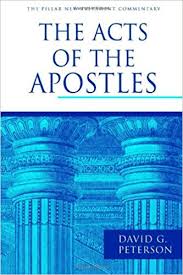
Acts (Pillar) by David Peterson

book acts p

David Peterson has produced one of the most outstanding commentaries we have on the book of Acts today. If you judge this commentary on the basis of its Introduction, it’s theology, and its commentary on the text, you will see that it is a winner across the board. To my mind, it is one of two in the exegetical commentary category that could be labeled “must have” today. Mr. Peterson has outdone himself in giving us a conservative, quality commentary on this critically important book of the Bible. This commentary stands high in the revered Pillar New Testament Commentary series.

His Introduction is ideal and one of the best I’ve seen on any New Testament book of the Bible. It covers all the usual topics with surprising depth. After a lengthy select bibliography, Mr. Peterson begins his Introduction discussing authorship and date. He explains well why Luke should be accepted as the author and finds a date in the 60-70s as sensible. In his discussion of genre, he looks at the unity of Luke and Acts and surveys the ancient literary models for this book. When he discusses sources, he emphasizes Luke’s eyewitness material. He is adept at explaining rhetoric and historical reliability as well.

Next, he provides a section on character, structure, and purpose. He sees the book of Acts as a theological history and says, “the narrative of Acts unfolds geographically and focuses on the ministry of key individuals within each context”. As you would expect, he draws in how the narrative is dominated by speeches and what he calls a narrative of fulfillment. As for structure, he sees the Word of God progressing through the book. In the section on interpretive issues he points out many of the editorial techniques that you will find in this book, as well as patterns of repetition. His section on textual matters is brief.

Next, he provides a large, warm, and outstanding section on the theology of Acts. He discusses God and His plan, Jesus as Messiah and Lord, the Holy Spirit, salvation, the Gospel, the atoning work of Jesus, witness and mission, miracles, the demonic, and the church. This section is impressively done and is the best I’ve seen on this book.

The commentary proper is full at over 600 pages and Mr. Peterson continues the quality of writing that we found in the theology section of the Introduction. You will not be disappointed.

Again, this is one of the two best exegetical commentaries on the book of Acts that I’ve encountered. This book will be a heavyweight acquisition for your library and I highly recommend it.

I received this book free from the publisher. I was not required to write a positive review. The opinions I have expressed are my own. I am disclosing this in accordance with the Federal Trade Commission’s 16 CFR, Part 255.
 

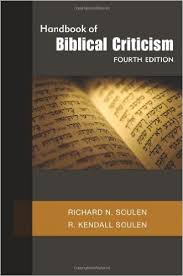
Handbook of Biblical Criticism (Fourth Edition)

book handbook

This book is handy to have near the desk. I’ve used an older addition when Richard Soulen authored alone to great advantage in the past, but this view, fourth edition, now co-authored with R. Kendall Soulen is even better. Pretty much any term you may encounter in scholarly reading that is obscure to you will be explained succinctly in this book. They cover technical terms, names, tools, and interpretive approaches. I noticed this later edition covers even more interpretive approaches from other parts of the world that you especially might not be familiar with.

For me, the book’s value is in its quick explanation of terms that I just didn’t know. He further helps me in words I’m a little fuzzy on or that I hadn’t thought about in a long time. Even in words I knew well, it was a help to see their careful explanation in a small compass. In cases where the entry warranted, I noticed articles that were longer than in the previous edition.

The entries cover all the bases. Terms about various types of criticism, special grammatical terms, famous biblical texts, scholars who had a major impact in biblical interpretation, and the latest approaches are all covered. Several entries have helpful bibliographies attached.

Again, this is the perfect book to have on hand to grab for that quickly needed explanation while you’re in the middle of other study. I’m glad to have it near and I highly recommend it.

I received this book free from the publisher. I was not required to write a positive review. The opinions I have expressed are my own. I am disclosing this in accordance with the Federal Trade Commission’s 16 CFR, Part 255.

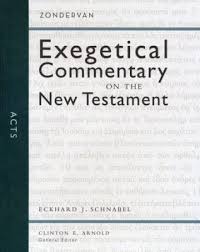
Acts (ZECNT) by Eckhard Schnabel

book acts z

Eckhard Schnabel’s commentary on Acts in the ZECNT series beautifully lives up to the high standard of this emerging series. Coming in at over 1100 pages, this volume is a major commentary on the book of Acts that ranks near the top of commentaries available today on that book.

The Introduction including the outline is only a little over 50 pages. Though that is briefer than in some other major commentaries, it doesn’t strike me that anything important was missed. He begins his discussion on describing Luke and his readers. He argues against the silly fad of seeing anonymity in Acts or any other book of the New Testament. He finds accepting Luke as the author as totally legitimate. He further discussed the language Luke used, his origins, and the fact that he was a physician. As you might imagine, he discusses the fact that Luke has written two books of the New Testament and he reaches conservative conclusions about the date of those writings.

Many scholars today debate if Luke should be considered a historian, and Mr. Schnabel feels he is a fine one who is actually the first historian of Christianity. He reviews the positions of genre, lists the speeches in Acts, and gives a fine discussion of the purpose of Acts. After discussing the Greek text of Acts, he provides an in-depth chronology of early Christian history that will be a tremendous help in studying the book of Acts. Structure, though, is barely mentioned in the Introduction as he gets plenty of coverage in the commentary itself.

If you are familiar with the design of ZECNT, you will find that this commentary uses it to great advantage. Any Greek that is used has its English counterpart nearby making this commentary accessible to any user. I found his commentary probing, helpful, and better than I’ve seen in many other major commentaries on the book of Acts. I reviewed several passages, and found material that was very helpful to me in every case. This is an outstanding commentary and I highly recommend it.

I received this book free from the publisher. I was not required to write a positive review. The opinions I have expressed are my own. I am disclosing this in accordance with the Federal Trade Commission’s 16 CFR, Part 255.