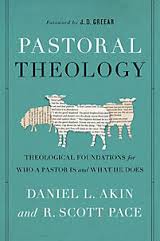
Interpreting Old Testament Wisdom Literature–A Book Review

book ot wisdom

Here’s a scholarly book designed to really get at what OT wisdom literature is and what scholarship has thought it to be. Edited by David Firth and Lindsay Wilson, this book highlights the work of eleven scholars on the oft-debated issues of wisdom literature.

Part 1 is one chapter by Craig Bartholomew that introduces where the study of OT wisdom is today. That provides a fine overview, including some of the more bizarre things out there.

Part 2 gives chapters on the four main wisdom books of Proverbs, Job, Ecclesiastes, and the Song by Ernest Lucas, Lindsay Wilson, Katherine Dell, and Rosalind Clarke respectively. All of the chapters were worthwhile providing the reader learning each time.

Part 3 branches out on themes including seeing Ruth as Wisdom literature, retribution, wisdom, the connection of wisdom and biblical theology, voicing, and a really profound discussion of divine absence.   Gregory Goswell, Lennart Bostrom, David Firth, Christopher Ansberry (he was a really good writer), Simon Stocks, and Brittany Melton provided these chapters.

The book was a solid effort. If you like this type of book, I suggest you check out “Five Festal Garments” by Barry Webb from the same publisher as well. I predict you will see this volume quoted often in future scholarly works. It would be a worthy addition to your library.

I received this book free from the publisher. I was not required to write a positive review. The opinions I have expressed are my own. I am disclosing this in accordance with the Federal Trade Commission’s 16 CFR, Part 255.

Luke 1 (Hermeneia) by Bovon

book luke bovon

This commentary is one where I’ve heard so many tidbits of praise that I have long wanted to see what all the hoopla was about. With this review I’ve had my opportunity to look over this commentary from the Hermeneia series that I’ve had little interaction with. Since the series is geared more to scholars while my needs are that of a pastor, perhaps that was to be expected. Having now looked at this first volume of the three-volume set, I’m ready to admit that it is as special as its press clippings say.

Even though I have some caveats to my glowing review, I’m so glad to have it at my disposal. I must confess that the Introduction is rather brief, and misses what most introductions of an exegetical commentary discuss. That reason, I’ve heard, is because Bovon has written a full volume on introductory matters of Luke’s Gospel and feels no need of repetition. Further, I have no sympathy with his conclusions about sources, dating, or the historical integrity of what Luke’s Gospel says. Why with such caveats do I offer such a high ranking?

He is savvy with exegetical or philological insights. Even better, his theological help is profound. In the passages I reviewed, after I read past matters I couldn’t agree with, I’d find sparkling nuggets that enabled whole new lines of thought. I don’t know about you, but that’s what I’m looking for in a commentary. He’d often pull in incredibly interesting references from other parts of Scripture. I find that kind of help stimulating.

Aimed at scholars or not, I still recommend this book as a fine resource for pastors!

I received this book free from the publisher. I was not required to write a positive review. The opinions I have expressed are my own. I am disclosing this in accordance with the Federal Trade Commission’s 16 CFR, Part 255.

Seven Leaders by Iain Murray

book seven leaders

Iain Murray continues his impressive output of biographies in this latest volume published by Banner of Truth. Though some are more known than others, his 7 mini-biographies on John Elias, Andrew Bonar, Archie Brown, Kenneth MacRae, Martin Lloyd-Jones, W. J. Grier and John MacArthur makes for enjoyable reading. He intends to show that the Lord uses different individuals to similarly do a mighty work. Still, you might not see the connection in the seven here, and even surmise that a better list could have been assembled, yet that doesn’t hinder the book from being a good one.

Murray is chatty. He at times falls into the minutia of a doctrinal debate, he over-emphasizes election, and can jump around a lot. While being casual would sink most biographers, Murray comes out on top again. I’ve never failed to be blessed by his biographies. It’s the perceptive spiritual and devotional content he draws out of the lives of those he writes about that makes his books as edifying as they are enjoyable.

Any preacher will get a double blessing from this book. He has striking conversations about what we do as preachers from the words and actions of those whose story he tells. He refers several times to the difference in varying texts and the consecutive method and concludes both have a place. It’s only preaching devoid of doctrine that misses the mark.

The three he has already written biographies on were the ones he seemed to purposefully not give as much biographic details. He preferred to make more wry observations instead. I’ve always loved Lloyd-Jones and that chapter was what you’d expect. Of those I knew little, I especially enjoyed John Elias, Archie Brown, and Kenneth MacRae. Though I was familiar with Bonar, his chapter was enlightening and outstanding.

As an added bonus, Banner always provides beautiful volumes with its hardbacks. This book is a worthy choice to find its place on your biography shelves and to provide several hours of reading pleasure.

I received this book free from the publisher. I was not required to write a positive review. The opinions I have expressed are my own. I am disclosing this in accordance with the Federal Trade Commission’s 16 CFR, Part 255.
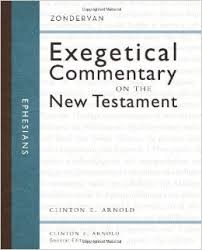
Ephesians (ZECNT) by Clint Arnold

book ephesians z

Clinton Arnold, who also happens to be the editor, contributes this volume on the wonderful Book of Ephesians in the Zondervan Exegetical Commentary (ZECNT) series. Mr. Arnold is a scholar highly qualified to comment on this book, one of the most important in the Bible. It’s obvious that Ephesians has been area of expertise for him. As with several volumes in the series, Mr. Arnold holds conservative viewpoints and defends them in a magisterial fashion. His bold proclamation of a belief in the inerrancy of Scripture was much appreciated by this reviewer.

He begins his Introduction by relating his awe of the Book of Ephesians. He believes the destination of the letter is Ephesus and shows the recent scholarly rejection of it to be built on a foundation of sand. He draws a vibrant portrait of the setting in Ephesus including its diverse religious and cultural background. He traces where Judaism stood there. I found it easy to agree with his four main themes of Ephesians too.

On authorship he remains convinced of Paul and explains why we should as well. He sifts through the scholarly debate over Ephesians similarity to Colossians to good advantage. He doesn’t have as much to say about structure as some, but doesn’t believe rhetoric is as in play as some have argued. After an outline and bibliography, he jumps into the commentary of the text.

The commentary is in the pastor-friendly ZECNT style. I read through some of what I believe to be the harder passages and loved what I found. There’s great presentation of options and clear reasoning about what he feels to be the right conclusion. I thought his section on the household code was balanced and firmly complementarian.

There’s a lot of competition in the Ephesians commentary category. He’s much more succinct than Hoehner and up near the staus of O’Brien. The writing flows well and the content is top notch. This volume is clearly in the must-have category.

I received this book free from the publisher. I was not required to write a positive review. The opinions I have expressed are my own. I am disclosing this in accordance with the Federal Trade Commission’s 16 CFR, Part 255.

Colossians and Philemon (ZECNT) by David Pao

book colossians

The Zondervan Exegetical Commentary on the New Testament (ZECNT) series rings the bell again with this fine volume on Colossians and Philemon by David Pao. The more volumes in this series I peruse, the more I like the ZECNT format. The scholarship is conservative and the outlook warmly in sympathy with the biblical text. Pao holds his own with the other great scholarly writers in the series.

The Introduction to Colossians is ideal. He argues beautifully for traditional conclusions while succinctly sharing various viewpoints. Still, he doesn’t let this volume drown in the weirder scholarly drama that we sometimes find in modern exegetical commentaries. He agrees with the long-accepted conclusion that Paul is the author and feels that Rome is the most likely location of the letter’s origin. He describes well the audience in Colossae and explains the circumstances behind the text. He sees both a Jewish legalism and syncretism at play in Colossians. He provides a helpful outline and bibliography.

The commentary on Colossians follows the usual format of discussing literary context, offering up the main idea, diagramming the text, discussing the structure, providing an exegetical outline, followed by substantial commentary on the text along with a section on theology in application. This format really serves up exactly what the pastor needs and is helpful throughout. I found his comments perceptive.

Philemon is given a similar Introduction followed by the same type of commentary format. Though I do not really agree with his rejection of seeing Onesimus as a runaway slave, it’s all still very helpful. I’m more in sympathy with his conclusions on Colossians, but this is still a superb choice for Philemon.

This commentary ranks up there with Douglas Moo  and Peter O’Brien and is newer than either of them. Add to its high rating its economical price and you have a winner here. I highly recommend it!

I received this book free from the publisher. I was not required to write a positive review. The opinions I have expressed are my own. I am disclosing this in accordance with the Federal Trade Commission’s 16 CFR, Part 255.
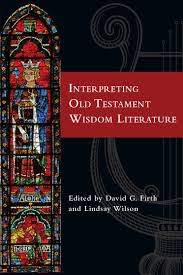
The First Letter to the Corinthians (Pillar)

book 1 cor

Roy Ciampa and Brian Rosner team up to provide this commentary on First Corinthians in the highly respected, conservative Pillar Commentary series edited by D. A. Carson. At this point, I’ve used most of the volumes in this series, and even reviewed several of them, and can’t deny that this series is one of the premier ones on the New Testament. Many of us look forward to when the entire New Testament is covered.

This volume on First Corinthians is huge, at just under 900 pages, on this one of the more challenging books of the New Testament. After a lengthy bibliography, the authors dive into an Introduction. With a confession that First Corinthians is one of Paul’s most difficult letters, they then jump into a discussion of the background of the church in Corinth. That section is quite well done. Next, they examine the identity and aims of the apostle Paul. They conclude that “Paul’s aim, then, is to bring about true worship and obedience among the Gentiles, to the glory of God”.

In the discussion about the interpretation of the book, they outline the structure of First Corinthians. They feel “the four main elements of 1 Corinthians are (in order) wisdom, sexuality, worship, and resurrection/consummation”. A section that was a bit harder to follow was the biblical theological framework of First Corinthians. They pull in many parallels from the Old Testament. They discuss verbal aspect and finally conclude that a “biblical/Jewish approach provides a solid basis for appreciating the structure and coherence of Paul’s response to Corinthian problems and also does greater justice to the fundamentally Jewish character of Paul’s response to the Corinthians”. You will have to decide for yourself if you see the depths of the Jewish character that they do.

The commentary itself is outstanding and of the high-caliber writing that we are used to finding in the Pillar commentary series. When checking several of the more notorious problem passages, you will find the authors arguing clearly and helpfully. I really liked what they had to say! I’m sure scholars will love this detailed volume. On the other hand, this volume is likely the top exegetical commentary on First Corinthians available to pastors today.

I received this book free from the publisher. I was not required to write a positive review. The opinions I have expressed are my own. I am disclosing this in accordance with the Federal Trade Commission’s 16 CFR, Part 255.
Jeremiah (OTL) by Leslie Allen

book jeremiah

Leslie Allen is a veteran commentator who has contributed commentaries in several important series. Here in the Old Testament Library (OTL) Allen has replaced an earlier weak volume in the series with this widely-recognized contribution on the Book of Jeremiah. Having used some of his other commentaries, I found here the same quality of efforts as I saw in earlier projects. The book is even considered more conservative than several in this series.

After a nice bibliography, Mr. Allen begins a rather brief Introduction for this commentary. I appreciated his sharing his six guiding principles of approach to this commentary. I wish all commentators would so succinctly tell us up front the approach they’re going to take. He gets into translation and text and then quickly moves to the genre. He feels that “oracles of disaster constitute a backbone for the book”. He discusses the quotation formulas that you will encounter in Jeremiah. He barely addresses style before he jumps into literary development. Though I could not agree with his conclusions about the LXX and MT, he did carefully state his reasons. His comments on structure were helpful, and then he ends the Introduction with a discussion of purpose in the complex Book of Jeremiah. He remarks that the “purposeful trajectory of overriding grace that stretches over the book like a rainbow” is key.

The commentary was superior to the Introduction. In each passage, he gave the text with exegetical notes, followed by a paragraph on the passage as a whole, and then with more comments on individual verses. Though I could not always agree with his conclusions, you could tell that Mr. Allen was a season scholar with a full grasp of all the issues.

I found this book to be one of the more important in the OTL series, and as I said before, more conservative than some of them. Anyone trying to secure the most important commentaries on Jeremiah for a first-class library, simply must add this volume. I recommend it.

I received this book free from the publisher. I was not required to write a positive review. The opinions I have expressed are my own. I am disclosing this in accordance with the Federal Trade Commission’s 16 CFR, Part 255.

Interpreting the Psalms by Mark Futato

book psalms

In the series “Handbooks for Old Testament Exegesis” that teaches us how to interpret the different genres of the Old Testament, the Book of Psalms is rightfully seen as so important as to receive its own volume in the series. This book will complement “Interpreting Poetry”, which can also be found in this series by Kregel.

Chapter 1 discusses appreciating poetry and seeks to differentiate Hebrew poetry from what is common in our culture. For one thing, rhyming is not important in Hebrew poetry. This chapter also serves to define all the terms like line, colon, by-colon, strophe, stanza, and correspondence. The chapter also seeks to explain imagery and patterns. As you will find throughout the book, many examples are pulled from the Book of Psalms to make his point.

The next chapter on “Viewing the Whole” was one of the best in the entire book. The author gave much discussion on the purpose and message of the Psalms where he found the theme of the book to be the kingship of God and the eschatological hope that our King is coming.

Chapter 3 is about preparing for interpretation. In this chapter, we learn to ascertain the historical setting of a Psalm, to see the timelessness of the Psalms, and how to do text criticism. This chapter ends with bibliographic suggestions for further study. Chapter 4 is about interpreting the categories, or as we might normally express it, the genres. He explains how these things guide our expectations and give another level of context to help us. Chapter 5 moves us on to the sermon and putting into practice what we’ve learned in the book. The book is concluded with a helpful glossary.

This book by Mr. Futato, and edited by David Howard, is a worthy addition to this series. It stacks up well with the others that I have had the chance to use. It gives hermeneutic help in the narrow, but vitally important, Book of Psalms. I highly recommend it.

I received this book free from the publisher. I was not required to write a positive review. The opinions I have expressed are my own. I am disclosing this in accordance with the Federal Trade Commission’s 16 CFR, Part 255.
Isaiah (OTL) by Childs

book isaiah otl

This volume by Brevard Childs replaced three volumes by Otto Kaiser and Claus Westermann in the popular Old Testament Library (OTL) series. It was written in the twilight of his career after his highly-regarded commentary on the Book of Exodus in the same series. Most reviews I’ve seen feel Mr. Childs is the best commentator on Isaiah that we have from the critical camp. After reviewing this book myself, I can see how that came to be believed by many.

In what seems to be a unique approach, Mr. Childs gives an introduction to the Book of Isaiah as a whole, followed by the introduction to Isaiah 1-39. Then he gives an introduction to Isaiah 1-12. That’s followed by commentary on that section and in chapter 16 we have an introduction to Isaiah 13-23. That pattern is continued with separate introductions to Isaiah 24-27, 28-35, 36-39, 40-55, and 56-66 followed by commentary on that section. I’m used to seeing Isaiah chopped in either two or three parts by the critical side, but this was rather unique. Don’t worry, though, following the commentary is still straightforward.

Mr. Childs did not stick to a canonical approach as much as he did in his commentary on Exodus, and gets more into sources and other redactional critical ideas. In his introduction to the whole book, he discusses the approach that he will take. More than in many commentaries I’ve read, I think it’s highly important that you allow him to explain for himself the track he will follow.

In the commentary itself, you will find much of what you might have come to expect with Mr. Childs. There’s still redactional discussions, but real exegetical help and textual insights abound throughout. The commentary is not as long as you might expect for a book the scope of Isaiah, but it still offers the reflections of a season scholar at the end of his career.

We can’t deny that this volume is an important one on the Book of Isaiah today. Though I follow a more conservative path than Mr. Childs does, I still find value in this book and look forward to interacting with him in future studies I do in the Book of Isaiah. It’s worth checking out.

I received this book free from the publisher. I was not required to write a positive review. The opinions I have expressed are my own. I am disclosing this in accordance with the Federal Trade Commission’s 16 CFR, Part 255.

The Historical Reliability of John’s Gospel by Blomberg

book john reliab

This book by reputed scholar Craig Blomberg has become the leader in the field in the unique category of the historical reliability of John’s Gospel. Haven already written “The Historical Reliability of the Gospels”, Mr. Blomberg was right at home in digging deeper into the much beloved Gospel of John.

Part one covering through page 68 is what he calls introductory considerations. It includes topics such as you would find in a traditional Introduction of a major commentary, yet always with an eye to his subject of historical reliability. A skepticism in the matter of historical reliability mars many works in print on the Gospel of John today. It’s wonderful to see a book that upholds that reliability when he discusses authorship, date and provenance, sources, the relationship between John and the Synoptic Gospels, literary genre, and audience and purposes. The final part of this section discusses where he feels the burden of proof lies in what the criteria of authenticity ought to be followed by his sensible suggestion for the way forward.

Part two is a commentary of over 200 pages on the Gospel of John with a focus in every text on the historical data and why it is reliable. To my mind, that makes this short commentary a jewel. It’s a subject that might be ignored in several texts in even major commentaries on the Book of John. In our skeptical age, this commentary helps in an area of one of the strongest onslaughts against the Book of John that we face. Frankly, the value of this commentary exceeds its size.

The commentary is followed by an incredibly detailed bibliography of near 35 pages. All in all, this volume’s attractive cover and economical price makes it an all-around winner.

I received this book free from the publisher. I was not required to write a positive review. The opinions I have expressed are my own. I am disclosing this in accordance with the Federal Trade Commission’s 16 CFR, Part 255.