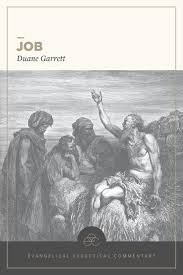
Job (EEC) by Duane Garrett

Here’s a bright, new commentary on the fascinating Book of Job from one of the leading commentary series of our day (EEC). The task fell to prolific commentator Duane Garrett. Ages ago he tackled other Wisdom books in the NAC series. Though that was a perfectly usable volume, it was the work of a rookie. Here the seasoned player steps to the plate and delivers a mature work on Job. I have not read everything he has ever written, but this is the best work he has done out of what I have used.

From the first pages of the Introduction his skills are apparent. He’s well researched, he distills that research to clearly state what the scholarly world has thought, and then he is not afraid to make a conclusion. With kindness to us he does it all without excessive verbiage.

I find myself in sympathy with most of his conclusions as well. The scholarly world has moved on from dating Job closer to Abraham and I just can’t go with them. The older generation had far better reasoning there and the new arguments strike me as vacuous. Garrett makes a strong argument for seeing chapter 28 as an inserted Wisdom Poem. I’m not sure, but he lays it out for you to decide.

He begins with the chiastic structure of Job and is spot on. Whether what he said above about chapter 28 is correct or not, it is the center of the chiasm it seems for sure just as says. The rest of the Introduction is well done. He writes with clarity on textual issues, genre, and biblical parallels.

There’s plenty of meat on the bone in the commentary proper as well. Exegesis, explanation, and theology are first rate. Some of those speeches are exceptionally challenging and there’s excellent help here.

So where does this one rank among commentaries on Job? Hartley (NICOT) is the most similar. He blows many others away as they commentate through a dark haze and so rob Job of its theological beauty. I guess, then, we will have to rank this as our best option for Job in the major commentary category.

I received this book free from the publisher. I was not required to write a positive review. The opinions I have expressed are my own. I am disclosing this in accordance with the Federal Trade Commission’s 16 CFR, Part 255.
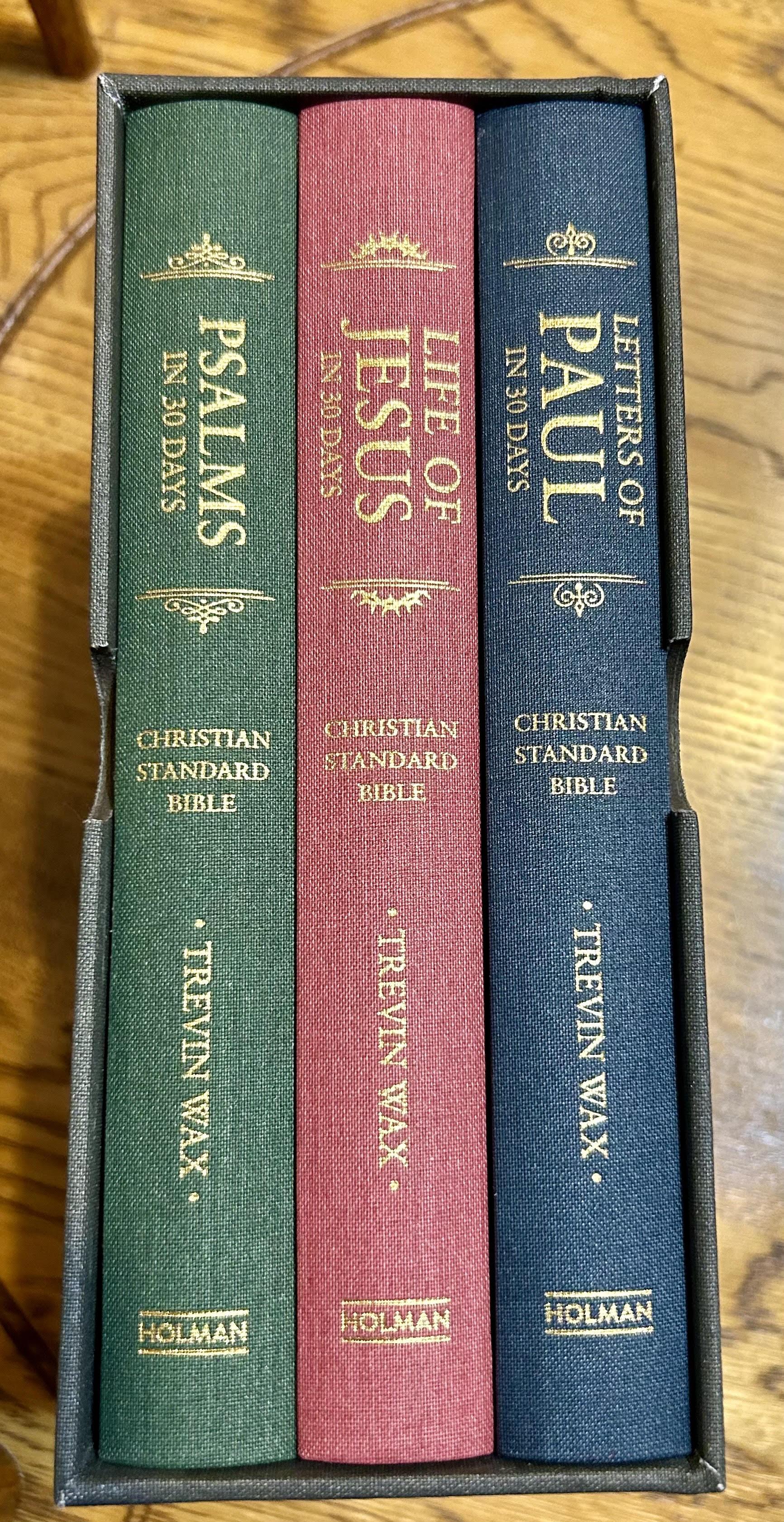
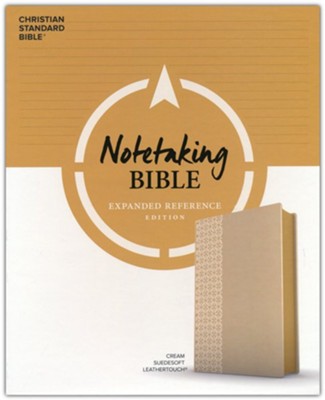
The 30 Days Series Bundle by Trevin Wax

This gorgeous set is a boon to one’s devotional life. It’s actually three popular titles to use for one month each with a morning, mid-day, and evening reading. The first one covers all 150 psalms in a month. That’s a cool undertaking for sure. The next volume covers the life of Jesus by a collection of key passages in the Gospels. The final one comes from the letters of Paul.

Every entry has a short call to prayer followed by a “Confession of Faith” for morning entries. The evening portion substitutes a “Confession of Sin”. Next, there’s a canticle followed by the Biblical reading. After the Gloria, you get the Lord’s Prayer in every entry. The selection ends with a short famous prayer and a blessing. It’s a nice design.

The set itself makes you think of an heirloom set. The volumes look so sharp in the slipcase. These books will easily last for many years.

It would be impossible to not benefit from these books and I recommend them. Mr. Wax envisioned these volumes masterfully and you will be blessed.

I received this book free from the publisher. I was not required to write a positive review. The opinions I have expressed are my own. I am disclosing this in accordance with the Federal Trade Commission’s 16 CFR, Part 255.
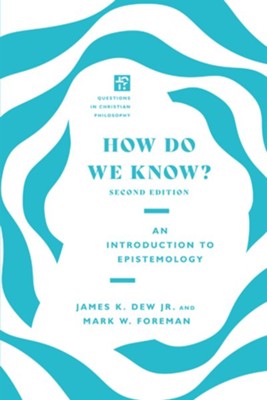
CSB Notetaking Bible, Expanded Reference Edition, Brown LeatherTouch Over Board

Here is a lovely Bible for those who enjoy note taking directly in your Bible. As for the translation, this is the Christian Standard Bible, which is one owned by Holman Publishers. There’s a short article at the beginning where they explain their approach to making this translation. They say they combine the best of formal equivalence and dynamic equivalence to produce what they call optimal equivalence. I did a little checking and they offer the KJV as well.

The one in front of me for review is the “Brown Leather Touch Over Board”. It’s an attractive hardback volume that seems well crafted. Others options they provide are “Cream Suede Soft”, “Floral Cloth Over Board”, and “Sea Depth Leather Touch”. They are all nice and cater to various tastes, but I prefer this brown one by far.

They give ample room for notes. To have that space for notes you have to give up something. Even though it’s a reference Bible, there’s not many other features outside those references. That’s no problem though because you’d only pick this one if you specifically wanted space for notes. Personally, I love a Bible with the note taking space. I’ve used one for many years. My scribbled notes would be worthless to others and probably illegible. Still, they are so helpful to me. Mark me down as firmly in the note taking Bible camp.

I received this book free from the publisher. I was not required to write a positive review. The opinions I have expressed are my own. I am disclosing this in accordance with the Federal Trade Commission’s 16 CFR, Part 255.
How Do We Know? by Dew and Foreman

Here’s another volume in the “Questions in Christian philosophy” series that distills what I imagine would be a semester-long class. I enjoyed the earlier one on Logic especially, and found this one on epistemology helpful too. Though I read theological works regularly, this material is new to me. The subject itself, not the author’s writing, can be challenging. At times philosophy has split the hair too finely on what it is to “know”, and yet how powerful is the thought that we can “know” something.

As for the book itself, it’s clearly written. Often the examples are catchy and effective to make the idea clear. I imagine Dew and Foreman would be engaging teachers. The only problem I had with the book is that too often they wouldn’t pick a side. They never failed to give you the strengths and weaknesses of every viewpoint, but it almost seemed like they never champion any one of them. They never really forged their own new way forward either. Since this was newer material for me, perhaps I wanted that feature more than usual. Especially I wanted to know how a Christian ought to think as so many of the philosophers were not Christian. I am not saying they didn’t give information that you could dig out, perhaps, and find your own opinion. But that design would be better for those who are well-versed on the subject. I hope my one criticism of the book is not actually more one of my own self than of the authors, but I’ll leave that to your judgment.

Still, when I have a question on epistemology, I’ll be reaching for this book.

I received this book free from the publisher. I was not required to write a positive review. The opinions I have expressed are my own. I am disclosing this in accordance with the Federal Trade Commission’s 16 CFR, Part 255.
Galatians (Word Biblical Themes) by Nijay Gupta

This is the inaugural volume of the New Word Biblical Themes series. For some reason, only 15 volumes were ever written in the old series meaning that by far most in the WBC series did not have a corresponding offering in this series. The first thing you notice now is that unlike the old series each volume is not written by the author of the corresponding WBC volume. That’s not necessarily a bad thing, but it makes this new series more distinct, less likely to rehash information from the WBC series, and not bound by any of the weaknesses (or strengths) of the commentary. This series will be entirely in the hands of the new authors and the work they do.

That brings me to Nijay Gupta, who additionally happens to be the series editor. Richard Longenecker did the WBC volume back in 1990. That has been ranked as a high-class exegetical work ever since, though it has been consistently labeled a bit overboard with its entertainment of newer perspectives by many in the more conservative camp. Spring forward 34 years and I will say the same thing about Gupta. He works well from where he reasons, but do you accept that line? I found his work here easy to read and follow with all necessary scholarly spade work behind it, but he is dialed in to the wrong frequency for me.

Perhaps you’ve already guessed he is sympathetic to the New Perspective on Paul (NPP) and (full disclosure) I am not. Still, he divides how we view Paul’s thought in four main ways: 1) The Reformation Approach, 2) NPP, 3) the Apocalyptic Paul Approach, and 4) the Salvation-Historical Approach. He sees it as a combination of #2 and #4 while I would see it as a combination of #1 and #4. My viewpoint is unimportant as you are seeking a review of his book. My point is, more than in most books, your viewpoint is going to greatly affect your valuation of this book. Gupta himself says, “… leaning into one of these approaches leads to a particular kind of reading of Galatians, and promoting another one presents a different reading, sometimes starkly different.” This is a book about themes and your guiding theme orients everything else you say.

I still must commend certain things about this book. He lays the issues out well even if he, in your opinion, chooses the wrong option. There is value sometimes in reading on an entirely different track. Also, he very cogently and succinctly lays out his position in an understandable way. It’s quite easy to see what he believes, and why he believes it, even if you cannot agree with it.

And there you have it. Part of this book’s final score will be the viewpoint you had before you even cracked it open.

I received this book free from the publisher. I was not required to write a positive review. The opinions I have expressed are my own. I am disclosing this in accordance with the Federal Trade Commission’s 16 CFR, Part 255.
Galatians (CCF) by N. T. Wright

This was the inaugural volume of the new Commentaries for Christian Formation (CCF) series. I’m sure they were pleased to snag N. T. Wright since he is such a major scholar. To be sure, he is controversial because he is one of the proponents of the New Perspective on Paul. Because I especially liked the new volume on Hebrews in this series, I backed up to check out this one. Since I’m not a NPP guy and because Wright isn’t in any of the main series I’ve consistently reviewed, this was my first foray into Wright’s writing.

By the end of the Introduction here, I felt I understood Wright and could see what all the hoopla was about. He is an engaging, even provocative writer. Rather than an academic work, I felt I was reading a captivating essay. The more I read, the more I wondered if it would help a lot of works to adopt that style. It is much more gripping and makes for more of what we might call a real reading experience. I must give Wright all the props for his writing.

Still, I wasn’t fully persuaded by his arguments. They had enough going for them that I could find places for caution in running mindlessly to our usual conclusions, but not enough to just overthrow them. (You can decide if I was too biased a reader). For example, he is convinced that the Reformation oriented New Testament studies away from what they were in the First Century (that will never do in some circles! ). Again, I think he gives us enough to consider more carefully earlier concerns, but no where near enough to think the Reformation recreated Christianity in its own image. From there his comments had value mostly in regard to when he was not trying to advance his scheme because, as I said before, the man unquestionably possesses advanced writing skills.

His work still has value in the commentary section. I see him as a guy standing at a different vantage point. Sometimes it’s too far away to see through all the bushes, but where he has a clear line of sight, it’s something else.

He’s probably geared quite nicely for Christian formation, probably more so than for theological precision for sure too. Based on what I’ve said, you’ll know how many stars to give this work.

I received this book free from the publisher. I was not required to write a positive review. The opinions I have expressed are my own. I am disclosing this in accordance with the Federal Trade Commission’s 16 CFR, Part 255.
Galatians (EEC) by Michael Burer

Galatians gets its turn in the outstanding EEC series. The series is one of my favorites in the major exegetical commentary category. In that vein, many releases are coincidentally coming out on Galatians (probably not the timing publishers really wanted), but this is easily one of the best.

The Introduction is well done and pretty conservative. It’s engagingly written and touches all the needed places. He takes the South Galatia View and lays out his case well. I wish he would have more directly addressed structure beyond his simple outline.

Even better than the Introduction is the Commentary proper. Exegesis fills his wheel house from wall to wall. In each passage, he gives some very detailed textual notes followed by his own translation. From there, he offers his most helpful work in the commentary section. It’s detailed, copiously footnoted, and hits the sweet spot on depth. After that, he gives theological comments of varying lengths. Pastors will appreciate the application and devotional implications section. Most sections have an additional exegetical comments, though I couldn’t quite gauge what determined if it went here or the earlier section. Each passage had its own selected bibliography.

If you’re building a theological library, you could start here. I’m pleased with this offering in this series I admire.

I received this book free from the publisher. I was not required to write a positive review. The opinions I have expressed are my own. I am disclosing this in accordance with the Federal Trade Commission’s 16 CFR, Part 255.
All the Genealogies of the Bible by Nancy Dawson

Here’s is one of the most unique resources I’ve seen. When I say there’s nothing quite like it, I mean there is NOTHING quite like it. This is not a coffee table book even if it looks just like one. The research behind this book is off the charts. Made for real work, it was still quite fun anyway.

If you think about it, there are a substantial number of genealogies in the Bible. My experience has been that I naturally know very little about them, and only the most complete commentaries dig into them. Actually, some of them even fail to. None are given short shift here.

Besides the appealing layout, it’s the exegetical help that is so impressive. The book isn’t big because of pictures, but because of the voluminous exegesis and research.

I have already cleared up a few matters in my mind here. If my question is specifically about a genealogy in the Bible, I will forgo the commentary and come straight here going forward. Hardly do we ever get a research volume that can make such a distinct contribution and fill in such a cavernous lacuna as this outstanding book does.

I received this book free from the publisher. I was not required to write a positive review. The opinions I have expressed are my own. I am disclosing this in accordance with the Federal Trade Commission’s 16 CFR, Part 255.
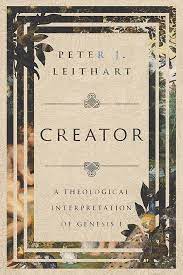
Creator by Peter Leithart

Wow! What a book! It was fascinating, enlightening, challenging, and it taught me. I must admit there were times I struggled. There were times I had to lay it aside and come back later. A few times I wondered if I were too dense and were in over my head. But I kept coming back and I am so glad did.

Where I kept running into problems was when I needed a bit more philosophy background than I had. If that describes you, do as I did and persevere. He’s going somewhere and will get back to the more comfortable surroundings of theology soon enough. If you will hang on, he will show that we have had a bit too much Greek influence on our theology and that has put us in scriptural quandaries. I was convinced.

Before I say more, I must admit Leithart is a brilliant writer. I do feel he pitched this volume to professional theologians (untranslated words are a dead giveaway). I wish he had veered toward about 20% more popular in writing style (I mean, how many professional theologians are there?), but the denseness was worth it still. I’ve read some of his more popular works and he is great whether you agree or not. He has original thinking in his works and he is profoundly and pleasingly provocative.

I’m not going to rehash the book here. Just experience it. For me, he tweaked my thinking on some of the attributes, particularly accommodation. Further, he opened my eyes to how crucial the idea of Creator is and made me understand my God even more. Finally, he blew me away in his discussion of time.

I tend to be a bit liberal with praise in my book reviews, but there’s no grading on a curve here. This is a great one.

I received this book free from the publisher. I was not required to write a positive review. The opinions I have expressed are my own. I am disclosing this in accordance with the Federal Trade Commission’s 16 CFR, Part 255.

The Hope of Life After Death (ESBT) by Jeff Brannon

This series is exciting! Had I been planning this series I might have overlooked resurrection getting one of the slots in it, but after seeing this title it makes perfect sense. Brannon makes his case for Resurrection being one of the “essential” themes of biblical theology. His fleshing out the link to Creation and Redemption only strengthen his case.

The book is clear and clear-headed. He is quite convincing in driving home his premise. Besides his love of quoting obscure lyrics of (popular?…I guess) music, he succeeds across the board.

To grasp resurrection he grapples with life and death. Relating that to Creation and the Fall was the proper foundation while building with redemption (New Creation) and Resurrection (Eternal Life) was the right edifice to build upon it. A lot has been written on these themes but his niche is a clarity that comes from a careful presentation.

He also traces his theme to good effect in biblical order. Watching a doctrine develop progressively is one of the best ways to take it in.

As you can imagine, he address Christ’s resurrection and does so by building into his rich tapestry. From there he weaves in the church before reaching our final resurrection.

What’s amazing in a book like this is taking one doctrine to examine them all. Biblical theology is really rocking when that really happens. It happens here.

I received this book free from the publisher. I was not required to write a positive review. The opinions I have expressed are my own. I am disclosing this in accordance with the Federal Trade Commission’s 16 CFR, Part 255.