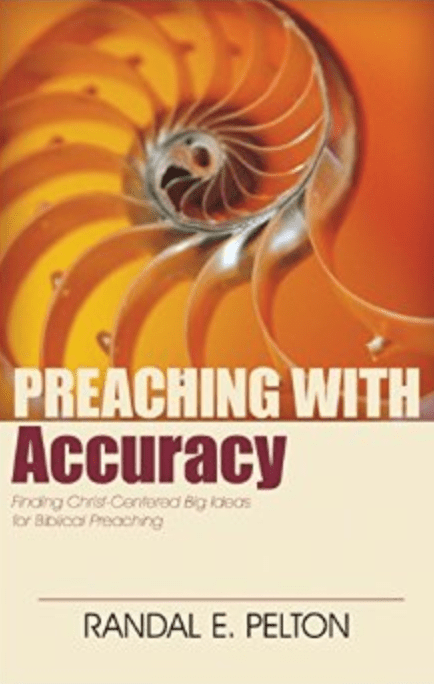
Preaching With Accuracy by Pelton (Books on the Ministry #17)

Do you ever struggle with how to get to the bottom of a text while being true to its context? It is an area where we can use a little help as so much preaching today totally misses the mark. Here is a book by Randell Pelton, and published by Kregel, of manageable length to help us in that endeavor. If you read the detailed footnotes, you will double the length and depth.

Mr. Pelton traces out the particulars of his own method, but you would not have to rigidly follow his steps to glean from this book.His Introduction clearly lays out his philosophy of true preaching and how he will discuss it. Chapter 1 is a passionate plea to show that expository preaching still works. He shows how a seeker-sensitive approach has changed preaching for the worse–we have morphed into little self-help talks that obscure the vibrant power of Scripture. He also gives guidance on picking Scripture portions to preach and explains how to “cut” the text.

The bulk of the book defines his method. If you have preached long enough to have settled into your own pattern, for the better or worse, as I have, you can still get great insight here. The point of any such method is to be true to Scripture and say in context. He has his own terminology, but it is mostly watching the context both near and far. I loved his guidance on preaching the OT (sensus plenior).

His last point is focusing on a Christ-centered hermeneutic as the final point of context. He feels Tim Keller is the role model here. His goal is to avoid moralistic preaching and stay Gospel-focused. This can be overdone, in my view, as some portions of Scripture have a true ethical or moralistic component, but that Christ is our only hope to live it is also valid.

A good reminder for seasoned preachers, and a great help to less experienced ones, this volume deserves high ratings.

I received this book free from the publisher. I was not required to write a positive review. The opinions I have expressed are my own. I am disclosing this in accordance with the Federal Trade Commission’s 16 CFR, Part 255.    

Find all books in the Books On The Ministry series here.
 

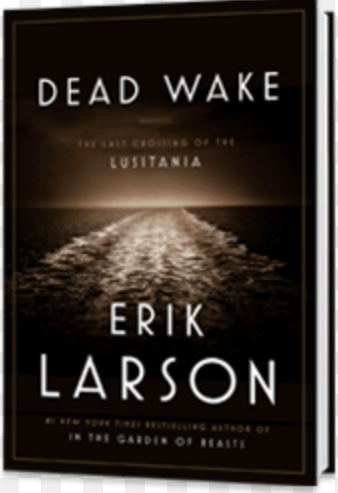
Dead Wake by Erik Larson

The last crossing of the Lusitania gets a vivid, dramatic telling in this superb volume. This was my first go with Mr. Larson, but I found his writing matched the superlative blurbs I’ve seen for his other books. My knowledge was limited on the Lusitania, so learning and exciting reading met together here.


The book never drags and is filled with tension throughout as you know what is coming. We meet several of the passengers, see the dynamics of personality of Captain Turner, and back office workings of the Cunard ship company. You get to know them to the point that their fate during the actual sinking is high drama. The scene of the dead wake itself, the torpedoe coming across the water and being seen by many, is well done too.


 We learn of Room 40 and what the Admiralty, including Churchill, knew about the U-boats. They could not tip their hand and risk losing the Germans knowing about the codes that they had broken. Then, from German records of the captain of U-20, we watch the story unfold from their perspective. We learn too of complications because of war that added to the horror of the event that could have possibly been avoided. 


In a few paragraphs here and there President Wilson’s story is brought into the story. You will be convinced his budding romance had a great effect on what he did during these critical events.


Though this volume can hold its own with a great novel, I truly believe it passes the test of being well researched as well. Though Mr. Larson made some good conclusions, he seemed to strive make you and I able to make our own. The book succeeded on every level (except the attractive book needed pictures) and I highly recommend it as 5-star plus!

I received this book free from the publisher. I was not required to write a positive review. The opinions I have expressed are my own. I am disclosing this in accordance with the Federal Trade Commission’s 16 CFR, Part 255.    


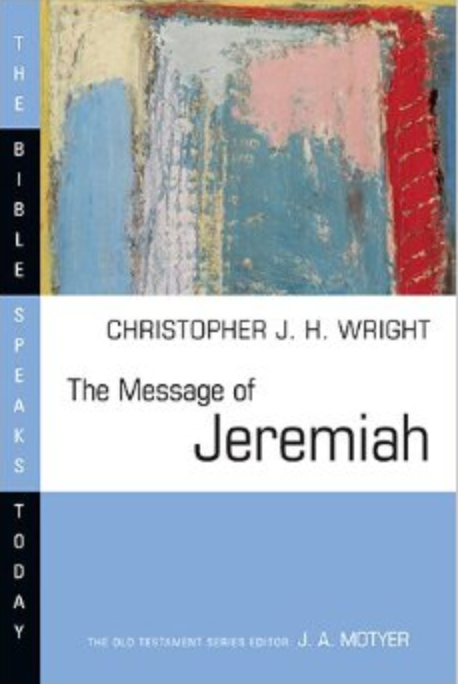
The Message Of Jeremiah (BST) by Chistopher Wright

Are you looking for a clear, helpful commentary on Jeremiah that focuses less on technical exegesis and more on explaining the meaning of the text you read? Then I strongly recommend this volume in The Bible Speaks Today series published by IVP.

The first thing you will notice and appreciate is the passion that exudes from Mr. Wright for Jeremiah. In fact, he displays a belief and love for all of God’s Word that is sadly lacking in some modern commentaries. It doesn’t hurt, either, that his prose sparkles on page after page. That is a distinct bonus in commentary writing.

This volume replaces the volume by the quintessential short commentary writer Derek Kidner. That man could say so much in a few words. Though I plan to continue using the Kidner Volume (IVP has republished it as a classic commentary), this new volume surpasses it. Mr. Wright gives us help on every passage, which Kidner could not do because of stricter space constraints.

After a truly helpful, short introduction for Jeremiah, the bulk of the 444 pages explain the text. In reviewing this volume I especially studied his comments on about ten passages that I had studied in-depth and preached on previously in my pastoral ministry. His commentary was outstanding in each case and I look forward to using this volume often in the years ahead as it will take a prominent place on my shelves. He gives great explanation coupled with real spiritual insight.This volume is a real boon to the expositor!

I received this book free from the publisher. I was not required to write a positive review. The opinions I have expressed are my own. I am disclosing this in accordance with the Federal Trade Commission’s 16 CFR, Part 255.    

IMG_2407


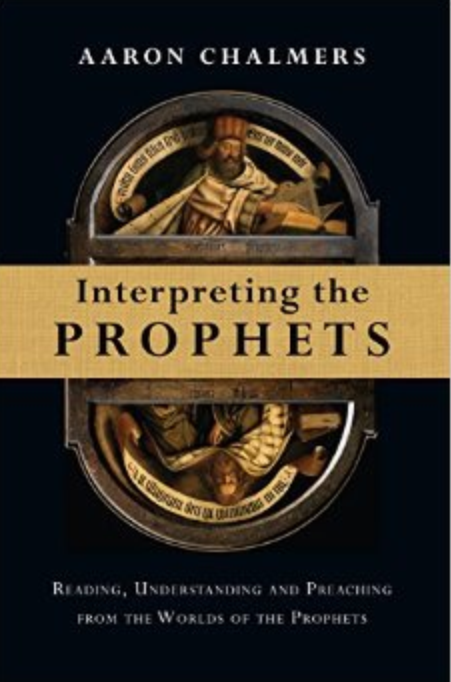
Interpreting The Prophets by Aaron Chalmers

There is no doubt that the Prophets of the Old Testament are the most difficult portion of Scripture to get a handle on. You can go astray in so many ways from an interpretive standpoint. Mr. Chalmers, teacher of the Old Testament and hermeneutics, writes to assist us in that quest  in this volume published by IVP.

He specifically wants to deliver something different from what most of us have on our shelves. Other prophecy handbooks aim at content about the individual prophetic books and the prophets themselves. He feels that what is more needed is an ability to get in these books and sensibly interpret ourselves. Though I appreciate the content-driven volumes myself, I can see his point. The volume he has given us, accordingly, is about the complicated hermeneutics of the prophets rather than a traditional volume.

He has succeeded, in my view, on some levels. His threefold division of the historical world, the theological world, and the rhetorical worlds is logical. In the historical world section, he spends time well explaining what an Old Testament prophet is. I take issue with some assumptions he makes in regards to the writing process of the prophetical books. Though he is kind to conservatives, he seems to lean more toward a critical perspective of redaction taking place over centuries. There is no concrete evidence to cause me to believe that position, but admittedly a large part of the scholarly world agrees with him. It seems to me Mr. Chalmers’ theological position stands close to John Goldingay, who is, in fact, oft quoted in this volume.

The latter part of the historical section was interesting as was the theological one. The rhetorical section made distinctions that scholars wrestle with more than pastors or Bible students. The distinction between prophecy and apocalyptic sometimes, in my view, confounds more than it enlightens. Still, he will explain it as well as it can be.

This volume appears like a textbook at times, and would not make a profound difference if you were going, to say, preach a sermon on a text in Obadiah this Sunday; but you would gain insight in how to think about the prophets overall and that is the value you will find between the covers of this book.

IMG_2404

I received this book free from the publisher. I was not required to write a positive review. The opinions I have expressed are my own. I am disclosing this in accordance with the Federal Trade Commission’s 16 CFR, Part 255.    

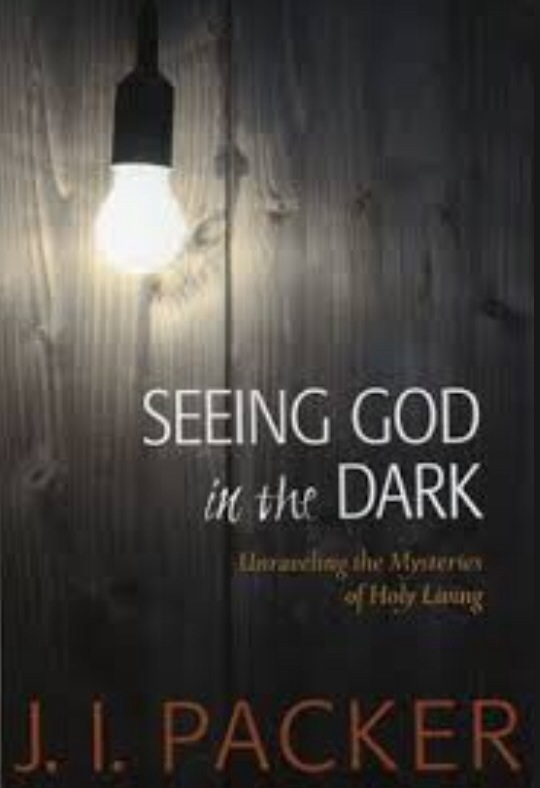
Seeing God In The Dark by J. I. Packer

image


“Unraveling the Mysteries of Holy Living” says the subtitle of this theologically penetrating volume by Packer and published by Hendrickson Publishers. While that might be misleading to some degree since he is a writer who would command a large audience if he wrote a new volume on that subject, this is actually a collection of articles all across Mr. Packer’s career. Don’t let that scare you away.  While on the surface that sounds dull, in this case it succeeds.

First, someone has chosen well in assembling this collection. While it would not be necessary to read the chapters in order in a collection of this sort, there even seems to be good logic in that ordering. They speak to our generation without surrendering faithfulness to Scripture. That is not to say, that there are not a few chapters where I strongly disagree with him. He sees predestination as strongly as any popular writer today. Still, he is incredibly gracious and gets one really thinking.

In some strange way he reminds me of C. S. Lewis and Lloyd-Jones in writing style, even if the three would disagree at points. It is all the metadiscourse in their writings. If you and I wrote so much about our writing as we wrote, it would destroy us. In some way they do it and hold your attention firmly in their grips.

My favorite chapters were the ones on revival and Christian living. The very last chapter was one of the best, so be sure to go all the way to the end. Another interesting feature was the way he addressed those with charismatic beliefs. I never saw anyone so gracious while disagreeing with them. I think he went even farther than I could in finding their good traits.

For what this volume sets out to give, it delivers!

I received this book free from the publisher. I was not required to write a positive review. The opinions I have expressed are my own. I am disclosing this in accordance with the Federal Trade Commission’s 16 CFR, Part 255.


The Song of Songs by Iain Duguid (TOTC)

Here is a jewel of a commentary by a writer always worth reading–Iain Duguid. He writes in venerable Tyndale Old Testament Commentary series (TOTC) on a book of the Bible, Song of Solomon, where many commentaries are disappointing. This volume, for me, was a breath of fresh air.


It is a specimen of succinctness while still speaking on all the important issues that larger volumes tackle. (You can do as I did and take a glance at Duane Garrett’s WBC for meticulous detail on interesting subjects raised here). While the old Tyndale volume on the Song by Carr was a good commentary, I found this one more helpful.


For one thing he respects the allegorical approach (or as he explains, a typological approach). He gently discusses where there might be problems, but he also does on the natural approach. He finally comes to a natural interpretation, minus sexual excess, with a dash of typology. I personally would have more a typological approach with a dash of natural interpretation, but I was enriched by this outstanding volume. 


For another, he is talented as a commentary writer wrestling with the text. He has other commentaries out there worth getting too. I found a few places in the text where I disagreed with his conclusions, but again, he writes well and fair. Pastors and Bible students will be glad to get this wonderful, economical commentary. Five stars all the way.

I received this book free from the publisher. I was not required to write a positive review. The opinions I have expressed are my own. I am disclosing this in accordance with the Federal Trade Commission’s 16 CFR, Part 255.


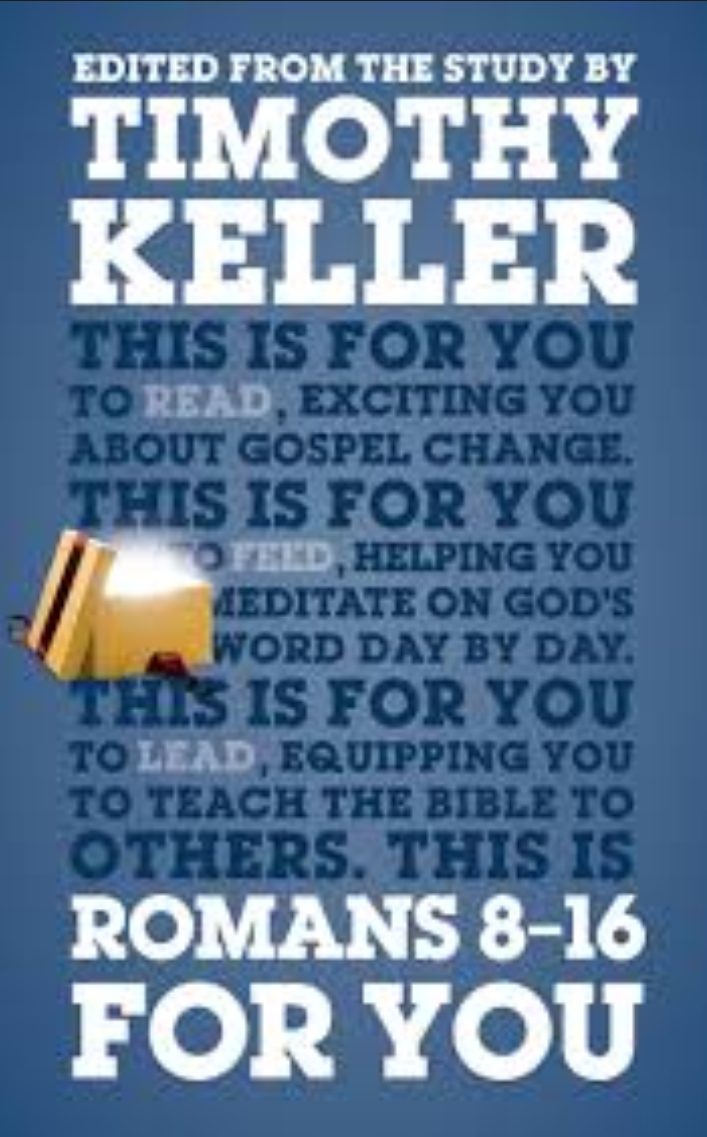
Romans 8-16 For You

Timothy Keller here finishes his fine commentary on Romans in the “For You” series published by The Good Book Company. Each volume I have in this series has been a winner and this volume continues that high standard. Keller always reads well and that turns out to be maintained in commentary writing.

This volumes covers the great battleground of Scripture (Romans 9-11) and, frankly, I hold to a different viewpoint than him there. I will not rank this volume lower on that account as personal agreement is not always the first necessity in a good commentary. He writes respectfully, and though he did not change my mind, I appreciate his attempt and the thought provoking things he said at times.

Throughout the rest of the book he seemed less inclined to support a position and gave outstanding explanation of the text. Notice the fascinating discussion comparing a slave and a son on page 34 as an example. Or his discussion of disputable matters for Christians on page 145. There are many such examples.

The series as whole reaches from Bible students all the way to those who teach and preach it. It is a rare series that can effectively span that range and this one does. I highly recommend it.

I received this book free from the publisher. I was not required to write a positive review. The opinions I have expressed are my own. I am disclosing this in accordance with the Federal Trade Commission’s 16 CFR, Part 255.

IMG_2368

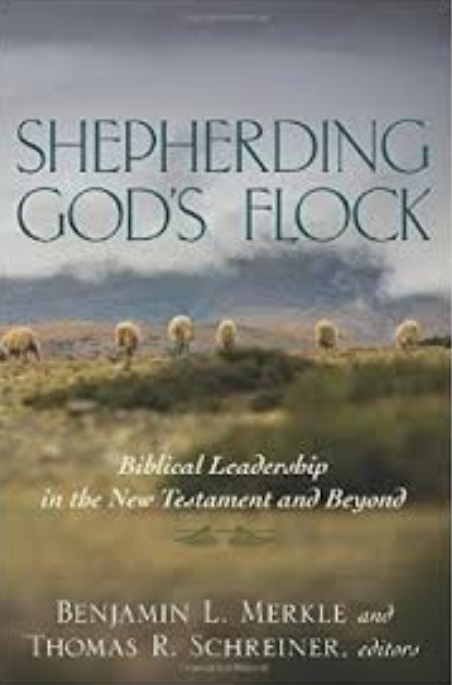
Shepherding God’s Flock– A Book to Help Us Learn Biblical Leadership

Here is a book on a hot topic in our day–what church leadership ought to look like. With a clear call to be a true shepherd, this volume also discusses church polity. It is written from a Baptist perspective, is kind to all viewpoints, and it it has no problem stating its own position. Eleven contributors join forces to give us a clear, worthwhile volume.

Beginning in Bible times, this volume discuss how much the church borrowed from a synagogue background of the times (not as much as some say it concludes). Chapters 2-4 masterfully guide us through the Gospels, Acts, and the Epistles.

While the volume speaks passionately at times on ministry, it could as easily find a place on the ecclesiology shelves. Two chapters explain Catholic polity. Though I found that less interesting, a good case was made for the affect that has had on all Christianity. Next we have the Presbyterian model of church government well explained. Then Anglican thought is described.

Finally we have Baptist thought discussed. As a Baptist, I think the reasons we do not agree with the above options are well given. Then, the authors go on to show that they believe a plurality of elders are the correct biblical model too. I do not agree and was unpersuaded by the arguments given. They were fair and candid, however, in mentioning that there is little proof that this is the historic Baptist position. They work had at making their case and readers will do well in learning from them as they state issues well.

Chapter 11 is a superb conclusion about shepherding a flock today. We can learn from this volume.

I received this book free from the publisher. I was not required to write a positive review. The opinions I have expressed are my own. I am disclosing this in accordance with the Federal Trade Commission’s 16 CFR, Part 255.

IMG_2364

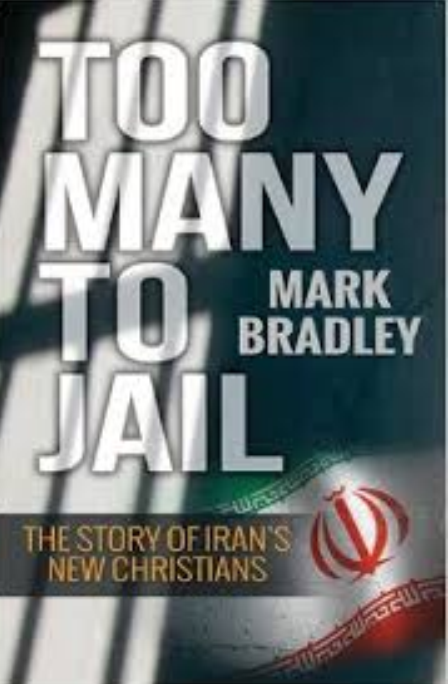
Too Many To Jail–An Exciting Read

Does it excite you to read of God’s mighty work going on in the most unlikely of places? Does reading of revival in places of intense persecution move you? You will, then, love this new volume by Mark Bradley, and published by Monarch Books, that tells the story of Iran’s new Christians.

The author holds to the theory that God often does His greatest work where persecution is strong. I fully agree. Iran would have made my top 5 hardest countries for Christian work based on my superficial understanding of that country.

Forces at work there are far beyond what I realized. The author explains quite well how Islam and its radical ways has turned many Iranians against it. The so called Revolution has hurt the people there in so many ways. Then the presidency of Ahmadinejad deeply hurt that nation financially, as well as corruption and abuse in the name of Islam only made it worse.

He shows how they in their pain are attracted to Jesus Christ. Many are turning to Christ fully realizing how great a price they may pay. In fact, many have paid it. Amazing, Christianity just keeps going.

The last part of the book shows how house churches are what is working there. There is no way visible churches could work in the current environment, but despite the authorities’ best efforts, house churches are thriving.

There are a few unusual aspects of the revival in places as one element of it seems to come from charismatics. The author seems to approve, but it is very little mentioned. Most great revivals I have ever read of seemed to be a little loose on the margins. Still, this is a fine volume.

I received this book free from the publisher. I was not required to write a positive review. The opinions I have expressed are my own. I am disclosing this in accordance with the Federal Trade Commission’s 16 CFR, Part 255.

IMG_2348

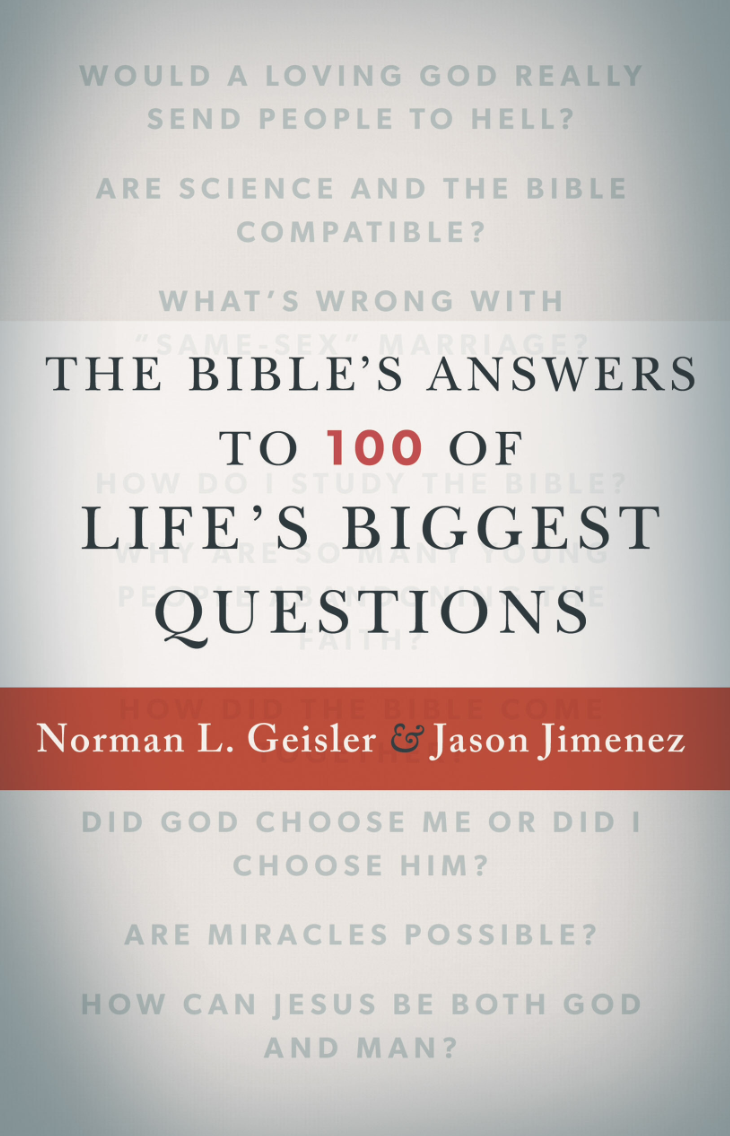
The Bible’s Answer To 100 Of Life’s Biggest Questions by Geisler & Jimenez

Looking for a book that would help newer Christians, or those seeking to get more up to speed as a believer? Here in a book with an ideal format of questions and answers, this volume by Norman Geisler, famed apologist, and Jason Jimenez, published by Baker, will be an asset to you.

The first 18 questions are superb in their succinct guidance on things like, “Who made God?”, or “If God, why evil?”, or even “What happened to the dinosaurs?” The answers sparkle with the kinds of things we need in this rough-and-tumble world. Think confronting the tough questions of others as a Christian.

Parts three through seven (questions 19-59) cover basic doctrine in areas of Christology, the Holy Spirit, sin, salvation, Heaven, Hell, angels and demons, the Church, and end times. Basic truths are given at a level essay to grasp, and though we might quibble over some statement, most pastors would be thrilled at folks learning these basics.

Next we have questions for the Christian life. A few are so basic, but still just perfect for a new Christian. Then in questions 71-78 help for difficult social issues are given. Part 11 on world religions, again Mr. Geisler’s specialty, could hardly be better. It is not an attack on them, just explaining where there are fundamentally opposite of, and incompatible with, Christianity.

The last questions on the family seem a little trite, but the book, for what it attempts to be, is a winner!

I received this book free from the publisher. I was not required to write a positive review. The opinions I have expressed are my own. I am disclosing this in accordance with the Federal Trade Commission’s 16 CFR, Part 255.

D

IMG_2336