Understanding World Religions in 15 Minutes A Day by Garry Morgan

Do you ever catch yourself wondering what exactly other religions believe? Do you  wonder if your one sentence understanding is actually accurate? Do you then go look at a bookshelf of books on world religions and notice that they are all 500 pages or more and chicken out? Well, likely this is the book you have been looking for. It’s given in 180 readable, easy pages and as the title implies, your time is taken into consideration.

He begins by defining “religion”. He keys on a systematic set of beliefs that speaks to ultimate questions about life’s meaning. He will with this logical definition be able to legitimately address secular humanism as a religion.

He addresses Christianity first in one short chapter accurately focusing on the fact that Christianity isn’t a religion but a relationship. Well, according to his definition, it is one, but I appreciate how he found a way to show that the Christian “religion” is fully unique in how it answers life’s questions and the dealing with sin. When looked out from this vantage point, it is amazing, at least to me, what puts all other beliefs in the same fold-a solution tied up in works.

Then he dives into Catholicism, Eastern Orthodox, Protestant, and Evangelical Christianity. I might find it a weakness in his trying to present Christianity objectively to the point of not overtly stating its superiority, but I’m sure it was so designed to reach a broader audience. You do see, though, that covertly he is a believer.

He gives the most detail on Islam as it is on our minds these days. Six chapters cover the variety that is out there in the Muslim world. He makes the complexities digestible and is all most would want to read on it. He also explains the confusing differences with Hinduism, Buddhism and the Baha’i faith.

He also covers eastern religions that, though rarer, make their way to us in popular culture in movies and current bestselling books. New Age and transcendental meditation are even covered.

He tries to define the difference in a cult and a religion. Some groups called cults in our day are addressed as well.

This book is a solid addition to Bible study. It’s length is a winner and it is understandable without being heavy. It’s most cases it will answer your questions satisfactorily. I recommend it to Christian laymen, homeschooling families, and pastors who need a quick review or overview.

I received this book free from the publisher. I was not required to write a positive review. The opinions I have expressed are my own. I am disclosing this in accordance with the Federal Trade Commission’s 16 CFR, Part 255 . 
Man Alive by Patrick Morley

Here’s a winning addition to the growing shelves of Christian books for men.  There’s no lack of need since men as a general rule are lagging behind in spiritual advancement. Frankly, we need the help.

Mr. Morley talks a language you can understand. It’s where we live–good or bad.  He says “…as many as 90 percent of Christian men lead lukewarm, stagnant, often defeated lives. They’re mired in spiritual mediocrity–and they hate it.” True on both counts, wouldn’t you agree?

The book arranges around what he calls the seven primal needs of men. You might think some of them selfish, or addressing brokenness, but they are undeniably the fabric of men’s lives. We don’t want to live life alone despite the male tendency for aloof isolation. Our actions, like being swallowed by a career, pull us away from meeting our real need. See the difference in approach? Not spend time with your family because it’s a good thing, but because it meets your own deepest needs. We so often misunderstand ourselves.

In our complete misunderstanding we run from God and the fellowship of other believers in a local church when that is our very need. We need the “transforming” mentioned in Romans 12:2.  He distinguishes between heart transformation and behavior modification. Which do we need? But where do we put our emphasis? No wonder we have such a hard time. Learning that the Father really loves me, individually me, is another. He explains how the tendency for macho behavior among men is at its core just a cover up in this area.

We also must believe our life has purpose. Sadly, most of us do not. He gives practical insight that can help. He progresses to explain our need to break free from destructive behaviors, which likely spring from the aforementioned. Needs 6 and 7 seem, to me, to be found in the earlier mentioned ones, but they are critical enough to be worthy of the extra effort to grasp.The 8th one is a good summary–To make a contribution and make the world a better place. That’s not as selfish as it sounds, and I imagine, is where Christ would be glad (on His terms of course) to help us. There’s psychology here, but the Bible lurks in the wings as well. I recommend the book.

I received this book free from the publisher. I was not required to write a positive review. The opinions I have expressed are my own. I am disclosing this in accordance with the Federal Trade Commission’s 16 CFR, Part 255 . 
A Theology Of Luke And Acts

Respected scholar Darrell Bock delivers in this volume on his topic of the theology of Luke and Acts in the BTNT series. Mr. Bock, already hailed as having given us the best modern exegetical commentary on Luke, writes on a subject here he has given many years of his life to study.

You will find all the usual suspects on the study of Luke and Acts–the connection of Luke and Acts, salvation, Christ, the Holy Spirit, women, and the poor. But there’s more. Things I hadn’t thought much of in regards to Luke and Acts, all laid out in a cogent, clear, persuasive form. As you would expect, he interacts much with other scholars and their opinions as he travels along his subject. As a pastor I can’t help but see some of that as the straitjacket the scholarly world has wrapped around itself. Still, he is concise enough that his text holds interest. If you are like me, you so think of Luke as one of the Gospels that you at times forget its special connection to Acts.

Zondervan asked we reviewers to pick one chapter and particularly review it. I chose the one that I felt I had the least knowledge of–“The Law in Luke-Acts” (Chapter 18). It really didn’t seem to me Luke or Acts had a lot to say on that subject.

Mr. Bock shows us that the scholarly world has had occasion to analyze the subject recently. He laid out the basics clearly in 3 paragraphs. I appreciate Mr. Bock fairly representing other viewpoints while telling his conclusion.  In doing so he dodges the problem of becoming so immersed in details, as many do, that they forget a conclusion was why we went digging in the first place. I don’t have to agree to enjoy the evidence being weighed and a conclusion being drawn.

He concludes that “… in the end law-abiding for Luke is only a consideration for Jewish believers, while Gentiles must be sensitive to certain practices tied to the law.” His idea seems to be “law-sensitive” is the orientation of Luke and Acts, and that it carries “realized promise” but no “salvation benefit.” Of course it has no salvation benefit, and I doubt Luke is really “conservative” in regards to the Law. More likely, to my mind, it’s Jewish person-sensitive since Christ has uprooted what has been deeply ingrained  into the very fiber of their people. I’d say it’s more a sensitivity to the complications of a progressive revelation.

He also masterfully discusses the issues of whether or not the Law failed, or at least how should what Jesus did be accounted for with the Law. He lays out all the possibilities available to form an opinion. I left it thinking that the Law failed in doing what people imagined it would while it fully succeeded in all the Lord planned for it to do.

He traced things like Sabbath incidents and gave us the data that is needed to form our opinions. Mr. Bock succeeds because he gave me what I needed to decide for myself. And he did it well. The whole book delivers in this way. I suspect this book will be popular among scholars, students, and pastors. As for me, it will hold a prominent place on my shelves and will be the first volume I reach for on questions of Luke-Acts theology. What better recommendation could a pastor possibly give?

I received this book free from the publisher. I was not required to write a positive review. The opinions I have expressed are my own. I am disclosing this in accordance with the Federal Trade Commission’s 16 CFR, Part 255 . 

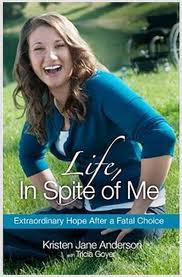
Life, In Spite Of Me–An Inspiring Read

life in spite of me

Do you need encouraged? Inspired? This book delivers. Kristen Jane Anderson gives us her tragic story that becomes transformed by the Lord into triumph. A suicide attempt on a train track left her a double amputee. She should never have lived (that’s no exaggeration as the book proves), but she did. Listen to her story and finally see the hand of God become clear.

I had never heard her story until my wife, a paraplegic herself, had been reading about Ms. Anderson and was fascinated by it. That intrigued me, but I began reading thinking I would decide for myself. I did and it was a page turner!

When you read the advertisements that this book is a tool for suicide prevention, don’t assume that is all the book is about. Yes, every person contemplating suicide needs this book. Beyond that, though, every person fighting depression, or even a round of discouragement, will find this volume a rallying cry to not give up. Actually, if all you are looking for is a story of the mighty power of God on a life, grab this book. It reads easy and holds your attention throughout.

What makes this book work? Ms. Anderson doesn’t hold back. No matter how unpleasant the detail, if it is needed to tell her story, she tells it. Depression, partying, all the things that added to the darkness she went through are given in all the gory details. At the same time, dark things are never glamorized. She tells us what she thought and felt each step of the way.

Adjusting to her new found disability was shown in a clear way that as one who watched his wife adjust, I could relate. I thought that part was especially well done. Then, there was guilt. It haunted her through everything and we find where she found victory. Even with counseling and dealing with prescription drug issues we are let into her life. Failures, setbacks, and finally success are laid bare.

The point where she found Christ was an emotional high in the book where you felt like cheering. Later, when her loving mother did the same, you find yourself excited again. Finally, there’s the lesson she learned–a loving God saved her on a train track so He could save her soul later. A lady with so much sadness became a lady filled with love and gratitude. Ms. Anderson, thank you for sharing your story that clearly can help so many.

I received this book free from the publisher. I was not required to write a positive review. The opinions I have expressed are my own. I am disclosing this in accordance with the Federal Trade Commission’s 16 CFR, Part 255 . 

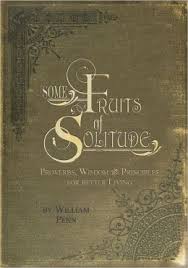
Some Fruits Of Solitude

some fruits of solitude

Here’s a treasure trove of wisdom from yesteryear. Written be William Penn and given as “Proverbs, Wisdom, and Principles For Better Living.” Yes, that is the William Penn of Pennsylvania fame. It’s not a book about solitude, but the wisdom he came up within periods of solitude. Perhaps we need more solitude if we could have as much insight as he did.

The book is set up in categories like pride, luxury, frugality or bounty, right marriage, and many more. Yes, as you would expect, a category on friendship is included. This book can be taken in large or small chunks. I read several of these statements to my family and they spurred some good discussions. I would find my wife picking it up and reading it as well. Guess which one she found and loved the most?  “Between a man and his wife nothing ought to rule but love. Authority is for children and servants: yet not without sweetness.” Strangely, that’s the very same one the publishers found best to put on the back cover. She and I both felt this book had good things to say to families. Our children need these forgotten truths.

Older words are used at times and that may turn off some, but you can pretty easily understand the statements. Plus it has that classic look and feel to it.

As I read it I so wished the people with influence in our country still viewed the world as Mr. Penn did. I say let’s bring back this type of common sense.

I received this book free from the publisher. I was not required to write a positive review. The opinions I have expressed are my own. I am disclosing this in accordance with the Federal Trade Commission’s 16 CFR, Part 255 . 
Father Hunger–An Urgent Read

Just how important is fatherhood anyway? Our culture has no answer as it can’t think of one good reason for fatherhood beyond the biological one. For that matter, many fathers can’t add any more items to the list. Shall we listen to our culture? I’m not sure what our listless age has to commend to itself to be our guide. God, as the Master Designer, is left out of our thinking and the consequences are horrific. That’s where one of the most incredible books on fathers I have ever read comes into play. “Father Hunger” by Douglas Wilson is profound and greatly impacted me. Every page was like the hard steel blades of the plow tilling through the soil of my heart.

What Mr. Wilson was able to accomplish in this volume is rarely done. When the subtitle proclaims “Why God calls men to love and lead their families”, the book actually delivers on the “why.” Few books can give us the big picture and get especially practical as well. As an avid reader, it’s my opinion that most authors can give us only one or the other. Mr. Wilson, with verve, skill, and a pastoral heart actually pulls it off.

With deftness he upholds the essential equality of men and women while showing that the Lord, again the Master Designer, has assigned men and women different roles. That will probably keep this book off the New York Times Bestseller List, but it will have the smile of Heaven for its Biblical faithfulness. God is Father, so do you imagine in His design fathers would have a non-essential role? Ladies, don’t panic—Mr. Wilson never gives men power to be selfish brats, just power to love and be unselfish and sacrifice himself for his family. Listen to this incredible statement on men taking responsibility: “… to take on a lifetime of sacrifice and hard work. A man who takes a woman to the altar is going there to die to himself. But that is all right because it is not good for man to be alone.”

He looks at our country and where it is today and sees the absent father as the biggest culprit for the mess we are in. From fathers who provide the seed for a child and vanish to the fathers who live at the same address and mostly do their own thing in life, we have a generation of absentee fathers. The Lord designed everyone to need a father. A father’s loving hand is needed in the life of every child. He says, “Your actual pursuits are a running scoreboard. They reveal what you actually prize.” Are you challenged here? I am.

He shows how feminism, or the dire warnings of overpopulation, or the design of the welfare system, or the plea for gay marriage are all direct attacks on fatherhood. It also a direct attack on what every one of us needs to thrive as God intended. Statistics on everything from crime to education are given. The jury is in and the verdict says that homes without fathers are destroying children today. Without a Dad they will much more likely be a school dropout or be in prison. Also, the worst we see out of men comes from not encouraging them to settle down, accept responsibility, and protect their family.   He shows how God is masculine (not male) and how masculinity (defined with care) is needed all around.

There’s so much more, but this review is getting ridiculously long. For the practical side, the chapter “Some Father Mechanics” is worth the price of the book alone. I saw my lack all over its pages. Thank you Mr. Wilson. If no one else needed your book, I did.

I received this book free from the publisher. I was not required to write a positive review. The opinions I have expressed are my own. I am disclosing this in accordance with the Federal Trade Commission’s 16 CFR, Part 255 . 
Meet The Skeptic–A Timely Subject

Here’s a book we’ve been needing–“Meet The Skeptic” by Bill Foster. So many of us witness by routine with a rote presentation with no regard if the person we witness to can make any sense out of a word we say. Or perhaps we use theological words, though great to us, which can no longer be understood in our Biblically illiterate world. Mr. Foster talks us through this problem, reminds us that it is people we are after, and guides to better methods and word choices.

For example, “salvation” would in no way mean to a guy with no church background what it would to those of us who have grown up in church. To ask “if you died today, would you go to Heaven” wouldn’t mean much to a lady who doesn’t believe there is a Heaven. To only quote the Bible might have little impact if that person has been indoctrinated to believe the Bible is full of errors. I believe the Bible has the answer, but how can I turn the conversation in a direction that would make Biblical truth something that the listener must reckon with?

That’s where this book comes in. Mr. Foster does a masterful job reorienting us. He introduces many insights that I honestly had never thought of before. What makes his presentation so powerful is his uncanny ability to let us know how others think, how they’ve come to think it, and how we might finally get through with the Gospel of Jesus Christ.

He explains the 4 main types of skepticism you may meet: spiritual skepticism, moral skepticism, scientific skepticism, and biblical skepticism (not believing the Bible is trustworthy). He describes the root idea behind the skepticism and offers probing questions to get them thinking. There’s even a quick reference chart at the end of the book designed to help you grasp what is fully brought out in text.

It’s not a gimmick; this book talks sense. I’ll keep mine handy for reference. Mr. Foster clearly admits that not everyone will turn to Christ with his approach. But wouldn’t you feel better knowing they rejected what they understood instead of what you ineptly explained?

I received this book free from the publisher. I was not required to write a positive review. The opinions I have expressed are my own. I am disclosing this in accordance with the Federal Trade Commission’s 16 CFR, Part 255 . 
A Book Our Children Need Before They Leave Home

It’s not academic analysis but real life that confronts us in “How Do We Know The Bible Is True? Volume 1”, edited by Ken Ham and Brodie Hodge. Yes, it passes the academic test, but it wants us to be able to face an antagonistic world. It addresses the questions the world is asking Christians today. Not only do we have little effect on a world for which we have no answers, but these are the type of questions that pull our children away from Christianity.

Product Details

The chapters are 28 relevant questions answered by various authors. The first one had me hooked as it answered the question “How Do We Know The Bible Is True?”  How would you answer that question? We might answer “by faith”, but that means nothing to the non-Christian. Here and at other places in the book the laws of logic are brought to bear. What could be better in a world that says we believe the Bible against reason. Find out here that though faith will never be taken out  of the equation, our belief is not against reason!

In chapters on the reliability of the Old and New Testament we get answers (really good answers) to questions Christian young folks hear on college campuses or at the workplace. I heard these things attacked when I went to the University of Tennessee several years ago and I had to dig hard. I want my children to read this before they get in such a situation. I saw others then have their faith crumble as they had no answers to such things. But there are answers, and this book lays them out beautifully.

Some questions are not as critical as others–like the 3 days of Christ in the Tomb and so which day was Christ crucified on, or issues like polygamy. Others are great! People throw up Bible contradictions, or who wrote Genesis, or how to view evidence. In several places you will learn that carbon dating doesn’t prove a thing because of the assumptions made, that the assumption of uniformity is not legitimate on the part of evolutionists, or best of all, the strongest arguments that evolutionists make is only possible if God exists. You’ve got to read about that great fact.

I highly recommend this book. If Christian young people mastered the contents of this book, far fewer of them would drift away. May the Lord use this book to that end.

I received this book free from the publisher. I was not required to write a positive review. The opinions I have expressed are my own. I am disclosing this in accordance with the Federal Trade Commission’s 16 CFR, Part 255 . 

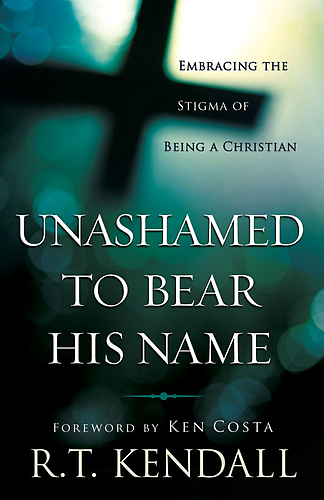
Unashamed To Bear His Name by R.T. Kendall–Book Review

 
unashamed to bear his nameWe have here a tale of two books–it was the best of times and it was the worst of times! The first book is quite a read as it highlights the very scriptural idea that Christians are called upon to bear reproach for the Name. That Name is the name that moves the heart of every believer–Jesus. A Christian should expect and gladly bear any shame the world hurls at us for that Name.  He defines using the words “stigma” and “scandal.”

He well explains that it is a privilege to bear this stigma as well as highlights the foolishness of being consumed with what others say. This is not so difficult a cross to bear. Why would followers of Jesus care what His enemies say?

Then he weaves his theses into the Gospel itself. Or perhaps we could say the practical side of bearing shame for Christ is upholding the truths of His Gospel. To say a positive word for Christ may get you in trouble, but saying that we are sinners in need of Christ will really get you in trouble. Mr. Kendall did a piece of work in defending this.

He further showed how Bible characters across the Scriptures suffered this reproach, and many of them did it gladly and reaped obvious benefits.  He follows this with defining what is bearing shame and is not bearing shame. The question is broached by what would he be willing to go to the stake for. That will put it in perspective quickly. I agree that Christ and the salvation He provides pretty much exhausts the list. Finally he vividly shows that needing vindication here in this life is a fault. His quoting of the song “Nobody Knows the Trouble I’ve Seen” tells the whole tale. Read it–you’ll see.

Now there’s the second book. He disintegrates into comparing his getting entangled in charismatic doctrine as this same idea. I could in no way see the connection. When his friends turned against that direction in his ministry, he feels like he is bearing shame for the doctrine of the Spirit. The book is still a worthy read though you may not need to read it to the end. You won’t need me to tell you when the book changes completely.

I received this book free from the publisher. I was not required to write a positive review. the opinions I have expressed are my own. I am disclosing this in accordance with the Federal Trade Commission’s 16 CFR, Part 255.

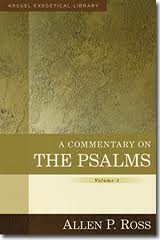
Book Review–Commentary On The Psalms, Vol. 1 by Allen Ross

psalms by ross

Another commentary on the Psalms? Yes, and better than most you already have on your shelves. Mr. Ross has spent a lifetime studying the Psalms and the fruit of it is handed right to us here. The style is pastor-friendly, yet the scholarship is rich. The difference seems to be that he doesn’t feel the need to impress other scholars as he ever aims at those who handle God’s Word. I loved that he had no problem consulting literature of yesteryear thereby avoiding the ridiculous idea that only the latest commentary has anything to say to us.

The first 179 pages give a powerful introduction to the Psalms. Written to be understood, he communicates what other commentaries couldn’t touch in double the pages.  When he writes on the value of the Psalms, we find out all we need to know about Mr. Ross. He loves, appreciates, and is in awe of the Psalms. He  realizes the special place the Psalms have always help among God’s people. I especially liked his discussion on the titles of the Psalms. He gives good help on the different types of Psalms. These discussions are crucial to understanding the text.  He well discusses how to interpret Biblical poetry, without which we are shooting in the dark. His “Psalms in Worship” are eyeopening and a good reminder on how the Lord used the Psalms in Israel. Then, he writes again about the various types of Psalms pulling out their theology.

What’s the last part of the introduction? He tells us how to develop an exposition of the Psalms. Whether you would do an exposition exactly as he would say or not, don’t you appreciate that emphasis?

Pages 181-887 cover Psalms 1-41. The depth is good. You may have some volumes on the Psalms that look thick on your shelves, but they cover all 150 Psalms and can be surprisingly thin and really not cover some verses at all. He gives background on each individual Psalm, an exegetical analysis, commentary in expository form, followed by message and application. That design is superior.

If this is what the Kregel Exegetical Library Series is going to be like, give us more. I hope Mr. Ross will give us the rest of the volumes to cover the Psalms in a timely manner. This is a winner, especially for the pastor!

I received this book free from the publisher. I was not required to write a positive review. The opinions I have expressed are my own. I am disclosing this in accordance with the Federal Trade Commission’s 16 CFR, Part 255 .