Our Favorite Sins by Todd Hunter–Book Review

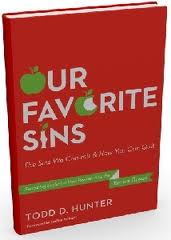
our favorite sins

The subtitle “The Sins We Commit & How You Can Quit” tells us both what we do not want to talk about as well as what we have all given thought to often. It’s uncomfortable to think about the sins that we not only commit, but actually fail in regularly. Fortunately, since Mr. Hunter stirs up such subjects for us to face, he goes on to tackle what we should do to overcome these temptations that follow us all through our lives.

In launching into his subject, Mr. Hunter admits the battle that we all face with temptation. He never hides the fact that the battle has been as fierce in his own life as he knows it is for we readers.  Quickly he establishes that our wrong desires, springing from pride, are deep inside us and are the ultimate problem  in the sins we commit. He makes an understandable and strong case here. I was convinced.

He explains how well we rationalize our sins. His description is really uncanny as I know I have rationalized the way he describes.  Then he describes the all too common situation of living years as a Christian and never quite getting victory. In that many of my failures are similar to what they were years ago, I too well know what he means. Add to that the fact that temptation is here to stay, and we are discussing one of the biggest issues of the Christian life.

In probing this issue for us he recognizes that what tempts me probably is not what tempts you. Based on those deep “disordered desires”  He ties it together in a clear way the process of desire, rationalization, and then failure. We become creatures who live to feed our desires. We feel helpless and only fail more. He analyzes survey respondents on how they handled temptation and shows that if we even try at all, our pathetic responses are doomed from the beginning.

Then he takes us on an expose of the most common temptations of our times. There’s worry, procrastinating, over-indulgence, social media addiction  (Let’s look out as I write on here as you read on here), and laziness. In chapters 9 and 10 he takes these common temptations and brings us back to his premise that our desires must be re-ordered though the power of Christ. It’s helpful stuff.

He has 2 chapters on Sacraments and the Lectionary that I found of little use. He’s an Anglican who uses these things though you would never know it outside these 2 chapters.

This is a great read that highlights the need of a transformational approach rather than the pitiful failing attempts we have used for years. This book can help us.

I received this book free from the publisher. I was not required to write a positive review. The opinions I have expressed are my own. I am disclosing this in accordance with the Federal Trade Commission’s 16 CFR, Part 255 . 
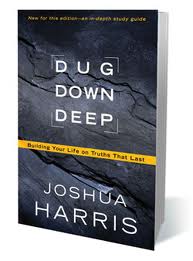
Dug Down Deep by Joshua Harris

dug down deepHow would you like to read a book on systematic theology that you could enjoy, learn from, and constantly forget that you were reading a book on theology? In this volume that is exactly what you will get. There’s real depth here but it’s sprung on you subtly. The cumulative amount of doctrine taken in will surprise you by book’s end. In our day when Christians would rather face an IRS audit than read a book on systematic theology, this book has great potential. In fact, I don’t think large theology books are read by anyone outside the categories of pastor or scholar, and probably few pastors have read such a work in years. This book will allow you to think of the great subjects again.
Mr. Harris can write. There’s no question about that. When he uses the example of rumspringa from the Amish world in chapter one to lure us in, I was caught a third of the way in. We realize the gap between what we say we believe and what we do is often helplessly far apart. This could be because we have never really grasped what the Bible is saying to us as we have imagined we have. Another hint: Jesus Christ is part of the answer no matter what the question is. I loved how he used his story and the earlier story of his father to tell this story. That’s how he pulls it off. The story is captivating and doctrine woven through it. When you finish the story, you think, wow, that was interesting. Then as you think about it, you find yourself wrestling with the greatest doctrines.

He begins with the doctrine of the Bible as a foundation to decide our beliefs. He reads well and is never superficial. From there he makes us face the doctrine of Christ. Next he carefully draws a realistic picture of the depths of the tragedy of sin in us. How our age needs this discussion! We forget how badly we need Jesus because we haven’t fully comprehended the mess we are in.

In chapter 7 the chapter is as good as its catchy title: “How Jesus Saved Gregg Eugene Harris”. I think you will find it quite similar to the story of how Jesus saved you. There’s no overt Calvinism in the chapter though you suspect he believes that regeneration precedes your putting faith in Christ. Still, the chapter was thought-provoking. In his chapter on the Holy Spirit I was absolutely shocked that he, to some degree, looked favorably on speaking in tongues. Had the few sentences that spoke of that   been deleted, you would find an exceptionally balanced presentation of the doctrine of the Spirit.

The book works on every level. He even addresses common misunderstanding that are driving the Christian world and how they don’t quite mesh with God’s Word. As a pastor, I found the book personally rewarding. It was review, it was more perspective, and it seemed to suggest dozens of sermon ideas. Beyond that, I recommend Christians every where read this book and mine its treasures.

I received this book free from the publisher. I was not required to write a positive review. The opinions I have expressed are my own. I am disclosing this in accordance with the Federal Trade Commission’s 16 CFR, Part 255 .
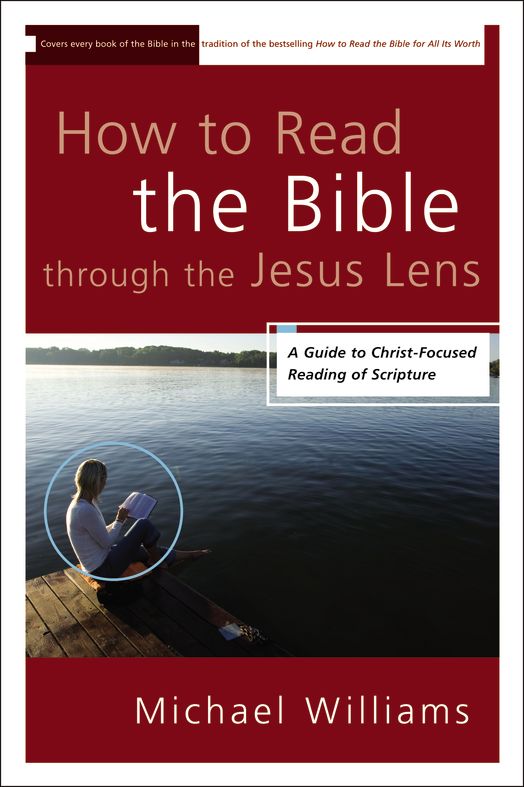
How To Read The Bible Through The Jesus Lens by Michael Williams–Review

Here’s a volume providing an overview of each book of the Bible with the special emphasis on how that book presents Jesus Christ to us. Quite a catchy emphasis, wouldn’t you agree? If you agree that the Person of Jesus Christ with His great mission of redemption is the key of the entire Bible as I do, then this is a worthwhile subject to pursue. Perhaps some books of the Bible reach for a more generalized subject matter and required some stretching on Mr. Williams part to give us the view through the Jesus lens, but the book has real value.
The publisher (Zondervan) asked that I focus on one segment of the Biblical corpus in this review, and I chose the Gospels since that has been a special point of emphasis in my studies for 4 or 5 years now. I thought his explanation of Mark and Luke were superior to those for Matthew and John. I might not personally agree with his ultimate opinion of each Gospel’s main theme, but his are worthy of consideration. Books of the Bible, and particularly the Gospels, have such depth that there will never be overwhelming consensus. What we readers need are those key and unique features of the book that will help us wrestle with our own conclusions about the book’s theme. Things like Matthew focusing on 5 key sermons, or Mark being geared toward Roman citizens, or Luke being fascinated with the problem of sin, or John highlighting the need to believe. These helpful discussions you will find in this book.
This book covers each book of the bible in around 4 pages. In every case there is a discussion of the theme and some specific “Jesus Lens” comments. These are quite good and are followed by “contemporary implications” and “Hook Questions” that are not quite as valuable. How would you pick the main contemporary implications of an entire book? I fear that would only give us the chance to say anything and yet nothing.
Still, this book is helpful. Don’t let the length fool you. It helps with perspective to look at some things from the big-picture viewpoint rather than just long, detailed, scholarly tomes.
Currently, a trend exists in many places to say that the redemptive aspect of every passage is what must be preached or we are just engaging in “moralistic preaching.” This is, of course, overdone as such an approach might make us miss what the Lord is actually saying in a passage. I can agree, however, that I should never let Jesus Christ get too far from my thinking in expounding a passage of Scripture or in personally studying it. It is in this vein that this book succeeds.
In my library there is a place for books that help me get the big picture of a Bible book that I am beginning to study, and this volume will take its place there as one that I will always consult. What better recommendation could I possibly give it?
I received this book free from the publisher. I was not required to write a positive review. The opinions I have expressed are my own. 

The Jesus We Missed by Reardon–Book Review

jesus we missed
What do we mean when we say that Jesus was both fully divine and fully human? Most Christians have some clear ideas about Jesus being fully God, but His being a man is harder to conceive and explain. In fact, most Christians would rather not discuss the subject for fear of inadvertently attacking Christ’s deity. It is in this usually avoided area of doctrine that Patrick Henry Reardon writes. This book, published by Thomas Nelson Publishers, boldly tackles the subject.
Reverent study of the humanity of Christ will in no way lessen our respect of the divinity of Christ, but rather better define it. Actually, our appreciation of what Jesus did for us will grow exponentially  as we see that He suffered as we suffer, he felt pain and heartaches as we feel them, and He understands on every level all that we could ever go through.
In this thought-provoking work, we are forced to confront Christ’s humanity head on. Questions that you either never thought of, or thought it best to never think of, are asked in a way that you much decide or close the book. In the preface alone, the shocking question of did Jesus ever get sick and vomit is asked. Before you run away, ask yourself if that isn’t a worthy question. Does Jesus understand when I am in the middle of a bout of extreme nauseousness? At this point doctrine and daily living intersect.
I couldn’t say that I agree with  every conclusion of Mr. Reardon. When he speaks of Jesus and His mother Mary being at odds at the wedding where He turns water to wine, I feel he slightly stretches the extent of it. While I can appreciate the bewildering nature of Mary’s experience as Jesus  grew up, I can’t help but believe that she did think of Him as we usually picture it in light of the angel’s graphic description of the Child she would carry. The extraordinary fact of the Virgin Birth could never be lost on her for a moment, even though her being a human mother had to come out at times. Mr. Reardon also attributes more to the human author’s personal knowledge (Matthew, Mark, Luke, and John) than I would feel comfortable doing as it would overlook the ultimate authorship of the Holy Spirit.
But when Mr. Reardon talks about Jesus’ growing up always going to the synagogue, or His interaction with certain individuals, or His sufferings in Gethsemane or on the cross, he is spot on. I have  been blessed by studying Christology and it looks like we have a tool here to help those who have never studied it to get going.
Pastors can gain further insights on the Hypostatic Union while laymen can follow the discussion with minimal heavy theological terms. That makes this book, even with the few aforementioned caveats, a winner all the way around.
 I received this book free from the publisher. I was not required to write a positive review. The opinions I have expressed are my own. I am disclosing this in accordance with the Federal Trade Commission’s 16 CFR, Part 255 .

Healing Your Church Hurt –Book Review

healing your church hurt
Stephen Mansfield has given us a winner. It was with apprehension that I opened this book with the subtitle “What to do when you still love God but have been wounded by his people.” I thought, O no, a book to help people wallow in their hurts whether real or only perceived. The local church gets such bad press these days, perhaps I was preconditioned to think this way. Well, did I ever get a pleasant surprise.
Never was church itself criticized. He painted, however, the realistic portrait that the Christian life is rarely lived without some church issues. This is not broad strokes really, but, I suppose, to be expected with all those imperfect people being involved who make up every church. He admitted that some church members are truly hurt at church. We pastors like to live in the cloud that says it doesn’t really happen, but it does. With equal force he revealed that pastors, too, often get hurt by folks at church. I’m sure that was a shocking revelation to many church members. Then, with the greatest candor he confessed that many of our supposed hurts are petty and unbecoming of what we make of them. He did all this in just a few pages and I was hooked. I was ready to hear what he had to say.
Then the balance of the book is simply this–You are hurt in church. Whether it was real or imagined is not the issue. An analysis of the fiends who treated you so is pointless. What are you, the hurt one, going to do? You can’t change it. You can’t rewrite history with you being treated more justly. You really can’t give your enemies their due, especially in line with your being a Christian. So, what are we going to do?
He goes through that dark process that is so easy for any of us to go through that includes hard feelings, bitterness, and finally, even things far worse. How did Mr. Mansfield effectively show us this process? He surveyed the wreckage of his own church hurt. He was a successful pastor of a growing, thriving church and one day it all blew up in his face. When he first broached the subject, I wondered if he was going to use his position as a popular writer to get his revenge. I assure you that was not the case. He never called his enemies by name, and I felt he never told us more than was necessary about them to get the picture of what was going on in his heart. No, the one he exposed with all the gory details was himself.
He went far out on the limb and started cutting. He told us what he did, how he really felt, and the thoughts that came gushing out of his mind. They were grotesque. They overshadowed what his enemies, who I imagine truly were guilty, did. Such is the cherishing of bitterness for a Christian. Our Lord has simply not designed us to be able to function fueled by hate. It’s like trying to put milk in your   car’s gas tank. You won’t be going anywhere. He risked our disliking him. He opened himself up to the critical spirit of our age. You and I have probably been here, but we haven’t told anyone like he does in this book. I think his motive was to help us.
He took us through the process of his coming out of this darkness. He gratefully acknowledged some strong friends who pushed and prodded him. He spoke of false steps and false starts and clear failures. He explained that his bitterness was a multi-layered thing where he had to dig deeper and deeper to unroot it. What he said reminded me of the oft discussed concept of “pit dwelling” that I think came from Southern Baptists and has been popularized by authors like Beth Moore. In any event, the discussion is thoroughly biblical and worthy of our consideration. In the end, he showed us that it was worth whatever it cost him to leave his unreal world of bitterness. And the answer was old–forgiveness. Real forgiveness.
I give this book the highest possible recommendation with a prayer that it help many of us with a real, yet critical issue in our lives.
I received this book free from the publisher. I was not required to write a positive review. The opinions I have expressed are my own. 
This book is published by Barna, an imprint of Tyndale Publishers. The publishers have kindly given me a link to share with you for more information and the ability for you to download a sample chapter to see what you think: http://www.tyndale.com/Healing-Your-Church-Hurt/9781414365602 Be sure to check it out.
Watch for a new blog post here within the next day where I will tell you how to enter a drawing for your own free copy of this book. 

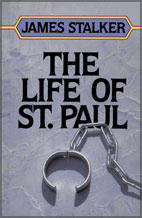
Guest Blogger-Kyle Shearin-“The Life of St. Paul” by James Stalker

I am glad to have as guest blogger my friend, Kyle Shearin. We first met when he and his wife brought a summer singing group from Crown College through our area. He is a sharp, dedicated young man. He teaches at Crown College and is actively involved at Temple Baptist Church. I remember once talking to him as he shared how burdened he was for the Singles Ministry he was leading at Temple Baptist Church. Ironically, it was in that same ministry I met my wife 13 years ago. I gave him the choice of blogging on any book of his choice. His reading has been heavily leaning toward the Apostle Paul of late. He read several on that subject and it turns out an old one was his favorite. Thanks Kyle. Here’s what he had to say….

Many are the books that arebeneficial on the life of the Apostle Paul but few are the books that areconsidered “Classics” on the life of Paul. Stalker’s book is not the mostthorough you will find on the topic but it is among the most respected.
Somebooks on Paul leave you thinking that he was not only the “Apostle Paul” butalso the “Savior Paul”. The author walks you through the soaring ministry ofPaul as well as the stumbling ministry of Paul.
Highlight of the Book
Stalker’schapter on the missionary journeys of Paul is second to none. The chronology ofevents brought to life will have you walking the streets with Paul and seeingGod made strong through weakness.
Chapter Titles
His Place in History
His Unconscious Preparationfor His Work
His Conversion
His Gospel
The Work Awaiting the Worker
His Missionary Travels
His Writings and HisCharacter
Picture of a Pauline Church
His Great Controversy
The End (Paul’s End)
Author:
      James Stalker was born in Scotland in1848. He graduated from Edinburgh University and New College and served formany years as a pastor in the Free Church in Scotland. His most renowned bookis the “Life of Christ”.
Title– The Life of St. Paul
ISNB – 0-310-44181-1
Est. price – $16.00

Forgiveness by Harold Vaughan and T.P. Johnston

Here’s a great book on a timely subject. It can’t quite live up to its subtitle “How To Get Along With Everybody All The Time!”, but then again, no book could. It does, however, thoroughly and convincingly cover  Biblical teaching on the subject. Forgiveness, or the lack thereof, is one of the biggest problems today in my observation. Perhaps because its so easy to not forgive, so common, and such a habit. It is a “respectable” sin in that someone even in the best Christian circles would take much more flack for allowing a cuss word to slip, or be caught smoking, and so on, than being filled to the brim with unforgiveness. Yet if we viewed the matter in terms of what the Lord spoke the most about needing our greatest emphasis, unforgiveness would vault to the top of the list of sins we’d better take care of today.
The subject matter divides into 3 sections: a) granting forgiveness, b) seeking forgiveness, and c) enjoying forgiveness. The book begins tackling the question “Why should I forgive?” and its arguments are unanswerable.
The key argument is that being at odds with others puts me at odds with Jesus Christ. If you consider yourself a dedicated Christian, or at least desire to be one, that is catastrophic! Then there’s a thorough explanation of what forgiveness actually is. It quickly dispenses with the bizarre idea that someone must ask me for my forgiveness before I can grant it. Jesus declaring from the agonies of His cross, “Father forgive them…”, forever settles that question.
Think of this statement: “Unforgiveness is a two-way street. If you decide to put someone in debtor’s prison, God will do the same to you!” If more people could see this truth, it would finally explain for them why their lives are so joyless despite possessing Christ’s forgiveness. What we think is trials and problems weighing our lives down may need an entirely different diagnosis. Chapter 4 expertly takes us through the process of what unforgiveness does in our lives. It is a journey through bitterness, wrath, anger, clamour, evil speaking, and finally, malice. I wonder if this destination makes us a much more grotesque sight than the one who originally did us wrong.
The whole book gives wise counsel and is thoroughly based on Scripture. You can look at these and other materials at christlifemin.org where other books and downloadable sermons are available. I highly recommend this book, especially if you know in your heart you need it.

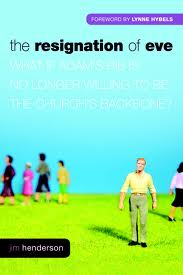
Book Review–The Resignation of Eve

resignation of eveThe Resignation of Eve by Jim Henderson  is presented as tackling the “sad resignation…developing among dedicated Christian women who feel overworked and undervalued in the church.” I thought it might be the perfect counterpart to another book I recently read: Why Men Hate Going To Church. I felt the victim of bait and switch as I read this book.The real goal of this book is to promote women in the ministry. I must confess up front that women in the ministry is not a position that I find scripturally sound. He contends that many women are leaving church over this issue. Of course some women have left church if they could not have a key leadership/pastoral role in the church, but are we to believe that this is even in the top 5 reasons for women leaving church? What, then, is the reason men are leaving the church? Because leadership is open to them? He paints a dark picture of many more women leaving if they are not allowed to take any role they like.He makes his case with case studies of individual stories of women he interviewed. Each chapter is well written and you leave the chapter feeling you really know something about the woman be describes. Still, to prove a point, he uses only anecdotal evidence. Despite trying to say he used a good variety of women to present his case, the majority of Christian ladies I know could not be described by any example he used.

The few conservative women he wrote about were not the best examples he could have used (I mean these ladies no disrespect). Even with them I felt thay were presented as naive, just not sophisticated enough to see the obvious truth that  everything the Bible says about women not being pastors was culturally charged and without present bearing. Many thoughtful Bible students would disagree and to just state it as fact is weak.

As the book went along, you got the feeling that he was promoting the idea that we must structure church to give people what they want to get them to stay. There was never a discussion of what the Bible actually said about how church should be done.

He did mention a few inconsistencies among some churches that refuse women the office of a pastor.  But that alone couldn’t carry his premise.

The book should be advertised to the target audience of denominations that say they believe women are allowed to pastor but the numbers are out of kilter. Then the book could use arguments, as it did, that are used in the workplace. All in all, I cannot recommend this book.

I received this book free from the publisher. I was not required to write a positive review. The opinions I have expressed are my own. 

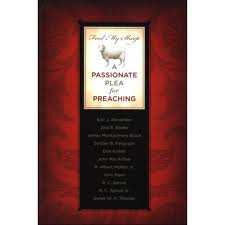
Feed My Sheep

Feed My Sheep: A Passionate Plea For Preaching published by Reformation Trust Publishing, which you can find at Ligonier.org, has 11 chapters by various authors calling us back to the prime importance of preaching. Feed My SheepAlbert Mohler first discusses the primacy of preaching citing history and Scripture (e.g. Col 1: 25-29) to build his case. He shows us that preaching is not one of a pastor’s important duties, but , in fact, it is the key one. We do live in an age where pastors are expected to do everything and some pastors prefer almost any administrative duty to the hard work of sermon preparation. Perhaps over time we become rather slick, but too superficial to do our people any good.  I loved his analysis about “product envy” for preachers. Other professions can look at how many items sold or made but results in the task of preaching are not so easy to calculate. The lack of quantifiable results may derail us from expounding the Word of God which carries the help those we minister to really needs.James Boice tackles the “foolishness of preaching”.  He argues that preaching is God’s wise way to show that the world’s wisdom is foolishness. He also speaks of how many Bible characters preached, and how preaching leads to conversions and church growth. Ultimately, this works because the Lord works through His Word.Derek Thomas writes on “Expository Preaching.” Really this is the type of preaching referred to in the whole book. Using the history of several great preachers, defining the terms of preaching carefully, he writes as an academician. His description of failed preaching types is really good.

Joel Beeke writes on experimental preaching, or getting beyond explanation to application as all good preaching should.  R.C. Sproul discusses teaching in preaching. Since we live in a generation that prefers light preaching this is a challenge to help our people learn the Word of God. R.C. Sproul Jr. has a brilliant chapter on “Preaching To The Mind”‘.

Sinclear Ferguson writes with good effect on “Preaching To The Heart.” His chapter is practical. Don Kistler gives us “Preaching With Authority”. He discusses how Jesus spoke with authority, an authority so obvious all noticed. He relates how Paul wrote about it, for example, Titus 2:15. He reminds us of what an awesome call we have in our call to preach. Eric Alexander writes on “Evangelistic Preaching”. Some might find it lacking.

John Piper speaks on “Preaching To Suffering People.” Perhaps this is an example of how productive a use this call to dedicated preaching can provide.  John MacArthur writes the closing chapter as a plea to take the contents of this book and go and do what a shepherd should do.

The book is an encouragement. It runs against the tide of modern-day preaching and is what we need. You may have noticed that every writer tightly holds to reformed theology, and though I definitely do not, we must graciously admit that reformed writers are simply giving us the best writings on preaching today. This book is a clear example of that fact. I want to be the preacher the Lord wants me to be. Don’t you?

I received this book free from the publisher. I was not required to write a positive review. The opinions I have expressed are my own.

Tyndale by David Teems

You always assumed, I’m sure, that William Tyndale was an important man in Christian history. This book shows just how amazingly important he was. You knew about his first English translation of the New Testament, perhaps you even knew he died as a martyr. Did you know, though, that he had a great effect on our English language? He is credited with many words in our language coming from his pen. If you are a lover of the KJV as I am, you will be shocked as I was to learn that many of the most memorable lines of the KJV came over unchanged from Tyndale. Consider:

Let not your hearts be troubled..
The Lord bless thee and keep thee.
The Lord make his face to shine upon thee and be merciful unto thee.
…for whither thou goest, I will go, and where thou dwellest, there I will dwell.

There are many others that Mr. Teems shares with us. You leave this book convinced that Tyndale has had the greatest influence of all on the Word of God in English. There really is no close second.

You are impressed too as you read of Tyndale’s simple faith and dogged determination to translate the Bible into English. It was his driving passion from which he never wavered. Mr. Teems quotes Tyndale in regards to his translation work:

…that I never altered one syllable of God’s word against my conscience, nor would do this day, if all that is in the earth, whether it be honour, pleasure, or riches, might be given me.

Though Mr. Teems didn’t exactly word it this way, it is obvious that Tyndale was especially gifted by God for his great work. It was his life’s work, one that cost him greatly, living and running as a fugitive with loneliness and danger always staring him in the face.

Mr. Teems has done us great service in this volume. He is handy with a pen. His own literary skill makes him able to demonstrate how deep Tyndale’s talents really go. He holds Tyndale up beside the great literary figures and even mentions where Shakespeare used Tyndale. I finished this book thinking that more than a heroic man, Tyndale was one of the really great ones. Perhaps he hasn’t had his due, but Mr. Teems while fairly showing his faults, accurately presents us with “Tyndale: The Man Who Gave God an English Voice.”

I received this book free from the publisher. I was not required to write a positive review. The opinions I have expressed are my own. I am disclosing this in accordance with the Federal Trade Commission’s 16 CFR, Part 255.

20140124-210624.jpg