“It is a night to be much observed unto the LORD for bringing them out from the land of Egypt: this is that night of the LORD to be observed of all the children of Israel in their generations.” Exodus 12:42
Do you look back to some special, unforgettable moment in your life? A moment that defined you and forever changed your life? For me, it was 33 years ago when I accepted Jesus Christ as my personal Savior. In this passage, the nation of Israel had such a time, a time when she in fact became the nation of Israel. It was “a night to be much observed.”
Preparing For This Night
Much will go into preparing for this night. On this thought consider facing a plague. This story begins in Exodus 11. We come there to an ongoing battle between Pharaoh and God Himself. The Lord has been represented by Moses, and nine plagues have already been poured out on Egypt. One plague remains and its story begins here. This tenth plague will be the one that finally breaks Pharaoh’s back and causes him to let Israel go. This plague will be so effective, in fact, that the Egyptians will beg the children of Israel to leave. In its aftermath, the Egyptians will proclaim, “we be all dead men.”
This final plague involves the death of all the firstborns in Egypt. I’m a firstborn myself, and I imagine any firstborn would find this story especially interesting. In reading this story, we probably ask ourselves just what is the significance of the firstborn. If you have children, think about what your firstborn means to you. It means that your family will continue. My grandfather had eight daughters and two sons. The older son had all daughters and my dad, his other son, had one daughter and me. I remember my grandfather telling me that he was depending on me to preserve the family name. When my first son was born, I thought of my grandfather and the importance he attached to carrying on the family name. To Egypt all the firstborn sons represent the furtherance of them as a people.
In her pride, Egypt assumes that her firstborn sons means she will continue forever. When Pharaoh had the male babies of Israel killed, we see that apparently Egypt did not think Israel would continue but rather be obliterated under Egypt’s hand. This last plague will remedy that thinking. When the “night to be much observed” is over Egypt will never think that again. At midnight on the night the Lord chooses, everyone irrespective of station in life will lose their firstborn. This plague will reach from Pharaoh’s palace to the poorest home in Egypt. In this unusual plague even the animals will lose their first born. Every home will give up a cry of terror at its loss. It will be like nothing they have ever seen. To imagine this scene, remember what it was like in your home when you learned of the death of a dear loved one. Now expand that scene to every house, on every street, and all across the land!
What is really happening is that the Lord is bringing out Israel and no one will stop Him. Exodus 11: 7 says, “But against any of the children of Israel shall not a dog move his tongue, against man or beast.” When the Lord makes His move, not even the dogs of Egypt will have the nerve to bark. Verse 7 continues to show the reason why: “that ye may know how that the LORD doth put a difference between the Egyptians and Israel.” After this night, Egypt will learn that there is a difference between God’s people and His enemies.
Also notice needing a lamb. Even to the Israelites this plague is going to be interesting. Israel faced the first three plagues with Egypt – the river turning to blood, the frogs, and the lice. It wasn’t until the fourth plague, the plague of flies, that God differentiated between Israel and Egypt. From the fourth plague until the ninth, Israel was completely spared. Israel didn’t have to do anything to keep the flies from bothering them, or for any of the others until the tenth plague. But with this last plague, the Lord will require that they do something to avoid it. They will need a lamb. There is such significance in this act that Moses will carefully get the instructions to all the people of Israel. This night will be so special that they will observe it every year.
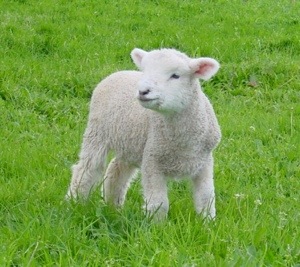
For this special night not just any lamb will do. It must be a one year old male lamb with no blemishes. You couldn’t just buy the first lamb you saw. You couldn’t purchase a three-legged lamb to save money. No, there could be no imperfections. Perhaps you would see a beautiful lamb and notice a small black spot somewhere on its body. It wouldn’t work. Perhaps the lamb would be a magnificent specimen with a shiny coat and good size, but have a slight problem with one hoof. The deal would be off. For the lamb to have no imperfections was essential. Whatever it took, you had to get yourself a lamb. There were provisions for the especially poor like a couple of families sharing one lamb, but there had to be a lamb for you. This is not something that only Moses had to do, or something that he could do for everyone, but every home must make its own preparations. In this case he couldn’t say, “just watch me as I do this,” but he had to instruct each home in how to have its own lamb. And it had to be a lamb that the Lord would accept, a lamb without blemish.
The instructions were even more explicit. Each home must kill its lamb at the same time. Then they were asked to do what must have seemed so shocking. They were to collect the blood of the lamb in a basin. Before they cooked the lamb for the special meal that they were to have, they were to take the blood they collected to their door. Then they were to take a hyssop, which is a bushy stalk with leaves and small flowers, and rub the blood on the side posts and upper post of the door. If you had a weak stomach, you might not like this job. The father of the home would keep dipping the hyssop in the blood and slapping it on the door posts to make sure it was thoroughly covered in the blood.
After following those grotesque instructions, they were to take the lamb and roast it that very night. They were to eat unleavened bread and bitter herbs with it. None of the lamb was to remain by morning. If necessary, they were to burn it to comply with this instruction. Then the Lord tells them the point of these instructions. On this special night He will pass through the land and look at every door to see if the blood has been applied to it. Where He sees the blood on the door, He will pass over that home and spare it this bitter plague. Obviously, where there is no blood on the door, He will not pass over but will come inside. If He comes inside, the firstborn will die!
Facing This Night
It’s amazing what facing this night will entail. On this thought consider waiting as a family. Moses begins explaining to the elders what the Lord would expect in each home. The story is told in Exodus 12:21-28:
21 Then Moses called for all the elders of Israel, and said unto them, Draw out and take you a lamb according to your families, and kill the passover. 22 And ye shall take a bunch of hyssop, and dip it in the blood that is in the bason, and strike the lintel and the two side posts with the blood that is in the bason; and none of you shall go out at the door of his house until the morning. 23 For the LORD will pass through to smite the Egyptians; and when he seeth the blood upon the lintel, and on the two side posts, the LORD will pass over the door, and will not suffer the destroyer to come in unto your houses to smite you. 24 And ye shall observe this thing for an ordinance to thee and to thy sons for ever. 25 And it shall come to pass, when ye be come to the land which the LORD will give you, according as he hath promised, that ye shall keep this service. 26 And it shall come to pass, when your children shall say unto you, What mean ye by this service? 27 That ye shall say, It is the sacrifice of the LORD’S passover, who passed over the houses of the children of Israel in Egypt, when he smote the Egyptians, and delivered our houses. And the people bowed the head and worshipped. 28 And the children of Israel went away, and did as the LORD had commanded Moses and Aaron, so did they.
Imagine the father of each household explaining to his family what is taking place. He explains that the family must get a lamb to be ready for this incredible night that is coming soon. The Lord instructed that each family must have its lamb four days. So the family gets the lamb, a lamb with no blemishes, and keeps it those four days. We can be assured that they brought this lamb into their home and took wonderful care of it. The stakes were too high to risk losing the lamb. If the children in this home are like most children, they would play with this lamb and become quite fond of it. Four days time would be more than enough time for the children to make a pet of the lamb, and we can easily imagine that in their innocence they beg their father to not go through with killing their new lamb.
In addition to the children begging to keep the lamb, the father notices the nervous expression on his wife’s face. As she glances at her firstborn son, she probably asks her husband, “Honey, are you sure you got those instructions down right?” As the father scans the room, he sees also his fidgeting firstborn son sitting in the corner. That boy’s heart skips a beat with every bleating of that lamb. He probably says, “Dad, I hope we are doing this correctly.” There is an awkwardness pervading the entire room as all, even some of the other children, are thinking what life would be like without their older brother.
To ease the tension and because it was his duty to explain the significance of this night, the father spends much time in describing that this night will forever have great meaning. “We will think often,” he will explain, “of this night and even celebrate it once each year.” In other words, he attempts to explain, this night will define our lives. This night always will be for an Israelite “a night to be much observed.”
At last, the time came to kill the lamb. The father carefully follows the instructions. He would kill the lamb, collect its blood in a basin, take a hyssop, and sling the blood upon the door posts. What a bloody mess there would be as he took such care to make sure that he had plenty of blood on that door frame. The children were probably horrified as they watched their father work. They had never seen him do anything like this! To reassure them, he no doubt explained that the Lord required this and further talked about what it meant as best he could. If they were like my children, they would naturally ask “why” through the whole process. He probably said, as he had one eye on his firstborn son, “If the Lord requires blood on our door, then we are going to put blood on our door.” He would not stop until he had the blood on those doorposts as thick as he knew how to get it. I’m sure that when he closed the door that blood even trickled down the inside because he had put so much on the outside. He will have the blood on his door when the Lord brings that last plague down his street.
With the bloody work now done, they will cook the lamb and prepare the meal as instructed. After the meal they must wait until midnight. Had you lived in those days of hard work, you would never sit up until midnight. But no one sleeps this night. They just wait. If their faith wavers at all, they probably continue glancing at the firstborn son. The room grows quiet as all are lost in their thoughts about what midnight will bring.
Finally, midnight comes. They have no clocks that keep exact time, but they know that it is midnight by the faint screams they hear in the distance. Let’s suppose that this family lives in the first house as you enter the land of Goshen, which is the area of Egypt set aside for the Israelites. Those screams are in the direction the farthest Egyptian homes that can be heard from their house. As they listen, they notice that the screams grow louder and approaches nearer. They can sense that because of the screams He is passing one house at a time but coming in their direction. As the plague comes closer they can make out what some are saying in those screams. Then they hear someone distinctly yell, “My son is dead.” The children, who are already in their parent’s lap, snuggle in as close as is humanly possible. As they stare at their door, they are now so glad that their father had put the blood so heavily on the door posts and that blood could even now be seen dripping down the inside of the door.
Now notice trusting in the blood. Earlier in the night they had probably wondered why the Lord had asked for such a gross act. They probably wondered why He didn’t do something more beautiful, or something more religious. They wished they could have had more exciting instructions rather than these events that were making for such a terrifying night. But in spite of their earlier thoughts, they were sure glad to have that blood on the door now. In fact, no one dared go outside, but all stayed hid behind that blood.
After a few more excruciating moments, the screams got so close that all in this home knew that the Lord was almost to Goshen. You could almost count off the distance until you knew that the Lord was now passing your door. With all eyes bouncing from the firstborn son to the door and back, a smile began to form. What begins as a faint smile, grows into an explosion of emotion! Can you imagine all the laughing and happy tears? All embrace the firstborn son with the hardest hugs he had ever experienced. For this night, “a night to be much observed,” you would have expected something festive, not something so solemn. But when you think that older brother still lives, it was quite festive after all. As the emotion died down, all surely marveled at how the blood had worked.
It had been a shocking night, as Exodus 12:29-30 relates:
29 ¶ And it came to pass, that at midnight the LORD smote all the firstborn in the land of Egypt, from the firstborn of Pharaoh that sat on his throne unto the firstborn of the captive that was in the dungeon; and all the firstborn of cattle. 30 And Pharaoh rose up in the night, he, and all his servants, and all the Egyptians; and there was a great cry in Egypt; for there was not a house where there was not one dead.
No, there was not a house among the Egyptians where one had not died, but the blood had been sufficient for this modest Israelite home.
Learning From This Night
If we could take to learning from this night, we could gain eternal results. On that thought consider accepting the Lamb. This night the Lord had, among other things, been teaching. Those lessons were that it would always be true that a Lamb was needed, that a substitute was necessary, and that the innocent must die for the guilty. Here in a beautiful Old Testament picture we see what the New Testament carefully explains – that Jesus Christ is the Lamb of God. I Corinthians 5:7 says, “Purge out therefore the old leaven, that ye may be a new lump, as ye are unleavened. For even Christ our passover is sacrificed for us:” Yes, what took place this night was gory, but Jesus Christ was sacrificed. His blood was shed. He was for you and me what the little lamb was to that little Israelite family.
Jesus Christ, just as that lamb, was “without blemish.” He was perfect and had no sin. Even Pilate, who cared only about what was expedient for his political career, had to admit, “I find no fault in him.” The requirements for the lamb demanded that he be a male and Jesus Christ the Son of God was made a man. The lamb was to be “of the first year” and Jesus Christ, though the eternal God, was in the prime of His earthly life at 33 years of age. Exodus 12:6 says, “ . . . and the whole assembly of the congregation of Israel shall kill it in the evening.” Part of the suffering of Jesus Christ was His crucifixion before the gaping eyes of a cruel mob. And never forget that as a sinner your fingerprints are all over His bloody, broken body. It was your sin and mine that brought him out of Heaven to the tortures of Calvary. Further, all the lambs had to be killed at the same time. Jesus Christ died at just the right time for Romans 5:6 says, “ . . . in due time Christ died for the ungodly.” Amazingly, Jesus Christ died on the cross at the very moment the Passover lambs were being slain.
The instructions also required that the lamb be “roasted with fire.” This is a picture of Jesus’ incredible suffering. With the extreme loss of blood, thirst, and bones out of joint, Jesus went to the farthest reaches of suffering. After the lamb was roasted with fire, it was to be eaten “with bitter herbs.” This is a picture of Jesus’ deep sorrow. Jesus Christ knew sorrow. John 1:11 reads, “He came unto its own, and his own received him not.” In fact, the very ones He came to die for were screaming, “Crucify him!” Another key instruction was that none of the lamb was to remain by morning. That the meal had to be eaten at one time illustrates that salvation is both a one-time and a once-for-all-time transaction in Christ. It is not a process but an instantaneous new birth. You don’t get a little bit saved today and a little bit more tomorrow; no, in an instant you “pass from death unto life.”
Now notice applying the blood. Folks, we already have the perfect lamb. We need not keep searching since the lamb without blemish has already been provided, the blood has already been shed, and it stands ready to be applied. You need not worry yourself about finding a better lamb. None could be found. So the question, then, is not about the acceptability of the Lamb but is really will you accept the Lamb already lovingly provided. Will you take the blood of the Lamb and apply it to the door of your heart?
Sin leads to death. So death is coming down your street. Don’t you hear it coming? Go to any funeral home and see its work. Death will make its way past the door of your heart. You know you have heard the distant screams and that it gets closer to you every day. In the Bible death is more than just dying. It is spiritual death that entails eternal separation from God in a place called Hell. The only way this spiritual death will pass over you will be if it finds the blood of Jesus Christ applied to the door of your heart. Can’t you see that when death came down the street only one thing made any difference? The Blood! Did you notice that the house made no difference? It made no difference if the windows were washed or if the lawn was mowed or if there was a new paint job. There was no consideration for whom your family was. Pharaoh’s firstborn son was just as dead as the son of the lowliest home in Egypt. Only the door was looked at. Only the blood mattered. And so it is with you and me. It makes no difference what your background is, or your religion, or anything else, but only the blood of Jesus Christ. Remember Romans 5:8-9:
8 But God commendeth his love toward us, in that, while we were yet sinners, Christ died for us. 9 Much more then, being now justified by his blood, we shall be saved from wrath through him.
See this great lesson of Scripture – Hebrews 9:22 “without shedding of blood is no remission.” This flies in the face of everything the prideful heart of man holds dear. Yet the eternal happiness of every man depends on it. The simple truth is that for every man, great or unknown, the Lord will look at the heart to see if the blood is there. Can’t we see that it is either the blood or the screams? In this case the screams are of one sinking into Hell! Have the blood of the perfect Lamb of God applied to your heart today by trusting Jesus Christ as your personal Savior.
What was a night of terror for some was a night of deliverance for others. -You do not have to seek the terror; it’s already on its way. But you can have the deliverance. If you already have this salvation, then remember that this must be our clear message to perishing souls.
This special night was one that the delivered understood, and a night that they forever thank the Lord for. It was a night worth being ready for. It was a night worth remembering. It was “a night to be much observed.”