1 Corinthians (TNTC) by Thomas Schreiner

book 1 cor tntc.jpg

Thomas Schreiner provides us an ideal commentary of the type aimed at pastors or Bible students rather than scholars. It’s part of the celebrated Tyndale New Testament Commentary (TNTC) series that’s been a favorite for decades. In fact, the value of this series becomes especially apparent when Schreiner confesses that it was a distinct help in his younger days. Talk about coming full circle!

His task, however, was daunting as he gets to replace the redoubtable editor and writer Leon Morris. Morris was exceptionally gifted for these type of commentaries, so I can see why the current editors went after a heavy hitter like Schreiner. For my money, Schreiner, who had already proven adept with major exegetical works, scored a home run here. (That’s high praise from one who will never part with Morris!)

After a nice bibliography, Schreiner turns out a thoughtful, well-constructed Introduction. He surveys the city of Corinth, Paul’s ministry there, and the occasion of the epistle. His description of the letter’s occasion was perceptive and was strengthened by several appropriate tables. Next, he delves into the nature of the letter, which is a sane look at the letter’s unity. In the section on major theological themes, he begins with the Trinity and spreads to the church. Other themes include salvation, resurrection, the Christian life, food offered to idols, and spiritual gifts. He ends with a nice outline.

The commentary itself is outstanding. If you want to see the quality of his work, look at a controversial passage like, say, I Corinthians 7 on marriage issues. Words like gentle and gracious come to mind. On the other hand, words like brave and certain come to mind as well. In other words, you will get the kind of things you are looking for when you pick up one of this kind of commentary.

This commentary is a winner all around. It’s inexpensive too. What more could you ask for?

I received this book free from the publisher. I was not required to write a positive review. The opinions I have expressed are my own. I am disclosing this in accordance with the Federal Trade Commission’s 16 CFR, Part 255. 

Valley Forge by Bob Drury & Tom Clavin

book valley forge.jpg

Valley Forge. Now that’s a subject worthy of its own book. If nothing else, there’s George Washington. Washington attracts great writers you know. Ron Chernow was compelled to give us a life of Washington while David McCullough gave us 1776, so it’s no surprise to me that the bestselling author team of Bob Drury and Tom Clavin were pulled to Valley Forge. Valley Forge made for one of the greatest chapters of Washington’s celebrated life and contributed immensely to his mystique. Drury and Clavin give it the treatment it deserves in this fine book.

The authors struck the right balance in setting up the famous winter in Valley Forge, telling its story, and describing what followed along with its significance. Part 1 tells us of a series of failures that led into the dismal winter. Wait till you read of Brandywine. That this book ends in great victory makes the whole story something of a microcosm of Washington’s amazing life. He had more losses than most any famous general, yet he always preserved to ultimate victory. Defeat never crushed him, the odds never defied him, and he is the poster child of fearlessness in battle. He could rally men that seemed beyond it. All in all, he makes for thrilling reading as this book turns out to be.

It would be unfair, though, to call this only a biography of an episode of Washington’s life. There are all kinds of heroes and villains to be found. For example, you will despise Charles Lee by book’s end. There’s plenty more across the field among the Redcoats too.

The famous winter is great drama as well. The suffering was real—so real that the victories in the following spring seemed unreal. My only complaint with this book is that the authors were perhaps more skeptical of some of the Christian elements than seemed necessary. I know legends always have a potential of growing, but the evidence of Washington’s genuine Christianity is greater than what’s found here.

If you love either Washington or the Revolutionary War, or for that matter any well-written slice of history, you will thoroughly enjoy this book.

I received this book free from the publisher. I was not required to write a positive review. The opinions I have expressed are my own. I am disclosing this in accordance with the Federal Trade Commission’s 16 CFR, Part 255. 

Galatians (NICNT) by DeSilva

book gal nic

David DeSilva has wonderfully replaced the volume on Galatians by Ronald Fung in the long-lived, much loved New International Commentary on the New Testament (NICOT) series. This new volume is little like its predecessor.  That volume was old enough to be written in a more expositional way than is found in the major scholarly works the series turns out today. DeSilva is fully in line with what the series has been turning out in recent years. Without a doubt, he brings many of his own specialties and a somewhat more lively writing style as well. He always has a few detractors for his strong emphasis, and to some minds overemphasis, on rhetoric, but I predict this commentary will be well received. It’s pretty conservative too.

There’s a major, thorough Introduction of over 100 pages after a substantial bibliography. First, he addresses the Pauline authorship. From there, he delves into Paul’s ministry in Galatia and the pastoral challenges he faced there. That requires a careful rendering of the false teachers there. It was an explosive battle among Paul and the false teachers and DeSilva well described it. Next, geographic issues (he favors the South Galatian view) and chronology are surveyed. Acts is consulted and a conservative chronology is pieced together over several pages.

As you would expect with this author, he dives deep into rhetorical issues. There are 40 pages on it! I don’t find that as interesting as some do but he examines it with the best scholarly standards. He ends with structure and the overall effectiveness of the letter.

Next, you get 400 pages of commentary on the epistle itself. I found it thorough, done with careful exegesis, and with a healthy coverage of issues scholars love along with some timely excursuses. Pastors will benefit from this commentary too. All in all, a fine work.

I received this book free from the publisher. I was not required to write a positive review. The opinions I have expressed are my own. I am disclosing this in accordance with the Federal Trade Commission’s 16 CFR, Part 255.
Hosea (Apollos Old Testament Commentary) by Joshua Moon

book hosea apo

The Apollos Old Testament Commentary series is starting to get out enough titles to see that we are going to have a major series on our hands. They run from conservative to moderately critical and are far more conservative overall than, say, the Word Biblical Commentary series. This latest release is a helpful volume on one of the Minor Prophets, Hosea. I enjoy having individual commentaries on even the smaller books, and this is one of the few major ones on Hosea. Only Dearman in NICOT comes to mind, yet their strengths are different enough to make both worthwhile. Both have impeccable scholarship, yet I suspect pastors might favor this one while scholars will go with Dearman. I’m glad to have both within reach. Joshua Moon is the younger scholar, and perhaps like me, you hadn’t heard of him before. I suspect a productive career for him after writing this quality commentary on Hosea. He seemed adept at commentary writing as he pitched this book perfectly for both scope and length.

The Introduction begins with an overview of Hosea’s historical backdrop. He holds to a conservative chronology. From there, he broadens his purview to Hosea’s place among the prophets. The next section looks at Hosea from a writing perspective. He says, “As will be amply demonstrated, no part of the text requires a date earlier or later than the era stated in the superscription”. He does discuss editing which always strikes me as fanciful. The sections on text and structure are a little too brief, but the one viewing Hosea in light of the Covenant was well done. Theology could have used more space too, but I suppose he saved it for the commentary itself.

The commentary is truly helpful. It’s presented in the usual Apollos style: translation, notes on the text, form and structure, comment, and explanation. I liked what I found here.

The Apollos series has another quality title here and I warmly recommend it.

I received this book free from the publisher. I was not required to write a positive review. The opinions I have expressed are my own. I am disclosing this in accordance with the Federal Trade Commission’s 16 CFR, Part 255.

The Message of the Living God (BST) by Peter Lewis

book liv gos bst

Peter Lewis contributes this book in the Bible Speaks Today (BST) series. In addition to all the fine commentaries covering all the books of the Bible, there are several like this one that covers biblical themes. The approach to explaining these themes is still one of examining Bible passages. If you happen to be studying the doctrine of God, you might find this volume along with The Message of Creation by David Wilkinson and The Message of the Trinity by Brian Edgar to form quite a trilogy. In any event, this book on the Living God covers several key passages effectively.

The book is divided into three parts: God and His world with all Genesis passages, God and His people with passages over the rest of the Old Testament, and God in Three Persons with all New Testament passages. Believe it or not, that division is not stretched.

There are many outstanding expositions here, but I found the one entitled “Genesis for today” on Genesis 1 to be particularly perceptive. Several attributes of God are brought alive here. You’ll find many underlined sentences in my copy!

This book has great value because most volumes on this subject approach it in a systematic theology fashion. We sometimes need reminding that good systematic theology should come from Bible passages first.

I’m a fan of all the books in this series and mark this down as another title well worth your time.

I received this book free from the publisher. I was not required to write a positive review. The opinions I have expressed are my own. I am disclosing this in accordance with the Federal Trade Commission’s 16 CFR, Part 255.

Spirit-Led Preaching (Revised Edition) by Greg Heisler

book sp led pre

Most books on preaching, and I’ve read a lot of them, only give a cursory mention of the Spirit’s role in preaching. The better ones sometimes give a chapter. Besides a book by Tony Sargent on the preaching of Martyn Lloyd-Jones, I’m not aware of any book like this helpful volume by Greg Heisler that probes the Spirit’s role in preaching. Even the Sargent book, as awesome as it is, doesn’t guide us through the whole sermon preparation process step by step with an eye on the Spirit as does this book. I somehow missed the first edition of this work, but this revised edition was a blessing and a reminder to me.

Chapter 1 challenges us to see that the most vital element, the Spirit’s help, may be missing in our preaching. What’s worse is that we may not have even felt the loss! Chapter 2 probes exactly what Spirit-filled preaching is. That aforementioned loss may mushroom for you in this chapter. If you somehow slip through without concern through chapters 1 and 2, chapter 3 will bring you before the tribunal. Jesus, the Prophets, and Paul all clearly highlight the essentialness of the Spirit in preaching. That must be the standard for us as well. Since there’s little doubt of being all in at that point, chapter 4 works through the doctrine of illumination. Here the nuts and bolts meet the Spirit. We who love the Word, and the exposition of it, find how complimentary Word and Spirit are to each other in chapter 5.

Chapter 6 looks at the Spirit and sanctification. Here the preacher himself and the Spirit are in view. The next chapter takes the preacher again through the sermon preparation process from text selection to ready to preach again with the Spirit. Chapter 8 glides into sermon delivery with the Spirit. Chapter 9 is a breath of fresh air as it takes the Spirit to the congregation. The value of listening is even probed. Chapter 10 is something of a challenging summary.

I’m impressed with this book. Its contents are desperately needed in our day of programmed, sterilized preaching that would rather give pointers for self-improvement than deliver the Word of God that throbs with life and has the power of the Spirit to bring it to life for you. Every preacher needs a library of key books on the ministry. Make sure this book is in yours.

I received this book free from the publisher. I was not required to write a positive review. The opinions I have expressed are my own. I am disclosing this in accordance with the Federal Trade Commission’s 16 CFR, Part 255.
Dr. Benjamin Rush–A New Biography by Unger

book ben rush.jpg

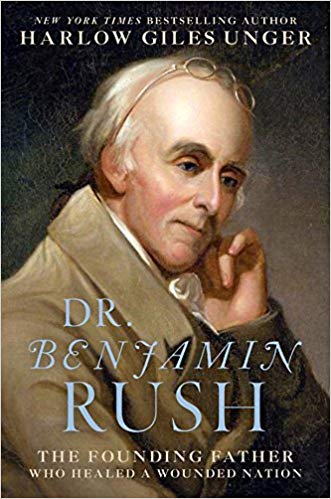
Dr. Benjamin Rush is a Founding Father that I’m happy to finally get to know. Famed historian, Harlow Giles Unger, delivers Rush from his inexplicable obscurity in this fine biography. The subtitle “The Founding Father who healed a wounded nation” is in no way hyperbole. If you love biography, you’re in for some pleasant reading. If you love early American history, you’re going to wonder how you’ve missed Dr. Rush for so long.

What an incredible person was Dr. Rush! He signed the Declaration of Independence, was dear friends with many of the more famous Founders and faced personal danger for favoring independence from Britain. He loved medicine and people and continually damaged his own finances to help the less fortunate. He was “first” in so many categories—humane treatment of wounded soldiers, medical treatment for the poor, prison reform, and psychiatry. He stood up to anyone it took, including Washington, to push these things he felt were right. Every chapter of this biography makes you admire him more.

Beyond just providing great biography, Unger skillfully handled the medical aspects of Rush’s life story. That Unger comes from a long line of doctors was a big help. Rush was involved in a few medical conflicts and was a proponent of “bleeding” patients. This biography will show that though bleeding was a mistaken treatment, it was based on the best medical science available. Rush studied hard and accumulated research that was a great help to later researchers. He was slandered unmercifully, yet never abandoned his medical calling.

Unger also relates Rush’s Christianity. He doesn’t probe it or determine it’s influence on who Rush was, but he doesn’t obscure the fact of it either. The reader can do his or her own analysis. I was fascinated at Rush’s efforts to get to the bottom of Jefferson’s beliefs. It almost amounted to witnessing. Jefferson respected him so much that he opened up to Rush when he usually preferred to keep his religious views to himself. Since Jefferson’s views were not too orthodox, Rush suggested they agree to disagree.

Another nugget of this biography is the relating of how Rush reached out to both Adams and Jefferson to mend their differences and reestablish their friendship. That healing was as profound as his medical work in the young nation. It appears that he was the only man both so respected that he could have pulled this off.

This biography is a treat. If you love early American history, it’s a must-have book. I loved it!

I received this book free from the publisher. I was not required to write a positive review. The opinions I have expressed are my own. I am disclosing this in accordance with the Federal Trade Commission’s 16 CFR, Part 255.
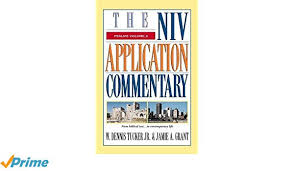
Psalms Volume 2 (NIVAC) by Tucker and Grant

book psa 2

We have waited for this commentary for a long time. Gerald Wilson’s volume 1 on Psalms 1-72 has been out for years and has been the most-decorated volume in the entire NIVAC series. His untimely death necessitated others produce this commentary and Dennis Tucker and Jamie Grant have filled that lacuna. They have the credentials in scholarship to write this commentary that is, perhaps, unfairly in the spotlight and will face more scrutiny than usual. Wilson was like the guru on the Psalms, and as these authors admit in the preface, he singlehandedly defined the direction the scholarly world has taken since the 1980s on the Psalms. Such influence casts deep shadows, yet these authors acquitted themselves nicely. Beyond the scholarly world, pastors and Bible students will see and love it for what it’s meant to be–thorough commentary that bridges to contemporary life.

Two things become obvious in the Introduction. They are only going to write on what Wilson left undone and intended for volume 2. Since most who purchase this volume will likely have volume 1, that approach makes sense. They also will write with profound respect for Wilson, yet not be afraid to gently disagree on any point. I’m impressed by that style.

The Introduction, then, is taken up with two main concerns: the shape of the Psalter and the theological themes of the book. I don’t buy into the idea of editors changing the Psalms, but I do believe these scholarly discussions uncover intent. The Psalms aren’t haphazardly thrown together. There is purpose. As for theology, the Psalms are both so unique and precious that theological understanding is paramount. I enjoyed what I read here.

The commentary is fine as well. It follows the NIVAC pattern and uses it to advantage. As would be the case with any commentary, I might not agree with their slant on certain psalms, but they give real help. Just think, over 1000 pages on Psalms 73-150!

This commentary exceeded what I expected, accomplished all of its goals, and would make a fine addition to your library. I highly recommend it!

I received this book free from the publisher. I was not required to write a positive review. The opinions I have expressed are my own. I am disclosing this in accordance with the Federal Trade Commission’s 16 CFR, Part 255.
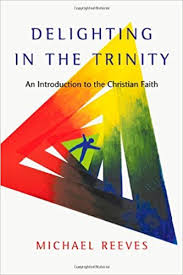
Delighting in the Trinity by Michael Reeves

book del trin.jpg

Mark this down as one of the best books around on the Trinity. Don’t let the fact that it’s written in a popular style cause you to believe that it’s inferior to more scholarly volumes either. Michael Reeves has put the Doctrine of the Trinity on the high perch it deserves and uses it as a springboard to comprehend our faith. If you don’t go into the reading of this book with Mr. Reeves’ conclusions, you will likely leave it that way. Along with all that academic value, you will have your heart warmed too. This book succeeds at every level.

Instead of giving a chapter-by-chapter overview, let me tell you some of the things that jumped off the page for me. He reminded me how persuasive the concept of God as Father is all across Scripture. He demonstrated that because the Father loved the Son, creation is about Him sharing His love! He explained how our triune God “is the sort of God who will make room for another to have real existence”. That observation even explains the presence of evil in our world.

There’s more! He reveled in the explanation of grace being more than God giving out of what He had—He gives Himself. The Lord created familial relationships, he said, to extend the fellowship He loves. Isn’t this enough to hook you? If not, check out his discussion of holiness. I saw in the Trinity more than ever that God loves me.

If I could only have one book to explain the importance and practicality of the Trinity, this book would be it. Call it indispensable!

I received this book free from the publisher. I was not required to write a positive review. The opinions I have expressed are my own. I am disclosing this in accordance with the Federal Trade Commission’s 16 CFR, Part 255.
Hebrews (Interpretation) by Thomas Long

book heb i

Thomas Long contributes this volume to the Interpretation Bible Commentary Series on Hebrews. On the plus side, it’s lively and theologically sharp. On the negative side, it’s too brief. In line with the series, it gives a cogent rendition of the critical position. Out of line with the series, it’s too short for the size and importance of the book of Hebrews.

The Introduction is merely a teaser. He succeeds in wheting your appetite for Hebrews, but little more. No common topic addressed in the introduction of a commentary is sufficiently addressed here. The bibliography at the end is equally as meager. Turn on to the commentary proper.

Here there is value. He writes well. Even if you don’t agree with him, which was often the case for me, your gray matter will be activated. I got what I wanted out of this book. I could see where critical scholarship stands on Hebrews. As a bonus, there was some theology that you could take and run with. It should have been longer, but we will still label it a solid critical effort.

I received this book free from the publisher. I was not required to write a positive review. The opinions I have expressed are my own. I am disclosing this in accordance with the Federal Trade Commission’s 16 CFR, Part 255.