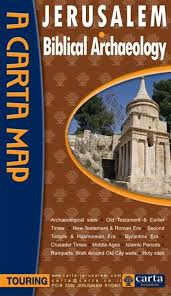
Jerusalem Biblical Archaeology: A Carta Map

map-jerusalem-carta

I so wish that I had had this map when I was in Israel. Without a doubt, I will never go to Jerusalem without it again. This foldout touring map has the same high quality that we find in all Carta products. Every biblical archaeology site imaginable in and around Jerusalem is included on this map. You could truly plan days of tours with this map in your possession.

One side of the map is in large map covering the Old City. It includes every site you’ve ever heard of and many more. It takes up half of the backside, would be easy to hold in your hand, and help you do multiple walking tours of Jerusalem. If you have been to Jerusalem in the past, you will be amazed how many things you walked by when you study at this map. I don’t know how they included so much information without cluttering the map, but each side has enough information to let you know exactly what the site is without covering up its place on the map. This would be the only map you would need on a day in the Old City.

The entire front side of the map, besides some attractive pictures around the edges of two sides, covers the greater Jerusalem area. You will need a car, but again there are so many sites. I would even encourage you to get this map if you plan to hire a tour guide as it would help you decide what you wanted to see. Remember many modern maps don’t show all of these sites. For example, when I was in Jerusalem, I had a car and I wanted to see Tell el Full, which is biblical Gibeah, the home of Saul, and I could never find it. Not far from there is Beit Hanina, or a piece of the ancient Road to Jerusalem built by the Romans, which I didn’t even know about. Both of these places would be easy to visit with this map.

The bottom half of the back of the map covers six places an extra detail: the Kidron Valley, Mount Zion, the city of David, the Hinnom Valley, Ein Kerem, and the water aqueducts that served ancient Jerusalem.

This map is fascinating. It would provide an opportunity for great study before a trip and supply the ideal map while on the trip. I give it the highest recommendation.

I received this map free from the publisher. I was not required to write a positive review. The opinions I have expressed are my own. I am disclosing this in accordance with the Federal Trade Commission’s 16 CFR, Part 255.

To buy:

http://store.carta-jerusalem.com/guides-maps/723-jerusalem-biblical-archaeology-9789652208743.html
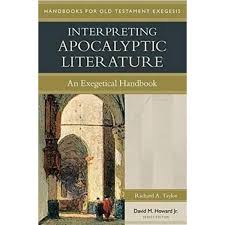
 

Interpreting Apocalyptic Literature by Richard Taylor

book-apoc

This book is the latest release of Kregel’s helpful “Handbook for Old Testament Exegesis” series, edited by David Howard. It tackles what is, perhaps, the most difficult genre in the Bible—Apocalyptic Literature. Though the volumes in this series are designed for graduate-level courses, this volume by Richard A. Taylor is accessible and reads well.

Chapter 1 sets the stage by carefully answering the question, what is apocalyptic literature. That chapter begins by explaining the importance of genre in exegeting the Old Testament. He also relates well that which most surprises the student as he reads – scholars have trouble even agreeing on what the definition of apocalyptic literature is. Taylor does give us a definition on page 33, but its paragraph length shows the difficulty of definition here. He also defines the kind of apocalyptic literature types that we may encounter in the Old Testament. Perhaps, like me, you don’t see a lot of “ex eventu” prophecy in the Old Testament as he does.

The next chapter is quite helpful as it surveys the places in the Old Testament that you encounter apocalyptic literature. He also discusses a great deal other extrabiblical Jewish apocalyptic texts. I personally find those texts to be of much less value in understanding true Old Testament apocalyptic texts than modern scholars, but every such book is bound to discuss those spurious texts.

There’s much help for the preacher in carefully defining types of figurative language you might encounter. Clearly, that type of language cannot be explained in the same manner as we do with narrative texts. From there, he goes on to explain the process of interpreting apocalyptic literature.

Along the way, you will find words well-defined, lists of other books you might need for exegesis, and examples of his method on specific Old Testament texts. In addition, there’s a very helpful glossary at the end of the book. The appendix on antecedents of apocalyptic literature would be far less help to most preachers.

Because he covers his subject in about 200 pages, this is probably the perfect book to have on the subject. Some folks might be satisfied with the apocalyptic literature chapter in a regular hermeneutic volume, but if you want more, this is the book for you.

I received this book free from the publisher. I was not required to write a positive review. The opinions I have expressed are my own. I am disclosing this in accordance with the Federal Trade Commission’s 16 CFR, Part 255.

Here’s a Deal For Carta Items–Check It Out!

Yesterday I received a review copy of Jerusalem • Biblical Archaeology from Carta. This is a wonderful resource for anyone traveling to Jerusalem, or anyone interested in the archaeology of the Holy City. The map of the Biblical Archaeological Sites of Jerusalem are printed on one side of this 2 ft. by 3 ft. map. […]

via Special offer on Carta Jerusalem resources — Ferrell’s Travel Blog

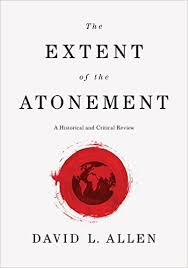
The Extent of the Atonement by David Allen

book-atonement

Here is an encyclopedic treatment of the oft debated topic of the extent of the atonement. In particular, it’s a refutation of the limited atonement. To be sure, it’s focus is the atonement and not the totality of the Calvinistic system. This book really serves two distinct purposes. On the one hand, it makes a case for a universal atonement, while on the other hand, it presents an exhaustive history of what has been believed on the subject in the past.

The historical research done is mind blowing. I can hardly believe the volume of pages of reading that would’ve had to have been done to pull it off. No matter which side of the issue you are on, you must appreciate all the historical research that has been marshaled into one place for us.

Though I agree with the author in holding a universal atonement position, many things I learned here were a surprise to me. I already knew that there was no known precedent for the limited atonement in the church fathers, so my surprise came in the Reformation era. The biggest shock was that John Calvin himself did not hold to a limited atonement. In fact, we can find no historical proof of it before Beza. I was further shocked through the next several chapters to find several Calvinistic theologians that I knew did not hold to a limited atonement even if they did the other elements of Calvinistic theology.

Mr. Allen, in my view, presented some compelling exegesis and logical argumentation throughout the book. I felt he was honest with what his research uncovered. If the theologian he studied made any statements positive toward a limited atonement, he readily admitted it. After reading this book, it will now be an encyclopedic resource for me when I want to look up a theologian to remember his position on the limited atonement.

After he completed his historical review, he reviewed in-depth the most popular, common, new title presenting the limited atonement, “From Heaven He Came and Sought Her.” I felt he answered it beautifully, without superficiality or generality, and was quite successful. His closing chapter on why an unlimited atonement is important made an excellent conclusion.

The only negative thing that I noticed in this fine title is that I fear it is more likely to rile than persuade his opponents. At times, he would take his opponents to task for being over-the-top in their statements and would turn around and be overly harsh to them on the same page. Remember it seems that way to me, and I was on his side as I read.

Still, this book is a tremendous resource. It offers outstanding history and makes salient points that may be tough for those who hold to a limited atonement to answer. I highly recommend it.

I received this book free from the publisher. I was not required to write a positive review. The opinions I have expressed are my own. I am disclosing this in accordance with the Federal Trade Commission’s 16 CFR, Part 255.

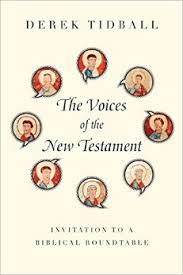
The Voices of the New Testament by Tidball

book-voices

At first glance this is a book idea that seemed a little cutesy, or at least that’s what I was thinking. In fact, this idea of having the different New Testament writers discuss theology as if they were around the table seemed like a gimmick. It wasn’t until I actually read the book that I found it to be a unique and engaging way to think about how doctrine is presented in the New Testament.

Derek Tidball’s first chapter gave a good, brief overview to the different approaches to New Testament theology. When he discusses the authorial approach, you can’t help but think how many such works set the writers of the New Testament against each other almost as competing voices for Christianity. That is not the case here. Besides an imaginary Chair and observer, his panel is made up of Luke, James, John, Jude, Mark, Matthew, Paul, Peter, and the Hebraist.

In chapter 2 he goes big picture and discusses the common thread of the New Testament as being the Good News. It’s in this first chapter of the panel going at it that you find out just how interesting and helpful this work is. The quality is maintained all the way to the end and the great doctrines of the New Testament are gone through in a very logical sequence. The amazing part is that this method actually reads much better than many other such theologies.

In addition to the theology, you get a great picture of the emphasis of each New Testament writer. For example, if you were study in Matthew you can go through this book and read Matthew’s statement in each of the theological discussions and you have a good idea of the uniqueness of the book of Matthew. Not only does this book read well, it lends itself to future consultation on a variety of New Testament subjects.

You won’t agree with every single theological description in this book, but you will get a conservative, Scripture-affirming treat for your studies. To my mind, this volume can take his place among much larger works on our shelves and I highly recommend it.

I received this book free from the publisher. I was not required to write a positive review. The opinions I have expressed are my own. I am disclosing this in accordance with the Federal Trade Commission’s 16 CFR, Part 255.

Jonah (ZECOT) by Kevin Youngblood

book-jonah

What a commentary! Having read in the past most of the major commentaries on the Book of Jonah, I feel this is a standout volume. This book is the first ZECOT volume that I have used, but if future volumes are of the same caliber, this series will become one of the top choices for Old Testament study.

Don’t let the subtitle “a discourse analysis of the Hebrew Bible” throw you off and assume this is some esoteric angle that would never appeal to a pastor. This discourse analysis approach simply means the story of the entire Book of Jonah and the flow of the narrative are always kept front and center in the verse by verse comments. Frankly, that approach works and is well done.

I loved that the series introduction confessed that all Scripture is God-breathed while the author’s preface declared the Book of Jonah a masterpiece. If you use a lot of commentaries, you will especially appreciate the ones where the author is in love with the book of the Bible on which he or she writes. Mr. Youngblood certainly came across that way to me.

Mr. Youngblood’s introduction to the book of Jonah struck me as being of the perfect length and depth. He discussed the usual suspects – placement in the Canon, historical context, literary context, and an outline – with verve. Much of the information was of the kind that really aids one preaching on Jonah. He beautifully wove in his discourse analysis as well.

The commentary itself is superb. Again, he always keeps us grounded in the context at large. Still, he draws out the needed background, word meanings, and other important detail. At the end of every periscope, there is fine theological reflection.

As an added bonus, this is an attractive volume. The layout is ideal and eye pleasing while the charts and maps really add something helpful. Simply put, this volume is my new favorite exegetical commentary on the Book of Jonah.

I received this book free from the publisher. I was not required to write a positive review. The opinions I have expressed are my own. I am disclosing this in accordance with the Federal Trade Commission’s 16 CFR, Part 255.

Hebrews (NIGTC) by Paul Ellingworth

book-hebrews

Eerdmans has breathed new life into this reputable commentary by this new release in a more economical paperback edition. Now pastors and students can afford to have this major exegetical commentary on their shelves where it belongs.

This work is massive. Encyclopedic comes to mind when you consider all it offers in its over 750 pages. Scholars will pour over every line while pastors will likely focus on the paragraphs that aid in exegeting the passage.

Its 88-page Introduction covers well all the issues you would expect in a major commentary on a book of the Bible. He carefully goes through all the options for authorship and cautiously supposes that Apollos is the best guess. He examines carefully the first readers, destination, and date of this book. He briefly and carefully lays out the canonization of Hebrews and highlights the obvious use of the Old Testament throughout the book. When he discusses literary structure, he covers in detailed fashion what has been thought before. He discusses theology, purpose and occasion, and ends His Introduction with a few pages for the specialist on the text of Hebrews.

In the commentary proper he gives incredible detail. This commentary’s greatest strength (detail) might also be its greatest weakness as sometimes the trees get more prominence than the forest. Still, if you were building a major exegetical library, how could you possibly be without it? Further, it can give you the detail you will need to make your own decisions.

You may find places as I did where you could not agree with Mr. Ellingworth, but you will find it a serious resource. I recommend it.

I received this book free from the publisher. I was not required to write a positive review. The opinions I have expressed are my own. I am disclosing this in accordance with the Federal Trade Commission’s 16 CFR, Part 255.

The Book of Isaiah and God’s Kingdom by Abernathy

book-isaiah

Here’s a book that digs deeply into the meaning of the book of Isaiah. Andrew Abernethy believes that seeing the kingdom in the book of Isaiah is the key to discovering its meaning. I believe that you, as I, will come to believe that he made an outstanding case for what he believes to be true about the concept of the kingdom in Isaiah. This volume makes a great addition to the New Studies in Biblical Theology series published by IVP and edited by D. A. Carson.

In the Introduction, he points out how words about the king in the kingdom are found all through the book of Isaiah–far more actually than most of us realize. He states that he wants to frame the entire study on: God the King, the lead agents of the King, the realm of the kingdom, and the people of the King.

Throughout the book, he approaches how Isaiah covers the concept of kingdom in its three main sections (1 – 39, 40 – 55, 56 – 66). He begins in the incredible vision of God in Isaiah 6, and though that is a familiar passage to most Bible students he points out examples of the concept of kingdom where we might have missed them.

Though he makes interesting, conservative observations throughout the book, there are places where I would not be able to agree with him. His handling of Isaiah 7:14, for example, is not something I could fully agree with.

The ultimate praise that I can draw from this book in this review is that I will never again read the book of Isaiah without thinking of the concept of God’s kingdom. When the author accomplishes what he sets out to do with the reader, as he has done with me, he obviously has succeeded. Therefore, I highly recommend this volume to students doing an in-depth study of the book of Isaiah.

I received this book free from the publisher. I was not required to write a positive review. The opinions I have expressed are my own. I am disclosing this in accordance with the Federal Trade Commission’s 16 CFR, Part 255.

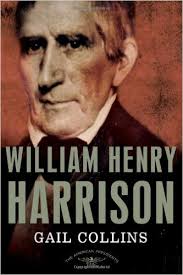
William Henry Harrison by Gail Collins (Presidential Bio Series)

book-harrison

William Henry Harrison is the president who never had a chance to building a legacy as he died one month into office. We at best can guess what he might have done. Believe it or not, he is still part of only four families (Adams, Roosevelt, and Bush being the others) to have two occupants in the White House as his grandson Benjamin would later be president.

His real claim to fame was the Battle of Tippencanoe and the War of 1812. In fact, he was an older man whose career seemed over when the presidency came calling. He seemed a devoted family man and was father to many children.

Gail Collins outlined the bare facts of his life, and was a fine writer, but she was totally out of sympathy with him. As with most in his generation, he walked a tightrope on the issue of slavery and that was enough for Collins to completely write him off. Her boorish portrait was not substantiated by facts.

I have looked deeply to trace out the religion of each president on my journey to read a biography on each president. She never once mentioned his religion and I checked the index when I finished just in case I missed something–nothing!

Though this book is part of the reputable American Presidents Series, I wish I had chosen a different volume. While he may not have been one of our outstanding presidents, I feel he was far more a decent man than presented here.

The Attributes of God: Volume 2 by Tozer

book attributes.jpg

When you have Tozer on the Attributes of God you have Tozer at his best. Perhaps you have read his “Knowledge of the Holy” and found it one of the most amazing books you have ever read as I have. This volume, along with the corresponding volume 1, cover the same territory but with a more conversational and devotional approach. It is profound and worth reading even if you have read “Knowledge of the Holy.”

After an Introduction that talks about God’s Character in general, Tozer presents ten of the attributes in ten in-depth chapters. These attributes cover God’s self-existence, transcendence, eternalness, omnipotence, immutability, omniscience, wisdom, sovereignty, faithfulness, and love. There’s not a clunker in the bunch as I found meaning, warmth, and enlightenment in every chapter. You always get the feeling that you were reading a man who knew the Lord in the way you wanted to.

This edition by Moody has over 100 pages of a study guide by David Fessenden that really help readers dig into this volume. Mr. Fessenden is clearly well versed in Tozer’s writings and often quotes his other volumes to illumine the text here.

I highly recommend this volume. It is a true must-have volume!

I received this book free from the publisher. I was not required to write a positive review. The opinions I have expressed are my own. I am disclosing this in accordance with the Federal Trade Commission’s 16 CFR, Part 255.