The Mystery Solved On Why Republicans Failed a To Stop The Iran Deal

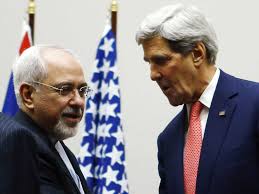
iranThough I am learning to continually lower my expectations, I have been mystified on why the Republicans were so inept at fighting the warped Iran Deal.  I mean, we have an unpopular President and the public seems fairly skeptical. Even in purely political terms, what a chance for the opposition party (Republicans) to land a blow on the President. Politicians rarely miss such opportunities. So again, I have been totally unable to figure this one out.

Finally, I came across an article from National Review (Shared below). Though they are known famously as a conservative magazine, they are much more reputable than many others that might, for example, show up on your Facebook news feed. The answer to the mystery is sad, though, perhaps, not a shock.

Read there about how companies like Boeing, which would profit enormously from the Iran Deal, makes hefty contributions regularly to Republican senators. Then see how they months ago passed a bill that gave President Obama the authority to lift sanctions unless the Senate passes a Resolution against it. Of course they knew they couldn’t. Here is the sick part–they set up a way to appear to be against it now publicly by voting for the Resolution now knowing it wouldn’t pass. They can even gripe about what they helped put it place to appease the folks at home.

This deal is one of the worst in our nation’s history. It helps a rouge nation get nuclear weapons. It puts Israel, our ally, in grave danger. As a Christian, I believe God frowns on it. This shows the low place where our country is spiritually. Corruption runs deep.

I encourage you to read the article for yourself:

National Review Article

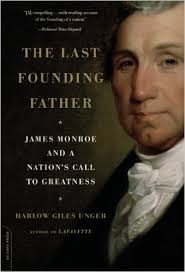
The Last Founding Father (James Monroe) (Presidential Bio Series)

james monroe

Harlow Giles Unger gives us a lively easy-to-read volume on President James Monroe here. His subtitle “James Monroe and a Nation’s Call To Greatness” shows his belief that Monroe’s presidency was great times for our nation. That Monroe was our last Founding Father is open to debate and may depend on how you define it. Had Mr. Monroe died before 1800, I doubt he would have been thought a Founder.

In any event, he was the first Revolutionary War veteran since Washington, and for that matter, the last. A young man in Washington’s army, and one with close experiences with Lafayette, he was even seriously wounded in the line of duty.  He loved Washington but came under the spell of Jefferson and became one of his protegees. To be fair, he was protegee number two after Madison.

He had the same Virginia background as three of his four predecessors, including money problems, the typical troubles of one trying to be somebody in Virginia, and being a slave owner. Like them too he had some troubled family members. The difference was that he was not really born into this life and aspired to it, including the slavery. He left nothing for us to know his religious beliefs.

He career as Virginia’s governor and his time in France was productive. He showed initiative and had to make decisions in those days where communication across the Atlantic was so slow. Unger well highlighted his many accomplishments.

The flaws of the book were usually to do with getting carried away praising Monroe. He paints an inaccurate picture of James Madison being incompetent and Monroe carrying him the last two years of his presidency. Besides Monroe he seemed to praise only Washington and even suggested Monroe was another Washington in many ways. A biography where the biographer comes to really respect his subject is often a good read, but this one got carried away.

On the plus side, I left this volume feeling I had underestimated Monroe. He actually was one of the good ones. His time in office was greatly prosperous and he greatly aided the expansion of our country. His end in poverty and ill health was sad.

There must be a better biography of Monroe somewhere, but it would likely have to work hard to be as entertaining as this one. Here is a pleasant read.

Find other review in the series here.

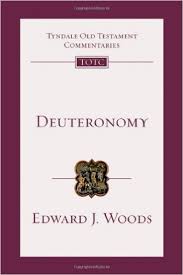
Deuteronomy (TOTC) by Edward Woods

deuteronomy

Here is another replacement volume in the venerable Tyndale Commentary series. This volume replaces the 1974 volume by Thompson and is superior to it. This bodes well for the Tyndale series holding its high place among commentaries.

Woods gives a lengthy, for this type series at least, Introduction. My favorite part is that the author’s love for Deuteronomy shines throughout. These type make the best commentary reading. His case for Deuteronomy being pivotal is well done and convincing. His discussion on authorship touches the scholarly bases without falling for their excesses.

His description of literary features is illuminating. His comparison to law codes may seem a little overdone, but too many scholars discuss it for him not to mention it. His expansion of comparing Deuteronomy, and particularly the Ten Commandments in Deuteronomy, to the rest of the Pentateuch was helpful. Finally, his discussion of theology was the best part of the Introduction. It really helped put Deuteronomy in perspective.

The Commentary proper was helpful, thoughtful, and never trite. This will be a fine volume to consult for years to come. I highly recommend it.

I received this book free from the publisher. I was not required to write a positive review. The opinions I have expressed are my own. I am disclosing this in accordance with the Federal Trade Commission’s 16 CFR, Part 255.

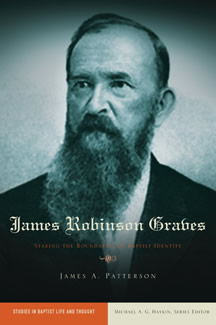
James Robinson Graves by James Patterson

j r graves

Here is a man probably not known by many today, but who had an incredible impact on Baptist thought in America. This biography tells us of the man and we see the development of Baptists clearly as well. He particularly molded the early Southern Baptist Convention. His career was mostly as a Baptist editor and he spent his life battling for his views.

Mr. Patterson, a Baptist professor, dug deep to make this scholarly contribution. Though the scholarly style may repel some, his contribution is likely to always be the definitive volume.

He also traces the actual viewpoints that still show up in some circles that are called Landmarkism. Though Graves picked up thoughts in several places, it was his writings that put Lankmarkism on the map. Very few people believed his view on Baptist succession and rigid church and baptism beliefs before he popularized them.

Patterson shows that these beliefs matched the political thinking of the times. As a biographer, he went to great pains to be fair to Mr. Graves. The problem was, however, that Mr. Graves makes that hard to do. Mr. Graves was so rigid and harsh he failed to keep the testimony he should have held to have the ear of so many.

Frankly, the book is fascinating if you have ever been part of the Baptist world. In fact, I don’t know how we could understand Baptists accurately today if we did not know what this biography told us. I highly recommend it.

I received this book free from the publisher. I was not required to write a positive review. The opinions I have expressed are my own. I am disclosing this in accordance with the Federal Trade Commission’s 16 CFR, Part 255.

History Repeating Itself (IBTR #76)

history

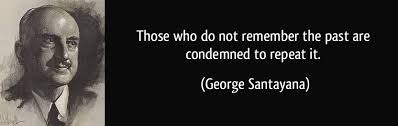
The old adage that those who don’t learn from history are doomed to repeat it shows up in ever unexpected places. Perhaps you are like me and lament the ugly bickering and outright attacks so prevalent in the Independent Baptist world today. I still find people expecting me to spew out current names in this series where I have decided to only write about issues because that is simply what is always done. What names I do want to mention here are Baptists who lived in the 1800s whom I have just discovered blazed a trail we regretfully have followed.

Reading a book to review as I often do, I stumbled upon the life of James Robinson Graves who had a pronounced influence in the early days of the Southern Baptist movement. I assure you his impact upon Independent Baptists today is equal to that upon Southern Baptists.

He is known for being the founder of Landmarkism. That teaching involves a belief in Baptist succession and a corresponding strong denominational identity. Though there are several points of his teaching that I would strongly disagree with, that is not the trail he blazed that I want to address except in one specific way.

It was his deciding what was Baptist and his relentless criticism of those who disagreed with him. Though he had a few short pastorates and did some evangelistic work, his career was defined by his publishing of Baptist periodicals where he strongly sought to sway Baptists to his way of thinking. While some good things have come out of Baptist periodicals, can you imagine the character assassinations and rank sin that has also been propagated by that method?

Perhaps his greatest contribution was championing the Baptist foundational thought of the autonomy of the local church and soul liberty that, though it sounded at times like a Jeffersonian republicanism or even a Jacksonian populism, still resonated truth springing from the priesthood of the believer. Strangely enough, his overboard attacks on those who disagreed with him was a direct denial of that soul liberty he at times articulated so well.

His battles consumed his ministry. He was engulfed in a battle with his pastor at the First Baptist Church of Nashville, who strongly disagreed with his Landmark teaching, and it turned rather ugly. Neither he nor the pastor looked very Christian by the time it was over. Finally, he was churched and left and started a church with a few others that he said was the true First Baptist (so much for church succession!). It is always surprising what we can throw out the window in an ugly battle and be so blinded to our own contradictions.

He sank into criticism. He tried to uphold truth with the unworthy tool of scorn. He attacked everybody who disagreed in any way. He attacked the Catholics. Then he attacked the Protestants as if they were no better. (Really?) Finally, and inevitably, he attacked other Baptists derisively calling them Pedobaptists. Catholics, Protestants, and other Baptists all equally corrupt because they did not agree with him on every point!

So, see what I mean? I won’t mention any current names, but Mr. Graves appears channeled in the breast of several others today. Just because we claim an issue is life and death and requires unquestioned acceptance does not make it so. I couldn’t help but notice how Mr. Graves proclaimed that he was being true to God’s Word without actually showing us. It certainly does not legitimize our pathetic unchristian behavior toward one another either.

Carry this historical tale to its end. History still loves to repeat itself. The Civil War came and his publishing business crashed. It could never get back to where it was before the war after hostilities ended. Ever notice how so many of these men or cliques crash before their ministries actually end? They seem to fragment, if not disintegrate completely. Check the periodicals, etc. of the 1970s, 80s, or 90s. See a difference? What do you suppose will happen in 10 or 15 years? Probably some new Independent Baptist will pick up the mantle of Graves while some others fade stage left.

Will we ever learn? If not, history stands ready to remind us.

Find all articles in the series here.
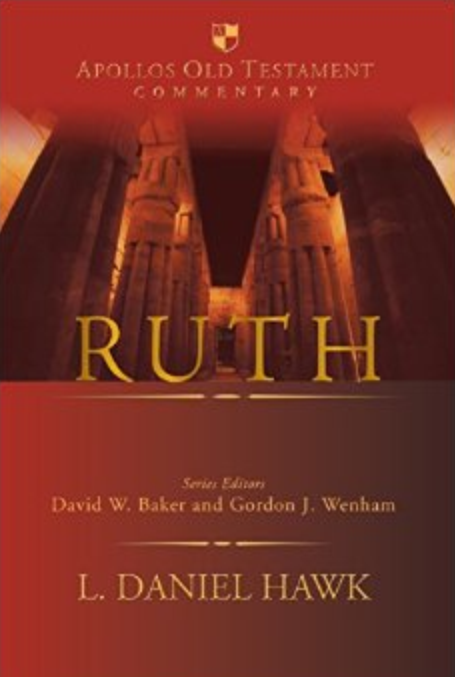
Ruth (Apollos Old Testament Commentary) by L. Daniel Hawk

Here in the latest of the fine Apollos Old Testament Commentary series published by IVP we find a surprising volume solely on the little book of Ruth. Though often attached to Judges in the commentary world, this book is often more loved and well known than its larger companions. Most Christians love studying Ruth. Daniel Hawk gives us a thoughtful volume on Ruth that, in my judgment, takes its own track. In analyzing structure he reads ethnicity as a key component to understanding Ruth. While there are theological points to the Israel versus Moab points of the story and the ironic turn of events, I cannot personally elevate that as highly as he does as the crux of understanding Ruth. Still, it highlights points other commentaries miss.

His Introduction covers the normal territory and he well summarizes what scholarship has so far thought. His discussion on how some classify the book—true story, idyll, novella, folk tale—only reminds me that such discussions would never have arisen had not scholarship decided to attack the historicity of the Bible in generations past. While I agree with his assessment that Ruth “resists classification”, I wish he had given a stronger word on its complete veracity.

What is valuable is the perceptive observations he often makes that you can use as a takeoff to study. For example, he says, “While the narrator begins and ends with males, the first and last characters to speak in the story are women.” I found myself underlining many such observations in both the Introduction and the Commentary itself.

This volume would not be my first choice on Ruth, but I count it a helpful additional resource and well worth having. The Apollos continues to shape up as a fine series.

I received this book free from the publisher. I was not required to write a positive review. The opinions I have expressed are my own. I am disclosing this in accordance with the Federal Trade Commission’s 16 CFR, Part 255.

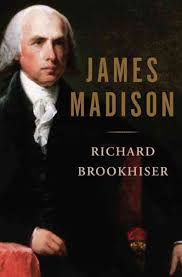
James Madison by Richard Brookhiser (Presidential Bio Series)

madison

Prolific writer Richard Brookhiser tackles President James Madison in this short biography. Though the writing skills I have come to respect in Brookhiser are present, this volume is not quite as good as the others of his that I have read. As a biography, I did not think it was as good as David Stewart’s “Madison’s Gift” either.

The book begins with a riveting retelling of the British marching on Washington during his time as President. Then, it backed up and took the story chronologically. When you finally got back to that point of his life’s story, you could never figure out what device the author had in mind by opening the book with it. I thought of it as a missed opportunity.

Still, the prose is agreeable and the reading easy in this volume. While the biography is not standout, his premise that Madison brought us the partisan politics that since has defined us was much more successful. Some think he overstated his case, and surely Jefferson had a role, but he was an essential element as Brookhiser proves.

This is not my first choice for Madison, but still a fine read.

Find all others in this presidential series here.

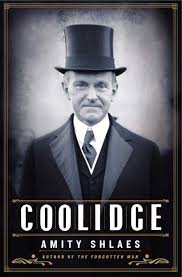
Coolidge by Amity Shales (Presidential Bio Series)

coolidge

Here is an awesome book bringing to life a man I have wanted to know ever since I heard he was a role model of Ronald Reagan. Shales was a good biographer who stepped out of the way and let us know Cal.

In her deft hands, the simply telling the story helped us see that Coolidge was a good man. He was ever motivated by principle and was, perhaps, the least politician who ever sat in the office.

He was a hard worker, and especially tireless in going after budget cuts. The country and the economy thrived in his time in office.

Shales shows us his full orbed personality. He likely was a little harsh at times. His moniker of “Silent Cal” was no exaggeration. He was a little jealous of his beautiful wife too, but he clearly adored her. Shales related one strange episode where his wife and a secret service agent got lost hiking. He exploded and the agent was transferred. It did seem he was at least a nominal Christian.

He seemed to be the perfect President for his times and you wonder if he would have done quite as well at other times. He handled the Boston Police Union strike in such a way that perhaps he could have well handled a major foreign policy crisis, but we will never know as he was spared that in his term.

I did get the feeling that he would have better handled the Depression than Hoover, as he fully realized the market was overvalued in his day.

I came to really like this man and came to love this biography along the way too. This is a real winner.

Read all in the presidential series here.

The First American Evangelical: A Short Life Of Cotton Mather

mather

Have you fallen prey to the prevalent misconception that Cotton Mather was the moralistic, harsh perpetrator of the Salem Witch Trials? If that is the case, you do not really know the man. Author Rick Kennedy takes us to the heart of the man and Mather is, in fact, a man worth knowing. Kennedy succeeds in a short biography at what some massive tomes can’t even deliver—a winning biography that is enjoyable to read and brings life to the subject.

I must confess that I came to greatly admire Mather by the end of this book. His faith was real. Though he worked at scholarly efforts on many occasions, he never lost his full confidence in God’s Word. He was in no way a fake. He was sincere in his home and ministry. The members of his church loved him and stood by him all his days. His faith was tested and stood as he buried 13 of 16 children and 2 of 3 wives.

Kennedy makes a good case that Mather is not the last American Puritan, but rather the first American Evangelical. He had only a cursory involvement in the Salem Witch Trials, but has had his reputation altered by a disreputable rival.

You will see just how good this book is in the first chapter entitled “The Pastor’s Study”. While that title may bore you, I have never come to know someone better in the first chapter before. The scene he draws is vivid and makes the study a vibrant place.

He doesn’t hide Mather’s weak points. He almost took his thoughts on angels too far. He relentlessly promoted his own books. His last marriage had problems and he always had trouble managing his own finances. All these things only made him real. The fine man remained. I simply loved this book!

I received this book free from the publisher. I was not required to write a positive review. The opinions I have expressed are my own. I am disclosing this in accordance with the Federal Trade Commission’s 16 CFR, Part 255.

Holman Illustrated Bible Commentary

holman

As a pastor I think I have found the perfect resource to recommend to folks serious about studying the Bible–this new whole Bible commentary by Holman Reference, edited by E. Ray Clendenen and Jeremy Royal Howard. This volume is perfect for the person trying to read the Bible but struggling with certain passages. Even if you have been studying the Bible for years, you will still find this a real asset.

You have some measure of commentary on every verse. It may not give all the detail you would want on that verse (no one-volume commentary can), but you can at least grasp the general idea. There are fine maps as you see in other Holman resources as well interesting pictures. It really has a nice look.

While I do not know the names of all the contributing scholars here, I see many that are known to be outstanding scholars. Each book gets a short background, themes (message and purpose), how it fits in the Bible as a whole (Contribution to the Bible), and Structure. These are well done.

The only thing missing is an Introduction to the Bible as a whole or of each Testament, but no volume can have everything.

I highly recommend this commentary!

I received this book free from the publisher. I was not required to write a positive review. The opinions I have expressed are my own. I am disclosing this in accordance with the Federal Trade Commission’s 16 CFR, Part 255.