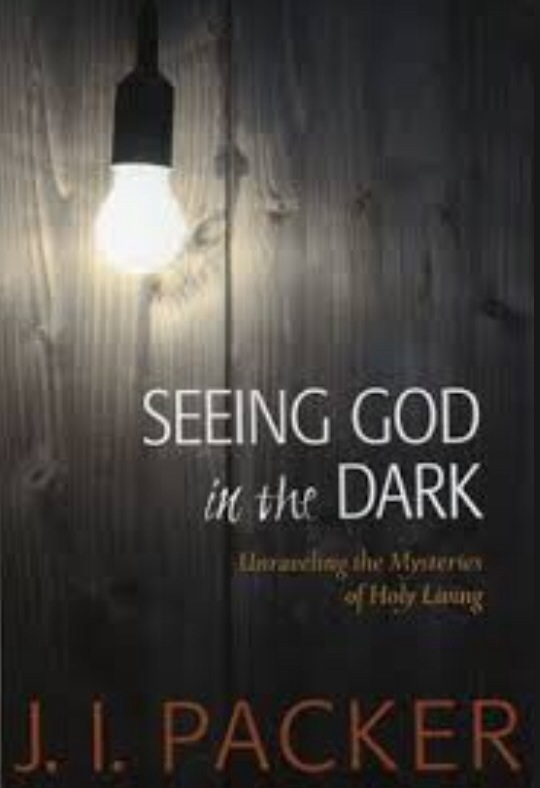
Madison’s Gift by David O. Stewart

Here is a brilliantly executed volume on one of our most underrated Presidents, James Madison. Madison was a man little of physical stature, one that stood in the shadows of Washington and Jefferson, but who did more heavy lifting on what our Constitution actually says than anyone. A diligent student and a tireless worker, Madison earned the label “Father of the Constitution.”


Instead of a cradle-to-grave standard biography, Mr. Stewart gives us his life through the lens of the five key relationships of his life. In that every life is probably partially defined by our five closest relationships, this volume succeeds in bringing Madison alive. 


His relationship with Washington was interesting in that he would have been considered Washington’s protege, but that relationship changed as Washington focused on holding the Union together while Madison increasingly focused on the political party he helped form. The writing here is so good you find yourself sad that the relationship was what it was by Washington’s death.


With Alexander Hamilton, you are shocked again as you read of their close association, common goals, and joint writing of The Federalist Papers giving way to being key leaders of rival parties.


Jefferson and Madison were soul mates and of equal intellectual powers. You will read of the unwavering friendship where Madison always gladly deferred to Jefferson.


The most shocking aspect of his relationship with James Monroe is how often they had a falling out only to be great friends again.


With Dolley, he found the perfect wife for what he did with his life. Though he married late, you will see how well she complemented his work.


I thought this approach to Madison would be a chronological nightmare for the reader, but Mr. Stewart’s writing washed that fear away.  I feel I know a lot more about what made Madison tick and must rate this volume a winner!

I received this book free from the publisher. I was not required to write a positive review. The opinions I have expressed are my own. I am disclosing this in accordance with the Federal Trade Commission’s 16 CFR, Part 255.  


Be looking for a post on presidential biographies coming soon.

IMG_2437

Acts (EP Study Commentary) by Guy Prentiss Waters

Looking for a solid commentary on Acts aimed more at expositional help rather than just exegetical detail? You ought to check out the new EP Study Commentary volume by Guy Prentiss Waters. That is not to say that it isn’t exegetically sound, but that it is written in a way at once interesting and clear.


The Introduction is short but gets you going in the right direction. Mr. Waters writes from both a reformed and amillennial perspective, and though that is not my own viewpoint, I still recommend this volume anyway because of the perceptive comments he so often gives. In fact, I have a growing appreciation for this series as a whole, though I only have a few volumes, because of its warm-hearted approach. As with the series, this volume is particularly pastor-friendly.


Perhaps the best commendation I can give it is the nuggets I found myself underlining as I perused it. Yes, I found some paragraphs that I disagreed with, but I never failed to see one who loved our Lord, His Word, and the Book of Acts in particular. The application was of the sort one hopes to find in preaching. The commentary length is ideal as well.


I appreciate the exegetical commentaries and use them often, but it is volumes like these where the reading turns pleasant. I wholeheartedly recommend it.

I received this book free from the publisher. I was not required to write a positive review. The opinions I have expressed are my own. I am disclosing this in accordance with the Federal Trade Commission’s 16 CFR, Part 255. 

Check out many other commentaries here


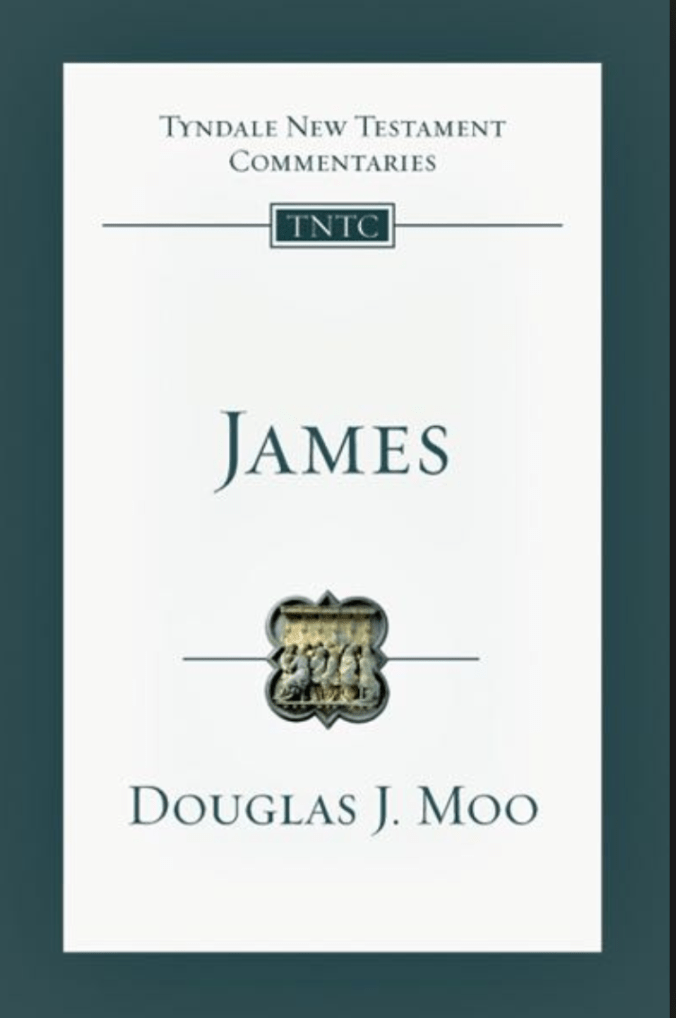
James (Rev. Ed.) [TNTC] by Moo

Tyndale Commentaries (IVP) continues its quest to revise its venerable Old and New Testament series. With a few Old Testament volumes already out, this volume is the first one for the New Testament. In this case, the editors chose to retain well-known scholar Douglas Moo. Although it is not a major revision (some paragraphs are unchanged), Mr. Moo is an active scholar who has also written a larger commentary on James as well as several others. The editors made a good choice here.

As we have come to expect from this series, the introduction is succinct and appropriate. All the key issues are brought up and made sense of. Authorship, background, date, structure, and theological emphasis are all well covered. I found myself agreeing with many of his conclusions.

In the commentary, each passage is discussed in terms of context, commentary, and theology. That format is ideal to help grasp the meaning of the passage. The help is more substantial than many of the briefer commentaries out there.

In the key test in evaluating the value of any commentary on James, this volume succeeds in making friends of Paul and James and their respective theologies. Both in the Introduction and the commentary proper, Mr. Moo, with clear analysis of the theological points and probing interaction with the text itself, makes his case.

Of course there is much more to James and this volume handles it well too. This is a solid commentary.

I received this book free from the publisher. I was not required to write a positive review. The opinions I have expressed are my own. I am disclosing this in accordance with the Federal Trade Commission’s 16 CFR, Part 255.    


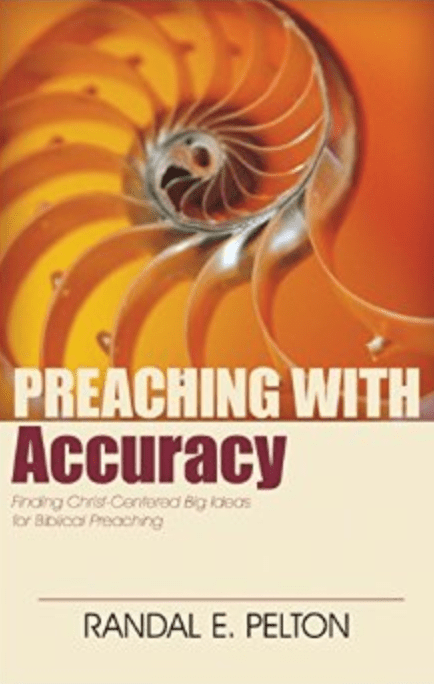
Preaching With Accuracy by Pelton (Books on the Ministry #17)

Do you ever struggle with how to get to the bottom of a text while being true to its context? It is an area where we can use a little help as so much preaching today totally misses the mark. Here is a book by Randell Pelton, and published by Kregel, of manageable length to help us in that endeavor. If you read the detailed footnotes, you will double the length and depth.

Mr. Pelton traces out the particulars of his own method, but you would not have to rigidly follow his steps to glean from this book.His Introduction clearly lays out his philosophy of true preaching and how he will discuss it. Chapter 1 is a passionate plea to show that expository preaching still works. He shows how a seeker-sensitive approach has changed preaching for the worse–we have morphed into little self-help talks that obscure the vibrant power of Scripture. He also gives guidance on picking Scripture portions to preach and explains how to “cut” the text.

The bulk of the book defines his method. If you have preached long enough to have settled into your own pattern, for the better or worse, as I have, you can still get great insight here. The point of any such method is to be true to Scripture and say in context. He has his own terminology, but it is mostly watching the context both near and far. I loved his guidance on preaching the OT (sensus plenior).

His last point is focusing on a Christ-centered hermeneutic as the final point of context. He feels Tim Keller is the role model here. His goal is to avoid moralistic preaching and stay Gospel-focused. This can be overdone, in my view, as some portions of Scripture have a true ethical or moralistic component, but that Christ is our only hope to live it is also valid.

A good reminder for seasoned preachers, and a great help to less experienced ones, this volume deserves high ratings.

I received this book free from the publisher. I was not required to write a positive review. The opinions I have expressed are my own. I am disclosing this in accordance with the Federal Trade Commission’s 16 CFR, Part 255.    

Find all books in the Books On The Ministry series here.


Misconceptions About The Truth Revolution (IBTR #63)

Being misunderstood is a risk with any passionate writing. Misconceptions will almost always arise when dealing with painful problems. The status quo will always have its champions. To do good on any level will always strike someone as evil. Such is life.

In this Truth Revolution, from the day I penned the first article, I went in with both eyes open. Perhaps you think me ill advised, but I was not naive. I knew. I always knew what losses might follow the gains I sought. I counted the cost, understood the calculated risk, and wrote the series anyway. I used the picture of Revolutionary War soldiers in the original article for a reason. Forgive the illusions of grandeur, but I saw myself writing like the Founding Fathers did. They paid and so could I. (On the other hand, I never saw myself as that big aimagevoice–hopefully just one small voice in a growing number of voices.)

I offer no apology. I have no regrets for what I have written. I am sure it could have been better in ways, but I will stand by it, such as it is.

Still, misconceptions by good people can happen, just as logical criticisms can be offered up. I would like to address a few.

1. You Give Fodder To All Who Attack A Pastor.

While I have written extensively about pastors or leaders abusing people, that in no way denies that people can sin grievously against a pastor. I am a pastor and have had that experience before myself. Every situation must be looked at honestly, carefully, and Scripturally. Still, we must realize that the extra authority of leadership also demands greater cost, even putting up with more. Our accountability must, then, be higher. We can do more damage from a position of authority than those who do not have it and that must be taken into account.

2. You are hurting Independent Baptists.

I remain convinced that those of us who address our problems instead of acting as if they do not exist do Independent Baptists the most good.  My goal is not to destroy but to salvage. Still, my first prerogative is to be true to Scripture and Christ. His Name is more important to me than the name Independent Baptist. As it turns out, there is no shame besmirching His Name while there is in too many of the groups in Christianity including our own.

3. You are encouraging those leaving the Independent Baptist world.

I am aware some are leaving. There have even been a few isolated cases, I am told, where someone hands a printout of one of these articles to a pastor while walking out the door. That was not my original purpose, but even if it is done in a case where the church member is wrong that no more makes this series look bad than someone quoting the Bible out of context makes the Bible look bad! We must remember, too, that people leave. We must let them leave without harassment. It is only cults that do that! Letting them leave in peace is normal and allows them to more easily come back if they ever choose.

4. You are harming the good pastors.

One of the really good guys said, “how are if ever going to get out from under this if we keep discussing it.” It can only hurt us, though, if we are guilty of it–that is the beauty of “independent.” When we pastors are faced with criticism, we have a process to go through. First, we must examine ourselves to see if it is true, and if it is, we should fix it. If it is not, we must let it go realizing that we are partaking in the sufferings of our often-critiqued Savior. The truth is, we should just do right and lies won’t stick except with folks who have issues anyway. Let’s treat our flock with such love that any discussion of abuses could have no effect on our people because they know better about us. Lies can never alter truth anyway.

5. Do you even think you are accomplishing anything worthwhile?

I am not in a position to know the lasting effects of this series. It probably will be completely forgotten in ten years. I get letters from people who say it has helped, but that is, I know, anecdotal evidence at best. Maybe it helps a few; is that worth it?

I will just leave that to the Lord.

Find all articles in the series here.

Dead Wake by Erik Larson

The last crossing of the Lusitania gets a vivid, dramatic telling in this superb volume. This was my first go with Mr. Larson, but I found his writing matched the superlative blurbs I’ve seen for his other books. My knowledge was limited on the Lusitania, so learning and exciting reading met together here.


The book never drags and is filled with tension throughout as you know what is coming. We meet several of the passengers, see the dynamics of personality of Captain Turner, and back office workings of the Cunard ship company. You get to know them to the point that their fate during the actual sinking is high drama. The scene of the dead wake itself, the torpedoe coming across the water and being seen by many, is well done too.


 We learn of Room 40 and what the Admiralty, including Churchill, knew about the U-boats. They could not tip their hand and risk losing the Germans knowing about the codes that they had broken. Then, from German records of the captain of U-20, we watch the story unfold from their perspective. We learn too of complications because of war that added to the horror of the event that could have possibly been avoided. 


In a few paragraphs here and there President Wilson’s story is brought into the story. You will be convinced his budding romance had a great effect on what he did during these critical events.


Though this volume can hold its own with a great novel, I truly believe it passes the test of being well researched as well. Though Mr. Larson made some good conclusions, he seemed to strive make you and I able to make our own. The book succeeded on every level (except the attractive book needed pictures) and I highly recommend it as 5-star plus!

I received this book free from the publisher. I was not required to write a positive review. The opinions I have expressed are my own. I am disclosing this in accordance with the Federal Trade Commission’s 16 CFR, Part 255.    


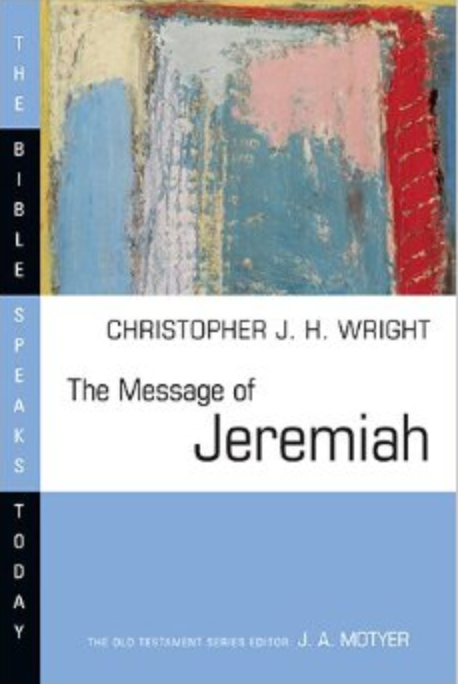
The Message Of Jeremiah (BST) by Chistopher Wright

Are you looking for a clear, helpful commentary on Jeremiah that focuses less on technical exegesis and more on explaining the meaning of the text you read? Then I strongly recommend this volume in The Bible Speaks Today series published by IVP.

The first thing you will notice and appreciate is the passion that exudes from Mr. Wright for Jeremiah. In fact, he displays a belief and love for all of God’s Word that is sadly lacking in some modern commentaries. It doesn’t hurt, either, that his prose sparkles on page after page. That is a distinct bonus in commentary writing.

This volume replaces the volume by the quintessential short commentary writer Derek Kidner. That man could say so much in a few words. Though I plan to continue using the Kidner Volume (IVP has republished it as a classic commentary), this new volume surpasses it. Mr. Wright gives us help on every passage, which Kidner could not do because of stricter space constraints.

After a truly helpful, short introduction for Jeremiah, the bulk of the 444 pages explain the text. In reviewing this volume I especially studied his comments on about ten passages that I had studied in-depth and preached on previously in my pastoral ministry. His commentary was outstanding in each case and I look forward to using this volume often in the years ahead as it will take a prominent place on my shelves. He gives great explanation coupled with real spiritual insight.This volume is a real boon to the expositor!

I received this book free from the publisher. I was not required to write a positive review. The opinions I have expressed are my own. I am disclosing this in accordance with the Federal Trade Commission’s 16 CFR, Part 255.    

IMG_2407


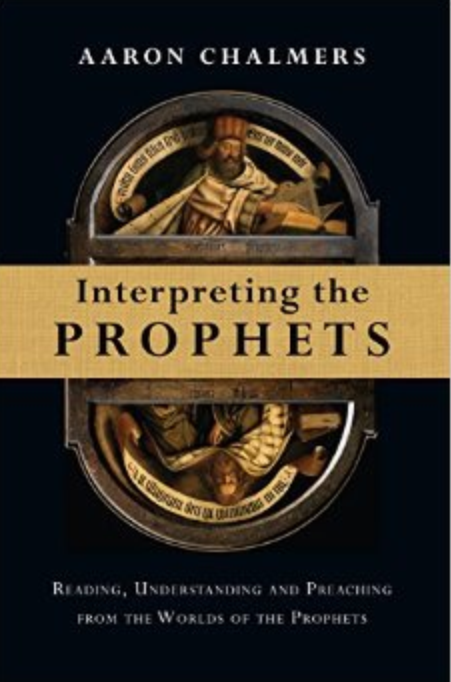
Interpreting The Prophets by Aaron Chalmers

There is no doubt that the Prophets of the Old Testament are the most difficult portion of Scripture to get a handle on. You can go astray in so many ways from an interpretive standpoint. Mr. Chalmers, teacher of the Old Testament and hermeneutics, writes to assist us in that quest  in this volume published by IVP.

He specifically wants to deliver something different from what most of us have on our shelves. Other prophecy handbooks aim at content about the individual prophetic books and the prophets themselves. He feels that what is more needed is an ability to get in these books and sensibly interpret ourselves. Though I appreciate the content-driven volumes myself, I can see his point. The volume he has given us, accordingly, is about the complicated hermeneutics of the prophets rather than a traditional volume.

He has succeeded, in my view, on some levels. His threefold division of the historical world, the theological world, and the rhetorical worlds is logical. In the historical world section, he spends time well explaining what an Old Testament prophet is. I take issue with some assumptions he makes in regards to the writing process of the prophetical books. Though he is kind to conservatives, he seems to lean more toward a critical perspective of redaction taking place over centuries. There is no concrete evidence to cause me to believe that position, but admittedly a large part of the scholarly world agrees with him. It seems to me Mr. Chalmers’ theological position stands close to John Goldingay, who is, in fact, oft quoted in this volume.

The latter part of the historical section was interesting as was the theological one. The rhetorical section made distinctions that scholars wrestle with more than pastors or Bible students. The distinction between prophecy and apocalyptic sometimes, in my view, confounds more than it enlightens. Still, he will explain it as well as it can be.

This volume appears like a textbook at times, and would not make a profound difference if you were going, to say, preach a sermon on a text in Obadiah this Sunday; but you would gain insight in how to think about the prophets overall and that is the value you will find between the covers of this book.

IMG_2404

I received this book free from the publisher. I was not required to write a positive review. The opinions I have expressed are my own. I am disclosing this in accordance with the Federal Trade Commission’s 16 CFR, Part 255.    

I’m Out! (IBTR #62)

imageI’m out! Well, I am and will later in this article explain where I am out. Those words reverberate loudly often, in the reverse, in the Independent Baptist world as well. That is worthy of discussion too.

Perhaps you have watched a show that fascinates my family called “Shark Tank”. It is not my favorite program, and usually I will read while they watch, but in my home you can’t help watching it some. If you haven’t seen it, it is a show where entrepreneurs needing money to propel their business forward come before five filthy rich business magnates and pitch their business to see if one or more of the five will give the money for a stake of the company. Those five have succeeded for a reason and can spot a bad business plan or product as quickly as a dog can a bone. There is even one shark in the center called Mr. Wonderful (never has the bar for wonderful been set so low) who often reenergizes the term “painfully honest”.

In accordance with the typical vicarious reality-TV experience of our generation, the camera will pan from the face of the entrepreneur to the shark. The tension is seeing if the shark will make a deal or say those dreaded words: “I’m out!” Though it seems personal, the viewer must not forget that those sharks surely have a right to invest where they choose. They seem in most cases to be fairly cordial afterwards to those they just dropped the bomb of “I’m out” on. Still, you can see the fear in the eyes of the entrepreneurs that the “I’m out” may come.

In the Independent Baptist world, and I imagine in a few other corners of Christianity, we have almost that same scenario, except worse. The words “I’m out” are altered to “You’re out.”  It is not I am going to pack up my toys (or money) and go home, but I am going to pack up your toys (or fellowship) and send you home. The former is unpleasant, but the latter is devastating.

We have had much communication with those on both sides of the “You’re out”. There are those who have heard it and are trying to recover from what has been an emotional crisis involving family or friends. If that doesn’t strike you as a big deal, it only proves you have not been through it. Someone I dearly love has had the “you’re out” hurled at them this very year.

Then there are those with that look of terror in their eyes who fear the words may come at any time. They wrestle with sticking to what they believe or selling their souls to avoid the “You’re out”.

O I almost forgot—you may be wondering what events precipitated the pronouncement of “You’re out”. Believe it or not, this complete or near-complete breaking of fellowship were over things like (in order of occurrence): dress standards, complete obedience to a certain clique’s position, unquestioned support of a questionable leader, and music standards. I will refrain from sarcasm here and just suggest you join many others of us in rolling your eyes.

I want to give a word to those who have heard the painful “You’re Out” since I know several readers of this blog fall in that category. Imagine being in a plane and the other riders decided you were not enough in agreement with them and opened the door and threw you out barely giving you time to strap on a parachute. There is the sheer terror of falling (at least that is how I visualize it as the last guy who will ever volunteer to jump out of a plane), the hurt of being treated so by those you expected more of, and the fear of the unknown and how exactly you handle the landing since you have never done this before. A little overwhelming, wouldn’t you agree?

But then imagine that as you drift down in your parachute in a torrent of emotion that you see the plane you were thrown out of slam into the side of a mountain. That would, of course, only make for even more strong emotions, but would not one of those new emotions be gratitude that you were no longer on the plane? Hurting one, what I am trying to say is that the plane you were thrown out of is going to crash.

Please don’t think I am saying: they hurt you and they will pay. That is God’s business and our thoughts must not go there. What I am saying is that a life where we must earn God’s love, where our soul liberty is brutalized, where the priesthood of the believer we possess is sabotaged, and the Lordship of Christ we must give to Jesus is high jacked– that life cannot succeed. That is not the Life that Jesus gave us. It is not really life at all. Be thankful you are no longer on the plane. Hurting or not, you are far better off.

O, before I go, I said I would explain where “I’m out”. I do not direct those words to any Independent Baptist people or institutions. Probably I can just wait for them to say “You’re out” to me and it will all sort itself out. Those who never say “You’re out” to me will find that I will remain friendly to the end. The Truth Revolution is not personal over characters in IFB for me, but personal about Christ Who I love. I love being a Baptist with its blood-stained heritage, but not what some Baptists have defrauded of that heritage.

So, I’m out to being sucked into bondage. I’m out over someone dictating to my conscience. I’m out to being forced to conform to feeble men’s demands. I’m out over forced or made up Bible (mis-) interpretations. I’m out to someone robbing me of the joy Christ so freely gives. I’m out to men’s opinion overtaking the Word of God. I’m out to voices that would drown out the Word of God. I’m out to having freedom and liberty in Christ taken from me. I have a wonderful Savior and I am free and I love it—so I’m out.

Find all articles in the series here.
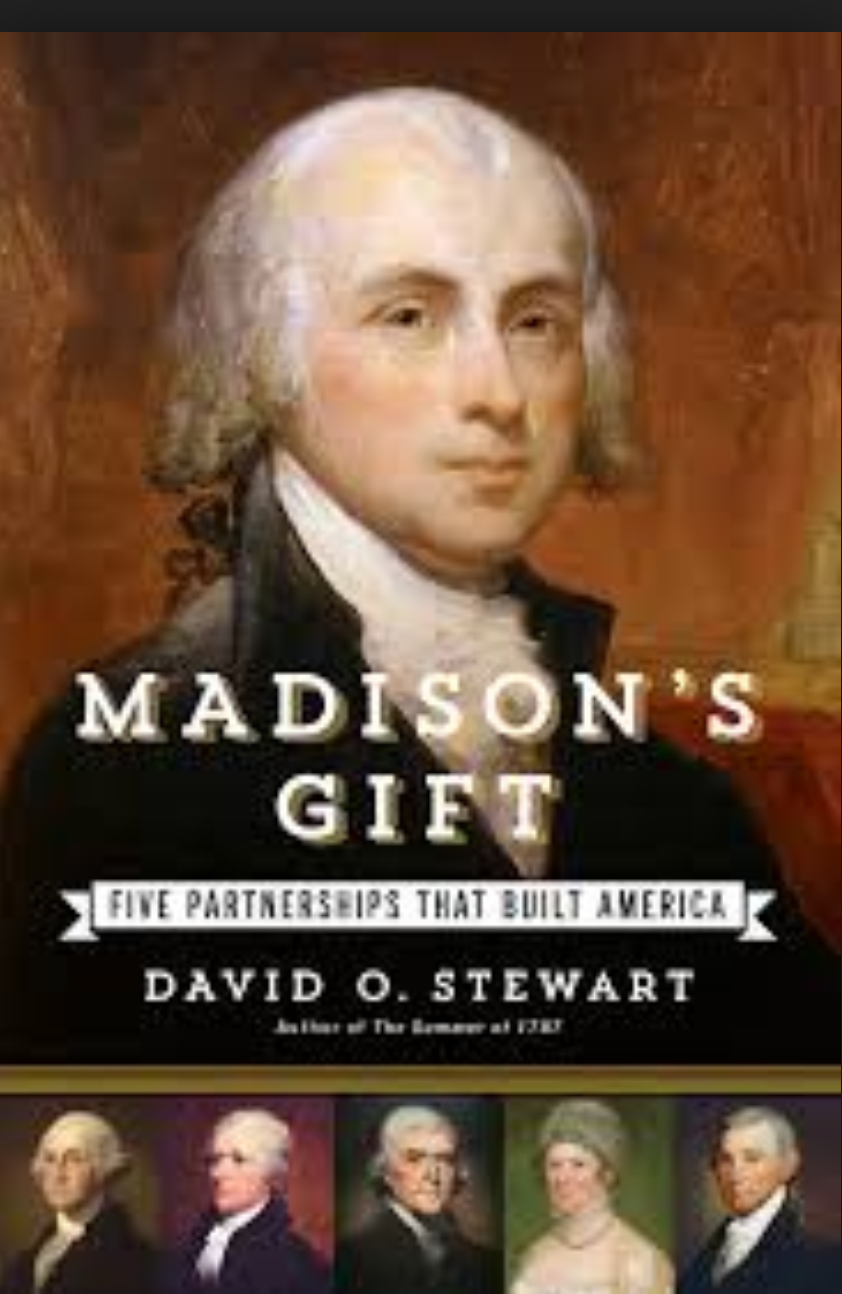
Seeing God In The Dark by J. I. Packer

image


“Unraveling the Mysteries of Holy Living” says the subtitle of this theologically penetrating volume by Packer and published by Hendrickson Publishers. While that might be misleading to some degree since he is a writer who would command a large audience if he wrote a new volume on that subject, this is actually a collection of articles all across Mr. Packer’s career. Don’t let that scare you away.  While on the surface that sounds dull, in this case it succeeds.

First, someone has chosen well in assembling this collection. While it would not be necessary to read the chapters in order in a collection of this sort, there even seems to be good logic in that ordering. They speak to our generation without surrendering faithfulness to Scripture. That is not to say, that there are not a few chapters where I strongly disagree with him. He sees predestination as strongly as any popular writer today. Still, he is incredibly gracious and gets one really thinking.

In some strange way he reminds me of C. S. Lewis and Lloyd-Jones in writing style, even if the three would disagree at points. It is all the metadiscourse in their writings. If you and I wrote so much about our writing as we wrote, it would destroy us. In some way they do it and hold your attention firmly in their grips.

My favorite chapters were the ones on revival and Christian living. The very last chapter was one of the best, so be sure to go all the way to the end. Another interesting feature was the way he addressed those with charismatic beliefs. I never saw anyone so gracious while disagreeing with them. I think he went even farther than I could in finding their good traits.

For what this volume sets out to give, it delivers!

I received this book free from the publisher. I was not required to write a positive review. The opinions I have expressed are my own. I am disclosing this in accordance with the Federal Trade Commission’s 16 CFR, Part 255.