Drawing For A Free Book

Please enter a drawing for a free copy of “Healing Your Church Hurt” by Stephen Mansfield recently reviewed on the blog here: http://reaganreview.blogspot.com/2012/02/healing-your-church-hurt-book-review.html The publishers, Barna an imprint of Tyndale Publishers, have provided me a free certificate that I will mail  to you which you can redeem for the free book.You can enter by simply responding with a comment to this blog post saying “Enter me” or letting me know privately by email. You will be given additional chances in the drawing by stating that you 1) Told someone who might like books or other pastors about this blog (Honor system –I don’t have to know who you told), 2) Like “The Reagan Review” on Facebook, or 3) become a follower of the blog if you have a google email account or just follow by email if you don’t. You can let me know about #2 or #3 even if you have already been following for a while.

Please respond by 12 Noon, Thursday, March 1, 2012. I will notify the winner to get your mailing address at that time.


Best Wishes,
Jimmy 

Healing Your Church Hurt –Book Review

healing your church hurt
Stephen Mansfield has given us a winner. It was with apprehension that I opened this book with the subtitle “What to do when you still love God but have been wounded by his people.” I thought, O no, a book to help people wallow in their hurts whether real or only perceived. The local church gets such bad press these days, perhaps I was preconditioned to think this way. Well, did I ever get a pleasant surprise.
Never was church itself criticized. He painted, however, the realistic portrait that the Christian life is rarely lived without some church issues. This is not broad strokes really, but, I suppose, to be expected with all those imperfect people being involved who make up every church. He admitted that some church members are truly hurt at church. We pastors like to live in the cloud that says it doesn’t really happen, but it does. With equal force he revealed that pastors, too, often get hurt by folks at church. I’m sure that was a shocking revelation to many church members. Then, with the greatest candor he confessed that many of our supposed hurts are petty and unbecoming of what we make of them. He did all this in just a few pages and I was hooked. I was ready to hear what he had to say.
Then the balance of the book is simply this–You are hurt in church. Whether it was real or imagined is not the issue. An analysis of the fiends who treated you so is pointless. What are you, the hurt one, going to do? You can’t change it. You can’t rewrite history with you being treated more justly. You really can’t give your enemies their due, especially in line with your being a Christian. So, what are we going to do?
He goes through that dark process that is so easy for any of us to go through that includes hard feelings, bitterness, and finally, even things far worse. How did Mr. Mansfield effectively show us this process? He surveyed the wreckage of his own church hurt. He was a successful pastor of a growing, thriving church and one day it all blew up in his face. When he first broached the subject, I wondered if he was going to use his position as a popular writer to get his revenge. I assure you that was not the case. He never called his enemies by name, and I felt he never told us more than was necessary about them to get the picture of what was going on in his heart. No, the one he exposed with all the gory details was himself.
He went far out on the limb and started cutting. He told us what he did, how he really felt, and the thoughts that came gushing out of his mind. They were grotesque. They overshadowed what his enemies, who I imagine truly were guilty, did. Such is the cherishing of bitterness for a Christian. Our Lord has simply not designed us to be able to function fueled by hate. It’s like trying to put milk in your   car’s gas tank. You won’t be going anywhere. He risked our disliking him. He opened himself up to the critical spirit of our age. You and I have probably been here, but we haven’t told anyone like he does in this book. I think his motive was to help us.
He took us through the process of his coming out of this darkness. He gratefully acknowledged some strong friends who pushed and prodded him. He spoke of false steps and false starts and clear failures. He explained that his bitterness was a multi-layered thing where he had to dig deeper and deeper to unroot it. What he said reminded me of the oft discussed concept of “pit dwelling” that I think came from Southern Baptists and has been popularized by authors like Beth Moore. In any event, the discussion is thoroughly biblical and worthy of our consideration. In the end, he showed us that it was worth whatever it cost him to leave his unreal world of bitterness. And the answer was old–forgiveness. Real forgiveness.
I give this book the highest possible recommendation with a prayer that it help many of us with a real, yet critical issue in our lives.
I received this book free from the publisher. I was not required to write a positive review. The opinions I have expressed are my own. 
This book is published by Barna, an imprint of Tyndale Publishers. The publishers have kindly given me a link to share with you for more information and the ability for you to download a sample chapter to see what you think: http://www.tyndale.com/Healing-Your-Church-Hurt/9781414365602 Be sure to check it out.
Watch for a new blog post here within the next day where I will tell you how to enter a drawing for your own free copy of this book. 

Commentary Sets

old library

The question, this time posed by my friend Mark Fowler, concerns what commentary sets would be most helpful. The logic is that sets would give more coverage than accumulating individual volumes. So I approached the question as if my library burned down and I had to begin again, what would I first buy. (That, of course, assumes I could survive my library burning down. I probably couldn’t, but I’ll play along for this blog’s sake.) We are not suggesting that anyone would be satisfied with only sets as usually an author who specializes in one book of the Bible will often write the best commentary on it, but sets give me something on every book of the Bible (I plan a future blog posts on favorites for each book of the Bible). If I had few study books available, sets would then give me the most bang for my buck. I have more emphasis here on older sets. (See link at bottom for newer exegetical series).

The First Five Sets I Would Buy

1. The Expositors Bible Commentary edited by Frank Gaebelein in 12 volumes

As with any set by multiple authors, quality varies. But this gives you some depth as these would qualify as exegetical commentaries. Some are written by world-class scholars. Fortunately, the commentators are all conservative. (Remember a conservative scholar may not be as conservative as you and I, but I speak comparatively to their own world of scholarship). These volumes have been a blessing to me. Most authors in the set are premillennial, which is rather uncommon. Faithful searching may turn up the used set for $100-125. You could also build your set one at a time. This set has been updated and the new series can be found at the link below.


2. The Wycliffe Bible Commentary
Here’s a 1-volume commentary covering the entire Bible. Many such commentaries are of little worth, but you will find this one helpful. Read it at the beginning of your studies to take off correctly. This volume can be found cheaply.


3 .Jamieson-Fausset-Brown
May come in 3 volumes, or 1 volume in small print. Solid.


4. Bible Knowledge Commentary edited by Walvoord and Zuck in 2 volumes
Superior. No passage will be dodged.


5. Expositions of Holy Scripture by Alexander Maclaren
Just because he is my favorite. Check out MacLaren here.


With these 5 I would at least have something on every passage.


Other Sets I Would Try To Get Over Time

1. The Pulpit Commentary
A big set in 23 volumes. You will either really like it or you will think it is worthless. Preview before you buy. There’s a exegetical commentary section and a homiletic section.


2. The Preacher’s Homiletic Commentary
Another big set (31 volumes), but it reads a little quicker than the Pulpit Commentary. A few friends have told me they like it better. Both could help at the end of your studies when all that is left is adding homiletic spice. I’ve enjoyed owning both.


3. The Biblical Illustrator in 23 large volumes
Massive. Condenses in varying degree great sermons of the past. If you are this far down the list you better have some nice shelving.


4. Lange’s Commentary in 12 volumes
A fine set. Perhaps should have been in the first 5 above. Think older, but still helpful.

5. Barnes Notes in various sets
Some sets cover the OT, but Barnes only did a few of them. He did all of the NT. Well worth having.


6. Keil & Delitzsch in 10 volumes (OT only)
A little Hebrew to work around, but as good as any scholars of their day and they cover all the OT. A little dry.


7. Lenski’s Commentaries on the NT
It’s funny how dogmatic he can be at times–it reads like he’s right and you are wrong. Still, it’s really good.


8. Through The Bible by J. Vernon McGee
I have a soft spot in my heart for this set. As a teenager it was the first set I ever bought. He reads easy and says nice things. Pay attention to when he is off topic. Don’t emulate him there.


9. Bible Exposition Commentary by Warren Wiersbe
This is the nicer and quicker way to get his “Be” series. The OT volumes are better as he wrote them later. He grew as a writer over time.


10. The Expositor’s Bible
An old set that varies widely. Some are very poor while other volumes are outstanding. A few might rank as the best you’ll ever have.


11. Hendriksen and Kistemaker covering the NT
Superb! But doesn’t cover the OT. These scholars are reformed, but there is such a warmth to their writing (especially Mr. Hendriksen). They love the Scriptures they write about. I wish more scholars would use them as a role model.


12. John Phillips Commentaries
Steady and consistent in quality. I heard him preach once and was blown away. His volumes on Psalms and Proverbs are standout volumes.


13. Calvin’s Commentaries in 22 volumes
Don’t expect a treatise on Calvinism at all. The man was a brilliant commentator and we must give him his due even if we couldn’t subscribe to the theological system that bears his name. Yes he sees election as you would expect a Calvinist to see it, but he isn’t driven to find Calvinism under every rock as some modern Calvinist commentators do. He wants to discuss what the text actually says as a good commentator should.


14. John Trapp’s Commentary in 5 large volumes
Spurgeon loved this set. He said we could use it to spice up the whole dish. Rare and expensive. I got a deal and have enjoyed it.


There are other good ones. Grab John Kitto’s Daily Bible Illustrations if you can, as well as Bishop Halls Contemplations . You might like Gray and Adams, though I don’t use them as often. I just recently got the set Christ In The Bible by A. B. Simpson and he is good at seeing Christ. There’s The Expositor’s Greek Testament but my set stays pretty dusty. Alford on the NT isn’t too bad. The Speaker’s Bible is spotty, but at times a winner. Handfuls On Purpose by Smith and Lee is a set to look for sermon ideas, not a place to help you understand a text. Adam Clarke is well known, but I rarely consult his set of commentaries. Matthew Poole is better than you think. Bengel’s NT Commentary I find to be very good. A.T. Robertson’s Word Pictures is underrated in my opinion. Harry Ironside’s commentaries vary in depth of comment but are always good. Matthew Henry’s Commentary still has something to say after all these years.I may have forgot something. Perhaps there are a few sets I don’t have and so can’t comment on them. This blog post does not cover newer exegetical commentary series that are being written today.  We are covering the old standbys here.

You must be diligent in searching for bargains to assemble all these sets. I find it best to prioritize my want list, but be ready to jump if something comes along for next to nothing. Happy Bible study.

Related:
Bible Commentaries–covering newer, exegetical commentary series
Bible Atlas

IMG_2373

Charles Spurgeon (Great Preachers Series)

That Charles Haddon Spurgeon is a legend is beyond dispute. Any pastor would have to be amazed by his pastorate and overall ministry. The crowds, the conversions, the influence stagger the imagination. Were we to know the depths of his suffering both physically and at the hands of other religious leaders, we might not want his ministry after all.

Perhaps the most amazing thing of all is that after 120 years his books and written sermons are as fresh as ever. There’s some phrasing peculiar to his day, but his sermons still grab the heart. His sermons come in 2 sets. There’s the 6 volume set called New Park Street Pulpit that were from the first years of his pastorate and are available reasonably priced used. Then there’s the 57 volume set published by Pilgrim Publications called Metropolitan Tabernacle Sermons that retails for $2000 (occasionally used sets come up for $1000-$1200). I was blessed to finally get an almost complete set! There’s some older used volumes, but these Pilgrim volumes have nice bindings that will last for generations. There are several other sets with various names (I have a few myself), but remember they are all taken from these 2 sets.

His sermons are often textual, sometimes expository, and rarely topical. Their greatest strengths include vividness, imagination, and most of all, gospel. No one can lift up Jesus Christ quite like he can. I’ve heard that Spurgeon’s sermons comprise the largest collection of writings by one person in the English language. Though Spurgeon was a Calvinist, only a handful of sermons really have much Calvinism in them. The truth is Spurgeon was much maligned by more ardent calvinists than himself. Read Iain Murray’s “Spurgeon Vs. Hyper-Calvinism” to learn this history. The truth is that Spurgeon constantly called on men to turn to Jesus for salvation, and he never spoke of being worried if you are elect–no, just flee to Christ. Personally, I think he is at his best in the parables and miracles. Wow, he makes them come alive!

He wrote other things as well. “Lectures To My Students” and “An All-Around Ministry” are still read by those in the ministry. Articles he wrote appreared in several small volumes. His last volume was a commentary on Matthew that I find very useful. His 3 large volumes on the Psalms are my very favorite on the Psalms. I would hate to be without them. He wrote several other volumes like Advice To Seekersetc.

Be sure to read “Commenting and Commentaries” either for book suggestions or laughs. I’ve worked hard to obtain several of his recommendations. He favors the Puritans, and though I’ve read them some, I wish they were better at coming to the point. Spurgeon took good things they offered (especially application), but he in no way reads like them. Listen to some of his comments in this book:

65.”Too small to be of any use. You cannot put the sea into a tea cup.”
100. Thomas Pyle “A pile of paper, valuable to housemaids for lighting fires.”
435. “The author confounds rather than expounds.”
766. “We have frequently characterized this author’s writings. They are clear, cold, and dry, like a fine moonlight night in the middle of winter. A man needs a peculiar mind to enjoy Hengstenberg, but all educated students can profit by him.”

And there are many, many more zingers.

If you come to enjoy and appreciate Spurgeon as I do you will want to secure some of his biographies. I have Spurgeon: Prince of Preachers by Drummond (Kregel), The Life and Works of C. H. Spurgeon in 2 volumes by G. Holden Pike (Banner of Truth), Life of Charles Spurgeon by Russell Conwell (old, written shortly after his death), The Life and Works of C. H. Spurgeon by Henry Northrop (Sword), C. H. Autobiography in 2 volumes (Banner of Truth), From The Pulpit To The Palm-Branch (Solid Ground), The Unforgettable Spurgeon by Eric Hayden (Emerald), and The Shadow of the Broad Brim by Richard Day (Crown Publications). There are a few other small ones I have as well. He has been a popular subject for biographers.

The main thing about Spurgeon is the depth of his love for the Lord. As a preacher, his sermons challenge me. As a Christian, they move me.

Favorite Preachers To Read

great preachers
“Who’s your favorite authors to read ?” came the question across the table from Pastor Scott Hooks. That question took me off guard, strangely enough, for as much as I love to read, to think about all the books I have read or used, it was hard to reduce that to 2 or 3 names. After an awkward pause, I started naming 5 or 6 names. Guess who they all were? Preachers. Men who had not set out to be authors, but whose sermons made it into print.
Books of sermons should be part of every good family or ministry library. For any Christian they have great devotional value. The only downside to it is that you may decide that some of us pastors really don’t know how to preach. For we pastors, reading the best sermons challenges us, shows us what preaching ought to be, and encourages us to work harder. The only downside for us would be that instead of being inspired, we would  just steal them. To present another’s work as our own is an incredible dishonesty shocking to find in someone speaking for Jesus Christ.
Think of the impact the sermons of Jesus had. Even though the Bible likely only records parts of His sermons (We know this because at times He would spend the whole day teaching and preaching), they are so powerful. The parts of Paul’s preaching that we have also make sermon series for us. It wasn’t, however, till after the invention of the printing press that lots of sermons made it into print. Not all of them were great, but some are treasures for all time. It was in the 1800s, in my opinion, that we had the golden age of preaching. Praise the Lord, we can read them today.
I want to blog about them individually. I want to tell of Spurgeon, MacLaren, and a few others that you perhaps haven’t heard as much about. I may do other book reviews and still have guest blogs coming, but I want to start a series of blogs about preachers and their written sermons that have enriched my life and ministry and makes me want to reach to greater heights in the grand work the Lord has called me to do.
Preachers in the series so far:
More to come…

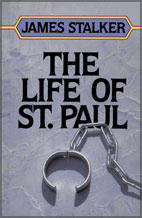
Guest Blogger-Kyle Shearin-“The Life of St. Paul” by James Stalker

I am glad to have as guest blogger my friend, Kyle Shearin. We first met when he and his wife brought a summer singing group from Crown College through our area. He is a sharp, dedicated young man. He teaches at Crown College and is actively involved at Temple Baptist Church. I remember once talking to him as he shared how burdened he was for the Singles Ministry he was leading at Temple Baptist Church. Ironically, it was in that same ministry I met my wife 13 years ago. I gave him the choice of blogging on any book of his choice. His reading has been heavily leaning toward the Apostle Paul of late. He read several on that subject and it turns out an old one was his favorite. Thanks Kyle. Here’s what he had to say….

Many are the books that arebeneficial on the life of the Apostle Paul but few are the books that areconsidered “Classics” on the life of Paul. Stalker’s book is not the mostthorough you will find on the topic but it is among the most respected.
Somebooks on Paul leave you thinking that he was not only the “Apostle Paul” butalso the “Savior Paul”. The author walks you through the soaring ministry ofPaul as well as the stumbling ministry of Paul.
Highlight of the Book
Stalker’schapter on the missionary journeys of Paul is second to none. The chronology ofevents brought to life will have you walking the streets with Paul and seeingGod made strong through weakness.
Chapter Titles
His Place in History
His Unconscious Preparationfor His Work
His Conversion
His Gospel
The Work Awaiting the Worker
His Missionary Travels
His Writings and HisCharacter
Picture of a Pauline Church
His Great Controversy
The End (Paul’s End)
Author:
      James Stalker was born in Scotland in1848. He graduated from Edinburgh University and New College and served formany years as a pastor in the Free Church in Scotland. His most renowned bookis the “Life of Christ”.
Title– The Life of St. Paul
ISNB – 0-310-44181-1
Est. price – $16.00

Handling Criticism– A Blog I Read

I find myself reading more blogs. I’ve read some good things from people I know nothing about. In a 2 minute mental break from studying, I find reading a blog post refreshing. Plus, in a few paragraphs I might think about something that I wouldn’t have time reading a whole book on.
Here’s one worthy of sharing:  http://www.dashhouse.com/blog/2012/2/1/tim-keller-on-responding-to-critiques.html Again, I know nothing about the person writing this blog. I don’t know about you, but that doesn’t worry me at all. We need to be careful about what I once heard called “academic inbreeding,” and anyway, discernment should not be that hard to come by for the Bible student who loves Jesus Christ.
In the link above he discusses a sermon he heard about handling critiques leveled against you. It’s rather convicting. We would all like to throw it out if it weren’t so blatantly scriptural. I wonder what difference this biblical approach to something we all find distasteful would make. Likely, we’d have a profound impact on our churches, ministries, and, of course, our personal lives.

Forgiveness by Harold Vaughan and T.P. Johnston

Here’s a great book on a timely subject. It can’t quite live up to its subtitle “How To Get Along With Everybody All The Time!”, but then again, no book could. It does, however, thoroughly and convincingly cover  Biblical teaching on the subject. Forgiveness, or the lack thereof, is one of the biggest problems today in my observation. Perhaps because its so easy to not forgive, so common, and such a habit. It is a “respectable” sin in that someone even in the best Christian circles would take much more flack for allowing a cuss word to slip, or be caught smoking, and so on, than being filled to the brim with unforgiveness. Yet if we viewed the matter in terms of what the Lord spoke the most about needing our greatest emphasis, unforgiveness would vault to the top of the list of sins we’d better take care of today.
The subject matter divides into 3 sections: a) granting forgiveness, b) seeking forgiveness, and c) enjoying forgiveness. The book begins tackling the question “Why should I forgive?” and its arguments are unanswerable.
The key argument is that being at odds with others puts me at odds with Jesus Christ. If you consider yourself a dedicated Christian, or at least desire to be one, that is catastrophic! Then there’s a thorough explanation of what forgiveness actually is. It quickly dispenses with the bizarre idea that someone must ask me for my forgiveness before I can grant it. Jesus declaring from the agonies of His cross, “Father forgive them…”, forever settles that question.
Think of this statement: “Unforgiveness is a two-way street. If you decide to put someone in debtor’s prison, God will do the same to you!” If more people could see this truth, it would finally explain for them why their lives are so joyless despite possessing Christ’s forgiveness. What we think is trials and problems weighing our lives down may need an entirely different diagnosis. Chapter 4 expertly takes us through the process of what unforgiveness does in our lives. It is a journey through bitterness, wrath, anger, clamour, evil speaking, and finally, malice. I wonder if this destination makes us a much more grotesque sight than the one who originally did us wrong.
The whole book gives wise counsel and is thoroughly based on Scripture. You can look at these and other materials at christlifemin.org where other books and downloadable sermons are available. I highly recommend this book, especially if you know in your heart you need it.

The Complete Biblical Library

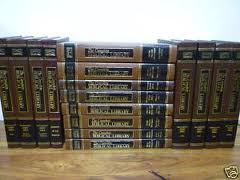
complete biblical librarySometimes diligent searching through used books pays off. I came into the possession of a set of books that I never thought I would have for a fraction of what they normally sell for. I got the complete set of the volumes that make up the Hebrew and Greek dictionaries of The Complete Biblical Library. They are beautiful hardback volumes of faux leather with gold gilt lettering  .There are 22 volumes of the Old Testament portion (blue volumes). Volumes 1-15 cover the books of the Old Testament while Volumes 16-22 (the part I got) is a detailed Hebrew Dictionary with its own numbering system. There is a Hebrew spelling, a phonetic spelling, a listing of the part of speech, a simple definition, a listing of cognates and synonyms, a concordance of every Old Testament usage, and then more careful explanation such as you might find in a theological dictionary. This is followed by word or page number references to several other works including Strong’s.The New Testament ( brown volumes) is similarly set up. There are 16 volumes with volumes 1-9 covering the books of the NT and Volume 10 being a Harmony of the Gospels while Volumes 10-17 (the part I got) being a Greek Dictionary and the last volume a Greek Grammar with helpful indexes for the dictionary. That last volume has an index to give Strong’s numbers to correspond with their numbers. For some reason the index for Hebrew words is here instead of in the OT set. My only complaint is that the indexes would be more helpful the other way around. I use Strong’s numbering system and wish I could look down a list of Strong’s numbers to find this set’s corresponding number. I hope I don’t have to make my own!

For some reason these books published by World Library Press in Springfield, Missouri are out of print and hard to get. The idea behind this series as brought out by editor Thoralf Gilbrant is to give as in-depth a study aid as is available in the better scholarly works but set up in a way that a Bible student who doesn’t read Hebrew or Greek can use to full advantage. I personally think that is as ideal an approach to further Bible study as I have heard. The Bible is made up of words and as pastors, or Bible students, we must know exactly as possible what they mean. To know less is to shoot in the dark. I look forward to using this set the rest of my life. I’m going to rearrange a shelf so they are reachable from my desk.

I don’t have any insight on the volumes covering the books of each testament as I don’t have them. I’d love to, but in that lightning rarely strikes in the same place twice, I doubt I will. In any event, you are reading from one grateful-to-the-Lord guy for what the Lord dropped in my life this week.

Book Review–The Resignation of Eve

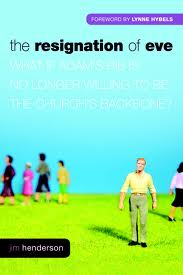
resignation of eveThe Resignation of Eve by Jim Henderson  is presented as tackling the “sad resignation…developing among dedicated Christian women who feel overworked and undervalued in the church.” I thought it might be the perfect counterpart to another book I recently read: Why Men Hate Going To Church. I felt the victim of bait and switch as I read this book.The real goal of this book is to promote women in the ministry. I must confess up front that women in the ministry is not a position that I find scripturally sound. He contends that many women are leaving church over this issue. Of course some women have left church if they could not have a key leadership/pastoral role in the church, but are we to believe that this is even in the top 5 reasons for women leaving church? What, then, is the reason men are leaving the church? Because leadership is open to them? He paints a dark picture of many more women leaving if they are not allowed to take any role they like.He makes his case with case studies of individual stories of women he interviewed. Each chapter is well written and you leave the chapter feeling you really know something about the woman be describes. Still, to prove a point, he uses only anecdotal evidence. Despite trying to say he used a good variety of women to present his case, the majority of Christian ladies I know could not be described by any example he used.

The few conservative women he wrote about were not the best examples he could have used (I mean these ladies no disrespect). Even with them I felt thay were presented as naive, just not sophisticated enough to see the obvious truth that  everything the Bible says about women not being pastors was culturally charged and without present bearing. Many thoughtful Bible students would disagree and to just state it as fact is weak.

As the book went along, you got the feeling that he was promoting the idea that we must structure church to give people what they want to get them to stay. There was never a discussion of what the Bible actually said about how church should be done.

He did mention a few inconsistencies among some churches that refuse women the office of a pastor.  But that alone couldn’t carry his premise.

The book should be advertised to the target audience of denominations that say they believe women are allowed to pastor but the numbers are out of kilter. Then the book could use arguments, as it did, that are used in the workplace. All in all, I cannot recommend this book.

I received this book free from the publisher. I was not required to write a positive review. The opinions I have expressed are my own.