Bible Atlas–Finding The Right One

I love Bible maps. It goes all the way back to the maps in the back of the Bible I received when I got saved all those years ago. No one would need as many as I have, unless , of course, you have a weakness for them as I do. Every Bible student should have one good one, and Sunday School teachers and pastors would do well to have two or three.

What is the value in Bible atlases, you ask? The terrain of Bible lands is unusual to what is around us. You might have to go all the way across the United States to simulate the change experienced in 20 miles there. Plus you don’t know the towns there so if a Bible character took a journey from Jerusalem to Bethlehem it would be only 8 miles (like the Wise Men leaving Herod to see Jesus) while Nazareth to Bethlehem would be 80 or so miles depending the route taken (like Mary and Joseph traveled). Some routes were arduous journeys because of terrain while others would be easy walking. To go from farmland to desert, or from cool weather to hot, could in may places be done in a day on foot. A quick glance at a Bible Atlas might be the very thing that put the Bible story you read in the proper perspective.

A good Bible Atlas will have quality pictures of various Bible places (a picture is definitely worth a thousand words in that case), topographical information, plenty of maps as there are so many stories in the Bible, and good graphics. My eye for graphics might be different than yours, so previewing the maps before you purchase is a good idea. Christian Bookstores usually have only a couple choices so going to Christianbook.com and searching the Bible atlases and viewing the excerpts available would be helpful. You will want to make sure that they follow conservative scholarship in the map information provided. Comparing a few atlases will reveal that some Bible sites are less certain than others and you might have to read the evidence and make your own judgment.

MAIN CONTENDERS

The best Bible atlas for the pastor would be what is now called The Carta Bible Atlas, which for years was called The MacMillan Bible Atlas. I had the older edition for years, but the newer one contains some new helpful maps and I am glad to get it too. This atlas is far superior in the OT than the NT, but even the NT maps are helpful. It is written by Aharoni and Avi-Yonah, Jewish scholars who lived in the Bible lands.  I doubt they were believers, but the OT was the heritage of their people and they put together the best. The graphics are not spectacular, but the number of maps for even lesser-known events make them always my first choice. (Link below for review).

Since I first released this article, Emanuel Hausman of Carta wrote me (comments below) and said, “Please note that the 5th revised and expanded edition of The Carta Bible Atlas (2011; OT – Anson F. Rainey & NT – R. Steven Notley, a devout Christian). Incidentally Notley’s Chapters, Historical Geography of the Gospels &The Early Days of the Church in The Sacred Bridge have been rated “superb”. Also the 1st edition of Rasmussen’s NIV Atlas of The Bible, A Gold Medal Title, was created by Carta as was the earlier edition of the Standard Bible Atlas.” I appreciate his helpful information.

I should also tell you about the most detailed atlas I have–The Sacred Bridge by Rainey and Notley. I’ll admit it’s a luxury, but it is the ultimate one available. The maps are small, but the text is detailed to almost every Bible event imaginable. It can be liberal in places, but if you want to find the archaeological site to match the Bible site in modern Israel, it is indispensable. Its comprehensiveness is unparalleled. It may be aimed more at scholars than pastors. There is a second edition out now that I have not seen. Just recently the publishers have offered In The Steps of The Master to offer that material to a wider audience.

Carta’s New Century Handbook and Atlas of the Biblepublished by Carta, is a less techical The Sacred Bridge and is outstanding. Pastors will love it too.

Another great volume is the Zondervan Atlas of the Bible that was released as a new, improved edition in 2009. Formally, it was called the Zondervan NIV Atlas of the Bible. It is gorgeous and exceptional and I was glad to get it as a Christmas gift. For an economical, solid help it may well be one of the very best. There is a newly-released Zondervan’s Essential Atlas of the Bible that is a condensing of the larger work that I do not own, nor need since I have the fuller volume.

I was glad to secure The Crossway ESV Bible Atlas by John Currid and published in 2010. This volume has many detailed, accurate maps and a great deal of texts and charts. It has the added bonus of being one of the most conservative in its conclusions and I believe I agree more with its choices for uncertain Bible sites than any other. This is a heavy hitter that appears to be vying to be pastors number one choice.

You will like the vastly improved New Moody Atlas of the Bible by Barry Beitzel. It is so improved that I consider it a new volume unrelated to previous editions. Solid across the board, its greatest feature is the geographic section and the outstanding maps given there.

Another contender is the Holman Bible Atlas (Link below). It is one of the top atlases for Bible students as well. Its maps are excellent and the text is engaging and the pictures of Bible sites as helpful as the maps. It has been a very popular atlas.

I also recently reviewed the Rose Here and Now Bible Map Atlas (Link below). Rose Publishing has joined the big boys in the Bible Atlas world now. With its Carta maps and biographical approach, Bible students will find this a winner.

The most recent major Bible atlas is The Discovery House Atlas by John Beck. Its author has spent an incredible amount of time in the Holy Land and it shows.

OTHER ATLASES

I have enjoyed Biblica: The Bible Atlas. The maps are fine, but the key feature of this volume is the art work from all through the centuries. Weighing 10 lbs., this volume reminds one of Spurgeon describing a volume as big enough to be the author’s gravestone!

Two good inexpensive choices are Bible Atlas & Companion by Barrett, Hudson, and Bolen and Holman Quick Source Bible Atlas With Charts and Biblical Reconstructions. The maps and graphics are really good in both. The former has really nice pictures as Todd Bolen is a well-known photographer. It covers many Bible events with excellent information and graphics. The latter has the added benefit of the first half of the book being on the unique geography of Israel. The maps are as good as some more expensive volumes. I highly recommend these two for pastors, Sunday school teachers, or any serious Bible student.

You can also supplement your collection with older used volumes that are nicer than you might imagine. I have The Readers Digest Atlas of the Bible (maps good, text worthless), Atlas of the Bible by John Rogerson (average), “The Standard Bible Atlas” (a small student atlas using the Hammond maps that were the standard for many years), and The Moody Guide To Bible Lands by Tim Downey (old edition–there is a much improved edition just released and discussed below). I also have The New Illustrated Bible Atlas by Joseph Rhymer (decent), The Illustrated Atlas of the Bible Lands published by Warwick Press (below average), An Atlas of the Life of Christ by John Stirling (old, small, and very accurate), and New Bible Atlas by Wiseman, Bimson, et al (helpful). The older Atlas of The Biblical World by Baly and Tushingham (Graphics and pictures poor, information good) is worth having as is Bible Mapbook by Simon Jenkins (very good). A newer choice is The Kregel Bible Atlas by Tim Dowley (Concise, but good). Some of these can be found on used book sites for as little as $1. The last volume sells new for $15, but the others are out of print and I wouldn’t pay over $5 for any of them.

A huge volume that could well supplement any collection is The Harper Collins Atlas of the Bible (one edition was called the Time Atlas of the Bible). It has cool maps that are sometimes reoriented with, for example, west at the top! If you are geographically challenged, this may be too much. I love some of their maps of Bible battles (hills with trees showing). Another is the Collegeville Atlas of the Bible. The graphics are really good as are the pictures, but the text lacks value.

The Deluxe Then And Now Bible Maps published by Rose is a great concept and especially helpful were you to be planning a trip to the Holy Land, but I wish several of the maps of Israel were on a smaller scale. As mentioned above, incorporating these maps into the  Rose Then And Now Bible Maps Atlas was a great idea.

There are some specialty volumes out there like Battles Of The Bible: 1400 BC-AD 73 by Dougherty, Haskew, Jestice, and Rice. It is visually stunning and exciting to look at as battles played a big part of many Bible stories.

Here are a few more, but only if you are a map junkie like me. The Holy Land Satellite Atlas Volumes 1 and 2 published by Rohr Productions.” These volumes are unique and give information that you can’t get anywhere else. When I studied for my solo trip to Israel and Jordan I used these volumes to help me transpose Bible Atlas information on modern road atlases. The pictures are extraordinary and include sites the other atlases never show, at least in up-to-date fashion because many of them are deep in the West Bank. I should mention, too, the Student Map Manual: Historical Geography of the Bible Lands.

You will enjoy the Aerial Atlas of the Holy Land by John Bowker. It is in no way exhaustive, nor would I choose what he did to highlight in the same number of pages, but it is great for what it chooses to cover. I really enjoy its pictures and the maps are sufficient. It is a fun addition to the atlas section of your library.

Carta has been publishing several specialty atlases well worth checking out. Check out some reviews I’ve done of these volumes here, here, and here.

In addition, Carta has maps you use could profitably use while touring in Israel. Check out the Jerusalem Biblical Archaeology map. Now they have an excellent Israel Biblical Archaeology map as well.

Before I close I should mention that there are a few very nice volumes that I do not yet have. Since I am a little compulsive/obsessive in this area, I’ll try to get them at some point. I have not yet seen the Tubingen Bible Atlas. It is a bilingual work that I have heard good things about. I would love to secure a few more specialty atlases on Bible history as well as some on the city of Jerusalem. I will update this post with each new acquisition.

I’m likely one of the few people who thinks that an hour of bible atlas viewing is an hour well spent. Still, we can all profit from a Bible atlas in our Bible studies.

Last updated on 8/17/2017

Other Atlas Reviews:

Holman Bible Atlas

Rose Then-And-Now Bible Maps Atlas

Carta Bible Atlas

Carta’s New Century Handbook and Atlas

Discovery House Bible Atlas 


Related:
Bible Commentaries–Newer exegetical series
Commentary Sets–older, or devotional sets
Feed My Sheep

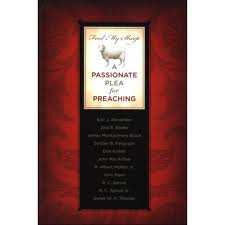
Feed My Sheep: A Passionate Plea For Preaching published by Reformation Trust Publishing, which you can find at Ligonier.org, has 11 chapters by various authors calling us back to the prime importance of preaching. Feed My SheepAlbert Mohler first discusses the primacy of preaching citing history and Scripture (e.g. Col 1: 25-29) to build his case. He shows us that preaching is not one of a pastor’s important duties, but , in fact, it is the key one. We do live in an age where pastors are expected to do everything and some pastors prefer almost any administrative duty to the hard work of sermon preparation. Perhaps over time we become rather slick, but too superficial to do our people any good.  I loved his analysis about “product envy” for preachers. Other professions can look at how many items sold or made but results in the task of preaching are not so easy to calculate. The lack of quantifiable results may derail us from expounding the Word of God which carries the help those we minister to really needs.James Boice tackles the “foolishness of preaching”.  He argues that preaching is God’s wise way to show that the world’s wisdom is foolishness. He also speaks of how many Bible characters preached, and how preaching leads to conversions and church growth. Ultimately, this works because the Lord works through His Word.Derek Thomas writes on “Expository Preaching.” Really this is the type of preaching referred to in the whole book. Using the history of several great preachers, defining the terms of preaching carefully, he writes as an academician. His description of failed preaching types is really good.

Joel Beeke writes on experimental preaching, or getting beyond explanation to application as all good preaching should.  R.C. Sproul discusses teaching in preaching. Since we live in a generation that prefers light preaching this is a challenge to help our people learn the Word of God. R.C. Sproul Jr. has a brilliant chapter on “Preaching To The Mind”‘.

Sinclear Ferguson writes with good effect on “Preaching To The Heart.” His chapter is practical. Don Kistler gives us “Preaching With Authority”. He discusses how Jesus spoke with authority, an authority so obvious all noticed. He relates how Paul wrote about it, for example, Titus 2:15. He reminds us of what an awesome call we have in our call to preach. Eric Alexander writes on “Evangelistic Preaching”. Some might find it lacking.

John Piper speaks on “Preaching To Suffering People.” Perhaps this is an example of how productive a use this call to dedicated preaching can provide.  John MacArthur writes the closing chapter as a plea to take the contents of this book and go and do what a shepherd should do.

The book is an encouragement. It runs against the tide of modern-day preaching and is what we need. You may have noticed that every writer tightly holds to reformed theology, and though I definitely do not, we must graciously admit that reformed writers are simply giving us the best writings on preaching today. This book is a clear example of that fact. I want to be the preacher the Lord wants me to be. Don’t you?

I received this book free from the publisher. I was not required to write a positive review. The opinions I have expressed are my own.

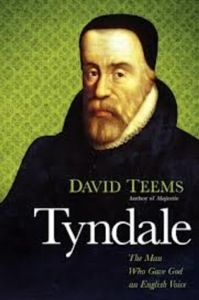
Tyndale by David Teems

You always assumed, I’m sure, that William Tyndale was an important man in Christian history. This book shows just how amazingly important he was. You knew about his first English translation of the New Testament, perhaps you even knew he died as a martyr. Did you know, though, that he had a great effect on our English language? He is credited with many words in our language coming from his pen. If you are a lover of the KJV as I am, you will be shocked as I was to learn that many of the most memorable lines of the KJV came over unchanged from Tyndale. Consider:

Let not your hearts be troubled..
The Lord bless thee and keep thee.
The Lord make his face to shine upon thee and be merciful unto thee.
…for whither thou goest, I will go, and where thou dwellest, there I will dwell.

There are many others that Mr. Teems shares with us. You leave this book convinced that Tyndale has had the greatest influence of all on the Word of God in English. There really is no close second.

You are impressed too as you read of Tyndale’s simple faith and dogged determination to translate the Bible into English. It was his driving passion from which he never wavered. Mr. Teems quotes Tyndale in regards to his translation work:

…that I never altered one syllable of God’s word against my conscience, nor would do this day, if all that is in the earth, whether it be honour, pleasure, or riches, might be given me.

Though Mr. Teems didn’t exactly word it this way, it is obvious that Tyndale was especially gifted by God for his great work. It was his life’s work, one that cost him greatly, living and running as a fugitive with loneliness and danger always staring him in the face.

Mr. Teems has done us great service in this volume. He is handy with a pen. His own literary skill makes him able to demonstrate how deep Tyndale’s talents really go. He holds Tyndale up beside the great literary figures and even mentions where Shakespeare used Tyndale. I finished this book thinking that more than a heroic man, Tyndale was one of the really great ones. Perhaps he hasn’t had his due, but Mr. Teems while fairly showing his faults, accurately presents us with “Tyndale: The Man Who Gave God an English Voice.”

I received this book free from the publisher. I was not required to write a positive review. The opinions I have expressed are my own. I am disclosing this in accordance with the Federal Trade Commission’s 16 CFR, Part 255.

20140124-210624.jpg

Leonard Ravenhill

leonard ravenhill
Sometimes you need an author that will jolt you out of your spiritual lethargy. Leonard Ravenhill will never fail you at such a time. I’m thinking now of 2 of my favorite Ravenhill titles: Why Revival Tarries and Sodom Had No Bible. In Why Revival Tarries there are 20 chapters with a page of fantastic quotes at the beginning of each chapter. Imagine being a preacher as I am and being hit with:One does not need to be spiritual to preach, that is, to make and deliver sermons of homiletical perfection and exegetical exactitude…Preaching of the type mentioned affects men: prayer affects God. Preaching affects time; prayer affects eternity.


That is paragraph two of chapter one–See what I mean!  Or how about this:

No man is greater than his prayer life. The pastor who is not praying is playing; the people who are not praying are straying.


Yes he is eminently quotable, likes a rhyme, yet is never corny. I could provide many other great quotes, but I am far too slow a typist to reproduce the entire book here. It is still in print and can be picked up at christianbook.com for $8.99. The answer to the question of why revival tarries has much, I came to see, to do with me.

Sodom Had No Bible is, I suppose, a book of his sermons. The thought of the title sermon is that Sodom was judged, but she had no Bible. What does that obviously mean for us today? He draws a picture that we fiddle as Rome (America) burns. “Riveting” is my review in a word. It’s in print with Christian Life Books for $11.99, or used for around $4 on places like addall.com

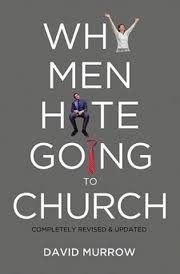
Why Men Hate Going To Church by David Murrow

why men hate going to churchWhy Men Hate Going To Church—the title says it all. It’s the question we have all had, on a subject we have all noticed, without ever asking. Perhaps you imagined that there was no answer. It is just one of the mysteries of life. Read this book by David Murrow and you will have answers that will make you wonder that you never noticed them before. He gives answers that stem from the fundamental differences of men and women. We see some of these ideas in marriage books to our advantage. I will confess to being skeptical as I began, but this book is compelling. As a pastor I found his marketing/media perspective unique and thought provoking.
He shows that we have feminized church. Our services are much more favorable to women than men both in comfort and service. He gives a fascinating history of how this developed. As I read, I thought there is little than can be done about it, but in the last half of the book he gives practical advice. A new mindset is the key one.
He is friendly to the contemporary style of worship and I am firmly of the old fashioned variety, yet where his type of worship fails men he minces no words. I appreciate that kind of candor. This work doesn’t pretend to be theological at all. If some idea he offers sounds like a marketing ploy to give them what they want with no regard to God’s glory,  that is the reader’s problem. For what it is, this book could hardly be better.
I received this book free from the publisher through its book review bloggers program. I was not required to write a positive review. The opinions I have expressed are my own. I am disclosing this in accordance with the Federal Trade Commission’s 16 CFR, Part 255 

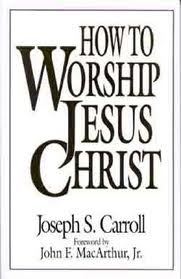
How To Worship Jesus Christ by Joseph Carroll

worshipRecently Ryan Brown, Jamin Boyer, and I had the privilege to visit Dr. Tim Jayne’s new office. It’s beautiful, roomy, and as ideal as any preacher could imagine. We talked, had a great visit, and as Dr. Jayne is known to do, he gave us each a book. In addition to teaching college students the Bible, he is well known as one who encourages preachers to read fine books. I appreciate that emphasis in his ministry. There is an obvious passion in him that I share on that subject.While there he recommended a book that he wishes every pastor would read–“How To Worship Jesus Christ”. He has given scores of this book away over the years. Strangely, I already had the book and it was laying in a pile of books that I intended to read soon. Somehow, it was never the book I selected. I think I got it in a box of books I picked up at a library sale.Since he told us that many pastors he has introduced the book to read it every year, I read it right away. The book fully lived up to its reputation. He was a missionary for many years and the contents of this book were worked out in those days of service. His influences command respect. He called Hudson Taylor “the father of modern faith missions” (emphasis mine). A. W. Tozer, who never fails to challenge me, was clearly his greatest influence.

He effectively made the case for what our private time is all about. He says, “My quiet time then became something for Him, not something for me.” The great need, he says, is to worship Christ until He becomes real to you. That grows into it being about Him, not even the people to whom you minister. Perhaps preachers talking of that concept today learned it here. In any case, I have never heard it better said.

He quotes Phil 3:8 “…that I may win Christ” and spoke of intimate fellowship with Christ being the key. He explains that people who must always be pushed to do things like witnessing or supporting missions have a serious problem. Then he continues: “What was Paul always doing? He is consistently bringing you to Christ and leaving you with Christ.” To my mind, that is profound. Nuggets that really challenge you continue to the end of the book.

The book is still in print by Moody (My copy is older). Amazon.com and others have inexpensive used copies while a new copy can be gotten from CBD for $8.19 (Christianbook.com)

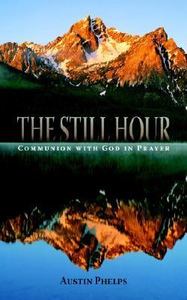
The Still Hour by Austin Phelps

still hour
Here’s a book on prayer from the 1800s. I read once sometime ago that Peter Masters recommended the book and said it was “once enormously popular.” My copy includes a quote from Spurgeon saying the author “seems to truly and completely know the power of prayer.” It seems this book fell off the map for decades. Used copies can be found and Solid Ground Christian Books has a beautiful paperback volume in print now for an economical price. Check solid-ground-books.com. I have at least 20 volumes on prayer in my library and nothing quite moved me like this one. As a young Christian John R. Rice’s Prayer: Asking and Receiving  helped me as did R. A. Torrey’s volume on prayer. Mrs. Rosalind Goforth’s volume on How I know God Answers Prayer is not to be missed as well.

“The Still Hour” is a book, though, I wonder how I missed all these years. Read it at your own risk. I was greatly convicted and concluded I didn’t pray at all.

Listen to these chapter titles to get an idea of what you will encounter in this volume:

Absence of God in Prayer
Unhallowed Prayer
Romance in Prayer
Idolatry in Prayer

and many more. It’s only 136 pages, but a phenomenal read.

Hello

As an avid book lover, particularly in Bible study, I get asked about recommendations fairly often. I am not an expert in any way, but as a pastor I spend a great deal in time in these type books.I’d love to hear from others too. Just this week I received a recommendation that has proven to be extraordinary. I’ll write about it later.

We live in a digital age, but my heart is in the past. I want to feel the book, hold it in my hands, and put in on my shelf often with scribbled notes inside.