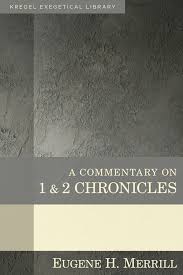
Chronicles by Eugene Merrill (Kregel Exegetical Commentary)

chronicles

Seasoned commentator Eugene Merrill gives us a full-scale commentary on an oft-overlooked portion of Scripture–the books of Chronicles. This volume is a fine addition to the developing series called the Kregel Exegetical Library series. I expected this to be an excellent volume based on several other commentaries by Merrill that adorn my shelves, and I was not disappointed!

His Introduction fills the first 70 pages. While as scholarly as you would expect, this Introduction covers issues in a way more conducive and interesting for pastors and teachers. More bizarre scholarly sidelines are ignored. His section on the historical and cultural setting was enlightening. When he tackled authorship, he had trouble believing the traditional viewpoint that Ezra wrote Chronicles. On the subject of sources, which often gets out of hand in many commentaries, he focuses on the 14 ones that Chronicles actually mentions. The section on theology is the best of the Introduction and quite well done.

The commentary proper is excellent. Even in something as difficult as the genealogies, he had fine application of theology. The charts there were a real asset too. I should mention that I found the footnotes far more helpful than in most such volumes.

This volume grades out at A+ and is clearly a top volume now on Chronicles.

  I received this book free from the publisher. I was not required to write a positive review. The opinions I have expressed are my own. I am disclosing this in accordance with the Federal Trade Commission’s 16 CFR, Part 255.
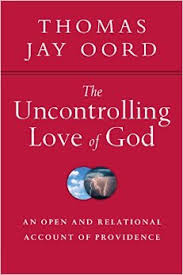
The Uncontrolling Love of God by Thomas Jay Oord

oord

This book tackles a subject that everyone thinks about at times–how to think about God in a world of profound hate and senseless tragedy. While the author, Mr. Oord, takes us beyond the hard feelings of questioning faith to the theology that can tries to answer the question, he even goes to science and philosophy along with the Bible. Without any fluff at all he takes us on a journey that demands we decide what we believe about the providence of God.

Mr. Oord brought out a potpourri of emotions in me as I read. At times I would feel I was reading a simple believer in Christ while at other points I would think how could he believe such nonsense.  In one place he would hold that Scripture is a trustworthy guide and at another he would speak of evolution as a settled fact. Here he would want to honor the Lord and His Word and there he would speak of science and philosophy as near equals to the Bible. 

His analysis of all the issues and what has been believed was simply superb. His writing was as good as acedemic titles get. His simple, little chart on page 83 crystallized the range of thought on providence. His description of every method was fair and probing. He was a careful thinker who would have no part in reducing the discussion to merely a Calvinistic/Armenian debate. 

When he finally turned to his own explanation that he called “an open and relational account of providence”,  I simply could not go along with him. Though he offered profound points, I could not put them all together as he did. He figured that God’s love was the controlling factor in all God did until providence could be deemed as the Uncontrolling Love of God.

To my mind he missed a major point. The Lord is better described as equally the God of love and the God of holiness/justice. I believe one could arrive at a better theology of providence with that focus.

Despite disagreeing with his ultimate premise, and some lesser ones on what God could do or miracles, why do I give this volume a pretty good rating anyway? He spurred my thinking until I had to decide what I believed. I will always count such a book good and helpful. I am truly glad I read this book and have it on my shelves to refer to in the future.

I received this book free from the publisher. I was not required to write a positive review. The opinions I have expressed are my own. I am disclosing this in accordance with the Federal Trade Commission’s 16 CFR, Part 255.
4 Exciting New Titles From Carta

Carta has four new titles that Bible students will love to check out!

jeru

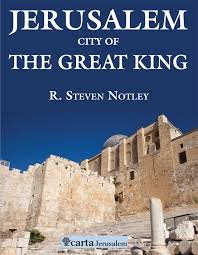
This is the second of a planned four-title series that will make up The Carta New Testament Atlas. Steven Notley, already a co-author of the sweeping Bible Atlas The Sacred Bridge, contributes this fine volume. It is the perfect blend of history, text, pictures, and maps. Yes, it is the outstanding Carta maps! Together these features are a feast for the reader.

Bible students will be greatly enriched here and will find much to expand understanding and gain background in New Testament studies.  Carta has been reaching out to a wider audience in many of there later releases, and as much as i love them all, this may be the best so far.

I see an additional use for this book. Are you planning a trip to Jerusalem? I can’t imagine how much better such a trip would be if you read this book first.

This is a real gem!

life jesus

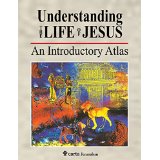
Bible students will love this 40 page volume. It is more of a visual smorgasbord. The text is minimal so you have just enough to gain what the pictures and maps will give you. Some of the best of the famous Carta maps are here. Bible study groups, Sunday School classes, and of course, pastors and teachers will love this volume.

More economical than a full-scale Bible Atlas, but perfect if you are having an in=depth study of the life of Jesus.

We have here another winner!

jewish

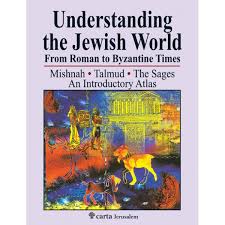
Do you ever wonder what happened to the Jewish World from New Testament times forward? Michael Avi-Yonah and Shmuel Safrai wrote this material in three larger works. What we have here is a more manageable 40 page work for Bible students. The editors have selected well in producing this for we who teach, preach, or study God’s Word. Many of us have a noticeable gap in our knowledge in this very area.

This book, in beautiful, large pages gives us what larger volumes give. the difference is what you have to wade through to get the information, and of course, price.

Another fine title from Carta!

boat

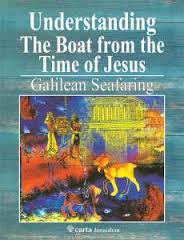
No doubt this a specialty title, but when we stop and remember just how much of Christ’s ministry was by or on the Sea of Galilee, this is a fascinating title. Written by Shelley Wachsmann, this volume takes the discovery of a First Century Galilean boat that Mr. Wachsmann was part of and puts the whole idea of Galilean Seafaring in perspective.

The book begins with a background seafaring in NT times and even the legends of the area. All we know about travelers there from NT times to modern days is given. The rest of the book covers the discovery, the challenging excavation, and the careful preservation of this amazing discovery of a boat just like Jesus would have used.

I’ll call this volume–fun!

I received this book free from the publisher. I was not required to write a positive review. The opinions I have expressed are my own. I am disclosing this in accordance with the Federal Trade Commission’s 16 CFR, Part 255.
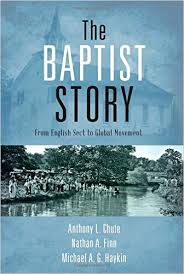
The Baptist Story–A Great New Book

baptist story

Here we have an up-to-date Baptist History textbook. They are harder to come by than you might imagine and this one boasts careful historical analysis, nice pictures, and good writing–the very things so often missing in a text book. Respected scholars Anthony L. Chute, Nathan A. Finn, ans Michael A. G. Haykin join forces to deliver the definitive textbook on Baptists for this generation.

Successionists, or Landmarkers, will be disappointed as Baptists are traced to the 1600s as an English sect. Though there are some similarities to Anabapists and other groups, they followed the evidence and cannot a historically verifiable succession. Even if you are a follower of Landmark thought, you will still find a wonderful historical record from the 17th Century to today.

Though you find a love for all things Baptists here, there is no hiding our less seemly features. We have had a penchant for arguing over the years and that is respectfully handled. Since the Southern Baptists have grown to be the biggest of the Baptist world, they get the most coverage. Still, a fair handling of how other Baptists groups emerged, what issues divided, and how it worked out over time is given. Independent Baptists are treated fairly and the issues why they left the Convention are accurately reported.

This is a fine resource and I highly recommend it.

I received this book free from the publisher. I was not required to write a positive review. The opinions I have expressed are my own. I am disclosing this in accordance with the Federal Trade Commission’s 16 CFR, Part 255.
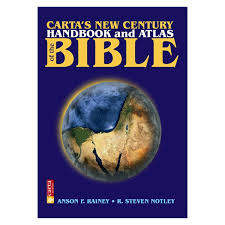
Carta’s New Century Handbook and Atlas

carta NCH

Are you looking for a great Bible Atlas for some serious Bible study? Then you will want to give this atlas by Anson Rainey and Steven Notley serious consideration. It has much going for it. Carta maps, the best we have, are the primary asset here. Then you will learn that this is a concise edition of the most comprehensive Bible Atlas in print–The Sacred Bridge: Carta’s Atlas of the Biblical World. Fortunately,  the parts missing from this volume will likely be the things least missed by Bible students. What remains is an incredible Bible Atlas at half the price.

The authors brought different strengths to the project. Rainey (died in 2011) was considered the greatest scholar on the historical geography of Israel of his generation. Notley, who authored the chapters on the New Testament, is a warm believer who lived in Israel for many years and mastered his subject. I often find myself not agreeing with conclusions in the text, especially in the OT section, but there is hardly a better compendium of scholarly thought.

Then there are those maps! That is what I most want in an atlas. So I use those maps and get an update on what the scholarly world is thinking. There is detailed archaeological information that is a gold mine as well.

As a pastor, I have thought that The Carta Bible Atlas, by the same publisher, was the best we have. This volume is a rival and actually a fine compliment. I am glad to have both to consult. This one has more historical geography, the other more actual Bible events covered. This one has more color and visual beauty, the other has more obscure passages illumined.

This is a phenomenal volume!

I received this book free from the publisher. I was not required to write a positive review. The opinions I have expressed are my own. I am disclosing this in accordance with the Federal Trade Commission’s 16 CFR, Part 255.
For more on Bible Atlases, click here.


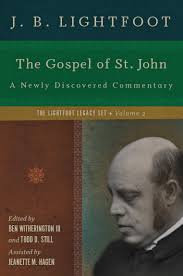
The Gospel of St. John by Lightfoot

john lightfoot

Here is the second of IVP’s planned releases of recently-discovered commentaries by famous scholar J. B. Lightfoot. Ben Witherington , a reputable scholar himself, found the handwritten manuscripts in Durham. Though many of Lightfoot’s commentaries have been popular for over a century, these releases cover commentaries on parts of the Bible that he did pursue publishing because dear friends wrote on those same books of the Bible. Now with this publishing event, his work was not in vain.

This succinct commentary goes through John 12. There is some untranslated Greek, but an open interlinear Bible will allow you to work around it. You can tell what a thoughtful scholar he was as you read. There are many points where I could not agree with him, but I still find interacting with him profitable in any event.

Even more fascinating for me was his introduction on the authenticity of the Gospel of John, as well as Appendix A and B on the same subject. He has great points that are unlike what I have read in other places.  The context of his times and the negative onslaught of German scholarship he battled makes you appreciate it more. Appendix C by Martin Hengel will round out your understanding of German scholarship and its influence.

We have here both an interesting, historical commentary and something of a collector’s item. You will want to check it out.

I received this book free from the publisher. I was not required to write a positive review. The opinions I have expressed are my own. I am disclosing this in accordance with the Federal Trade Commission’s 16 CFR, Part 255.
Rediscovering Discipleship by Robby Gallaty

download

“Making Jesus’ Final Words Our First Work” reads the subtitle as it reveals the passion for discipleship that you will find between the covers of this book. I have never read a book that biblically makes the case for discipleship as well as this one. Beyond that is the practical guidelines given by one with much experience. There’s seven chapters on the why and six on the how.

Part One includes an in-depth look at how Christ made disciples. The chapter on “Thinking Like A Hebrew” is profound in its insights and one of the most powerful in the book. Then he got into the type of people Jesus discipled–blue collar, untrained, and young–and shows us there might be better candidates around us than we supposed. He also makes sure that we don’t lose sight of the goal that the disciple be transformed in the image of Christ. 

He looks at discipleship historically as well going back to Augustine. His analysis of Wesley’s effective methods will really get you thinking. His thought that a comma in the KJV did the most damage to discipleship seems overdone, but otherwise his historical insights seem hard to refute.

The second part of the book highlights what he has learned from personal experience. His way is not the only way, but his experience makes him deserve our ear. Finally, he makes a clear distinction between evangelism and discipleship. Discipleship is for believers! This work deserves the prominent place on our shelves for often use.
   

I received this book free from the publisher. I was not required to write a positive review. The opinions I have expressed are my own. I am disclosing this in accordance with the Federal Trade Commission’s 16 CFR, Part 255.
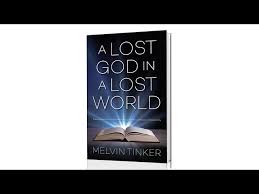
A Lost God in a Lost World by Tinker

lost

Are you sad about where Christianity is in our world today? Are you sure that it is mostly run amok? Do you wonder if you have your own head on straight? Then you will likely find comfort and guidance in this volume. Its subtitle “From deception to deliverance; a plea for authentic Christianity”  tells us that much of the problem could be the kind of Christianity many of us have.

The Foreward by David Wells and the author’s Preface are succinct, powerful, and well-written descriptions. Then, to carry the case forward,  we are treated to nine expositions from Scripture that strongly make the point. It is powerful, in my judgement, to let the authoritative Scriptures make the case. Though I might disagree on a sentence or two by the author, these are excellent expositions.

I particularly enjoyed his perceptive discussion of idolatry from Isaiah 44:9-23 called “When God Is Weightless”. Pride is also grandly exposed in his examination of Ezekiel 28 (I still see Satan where he does not, but his interpretation is the perfect application). Philippians 2:5-11 made an outstanding study on Christ and the cross. When we are discussing the big picture this book tackles we must make our way by Christ and His cross. He naturally ends with expositions on the Second Coming and a need to be heavenly minded.

This book is both thought provoking and a blessing, and I recommend it.
 

I received this book free from the publisher. I was not required to write a positive review. The opinions I have expressed are my own. I am disclosing this in accordance with the Federal Trade Commission’s 16 CFR, Part 255.
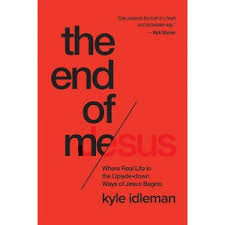
The End Of Me by Kyle Idleman

end me

Popular author Kyle Idleman examines the paradox of the Christian life. When Christians overlook that paradoxical nature of our faith, they inadvertently follow the world, even to its feckless results and hollow living. This book calls us back to what our culture blinds us to.

Though based loosely on the Sermon on the Mount, I would not categorize this an exposition. It strikes me as much more belonging in the Christian living section. I was picturing A. W. Tozer walking out in a hip suit and talking in modern slang. Of course, Tozer would never do that, but perhaps you get the idea.

The book is divided in parts with four chapters each. In the first part, Where Blessings Begin, he writes on brokenness, mourning, being humbled, and being authentic. Authencity is a popular concept these days, but the others are rarely spoken of. His version of authencity is far better than much of the “I am just me” that passes for authenticity  in many places. In this first part, I thought the chapter on being humbled was the best and most challenging. The more I think about it, though, I wonder if that says more about me than the book.

I underlined several lines throughout the book. For example: “But it’s so easy for me to put on a show, add a little extra, be more than I am. Every instinct I have tells me to cover my sin deeply, to stamp a big smile across my face, and to give the impression that I have all the answers. But getting to the end of me means getting over myself so the real me can experience the real life in Christ.” See what I mean?

The second part goes on, as you might imagine, to being filled with Christ after being emptied of self. It is well done throughout. I commend Mr. Idleman for writing on these that are sorely needed but run contrary to most of what we hear these days. This is a good read.
I received this book free from the publisher. I was not required to write a positive review. The opinions I have expressed are my own. I am disclosing this in accordance with the Federal Trade Commission’s 16 CFR, Part 255.
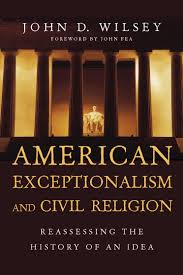
American Exceptionalism and Civil Religion by Wilsey

american ex

Have you ever read about a subject that you have known for a long time that you needed to have deeply thought about, but had not? That is the experience I have had in this unique volume. I am a Christian and consider myself first and foremost a follower of Jesus Christ. At the same time, I am one of those old-fashioned patriotic types who can get a lump in my throat in a whole variety of patriotic settings. Mr. Wilsey forced me to reconcile some things where I had never done so before.

He clearly had a Bible first and patriotism second attitude of which I agree. I even saw the traces of that same patriotic background in his life. I could show you several sentences and paragraphs in this volume, and even some historical assessments where I could not agree, but he gave me the tools to evaluate this issue. My final conclusions were not far from his when I finished.

He distinguishes throughout the book a helpful “open exceptionalism” and a “closed exceptionalism” that conflicts with Christianity. His categories may not always divide as neatly as they do in his mind, but his point is well made.

I intend to use what I learned in this volume going forward. It’s scholarly and helpful throughout.  I know of no other book quite like it and I highly recommend it.

I received this book free from the publisher. I was not required to write a positive review. The opinions I have expressed are my own. I am disclosing this in accordance with the Federal Trade Commission’s 16 CFR, Part 255.