The Letter to the Hebrews by Grindheim

He did it. He had big shoes to fill, but he replaced the Hebrews volume in this much-beloved series. He had big words to live up to as well. After I had almost finished the Introduction and was becoming impressed with Sigurd Grindheim, who I had never heard of, I turned back to D.A. Carson’s Editor’s Preface and read the high praise of “lucid brevity” among other things and found he lived up to that too. High expectations I found had been met and exceeded.

What makes this a winning commentary? First, it’s the breath. It’s noticeably impressive. It would take a far better man than me to think of something about Hebrews that he hadn’t fully surveyed. Second, it’s the writing style. Complex things sound simple without an ounce of superficiality. Third, it’s the sparkling theology that can keep the big picture in focus. If you force me to find a flaw, occasionally he led you right to the end before you could figure exactly where he stood, but even that criticism is a stretch.

The Introduction is thorough in its coverage, brilliant in its synthesis and thoughtful in its conclusions. I’m shocked I would say this, but his discussion of authorship and date was riveting. Scholars en masse have rejected the idea of a Pauline authorship, but his fair and balanced presentation led me to believe it’s not as unreasonable as you would think. That is not his conclusion, but that shows the magnanimity of his writing. Audience and occasion are well related while Structure is presented with the most reasonableness possible. I’m forced to agree with it. Rhetoric, an unavoidable issue in Hebrews, is evenly portrayed. Reception gets a deep turn, but as you will see, the doctrinal battles of the church must stop by the door of Hebrews. His discussion of theology kind of suggests theme as much as theology and is winsome all around.

From there, the commentary had little chance of failing. Everything you need for exegesis is neatly packaged, but then, and here’s the neat part, you are left with the essence as well. Commentaries served up from this recipe will gladly find me feasting at its table.

I received this book free from the publisher. I was not required to write a positive review. The opinions I have expressed are my own. I am disclosing this in accordance with the Federal Trade Commission’s 16 CFR, Part 255.
The Minor Prophets: A Theological Introduction by Bartholomew & Thomas

There are several nice volumes on the Minor Prophets available these days, but this one stands out. Its subtitle “A Theological Introduction” spells it out exactly. Think of it like this. You are receiving a nice introduction to each of these prophets as might be found in a major commentary on any one of them, but with the exceptional emphasis on theological matters over the minutia that sometimes engulfs said commentaries. In other words, here are introductions that get at what you really want to find.

The first two chapters set the stage. I found chapter 1 as a fascinating recap of how the scholarly world approaches studying the writings of the Prophets. Some of it is helpful while some of it might be something of overanalyzed conclusions. For example, sometimes scholars keep finding new genres to break things down into that in no way could have been on the original writers minds. They rehearse among themselves until they are thoroughly convinced, but some of us are a tad bit skeptical. Still, the authors here present this information in a succinct fashion that is really helpful. The overall layout and the charts only make it better better.

From there, every prophet gets a chapter that overviews the big picture and finds theological themes. I found this rich throughout. Obviously, structure is thoughtfully observed. In several cases, the prophet gets a second chapter plumbing some key theme. Some of those are more apropos than others, but all are worthwhile. Each chapter ends with a brief listing of recommended further reading.

I like this book to the point that I will never do a deep study of any individual Minor Prophet in the future unless I consult this book. It is a good one.

I received this book free from the publisher. I was not required to write a positive review. The opinions I have expressed are my own. I am disclosing this in accordance with the Federal Trade Commission’s 16 CFR, Part 255.
Numbers (BCOT) by Mark Awabdy

Think of all the people you know that see Numbers as their favorite book in scripture. In that blank space, I should find a nice opportunity to divert your attention to this review. Baker now has a second book of the Pentateuch covered in this newly emerging series. Clearly, this is going to be a major series.

I am not familiar with Mark Awabdy. It didn’t take me long to realize that he has a very distinct writing style for these types of works. In fact, it is almost as if the tone even was different. I’ll be curious to find out later if he strikes other people besides me in that same way.

Outside of style, he is clearly an accomplished scholar. He does write a tad bit more in a scholarly style than is my preference, but he has a lot of depth and shares a lot of information. In my view, he is solid on most fronts, whether that be exegesis or structural analysis of the text or even theology. On the negative side, he’s more accommodating to redaction criticism than I am comfortable to see. There’s a lot more to this book than that, but it is still distinctly noticeable to me. It’s like having a pretty good dish and adding the wrong spice. Were you to agree with his approach to redaction criticism this might be one of your favorite commentaries.

The introduction has a lot to ponder. The concentric rings of genre shown on page 11 do not seem particularly plausible to me while his overall ideas of structure were on target. As you might expect, I could not get on with his section entitled “composition” at all. Getting past that discussion will lead you to some pretty good theology.

When you get into the commentary proper, the trends of the introduction are still plainly seen. His reaction criticism is his escape hatch to get away from the question of the historical validity of the numbers given in this book. Look at, for example, his commentary on 1:44-54. That analysis won’t float for me.

Still, the mixture of exegesis and theology mitigate some of the criticism and renders this volume an asset. I would not make it my first choice on the book of Numbers, but it is still a nice book to have, and can teach you much. Mark my word, this is going to be a major series, and we are going to want to have all of its volumes.

I received this book free from the publisher. I was not required to write a positive review. The opinions I have expressed are my own. I am disclosing this in accordance with the Federal Trade Commission’s 16 CFR, Part 255.
1 & 2 Thessalonians (WBC) [Second Edition] by Bruce and Kim

I’ve been looking for this volume for years. It was announced so long ago that I wondered secretly if it was never going to come to pass. At times it was portrayed as a simple updating by Seyoon Kim of F. F. Bruce’s well received work of years ago. Well, let me tell you that that is not what it is. This is a major new production. There are very few of Bruce’s words that actually remain. That Kim is a protégé of Bruce is the real connection that remains. Apparently, Kim felt that an entirely new work needed to be written, and, as it turns out, it is the commentary section itself that is rewritten. This was the right choice for this work. Most of us already possess Bruce’s work, so what Kim has done is much more valuable to us.

To be sure, there is incredible breadth here. It was a little more technical than I expected, and then in some cases a little more than I would even want. But that is a matter of taste. The introduction ran to near 120 pages. Some of that is for the scholars only, but there’s a lot of good material for any of us. I like the way he introduced topics, compared options, and then gave a conclusion. So many modern commentaries never clearly give us conclusions. I’m a fan of conclusions. Whether I agree with them or not will be based on the evidence presented, but if a work is written without an eye toward conclusions, it often is little more than a barrage of words. For the record, I like and agree with several of his conclusions.

The commentary proper is in the well-known and often discussed format of the WBC series. I’m yet to find someone who professes it to be the best format, but we are all used to it by this point. Perhaps it has more value than some think because it separates out some things that some of us would not necessarily want.

I told you it was technical. There’s a lot of Greek given, but usually the English phrase is next to it and still easy to follow. I felt what we were given in the Form/Structure/Setting sections of each passage was especially good and filled with insights. You can’t be this detailed and not have several places where readers disagree with you, but again, his clarity of argument propels this work into the very helpful category. I recommend this work, and hope that it is the first of several new releases in this venerable series.

I received this book free from the publisher. I was not required to write a positive review. The opinions I have expressed are my own. I am disclosing this in accordance with the Federal Trade Commission’s 16 CFR, Part 255.
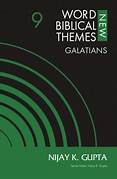
Exodus by Victor Hamilton

Perhaps you say, this is just a release of a book in paperback that has been around a while. While you’d be technically correct, you’d still be missing the point. Some commentaries are out of date in a few years while others last decades. Do you wonder why that is? It’s two things really: a) approach, and b) how well they say what they say. If you go hyper academic, you’ll be soon laid aside. If you can dig out what Scripture is really saying, that has more a timeless feel. You must, of course, be able to share penetrating thoughts in a way we can catch or you’ll fail over time as well even if your content is good. Victor Hamilton can do what it takes for a winning commentary. Being in a popular series, his Genesis is more well known, but this work is in that vein. Perhaps it’s more streamlined, but there’s real quality throughout. Back to this paperback release—any way to get a great commentary in a better deal is cause for celebration.

This commentary only concerns itself with what’s important. It’s not a devotional commentary that always runs to application, but rather one that so carefully draws out the theology that the application is obvious. Far and away, it’s best strength is the biblical theology that it provides. It wisely avoids critical minutia and goes hard after timeless insights into our story with God.

The exegesis is to the point and superb. Much learning guides this work more than learning just paraded through it. The commentary on each passage gives what I consider to be distinctly helpful.

Most people mention how this commentary is not in any major series, and that only proves it had nothing to prop it up. It’s just simply good. I’m so glad to have it.

I received this book free from the publisher. I was not required to write a positive review. The opinions I have expressed are my own. I am disclosing this in accordance with the Federal Trade Commission’s 16 CFR, Part 255.
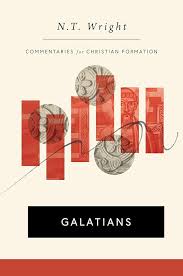
Leviticus (ZECOT) by Jay Skylar

Sometimes a trial run really helps. Jay Skylar already worked through Leviticus in the TOTC series. From there to here we traversed from good to really good. To be sure, the forest was even better than the impressive trees. I love commentaries that can see the grand vistas as well as they can examine a pebble on the trail. That’s what you get here. More impressive is that I’m saying that on Leviticus! Can you believe it? Leviticus. You know, the book where annual Bible reading plans come to die.

I’m really suggesting that you find life here where so many expect dust. Part of the credit goes to Leviticus. In one of the best-kept secrets of the Bible, Leviticus really is a fascinating, and even stimulating, book. Still, some of the credit goes to Mr. Sklar as well. Despite the treasure of Leviticus, whole commentaries have been written without finding even a particle of it. Rather than obscuring the light of Leviticus, Skylar opens the window for it to shine.

You see it right away in the Introduction. Immediately, he orients Leviticus into the big picture. For example, he says in Leviticus we have a “return to God’s Purpose in Creation.” It’s not a stretch. He concludes conservatively on authorship and date. He makes his case briefly, but convincingly. When he next turns to theology, he excels even more. I especially loved his explanation of holiness. Categories of sin are also a rich study. Finally, he provides real guidance on how to decide which are laws are still applicable. When he explains ritual, the discussion develops to the NT. There’s a little structure discussed and a detailed outline given, but structure is more developed in the commentary.

Having laid a grand foundation, the commentary is all you could want. In my opinion, the style of this series well matches Skylar as a writer.

We’ve used Ross, Hartley, and Wenham for a long time. This work is in their category, maybe even taking pride of place.

I received this book free from the publisher. I was not required to write a positive review. The opinions I have expressed are my own. I am disclosing this in accordance with the Federal Trade Commission’s 16 CFR, Part 255.
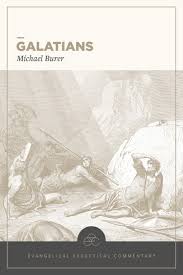
Revelation (BECNT) by Thomas Schreiner

I was surprised to see Schreiner in Revelation. I unfairly had him as a Paul guy only in my mind. It turned out those skills that he is well known for on Paul are found here.

This commentary is, without doubt, a major work on Revelation. It walks in the room and joins the big boys. But just like the other champions of the modern major academic, exegetical commentaries this one takes an “eclectic” viewpoint. That’s the rage of the hour. Doesn’t make anyone too happy, but then again not too angry either.

Like me, you may not take an eclectic approach but rather a specific viewpoint in one of the major categories. Will you still be helped by this commentary? I think you definitely will.

What are its strengths? Impeccable scholarship stands out. Sometimes that’s a pile of dry bones, but here it has life. Here the scholarly “interacting” pays off. It begins in the Introduction and continues in the commentary proper. Here the interaction necessarily involves the different perspectives and that enlightens no matter where you come from.

Another asset of this commentary is its tone. He fairly represents other viewpoints and humbly assesses and shares his own. I often don’t exactly agree, but he’s easy to follow. It’s easy for me to weigh as I’m looking at a fairly represented picture.

I wouldn’t call the structure of Revelation as a whole a strength here. Perhaps that’s the collateral damage of an eclectic position, though he gives a serviceable outline. He does give, however, some nice thoughts on structure in the smaller periscopes.

I’m convinced he sheds light in each passage no matter your overall prophetic outlook. Outside of one that lines up perfectly for you (rare), what more could you ask for?

I received this book free from the publisher. I was not required to write a positive review. The opinions I have expressed are my own. I am disclosing this in accordance with the Federal Trade Commission’s 16 CFR, Part 255.
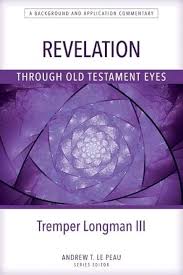
Philippians (ZECNT) by George Guthrie

This latest volume in the ZECNT on Philippians is a work of mature scholarship that possesses all the warmth you could hope for. Guthrie particularly succeeds in taking rich detail and weaving a tapestry that displays an inviting picture of what’s really going on in Philippians.

Guthrie takes all the pieces that you look for in a commentary and actually fits them all together rather than offering us a collection of near unconnected parts, which describes many commentaries today. Some of those might be indispensable, but we can enjoy one like here where all the pieces do in fact make a whole.

You will see what I’m talking about in the Introduction. It’s masterfully done. Things that are dryly given in other works here are marshaled into a view of a wide horizon. It’s not just what Paul said, but why he said it. As a case in point, notice the section on crafting the letter, particularly “The Church in Philippi and Paul’s Reasons for Writing”. That was eye opening for what’s really going on in Philippians. Still, while I’m bragging on his forest, there are enough trees here to fill the appetite of the more rigorous types.

The Commentary proper carries on what the Introduction began. The rich details are woven into an incredible unveiling of structure. Structure, as you may recall, is an aim of this series. I might not have thought of structure as being so essential to Philippians, but Guthrie proved me wrong. I say that even as I admit that some parts of this letter’s structure are baffling.

Philippians is much loved by all of us, but writings on it can easily grow stale. They can drown in a nebulous sea of joy as if that is all this letter had to say. There’s no drowning here! This is a keeper.

I received this book free from the publisher. I was not required to write a positive review. The opinions I have expressed are my own. I am disclosing this in accordance with the Federal Trade Commission’s 16 CFR, Part 255.

Proverbs (CCF) by Goldingay

In the last 5 years I’ve reviewed 6 commentaries by Goldingay. The amazing thing is not that I reviewed them, but that he had that many I could review in that span. I recently learned that he has Ezekiel and Leviticus in the pipeline too. He will probably do the entire New Testament next year.

This one on Proverbs is slightly different than the others in a couple ways. First, this series, Commentaries for Faith Formation, is different. It’s new, it still wants exegesis, but some application too. I’m not suggesting it’s lightweight, just that its aims are wider.

Second, Proverbs does not have the same opportunities for going off the reservation that appears in spots with Goldingay that makes you want to strangle him. (Sorry, wild streaks of hyperbole come out of me when I encounter Goldingay). Strangely, still, is that despite his frustrating tendencies, I always want his next release. That either says something good about his writing or pathological about me.

To be more straightforward, the thing about Goldingay is that he writes well. Sometimes he’s provocative, sometimes even bombastic, but you want to read the next paragraph. I saw it over and over in these Proverbs. Perhaps I wouldn’t have thought that Proverbs best matched his skill set, but it sure turned out to match his writing style.

The Introduction is a little flimsy, but I suspect that’s by design for this series. Future volumes, I guess, will bear that out.

When I commend his writing style, I’m not even remotely saying its fluff. All the benchmarks of a seasoned, albeit hyperactive, commentator are on display here. This is a substantial volume as long as you understand the aims of the CCF. The advanced end of the spectrum will still appreciate it, but it might be more usable than some of his works on the other end. In that vein, I judge it a broad success.

I received this book free from the publisher. I was not required to write a positive review. The opinions I have expressed are my own. I am disclosing this in accordance with the Federal Trade Commission’s 16 CFR, Part 255.

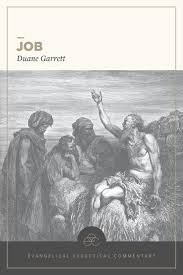
Job (EBTC) by Barry Webb

I’ve read Barry Webb in other places and liked his work, especially in Five Festal Garments, so I was excited to see him in this EBTC series. The series itself has found its niche and is off to a good start.

The Introduction of 88 pages, quite lengthy for a commentary of this type, succeeds in theology while I just couldn’t get on with the Wisdom as the controlling theme rather than, say, theodicy. Read his arguments and decide for yourself, but that strikes me as making the secondary primary. His presentation of history and genre didn’t ring the bell for me either. His discussion of structure was good as far as it went. When he got to theology, his work grew much richer. These Introductory issues do not define this work for me, but they are its weakest features in an otherwise nice work.

The commentary proper struck me as thoughtful. Real wrestling with the text occurs and that’s why this work ends up being a good one. Strangely, those occasionally bizarre discussions between Job and his three friends is where he did his best work. He really contributes there. Maybe that stuck out to me because I always found those speeches the more bewildering part of Job.

This commentary is a fine one to have alongside the larger works. Make this one an additional resource to spice up the theology and gain additional insights with those speeches. For those contributions, I’ll give it a solid recommendation.

I received this book free from the publisher. I was not required to write a positive review. The opinions I have expressed are my own. I am disclosing this in accordance with the Federal Trade Commission’s 16 CFR, Part 255.