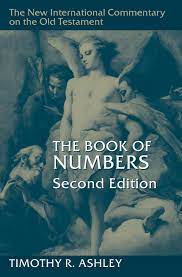
Numbers (Second Ed.) [NICOT] by Timothy Ashley

In the recent spate of new releases in the New International Commentary on the Old Testament (NICOT), we get this updated commentary on Numbers by Timothy Ashley. The first question, obviously, is what is different here from the original edition. Fortunately, he tells us right up front in the preface. First, he tries to take in a sampling if what’s been written in the last 25 years. Second, he changes a major earlier emphasis on arguing against the Documentary Hypothesis. Though he was on the right side of that issue, there could hardly be a more wasted labor than that of surveying the garbage can where that theory now resides. So this update has to be better!

For starters, this commentary has been rated in the top few on Numbers since it was released and the intervening years and releases of new commentaries did nothing to knock it off its perch. I’m convinced this update will keep it relevant and important for the next 20 years. The changes weren’t dramatic because its value was already established. The editors clearly made a wise choice in retaining Ashley.

The bibliography is quite large, though there aren’t as many post-1993 listings as you might have anticipated (where is Dennis Cole?). The Introduction is only 20 pages, but it does get sufficiently to the heart of the matter. Apparently, he prefers to discuss more issues in the commentary proper itself as that part is rather full. Structure gets short discussion, but it is not really debated as much as other books anyway. He still has an-depth discussion on authorship and composition that assumes sources and editing, but focuses on the final form of the text that he believes is authoritative. His section on theological themes looks at Numbers chronologically and well develops those themes. He is brief on his discussion of text and versions, but most of us would find little loss there.

It’s the commentary proper where this volume excels. The exegesis is masterful and top-flight. I couldn’t agree with his skepticism of the large numbers we find in this book, but otherwise there is all you’re looking for in a major commentary. In fact, the quality of the exegesis compensates for any criticism that you could level at this book. For that reason alone, the impressive exegesis, I must label this commentary 5-star all the way!

I received this book free from the publisher. I was not required to write a positive review. The opinions I have expressed are my own. I am disclosing this in accordance with the Federal Trade Commission’s 16 CFR, Part 255.
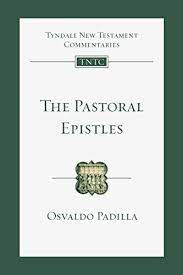
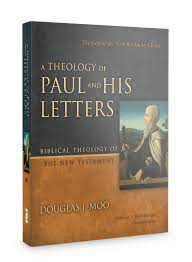
The Pastoral Epistles (TNTC) by Osvaldo Padilla

Here we get a brand new entry in the Tyndale New Testament Commentary (TNTC) series, in this case covering all three Epistles that make up the Pastoral Epistles. The new author in this replacement volume is Osvaldo Padilla. His writing matches what I saw in an introductory work on Acts of his that I encountered a few years ago. He writes clearly and yet his academic background is ever evident.

He begins his Introduction by discussing authorship. He surveys from the early church to the eighteenth century. Since very few doubted Pauline authorship for centuries, he quickly shares that he agrees, along with a clear affirmation in the veracity of Scripture at large. From there, he suggests textual reasons for agreeing with that premise of Pauline authorship. He works his way to the Enlightenment and the forces at work of those days that derailed belief in Paul’s authorship. It was an interesting overview. His conclusions are solid.

Genre comes next and again he explains the scholarly options well. Sometimes genre is an overdeveloped idea by scholars where it’s unimaginable that authors thought through so many categories before they wrote. Even more troublesome is how scholars often draw bold conclusions for the whole epistle on what is really hairs split three or four times. In any event, it’s clearly laid out here.

He addresses the recent debate about the Pastorals even being linked as a unit. His argument that the linkage is more theological than a historical uniformity is well played. He also makes good observations on the occasion of the Pastoral Epistles.

My only criticism of the Introduction is how he, after helpfully pointing out the use of “good works” and “godliness”, too strongly ties their usage to addressing Greek ideas rather than their straightforward Christian meaning. He then carries that reasoning to the commentary proper and uses it, in my view, to get around some of what the “household code” is stating . In those places, if you’re keeping score at home, he closely aligns with Towner and Marshall. To be sure, I’m in more of a minority position than him, but in any event you have your own opinion.

Please don’t think I’m downgrading the commentary overall because I disagree there. That’s just one little portion of the Pastorals and I love his theology, particularly on the Trinity, Christ, the Spirit, and salvation. He commentates exactly as this series is designed and it’s truly helpful. You can make good use of this book.

I received this book free from the publisher. I was not required to write a positive review. The opinions I have expressed are my own. I am disclosing this in accordance with the Federal Trade Commission’s 16 CFR, Part 255.
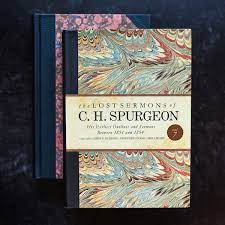
A Theology of Paul and His Letters by Douglas Moo

Every volume I’ve encountered in this Biblical Theology of the New Testament (BTNT) series has been excellent. As much, or maybe more, than the others this volume by Pauline scholar Douglas Moo shows expert handling. You wonder if there are absolutely no issues however minute that Moo doesn’t know all about involving Paul. Having written major, and I might add well received, commentaries on Romans, Galatians, Colossians, and Philemon, who could have been better positioned to write this work? As he relates in the preface, he worked on this project over 15 years. It was bound to be good and it is.

When I first picked up this volume, my thought was that it seemed to be laid out differently than the others in the series. The design appeared pedestrian and early on he relayed that he felt more comfortable in the trees than in the forest, that he enjoyed exegeting a text more than taking these big-picture views. Naturally, I lowered my expectations…until I read far enough to realize that he had misled me. The design was perfect because of the excellent work he did within it. Further, I felt he took me high enough to get a clearer forest view than I had. He knew every ditch that scholarship had run into, but he stayed on the highway. He wrote as one of whom Paul’s writings had pierced his heart after filling his head. Are we so jaded these days that we have forgotten just how much that can elevate a work like this one?

I enjoyed chapter 2 on the shape of Paul’s thought. In fact, it well illustrates what I said above. He sifted so much of the scholarly refuse to blaze a straight path to the mountain top. Along the way, you saw his honesty too. He had occasional small deviations to the normal conclusions of the bunch he runs with, but he seemed bound to tell where his studies took him. Let’s call it refreshing.

After that chapter you are better equipped to traverse his discussion of Paul’s life and ministry. After that, he takes each Pauline epistle in turn. You will feel in the hands of a master throughout. It is not a commentary, but has as much awareness as found in one.

Part 3 backs up and talks about the collective theology that you’ve already been collecting in the book to that point. Read enough to get his concept of the “New Realm”. It really unifies his entire presentation. Taking the three parts of this book together is somewhat akin to looking at Paul through a prism. Paul’s lofty contribution is key to our faith and worthy of such a grand view. This book provides such a view in a way that few ever have.

I received this book free from the publisher. I was not required to write a positive review. The opinions I have expressed are my own. I am disclosing this in accordance with the Federal Trade Commission’s 16 CFR, Part 255.
Others in the series:

https://thereaganreview.com/2017/08/19/a-theology-of-james-peter-and-jude-by-davids/

https://thereaganreview.com/2017/03/31/a-theology-of-johns-gospel-and-letters-by-kostenberger/

https://thereaganreview.com/2017/03/12/a-theology-of-marks-gospel-by-david-garland/

https://thereaganreview.com/2012/07/26/a-theology-of-luke-and-acts/

The Lost Sermons of Spurgeon (Collector’s Edition) Volume 7

The best one yet! We are now 7 volumes into this incredible series. Spurgeon lovers are thrilled. All lovers of great sermons should be. Spurgeon was special. He is, without any hyperbole, unique in Christian history. For preachers, there could hardly be one greater than Spurgeon to teach you what life in a sermon looks like. As you can tell, I love Spurgeon!

So why is this volume 7 the best one so far? First, it’s bigger. There are more of these extraordinary sermons. The more Spurgeon the better. You’ll be surprised by the sheer weight of this volume in your hand. The design is like the previous ones, but even the hue of this one is best. Beyond the sermons are all those luscious pictures for the Spurgeon collector. The traces of a labor of love are everywhere apparent in this book.

Second, it is finished! If you take the time to read the introductory material, you will see that the editors decided to put all the remaining sermons in this volume. Now you can secure the whole set if you’ve not been collecting as you go.

The sermons themselves are best described as very full outlines, but follow Spurgeon’s usual way of preaching all over the Bible. All of them are great and some of them are exceptional.

Besides recommending and rating this volume highly, I must also thank the publisher for this whole project. What a gift for us. What an accomplishment by them. Do you want quality and beauty on your shelves? Then this is for you!

I received this book free from the publisher. I was not required to write a positive review. The opinions I have expressed are my own. I am disclosing this in accordance with the Federal Trade Commission’s 16 CFR, Part 255.

Deuteronomy 1-11 (NICOT) by Bill Arnold

Bill Arnold gives us here the first of two volumes to replace the long-used work of Peter Craigie in the venerated NICOT series. Deuteronomy is one of the pivotal books of the Old Testament, so it is key to the success of the series. Bill Arnold, who has become the editor of the series, tackles Deuteronomy himself. What he has delivered is a quality work of mature scholarship.

The thorough introduction begins with background on narrative horizons and unity of composition that really highlights structure and distinctive features that actually open up the big picture for Deuteronomy. As he continues, he dives deep into how scholarship has thought of Deuteronomy including the famous redaction criticism that dominated Deuteronomy studies for decades. Though the theories of Graf-Wellhausen and Noth strike me as intensely rancid as found on the trash heap where they justly landed, Arnold laid out that history in an understandably, and I must add, surprisingly for me, an interesting way. Arnold is more accommodating to some ideas than I feel comfortable with, but he compensates for me with tone and clear writing to still find much value.

I enjoyed the rest of the Introduction and thought its greatest strength was its big picture presentation rather than some occasional details that seemed suspect to me. The theology section was especially rich and seemed to work in more big-picture analysis that delivered more than you get in many such theology overviews. He kind of showed off his scholarly prowess here in an accessible way.

The commentary proper covering Deuteronomy was all you would hope from a series designed like the NICOT. Mature, thoughtful, thorough, even penetrating, all come to mind. I will look forward to the second volume until it arrives. This volume will easily be one of the better major commentaries on Deuteronomy. For example, I thought it a more successful production than McConville’s Apollos volume on Deuteronomy.

NICOT is really picking up steam as a series and this one treats Deuteronomy with the star treatment it deserves.

I received this book free from the publisher. I was not required to write a positive review. The opinions I have expressed are my own. I am disclosing this in accordance with the Federal Trade Commission’s 16 CFR, Part 255.
The Glory of God and Paul (NSBT) by Morgan and Peterson

Wonder what they will say? That was my first thought when I saw this title by Christopher Morgan and Robert Peterson in the NSBT series. The glory of God is a concept that you think is self-apparent, at least until you try to express it. Then circular definitions and hollow platitudes roll off your lips. To be truthful, this title upon hearing of it didn’t excite me as some in this series, but equally in truth, I am excited to think upon what it showed me. The glory of God is a subject, as shown here, that pervades Scripture and clearly must be crucial to understanding our God.

The first two chapters take you to school on the glory of God. The various ways scholars define it is brought out, not just to ascribe scholarly labels, but to reason through to real understanding. Explaining God’s glory as being both intrinsic and extrinsic was the apex for taking the reader to mastery of the subject. This section was so worthwhile and revealing.

The reason the title of the book adds “and Paul” is because in the subsequent chapters the concept of the glory of God is fleshed out in the epistles of Paul. The theology and the exegesis of specific passages seemed spot on.

The variety and quality of this series always impresses as is certainly the case here!

I received this book free from the publisher. I was not required to write a positive review. The opinions I have expressed are my own. I am disclosing this in accordance with the Federal Trade Commission’s 16 CFR, Part 255.

Sermons on Job (3 volumes) by John Calvin

This is a publishing event! Fortunately for us, Banner is the publisher, and as you likely know, still puts effort into publishing beautiful, quality books that will last. Beyond acing the eye test, what we get between the covers of these three volumes is even more exquisite. These sermons on Job have long been considered among his finest. I’ve often told people not to think of him in terms of the theological system that bears his name, but as either a commentator or expositor. People across the theological spectrum can learn from him both content and the art of how it’s done. You don’t have to agree with every word he says, but you’ll be all the better for wrestling with them.

Since Calvin wrote in French, most of us need a helper to get at his sermons. Rob Roy McGregor, in my view, has excelled in translating and updating these sermons with words that flow beautifully. In fact, you can be reading these sermons and totally forget the centuries that have passed since they were preached. They could easily have come from our day in terms of readability.

While you’d be crazy to preach 159 sermons on Job, you’d be wise to read these 159 sermons on Job to prepare to teach or preach Job. So often, I’ve read later works on Job and found Calvin quoted. That’s not an accident. Sometimes he squeezes more out of a verse than I think is legitimately there, but the interaction will help you arrive at the heart of the passage. Plus, if you’re studying just one passage in Job, the corresponding sermon in this set will be a boon to you.

I have not, of course, read all of the sermons yet. But I have read in different parts of the set to get the flavor of the fruit that is provided here. It is ripe and tasty. In the first sermon alone, he explained how Job made a bad case of a good cause with his friends made a good case of a bad cause! Now that’s what I call insight!

Be sure to check out the Translator’s Preface and the Introduction. You wonder if Calvin’s prolific physical suffering (he suffered severe health problems for years) made Job a personal favorite or even a needed friend.

What an awesome set to get! ( Now if we could only convince Mr. McGregor to tackle Calvin’s Jonah sermons next!) This set is a treasure that has not been available to us before and how blessed we are to get it.

I received this book free from the publisher. I was not required to write a positive review. The opinions I have expressed are my own. I am disclosing this in accordance with the Federal Trade Commission’s 16 CFR, Part 255.
Now and Not Yet (NSBT) by Dean Ulrich

The NSBT series marches on with this interesting look at the significance and theology of Ezra and Nehemiah. The NSBT series is truly a random series, but the volumes are often fascinating. We never know what is coming next in the series, but we’d be remiss not to find out. Dean Ulrich does good work here.

The title Now and Not Yet suggests the track the book will run. That thought that is found in many prophetic writings here tells of a new chapter for God’s people that will more fully climax in Christ. Many are reluctant to develop that line of thinking in the scholarly world, so we appreciate the openness here to embrace it.

Throughout this book we are confronted with Ezra-Nehemiah as if it were one book rather than two. He makes a good case and at the least it does no harm to study with that design. Though I enjoyed what he gave us, I wish he had developed the structure even more.

Chapter two well explained the big picture of biblical theology. Chapter three explained the history of the return from exile but the nuggets were all in the theology developed.

In a creative turn, the next three chapters address rebuilding the temple, rebuilding the people, and rebuilding the wall. That told the story in a framework that allowed the theology to bud. Chapter 7 shows what worked and what fell short. There his now-and-not-yet theme fully bloomed.

Isn’t it wonderful that these NSBT volumes keep coming along? I want them all, don’t you? This one is a sample of why.

I received this book free from the publisher. I was not required to write a positive review. The opinions I have expressed are my own. I am disclosing this in accordance with the Federal Trade Commission’s 16 CFR, Part 255.
The Identity and Attributes of God by Terry Johnson

I must best describe this book as pure joy. I’d heard good things about it, but had been warned that it is heavily imbibed with quotations. To my mind, that usually doesn’t work. In those cases the author seems more of a compiler than a writer. I wondered going in if this would be more of a good reference than a good read. The more I read, the more my weak expectations were proven wrong.

The book is full of quotations, so how did the author pull it off? By picking the very best quotes, by seamlessly weaving them into the work, and by then writing thoughtfully around them. In the end, you get rich theology for your mind and warmth for soul. This is not a compilation. This is a book!

This book doesn’t address ever attribute, but covers some of the most important ones to ingest. After a discussion of God, the Trinity, and what the incommunicable attributes are, those of God as Creator and of His providence are brought to light. One of the best sections was holiness. Another favorite was goodness. I gained so much from it. The one on love started slower but really pierced my heart by end.

The book ends abruptly, but the author has delivered another volume on other attributes from another publisher.

You’ll see a pastor’s heart and a theologian’s precision throughout your read of this precious book. If this book doesn’t help you, I doubt you’re even trying.

I received this book free from the publisher. I was not required to write a positive review. The opinions I have expressed are my own. I am disclosing this in accordance with the Federal Trade Commission’s 16 CFR, Part 255.

Christian Theology by Adam Harwood

Here’s a new Systematic Theology that fulfills a distinct need on two fronts. First, it’s a bit more manageable than most systematic theologies without sacrificing the needed depth. Second, it’s from a distinctly Baptist perspective. In that vein, it doesn’t follow the Calvinistic approach that clearly dominates the systematic theology market. That difference means you get more perspective as several other popular volumes are so closely aligned as to render some redundant.

There’s also a unique presentation here that allows one new avenues of thinking. As I was reading, I was struck with how this material was obviously honed through years of interacting with students. Every section was quite approachable and useful. Only in the section on Last Things did I feel he left some questions unanswered, or at least gave a briefer treatment.

Who would benefit most from this book? Pastors will appreciate it for sure. It would also be a boon to one embarking on their first attempt at a really deep, thorough study. Several other such volumes might sink your studies by their opaque style, but that is not the case here. Even if you can handle those volumes, this one still gives a different perspective like I mentioned before that makes it still particularly valuable.

I keep a stack of 3-4 systematic theologies always close by. This one will join them on that often-used pile.

I received this book free from the publisher. I was not required to write a positive review. The opinions I have expressed are my own. I am disclosing this in accordance with the Federal Trade Commission’s 16 CFR, Part 255.