Following The Christmas Story In The Bible

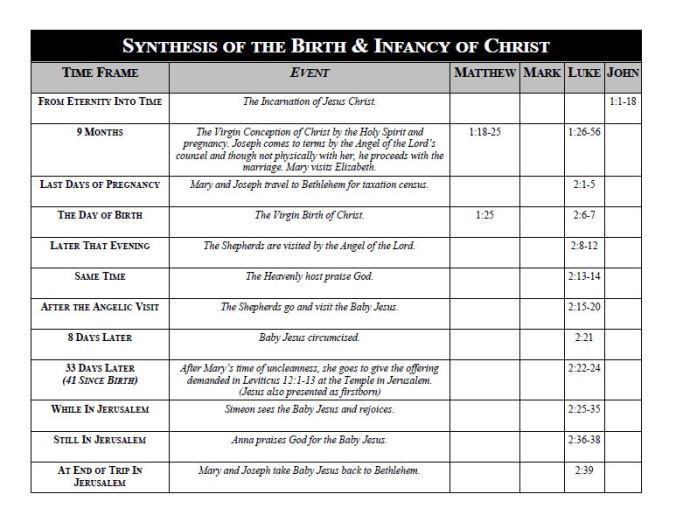
Synthesis of the Birth and Infancy of Christ (Click here for a PDF of the chart below. Feel free to print out for personal study.)

chripic1

chripic2

Sometimes following the Christmas story of the birth of Jesus Christ gets confusing for Bible readers. What time frame was involved? What happened on the night of Christ’s birth and what happened later? Did the Wise Men come the night of His birth? Etc.

The Bible speads the story out mostly between the Gospels of Luke and Matthew. Because of the critical nature of His Virgin Conception and Virgin Birth, the Bible tells that story in detail. Once Christ is taken by Joseph and Mary to Egypt, the details dry up. In fact, besides the detail of His leaving Egypt and returning to Galilee where He would grow up, nothing besides a trip to Jerusalem as a twelve-year old is mentioned until He begins His Public Ministry at age thirty. Apparently, we needed to see that like Israel He must go into Egypt and then return as she did. The similarities will end there as He will succeed in every point that she failed.

The chart here is designed to help you read the story in chronological order and keep your bearings. It is wonderful to see our heroic Savior in His incredible Incarnation. What great things it led to for you and me.

Happy Bible study and Merry Christmas!

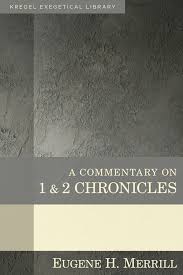
Chronicles by Eugene Merrill (Kregel Exegetical Commentary)

chronicles

Seasoned commentator Eugene Merrill gives us a full-scale commentary on an oft-overlooked portion of Scripture–the books of Chronicles. This volume is a fine addition to the developing series called the Kregel Exegetical Library series. I expected this to be an excellent volume based on several other commentaries by Merrill that adorn my shelves, and I was not disappointed!

His Introduction fills the first 70 pages. While as scholarly as you would expect, this Introduction covers issues in a way more conducive and interesting for pastors and teachers. More bizarre scholarly sidelines are ignored. His section on the historical and cultural setting was enlightening. When he tackled authorship, he had trouble believing the traditional viewpoint that Ezra wrote Chronicles. On the subject of sources, which often gets out of hand in many commentaries, he focuses on the 14 ones that Chronicles actually mentions. The section on theology is the best of the Introduction and quite well done.

The commentary proper is excellent. Even in something as difficult as the genealogies, he had fine application of theology. The charts there were a real asset too. I should mention that I found the footnotes far more helpful than in most such volumes.

This volume grades out at A+ and is clearly a top volume now on Chronicles.

  I received this book free from the publisher. I was not required to write a positive review. The opinions I have expressed are my own. I am disclosing this in accordance with the Federal Trade Commission’s 16 CFR, Part 255.

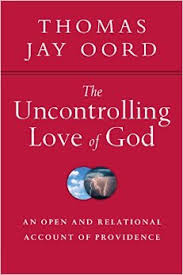
The Uncontrolling Love of God by Thomas Jay Oord

oord

This book tackles a subject that everyone thinks about at times–how to think about God in a world of profound hate and senseless tragedy. While the author, Mr. Oord, takes us beyond the hard feelings of questioning faith to the theology that can tries to answer the question, he even goes to science and philosophy along with the Bible. Without any fluff at all he takes us on a journey that demands we decide what we believe about the providence of God.

Mr. Oord brought out a potpourri of emotions in me as I read. At times I would feel I was reading a simple believer in Christ while at other points I would think how could he believe such nonsense.  In one place he would hold that Scripture is a trustworthy guide and at another he would speak of evolution as a settled fact. Here he would want to honor the Lord and His Word and there he would speak of science and philosophy as near equals to the Bible. 

His analysis of all the issues and what has been believed was simply superb. His writing was as good as acedemic titles get. His simple, little chart on page 83 crystallized the range of thought on providence. His description of every method was fair and probing. He was a careful thinker who would have no part in reducing the discussion to merely a Calvinistic/Armenian debate. 

When he finally turned to his own explanation that he called “an open and relational account of providence”,  I simply could not go along with him. Though he offered profound points, I could not put them all together as he did. He figured that God’s love was the controlling factor in all God did until providence could be deemed as the Uncontrolling Love of God.

To my mind he missed a major point. The Lord is better described as equally the God of love and the God of holiness/justice. I believe one could arrive at a better theology of providence with that focus.

Despite disagreeing with his ultimate premise, and some lesser ones on what God could do or miracles, why do I give this volume a pretty good rating anyway? He spurred my thinking until I had to decide what I believed. I will always count such a book good and helpful. I am truly glad I read this book and have it on my shelves to refer to in the future.

I received this book free from the publisher. I was not required to write a positive review. The opinions I have expressed are my own. I am disclosing this in accordance with the Federal Trade Commission’s 16 CFR, Part 255.

4 Exciting New Titles From Carta

Carta has four new titles that Bible students will love to check out!
jeru

This is the second of a planned four-title series that will make up The Carta New Testament Atlas. Steven Notley, already a co-author of the sweeping Bible Atlas The Sacred Bridge, contributes this fine volume. It is the perfect blend of history, text, pictures, and maps. Yes, it is the outstanding Carta maps! Together these features are a feast for the reader.

Bible students will be greatly enriched here and will find much to expand understanding and gain background in New Testament studies.  Carta has been reaching out to a wider audience in many of there later releases, and as much as i love them all, this may be the best so far.

I see an additional use for this book. Are you planning a trip to Jerusalem? I can’t imagine how much better such a trip would be if you read this book first.

This is a real gem!
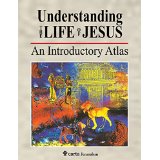
life jesus

Bible students will love this 40 page volume. It is more of a visual smorgasbord. The text is minimal so you have just enough to gain what the pictures and maps will give you. Some of the best of the famous Carta maps are here. Bible study groups, Sunday School classes, and of course, pastors and teachers will love this volume.

More economical than a full-scale Bible Atlas, but perfect if you are having an in=depth study of the life of Jesus.

We have here another winner!
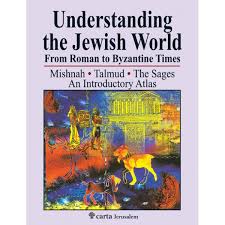
jewish

Do you ever wonder what happened to the Jewish World from New Testament times forward? Michael Avi-Yonah and Shmuel Safrai wrote this material in three larger works. What we have here is a more manageable 40 page work for Bible students. The editors have selected well in producing this for we who teach, preach, or study God’s Word. Many of us have a noticeable gap in our knowledge in this very area.

This book, in beautiful, large pages gives us what larger volumes give. the difference is what you have to wade through to get the information, and of course, price.

Another fine title from Carta!
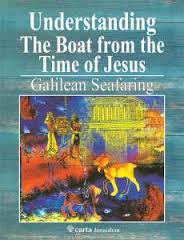
boat

No doubt this a specialty title, but when we stop and remember just how much of Christ’s ministry was by or on the Sea of Galilee, this is a fascinating title. Written by Shelley Wachsmann, this volume takes the discovery of a First Century Galilean boat that Mr. Wachsmann was part of and puts the whole idea of Galilean Seafaring in perspective.

The book begins with a background seafaring in NT times and even the legends of the area. All we know about travelers there from NT times to modern days is given. The rest of the book covers the discovery, the challenging excavation, and the careful preservation of this amazing discovery of a boat just like Jesus would have used.

I’ll call this volume–fun!

I received this book free from the publisher. I was not required to write a positive review. The opinions I have expressed are my own. I am disclosing this in accordance with the Federal Trade Commission’s 16 CFR, Part 255.
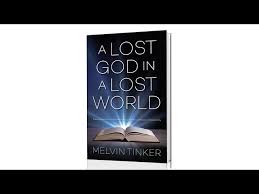
A Lost God in a Lost World by Tinker

lost

Are you sad about where Christianity is in our world today? Are you sure that it is mostly run amok? Do you wonder if you have your own head on straight? Then you will likely find comfort and guidance in this volume. Its subtitle “From deception to deliverance; a plea for authentic Christianity”  tells us that much of the problem could be the kind of Christianity many of us have.

The Foreward by David Wells and the author’s Preface are succinct, powerful, and well-written descriptions. Then, to carry the case forward,  we are treated to nine expositions from Scripture that strongly make the point. It is powerful, in my judgement, to let the authoritative Scriptures make the case. Though I might disagree on a sentence or two by the author, these are excellent expositions.

I particularly enjoyed his perceptive discussion of idolatry from Isaiah 44:9-23 called “When God Is Weightless”. Pride is also grandly exposed in his examination of Ezekiel 28 (I still see Satan where he does not, but his interpretation is the perfect application). Philippians 2:5-11 made an outstanding study on Christ and the cross. When we are discussing the big picture this book tackles we must make our way by Christ and His cross. He naturally ends with expositions on the Second Coming and a need to be heavenly minded.

This book is both thought provoking and a blessing, and I recommend it.
 

I received this book free from the publisher. I was not required to write a positive review. The opinions I have expressed are my own. I am disclosing this in accordance with the Federal Trade Commission’s 16 CFR, Part 255.
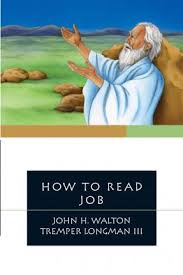
How To Read Job by Walton and Longman

read job

Here is a volume designed to help one get more out of reading the Book of Job. Scholars John Walton and Tremper Longman, both authors of larger commentaries on Job, team to make sense of what the Book of Job is means to us.

The earlier part of the book covers issues that you might find in a commentary introduction. Part 1 discusses Job as literature in four chapters. There are interesting things like the structure breakdown (check out the chart on page 21) and a discussion of tensions in Job. I felt the chapter “Is Job A Real Person?” a dud and overlooking the information that would demand him to be a real person.

Part Two gives six chapters on the characters in Job. Despite some interesting observations, the literary angle (characters as devices) was overdone. I could not follow the chapter on Satan at all.

Part Three is where the book blossoms. Explaining the retributive principle, how it could be misunderstood, and the true theological message of Job, all give us much to think about.  Trusting God is far more the point than getting answers in this life. The final part on reading Job as a Christian is not, in my judgment, as  good as the preceding theological section.

Still, I do not see how you could not be helped by reading this volume before you begin a study of Job. Whether you would agree or not with their conclusions, you would at least know well what the questions are. That is, of course, exactly what a book of this type should do.

I received this book free from the publisher. I was not required to write a positive review. The opinions I have expressed are my own. I am disclosing this in accordance with the Federal Trade Commission’s 16 CFR, Part 255.
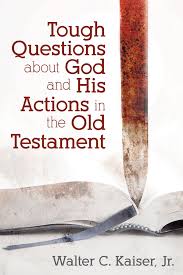
Tough Questions about God and His Actions in the Old Testament by Walter Kaiser

walter kaiser

This book lives up to its title. When it says it addresses tough questions, it actually tackles the toughest questions possible to hurl at the OT. The answers are not superficial, but show the deft hand of a seasoned scholar. Walter Kaiser, writing at the twilight of his career, shows his expertise in the OT. 

The book is a jewel. I found chapters two, three, and six on ethnic cleansing, truth or deception by God, and polygamy respectively to be the most profound. He completely educated me on polygamy. I actually have a firm conclusion on polygamy unlike I had before. I imagine you will learn much you didn’t know there too.

That is not to say all chapters are equally good. I personally found chapter nine on women quite a stretch. Still, as a whole I have never seen a book just like this one.

It will help you apologetically with questioners, it will help you shore up your own thoughts, and it will help you never denigrate the OT. The OT works with the NT and never against it. God is the same in both testaments. This book is a grand reminder.

Pastors, teachers, interested Christians, and even seekers will be blessed by this volume. I would recommend it to everyone!

I received this book free from the publisher. I was not required to write a positive review. The opinions I have expressed are my own. I am disclosing this in accordance with the Federal Trade Commission’s 16 CFR, Part 255.
Esther by Reid (TOTC)

esther

This is the first volume in the latest round of revisions in the outstanding Tyndale Old Testament Commentary (TOTC) series. The editorship has fallen into the capable hands of David Firth. Debra Reid supplies this replacement of the well-respected Baldwin volume in a winning way.

The Introduction, in 55 pages, covers the bases well for a volume of this size. If you are like me, you do not the excessive discussion on the literary style of the book as it often appears a charade to attack the historicity of Esther. Still, Reid covers what one must know to realize what scholars debate here. Canonization issues are sufficiently covered too.

I gleaned more when Reid turned to a discussion of style. She taught me several things I had not noticed before. Thinks like there is little direct speech in Esther, or how key the narrator is as compared to, say, Ruth, and character discussions are all very fascinating.

The commentary proper is even better still. The unique thing was the female perspective. There was no capitulation to feminism, but deep insights throughout. All in all, this is a fine, economical volume and I recommend it.

I received this book free from the publisher. I was not required to write a positive review. The opinions I have expressed are my own. I am disclosing this in accordance with the Federal Trade Commission’s 16 CFR, Part 255.
The Faithful Creator by Ron HighfieldHighlights

faithful

This volume tackles the tough questions, as the subtitle “Affirming Creation And Providence In An Age Of Anxiety” suggests. It is scholarly (I would guess graduate level), yet highly readable even if this is not your specialty. Dr. Highfield gives evidence of deeply thinking on everything involving these issues.

The book is in three parts: Creation, Providence, and the Problem of Evil. By the time you finish you will see that the problem of evil is where your beliefs on creation and providence are tested. I was genuinely impressed with the author’s presentation, logic, and fairness. Though he was a strong Bible believer and conservative in theology, he did not write to support one theological persuasion as much as addressing the hardest questions we Christians will ever hear or think.

Highlights include his explanation of the glory of God (pg. 111), his interaction with evolutionary biology (pg. 159), his description of reading the OT christologically (pg. 206), his phenomenal discussion of foreknowledge (pg. 226 ff), and his majestic handling of the problem of evil.

This volume will get the most prominent place on my shelves for this subject. I highly recommend it!

I received this book free from the publisher. I was not required to write a positive review. The opinions I have expressed are my own. I am disclosing this in accordance with the Federal Trade Commission’s 16 CFR, Part 255.
1 & 2 Samuel (Apollos Old Testament Commentary) by David Firth

samuel firth

This commentary on two of the more exciting books of the Bible is a real asset to pastors and Bible students. Firth is becoming quite the prolific commentator of late and tackles here another historical book of the Bible (since he rightfully argues the two are one book).

His Introduction is sufficient, and at 48 pages for a larger Bible book, it is quite succinct. While he writes well on genre and purpose, I couldn’t follow his thinking on authorship or sources–in fairness, it wasn’t radical. His explanation on narrative was insightful, but his discussion on central themes were spot on and the best the Introduction had to offer.

The commentary was by the far the best value in the book. He followed the standard Apollos setup with translation, notes on the text (just the right coverage for pastors), form and structure (with enough detail to explain its short discussion in the Introduction), comment (thought-provoking), and explanation (where he well ties it together).

I looked at several passages and enjoyed what he shared. He took extra care in the most famous passages (David and Goliath, for example). I had read criticism before I received this volume on his analysis of David with Bathsheba, and while I might fully agree with him there, he argued his point well. David did, as he said, not completely hide his sin from those he sent to get Bathsheba. He feels that David was more interested in getting Uriah out of the way to get the child than to hide his sin. I doubt that is true, but it does make you think!

This is a fine volume. As a point of comparison, this volume is fair superior to the well known Word Biblical Commentary volumes covering the same material. I highly recommend it.

I received this book free from the publisher. I was not required to write a positive review. The opinions I have expressed are my own. I am disclosing this in accordance with the Federal Trade Commission’s 16 CFR, Part 255.