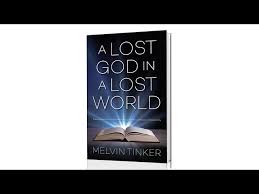
A Lost God in a Lost World by Tinker

lost

Are you sad about where Christianity is in our world today? Are you sure that it is mostly run amok? Do you wonder if you have your own head on straight? Then you will likely find comfort and guidance in this volume. Its subtitle “From deception to deliverance; a plea for authentic Christianity”  tells us that much of the problem could be the kind of Christianity many of us have.

The Foreward by David Wells and the author’s Preface are succinct, powerful, and well-written descriptions. Then, to carry the case forward,  we are treated to nine expositions from Scripture that strongly make the point. It is powerful, in my judgement, to let the authoritative Scriptures make the case. Though I might disagree on a sentence or two by the author, these are excellent expositions.

I particularly enjoyed his perceptive discussion of idolatry from Isaiah 44:9-23 called “When God Is Weightless”. Pride is also grandly exposed in his examination of Ezekiel 28 (I still see Satan where he does not, but his interpretation is the perfect application). Philippians 2:5-11 made an outstanding study on Christ and the cross. When we are discussing the big picture this book tackles we must make our way by Christ and His cross. He naturally ends with expositions on the Second Coming and a need to be heavenly minded.

This book is both thought provoking and a blessing, and I recommend it.
 

I received this book free from the publisher. I was not required to write a positive review. The opinions I have expressed are my own. I am disclosing this in accordance with the Federal Trade Commission’s 16 CFR, Part 255.

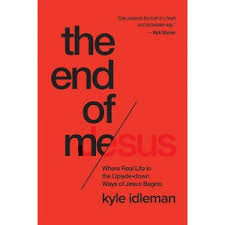
The End Of Me by Kyle Idleman

end me

Popular author Kyle Idleman examines the paradox of the Christian life. When Christians overlook that paradoxical nature of our faith, they inadvertently follow the world, even to its feckless results and hollow living. This book calls us back to what our culture blinds us to.

Though based loosely on the Sermon on the Mount, I would not categorize this an exposition. It strikes me as much more belonging in the Christian living section. I was picturing A. W. Tozer walking out in a hip suit and talking in modern slang. Of course, Tozer would never do that, but perhaps you get the idea.

The book is divided in parts with four chapters each. In the first part, Where Blessings Begin, he writes on brokenness, mourning, being humbled, and being authentic. Authencity is a popular concept these days, but the others are rarely spoken of. His version of authencity is far better than much of the “I am just me” that passes for authenticity  in many places. In this first part, I thought the chapter on being humbled was the best and most challenging. The more I think about it, though, I wonder if that says more about me than the book.

I underlined several lines throughout the book. For example: “But it’s so easy for me to put on a show, add a little extra, be more than I am. Every instinct I have tells me to cover my sin deeply, to stamp a big smile across my face, and to give the impression that I have all the answers. But getting to the end of me means getting over myself so the real me can experience the real life in Christ.” See what I mean?

The second part goes on, as you might imagine, to being filled with Christ after being emptied of self. It is well done throughout. I commend Mr. Idleman for writing on these that are sorely needed but run contrary to most of what we hear these days. This is a good read.
I received this book free from the publisher. I was not required to write a positive review. The opinions I have expressed are my own. I am disclosing this in accordance with the Federal Trade Commission’s 16 CFR, Part 255.

A Christian Looks At The ISIS Attack In Paris

paris

It is surreal to watch the television tonight. The attack in Paris, verified to be ISIS related, is large in scope and clearly takes us to a new level of danger in our world with its broad Islamic threat.

I have flashbacks to 9/11. People were dying at that moment and I remember when that was true on our soil. There is a huge difference even if the death toll is actually much lower in Paris. 9/11 was the days before heightened security and, of course, the cause of it. That is no longer the case.

Paris was attacked in January and was under the highest security alert possible. ISIS has become sophisticated enough to pull off a highly detailed attack now. That is bad for us all. With politicians finding controlling guns among law-abiding a bigger threat than ISIS, we can’t look to our leaders for actual leadership. In fact, our President just this morning proclaimed ISIS largely “contained”.

Another difference this time is that two of my sons are watching with me and are old enough to take it in. I can’t help but think of their future in this twisted world. A few friends on Facebook have already mentioned this scaring them. We won’t even know all the details for a while.

It seems to have come up a lot lately–a time to remind oneself that the Lord remains securely on the throne. My sons are in His hands, not mine! So I am reminding myself tonight. I am sitting here grateful for the salvation He gives and the constant watch care of me and mine. It’s good to know the Lord Jesus Christ. How about you?

Safe, but I will be praying too. Prayer will ever be better than panic. Again, how about you?

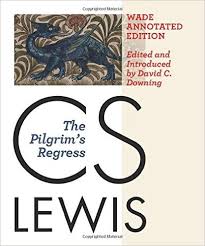
The Pilgrim’s Regress by C. S. Lewis–New Wade Annotated Edition

cs lewis

Although Lewis wrote this volume years ago, and Lewis needs no recommendation from me, this is a publishing milestone in this freshly annotated edition by David C. Downing. The Lewis volume, perhaps his toughest to penetrate, is opened up to us in such a greater way.

As for the book itself, it is an allegory in the vein of John Bunyan, yet in the style of Lewis. His Pilgrim takes quite a journey! Puritania captures legalism quite profoundly. Lewis fans will love it while new readers will enjoy taking in on.

The thing that stands out to me is how much I would have missed without Downing’s notes. I must confess that I would not have known most of what he shared had he not given this help. Downing has successfully taken a book that sounds well but would likely lose the reader and makes it more able to stand on the shelves as an equal to his other volumes. I imagine even Lewis himself would appreciate this edition.

It comes in a lovely hardback and includes original illustrations. All in all, this is a keepsake that I highly recommend.

I received this book free from the publisher. I was not required to write a positive review. The opinions I have expressed are my own. I am disclosing this in accordance with the Federal Trade Commission’s 16 CFR, Part 255.

A False Liberation (IBTR #77)

liberation

Have you ever seen someone run from such a bad, or legalistic, church or family that they ran headlong into some other oppressive situation? Have you, by chance, been that person? Have you seen someone who now loves to hear Bible criticism, or bad news of Christian’s failing, or approval of things clearly defined as sin in the Bible? I wonder if it is now epidemic to see such things.

C. S. Lewis says for some “it can be liberating to lose a faith based upon guilt, not grace.” For some that is such the case they can actually be glad to hear information apparently discrediting of Christianity.  This fact suggests three important things to us that affects differently across the spectrum:

1. It is truly liberating to leave a faith based on guilt.

Bondage forces us to crave freedom. It is quite perplexing when you are convinced that God demands the guilt as the way to Him. When you realize, however, that religious men have hoisted that system upon your back, you will likely run like a small child to a freshly-cleaned room to pull all the toys back out. It is liberating as grace delivers where nothing else will and it only dwells in the calming, safe region of the Lord.

If you have ever stumbled into the dark world of performance-based Christianity with its heavy, guilt-laden load, you will feel like you walked from the shivering cold into warm sunrays when you make your escape. It will be one of the greatest things that ever happened to you. The only danger is where you run to in your escape.

2. You don’t want to be a pastor, church, or Christian who puts people in this position.

Why be a recipient of grace and peddle bondage? Why pile burdens on people’s backs when you were called to proclaim a gospel of deliverance? It could be that we have drunk the Koolaid ourselves and are only passing it on because that is what the one who passed the Koolaid to us said to do.

We should want to see people run from the bondage of sin, but we should be horrified when their liberation came when they ran from us! This is simpler than we think. People will run to us if all we have is Jesus to give, but they will sprint away when we offer the cumbersome package of Jesus plus something else. We will hate to come to the end of the way thinking we propagated Christianity only to find we sold the cheap substitute of religion.

3. You don’t want to be the person who runs from legalism to some other bondage.

Some have their epiphany and run from a faith based on guilt, but they run the wrong way. It’s like they are attracted to grace but run right by it. In fleeing the grasp of legalism they fall in the clutches of licentiousness. We were not given grace that sin might abound. Some in casting off the legalistic rules men added to God’s Word throw out His actual commands too. Talk about throwing out the proverbial baby with the bath water!

You see it so often. One throws out the man-made regulations on clothing, but throws out God’s command for modesty too. One leaves a pharisaical rule that you can’t go to a movie, but then goes and watches one that is truly vile. The list goes on and on and stretches the meaning of “grace” past recognizable forms.

Faith based on guilt should be replaced by one based on love of Christ. That is more than a hairsplitting, far more.  To be compelled by love rather than guilt is a polar opposite. To believe that grace rendered God morally neutral is a mistake. Grace is the loving path God brought me around the mess of my sin, not the path that brought my Lord into the sin with me.

This error of thought can spiral to taking people away from the Lord. When we run by grace rather than into it, we will find our new Christianity as unfulfilling as our old one. Then in a second foray into warped Christianity we want little to do with Christianity altogether.

So praise the Lord if you escaped legalism! But don’t run into another oppression. If you do, you will only have a false liberation.

Find all articles in the series here.

Amy Carmichael by Iain Murray

amy

Are you looking for a Christian biography for the whole family? Here is one on a fine Christian lady that will appeal to everyone in your house. In addition to enjoying it myself, this volume will find use in our home school. Though the ladies might especially enjoy it, I will assure the men out there that this book and Amy Carmichael’s life will be a challenge to your own spiritual life.

Though the book is written where teenagers could easily read it, there is nothing fluffy about it. Prolific biographer, Iain Murray, whose books have been enjoyable to me on several occasions, distills her life for the greatest spiritual effect. Plus you get a real glimpse of who she is as a person. He tells what a wonderful impact Tomas Walker, the missionary she worked with, had on her life.

Amy Carmichael’s life, admittedly, makes a biographer’s task easy. She went just to be a help to a mission work and the Lord just opened a children’s ministry up to her. Not a typical ministry, however, as she was rescuing little girls from a life of forced temple prostitution and one of rescuing the lives of children who had no future in the harsh caste system in India.

Mr. Murray, in the last part of the book, examined her life critically because the two popular biographies wrote of her without one critical comment. He uncovers that she was human, was more and more autocratic as the years went by, but still with taking all that into account she was a sincere, humble, and trusting servant of Jesus Christ.

This is a fine volume on a fine lady and I highly recommend it.

I received this book free from the publisher. I was not required to write a positive review. The opinions I have expressed are my own. I am disclosing this in accordance with the Federal Trade Commission’s 16 CFR, Part 255.

The 5 Key Issues Facing The Independent Baptist World Today (IBTR #75)

key issues

So what are the main issues facing Independent Baptists today? Sometimes people ask me when they see the number of articles in this Truth Revolution series if I think there are really that many problems. They invariably add that if there are that many problems then I should leave. Were that the case, I would be forced to agree with them.

It is not that there are 75 problems, but a handful of distinct ones. Even these distinct ones are not across the board, but only in pockets across the country. Many are changing. The plethora of articles here are because no one post by me could satisfactorily address the individual issues. Even the Bible addresses various issues several times from various angles!

Here are the 5 key issues that have hurt the Independent Baptist world in some cases, as well as greatly damaging the lives of some believers:

  1. A Failure To Adequately Preach The Bible

When our preaching goes backward, the whole apple cart rocks and soon turns over. Yelling, storytelling, and moralism replaced proclaiming simply what God has said. How the Bible ever came to be boring in some of our minds, and in need of help in making it interesting and relevant, is beyond me. The Word of God throbs with life, drama, passion, and excitement. The only problem the Bible ever has are its preachers making it unnecessarily dull.

Expository preaching has disappeared from some of our churches. We have preachers who, I fear, don’t even know how to put one together. Too many forget that a sermon must find itself springing from what the text has actually said in order to be a Bible sermon. Some say we have switched to topical preaching, but I really must disagree with that too. A topical message should take its source from various Scriptures across the Bible (many can handle the many Scriptures part) of passages all taken in context (that is where they fail to even qualify as a biblical topical sermon).

Our other problems stem from this one because as the Bible becomes more obscure and unpreached we find ourselves more easily susceptible to error.

  1. Pastoral Abuse

When the Bible falls back from its rightful place as an infallible authority in our lives, it is tempting for a pastor to step into the vacuum that is created because we yearn for a true word of authority to bring peace into our troubled lives. It is tempting for the pastor to take on that role, and unfortunately, it is tempting for people to let him.  This error corrupts the beautiful thing called the local church that the Lord has given us. This robs the role of the Bible being our guide, as well as the Holy Spirit Who takes it on Himself to guide us on what the Scriptures say.

When pastoral abuse finds acceptance, then abuse grows throughout the church.

  1. Legalism in a Pharisaic Style

As we move farther from God’s Word, the accepted abuse requires a need for control. An ever expanding set of rules becomes the goal. It is claimed to be about honoring Christ, but it is about control. Some Independent Baptists try to dodge this issue by claiming that legalism is only about requiring non-biblical things for salvation. Still, it is a spirit of legalism that adds non-biblical things for pleasing God, or even earning His love. There is a little Pharisee in all our hearts and this can easily spread like an out-of-control wildfire. People are confused because in their hearts they know they should live in a Christ-honoring way. Of course we should! But that must be defined by what the Bible has actually said (See why #1 is the core of our problems). Where the Bible is silent, the Holy Spirit reserves the right to speak individually to each believer. He has never abdicated that right and given it to pastors.

  1. Overly Aggressive Separation

When legalism takes hold, many start reducing the Christian life to a set of standards proscribed by leaders. From there pressure is brought to bear to separate from those who fail to toe the line. While separation is taught in the Bible in fundamental areas particularly involving Christ and His plan of salvation, this runs to minute points of difference. This is how the Independent Baptist world has, in some cases, splintered into dozens of little groups who compete and little like each other.

  1. Lost Perspective and Weird Issues

Finally, we lose the sanity to differentiate the critically important from the not-so important. We end up in embarrassing debates and kooky issues. Some of it is so bizarre that people are arrested and it makes the evening news. Issues that are important like the inspiration of Scripture, and ones worth looking into like textual issues (I use the KJV), disintegrates into extreme and strange KJV points that are presented as life and death. There are many such disintegrations of issues out there.

These are the five key issues facing the Independent Baptist world today. I pray these things can change in many more local churches and individual lives (The places where change counts). I realize that this little off-the-radar blog can’t make that much difference, but I still believe many little voices can make for a loud conversation.

The truth is if these five issues were thoroughly dealt with we could see phenomenal change akin to revival. Actually, radically fixing point #1 would probably fix the whole mess. We need the Word of God back in its proper place.

Find all articles in the series here.
Do You Have Your Own Spiritual Litmus Test? (IBTR #74)

litmus

Sometimes we must turn around the things we despise in others and see if we are likewise guilty. We all hate people forcing their preferences on us. Even the most strident legalist hates seeing judgmental barbs flying his way.

Earlier in this series, I wrote on Spiritual Profiling and that we are so quick to size up others based on some crude criteria. Beyond the pain of others unfairly sizing us up, and beyond the crime of us sizing up others, there remains one other similar error that may greatly affect us–using a litmus test to size up ourselves.

Such lists are easy to throw together–attend church, read my Bible, wear the right clothes, avoid certain activities, only listen to approved music, and –Presto– I am a good Christian. At this point, the issue is not even if the Lord actually asks for everything on the list, though we often have the Pharisee’s penchant for going beyond Him, but our underlying thinking that says these things make me spiritual.

Am I the aggregate of what good things I do plus the sum of the bad things I do not do? Is it really that simple to gauge spirituality? Or is this even the gauge at all?

I am far enough in this journey that there appears to me to be little help for the dyed-in-the-wool legalist–his litmus tests will always be with us. I join you in disliking when someone foists his litmus test upon me. But I must ask: how is it any better when I forge a litmus test to prop myself up?

Could this be me creating my own smokescreen before the Lord? If I rapidly throw my fine little list together perhaps I can drown out what He really might want to talk to me about. It might not be something I can proudly point to on my list to you. It might be something so deep inside that you could never know. The ultimate point of my litmus test is, I suppose, that I simply don’t want to go there with the Lord. If that is the case, then my pretty little spiritual litmus test might just be one of the most unspiritual things in my life. It’s worth thinking about, wouldn’t you agree?

Find all articles in the series here.
Sola Scriptura–Is The Bible Our Only Guide? (IBTR #73)

sola

Sola Scriptura–By Scripture alone! That has a nice ring to it, doesn’t it? To that I give a hearty Amen! In Baptist churches that I have been around we have worded the same idea a little differently–The Bible is the final authority in all matters of faith and practice. To my ear that has a nice ring as well. Sign me up–It’s what I believe.

Sometimes what we profess to believe is not what we actually believe. That is called hypocrisy. But that does not exhaust our error. Sometimes what we think we believe is not what we actually practice. That is misunderstanding that requires we face it so our heads can catch up to what we thought our hearts championed.

Early in this series I wrote on “We Preach The Word Of God! Really?” and went hard after something I feel passionate about: Biblical (Expository) Preaching. As I argued there, despite our claims, there is a dearth of it in the Independent Baptist world.

Strangely enough, I had an unusual experience preaching last Sunday. I preached on “He Added No More” from Deuteronomy 5:22. It was an exciting passage to study and preach. It was Moses recounting the giving of the 10 Commandments 38 years after the event happened in Exodus 20. The phrase is key because had it only meant “He was finished talking” it would not have even needed to be said. Whether it be the 10 Commandments, the Law of God, the plan of salvation, or the Bible itself, He gave all we need. It is complete and permanent. He gave it and “He added no more”.

A lovely couple was visiting from out-of-town and as they were leaving they were complimenting how much they enjoyed that Scripture. The lady told me that she had spent her life in Independent Baptist churches and it had been her experience that the sermons so often added more. So much, in fact, that she could not find what she heard in Scripture! The Lord may have added no more, but the preacher sure did in many experiences she had apparently had.

I need not rehash that refrain so common from my lips. Yes, we who preach God’s Word must hold the high standard of preaching God’s actual Word. Oops, there I go again!

But it does suggest another issue as well. Whether the preacher we are listening to actually sticks to the text or not, we are still responsible to the text. Sola Scriptura is not lived by proxy. The Bible is not only the final authority in matters of faith and practice for a congregation, but for me individually.

What does that mean? I can not turn over my understanding of God’s Word to someone else. If it works like it is supposed to, your pastor can be a great aid to digging out God’s Word. But if he fails, you are not off the hook. You are responsible.

It goes farther. You can not allow some man to make all the decisions for your life for you; not while you hold that wonderful Bible in your hand and have the Almighty God waiting to be sought by you so as to guide you.

There are some preachers who are a shame to the ministry, and others who are an embarrassment to those who love the Bible, but they do not absolve me from letting the Bible be my guide. This is the other side of the truth we must all remember.

Find all articles in the series here.

The Priority of Bad News (IBTR #72)

badnews

Bad news can get out of hand. We can get a little addicted to it. Life has plenty of it and yet we always come back for a little more. In the last month it seems it has come as an avalanche. Perhaps we finally have more than we want now, but it is here in the extreme.

Still, I have learned an embarrassing lesson of late. At least three or four fake stories have come along among all the horrific stories out there and I have fallen for them like a careless novice. I should know better and that news stories are best verified before being believed or repeated. I’ve kept up with news all my life and have striven to not be naive. Somehow I have made what seems like rookie mistakes.

I suspect part of is that there has never been a month like the one we have just gone through and being shocked became a daily occurrence. Does that sound like an excuse? It is, even if it is true. I think a more accurate reason was my getting carried away with following these stories, yet lazily getting many of then from my Facebook news feed. Not all news stories on Facebook are created equal– no matter if they were shared by someone you respect (others can be fooled too), or if they come from what sounds like a conservative news source.

So I have scolded myself. I remember now than con artists will even try to sound like a reputable news source. Other sites hold to conservative principles but as “hits” are the name of the game in the internet world, they give way to sensationalism. Wouldn’t you agree that there is enough bad news in the world that we need not add to it by falling for fake stories? Wouldn’t you also agree that exercising caution in passing along accurate information even if hitting the “share” button is so easy is also in order?

So what has this to do with this Truth Revolution series? I mean beyond the obvious “truth”?

We have been so careless with what we do with bad news in our Christian circles. We are careless about making sure a story is true. If it is about someone failing, and so many fail, it must be true, right? Especially if they don’t agree with us on some little pet issue?

We repeat stories too. At least some of the stories in current news, were they true, could affect our lives. In Christian circles we often pass along junk that will never affect our lives personally. But bad news is such deliciously good conversation, isn’t it?

I scolded myself, as I said, over falling for a few political news stories where I should have known better. I wonder if it is time that we all scold ourselves over stories among Christians too. What do you think?

Find all articles in the series here.