Luke (NTL) by John Carroll

book luke NTL

This commentary is a fairly recent entry in the well-known New Testament Library (NTL) series. Before I received this book, I had heard reports that it was one of the most practical volumes in the series for pastors. Now that I’ve had a chance to get into it, I must agree. It’s a quality midsize commentary for the Gospel of Luke.

After an extensive bibliography, Mr. Carroll gets into his Introduction on Luke’s Gospel. Though rather brief, I felt it covered all the bases well. In fact, it might be the length that many pastors would prefer. He begins by explaining Luke’s impressive qualities, including he says, “Christian historian, gifted storyteller, literary artist, and theologian”. He sees Luke is drawing the picture of Jesus within the Roman world. As you will find in most such commentaries, he outlines what has been believed about Luke being the author of this gospel. He dates Luke’s Gospel later than I would. He discusses genre and purpose followed by the suggested approach to reading Luke’s Gospel. He feels that Luke applies his story to Israel’s story. He sees Luke’s Gospel as the theocentric and says, “what drives the story as God’s faithful commitment and relentless activity to accomplish the divine purpose for Israel, and through Israel for all people”. Finally, after discussing textual issues of the Gospel of Luke, he gets into the design of the narrative, which covers issues of structure. All in all, it’s an introduction well done.

The commentary itself was well done. He brought in appropriate background material, defined the meaning of words, and did lose track of the narrative flow of the gospel of Luke. Every passage I checked had meaningful, helpful commentary that you could appreciate. In fact, I compared some passages to what I had read in some of my favorite larger exegetical commentaries, and Mr. Carroll had something worthwhile to share in every passage. This is a good resource to add to your shelves.

I received this book free from the publisher. I was not required to write a positive review. The opinions I have expressed are my own. I am disclosing this in accordance with the Federal Trade Commission’s 16 CFR, Part 255.

To The Cross by Christopher Wright

book cross

After years of producing quality mid-sized commentaries, Christopher Wright has shown himself adept at writing fine sermons with helpful devotional material. In fact, this is his third such title in the last several months. One of those other titles was also by IVP and entitled Cultivating the Fruit of the Spirit. This latest volume called To the Cross is just in time for Easter.

One of the things that I especially noticed in this volume is how well Mr. Wright follows in the footsteps of his mentor, John Stott. I mean that as a sincere compliment that it is. In this exposition, he brings the story of the last days of Jesus to life. The sermons are warm, thoughtful, insightful, and touching.

His first sermon is on the Last Supper. I appreciate how he tied the blood of the covenant to this story. The next sermon on Peter’s denial was even better. He showed how failure was a part of Peter’s life and how that Jesus knew those failures and could handle them. The sermon on insults and paradise highlighted the people around the cross and described how Jesus’ last three temptations were so full of irony. He ended the sermon with two of the sayings of Christ on the cross. The last two sermons covering Jesus’ sufferings on the cross were gripping. He brought that to life far better than most I’ve seen. The sermons were over by page 108 and make outstanding devotional reading for Easter.

I was surprised to find the appendix where he talked about the process of preparing these sermons. It’s like a nice bonus, especially for younger preachers, who can greatly glean from surveying the methods of an effective preacher like Mr. Wright.

This book deserves to find a large audience. Every reader would have to be blessed by what they find on these pages. You won’t regret the time spent reading this fine book.

I received this book free from the publisher. I was not required to write a positive review. The opinions I have expressed are my own. I am disclosing this in accordance with the Federal Trade Commission’s 16 CFR, Part 255.
John (NTL) by Thompson

book john NTL

This commentary on the Gospel of John is one of the latest in the New Testament Library (NTL) series published by WJK. This volume is designed to be a major mid-length commentary for those who study in the Gospel of John. It is aimed more at those who teach than scholars. You will find it quite suggestive on many passages.

Marianne Meye Thompson explains in her preface that she has worked 17 years on this commentary. That’s a lot of time for mature reflection. It’s also fair to say that this is one of the more conservative volumes in this series. She chooses not to debate the historicity of the stories in John’s Gospel, but just comments on the text that we have.

I could not agree with her that the John of this Gospel was not the John, who was the son of Zebedee. Still, the Introduction to John’s Gospel she gave was filled with helpful insights. You could sense a love of the gospel of John as you read her comments. She makes some great comments on how John is different than the Synoptic Gospels. The discussion of Jesus as the son of God in both the Introduction and a later excursus (excursus 2) showed that this was an area of the author’s expertise. I thought her explanation of how matters affecting ritual purity were absent from John was well-made as well.

The section on structure was rather short though competent, and her opinion on the dating of John landed at the conservative position of the 90s. She stated that this commentary “focuses on the gospel’s account of Jesus of Nazareth: what he said, what he did, how is life ended, and what happened after his death.” To my mind, this commentary achieves the goals the author set out at the beginning.

Though it was not as in-depth as some of the major exegetical commentaries out there, I thought the commentary proper was both interesting and helpful. She wrote in a clear way that was easy to understand. I could not agree with all her conclusions, but I appreciated the way she wrote. I checked several passages in this commentary, and the quality was consistent throughout.

If you’re looking for an additional voice in your studies of John’s Gospel, you would do well to cure this volume for your shelves. I recommend it.

I received this book free from the publisher. I was not required to write a positive review. The opinions I have expressed are my own. I am disclosing this in accordance with the Federal Trade Commission’s 16 CFR, Part 255.
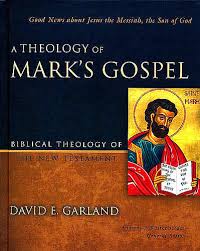
A Theology of Mark’s Gospel by David Garland

book-mark-theology

This book is the equivalent of a whole shelf of books on the Gospel of Mark. Veteran commentator, David Garland, has written an ideal volume here. Think of it as a book that summarizes all the issues and themes that scholars often talk about involving Mark’s Gospel to put beside your commentaries on Mark. Fortunately, Zondervan is putting out a whole series called the Biblical Theology of the New Testament (BTNT) in eight volumes to cover the New Testament. Authors in the series are required to have already written a commentary on one of the books in their section. Mr. Garland has already written a commentary on Mark in the NIVAC series. Though its stated audience is for upper college and seminary-level students, I found it, as a pastor, accessible and easier to read than many volumes of its kind.

The book is divided into two parts, though that division is a little skewed. Part one only has two chapters covering introductory matters while the rest of the whole book is on major themes in Mark’s theology. While those first two chapters on introductory matters were well done, I feel part two is where the immense value of the book comes out.

Do you know why I find chapters 3 through 14 so valuable? It’s because all the issues that I’ve encountered in commentary reading on Mark’s Gospel get discussed in a clear, suggestive summary of what’s been believed and straightforward reasoning behind conclusions Mr. Garland offers. Some of these subjects were ones I’ve tried to get smaller individual volumes on, but was thrilled to find them all here.

He discusses what the introduction of Mark 1:1-13 means. He covers the Christological titles of Jesus, such as the Son of Man. Other standout chapters were his explaining the Kingdom of God in the Gospel of Mark. He made great sense of the secrecy motifs that you so often hear of in regards to Mark’s Gospel. Another subject that you hear about so often is the prominence of discipleship and he covered it in great depth. Don’t miss chapter 10 on the requirements, costs, and rewards of discipleship – that chapter is quite perceptive. He makes clear what the atonement means in Mark’s Gospel, and as you might expect, covers Mark’s eschatology. The last chapter is on the debate over the end of Mark’s gospel, and though I find the longer ending more accurate, he well covers the issues.

As I said before, I can’t believe how many volumes I’ve looked for that could be replaced by this one volume. For my money, it’s quite a bargain.

I received this book free from the publisher. I was not required to write a positive review. The opinions I have expressed are my own. I am disclosing this in accordance with the Federal Trade Commission’s 16 CFR, Part 255.

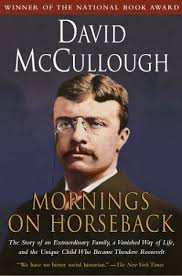
Mornings on Horseback by David McCullough (Presidential Bio. Series)

book TR horseback.jpg

Though this book could not be classified as a regular biography, as the story of Teddy Roosevelt ended in this volume before the famous parts even began, it was still a joy to read. David McCullough is easily one of my favorite authors. I’ve read over half of the books he’s written, and he always writes in a style that appeals to me. He often makes his nonfiction works read with the energy of great fiction. Though I would not label this volume my favorite of his books that I’ve read, I still enjoyed it. He painted a vivid portrait of all the foundational elements of Teddy Roosevelt’s life.

Teddy Roosevelt was not really cut from the same cloth as other men who held the office before him. His family was filthy rich. The hardships of the average citizen he could only see vaguely from a distance. I almost find it surprising that he became the rugged man he was with a high society background in New York City as he had.

A few things stand out from this early period of his life. His family adored him. For some reason, everyone in the family decided he was the most important person in their family from a young age. He faced horrific asthmatic attacks, and there was doubt on many occasions that he would even live to adulthood. That desire to live “the strenuous life” flamed up early, even before he had the health to really carry it out. He was able to see much of the world including Europe and the holy land, which was unknown to most Americans in those days.

He revered his father, Theodore Roosevelt, Sr. His father was a kind family man. He really didn’t have to work in the family business as he inherited his fortune, but he was often involved in major philanthropic efforts. He invested time in his family. Teddy Roosevelt’s deep respect of his father at times stressed him as he sought to live out the highest expectations that would please his father. While Teddy was at Harvard, his father died. He suffered greatly with stomach cancer and Teddy was grief stricken that he could not do more to help his father. Still, his father was a moral man and stressed morals to Teddy. To a great degree, Teddy held to those morals. His father also exposed him to Christianity, took him to church, and taught him the Bible. I could not tell from reading this book if Teddy had a personal faith in Jesus Christ, but it certainly impacted the man that he was.

Teddy met and married a beautiful young lady. While he served in the New York State house, his wife became sick in what was expected to be a routine delivery of their first baby. At the same time, his mother became sick. They were all in the same house while Teddy was away. Teddy rushed back, but both died just a couple days apart. As is often the case, tragedy molds a person and makes them more fit for greatness.

I look forward to reading a full biography of Teddy Roosevelt somewhere down the line, but this book is still a worthy read for either presidential biography lovers or McCullough fans. The book ended after Teddy put his life back together after some ranching in North Dakota and married his second wife. I finished the book thinking why didn’t McCullough just finish it. Had he done so, the book would’ve likely have been as great as “John Adams” or “Truman”. All in all, it is still an outstanding volume.

To read other articles in this series, click here.

Introduction to Biblical Interpretation (3rd Ed.)

book-biblical-interp

William Klein, Craig Blomberg, and Robert Hubbard, Jr. have teamed to give us one of the best hermeneutics textbooks that is in print today. It’s been popular with students since it was first written in 1993 and this third edition ensures its use for years to come. It has an attractive hardback cover to complement its substantial contents. I’ve perused several of these volumes on biblical interpretation that’s on the market today, and find this book to be one of the top choices.

Coming in at over 600 pages, this book deserves the label of in-depth. It might be a little tough to those who have never studied hermeneutics before, but those who have will love this volume. Don’t misunderstand me – it’s well-written, accessible, but covers a lot of information.

Chapter 1 on the need for interpretation drew a nice portrait of why hermeneutics are so important in studying the Bible. Without proper hermeneutics, the Bible gets to mean what anyone wants it to mean. When that happens, it means nothing. The next three chapters on history, literary and social-scientific approaches, and the canon and translations were not as interesting to me as what followed. In fact, some of the social scientific approaches gave credence to groups whose voice is off-base in interpreting the Bible. If those things are your interest, you will find those chapters well done.

Chapters 5 and 6 serve to allow the reader to see his or herself in the process of interpretation. Chapters 7 through 10 are the heart of the book. Those chapters cover the nuts and bolts of hermeneutics. There are a few things discussed the strike me as splitting the hair a little too fine, yet every hermeneutics textbook will discuss these things today. You will appreciate the choice writing that illuminates some rather technical information. There’s good help for interpreting different parts of the Bible and in both Testaments.

After chapter 11 delved into what we gain from proper interpretation, chapter 12 discussed the immensely important subject of application. Without application, interpretation is a hollow exercise. The authors did a good job in giving hints at how to make application after interpretation is done.

I’ve had the chance to study this subject in great detail, and I picked up a few key points in this book that I really appreciate. I don’t see how you can go wrong getting this book and I highly recommend it.

I received this book free from the publisher. I was not required to write a positive review. The opinions I have expressed are my own. I am disclosing this in accordance with the Federal Trade Commission’s 16 CFR, Part 255.

A Minister’s Obstacles–An Awesome Reprint

book turnbull

I’m excited to see this superb book reprinted. I found an old copy of this book early in my ministry and it made quite an impact on me. It’s crazy that it went out of print. It’s truly one of the great titles on the ministry that has been written. In fact, when I started a series a few years ago on the best books for ministry, I recommended this book. (Read me earlier review here).

The story behind this reprint is touching. Marty Moon fell in love with this book and was saddened to realize that preachers today did not have it available to glean from. He also wanted to give a gift to his pastor, Bill Lytell of Gospel Baptist Church, on the occasion of his 25th anniversary as pastor. On March 5, 2017 Pastor Lytell was presented with a copy of this book reprinted in his honor. Clearly, Mr. Moon saw in Pastor Lytell the great traits exemplified in this book.

Your pastor would likely be blessed by a copy too.

Click here to find on Amazon.

Luke (ZECNT) by David Garland

book-luke-zec

With every new title in this Zondervan Exegetical Commentary on the New Testament series that I delve into, I find my appreciation growing. This series is well conceived and this entry by seasoned-commentator David Garland adds to the laurels of the series. In addition to commentaries on a few New Testament epistles, Mr. Garland has already produced a volume on Mark in the NIVAC series. He is equally at ease in either the Gospels or the epistles.

In his Introduction to Luke, Mr. Garland discusses the authorship of Luke and Acts. In accepting Luke as the author, he strives to dig a little deeper into who Luke actually is. He keeps his discussion of Luke’s sources mercifully brief and jumps on into the genre of Luke and Acts. He sees Luke as both an historian and apologist. The next section is called “date, provenance, and the readers of Luke-Acts”. Unlike some other commentaries I’ve read, he discusses those three issues together rather than separately. There’s even in that section some great information that some others might put in the category of structure. He makes some nice, valid points about Luke’s purpose in writing this gospel. The only disappointment in the Introduction is that his section on structure is only an outline.

I found the commentary proper of even more value. That’s not to say I didn’t disagree with him on some points. For example, the meaning of the word “inn” in the birth of Christ is much more conducive to the traditional meaning that Mr. Garland seems to believe. Most other commentators would not agree with him on that one either. Still, the commentary is of extraordinary value. Every passage I surveyed offered the kind of things I’m looking for in a commentary.

Mr. Garland appears comfortable with the ZECNT format. In each passage, he discussed the literary context, stated the main idea, offered his own translation, explain the structure and literary form, and gave an exegetical outline before launching into a detailed explanation of the text. That is followed by a theology in application section that helps preachers bridge the gap between exegetical information and the sermon.

Having reviewed the volumes on Mark and John, and now reviewing this volume on Luke, I’m amazed at the quality this series has given us on these three Gospels. This volume is ideal for pastors. Think of it as being helpful like the NAC series with a little more depth. I warmly recommend it.

I received this book free from the publisher. I was not required to write a positive review. The opinions I have expressed are my own. I am disclosing this in accordance with the Federal Trade Commission’s 16 CFR, Part 255.

Luke (NAC) by Robert Stein

book-nac-mark

Robert Stein has written a quality volume for the New American Commentary series. I have long felt that the NAC series is a top choice for pastors in terms of content and price. Though the volumes are slightly shorter than some of the other exegetical commentary series, the help these volumes provide is still top-notch. This volume on Luke is one of the better volumes in the series.

The Introduction is succinct, power packed, and covers an amazing amount of information in its pages. In just a few pages he covers the authorship of Luke by examining internal evidence, church tradition, and the “we” sections and, to my mind, unanswerably proves that Luke was the author. He surveys well the various opinions on the date of Luke. He reminds us that Acts was never intended to be either Paul or Peter’s biography, but sought to tell the story of taking the gospel to the world. Though such things are highly suspect to me, he covers scholarly opinion on the sources of Luke. Though he finds outlines rather arbitrary, he provided a good one.

I fully agree with his conclusion that the purposes of Luke ought not be pigeonholed into a single purpose. He explains what he believes to be the four main purposes of Luke and provides a great deal of detail in explaining his case. I thought it was effective. His section on the theological emphases in Luke was also highly suggestive. By the time you get to the fine map that ends the Introduction, you may feel as I did that it was the kind of Introduction that really helps a pastor.

I found help in the many passages I reviewed in this volume. He was never trite, and he provides real assistance to one who preaches the Gospel of Luke. I highly recommend this volume to all my fellow pastors out there. You won’t be disappointed.

I received this book free from the publisher. I was not required to write a positive review. The opinions I have expressed are my own. I am disclosing this in accordance with the Federal Trade Commission’s 16 CFR, Part 255.

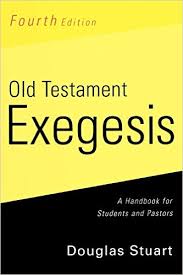
Old Testament Exegesis by Douglas Stuart (4th edition)

book-ot-exegesis

Subtitled “a handbook for students and pastors”, this volume has been a standard in the field for many years. Now in its fourth edition, it is poised to continue its usefulness for many more years. Mr. Stuart is a highly-respected Bible scholar, who has written several outstanding commentaries. I’ve enjoyed using several of them myself. In this volume, he goes through his process of performing exegesis on Old Testament passages. This book is especially valuable for those new to exegesis.

The structure of the book, with every section and subsection numbered, makes using it as a reference at any point of the exegetical process very efficient. After you work through the volume initially, you will find it easy to go back and check certain elements where you may be confused. There’s even a handy analytical table of contents at the beginning to help you zip to the needed location. While you might not have his exact method, you must think of everything he addresses at some point in the exegetical process. I don’t personally do everything in the exact order he says, but I found him to be engaging and suggestive. It even struck me as I read that there were some elements of the exegetical process that I could improve.

Chapters 1 and 2 are aimed more at students doing exegetical papers in seminary. Not only does he explain the process well, but he also illustrates his point with scriptural passages on several occasions. Chapter 3 shortens the process for pastors creating sermons. He takes the process even through application and sermon. Chapter 4 is a fine bibliographic chapter suggesting books for each phase. The suggestions are quite extensive.

The only downsides I could see in the book is that it reduced the process to such a science that the art was lost. Further, some of the language work he suggested is realistically not going to be done by pastors. Finally, if the student or pastor is just beginning, it would take years to build the library he recommends. In his defense, I’m sure he was suggesting buying one good book in each category.

You might want to check out a similar volume on the New Testament from the same publisher. Don’t miss the list of common Old Testament exegesis terms and the list of frequent hermeneutical errors in the back of the book. As a guide or refresher, I recommend this book.

I received this book free from the publisher. I was not required to write a positive review. The opinions I have expressed are my own. I am disclosing this in accordance with the Federal Trade Commission’s 16 CFR, Part 255.