A Cult? (IBTR #50)

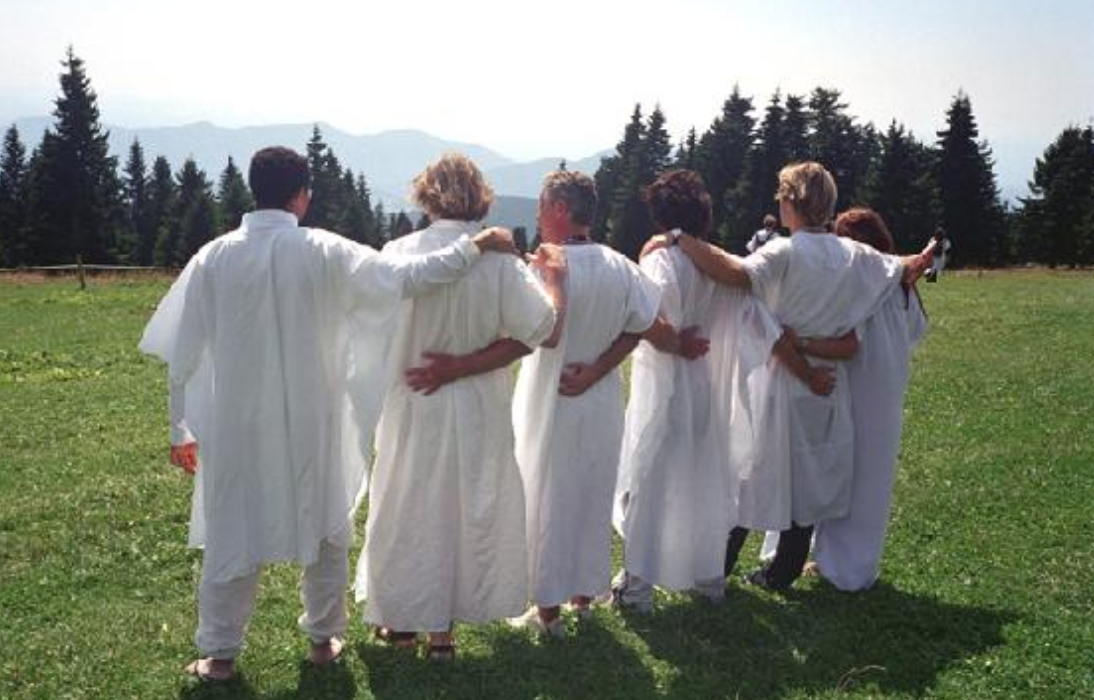
It may be the worst label of all. It is the first word that comes to mind for one severely hurt in religious circles and the last one anyone wants to hear hurled at them. While many in the Independent Baptist world are appalled at any hints of cultish behavior, others in it deserve no less than to be called members of a cult.

I suppose cultish behavior is more easily spotted from a distance. There is, apparently, a blinding effect when you are in the middle of it. Looking over into some other group you would say they are whacky, but if you are in it you often feel these abnormalities obvious to everyone but your group are the very essence of Christianity.

May I suggest a few alarming signs that you might want to consider in determining where you are today?

1. An only-we-are-right mentality

It is our obligation to attempt to understand our Lord’s heart as shared in His Word on all important matters, but this mentality is much more than that. We are right because we are the right group. When that subtle line is crossed it is often accompanied by intellectual suicide and a replacement of God’s voice by political pronouncements. You should study God’s Word until you feel confident about your position, but the day you are right because you line up so well with some group is the day you betrayed Christianity (and Christ) and started grazing in cultish pastures.

2. Your group turns inward and becomes closed minded to any discussion

Perhaps you could make a biblical argument for fencing out sin, but fencing in your own people as if they were both too stupid and too unspiritual to be trusted to follow the Lord becomes the day you allowed cultish behavior to control you. Whether you are the fence builder or the one fenced in, you breathe cultish air.

3. Your allegiance is to a man or group

Christ is The Lord! I can hardly believe more would ever need to be said on this subject, but many preachers rise up and usurp the loyalty that should only be Christ’s. I mean only He purchased it with His Own blood! How many times can a phone call from some big-shot preacher totally alter the course someone is on. This is the one thing that grows until we have someone like Jim Jones leading a whole group to drink the poison-laced Koolaid. That is a cult in full blown, and though it may not be this far, any transference of the Lordship of a Christ is putrid and evil.

4. The distinction between the law of God and the law of man is blurred

Cults thrive where men can say “Thus saith The Lord” when He actually did not and people can not even tell the difference. It becomes fertile soil for cultish errors to grow.

5. Man made rules start defining us

A holiness that springs from God’s clear Word is always positive, but a pseudo-holiness based on extra-biblical rules always corrupts. We had better check and see if what we vociferously proclaim actually can be found on the pages of the Bible. To be known as the group that doesn’t allow ____ may mean we are already a card-carrying member of a cult.

6. We overlook abusive behavior

There are things I have knowledge of (many email and Facebook messages by this 50th article) that are absurd and should be seen instantly as unacceptable and unchristian, yet they go on day after day. Some folks are chewed up and spit out on the ground, but the abusers just turn to a new victim without ever being held accountable.

7. Our Christianity doesn’t resemble Christ

There are many who would define for us exactly what Christianity ought to look like, but does it resemble what Jesus did those 3 1/2 years He ministered on this earth? If it doesn’t, I think you have your answer!

There may be other items that could be added to this list, and readers may very well add them in the comments section, but these seven alone would probably be enough to tell you if you have drifted into a cult.

Find all articles in the series here.
IMG_2137.PNG

The Radical Disciple by John Stott

I love a simple, yet profound, challenge for my Christian life. I love a devotional work with enough bite to deliver that challenge. John Stott’s final volume is just such a work.

He covers eight areas that he feels are “some neglected aspects of our calling”. Short, sweet, and inspiring, these chapters carry more punch than their size suggested.

His first chapter entitled “Noncormity” was extraordinary. In only eleven pages he wove the ideas of escapism and conformism being forbidden, the failure of pluralism, materialism, and relativism, and ugliness of narcissism in a meaningful way. He explained how self-love is a sign of the last days. The next chapter on Christlikeness was moving in that he wrote from the perspective that “God wants his people to become like Christ, for Christlikeness is the will of God for the people of God.

In the chapter on maturity he answers the question about what is the best description of Christianity today. What is that answer? “Growth without depth.” Wow! Could it be better stated? That whole chapter was memorable.

I really couldn’t connect on the next two chapters, but the rest of the chapter more than compensated for the two I felt of little worth. After these two, he got back on track.

The final two on dependence and death were as compelling as any I have read. Dependence, even in a declining health situation, can be a good thing. His own suffering punctuated the words that made sense even if we must begrudgingly admit it. His chapter on death would not have meant as much written by a young man. He would die within two years of writing this chapter. He stared down death as one safe in Jesus and I was moved as I read it.

Reasonably priced, not too long, but a real spiritual treat–I recommend this as a treasure.

I received this book free from the publisher. I was not required to write a positive review. The opinions I have expressed are my own. I am disclosing this in accordance with the Federal Trade Commission’s 16 CFR, Part 255.

Perspectives On Our Struggle With Sin: 3 Views Of Romans 7~Book Review

Have you ever wrestled with Romans 7? Are you aware of the battleground that exists upon the soil of its meaning? Would you like a little help? This volume edited by Terry Wilder, and published by B & H Publishing, clearly defines the battle lines and gives us enough detail to form our own opinion. I can hardly think of a better approach than bringing 3 writers who each strongly hold to one of the main positions, and letting them write and engage with passion while maintaining Christian respect for each other.

Grant Osborne writes in favor of 7:14-25 representing Christian experience after salvation. Stephen Chester tackles the idea that those verses are Paul’s description of wrestling with sin prior to conversion. Mark Seifrid argues that it is not really autobiographical at all, but simply one standing before the Law. Finally, Chad Brand concludes the discussion by addressing how we might use this passage pastorally.

The value of this book is that instead of shouting out rhetoric, or worse, invectives, they dig into the text itself. That approach made them, in my opinion, worth listening to. They each shot a hole or two in the other’s arguments, and they were never careless.

I came into this book already adhering to Mr. Osborne’s position. I left it the same. While it might be disingenuous to say that I am only stronger in my position now, I was enriched by all three and had to interact on all the issues around the edges. In short, I feel much better about my position now and owe a debt to these authors for it. Mr. Brand’s conclusion was masterful too. I loved it.

I love this style of book as well as this approach to studying issues that are often debated. I highly recommend this volume.

I received this book free from the publisher. I was not required to write a positive review. The opinions I have expressed are my own. I am disclosing this in accordance with the Federal Trade Commission’s 16 CFR, Part 255.

IMG_2132-0.JPG

Quarantined (IBTR #49)

In the right situation, quarantining can be a splendid idea. Many, I have noticed, suggest it in the current Ebola crisis(?). Someone mentioned to me the other day that quarantining is often used in the Christian world. The Independent Baptist world, for the record, contains some of its greatest practicitioners.

Before we consider it in a religious context, we must remember what the goal of quarantining always is. A disease is cordoned off so that it might not spread. The idea is to keep it out.

In a most bizarre twist, many in certain groups use it to keep it in. That’s right! They work to keep the disease in!

They have some unscriptural ideas that they do not want to get out. They have some particular standard or church practice that they deem essential and they quarantine those inside their own circles from all others who might hold a different point of view. (The quarantining of those in the group who disagree is a subject for another day). That one who disagrees on some dress or music standard must be ignored, shunned, and never listened to. In that they think they are so right, it seems odd that they would quarantine those they deem to be well! It would be like quarantining all the Americans who don’t have Ebola and putting them in medical facilities while letting the two or three that do have the run of the country. I guess it could work, but it seems the long way around.

I suspect that in the churches I speak of the real reason for quarantining is never mentioned. What is it? Their great distinctive point cannot be easily defended with Scripture or logic, so they must quarantine so real, tough, honest questions can never get to their ears. Deep down they know how hopeless the cause they champion would be! It is a position diseased Scripturally. Quarantining is they last wall of defense where unquestioned position live.

I say quarantine disease away, but never truth. Truth is not diseased and needs no medical intervention. Let it stand for it never stumbles. It is too strong to ever fear. There are cases where fear makes no sense and truth is one of them. I don’t fear dandruff (it takes hair to have it!). Let it out and all will be healthier; that is if you really have it.

Read all articles in the series here.

IMG_2131.PNG

Standing Up To The World (IBTR #48)

ibtr48Does it seem to you that standing up to a questioning world, meeting their criticisms head on, and sharing Christ without fear, is what we are supposed to do? Surely, all of us Christians could agree with that. On the other hand, have you listened to those who speak of how bold they are in such scenarios, but their efforts are more the fiber of ridicule than persuasion? Having insults to mask cluelessness is a temptation for us all, but, perhaps, the Independent Baptist world has a large, ugly trail of it.

Isn’t it sad when a needy world asks tough, but legitimate questions and rather than dig or think, we attack? We say they are stupid, or how could they be dumb enough to misspell a word in their question (I just had to have “misspell” auto correct for me!). I have heard people called names, or that they had better just shut up and get saved or they will split Hell wide open (when the question just might be proof of their seeking itself).

That certainly slaughters the claim that we love souls. The truth is that our pride is held in higher regard than someone’s soul. We can’t appear to be anything less than an expert even if we could not answer the question and care little to dig it out.

Some say Jesus  spoke with ridicule at times. He did, but He also possessed perfect knowledge of the person he was speaking to. The other big difference was that He never did it to hide being found out for being uninformed. He never had need to hide lazy thinking and shoddy preparation. We would rather mow someone down than take a few hours to get a handle on the issues under consideration. The Bible has the answers but we would rather bark than dig.

Some go father than this and go for outrageous criticisms and insults. An opponent’s looks or weight are completely irrelevant and to use such statements as a Christian in a discussion is absurd. Besides the utter shamefulness of it, it likely drives the people we should reach as far away as possible.

Let’s you and me hold ourselves to far higher standard than that. Let love prevail, and work rather than run and hide. The stakes are too high.

Find all articles in the series here.


Songs Of A Suffering King by J. V. Fesko


photo (27)A good library will always include several volumes at end of the Psalms section that covers only certain psalms in a group or of a similar nature or theme–Imprecatory or praise or pilgrim psalms, etc. Perhaps you see fewer volumes on the first eight psalms discussing them as particularly united. Enter now Songs of the Suffering King by J. V. Fesko and published by Reformation Heritage Books.

Surely Mr. Fesko is right in believing that the Psalms are not in random order, and that Christ is prominent in the Psalms. In saying that the psalms are about Christ, he actually goes so far as to say that Christ is in every Psalm. To my mind, that is harder to prove in some psalms that others. Though Mr. Fesko stretched his theory here and there, this is a warm-hearted volume.

What you have is thoughtful exposition that will aid you in your own preparations, as well as serve as fine devotional reading.  He gives, for example, great insights in Psalm 1 before making it all about Christ. Even in disagreeing that Christ was there as much as he said, I left the chapter enriched. His theory worked better in Psalm 2 and his comments were outstanding there too.

Psalms 3 and 6 were my favorite of his expositions, but they were all thought provoking. Warmly Recommended!


I received this book free from the publisher. I was not required to write a positive review. The opinions I have expressed are my own. I am disclosing this in accordance with the Federal Trade Commission’s 16 CFR, Part 255.

Books on the Ministry #15

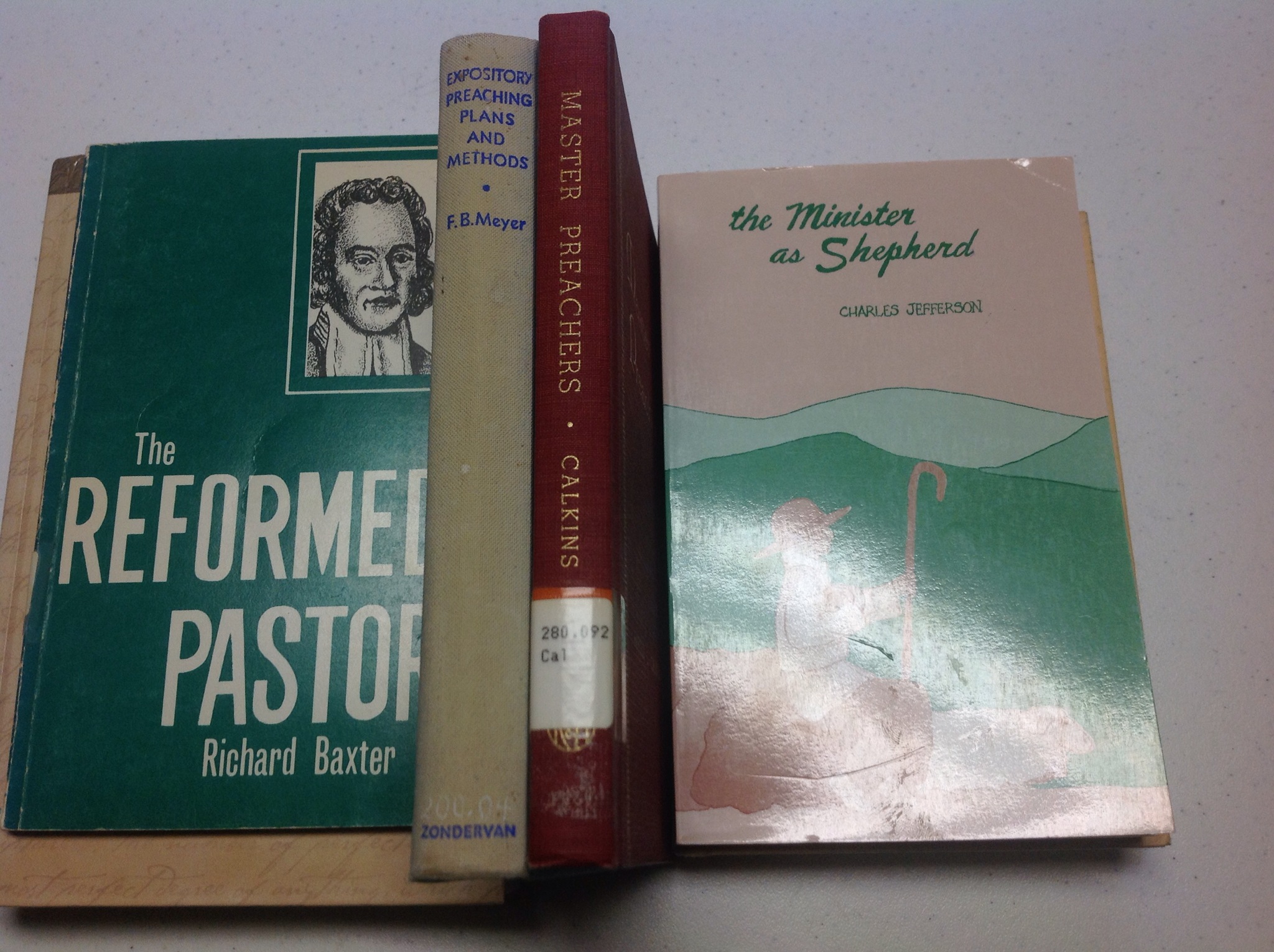
Here are four more outstanding volumes on the ministry. Two are timeless classics, and the other two are lesser known but well worth reading.

1. The Minister As Shepherd by Charles Jefferson

I read this volume in the very early days of my first pastorate and no book has shaped my thinking more about what pastoring looks like. In line with Scripture, he deftly compares our work to that of a shepherd. There could hardly be a better approach. We could use his wisdom today. He says so many good things!

“It is not necessary to put grass into the sheep’s mouth.” “Dictators are out of place in the pulpit.” Of us: “They are his representatives, but they do not take his place, nor possess his power. There is but one Lord, Jesus Christ, God’s Son.” He points out that Jesus says, “Feed MY sheep.” He tells our reward as: “The reward of the shepherd is that he becomes increasingly like the Good Shepherd.” Wow!

Pastor, this book will change your life.

2. The Reformed Pastor by Richard Baxter

That this classic volume is still such a blessing shows the timeless nature of what we do. When I finished this book years ago I wrote on the fly leaf: “Excellent! He cuts pastors no slack! We must wholeheartedly serve God!”
He tackles some of the harder aspects of pastoring, including dealing with matters of church discipline. “Reformed” in this case means “revived” and you will see that he writes with the gusto of one revived!

This book has been incredibly influential for a long time and still has something to say.

3. Expository Preaching Plans And Methods by F. B. Meyer

When one is an expert marksman in tracking out warm, glowing expository messages from the pages of God’s Word, his words on expository preaching are worth hearing. F. B. Meyer was such a man. You will be blessed reading any of his messages.

Whether it be specific pointers or speaking to the big picture of expository preaching, he is quite helpful. I love how he quoted Philip Henry who didn’t go over their heads, nor under their feet, but to their heart.

Take this to heart: “Many a track of Scripture, when we first read over it, seems as though it were hardly worth considering, and then the hidden Christ is suddenly discovered.”

Another gem!

4. Master Preachers by Harold Calkins

Here is something different. He takes several of the great masters of preachers and tells us about their study and devotional habits. For me, it didn’t hurt that he covered some of my very favorites–Maclaren, Spurgeon, Morgan, Parker, Whyte, Jowett, Muller and others. I am shocked he included Harry Emerson Fosdick, but one gravel among diamonds can be handled I suppose.

He writes that you and I may have more effective and fruitful ministry. I can’t imagine the reading required to put this volume together. There are so many illuminating nuggets. Did you know that Whitefield read Matthew Henry through on his knees? Did you know that Muller prayed even more for his sermons than financial needs? He explained how MacLaren would draw out shades of meaning and people would respond how it was all in the text and how did they miss it. There is so much more.

Happy reading!

For all articles and books discussed in this series click here.

IMG_2107.JPG

Urban Legends (IBTR #46)

It dawned on me that we sometimes have some serious urban legends in Christianity. My familiarity with Independent Baptist has made me aware of several in our ranks. When I looked the definition up to make sure my terminology was accurate, I laughed. Wikipedia defines urban legends as “a form of modern folklore consisting of stories that may or may not have been believed by their tellers to be true, and often possess horror implications that are believable to their audience.” The story is often “the Bible teaches …”, when of course it does not!

My thinking went this direction from a letter a fine Christian lady wrote me. She had been lambasted for an opinion that she could not believe that 1 Corinthians 7:1 (“Now concerning the things whereof ye wrote unto me: It is good for a man not to touch a woman.”) meant that a male could not hug a female who was merely a friend goodby.

This lady, obviously one who has become a Bible student, said that verse meant ” ‘to touch a woman’ is a euphemism for sexual intercourse”. It is very good to not fornicate, the verse is saying. Her exegesis was quite good as she shared her conclusions about the first seven verses.

The strange thing was how it came to mean that touching the opposite sex would always lead to instant fornication. That urban legend is so strongly believed by some and thundered out as if disaster was certain. Of course there is a touching that could lead to danger, but that does not mean every innocent touch is the same thing.

Urban legends can be easily fixed. Just check out the facts. It is amazing how simple it is.

In Bible matters, just check out what the Bible really says. Look at the appropriate passages in context and define the words carefully. Bible urban legends die a quick death in the hands of one careful with his or her Bible.

You feel pretty silly for believing an urban legend after you find out what it really was. For sure, don’t let that happen in God’s Word.

Find all articles in the series here.

IMG_2108.PNG

Faulty Measurements And Misunderstood Results

Christians do it all the time. Pastors are the very worst. It can lead to great discouragement and pain. What am I talking about? Attempting to measure the results of our efforts for Christ when we know not how to measure, nor what success really is.

I guess in the end we worry more about the results of what we planned to do rather than being simple servants of Jesus Christ.
His plan, not fully even understood by us, is not enough for us. We live for what we might do for Him rather than what He might do through us. We carelessly blur the line till we are living for what we want to do and consider ourselves a failure when it doesn’t all work out as we planned. May I encourage both you and I to think about this from a different angle?

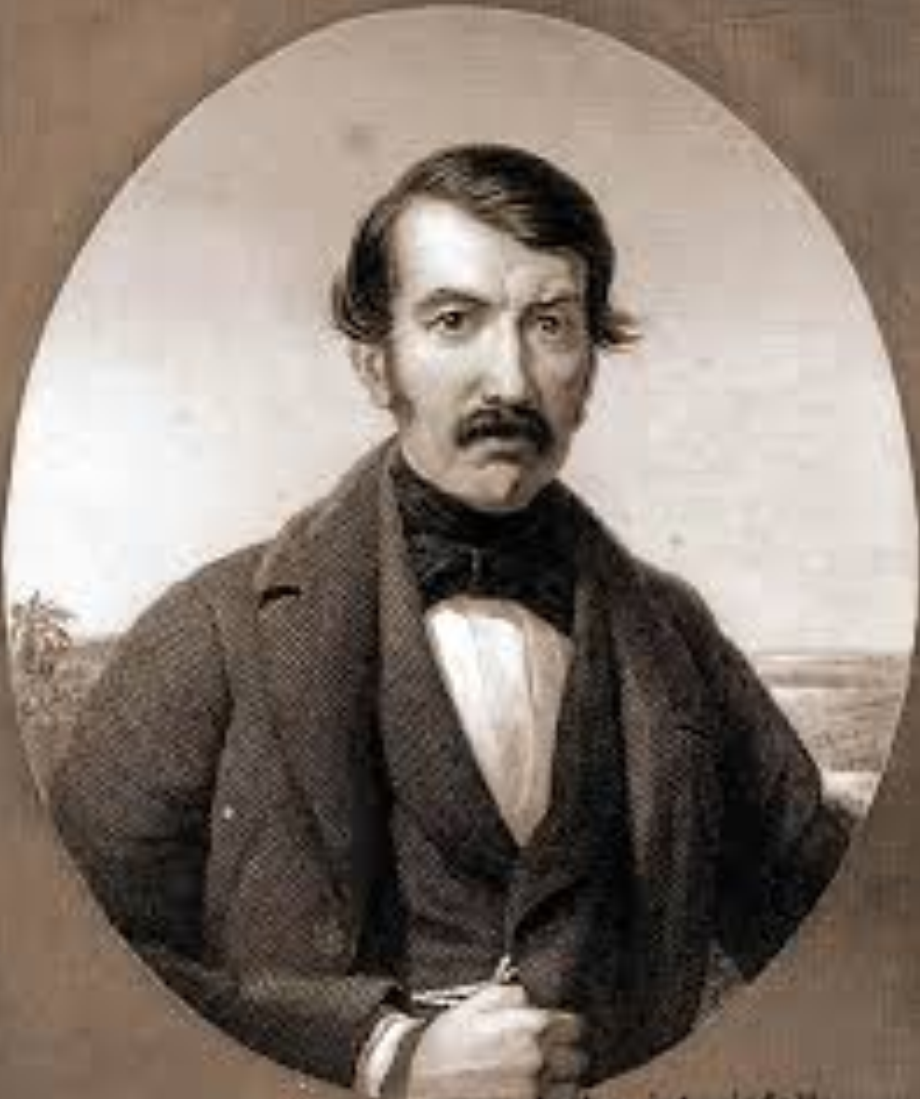
I read and reviewed a moving book about David Livingstone (link to review below). If you are like me, you count him as a hero and are inspired by his life for Christ. He was just a man. Perhaps he got a little sidetracked on exploring at the expense of his missionary efforts at times. He could be a little tough on those who worked under him in the harsh conditions of Africa and a few relationships were severed along the way. I am sure he was filled with regrets over the way he treated his wife and children. Still, he gave his life to the work he believed Christ gave him to do until that life was gone.

He clearly was led by God to see that exploring Africa would make a way for the Gospel. If the rivers could be mapped properly, missionaries could be brought in. He came to learn, quite accurately, that slavery would be a complete barrier to bringing the Gospel as no African would know the difference between a white slavetrader and a white missionary. So he went relentlessly.

In his later years he dealt with the discouragement of his results. One of his main expeditions was an embarrassing failure that haunted him his last years. Critics came out to agree with the worst thoughts his censuring mind could conjure up. The book I read showed these things really bothered him. His wife died just like her parents predicted she would if he took her to Africa. He mistakenly made finding the headwaters of the Nile his key exploration goal and he never found it. He exerted what influence he could in Africa and through letters to Europe to fight the slave trade. From his perspective, it was as ugly and bloody the day he died as ever.

He loved His Lord. On his last expedition he surely knew he was dying. He knew that meant his life would end with another failed exploration. Missions were not thriving in Africa and the slave trade marched on. I imagine he was a broken man, in body and spirit, as he knelt by his bed in prayer and then closed his eyes in death.

But Livingston was wrong. He measured his life by only what he could see. He forgot the very thing you and I so often do–what God is doing. As the book I read so magnificently showed, God was doing mighty things. He had no idea that the Lord was using his letters in Britain to kill the salve trade. He had no idea it would that the main slave market in Zanzibar would close within a month of his death. He had no idea that that army of missionaries that he dreamed of would in fact flood the African continent on the trail he blazed. He died thinking he was a failure and all lovers of Christian biography have David Livingstone volumes on their shelves. He was dead wrong.

I realize that after death we may not have the reputation Livingstone had, but it likely will not be the dark conclusions we imagine either if we have truly given our lives to serve Him. Our Lord feels no obligation to reveal all He is doing on a schedule that will massage our egos. In Heaven we can connect all the dots, but now are the days of simple service. Avoid measuring eternal results with instruments calibrated for time. Give Livingstone credit. He may have played some of the mind games of measuring results, but he never stopped serving his Savior. Right up to that day deep in Africa when he went home to look upon his Savior’s face. Let us follow his example there.

Book review:
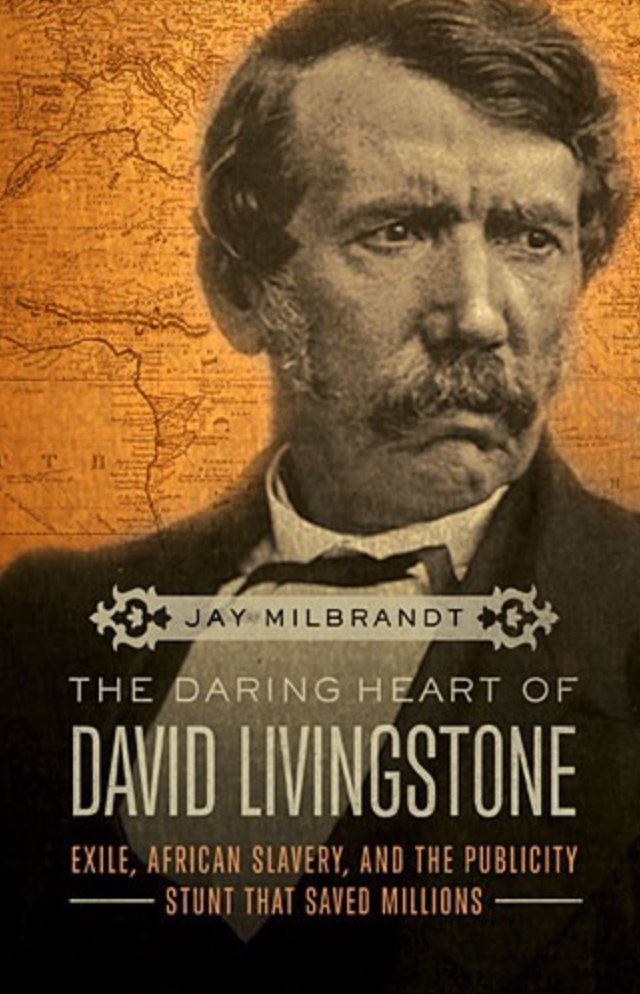
The Daring Heart of David Livingstone

IMG_2106.PNG

The Daring Heart of David Livingstone by Jay Milbrandt

What do you really know about David Livingstone? Would you love a volume that in giving wonderful biographical narrative emphasized one of Livingstone’s greatest, yet seldom-discussed accomplishments? How about if the volume was gripping to the point it you did not want to put down? You should, then, check out the new release The Daring Heart of David Livingstone by Jay Milbrandt and published by Thomas Nelson.

The subtitle “Exile, African Slavery, and the Publicity Stunt That Saved Millions” clues you in his angle. I must confess that at first I was a little skeptical about that angle. Livingstone was a missionary, not a political crusader, right?

Fortunately, the book was not obsessed with its angle, but only developed it naturally as it went along. What you had instead was the famous story marvelously condensed and thrilling as ever. All the big events were there woven seamlessly into the story of the man and the author’s conclusions. Mr. Milbrandt can tell a story well.

The author showed Mr. Livingstone warts and all, yet you never lost your great respect for him. He had his struggles and he felt a failure on several occasions. Results were unpleasant actually at times too. Yet, Livingstone never failed to keep pressing on.

What the author demonstrated well was that Livingstone, though he died without knowing it, was one of the main reasons the slave trade in Africa stopped. He proved too that became ever more a goal for Livingstone. He was horrified at the tragic events he witnessed in the abuse, enslavement, and,even, slaughter of Africans.

The irony of so much of Livingstone’s goals being accomplished without him knowing it, and his lonely, humble life in Africa as he became a worldwide celebrity, is a most compelling story. In my view, it is a story of God at work in our world as well.

My only complaint is the missionary work of Livingstone was rarely discussed and portrayed as a minor thing. For the man who died praying by his bed in Africa, the evidence easily proves he was a servant of the Lord.

This book is a home run, and short enough for those readers who shy away from biographies that are a little too thick. You will enjoy this book!

I received this book free from the publisher. I was not required to write a positive review. The opinions I have expressed are my own. I am disclosing this in accordance with the Federal Trade Commission’s 16 CFR, Part 255.

IMG_2101.PNG