You Can Change (2nd Ed.) by Tim Chester

In the Introduction the difficulty of change is realistically presented. Chapter 1 ties powerfully change to our being made in the image of God. I enjoyed the questions raised in chapter 2 about why would we like to change. You will see why that’s really important.

When you get to chapter 3, I find the presentation to be a bit muddled. On the good side, there is a wonderful explanation of our utter dependence on Christ, or you might say, on the power of the Gospel. Clearly, there is no change without the grace of our Lord. On the bad side, though, he completely misunderstands the spiritual disciplines as if they of necessity must be legalistic. He explains, or at least it appears to me he does, that if we use spiritual disciples we will without fail tell ourselves that we have affected the change and glory in it. Mr. Chester is a well respected theologian ( I too would rank him as such), but I hardly think that he would really believe that if he thought more deeply about it. Prayer, for example, is one of the spiritual disciples. Is all prayer legalistic? Even prayer for major change? I know he would reject that idea. What if I am using the spiritual disciples merely to access the grace of my Lord? Isn’t the goal of such disciplines to make Christ more real in my life, and therefore make me depend more on Him and less on me? To be sure, I need the same grace to go on in the Christian life that I did to become a Christian. No thinking person would dispute that point. Strangely enough, however, it’s surprising just how much similarity his approach has to the “Let go and let God” approach that those of Mr. Chester’s stripe would find so abhorrent. Perhaps he tells us the danger of one ditch (if I did allow myself to view the spiritual disciplines I’m employing legalistically) at the expense of fully describing the road itself.

On page 53, for example, he says “We also have a new motivation to battle against sin”. That’s for sure. Why couldn’t we employ the spiritual disciplines in that battle as a funnel for grace? In terms of this book review, he writes passionately about his approach and says many wonderful things about the beauty of the Gospel. Perhaps I’m a bit (overly?) passionate myself as a former pastor who now leads a Christian Men’s recovery program. You as the reader can weigh this issue yourself and raise or lower your rating of this book accordingly.

Though chapter 3 was like hitting a pothole for me, the book grew in helpfulness from there. By the time he got to chapter 6 I found his doctrinal thoughts really resonating with this idea of change. His discussion of repentance and mortification has real potential in being distinct help. Then chapter 7 evens tops it! What stops you from changing—a profound question.

Chapter 8 tackles support and he champions the local church. That is ideal, but I’ve seen so many cases that a church wasn’t particularly good at taking this role. You can say such churches are then failing, and perhaps that’s true, but it’s still a reality for some individuals. The thoughts on having others to speak into your life, however, is spot on.

The final chapter reminds me that he has worked practically every major doctrine into this work. Sanctification is part of the explanation of change for sure.

One thing that deserves praise in Mr. Chester is his penchant to admit his own struggles. Those admissions also seemed genuine and avoided glorifying the sin itself. That attitude is beneficial to helping others contemplate change.

This is a helpful book. Hopefully I wasn’t too picky in my criticism above, but I’d be the least able of anyone to answer if I was. I pray this volume helps many work through change.

I received this book free from the publisher. I was not required to write a positive review. The opinions I have expressed are my own. I am disclosing this in accordance with the Federal Trade Commission’s 16 CFR, Part 255

Matthew (Interpretation Bible Commentary) by Mark Allan Powell

In this new round of Interpretation Bible Commentary volumes, Mark Allan Powell tackles the Gospel of Matthew. Let me say up front that this is a more critical series where more conservative readers like me will find many points of disagreement. In a series like this one I’m especially looking for creative theology that might push my thinking to new, interesting places even though I might bail out in a few paragraphs along the way. Now that you know what I’m looking for, let me say that this volume delivered the goods. Since it is well written, more critically oriented readers will likely especially love it.

The Introduction was stand out because of its unique approach. Rather than tackling traditional introductory items, which I likely would have found little sympathy with anyway, he developed a whole new approach. The bulk of the Introduction covers 16 themes in Matthew. It’s amazing the mass of helpful material you get here. The thing that makes it so great is that after describing the thematic item, he lists everywhere Matthew demonstrates it. I could see myself using this section as much as the commentary proper.

The commentary proper provided the theology and creativity I hoped for in a writing style that really holds your attention. Though I strongly couldn’t agree with many conclusions from that perspective, I did find exactly what I’d hoped for.

I received this book free from the publisher. I was not required to write a positive review. The opinions I have expressed are my own. I am disclosing this in accordance with the Federal Trade Commission’s 16 CFR, Part 255.
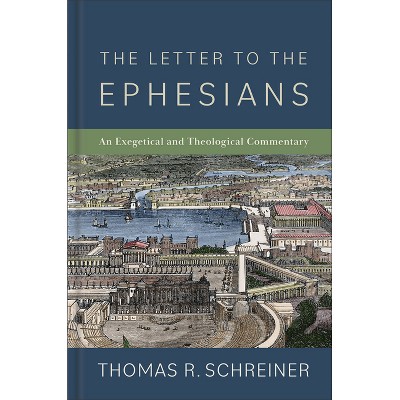
The Letter to the Ephesians by Thomas Schreiner

Here’s a good one. Its niche is clearly stated as being an exegetical and theological commentary. It actually delivers that very thing, amazingly, in less than 400 pages. I’ve seen TNTC volumes of that length. Don’t let that throw you off though. Don’t you want sometimes a very mature commentary that can come through both succinct and thorough? You might have guessed that Thomas Schreiner would be the guy who pull it off. He did.

His Introduction of 13 pages answered all burning questions. When you expertly dismantle influential, ludicrous scholarly conclusions apparently that’s all the space you need. At least it was all he needed. The thing that stands out to me throughout the Introduction was how easily I found myself following him to agreement.

I just happened to be in need of studying the early part of Ephesians 2 when it came time for me to review this book. It was so distinctly helpful to me. I really loved it. He is a master exegete.

When I got to the household code in chapter 5, he still kept convincing me in both the larger picture and many small details. (I didn’t perfectly keep count, but it appeared that he agreed with Thielman the most). I can think of a whole bunch of scholars who would be up the creek trying to argue against the wisdom of what he shared there.

This is a great commentary. It delivers the goods in less pages than many other volumes and sometimes that can be a really great plus. I recommend this one all the way down the line. 

I received this book free from the publisher. I was not required to write a positive review. The opinions I have expressed are my own. I am disclosing this in accordance with the Federal Trade Commission’s 16 CFR, Part 255.
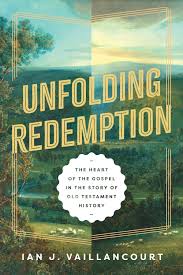
Unfolding Redemption by Ian Vaillancourt

If you have encountered Ian Vaillancourt, you likely noticed that he thrives in a biblical theology mode when looking at Scripture. His previous writings all seem in that vein. In fact, I thought his “The Dawning of Redemption” a really fine book. Here he rises to a higher altitude to look at the Old Testament as a whole.

The higher altitude view, obviously, has strengths and weaknesses. On the one hand, it really helps connect dots and take in the big picture. On the other hand, details are of necessity flown over. In a nutshell, that is exactly an evaluation of this book. That’s not a problem as no book can be everything. In fact, I can easily tell you the greatest attribute of this book—it’s a book to put in the hands of folks just starting to get serious about taking in biblical theology. It’s especially accessible without being superficial. More seasoned readers will appreciate how it’s written but might not find a lot they don’t already know.

This book focuses on the historical portions of the OT (Joshua to Chronicles). He creatively uses ideas to moor the reader to the text, such as “land” for Joshua. The most creative one is “ingrafting” for Ruth. The other asset is how each chapter ends with ties to the NT. It’s quite gospel friendly.

Here’s a fine book that can help bring along those ready to dive into biblical theology.

I received this book free from the publisher. I was not required to write a positive review. The opinions I have expressed are my own. I am disclosing this in accordance with the Federal Trade Commission’s 16 CFR, Part 255.