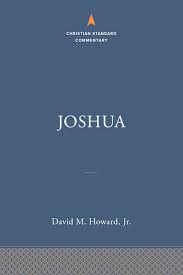
Joshua (CSC) by David Howard

This fantastic commentary has here an update from its NAC iteration. I applaud Mr. Howard getting the nod to carry the commentary over into the CSC and extend its usefulness for decades to come.

In the introduction, I was at first fearing that there was going to be very little updating from the earlier edition. I think that was because some of the earlier topics were things he just fully still agreed with and saw no reason to expand. It was farther along that he tackled some new subjects beautifully. He had an elaborate section on ethics as there are many ethical questions in the text of Joshua. Further, he expanded explaining the archaeological evidence for the major sites found in Joshua. There’s a very telling section that described why the Israelites were attracted to the culture of Canaan too. That certainly is a worthy question and I agree with his conclusions.

He also broached the subject of the large numbers in Joshua and the rest of the Old Testament. Critics love to pound away on this subject. He concludes that it is best to comment on them as if they were accurate. I am prone to take them as is and believe them.

Modern political thinking has forced new subjects to be especially looked at in the biblical text. For example, to some people the book of Joshua reads like ugly imperialism. He writes magnanimously and in such a way that his careful laying out of the issues and options are its greatest strengths. You will leave the introduction with a firm grasp of all the issues and what is at stake in the book of Joshua. I must commend this introduction and its additions from the earlier edition.

The commentary proper is excellent. He is a wise evaluator of the issues all while fulfilling the exegete’s task. There is much help for the preacher or teacher here. I already thought the earlier edition was outstanding, and I can only say it’s even better now.

I am compelled to say that this is the best commentary for a pastor or teacher on Joshua that we have. It’s the balance of depth and good conservative conclusions that make me feel that way. The competitors of this volume are either those with less detail or those possessing some glaring defect in one category or the other; e.g., theology or historicity. If you can only have one commentary on Joshua, this is it. 

I received this book free from the publisher. I was not required to write a positive review. The opinions I have expressed are my own. I am disclosing this in accordance with the Federal Trade Commission’s 16 CFR, Part 255.
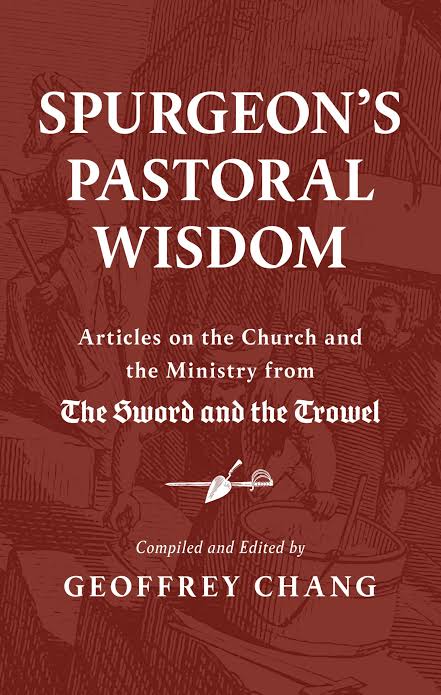
Spurgeon’s Pastoral Wisdom by Geoffrey Chang (Books on Ministry #27)

A new Spurgeon book! What could be better? I never tire of reading this marvelous preacher. Don’t let the thought of this being a collection of articles steer you away. Surgeon could not be dull if he tried. And though he ministered in the 1800s, his writing is always fresh and up-to-date. As I read through this book, I marveled at how many things never change. The London of the 1800s seems so different than the world you and I live in now, but ministry was and is still ministry.

The book is compiled by Geoffrey Chang. From what I have read, he has become quite the Spurgeon expert. In any event, the selections were perfect for a book on pastoral wisdom. I also appreciated how he organized the book as well as his writing very short but meaningful introductions to each section.

In part one that was articles on the Church, I so appreciated Spurgeon’s balance. He was a brave man who lived without the fear of man, but he could still be quite judicious in his use of discernment. For all I thought I knew about Spurgeon, I still learned many things here. I especially loved how he was always looking out for up-and-coming pastors or neglected pastors. Additionally, I loved how he never lost his zeal for revival.

Even though some of his more famous books gave great help on preaching, this book was full of wonderful counsel. He talked about sermon preparation, faithful preaching, and sermon delivery. I can’t think of a brighter light to guide us on this subject.

Strangely enough, I was even fascinated by the few articles he wrote on “Spurgeonism”. I hadn’t really thought much about how his fame must’ve been challenging to live with and keep your head on straight. From all appearances, it seems that he did.

The book was full of those pithy quotes that Spurgeon is so famous for. One that really stood out to me was how he once said that really being rich was not about having much, but having enough. How profound! And there were little phrases like this throughout.

Banner has given us its usual beautiful presentation of a book. The writings of Spurgeon are beautiful enough on their own. Can you tell that I love this book? 

I received this book free from the publisher. I was not required to write a positive review. The opinions I have expressed are my own. I am disclosing this in accordance with the Federal Trade Commission’s 16 CFR, Part 255.
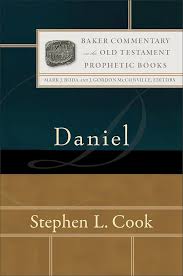
Daniel (BECOT) by Stephen Cook

This commentary is a trip. I’m not sure where we went, but it was quite a ride. Mr. Cook took a few curves too fast, but occasionally the scenery was spectacular. I know I saw the blue lights behind us on several occasions, but he would just smile and press the gas pedal a little harder. I’m sure he didn’t fully know where he was going either, but his outward confidence never wavered. I know it’s easy to be trite and say a commentary is different, but this one IS different. In fact, this is the very commentary that makes many others seem exactly alike.

Perhaps the aspect that makes this commentary unique is his views of how to process apocalyptic literature. Be sure to read his Preface as he lays it out. He also attacks approaches that moralize the stories of Daniel. Many do that and say to keep the Gospel primary, but that’s not exactly his angle. He has a very precise view of Wisdom. To my mind, his definition is not as different as the traditional one as he thinks. I liked how his views made him dig a bit deeper in places even if I couldn’t especially agree with him. His historical conclusions didn’t hold up for me either.

He is for sure an interesting writer. He quotes from so many unusual sources. I mean when was the last time Alice from her Wonderland was quoted in a commentary you were reading. Crazy? Yes. Interesting? Yes.

He also draws from unexpected disciplines. I saw philosophy and psychology often and several others. I kept expecting physics at any point.

Even if he travels in his own lanes, his work is well researched. There are footnotes galore throughout. I would not make this commentary my first choice on Daniel, but it is one that I will likely check going forward. If you are looking for a work that is captivating in new ways, I suspect this is the one for you.

I received this book free from the publisher. I was not required to write a positive review. The opinions I have expressed are my own. I am disclosing this in accordance with the Federal Trade Commission’s 16 CFR, Part 255.

Biblical Theology by Kostenberger and Goswell

This book offers a mass of help. As an added bonus, it is a gorgeous book. I guess the publishers knew they had something special and so gave it the gold treatment. The authors are widely respected and were a good choice to handle what must have been a Herculean task. When Mr. Goswell listed William Dumbrell as major influence, it all made sense.

Chapter 1 sets the agenda on what biblical theology is exactly as they carefully distinguished it from other approaches (You can sure tell D. A. Carson guided their thinking here). They even present a case study to explain the practice of biblical theology. I appreciate how they uphold biblical inspiration, which is the vitality of biblical theology. As you have probably surmised, this chapter serves as the introduction for the entire book.

The next chapter talks about book order, though that is something that’s never particularly interesting me, but it’s laid out in great detail for you. From there, the next chapter dives into the Pentateuch. Now it’s time to slow down because this book starts getting really good. Many of the things you find are written in other places, but it is a boon to us to have it all brought together here. Each book in the Pentateuch is discussed in terms of themes, ethics, and the book in the storyline of scripture. That is a fantastic way to approach the biblical theology of these books. I found myself agreeing with so many points that were made. Finally, the Pentateuch is looked at as a whole in the same three categories as mentioned above.

From there, he tackles the Prophets (remember he follows the Jewish organization of the OT rather than that in our Bibles), followed by the Writings. He follows the same pattern mentioned above. Some books of the Bible take less pages for him to describe than others, but obviously that makes sense.

The NT follows the same pattern. There’s coverage of book order but with little consensus. Next there’s discussion of the relationship between the testaments. The look at parallels was the most fascinating part there. When the NT use of the OT is explained, it’s taken book by book. Then each book of the NT is looked at exactly as done in the OT section. The farther I get into the book, the more I like that set up.

This is an epic book. I have a few others in my library that try to tackle biblical theology in this way, but I found this one to be more consistently even. The amount of research that went into this volume is mind-boggling. If you don’t believe me, just notice the footnotes! I’ve heard the publisher may be printing the Old and New Testament sections of this book in separate editions in the future. You simply can’t go wrong with this gorgeous book.

I received this book free from the publisher. I was not required to write a positive review. The opinions I have expressed are my own. I am disclosing this in accordance with the Federal Trade Commission’s 16 CFR, Part 255.