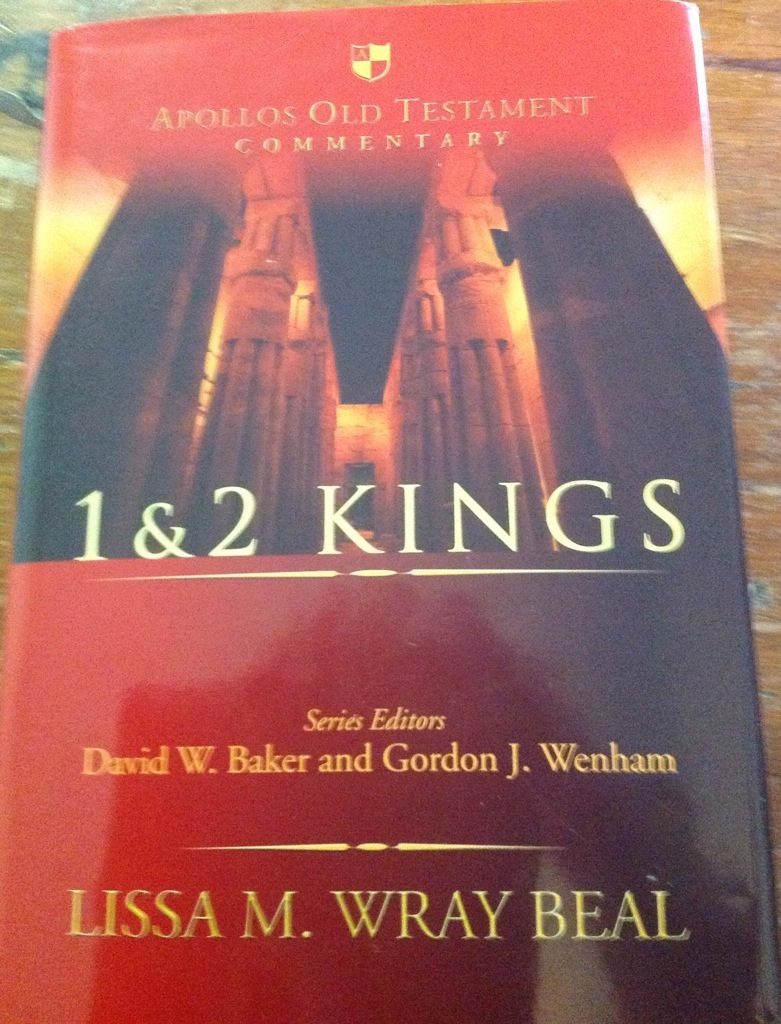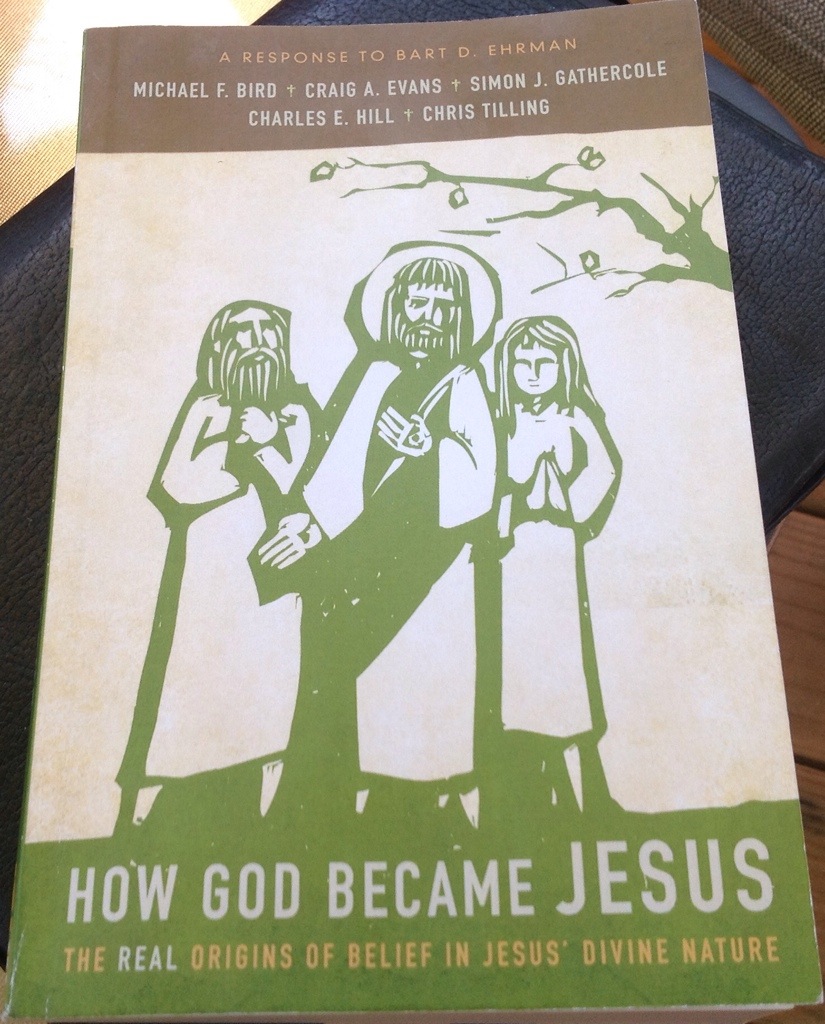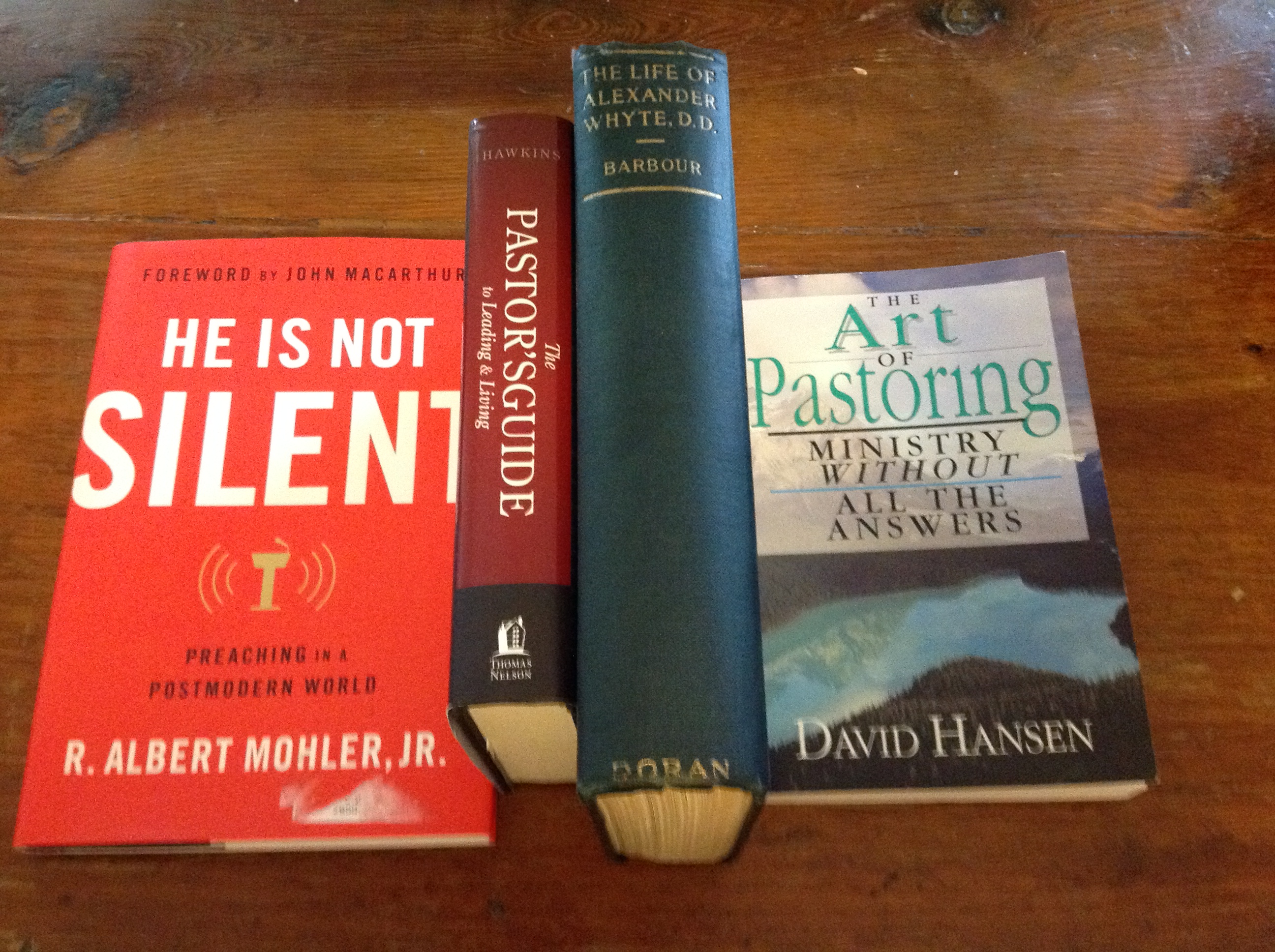
A Commentary On Judges And Ruth–Kregel Exegetical Commentary

Judgesruthchisholm

Do you need a really quality commentary on Judges and Ruth? Look no farther than this latest in the Kregel Exegetical Commentary series, this time by Robert Chisholm. Mr. Chisholm has 30 years teaching this portion of Scripture under his belt and it shows. Though a major commentary, this volume is effectively aimed at pastors and teachers. Instead of the rubbish approach of “speculative fancy that litters the history of biblical higher criticism”, he takes the superior and helpful “literary-theological” approach. That means he takes the text as he finds it! As a pastor, I am glad to have this book.

His Introduction for Judges is extensive and covers all the issues we might wonder about as well as the issues that scholars wrestle with. Chronological questions are the trickiest, but whether you finally come down where Mr. Chisholm did or not, you will for sure have the information to decide for yourself. The section entitled “What Is The Point Of Judges?” is exceptionally good. In addition, the section on female characters, of which Judges has many, is fascinating as a backdrop for the abject failure of men in those dark days. Preachers will love his suggestions on how to approach preaching the book as well.

The commentary itself is good. Just look at, for example, his explanation of Jeththah’s vow or of the Levite and his concubine shows he will tackle hard passages with verve. He thoroughly gives the different viewpoints, yet never fails to argue passionately for his point of view. I so prefer that approach whether I agree with the commentator’s conclusion or not.

He is equally as good on Ruth. I was unconvinced on his arguments against Daniel Block on the wrongness of Naomi’s sons marrying Moabites, but feel I know the issues involved like never before. There is no skepticism here.

In this second release in this series, Kregel is batting one thousand. If they can keep this level of quality, I say keep them coming!

I received this book free from the publisher. I was not required to write a positive review. The opinions I have expressed are my own. I am disclosing this in accordance with the Federal Trade Commission’s 16 CFR, Part 255 . 

Related article: Psalms Volume 1- Kregel Exegetical


Formation of the Bible By Lee Martin McDonald

In light of the barrage of attacking media on the Bible these days, canonicity is suddenly a hot topic. Sadly, most Christians do not really know how to discuss the topic of how our canon of Scripture came about, or more importantly, how it can be trusted. So we need volumes to educate us such as we have in this volume published by Hendrickson.

We have to either remove the rustiness that has developed or come up to speed as the world is asking the tough questions. The book can distinctly help us. This subject is complex and so subject to easy potshots! You will need a basic knowledge if, say, someone starts reading Bart Ehrman and says your Bible is hopelessly an untrustworthy text of antiquity and dares you to answer. Mr. McDonald is a scholar who gives us an introduction, a starting place, that assumes we may not the story of the our canon.

Though it comes as a surprise to some there were pseudepigraphal and apocryphal books that rose up to compete with the cannon that became what we know as authoritative Scripture just as the critics say. What is not true is the level of acceptance. This volume weaves through how that worked out.

The key value in this book is the way unfamiliar things are defined and explained. Both in the text and in an outstanding glossary of terms one can learn the language of canonicity. He gives full charts on all the books that you may hear of as “lost” too.

I do not reach every conclusion he does, but my only real fault with this book is that it does not hold up as a work of apologetics nearly as well as it as simply an educational one. On occasions he raised more questions than he answered, or at least answered powerfully. I believe an even stronger case can be made. Still, this book will be handy to have on the shelf.
I received this book free from the publisher. I was not required to write a positive review. The opinions I have expressed are my own. I am disclosing this in accordance with the Federal Trade Commission’s 16 CFR, Part 255.

BONUS REVIEW:

Another book I just read that you may enjoy along these lines is Behind The Bible: A Primer on Textual Criticism by Jeffrey D. Johnson.

In around a short power-packed 100 pages the issue of how we can trust the text of Scripture is given. I don’t personally agree with which family of texts he says is best, but he is calm in his handling of these issues. You really get a feel for how the process has worked and how scholars have approached it in different time periods. I recommend it.


20140506-221506.jpg

So Jimmy, Why Do You Write This Stuff? (Independent Baptist Truth Revolution# 27)

Quillpen1

Well, it is a fair question. I am aware some are asking it too. For that matter, I realize how the articles in this particular series might be hitting some readers. In fact, let me name each category of those who may cross paths with this series, followed by a word to each.

1. Non-Christians

They simply would have little inclination to read this series and rarely do. It is likely too far removed from their lives to hold more than a momentary interest. To them I say that while we have our issues, our Savior, Jesus Christ, has none. In fact, He can help each of us with our issues.

2. Non-Independent Baptists

They might on occasion read to see what weird things go on in our group. It can be perversely therapeutic to read other’s problems to feel your own are not quite so bad. Probably they find some similarities within their own groups, just on different issues. I read often where other groups have their own foibles. For example, I read where some (not all) Calvinists absolutely rip each other up over some minute detail of their theology. I have even heard when one tells the other that they are not really a Calvinist (one held a ‘forensic’ view of justification while the other held a ‘transformative’ view). That sure sounds familiar! I mean if you switch our quirks for theirs. To them I say, please pray for us as we pray for you.

3. Balanced Independent Baptists From Balanced Ministries

They read this series and it feels dark. This is the group that I feel most awkward about. I must seem an unbalanced, rabble-rouser to them. They know nothing of what I am talking about. They probably will choose to stop reading and I don’t blame them. To them I say, be thankful for your church and the wonderful pastors you have had, but please know that others have had a far different experience than you have had.

4. Balanced Independent Baptists Who Have Suffered In Unbalanced Ministries

They love reading these type of articles. Their deliverance means so much to them as the casting off of bondage has liberated them and they want to see others delivered too. Christ means everything now and denominational politics and outward conformance never will mean anything again. My prayer is that the Lord would use my attempts at writing to help a few others move into this category. To them I say, “To whom much is given, much is required” applies to us.

5. Former Independent Baptists

They may love reading these types of articles too. They may hand my articles to show someone why they left. (I have actually heard of such occurences). They may be either: a) folks just like #4 above but who just felt they should move out of the Independent Baptist world, or b) someone who is bitter toward Independent Baptists. To them I say, either a) sorry to lose you, but may the Lord bless and keep you, or b) I do not discount your pain but Christ can move you past it. To live a life of ridicule (like stufffundieslike.com) is but to fall prey to the same lifestyle that hurt you. Ugliness will not cure ugliness.

6. Status-Quo Independent Baptists

They may or may not be aware of the abuses I have written about. They probably dislike this series and articles like it. It rocks the boat. It causes discussions they don’t want to be part of. When the discussion gets rather intense, they resent being forced to address these issues. To them I say, sorry I make you squirm, but the great issues, those that demand a right or wrong label, deserve to be addressed. If more banded together to address abusive behavior in our ranks we might live to see it changed–come help us.

7. Abusive Independent Baptists

They despise this series. I am glad. Others have cowered at their feet and let them have a reign of terror. I will not! If we can help some who are abused to see these abusers for who they are, lives will be helped. To them I say, you have hijacked certain segments of the Independent Baptist world and I will continue to do my bit to stop you as long as I am able. I believe the pen is far mightier than the abusive sword you wield and you will lose in the end if you continue on this course. Still, Christ stands ready to help you too.

8. Hurting, Confused Independent Baptists

They read this series as just one of the many ways they sincerely try to find direction for what they deal with. Their letters will break your heart. Often, every step to stop the mistreatment they face is met with more intense abuse. If the Lord will enable me to help any of them, even a little, I will be so grateful. To them I say, Christ has better for you than this. Walk out of the dark bondage into the light of His grace. Your soul can feel His warmth again. You must only shut out the voice of manipulative men and listen only to His voice. You will heal when you only listen to His voice.

Conclusion

I can not explain why the Lord has led me to write this series, but I know He has. No amount of criticism, nor even as bad as I hate it, no amount of misunderstanding of my motives, will stop me. As an Independent Baptist, I look back to the John R. Rices and Lee Robersons who felt compelled to stand against a convention they believed to be drowning in liberalism and unbelief and took great heat to make their stand. I follow in a long tradition. There are many more like me and we are not going away. May the Lord help us away from a new sort of denominationalism, from a slaughter of soul liberty, and from abusive practices of the most unchristian sort. God bless you all!

Find all articles in the series here.

Bible Revival–A Needed Book

Bible-Revival-by-Kenneth-BerdingHow would you like a book that addresses one of the biggest, yet often overlooked problems of our day? It is the problem of a famine of the Bible– not only in our world, but within Christianity itself. Adding to the damage is our lack of ideas on how to address the problem. How will I address the problem in my life? How will pastors address it in our churches? Packing a real wallop, this volume by Kenneth Berding and published by the Weaver Book Company shares real answers. The answers are deftly given, and as the subtitle says (“committing ourselves to one book“), are what we should have already realized.

Mr. Berding confines his case that we have this famine to one succinct chapter. That suffices as I doubt any reader would fail to see the obvious nature of the Bible’s standing among God’s people. He even discusses some possible reasons, like distractions and so on, that gives insight to where we are today. Chapter two to the end are insightful, practical advise on what must be done.

His approach is one of confronting the things that keep the Bible at a such distance that it does not have the dramatic effect it otherwise would on our lives. Things like seeing the Bible as truly sufficient, or that it can be actually understood, or our being superficial in reading it, or worse, that we already know all the important stuff–these are makings of biblical illiteracy. He call our biases “special interests” and the preferred type of sermons today “therapeutism”. One of our biggest blunders, as he well explains, is our imagined right to an opinion of whether what we read is acceptable to us or not. He leads us persuasively away from these things.

Were we to confront the things that Mr. Berding calls out we would without fail have a revival in our personal lives regarding the Bible. I recommend this book for you and me. As a pastor, I recommend it to those I pastor too. It is a gem that I pray finds a wide audience!

I received this book free from the publisher. I was not required to write a positive review. The opinions I have expressed are my own. I am disclosing this in accordance with the Federal Trade Commission’s 16 CFR, Part 255 .


The Idolatry Of Success (Independent Baptist Truth Revolution #26)

golden-calfThe seduction is subtle, but so strong. We in the Independent Baptist world aren’t particularly more engrossed in it than other groups in Christianity, but engrossed we are. We give the all-too-common sin its own unique flavor. We drive relentlessly, as Jehu of old, to the ever elusive designation of success. In its pursuit, we lose things far more valuable.

In far too many cases, we (translation: pastors) get up every day and let success be the fuel that drives us in God’s work. We are a little hazy on how we will know if we reach the pinnacle of success, but on we go. We either: 1) decide we are farther along the road to success than others and become unbearably egotistical, or 2) decide we are behind and fall into the deepest depression. It is, in either case, the same problem. Yes, pastors are the worst offenders, but some, as it were, hitch their wagon to a star hoping to ride up into the glory of the star pastor.

It becomes the unsuspecting catalyst of abuse too. Success is never listed by our Lord as a spiritual commodity, so we are left to our own devices to procure it. That leaves us lonely in the unsteady hands of our flesh to guide our way. People become the pawns in our game. Pawns, as you know, are meant to be sacrificed to obtain the greater prizes. We start charging up the ladder stepping on fingers and even pushing a few right off. There is that greater goal you know. We push people to pull off a big day or have many bus riders or baptisms. Those things aren’t bad until we probe under the surface of why they are being pushed so intensely.

In many cases you don’t have to probe too deeply either. Whether the pastor is preaching in a guest pulpit, writing an article, or putting out a Facebook status or Tweet, he does the probing right before our eyes. There might a token “thank you” to those who worked hard, but the message comes through loud and clear–look at me and the great work I am doing for God. Can’t you see that I have got it! Success! The name of Jesus might get sprinkled here and there in the comments, but those comments really say you are looking at success and you should be impressed.

The abuse comes out in that the ones doing the work and those getting the credit are not the same person. Further, if success is not at the pastor’s perceived level of success he preaches hard sermons on their lack of dedication until they hit the altar and, more importantly, do better. Some get caught up in the same drama by seeking success in the pastor’s approval and praise. It comes, to the surprise of many, at quite a cost.

People are different. Some can go for years and never think it unnatural and stay relatively happy serving the pastor’s ego. Others go along for a while and then have their epiphany moment–they see what the pastor is really up to and they become angry and even cynical. Christ had nothing to do with the Christianity that got sucked into, but He gets collateral hard feelings from them. People leave churches for their own issues, and sometimes from their own backslidings, but some times from being used in an abusive, clandestine ego-building campaign of a pastor who lives for success.

I read recently where one speaking about some people’s mistrust of pastors said, “They have never known a pastor’s love; they have only known a pastor’s lust.” Perhaps if we want the sheep to act right we should quit treating them like mules.

I can’t say I’ve never been bitten by this bug. But I am learning. I think sometimes now of the pastor of 16 years of my growing up, Milburn White. With every passing day I see that he understood some things about pastoring that I need to see. He loved me. He never used me. He never wanted anything from me but what was best for me. Strangely enough, I had every possible job in the church I could and was involved with everything. He never rode me hard, but would always at just the right time say, I believe you can do _____. I was the type that often thought I most certainly could not. He believed in me. I was convinced that what I did was for Jesus because he NEVER made it about him. He made it about Jesus. When I saw him at my grandmother’s funeral a few years ago ( I had not seen him in many years before), he hobbled up and said he was so proud that I was serving the Lord, and that it made him so happy. Again, he made it not about himself. Yet he got what eludes many of us pastors–eternal and deserved gratitude and you can’t manufacture that. He made the ministry what God intended–to others and for Christ! Success? Would you say he had it? I pray when I am hobbling around someday someone will feel about me what I feel about him.

He had real success, something far removed from what I am writing against today. This success that so many go after today is insidious; it is treachery against the very idea of ministry; it is twisted service, misspent on me at the Master’s expense. The success-mad ministry of today is idolatry– the idolatry of self. I can’t serve Him and worship me.

Results come from many factors. Yes I should work hard and use up my very life in the ministry I have been given. (Don’t misunderstand me–I am not advocating a half-hearted approach to ministry). I should lead others to serve Him too. But never forget–Him, not me.

O Lord help me cast down the idol of success so that my blood, sweat, and tears, yes, my very life, may be given to You. Let me not live for the temporary applause of success here, but rather for the “Well done” from Christ’s lips.

Find all articles in the series here.
The Good Dad by Jim Daly

Well, who wouldn’t want to be? If you are like me, you wonder often if you are a good Dad. Jim Daly, president of Focus on the Family, is one I would want to hear talk on the subject. We need all the help we can get.

I’ll admit that I did not exactly expect what I read here. First, this wasn’t just straight principles. It wasn’t just a list of what you had better do either. It was Mr. Daly telling what he had learned from the three father figures in his life–his real father, his stepfather, and his foster father. They all bombed out and were gone from his life by the time he was twelve, with each one being progressively worse. Coupled with the death of his kind mother, these men inflicted great trauma in his life. It was the kind of trauma that speaks to what is at stake in being a father.

He quoted a few of the horrific statistics on “vanishing dads” and the far-reaching effects upon our society, but he clearly came from another direction overall. He explained how he felt when the Dads failed him. One on the football field when his Dad was the only one not there, later when his father was drunk at his baseball game, or when his stepdad left after his mother’s funeral, all the way to when his stepdad made a wild and false accusation, we felt the pain with him.

Why was this book helpful? He made us realize perfection was not ours to have. That viewpoint is more likely to make us throw up our hands and walk away. But we can figure out what is most important. We can focus there. We can learn to yell less, to stop overreacting and remember kids go through phases, and to make a big deal of only what is really big. We can decide which rules are important and let the others go.

His explanation on page 93 on four types of parenting styles–uninvolved, permissive, authoritative, and authoritarian–was profound. Three of the four are no good. Like the little bear’s porridge was just right, so is an authoritative parenting style. We Dads ever battle crossing over to the authoritarian mode, or maybe it’s just me!

This book succeeds because in a roundabout way it keeps grace and the gospel from being swallowed up in harsh law. Though it challenged me, it made me feel better instead of worse. That is a tall order for a book to Dads!

I received this book free from the publisher. I was not required to write a positive review. The opinions I have expressed are my own. I am disclosing this in accordance with the Federal Trade Commission’s 16 CFR, Part 255 .

20140425-234756.jpg

Are YOU Part of the Fringe Or The Mainstream? (Independent Baptist Truth Revolution #25)

tough decisionsI suppose you could talk theoretically all day about the battles between the fringe and the mainstream in the Independent Baptist world, or of any group for that matter. It doesn’t mean anything until you decide if YOU are in the fringe or the mainstream yourself. Likely, you, as everyone else, sees yourself in the mainstream. Some group most unlike you is, to your mind, the fringe. We can’t all be the mainstream, though, can we?

After last week’s article, I was surprised to see how many thought the Independent Baptist world itself was swallowed up in the fringe. Do you suppose it would be fair to evaluate yourself in light of how the majority of God’s people would view you instead of how you view yourself? I fully realize that lining up with a majority in no way makes you right, but what about if we are speaking of those who love the Lord, have Him as a huge part of their lives, and generally show the fruit of the Spirit in their lives? Then we could answer the bigger questions.

Are we following Christ or man? Are we part of the problem or the solution? Are we right after all, or incredibly wrong? Are we advocating the Christian life represented in Scripture , or something that came to being over the years independent of the Bible? Yes, these are the bigger questions. So, in interest of the significance of the bigger questions, here are some questions for those who would accept the label Independent Baptist to ask yourself to determine if YOU are part of the fringe or the mainstream:

1. Do you suppose (a) that only those who think exactly like you to the smallest details could be right with God or true to the Bible, or (b) that though you are settled in what you believe, you realize that others could love the Lord as much as you without agreeing in every detail?

2. Do you believe (a) that the Lord Himself is an Independent Baptist, or (b) that while you feel most comfortable lining up with Independent Baptists in our times, you realize the Lord is bigger than such designations?

3. Do you believe (a) that some controversial standards (dress, movies, etc.) are essential to being a dedicated Christian, or (b) while you have you own position for what you feel honors the Lord in your life, you realize all dedicated Christians will not reach the same conclusion on these matters?

4. Do you believe (a) that only a worship service and music that you are accustomed to could be the real thing, or (b) though you know exactly what kind of worship service and music you are comfortable with, you don’t believe that only could please the Lord?

5. Do you believe (a) that compliance to standards are the best gauge to determine the authenticity of a believer’s spiritual growth, or (b) that love of God, His Word, and love of others are far more accurate?

6. Do you believe (a) that we should separate from believers who do not live by the same standards we do, or (b) that we should only separate where the Bible specifically mentions separation?

7. Do you believe (a) that the “old-time religion” is our current practices that trace from the 20th Century, or (b) that the “old paths” are the timeless, foundational truths believed since Bible times?

8. Do you believe (a) that rip-roaring preaching on issues is the preaching the Lord loves and blesses, or (b) that  a careful, passionate exposition of passages in God’s Word pleases the Lord because it is His Word we need?

9. Do you believe (a) that pastors must be obeyed in all matters, or (b) that the Lord must be obeyed in all matters and pastors are a gift from Him who can only be followed to the extent they follow Him?

10. Do you believe (a) that we must work hard to please the Lord, or (b) that we are “accepted in the beloved” and there is nothing you could do to make the Lord love you more or less, and you serve Him simply out of love?

Really, the point is the fringe says doing exactly what we say is the critical issue while the mainstream would never dare rob you of your soul liberty, which is a Baptist distinctive that some paid for with their very lives. The question is easy. Too many A’s on this list and you may have the answer you don’t want to the question–are YOU part of the fringe or mainstream?


Find all articles in the series here.


The Fringe Versus The Mainstream (Independent Baptist Truth Revolution #24)

fringe copyAre the problems in the Independent Baptist world across the board? Does taking the name alone make one guilty of all its crimes? Surely only the most hardened cynic would say “yes”.

Are Independent Baptists the only group in Christianity with an embarrassing fringe group? Certainly not. There is always that element that you wish would go away, at least publicly, that never easily can be silenced. If that is so, and it is, why do I write a series such as I do here? Someone asked me, one of the good guys actually, that very thing, as well as a few others. It is in the context of the dichotomy between our fringe and mainstream that the answer to why I write this series will be found. Our mainstream has some wonderful people who are kind and dearly love our Lord. At the same time, we have a rather wacky fringe group who do great damage to the cause of Christ. These two facts were never meant to be in an easy harmony!

Points To Consider In The Conflict Between Our Fringe And Mainstream

1. We Are Most Responsible For Our Fringe Group.

I might have some insight into the fringe elements of, say, the Presbyterians. Do you think that someone outside the group, though, would be taken as seriously as someone inside the group? Have I experienced the issues that plague them? Have I lived where they live? So I turn back to my own. In the same way it makes sense for a pastor to look to the issues of his church, or a parent to look after his own children, or a worker to address the issues of the organization he or she is part of, so it makes sense for Independent Baptists to address our own issues. It is, in fact, a dereliction of duty just as it would be in any of the above examples. To most people looking on, our silence appears as denial. It actually silences critics when we deal with a problem before they scream about it.

2. It Does Not Damage The Mainstream To Call Out The Fringe.

Actually, the opposite is true. Nothing lumps the mainstream and fringe together like never speaking out against the fringe. To never say anything is tacit approval of the fringe. If you met someone from a foreign country who mentioned that our country supports abortion, would you not as a Christian explain that some of us absolutely find it appalling that some who share the name “American” with us support such a position? There are some positions held by the fringe of the Independent Baptist world that I want to be far distanced from and say that I find appalling. I will use my influence too, such as it is, to fight abortion. I feel the same way about issues I have been battling against in 23 previous articles.

3. The Fringe Have Hurt Innocent People.

At what point does right trump public relations? I think the moment people are hurt, driven away, or abused is the time to throw the PR out the window. I could see Jesus doing that. Jesus did a number on the PR of the religious hierarchy when He overthrew the money changer’s tables. There are greater issues at times.

4. When You Call Out The Fringe You May Attract The Fringe On The Other Side.

I admit that there are people on the more liberal side who are equally of the fringe. They would hurt others to advance themselves in the same way. Of course there are, for example, church members who are working a personal agenda as much as some pastors (though that has not been my theme in this series). Some feel calling out the fringe makes the mainstream look guilty by association. I, for one, have never thought our wonderful mainstream could fairly be made equal to the fringe. In the interest of fairness, let’s not lump everyone who is exposing the wrongs they have experienced at the hands of our fringe as trouble-making, heartless compromisers either. The charge is not true. I know of too many stories where they have gone far out of the way to limit the consequences for others.

5. The Mainstream is Guilty Of Allowing The Fringe To Define Them.

Our fringe is particularly noisy. For decades they have had the microphone and used it like a billy stick. Our silence has been equivalent to shooting ourselves in the proverbial foot. I remember years ago when I wasn’t so disillusioned with politics that I heard this statement: ” ‘Do not speak against other Republicans’ is the Eleventh Commandment.” How did that work out?

6. Calling Out The Fringe Will Not Turn Away Non-Christians.

Again, I think the opposite is true. I have heard this from a few people, but upon reflection I do not believe it is true. In the first place, it is quite a stretch to assume an unsaved person would even read an article about Independent Baptists. In the event they did, or they saw a Facebook thread about it, I think it would actually encourage them. Many have suffered abuse from religion, so when they see Christians holding Christians accountable, they better can believe our sincerity.

Conclusion

So how long will I write? Until the victory is won! As in the aforementioned example, I will never stop speaking out against abortion until it stops. Nor will I stop speaking out against the abuses perpetrated  by our fringe until they are dramatically changed. I encourage others to join me until our voices drown out theirs. Let’s be the morally responsible mainstream who holds the fringe to account.

Find all articles in the series here.

The Best Bible Atlas of All–The Carta Bible Atlas

0039363_carta_bible_atlas_5th_edition_300


If you could only own one Bible Atlas, what would be your choice? The Carta Bible Atlas, 5th Edition, by Carta would be my recommendation for pastors like me and serious Bible students.  I make that recommendation as a Bible Atlas nut who owns almost every one out there. It has one claim to fame that allows it to outpace the pack–It has the most maps for specific Bible events. They are unrivaled for accuracy.

Carta maps are the preeminent ones out there today. They publish larger atlases for scholars like The Sacred Bridge as well as more popular ones for general audiences. This one, now updated, however,  has been the standard for years. Originally called The MacMillian Bible Atlas and a pastor’s favorite since the 1960s, five updates have only made it better.  I have used an older edition for years, but I love the maps that have since been added with all my old favorites still there too. I guess my son will get my older edition so he will have a great start on a Bible atlas

The additions supplement world history among the Bible maps. They put Bible history in the larger context. The world around God’s people is important to the narrative and are part of the story in many cases. The maps are better for the Old Testament than the New, but the New Testament section is improved from previous editions.

The maps are not as vivid or colorful as those in some other atlases. There are occasions where a conclusion on Bible history or chronology is more liberal than I could accept. Still, even with those caveats, this volume is the best. Read your biblical passage and turn to the appropriate Bible map in this volume and you will see for yourself. Better still, what you are given is not beyond what would be benefical to a pastor or teacher unlike the larger volumes designed for scholars.

There are extra features like a list on all the archaeological sites in Bible lands in an appendix as well as great indexes of persons and places for cross study. You might want two or three other Bible Atlases, for great color graphics and pictures, but this is the one you must have for rich Bible study.

This volume is available at most online book retailers. Check out the Carta website to see all the fine products they put out.

I received this book free from the publisher. I was not required to write a positive review. The opinions I have expressed are my own. I am disclosing this in accordance with the Federal Trade Commission’s 16 CFR, Part 255.

Check out my article on Bible Atlases in general here.


Salvation By Crucifixion by Philip Graham Ryken

How is that for a theme? You could hardly think of one more significant! In this slim, yet powerful volume published by Christian Focus, we find a treasure trove of thoughts. Based on sermons from a weekly evangelistic lunchtime outreach in the city of Philadelphia, we can only imagine how special those meetings must have been.

As you read you can tell you are in the hands of an accomplished expositor. Though this book could be passed out for outreach, preachers will find it suggestive and enjoyable. Even his illustrations are above average. Great thoughts on how one might preach on this topic are found in these pages.

You get the cross from several vantage points: 1) The Necessity of the Cross, 2) The Offense of the Cross, 3) The Peace of the Cross, 4) The Power of the Cross, 5) The Triumph of the Cross, 6) The Humility of the Cross, and 7) The Boast of the Cross. He never stretched texts to get these points–they are there!

The humility of the cross on Philippians 2:8 was my favorite while the boast of the cross on Galatians 6:14 was the most enlightening for me. It is so pleasant and helpful to linger at the foot of the cross again.

I received this book free from the publisher. I was not required to write a positive review. The opinions I have expressed are my own. I am disclosing this in accordance with the Federal Trade Commission’s 16 CFR, Part 255.

This one is a dandy!

20140410-091033.jpg