Exodus (TOTC) by Paul Williamson

This replacement volume in the beloved TOTC series is, in my view, an upgrade over its predecessor. Mr. Williamson is more known to me in the biblical theology realm, but here he gives commentary writing a try.

My least favorite part of this work is the Introduction. It was competent on many levels, but was a bit too agreeable to some dubious scholarly concerns. He seemed to beat around the bush about Mosaic authorship and sources before, I think, concluding conservatively. He couldn’t bring himself to pick a date or a route for the exodus. I much prefer reading that champions a view. His couple of pages on structure, though, were perfectly succinct. Even if this Introduction is not exactly to my taste, I think few readers of this series are coming for that reason.

Not more important for this audience is the commentary proper. It is well done here and strikes the right balance in length for the series. Are you preparing a lesson or sermon? I think you would enjoy this one. His penchant for biblical theology enriches many a passage. You likely know what to expect in the TOTC series and you will get it here.

I received this book free from the publisher. I was not required to write a positive review. The opinions I have expressed are my own. I am disclosing this in accordance with the Federal Trade Commission’s 16 CFR, Part 255.
1 Corinthians (EBTC) by David Starling

This is my first encounter with Mr. Starling. He is in Australia and I hadn’t even heard of him, but I must admit that he struck me as a seasoned commentator. 1 Corinthians has several passages that invite debate, but I felt he was at his best guiding us through such passages. I loved his conservative, clear-headed explanations.

He also excels at a biblical theology level. Corinthians isn’t taking some big picture view as some places in Scripture, but it’s a helpful overview for what we face. Mr. Starling helps us here. I’d describe his view as this book guides us through facing and withstanding cultural pressure. I love it. It makes perfect sense. That viewpoint informs the commentary throughout.

He has a solid chapter in the Introduction as well on themes of biblical theology. They are pretty broad themes, but are well done. His explaining the background of Corinth, a major section in every commentary on Corinthians, was on target if not as lengthy as some. Other introductory issues were at least surveyed. His stab at structure is merely an outline.

This series has carved out its own lane and this is a good representative of it. I recommend it.

I received this book free from the publisher. I was not required to write a positive review. The opinions I have expressed are my own. I am disclosing this in accordance with the Federal Trade Commission’s 16 CFR, Part 255.
Daniel (NICOT) by Buster & Walton

This latest in the NICOT series is massive, especially to get through only chapter 6. I can sum this one up quickly. If you are coming to this commentary for academic concerns, you will feel like you’ve received candy from your stocking on Christmas morning. If you are more into sermon prep or regular Bible study, not so much. To be fair, this work approaches commentary writing in the pattern that has developed over the last couple decades in this series, though maybe even a bit more detail.

There are good things to share here, but let me share my concerns. First, more weight was laid upon genre than it could bear. The genre “court tales” is simply overused to explain Daniel at large here. Assumptions are made and then those conventions are too often made the central argument to what’s going on. Second, the history of composition and the corresponding historical background of those times also carries too much. I love a big commentary, but I’m not sure we need 30 pages there. Finally, the structure and theology sections were weak. For these reasons, the long Introduction was not too helpful to me.

Again, with an eye to fairness, more scholars would think I’m off base than the authors here, but I think, for example, pastors would agree with me.

On the plus side, the scholarly work here will be graded exceptional in those circles. When something is addressed, no one can deny the sweat evident in the work. Additionally, the commentary hits a higher gear in the commentary proper. Check out the background on young men like Daniel being taken into the service of Babylon. That’s what I call thoroughness!

I’m a fan of this series, and I’ll want the follow up volume to have the full coverage of the commentary proper, but let’s rate it 5 stars for scholars and 4 stars for the rest of us.

I received this book free from the publisher. I was not required to write a positive review. The opinions I have expressed are my own. I am disclosing this in accordance with the Federal Trade Commission’s 16 CFR, Part 255.
Matthew (CSC) by Craig Blomberg

It’s been at least 25 years ago that I picked up this volume’s predecessor in the NAC series. I’ve used it many times to advantage over those years. Count me as happy this one got a revision and landed in the CSC series here. Reading again his now improved Introduction reminds me of why I like Blomberg on Matthew. I’ve gotten more out of it than volumes in several larger academic series.

Ironically enough, I recently reviewed a fine theology on Matthew. Following up so soon with this volume makes me really appreciate how in so many less pages than that huge volume he still covered all the key things sufficiently well. I agree with most of his conclusions and even appreciate how he weighed things. In other words, he had a great understanding of which issues were important and which ones were not so much.

His section on structure was fairly brief, but most people are in fairly close agreement over Matthew’s structure. It’s the theology section beginning on page 10 that was his best. Again, he took the topics in order of importance and I think he nailed it as he really grasps what Matthew is all about.

I marked up several pages for things I need to go back and add to my own studies on Matthew. It was a real help to me. As I have already mentioned, I have used the commentary section for years. I wholeheartedly recommend it.

This is a great volume that is perfect for pastors or teachers or those just doing some really serious Bible study. You simply can’t go wrong with this one. 

I received this book free from the publisher. I was not required to write a positive review. The opinions I have expressed are my own. I am disclosing this in accordance with the Federal Trade Commission’s 16 CFR, Part 255.
Zephaniah (CSC) by Robert Chisholm

Can you believe this is the second major commentary on Zephaniah in the last few months? Perhaps even more surprising, I must label this volume a winner just like I did the other recent one in the ZECOT. To be sure, they possess different strengths. Both are very unique contributions that don’t mimic each other at all. Some readers are definitely going to favor this one. It’s deep, but very understandable. The last portion of the Introduction does get into the minutiae a bit, but it’s different minutiae than the other one too. I don’t know if I can sell you on having two standalone commentaries on Zephaniah, but that is actually what I think you should do.

One of the reasons that Mr. Chisholm can write so many interesting things in a different lane is that he is open to dispensational theology. Don’t expect a dispensational treatise, as I’m not suggesting that at all; but it can just give some very interesting viewpoints that other commentaries do not. Still, all the basic things you look for are here as well.

The introduction is outstanding and full of learning. It didn’t have as much on structure, but it did seem to have better linkage with the rest of the Old Testament. Its historical background was excellent, but I felt the book was at his best at bringing in material that really illuminated the big picture. He even has some pages that suggest possibilities for a sermon series on Zephaniah. You don’t see that too often.

The scholarly conclusions and the theology are both warmly conservative. The amount of research that he did is very impressive. The introduction runs to 140 pages! They held my interest all the way through.

Mr. Chisholm is a name that has always come up favorably over the years I have been doing Bible study. He has still got it.

I received this book free from the publisher. I was not required to write a positive review. The opinions I have expressed are my own. I am disclosing this in accordance with the Federal Trade Commission’s 16 CFR, Part 255.
A Theology of Matthew’s Gospel by Michael Wilkins

This volume gets us close to the completion of the Biblical Theology of the New Testament series. I’ve reviewed them all so far and there’s not a dud in the bunch. Matthew deserves one of the eight volumes in this series and Michael Wilkins does a phenomenal job. I’ve had an over 20 year fascination with reading everything I could get my hands on about this wonderful gospel. With that extensive background, I can tell you that this book lacks nothing.

I feel this book could hardly be better. If I had to split hairs, maybe it could’ve used a few more charts. It’s not only the depth of coverage, but the conclusions themselves that I love. I guess you couldn’t feel the need to judge a book by me liking its conclusions, but I suggest you give it a chance. What he concludes, he develops persuasively. He covered all these background issues, but in someway in so doing he has gotten to the heart of Matthew.

The book starts a bit slowly. That is because the first two chapters cover topics I find less interesting. If we have to endure such things, I’m at least glad to see that he has dispensed with some of the dumber things that have come down the path of the scholarly world. “Q” isn’t the spectacular book behind some dependent gospels, but a foray into limited imagination; but I digress.

Chapter 3 is a skillful summary of structure. It has taken several books to put together what he explains well in a few pages. The next chapter is a literary and theological reading of Matthew’s gospel. It’s not exactly a commentary, but think of it as a collection of nuggets. In other words, it’s really good.

The next part has several chapters on major themes in Matthew’s theology. What he discusses is easily the main topics that have been on the agenda of many people over the last few decades or even longer. I call your attention to his fantastic chapter on the kingdom of Heaven. I especially was enlightened by it.

He’s also fair to various groups within Christianity. For example, he is kind to those who follow dispensational theology, but at the same time, he probably doesn’t really offend any reformed thinkers either. In other words, he’s not writing for a specific team, but is just trying to do the scholar’s task. He does it well.

This book is so good that it can probably take the place of 10 other releases from the past. You will want this one. 

I received this book free from the publisher. I was not required to write a positive review. The opinions I have expressed are my own. I am disclosing this in accordance with the Federal Trade Commission’s 16 CFR, Part 255.
Genesis (OTL) by David Petersen

The OLT is my go-to for these conservative eyes to grasp the more liberal viewpoint. I know going in what to expect and that I’ll have a host of disagreements. I rate these volumes, though, on how interesting they are and how much imaginative theology is given. What did I find here? It was easy to read, it was not as extreme as I figured especially with this being on Genesis, and it was sufficiently imaginative. It gave me that out-of-my-box perspective I hoped it would.

The positions held in the Introduction were as expected, but without the usual pontificating. The raggedly worn Documentary Hypothesis theory was held to, but it seemed Petersen instinctively knew it would weary readers so he didn’t drone on about it. Some of his literary conclusions were still a bit much for me, but somehow he was still interesting in discussing it. Though I disagreed with much, there were a few nuggets along the way in the Introduction. Readers like me could safely skip the Introduction actually.

It’s when you get to the commentary proper that your time is repaid. If you work around a few subversive sentences, you will discover stimulating ones await you. I told you what I was looking for and I got it here. Better than some OTL volumes and better by far than Von Rad’s volume that preceded it, Petersen gives us a thoughtful work here. Liberal theologians should love it while we conservatives who admit we can learn from others can walk away with something worthwhile as well.

I received this book free from the publisher. I was not required to write a positive review. The opinions I have expressed are my own. I am disclosing this in accordance with the Federal Trade Commission’s 16 CFR, Part 255.
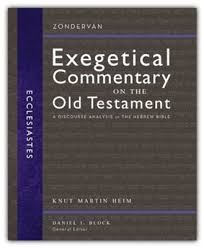
Luke (CSC) by Gregory R. Lanier

“Wow” comes to mind on this one. The NAC volume this replaces (though that volume is still in print) was solid and well worth having, but this one is next level. Lanier displays such mature scholarship with a hint of seeing all the scholarly world and being weary of some of it. I share his weariness and love having what he offers to learn from.

Just reading the Author’s Preface will tell you this is going to be good. Look at the six things he’s attempting to do in this commentary. One of those, focusing on Luke rather than some speculative “Q” behind him, means a tenth of the commentary isn’t pure rubbish as befalls so many works. Another, his upholding a high view of God’s Word, wins my trust out of the gate. I feel he kept all six of his aims.

He also showed that he felt no straitjacket bound him when he began the Introduction by expounding Luke 1:1-4. I’ve never seen that before, but especially here in Luke so many introductory issues were brought up in the text and made him avoid redundancy. From there, he explained Luke as literature and discussed sources. He slapped “Q” around a little more (can you tell I loved it?) and ended the section by reminding us of the full inspiration of Scripture. That’s such a breath of fresh air.

Some elite types will read what I’ve said so far and assume we have a lightweight commentary before us. How incredibly wrong they would be. Watch him guide us through plot, setting, narrative devices, and background factors and you will see that he’s not taking a backseat to anyone. He reasons his way to several conservative conclusions (e.g. authorship) rather than just stating positions. He also dismantled the untenable “community” ideas (e.g., Johannine community or Lukan community) that for some bizarre reason took a stronghold on so much NT scholarship. I further loved how he rolled his eyes at the circuitous routes of the “so-called quest for the historical Jesus”. I think I’ve shared enough for you to see the direction of the introduction, and I must say it is outstanding.

They were some of the most eye-appealing and helpful charts throughout the work, both in the introduction and in the text itself. They shared really helpful information to those of us trying to grasp the gospel of Luke. His commentary on individual passages was so helpful as well. I mean really good.

There are a lot of good commentaries on Luke, and several not as good as their reputation, but I see no reason why this one couldn’t be a pastor‘s first choice. It has what those of us preparing sermons need the most. Along the way, you’ll be told what the scholarly world has done with certain issues without yourself having to drown in them. I assure you, I will keep this one handy.

I received this book free from the publisher. I was not required to write a positive review. The opinions I have expressed are my own. I am disclosing this in accordance with the Federal Trade Commission’s 16 CFR, Part 255.
Zephaniah (ZECOT) by Jason Derouchie

Here’s the best solo volume on Zephaniah that I’ve encountered and that’s coming from one who has always enjoyed Zephaniah. It’s a small book that packs a punch. The author did the spadework and gave us a gift here.

The style of the this series is a great match for Zephaniah. The Discourse Analysis that is this series’ niche was well done. In fact, as much as I love and have expectations for discussion on structure, this may be the rare volume that had too much. I’ll say this for sure, you won’t need a second book covering the structure of Zephaniah because this book thoroughly weighs all the scholarly perspectives on it. I can’t even say that I agreed with every conclusion on structure, but the options are so thoroughly laid out that the work is done and all you need to do is pick among the options. Kudos to a commentary that pulls that off.

Don’t think that other important topics, however, are overlooked. The introduction discusses authorship, date and occasion, genre, literary features, and audience all before structure is addressed. After structure, there’s some excellent discussion of theology. I thought the highlight was how the author explains Zephaniah anticipating Jesus and his mission. That is taking theology down the correct avenue for sure.

The commentary was strikingly full. Unlike some prolix works, this work does not run off on weird scholarly tangents. There’s much excellent exegesis, linguistics, and thorough discussion of structure, even in every individual passage. I don’t see how preachers or scholars could go wrong with this volume. For preachers, I don’t think the scholarship is so dry that you’ll be turned off at all. Every section ends with more helpful theology, and for all the trees, the forest is never lost sight of. For Zephaniah, this is the way to go.

I received this book free from the publisher. I was not required to write a positive review. The opinions I have expressed are my own. I am disclosing this in accordance with the Federal Trade Commission’s 16 CFR, Part 255.

1 Peter (TNTC) (Rev. Ed.) by Wayne Grudem

Here a nice TNTC volume gets an update that will extend its usefulness for a long time to come. When I think of Wayne Grudem, I think Systematic Theology since that volume is perhaps as influential as any in print today. What he proves here is that he can run too in the commentary-writing world. He may have written a couple paragraphs in a systematic theology style in this book, but this a truly helpful commentary.

The 50-page Introduction is pretty full as this series goes. He is consistently conservative in his conclusions and I found myself agreeing with him at many points. More important to you, he explains how he arrives at those conclusions quite lucidly. For those who care, he interacts with scholarship well without letting that dominate. He also is not afraid to go against the grain where scholarship has gone amok. For example, he dispenses with the idea that 1 Peter is meant to be read as a baptismal sermon. As he effectively shows, baptism is hardly mentioned in Peter and then mostly in cursory way. How do scholars fall in these ditches?

Half way through the Introduction he transitions to theology and major themes. Don’t miss this section as that can be a great aid to understanding Peter. He works through twelve themes found in 1 Peter and you’d be hard pressed to disagree with his twelve.

If you are familiar with this series, you’ll find this a good representative of it. There are constraints on length, so it’s the type of work where every sentence counts. And here they did. Background, exegetical understanding, and a bit of theology pervade the writing on every passage. This is a fine commentary. 

I received this book free from the publisher. I was not required to write a positive review. The opinions I have expressed are my own. I am disclosing this in accordance with the Federal Trade Commission’s 16 CFR, Part 255.