John (NTL) by Thompson

book john NTL

This commentary on the Gospel of John is one of the latest in the New Testament Library (NTL) series published by WJK. This volume is designed to be a major mid-length commentary for those who study in the Gospel of John. It is aimed more at those who teach than scholars. You will find it quite suggestive on many passages.

Marianne Meye Thompson explains in her preface that she has worked 17 years on this commentary. That’s a lot of time for mature reflection. It’s also fair to say that this is one of the more conservative volumes in this series. She chooses not to debate the historicity of the stories in John’s Gospel, but just comments on the text that we have.

I could not agree with her that the John of this Gospel was not the John, who was the son of Zebedee. Still, the Introduction to John’s Gospel she gave was filled with helpful insights. You could sense a love of the gospel of John as you read her comments. She makes some great comments on how John is different than the Synoptic Gospels. The discussion of Jesus as the son of God in both the Introduction and a later excursus (excursus 2) showed that this was an area of the author’s expertise. I thought her explanation of how matters affecting ritual purity were absent from John was well-made as well.

The section on structure was rather short though competent, and her opinion on the dating of John landed at the conservative position of the 90s. She stated that this commentary “focuses on the gospel’s account of Jesus of Nazareth: what he said, what he did, how is life ended, and what happened after his death.” To my mind, this commentary achieves the goals the author set out at the beginning.

Though it was not as in-depth as some of the major exegetical commentaries out there, I thought the commentary proper was both interesting and helpful. She wrote in a clear way that was easy to understand. I could not agree with all her conclusions, but I appreciated the way she wrote. I checked several passages in this commentary, and the quality was consistent throughout.

If you’re looking for an additional voice in your studies of John’s Gospel, you would do well to cure this volume for your shelves. I recommend it.

I received this book free from the publisher. I was not required to write a positive review. The opinions I have expressed are my own. I am disclosing this in accordance with the Federal Trade Commission’s 16 CFR, Part 255.
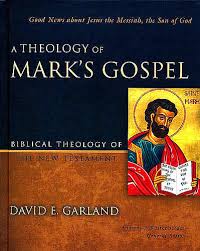
A Theology of Mark’s Gospel by David Garland

book-mark-theology

This book is the equivalent of a whole shelf of books on the Gospel of Mark. Veteran commentator, David Garland, has written an ideal volume here. Think of it as a book that summarizes all the issues and themes that scholars often talk about involving Mark’s Gospel to put beside your commentaries on Mark. Fortunately, Zondervan is putting out a whole series called the Biblical Theology of the New Testament (BTNT) in eight volumes to cover the New Testament. Authors in the series are required to have already written a commentary on one of the books in their section. Mr. Garland has already written a commentary on Mark in the NIVAC series. Though its stated audience is for upper college and seminary-level students, I found it, as a pastor, accessible and easier to read than many volumes of its kind.

The book is divided into two parts, though that division is a little skewed. Part one only has two chapters covering introductory matters while the rest of the whole book is on major themes in Mark’s theology. While those first two chapters on introductory matters were well done, I feel part two is where the immense value of the book comes out.

Do you know why I find chapters 3 through 14 so valuable? It’s because all the issues that I’ve encountered in commentary reading on Mark’s Gospel get discussed in a clear, suggestive summary of what’s been believed and straightforward reasoning behind conclusions Mr. Garland offers. Some of these subjects were ones I’ve tried to get smaller individual volumes on, but was thrilled to find them all here.

He discusses what the introduction of Mark 1:1-13 means. He covers the Christological titles of Jesus, such as the Son of Man. Other standout chapters were his explaining the Kingdom of God in the Gospel of Mark. He made great sense of the secrecy motifs that you so often hear of in regards to Mark’s Gospel. Another subject that you hear about so often is the prominence of discipleship and he covered it in great depth. Don’t miss chapter 10 on the requirements, costs, and rewards of discipleship – that chapter is quite perceptive. He makes clear what the atonement means in Mark’s Gospel, and as you might expect, covers Mark’s eschatology. The last chapter is on the debate over the end of Mark’s gospel, and though I find the longer ending more accurate, he well covers the issues.

As I said before, I can’t believe how many volumes I’ve looked for that could be replaced by this one volume. For my money, it’s quite a bargain.

I received this book free from the publisher. I was not required to write a positive review. The opinions I have expressed are my own. I am disclosing this in accordance with the Federal Trade Commission’s 16 CFR, Part 255.

Luke (ZECNT) by David Garland

book-luke-zec

With every new title in this Zondervan Exegetical Commentary on the New Testament series that I delve into, I find my appreciation growing. This series is well conceived and this entry by seasoned-commentator David Garland adds to the laurels of the series. In addition to commentaries on a few New Testament epistles, Mr. Garland has already produced a volume on Mark in the NIVAC series. He is equally at ease in either the Gospels or the epistles.

In his Introduction to Luke, Mr. Garland discusses the authorship of Luke and Acts. In accepting Luke as the author, he strives to dig a little deeper into who Luke actually is. He keeps his discussion of Luke’s sources mercifully brief and jumps on into the genre of Luke and Acts. He sees Luke as both an historian and apologist. The next section is called “date, provenance, and the readers of Luke-Acts”. Unlike some other commentaries I’ve read, he discusses those three issues together rather than separately. There’s even in that section some great information that some others might put in the category of structure. He makes some nice, valid points about Luke’s purpose in writing this gospel. The only disappointment in the Introduction is that his section on structure is only an outline.

I found the commentary proper of even more value. That’s not to say I didn’t disagree with him on some points. For example, the meaning of the word “inn” in the birth of Christ is much more conducive to the traditional meaning that Mr. Garland seems to believe. Most other commentators would not agree with him on that one either. Still, the commentary is of extraordinary value. Every passage I surveyed offered the kind of things I’m looking for in a commentary.

Mr. Garland appears comfortable with the ZECNT format. In each passage, he discussed the literary context, stated the main idea, offered his own translation, explain the structure and literary form, and gave an exegetical outline before launching into a detailed explanation of the text. That is followed by a theology in application section that helps preachers bridge the gap between exegetical information and the sermon.

Having reviewed the volumes on Mark and John, and now reviewing this volume on Luke, I’m amazed at the quality this series has given us on these three Gospels. This volume is ideal for pastors. Think of it as being helpful like the NAC series with a little more depth. I warmly recommend it.

I received this book free from the publisher. I was not required to write a positive review. The opinions I have expressed are my own. I am disclosing this in accordance with the Federal Trade Commission’s 16 CFR, Part 255.

Luke (NAC) by Robert Stein

book-nac-mark

Robert Stein has written a quality volume for the New American Commentary series. I have long felt that the NAC series is a top choice for pastors in terms of content and price. Though the volumes are slightly shorter than some of the other exegetical commentary series, the help these volumes provide is still top-notch. This volume on Luke is one of the better volumes in the series.

The Introduction is succinct, power packed, and covers an amazing amount of information in its pages. In just a few pages he covers the authorship of Luke by examining internal evidence, church tradition, and the “we” sections and, to my mind, unanswerably proves that Luke was the author. He surveys well the various opinions on the date of Luke. He reminds us that Acts was never intended to be either Paul or Peter’s biography, but sought to tell the story of taking the gospel to the world. Though such things are highly suspect to me, he covers scholarly opinion on the sources of Luke. Though he finds outlines rather arbitrary, he provided a good one.

I fully agree with his conclusion that the purposes of Luke ought not be pigeonholed into a single purpose. He explains what he believes to be the four main purposes of Luke and provides a great deal of detail in explaining his case. I thought it was effective. His section on the theological emphases in Luke was also highly suggestive. By the time you get to the fine map that ends the Introduction, you may feel as I did that it was the kind of Introduction that really helps a pastor.

I found help in the many passages I reviewed in this volume. He was never trite, and he provides real assistance to one who preaches the Gospel of Luke. I highly recommend this volume to all my fellow pastors out there. You won’t be disappointed.

I received this book free from the publisher. I was not required to write a positive review. The opinions I have expressed are my own. I am disclosing this in accordance with the Federal Trade Commission’s 16 CFR, Part 255.
The Gospel of John (NICNT) by Michaels

book-john-nicnt

J. Ramsey Michaels has provided us with a massive commentary on the Gospel of John in the New International Commentary of the New Testament series. This volume replaced the much-used and much-loved commentary by Leon Morris in that series. I had read good things about this book, and even had a few people say it was their favorite, so I was happy to delve into it for myself. Though I was ultimately convinced that I must give this book a high rating, I did find a few things not in its favor.

The Introduction, in my view, was not up to par for commentaries of this size. In defense of Mr. Michaels, he purposely kept it short and feels that Introductions would be better written after the fact. It almost read like a few reflections he wanted to share when he was finished. There’s not a lot of background either, but he also chose not to go that direction. He feels such background makes better sense in specific passages. The first part of his Introduction on the nature of John’s Gospel was interesting. He commented most on the authorship of the Gospel of John and was sympathetic to the traditional position, but choose to keep it anonymous since the author’s name is not mentioned. He almost sees anonymity as a trait of this gospel. He speaks only briefly of truth claims, the relationship of John to the other Gospels, and the structure of John’s Gospel, which I thought was the most lacking in the Introduction. He barely spoke of textual issues, and his section on theological contributions, which was good, was only four pages.

One other issue I had with the volume was that what he called the first tier of commentaries that helped him write his was Bultmann (!), Schnackenburg, Brown, and Barrett. At least Morris, Carson, and Keener were in his second tier. I felt at times that his first tier had too much influence on what he said. On the other hand, I would agree with many others who say that he came up with his own unique, fresh perspective.

You may ask why I would still rate this a five-star commentary considering the issues I have stated I have with it. Why must I? It’s the incredible, thoughtful content in the commentary itself. Every passage I interacted with taught me things that I had read nowhere else. Even though there might be a sentence that I disagreed with, in the next paragraph he would tie the passage into the larger context of John, or tie it into some other passage in John, or give some amazing exegetical insight that I found extremely helpful.

All in all, while this may not be my first choice on the Gospel of John, it is one that I will always consult going forward. A book that gets me thinking and opens other side paths in grasping a passage’s meaning is a winner in my book. I recommend it.

I received this book free from the publisher. I was not required to write a positive review. The opinions I have expressed are my own. I am disclosing this in accordance with the Federal Trade Commission’s 16 CFR, Part 255.
Acts (NTL) by Holladay

book-actsntl

Carl Holladay has produced the latest volume in the New Testament Library series. The Book of Acts has had several major commentaries in the last few years, but this one shoots more at being a midsized commentary. There’s a little over 500 pages for the entire Book of Acts. Though NTL is known for being more from the critical camp, I found it more conservative than I expected. In addition, I found it helpful.

Though the commentary as a whole is midsized, he provided a major introduction in 70 pages. Frankly, it was a joy to read. Even if I didn’t agree on every point, I appreciated the clear writing. He is not antagonistic to Luke being the author and he can accept a more conservative date though he would only be nailed down to a rather large range of dates. For sure, I was more confident of the historical trustworthiness of the history Luke provided than Mr. Holladay was.

Scholars will love his detailed description of the textual history of Acts that covered several pages, though that will be the least interesting part of the Introduction to most pastors. I became very interested again when he discussed the literary structure. His discussion of the speeches in the Book of Acts was outstanding including theology and purpose of the speeches. His explanation of the use of “witness” and use of the Old Testament was helpful. The final section of the narrative unity of Luke-Acts was thought-provoking. Again, I found much food for thought about what the Book of Acts seeks to accomplish.

The commentary proper was briefer than some of the other major commentaries I use, but still included several creative thoughts and every passage I reviewed.

This book might not be the first commentary I turn to when studying Acts, but it is one I will be checking in future studies. I predict this may become one of the more respected volumes in the series.

I received this book free from the publisher. I was not required to write a positive review. The opinions I have expressed are my own. I am disclosing this in accordance with the Federal Trade Commission’s 16 CFR, Part 255.
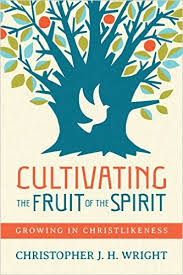
Cultivating the Fruit of the Spirit by Wright

book-fos

Christopher Wright is a scholar with a pastoral heart who is a joy to read. With faithfulness to the text he gives you something for your soul. Having loved his Old Testament commentaries in the past, I just recently learned what a great expositor he is. He knows how to pull out what is transforming from the text. In this case, we learn so much about life in the Spirit.

This volume can be approached from two points. First, it can be captivating devotional reading. In fact, that’s how I approached it as I read it from cover to cover. Second, it’s a fine volume to put on the Galatians section of your shelves for its study on the fruit of the spirit. I intend to keep it there for the second use as well.

His quotation of a lovely prayer of John Stott in his Introduction gets your mind in the right spiritual frame. He explained beautifully the opposite errors of moral license and legalism and how a proper study of the fruit of the spirit will keep you between those two extremes. He further explains that this list is not just a list of virtues corresponding and contrasting with the works of the flesh. As he says, if that is all this list was, it would be no more than a list of rules. He says, “a tree does not bear fruit by keeping the laws of nature, but simply because it is a living tree, being and doing what a tree is and does when it is alive”.

Chapters 1-9 cover in turn each of the items that make up the fruit of the spirit. In every chapter, he well defines what Paul meant by the word and illustrates it from all parts of the Bible. Every chapter was outstanding, but for some reason I especially loved chapter 9 on faithfulness. Faithfulness, he says, means being trustworthy and dependable. That’s a great thought to read back into faithfulness in the Christian life.

This book is perfect for any Christian, from the pastor to the newest Christian. I highly recommend it.

I received this book free from the publisher. I was not required to write a positive review. The opinions I have expressed are my own. I am disclosing this in accordance with the Federal Trade Commission’s 16 CFR, Part 255.
Mark (ZECNT) by Mark Strauss

book-mark-st

Mark Strauss has provided another winner in the ZECNT series. As with other volumes in the series, scholarly information is provided for the studious pastor. As it turns out, I imagine scholars will love it too. Mr. Strauss writes as one in love with the Gospel of Mark. To me, that is often the most important element in producing a successful commentary.

His Introduction of Mark really provokes the reader’s understanding of what the Gospel of Mark seeks to accomplish. As is a key focus with this series, he begins by explaining Mark’s story of Jesus. In describing Mark’s fast-paced story, he says, “this is a gospel narrative on steroids!” He explains that Jesus is both the mighty Messiah and the Son of God. He sees the book of Mark as having two distinct halves, which includes the time where the people were amazed at Christ followed by a time of opposition. He traces out the suffering servant motif with good effect too. Next, he explains Mark’s place in scholarly history, and well defines the various criticisms that have been in vogue over the years. He sees narrative criticism as the most significant of our day and then includes a section explaining his approach in this commentary. He says it is “eclectic, drawing insights from historical-critical, social-scientific, and narrative methodologies”.

He goes on to discuss genre, authorship, audience, and date with conservative conclusions in each. I enjoyed it even more when he got into occasion and purpose and brought out what was, in my view, some of the most interesting features of Mark. In literary features, he discusses Mark’s structure and a few other unique details that I found extremely helpful.

The commentary proper is in the fine ZECNT style that I’m growing to appreciate more each day. He puts each passage and literary context, provides a main idea, explains the structure, provides an outline, and then jumps into detailed explanatory commentary of the text. Though Greek words are used in the text, the English words are nearby and are easy to follow. In both the Introduction and in the commentary itself, this volume is theologically rich.

I recently had the privilege to review the volume on John in this same series and am amazed by the consistent quality. When it comes to an up-to-date, quality exegetical commentary, these volumes cannot be beat. I give this book the highest recommendation!

I received this book free from the publisher. I was not required to write a positive review. The opinions I have expressed are my own. I am disclosing this in accordance with the Federal Trade Commission’s 16 CFR, Part 255.

Obadiah (ZECOT) by Daniel Block

book-obadiah

This book is the first in the exciting new Zondervan Exegetical Commentary on the Old Testament series. Likely the short length of Obadiah brought it to press first. It is written by the general editor of the entire series, Daniel Block. Mr. Block has a sterling reputation in producing commentaries on books of the Old Testament. I personally use to great benefit his two-volume set on Ezekiel in NICOT and his volume on Judges and Ruth in NAC. This ZECOT series provides a discourse analysis approach in its commentaries. That means basically that it makes the primary emphasis on following the flow of the narrative. This volume succeeds in that aim.

The Introduction to Obadiah is enlightening. Since there is a greater variety of opinions about the date of Obadiah compared to the other Minor Prophets, all the known options are laid out clearly. I fully agree with his conclusion that Obadiah is best dated 586 BC when Jerusalem fell to the Babylonians. He well surveys the archaeological evidence to support his conclusions as well. In his section on Obadiah’s rhetorical aims and strategy, he surveys the speaker and audience of the book. He describes the message of Obadiah as: a) divine justice will prevail, and b) divine fidelity will prevail. When he discusses the rhetorical strategy, he works through a few of the more unlikely possibilities and argues against them before he draws out what he believes. Personally, like most scholars, I feel he overplays the significance of the similarities between Obadiah and Jeremiah. He ends the Introduction with a fine discussion on the structure of Obadiah including an exceptional chart to help you visualize his conclusions.

The commentary itself is ideal. Every unit is given a main idea of the passage, a discussion of literary context, a discussion of structure and literary form, followed by explanatory commentary. As you read the commentary you will see that you are in the hands of a seasoned commentator. Anywhere you find Hebrew in the commentary you will find English beside it making this commentary accessible to all. Don’t miss the final chapter, which in most books would have been in the Introduction, on the canonical and practical significance.

I’ve had opportunity to do very in-depth study of the book of Obadiah and have read almost all the major commentaries on it. As an exegetical commentary, Mr. Block has surpassed them all with this book. I highly recommend it as the definitive exegetical commentary on Obadiah.

I received this book free from the publisher. I was not required to write a positive review. The opinions I have expressed are my own. I am disclosing this in accordance with the Federal Trade Commission’s 16 CFR, Part 255.

I’ve written an expositional work on Obadiah that you can check out here.

I Corinthians (NIGTC) by Anthony Thiselton

book-ant-cor

Anthony Thiselton’s influential, important tome on First Corinthians is now made available in paperback. This more economical version will make it more widely available for Bible students. Before I received my review copy, I had heard several reports of how impressive it scholarship was. With it now in my hand, how would I best describe it? Scholarly, encyclopedic, exhaustive, theological, and comprehensive are the words that come to mind.

The Introduction demonstrates what you’re going to get in the whole commentary. There’s 52 pages, but it seems like enough information for twice that amount. In other words, there’s never any fluff, only more and more material for insight. Further, you see its value for both pastors and scholars. It begins with setting the stage in the most vivid way imaginable for Corinth. You immediately see that understanding the cultural milieu is critical to understanding the book of First Corinthians. He proves his conclusions with historical and archaeological evidence. He even hints at a few cultural peculiarities of Corinth that will affect interpreting later passages in this discussion. He also describes how important Corinth is to the overall ministry Paul.

When he gets into other issues common to an Introduction he slides beyond what most pastors would need or want and gives the scholars everything they could ever want; for example, when he discusses argument and rhetoric. His conclusions on Paul and dating are mostly conservative.

His thoroughness continues in the commentary proper. Even though there’s a good bit of Greek in his text, there’s usually the English in the same sentence that makes following his argument easy. There might be some paragraphs that a pastor would skip, but plenty of others that so thoroughly explains what is at stake that would still make it an incredible asset to them. I know I look forward to using it in the years ahead. It’s place in the scholarly world is set too. No scholar writing in the future on First Corinthians will dare to skip Thiselton. I warmly recommend this volume to anyone trying to build a first-class exegetical library.

I received this book free from the publisher. I was not required to write a positive review. The opinions I have expressed are my own. I am disclosing this in accordance with the Federal Trade Commission’s 16 CFR, Part 255.