A Commentary On Judges And Ruth–Kregel Exegetical Commentary

Judgesruthchisholm

Do you need a really quality commentary on Judges and Ruth? Look no farther than this latest in the Kregel Exegetical Commentary series, this time by Robert Chisholm. Mr. Chisholm has 30 years teaching this portion of Scripture under his belt and it shows. Though a major commentary, this volume is effectively aimed at pastors and teachers. Instead of the rubbish approach of “speculative fancy that litters the history of biblical higher criticism”, he takes the superior and helpful “literary-theological” approach. That means he takes the text as he finds it! As a pastor, I am glad to have this book.

His Introduction for Judges is extensive and covers all the issues we might wonder about as well as the issues that scholars wrestle with. Chronological questions are the trickiest, but whether you finally come down where Mr. Chisholm did or not, you will for sure have the information to decide for yourself. The section entitled “What Is The Point Of Judges?” is exceptionally good. In addition, the section on female characters, of which Judges has many, is fascinating as a backdrop for the abject failure of men in those dark days. Preachers will love his suggestions on how to approach preaching the book as well.

The commentary itself is good. Just look at, for example, his explanation of Jeththah’s vow or of the Levite and his concubine shows he will tackle hard passages with verve. He thoroughly gives the different viewpoints, yet never fails to argue passionately for his point of view. I so prefer that approach whether I agree with the commentator’s conclusion or not.

He is equally as good on Ruth. I was unconvinced on his arguments against Daniel Block on the wrongness of Naomi’s sons marrying Moabites, but feel I know the issues involved like never before. There is no skepticism here.

In this second release in this series, Kregel is batting one thousand. If they can keep this level of quality, I say keep them coming!

I received this book free from the publisher. I was not required to write a positive review. The opinions I have expressed are my own. I am disclosing this in accordance with the Federal Trade Commission’s 16 CFR, Part 255 . 

Related article: Psalms Volume 1- Kregel Exegetical


Bible Revival–A Needed Book

Bible-Revival-by-Kenneth-BerdingHow would you like a book that addresses one of the biggest, yet often overlooked problems of our day? It is the problem of a famine of the Bible– not only in our world, but within Christianity itself. Adding to the damage is our lack of ideas on how to address the problem. How will I address the problem in my life? How will pastors address it in our churches? Packing a real wallop, this volume by Kenneth Berding and published by the Weaver Book Company shares real answers. The answers are deftly given, and as the subtitle says (“committing ourselves to one book“), are what we should have already realized.

Mr. Berding confines his case that we have this famine to one succinct chapter. That suffices as I doubt any reader would fail to see the obvious nature of the Bible’s standing among God’s people. He even discusses some possible reasons, like distractions and so on, that gives insight to where we are today. Chapter two to the end are insightful, practical advise on what must be done.

His approach is one of confronting the things that keep the Bible at a such distance that it does not have the dramatic effect it otherwise would on our lives. Things like seeing the Bible as truly sufficient, or that it can be actually understood, or our being superficial in reading it, or worse, that we already know all the important stuff–these are makings of biblical illiteracy. He call our biases “special interests” and the preferred type of sermons today “therapeutism”. One of our biggest blunders, as he well explains, is our imagined right to an opinion of whether what we read is acceptable to us or not. He leads us persuasively away from these things.

Were we to confront the things that Mr. Berding calls out we would without fail have a revival in our personal lives regarding the Bible. I recommend this book for you and me. As a pastor, I recommend it to those I pastor too. It is a gem that I pray finds a wide audience!

I received this book free from the publisher. I was not required to write a positive review. The opinions I have expressed are my own. I am disclosing this in accordance with the Federal Trade Commission’s 16 CFR, Part 255 .


The Best Bible Atlas of All–The Carta Bible Atlas

0039363_carta_bible_atlas_5th_edition_300


If you could only own one Bible Atlas, what would be your choice? The Carta Bible Atlas, 5th Edition, by Carta would be my recommendation for pastors like me and serious Bible students.  I make that recommendation as a Bible Atlas nut who owns almost every one out there. It has one claim to fame that allows it to outpace the pack–It has the most maps for specific Bible events. They are unrivaled for accuracy.

Carta maps are the preeminent ones out there today. They publish larger atlases for scholars like The Sacred Bridge as well as more popular ones for general audiences. This one, now updated, however,  has been the standard for years. Originally called The MacMillian Bible Atlas and a pastor’s favorite since the 1960s, five updates have only made it better.  I have used an older edition for years, but I love the maps that have since been added with all my old favorites still there too. I guess my son will get my older edition so he will have a great start on a Bible atlas

The additions supplement world history among the Bible maps. They put Bible history in the larger context. The world around God’s people is important to the narrative and are part of the story in many cases. The maps are better for the Old Testament than the New, but the New Testament section is improved from previous editions.

The maps are not as vivid or colorful as those in some other atlases. There are occasions where a conclusion on Bible history or chronology is more liberal than I could accept. Still, even with those caveats, this volume is the best. Read your biblical passage and turn to the appropriate Bible map in this volume and you will see for yourself. Better still, what you are given is not beyond what would be benefical to a pastor or teacher unlike the larger volumes designed for scholars.

There are extra features like a list on all the archaeological sites in Bible lands in an appendix as well as great indexes of persons and places for cross study. You might want two or three other Bible Atlases, for great color graphics and pictures, but this is the one you must have for rich Bible study.

This volume is available at most online book retailers. Check out the Carta website to see all the fine products they put out.

I received this book free from the publisher. I was not required to write a positive review. The opinions I have expressed are my own. I am disclosing this in accordance with the Federal Trade Commission’s 16 CFR, Part 255.

Check out my article on Bible Atlases in general here.


Christian Faith in the Old Testament: The Bible of the Apostles–A Review

When the Apostles turned to their Bible, what was it for them? In clear, accessible style, Gareth Lee Cockerill shows us that it is what we call the Old Testament. More than that, he rescues the Old Testament from the oblivion that some would banish it to. He discusses it with gusto because he believes it is critical for Christians today. Unlike many scholars, he follows what the New Testament told Christians to do with the Old Testament–1 Corinthians 10:11 “Now all these things happened unto them for ensamples: and they are written for our admonition, upon whom the ends of the world are come.“–that is, mine its pages for great spiritual treasure! Thank you Mr. Cockerill.

This book succeeds on every level. It accomplishes its goal of reigniting passion for the Old Testament. In reading it you get a good overview or even an Old Testament survey. Even better, you get it without the dryness that some scholars are ever handicapped to write with. As a substantial bonus, and what separates this book from many competitors, there is real application for the Bible student or pastor scattered all along the way. The Charts added real value as well. They actually taught something. I was particularly blessed as seeing the parts and the whole in a better way.

The Appendix on “Why are these books in our Old Testament?” was exceptional. With all the critical questions on the Canon being thrown around today, I can hardly think of a more succinct presentation. He lands where many of us believe. In a small compass you really got the help you need.

I enjoyed reading this volume straight through, now it will find its way onto my shelves for reference when I begin study of a new book. Such books have always proven a great boon to me.

I read this book thinking I wish more scholars wrote this way. On every page I felt that Mr. Cockerill believes– he really believes! That is more of a problem in the scholarly world than some realize. I know he is a respected scholar because he has recently released a major commentary on Hebrews (that makes sense) in the prestigious NICNT series. I want to get that book now too.

A+ all the way here. I recommend it for Bible teachers and pastors, but studious layman can handle it too. Master this volume’s contents and a better Bible understanding you will have.

I received this book free from the publisher. I was not required to write a positive review. The opinions I have expressed are my own. I am disclosing this in accordance with the Federal Trade Commission’s 16 CFR, Part 255.

20140307-123814.jpg

Holman Bible Atlas

Are you looking for a genuinely helpful Bible Atlas? Be sure to consider the Holman Bible Atlas byThomas Brisco and published by B & H Publishing as part of its Holman Reference titles. It has many strengths to make it one of the top two or three options out there. Its professed audience is “for the interested lay person and beginning level student of the Bible in colleges and seminaries.” It has succeeded for that audience as well as for we pastors.

Its maps are prolific, visually appealing, and timely. You truly get maps where you most need them. 132 maps cover the Biblical text well and places and events are well labelled too. Variety shows up as a few have a 3D view as well. You might find a detail or two to squabble over (like omitting Perea’s important presence in Christ’s ministry), but overall you will find accuracy in this volume. In the primary characteristic of an atlas, this volume gets an “A”.

The pictures materially add value to the text. The author’s experience in archaeology shows in his often showing us ruins of famous sites. I particularly enjoyed those. Charts that really summarize and teach are used to good effect too.

One of the best features of this atlas is the text explaining the geography and how it impacted the Bible story discussed. For example, in the section on the time of David there is a fascinating description of Jerusalem, how it grew, and how its topography affected how it grew. Mr. Brisco, and the many others who contributed, show considerable learning and put it to good use. It actually makes for good reading.

There is little to criticize here. You can question the chronology here or there, or wonder why if there is such a dandy map for the Eighth Century Prophets, why aren’t there other maps for the other prophets. Or you might wonder why there are no page numbers. Since the atlas is in chronological order, however, the loss is not great for Bible students.

This is a top-flight Bible Atlas. The most recent printing has a much improved cover too. You will not regret adding this volume to your study library.

I received this book free from the publisher. I was not required to write a positive review. The opinions I have expressed are my own. I am disclosing this in accordance with the Federal Trade Commission’s 16 CFR, Part 255.

For a review of other Bible Atlases read here.

20140222-100157.jpg

The Day of the Resurrection

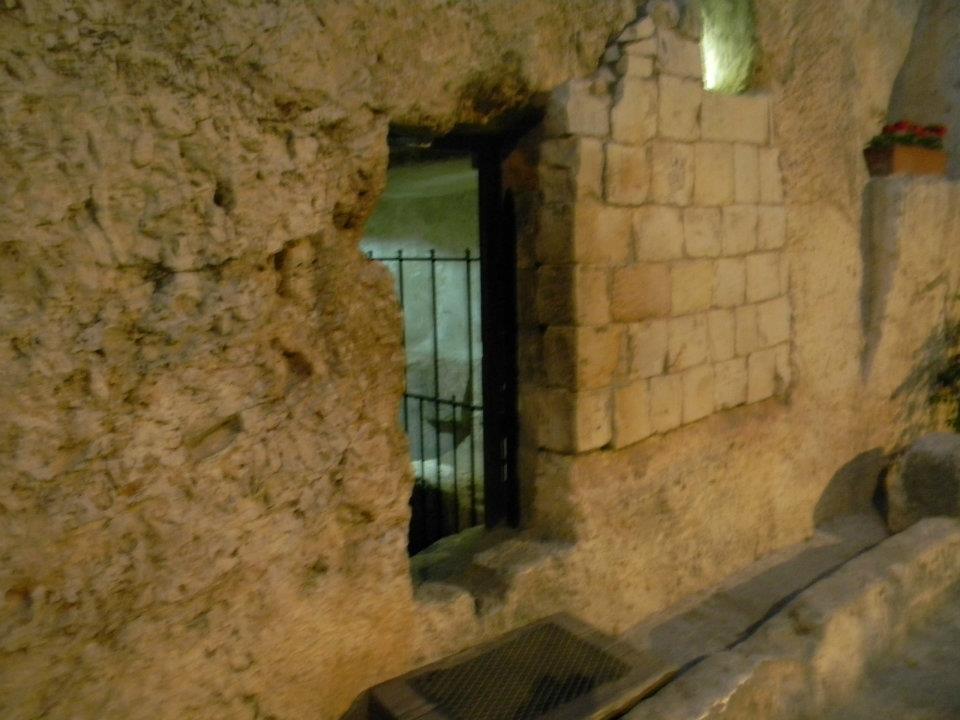
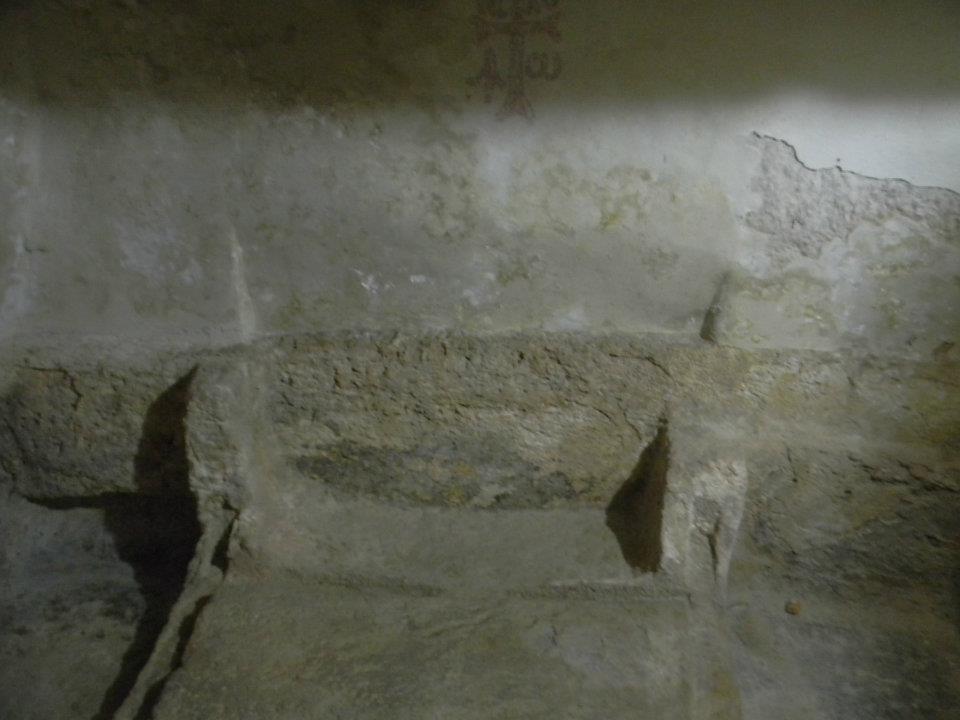
The Empty TombResurrection Sunday. Easter time. Is it just a big Sunday? One with a larger attendance and more work? Is it a day for family and a big Sunday meal? What is it, really, to you?

(Be sure to check out the chart below you can print out for study).

The Place where He lay!

The Place where He lay!

I don’t always dwell on it like I should, but everything I am, every dream I have, every hope of the future, every possible happiness that I could hope to have in time and eternity, all ride on 3 days about 2,000 years ago. Those days define me. No other thing even comes close. There was a choice I made, but the 3 days had to happen for me to have a choice and they are the pivot of all.
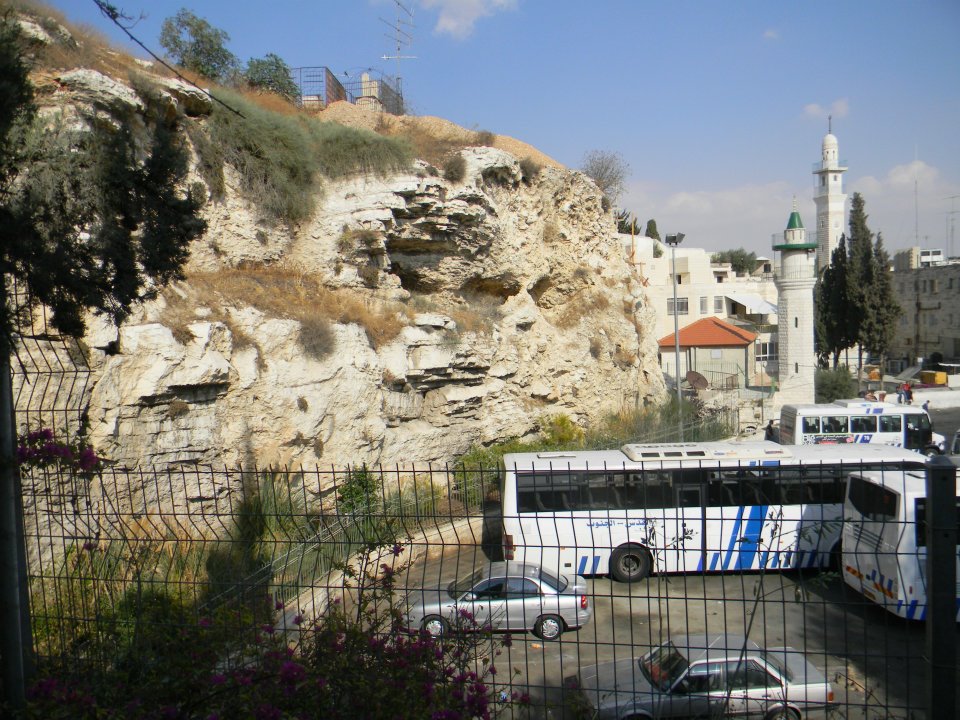
View of Mt. Calvary

View of Mt. Calvary

It is so pivotal, in fact, that it too defines human history. Before Calvary the world clamored, at least in the depths of their souls, in anticipation of this event where God transcended the corruption of sin we brought into His creation and which devastated you and me. After Calvary, we look back either in need of it or in wonder of it.
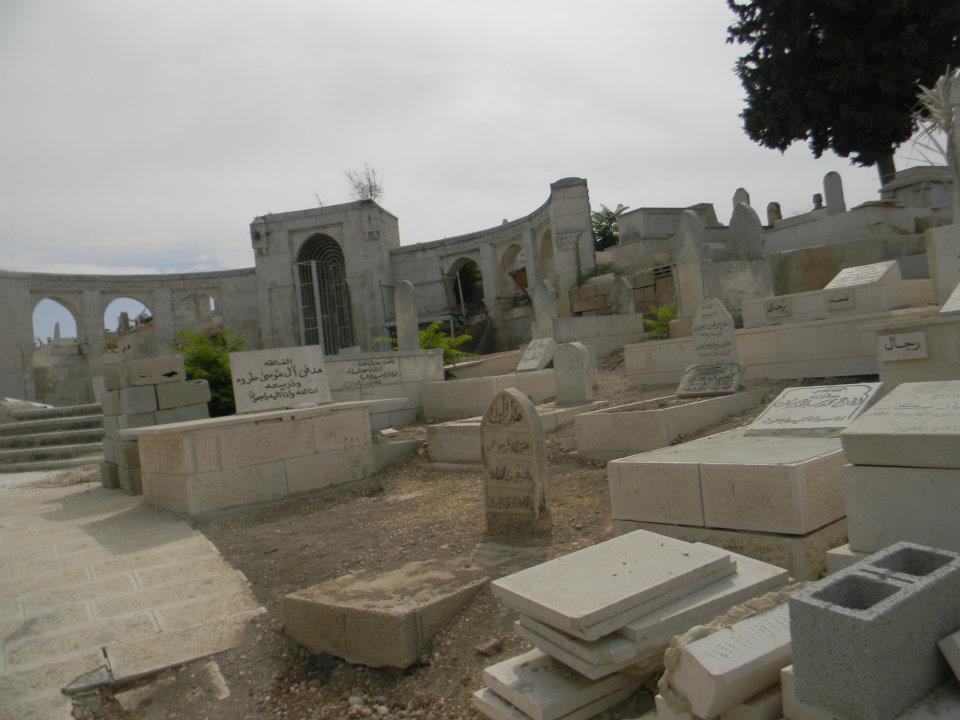
I managed to sneak up on Calvary early one morning while the caretaker was away and saw this scene!

I managed to sneak up on Calvary early one morning while the caretaker was away and saw this scene!

Jesus, my Savior, battled sin and death on a tortuous cross, was laid low in the cold tomb of death, and walked out on death with the keys of victory jangling in His nail-pierced hands on that Resurrection morning.
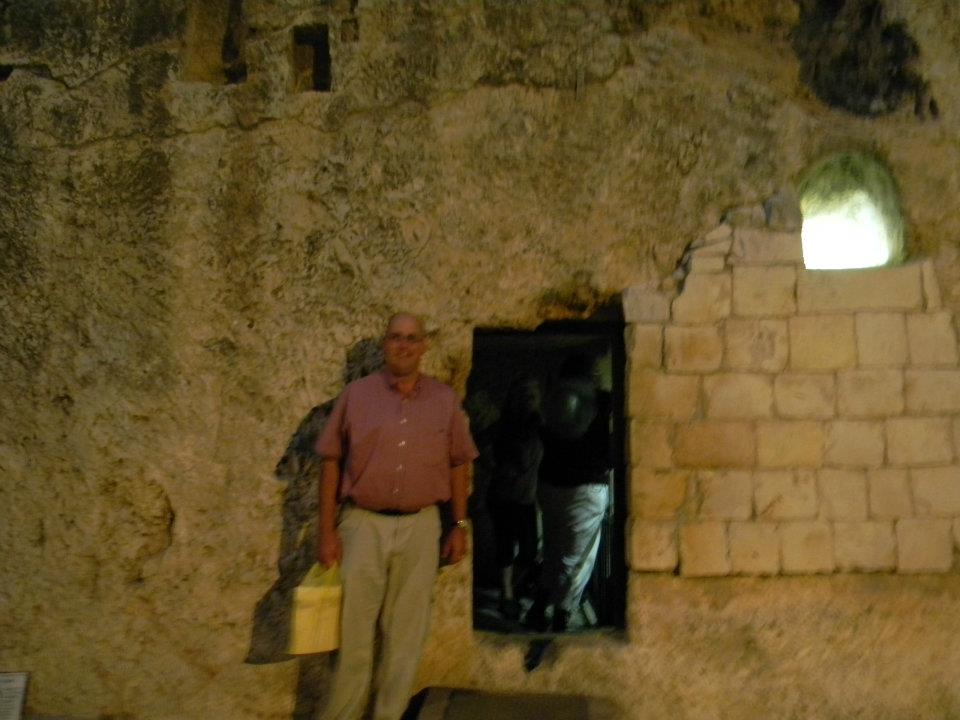
I went back at evening. The Empty Tomb is something I never want to forget!

I went back at evening. The Empty Tomb is something I never want to forget!

I don’t know where your mind or mine is this day, but the three days ending on Easter mean everything.
—————————————————————————————————
Related  post:
_____________________________________________________________
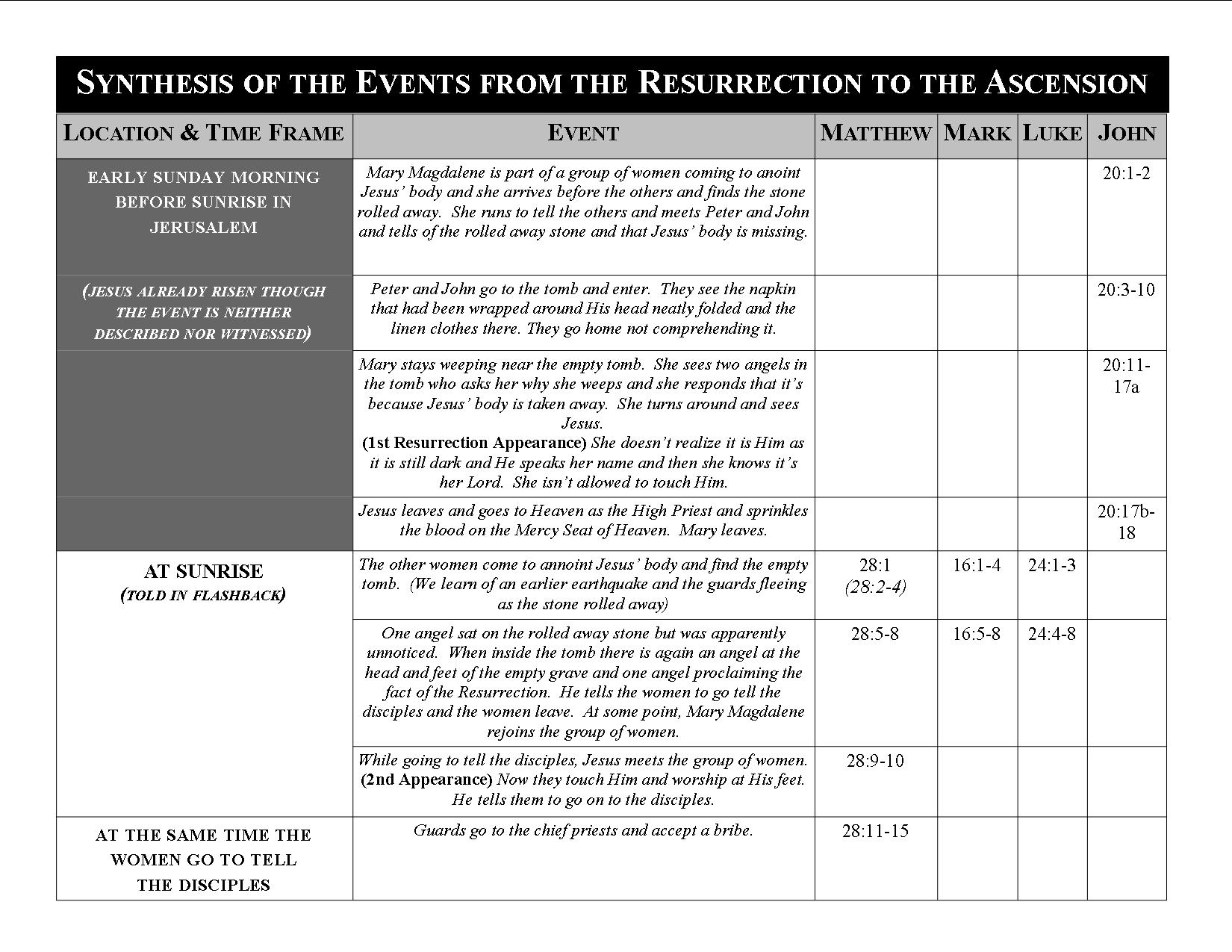
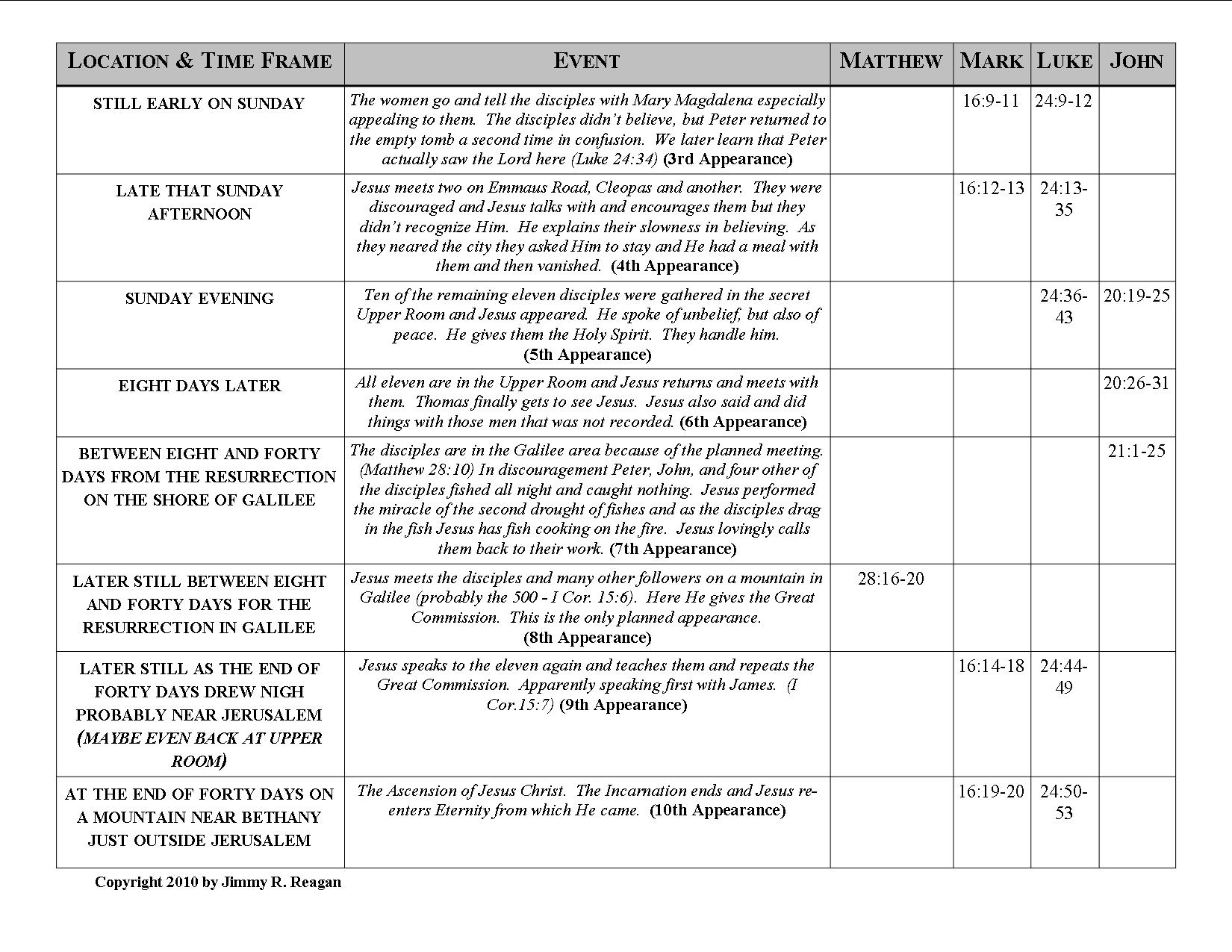
Here’s a chart to help you study the events of the Resurrection:
Click on above link to see the chart below in better detail or to print out from a .pdf file to study.
synthese of resurrection to the ascension (1)

________________________________________

If you enjoy this chart, it and several others from the Gospels have been collected in my new book “Following Jesus Through the Gospels”. Click HERE for more information.

______________________________________

The Theme Of The Gospel of Matthew

matthew

Welcome to Kyle Shearin’s class at the Crown College. Glad to have this opportunity to share this with you.

The Gospel of Matthew holds a special place among the books that make up the Word of God. We must carefully analyze the features of Matthew to determine what our Lord intended us to have in giving it to us.

The Theme of Matthew     

             Traditionally, the theme of Matthew has always been described as Jesus is the King of the Jews. Without doubt, there is much about Jesus as a King with His Kingdom in this Gospel. Israel is especially in view and the Jewish people are clearly the original intended audience. However, does that really express fully the purpose of our Lord giving us the Gospel of Matthew? We believe the idea that Jesus being the King of the Jews starts us down the path to an understanding of Matthew’s Gospel, but does not alone capture the essence of what we are to see here. The purpose for this Gospel is not so much that Jesus is the King of the Jews, but rather coming to terms with who Jesus the King of the Jews really is.

As we consider Matthew, how do we get to the theme? We find that various strands of thought are woven together with divine hands.[1] If we think about Matthew, what are the key elements that we find? With the Jewish emphasis of Matthew’s Gospel, surely the thought of Jesus Christ fulfilling all that the Old Testament said about the Messiah is one. As we progress reading, we see that Jesus Christ shows Himself mighty as He performs miracles of the greatest magnitude. As stated before, there is much about the Kingdom and we find that Jesus Christ the King explains, and in a way never seen before, governs His Kingdom. What also becomes progressively clear as one proceeds through Matthew is that Jesus Christ faces rejection. That rejection comes amid the irony of the great evidence of Who He is. These strands of thought taken together bring the theme of Matthew clearly before us. The theme of the Book of Matthew, then, is that Jesus Christ the King of Israel is the Son of God.

With this theme in mind, we can see how carefully it is carried through the Book of Matthew. Jewish people had their ideas of what a king and his kingdom should be and this had to be shown, particularly to Jewish readers. This kingdom is not made up of political elements as much as spiritual ones. Why would this need such careful explanation? The Jewish people, Matthew’s original audience, knew their Messiah would be a powerful and mighty king, but they were not seeing that He was the very Son of God. He is the fulfillment of Old Testament prophecy, but the Old Testament only touched the hem of the garment. King Jesus, the long-awaited Messiah, is the Son of God.

In developing the case that the theme of Matthew is that Jesus the Messiah was the Son of God, we notice many trends contained in the pages of Matthew. Take the title “Son of God”, which is mentioned 8 times in Matthew, and notice its usages. The first three mentions of the title are spoken by either Satan or a demon.[2] Matthew even highlights the irony of the depths of the rejection Christ faced by showing that the Devil and his henchmen admit what those in Israel could not. The double irony also developed is that this rejection in no way overthrew or even hindered what King Jesus planned for His Kingdom. Particularly in 8:29, the demons, in a state of abject fear, tell what they know to be fact when they call our Lord “Jesus, thou Son of God.” What better evidence could there be than this confession? In the Gospel of Matthew the Jewish reader, as well as all other readers, must grapple with the fact that Jesus, though not the king Israel wanted, is the King Who is the Son of God.

Another usage of the title “Son of God” appears in Matthew 14:33. There in one of the greatest physical miracles that Jesus performed in His earthly ministry He rescued His terrified Disciples in a ferocious storm on the Sea of Galilee. Matthew gives the most detail on this great miracle. Only he records Peter walking on the water to Christ, growing afraid and sinking, and then being grabbed by Christ before going under. When Jesus stepped into the boat, the winds ceased. This miracle was so awe-inspiring that the Disciples with worshipful hearts proclaimed: “Of a truth thou art the Son of God.” For the record, Matthew was one of those Disciples. Jesus Christ is clearly more than an earthly king, more even than a king with God on His side. He is the Son of God.

The next three usages of the title “Son of God” come from His enemies.[3] Each case is one of mocking sarcasm. The High Priest at His sham of a trial, the crowd of human vultures around His cross, and finally the chief priests, scribes and elders at His cross ridicule Him in His sufferings. The irony the reader of Matthew sees is all that the first 25 chapters told us of Him. His reception does not match the facts of His Person. He is the Son of God.

The final usage of “Son of God” in Matthew is the most ironic of all. Jesus has just died on the cross. Matthew records the statement of a Roman centurion: “Truly this was the Son of God” (27:54). With his rank in the Roman army, this was not the first crucifixion he had witnessed. Likely, he had grown accustomed to the grisly scene of death. This story happens against the backdrop of Israel’s rejection. This soldier’s allegiance is to a king in far-away Rome while the King Who was worthy of all allegiance is rejected by the people privileged to have Him in their midst. The irony–even a despised soldier of the occupying army could see that He was the Son of God. How powerful this presentation must be to the heart of a Jewish person that is Matthew’s target audience. In that a book of the Bible is for both the generation when written as well as later generations, this theme of Matthew makes a powerful appeal to those who read it today.

In a passage unique to Matthew, Peter’s confession of Christ is given (16:16). Peter was a man of many, often misplaced, words, but here is his shining moment. He proclaims, “Thou art the Christ, the Son of the living God.” Jesus is the Christ, the great Messiah-King. Matthew’s Gospel presents Peter’s statement as a positive statement of obvious truth. In 16:17, 18 Jesus Himself agrees with and commends Peter’s statement. As the Jewish reader considers what he reads in Matthew, he cannot fail to see that Jesus claimed to be the Son of God. In addition, Peter, one close to Him, claims the same thing. Peter is a Jew, raised with full knowledge of Jewish teaching and custom, and an intimate association with Jesus makes him willingly state that Jesus is the Son of God. Again, that ought to be fodder for thought to a Jewish person in Matthew’s target audience. Would you not agree that after 2000 years it has lost none of its punch? We Gentiles, not part of that original audience, are at no loss whatsoever. Matthew’s Gospel remains the profound book that moves us to see that Jesus our Savior is the Son of God. Such are the timeless writings of the Almighty God.

The theme of Jesus the Messiah being the Son of God is shown throughout Matthew beyond the usages of the title “Son of God” itself. Chapter 1 begins showing that Jesus is of the kingly line of Israel but moves right into showing that He is the Son of God. Matthew 1:1-17 gives us Jesus’ pedigree, which proves a legal right to Israel’s throne. This genealogy is beyond dispute, as the Sanhedrin would have exposed any evidence to the contrary. There was none. The best they could do was to deny the Virgin Birth and call Him the “carpenter’s son”. Joseph, a man who grew up in the Jewish mindset, became convinced He was the Son of God. For the record, though the kingly line has long since been cut off, Joseph is the one man in that line and he believes. In fact, the Sanhedrin never once denied His kingly heritage, but always denied that He was the Son of God. Matthew’s Gospel carefully shows this to its readers. Israel desperately wants a Messiah, but Jesus the Messiah is the Son of God and has ideas contrary to all of Israel’s plans. There is where the conflict arose and that is what Matthew is giving the Jewish reader to contemplate.

We cannot even get out of chapter one before all this becomes fully apparent. Matthew 1:21 says His name is JESUS, which is Savior. Israel would gladly accept a king to save her from her political troubles. Matthew’s Gospel, though, tells us “he shall save his people from their sins.” That is another matter altogether and explains a great deal of the rejection Jesus Christ faced.

Matthew 1: 22-23 goes on to tell of His Virgin Birth. Matthew’s Gospel of the four Gospels gets the task of highlighting the Virgin Birth. Can you guess why? Surely, it is to help the Jewish reader see that Jesus the King, Israel’s great Messiah, is more than a great king. It is not that He is more dynamic as a king, or that He is innately greater because He is Jewish, or even that He is more favored by God than any other king that has ever lived; no, it is because He is the Son of God.

Another strand of thought that brings our theme together is that Jesus fulfills all the Old Testament prophecies of the Messiah. Matthew 1:23-24 offers Jesus as the fulfillment of Isaiah 7:14. It relates what Jewish readers of the Old Testament apparently missed. Jesus Christ, the King, is Emmanuel, or “God with us.” God is with us in the person of God the Son. The Jewish reader has that groundwork laid early in Matthew’s Gospel in order to think about it as the remainder of the Gospel is read. It is the essential theme for the Jewish reader or for us, in that; it takes that essential truth–Jesus is the Son of God– to gain from the life of Jesus Christ. That it is a continuation of God’s revelation begun in the Old Testament only adds to it.

Matthew does not give all the human-interest side of Jesus’ birth as does Luke, but only Matthew’s Gospel gives us what is found in chapter two. Many of the strands of thought that combine to give us Matthew’s theme comes out here. An obvious allusion to Daniel 9:27 for timing and Micah 5:2 for place shows Old Testament fulfillment. Miracles involving the star and supernatural warnings show the uniqueness of Jesus and are a prelude to His mightiness that will be shown throughout Matthew’s Gospel. He is the King of the Jews as even the Wise Men can see. The irony of His rejection comes into clear focus as the religious leaders of Israel who through the Scriptures know the time and place of the Messiah’s birth ignore Him. There is no celebration at His birth and no one even makes the effort to go the six or so miles from Jerusalem to Bethlehem. That would surely smite the Jewish reader’s heart. The reader is left to wonder if the Jews who claimed to want a Messiah, and who did want political help with Rome as well as more freedom and power, knew more than they let on. Did they see that He is the Son of God with a spiritual agenda? Is that why they have no use for Him? The wonder of the Holy Spirit’s design in Matthew’s Gospel is that this all works together as a powerful polemic to accept Jesus Christ as the Son of God.

No doubt, Jesus’ earthly ministry was far removed from what many Jews expected. It is not what you would think an earthly king would do. For example, Jesus inaugurates His ministry with a baptism.[4]  Where is the coronation? We should see, however, that no matter what expectations were, Jesus is the Son of God. The dramatic scene at the Jordan River shows us. The Father Himself states: “This is my beloved Son, in whom I am well pleased.” Israel is not pleased, but the Father is. Ouch. How this must pierce the heart of the Jewish reader. In that there is rejection in all of our hearts, this should move us as well.[5]  It is as if the Father reserved for Himself the first mention of Jesus being the Son in Matthew, the first of the New Testament in fact.

Chapter 4 moves on into Christ’s temptation. Besides the practical teaching on facing temptation, the reader can see that this Jesus Christ is not a mere man. Not even the greatest man, nor the strongest king, could triumph as Jesus did here. He is the Son of God.

The Sermon on the Mount in chapters five through seven given us early in this Gospel shows us His perfect teaching. Matthew’s Gospel records the fullest account of that famous sermon. You hear the ring of the Old Testament in it, yet it is so much more. So spiritual, so discerning, so unselfish, and so unlike the heart of man is His sermon. He is the Son of God.

Matthew’s Gospel presents its material in a uniquely organized way. While the other three Gospels are for the most part chronological, Matthew has one whole section that is not.[6] Outside of this section Matthew is mostly chronological, but in this one section the material is given in topical form.[7] In relation to the theme, Matthew’s Gospel puts some of the greatest miracles early.[8] This might especially help the Jewish reader to see that Jesus is the Son of God. In Matthew’s design the earlier this truth can be ascertained the better. You and I now with four Gospel records to read are blessed to have one of them with this approach.

After the aforementioned special topical section in Matthew’s Gospel, there are other places where the theme shines through. Besides the episodes where the title “Son of God’ is mentioned, there are passages like the Transfiguration in Matthew 17:1-13. Yes, two other Gospels tell the same story, but reading Matthew straight through you see it falls in line with the theme. That Jesus stands above Moses, the great Lawgiver, and Elijah, Israel’s famous larger-than-life prophet, speaks volumes. A great king would not have credentials to overthrow them, but the Son of God does. That no misunderstandings develop, the Father speaks again: “This is my beloved Son, in whom I am well pleased, hear ye him.” Notice too in the story of the Transfiguration that Matthew puts great emphasis on Jesus’ brilliant radiance so that we would not miss that we read about the Son of God.

Then there is the account in Matthew 18:20 where Jesus says, “For where two or three are gathered together in my name, there am I in the midst of them.” While a king could not do that, the Son of God could. Jesus also told parables with Himself in them.[9] For example, in the Parable of the Wicked Husbandman Jesus is the unique son.[10] Even the casual reader can see that “the son” is none other than Jesus Christ the Son of God.

In the aforementioned trial of Christ where the High Priest sarcastically mentions the title “Son of God,” that same episode gives another irony that the reader of Matthew’s Gospel should not fail to see. Jesus is condemned on the very charge of claiming to be the Son of God.[11]  By this point the reader of Matthew already knows He is the Son of God and it is Jesus’ accusers who are the blasphemers.

Another thing we see throughout Matthew’s Gospel is that Jesus forgives sin.[12]  What would be evident to all readers is that only God could do that. Matthew’s Gospel, then, has presented its theme in various ways since chapter one so the foundation is laid before we are told of the greatest event of human history¾the Death, Burial, and Bodily Resurrection of Jesus Christ. Jesus on the cross is the act of paying for sin so that it can be forgiven. No king could do that deed; no, only the Son of God could.

Think of His Resurrection. We are so beyond the pale of men, so beyond a great king, and so beyond what even the most optimistic Jewish person could hope for in a Messiah. He conquers death! He is the Son of God.

Even how Matthew’s Gospel ends highlights our theme. Each of the four Gospels ends highlighting a different event. Matthew’s Gospel ends with the Great Commission that is the King’s orders until He returns. Still, Matthew 28:18 is the pinnacle of what Matthew has been saying to his Jewish readers and to us. There Jesus says, “All power is given unto me in heaven and in earth.” Look at the scope of His power. Look at the borders of His Kingdom. He is not a mere king, or even the greatest king. Israel is just a portion of His vast Kingdom. Israel’s Messiah is just a snapshot of His Eternal Person. The Jewish perception cannot contain Him. No, it is clear, as Matthew’s Gospel labors to show, that Jesus Christ the King of Israel is the Son of God.


[1]      See the chart “The Theme of Matthew”

[2]      Matthew 4:3, 4:6, and 8:29.

[3]      Matthew 26:63, 27:40, and 27:43.

[4]      Matthew 3:13-17.

[5]      The point of this discussion is not to highlight Israel’s guilt regarding Jesus Christ as much as to show a loving appeal given on their behalf.

[6]      The section is Matthew 4:12-14:13. It corresponds to the “Early Great Galilee Ministry” as shown on the chart “Overview Harmony of the Gospels”.

[7]      See the Chart “Shadow Division of Matthew IV”

[8]      Matthew 8:1-9:34.

[9]      These particular parables are often called Kingdom Parables.

[10]      Matthew 21:33-46.

[11]      Matthew 26:57-68, particularly verse 65.

[12]      Matthew 1:21; 20:28; 26:28.

Email me if you want a pdf of any chart referenced.


Check out my books here

Books On How To Study The Bible

Since I just finished teaching a class on “How To Study The Bible” that I found personally rewarding, I’d like to share about the books I consulted on this important topic. Collectively, Christians seem to be ever sliding backward on personal Bible study. We are starting to reap a disaster in Christianity as Christians know little of what the Bible says. Whether the preacher in the pulpit, the teacher in the classroom, or the Christian at home, we need help.

Here are the books that I found most helpful:

1. Interpreting The Bible by A. Berkeley Mickelsen

The best all-round volume that covers all the bases well. It’s scholarly, yet the reasoning can be easily followed. It’s especially helpful on specialized topics like parables and figures of speech. Begins with a good section on the history of interpretation. If I could only have one volume on the subject, this would be it.

2. Basic Bible Interpretation by Roy Zuck

More focused and to the point than many, yet it contains sufficient depth. Dr. Tim Jayne, who has taught the Bible for many years, actually gave this book when he was telling me that it was most effective for students to his mind. Mr. Zuck is a solid teacher from Dallas Theological Seminary. Although he finds dispensationalism in every shadow, I highly recommend this title for the real help it gives. (Logos is now offering this title here)

3. Principles of Expository Preaching by Merrill Unger

The title is misleading in that this book is not about preaching, but Bible interpretation. In that good preaching springs from right interpretation, this book will help any Bible student. A worthy addition to your library.

4. Understanding and Applying The Bible by Robert McQuilkin

A popular, helpful tool for the Bible student trying to gain principles to study the Bible. A different approach from Mickelsen, Zuck, and Unger, but he sheds real light.

5. Biblical Interpretation by W. Randolph Tate

A volume well respected in the scholarly world and helpful to we Bible students. A little deeper than the aforementioned titles, but I’d grab a copy if I could.

6. Bible Explorers Guide by John Phillips

This well-beloved Bible teacher has really given us a worthwhile volume. Pitched at the S.S. teacher/layman level, it really brings concepts alive that some of the more scholarly volumes just can’t give us–at least not as passionately. Not the last word on the subject, but I would hate to be without it!

7. Not Like Any Other Book by Peter Masters

Not as well known as other volumes on the subject, but a timely expose on ridiculous ideas that have infested Biblical scholarship and renders them unable to grasp the riches of God’s Word. I love this book!

Other Volumes

You might grab: Biblical Hermeneutics by Terry (old, large, and mined by later writers), Hermeneutics by Virkler (old, but shorter), Protestant Biblical Interpretation (influential, but not as helpful as some to a Bible student), and Toward An Exegetical Theology by Walter Kaiser (Popular and helpful).

Books to encourage doing Bible study: How To Master The English Bible by James Gray, Methods of Bible Study by W. H. Griffith-Thomas, and How To Study The Bible by R. A Torrey. J. Vernon McGee, I.M. Haldeman, and Arthur Pink have written on this as well.

Books more geared toward personal Bible study: Independent Bible Study by Irving Jensen (Inductive Method), How To Study The Bible by Braga, Dynamic Personal Bible Study by Cyril Barber, How To Read The Bible For All Its Worth by Fee and Stuart, How To Study The Bible For Yourself by Lahaye, Creative Bible Study by Richards, How To Understand Your Bible by Alan Stibbs, The Joy of Discovery by Oletta Wald, How To Enjoy Studying The Bible by Joseph Gettys, Principles of Bible Hermeneutics by Haritt (fine, but lacks perspective), Methodical Bible Study by Traina, Knowing the Scriptures by A.T. Pierson (unique), Enjoy  Your Bible and Simply Understanding The Bible both by Irving Jensen, Understanding the Bible by John Stott, Interpreting God’s Word Today by Kistemaker, and How To Get the Most From God’s Word by John MacArthur all might prove helpful.

Happy studying!

Here’s something similar on Bible Atlas books. Just click:

Bible Atlas

Bible Atlas–Finding The Right One

I love Bible maps. It goes all the way back to the maps in the back of the Bible I received when I got saved all those years ago. No one would need as many as I have, unless , of course, you have a weakness for them as I do. Every Bible student should have one good one, and Sunday School teachers and pastors would do well to have two or three.

What is the value in Bible atlases, you ask? The terrain of Bible lands is unusual to what is around us. You might have to go all the way across the United States to simulate the change experienced in 20 miles there. Plus you don’t know the towns there so if a Bible character took a journey from Jerusalem to Bethlehem it would be only 8 miles (like the Wise Men leaving Herod to see Jesus) while Nazareth to Bethlehem would be 80 or so miles depending the route taken (like Mary and Joseph traveled). Some routes were arduous journeys because of terrain while others would be easy walking. To go from farmland to desert, or from cool weather to hot, could in may places be done in a day on foot. A quick glance at a Bible Atlas might be the very thing that put the Bible story you read in the proper perspective.

A good Bible Atlas will have quality pictures of various Bible places (a picture is definitely worth a thousand words in that case), topographical information, plenty of maps as there are so many stories in the Bible, and good graphics. My eye for graphics might be different than yours, so previewing the maps before you purchase is a good idea. Christian Bookstores usually have only a couple choices so going to Christianbook.com and searching the Bible atlases and viewing the excerpts available would be helpful. You will want to make sure that they follow conservative scholarship in the map information provided. Comparing a few atlases will reveal that some Bible sites are less certain than others and you might have to read the evidence and make your own judgment.

MAIN CONTENDERS

The best Bible atlas for the pastor would be what is now called The Carta Bible Atlas, which for years was called The MacMillan Bible Atlas. I had the older edition for years, but the newer one contains some new helpful maps and I am glad to get it too. This atlas is far superior in the OT than the NT, but even the NT maps are helpful. It is written by Aharoni and Avi-Yonah, Jewish scholars who lived in the Bible lands.  I doubt they were believers, but the OT was the heritage of their people and they put together the best. The graphics are not spectacular, but the number of maps for even lesser-known events make them always my first choice. (Link below for review).

Since I first released this article, Emanuel Hausman of Carta wrote me (comments below) and said, “Please note that the 5th revised and expanded edition of The Carta Bible Atlas (2011; OT – Anson F. Rainey & NT – R. Steven Notley, a devout Christian). Incidentally Notley’s Chapters, Historical Geography of the Gospels &The Early Days of the Church in The Sacred Bridge have been rated “superb”. Also the 1st edition of Rasmussen’s NIV Atlas of The Bible, A Gold Medal Title, was created by Carta as was the earlier edition of the Standard Bible Atlas.” I appreciate his helpful information.

I should also tell you about the most detailed atlas I have–The Sacred Bridge by Rainey and Notley. I’ll admit it’s a luxury, but it is the ultimate one available. The maps are small, but the text is detailed to almost every Bible event imaginable. It can be liberal in places, but if you want to find the archaeological site to match the Bible site in modern Israel, it is indispensable. Its comprehensiveness is unparalleled. It may be aimed more at scholars than pastors. There is a second edition out now that I have not seen. Just recently the publishers have offered In The Steps of The Master to offer that material to a wider audience.

Carta’s New Century Handbook and Atlas of the Biblepublished by Carta, is a less techical The Sacred Bridge and is outstanding. Pastors will love it too.

Another great volume is the Zondervan Atlas of the Bible that was released as a new, improved edition in 2009. Formally, it was called the Zondervan NIV Atlas of the Bible. It is gorgeous and exceptional and I was glad to get it as a Christmas gift. For an economical, solid help it may well be one of the very best. There is a newly-released Zondervan’s Essential Atlas of the Bible that is a condensing of the larger work that I do not own, nor need since I have the fuller volume.

I was glad to secure The Crossway ESV Bible Atlas by John Currid and published in 2010. This volume has many detailed, accurate maps and a great deal of texts and charts. It has the added bonus of being one of the most conservative in its conclusions and I believe I agree more with its choices for uncertain Bible sites than any other. This is a heavy hitter that appears to be vying to be pastors number one choice.

You will like the vastly improved New Moody Atlas of the Bible by Barry Beitzel. It is so improved that I consider it a new volume unrelated to previous editions. Solid across the board, its greatest feature is the geographic section and the outstanding maps given there.

Another contender is the Holman Bible Atlas (Link below). It is one of the top atlases for Bible students as well. Its maps are excellent and the text is engaging and the pictures of Bible sites as helpful as the maps. It has been a very popular atlas.

I also recently reviewed the Rose Here and Now Bible Map Atlas (Link below). Rose Publishing has joined the big boys in the Bible Atlas world now. With its Carta maps and biographical approach, Bible students will find this a winner.

The most recent major Bible atlas is The Discovery House Atlas by John Beck. Its author has spent an incredible amount of time in the Holy Land and it shows.

OTHER ATLASES

I have enjoyed Biblica: The Bible Atlas. The maps are fine, but the key feature of this volume is the art work from all through the centuries. Weighing 10 lbs., this volume reminds one of Spurgeon describing a volume as big enough to be the author’s gravestone!

Two good inexpensive choices are Bible Atlas & Companion by Barrett, Hudson, and Bolen and Holman Quick Source Bible Atlas With Charts and Biblical Reconstructions. The maps and graphics are really good in both. The former has really nice pictures as Todd Bolen is a well-known photographer. It covers many Bible events with excellent information and graphics. The latter has the added benefit of the first half of the book being on the unique geography of Israel. The maps are as good as some more expensive volumes. I highly recommend these two for pastors, Sunday school teachers, or any serious Bible student.

You can also supplement your collection with older used volumes that are nicer than you might imagine. I have The Readers Digest Atlas of the Bible (maps good, text worthless), Atlas of the Bible by John Rogerson (average), “The Standard Bible Atlas” (a small student atlas using the Hammond maps that were the standard for many years), and The Moody Guide To Bible Lands by Tim Downey (old edition–there is a much improved edition just released and discussed below). I also have The New Illustrated Bible Atlas by Joseph Rhymer (decent), The Illustrated Atlas of the Bible Lands published by Warwick Press (below average), An Atlas of the Life of Christ by John Stirling (old, small, and very accurate), and New Bible Atlas by Wiseman, Bimson, et al (helpful). The older Atlas of The Biblical World by Baly and Tushingham (Graphics and pictures poor, information good) is worth having as is Bible Mapbook by Simon Jenkins (very good). A newer choice is The Kregel Bible Atlas by Tim Dowley (Concise, but good). Some of these can be found on used book sites for as little as $1. The last volume sells new for $15, but the others are out of print and I wouldn’t pay over $5 for any of them.

A huge volume that could well supplement any collection is The Harper Collins Atlas of the Bible (one edition was called the Time Atlas of the Bible). It has cool maps that are sometimes reoriented with, for example, west at the top! If you are geographically challenged, this may be too much. I love some of their maps of Bible battles (hills with trees showing). Another is the Collegeville Atlas of the Bible. The graphics are really good as are the pictures, but the text lacks value.

The Deluxe Then And Now Bible Maps published by Rose is a great concept and especially helpful were you to be planning a trip to the Holy Land, but I wish several of the maps of Israel were on a smaller scale. As mentioned above, incorporating these maps into the  Rose Then And Now Bible Maps Atlas was a great idea.

There are some specialty volumes out there like Battles Of The Bible: 1400 BC-AD 73 by Dougherty, Haskew, Jestice, and Rice. It is visually stunning and exciting to look at as battles played a big part of many Bible stories.

Here are a few more, but only if you are a map junkie like me. The Holy Land Satellite Atlas Volumes 1 and 2 published by Rohr Productions.” These volumes are unique and give information that you can’t get anywhere else. When I studied for my solo trip to Israel and Jordan I used these volumes to help me transpose Bible Atlas information on modern road atlases. The pictures are extraordinary and include sites the other atlases never show, at least in up-to-date fashion because many of them are deep in the West Bank. I should mention, too, the Student Map Manual: Historical Geography of the Bible Lands.

You will enjoy the Aerial Atlas of the Holy Land by John Bowker. It is in no way exhaustive, nor would I choose what he did to highlight in the same number of pages, but it is great for what it chooses to cover. I really enjoy its pictures and the maps are sufficient. It is a fun addition to the atlas section of your library.

Carta has been publishing several specialty atlases well worth checking out. Check out some reviews I’ve done of these volumes here, here, and here.

In addition, Carta has maps you use could profitably use while touring in Israel. Check out the Jerusalem Biblical Archaeology map. Now they have an excellent Israel Biblical Archaeology map as well.

Before I close I should mention that there are a few very nice volumes that I do not yet have. Since I am a little compulsive/obsessive in this area, I’ll try to get them at some point. I have not yet seen the Tubingen Bible Atlas. It is a bilingual work that I have heard good things about. I would love to secure a few more specialty atlases on Bible history as well as some on the city of Jerusalem. I will update this post with each new acquisition.

I’m likely one of the few people who thinks that an hour of bible atlas viewing is an hour well spent. Still, we can all profit from a Bible atlas in our Bible studies.

Last updated on 8/17/2017

Other Atlas Reviews:

Holman Bible Atlas

Rose Then-And-Now Bible Maps Atlas

Carta Bible Atlas

Carta’s New Century Handbook and Atlas

Discovery House Bible Atlas 


Related:
Bible Commentaries–Newer exegetical series
Commentary Sets–older, or devotional sets