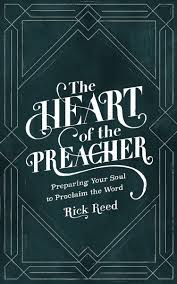
The Heart of the Preacher (Books on Ministry #25)

book heart preach.jpg

This book for the preacher is one of the best I’ve seen come along in a long time. Rick Reed from his own preaching experience and that of teaching homiletics knows precisely the path to the heart of the preacher as well as the deadends away from it. His mantra of the preacher preparing his soul is no hyperbole. This isn’t self-help pointers but vital issues that throb the preacher’s heart. Mr. Reed does something for preachers today that Ralph Turnbull did for others in previous generations in his A Minister’s Obstacles. Some of those obstacles are exactly the same while others are peculiar to our day and Mr. Reed knows the difference.

The book is divided into two parts, which he defines as the testing and the strengthening of the preacher’s heart, that could just as easily be called the negative and positive heart issues preacher’s face. After Brian Chapell’s foreword that is itself worth reading, Mr. Reed gives a clear introduction to what he is attempting to do. Some of the chapters include key subjects like ambition, comparison, insignificance, laziness (one of the best and not at all what you expect), fear, criticism, failure, and pain (another jewel). Part two continues at the high level he began by explaining personal soul care, championing expository preaching, developing internal security, doing the work of an evangelist, and in a timely chapter on taking care of yourself that he creatively calls “don’t kill the horse”. There wasn’t a dud in any of these 25 chapters and everything he discussed made you want to re-dedicate your efforts to the work of preaching for the glory of Jesus Christ.

Mr. Reed wrote with the humbleness that pushed his material deeper into your heart. He was never afraid to say that he struggled in some of these areas. You felt like you were listening to a brother in arms! The book is easy-to-read but never shallow. Every preacher ought to read it. I’m glad I did.

I received this book free from the publisher. I was not required to write a positive review. The opinions I have expressed are my own. I am disclosing this in accordance with the Federal Trade Commission’s 16 CFR, Part 255.
Carpe Diem Redeemed by Os Guinness

book carpe d

When Os Guinness has something to say, I’m ready to listen. All of his recent releases (Last Call for Liberty, Impossible People, and Fool’s Talk) have said something so needed for our day – don’t think trendy but timeless. This latest release, Carpe Diem Redeemed, which takes an old phrase meaning “seize the day” and does a play on a book from the philosophic world entitled Carpe Diem Regained takes that same sort of piercing look into our world today and pulls out how a Christian ought to think anyway. Fortunately, this book about “seizing the day” has nothing to do with the typical motivational tripe that floods the market in our day and yet says nothing. In fact, you won’t figure out the profound thing he is saying until he is finished saying it.

In presenting his thesis, Guinness must delve into and explain time from many angles. Even when you expect him to explain the obvious, he will express something that has stopped being obvious in our lives. In this first chapter alone, his introduction to time will pull in the concept of human freedom. Read it: it makes sense. His next chapter on the survival of the fastest explains time in our culture and the pressure it presents. Chapter 3 on the hidden tyranny of time is a treat. His explanation of the power of labeling should be proclaimed throughout the land. I’ve never read a better explanation of progressivism either. While he writes a book that strikes a chord with a conservative like me, he is not after a political system but a biblical view. That means he will step on any toes necessary to explain the truth.

Over the last few chapters, he will move to explaining how to “seize the day”. After he tells us the importance of understanding our times, you will be tempted to predict his final conclusion. And then you will be wrong. He will shock you and then you will agree with him and be encouraged in doing so. We don’t usually worry about spoilers for a book of this type, but I’m not going to spoil the surprise for you. Just read the book for yourself! You will be glad that you did.

I received this book free from the publisher. I was not required to write a positive review. The opinions I have expressed are my own. I am disclosing this in accordance with the Federal Trade Commission’s 16 CFR, Part 255.
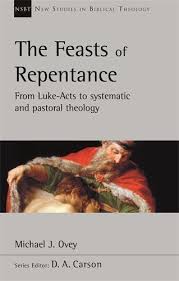
The Feasts of Repentance (NSBT) by Michael Ovey

book feasts nsbt

This latest release in the New Studies in Biblical Theology (NSBT) series, edited by D. A. Carson, is an interesting read. Sometimes trying to tackle all that the author, Michael J. Ovey, did in this volume can be a disaster. He’s ultimately trying to talk about the doctrine of repentance, he’s wanting to limit his evidence to Luke-Acts, focus on the feasts found in those two books, and tie the whole thing to systematic and pastoral theology. Though I don’t imagine that many writers would formulate that design, he did seem to pull it off.

In case you’re wondering, of all those things he wove together, repentance was his main subject. There’s another volume on repentance in this series, but they truly do not cover the same ground. His first chapter digs into what I find to be the most common question about repentance: is it necessary to salvation? He makes a good case for it being present in all actual conversions, and he is pretty good at marshaling Scriptures to prove his point. The second chapter got more into the Luke-Acts specialty as he looked at the feasts in these books and how repentance was handled in them. There was some interesting information there that I could say frankly that I’d never thought of. In later chapters, he looks at repentance in terms of Jews and Gentiles, how identity and idolatry are key to understanding repentance (one of the better chapters), and entering repentance into the discussion of faith and salvation. For the record, he does hold to a reformed view in this chapter. His final chapter looked at repentance in terms of forgiveness and the church. Along the way, there were some telling comments about our day.

Unfortunately, Mr. Ovey passed away before this book was released. It’s clear he had put a lot of work into it. By this point, you should probably have a great idea of how a NSBT volume works. This is another good representation of the unique contribution this special series makes.

I received this book free from the publisher. I was not required to write a positive review. The opinions I have expressed are my own. I am disclosing this in accordance with the Federal Trade Commission’s 16 CFR, Part 255.


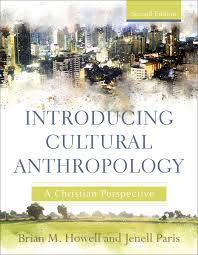
Introducing Cultural Anthropology (Second Edition) by Howell and Paris

book into cul antro

Brian M. Howell and Janell Paris joined forces to produce this second edition that looks at cultural anthropology from a Christian perspective. This textbook is of manageable length and is up-to-date on the issues that are considered by many to be in flux in our turbulent days. Though it is in a textbook format, it is quite easy to read no matter your reason for approaching the subject of anthropology. More than many textbooks I’ve seen, the authors share personal asides when appropriate, so it doesn’t come across as some dry textbook-by-committee approach.

The first chapter on the discipline of anthropology serves as an overall introduction to the subject. The next chapter tackles culture and a variety of issues that fall under that umbrella. The next several chapters explore main influencing subjects like language, social structure, gender, economics, authority, marriage, religion, and medical anthropology. As you can guess, chapters 4 and 5 enter the realm of the most hot-button issues of our day. I personally felt they did a better job looking at social structure and inequality in race, ethnicity, and class than they did surveying gender and sexuality. To be fair, they were only defining terms as they are now used though they made more allowances than I could. The last two chapters serve as a conclusion and even went as far as looking at anthropology in ministry.

The textbook is attractive though I would’ve probably preferred a hardback for this type of book. The chapters are laid out nicely. There’s a list of things you need to be able to do after you finish a chapter, clear introductions and explanation of key concepts with occasional graphs and insets that are enlightening. Each chapter nicely ends with a list of key terms, discussion questions, and what might be used as an assignment looking at real-life situations in a section entitled “Anthropology and Scripture”. All in all, this is a well put together textbook.

I received this book free from the publisher. I was not required to write a positive review. The opinions I have expressed are my own. I am disclosing this in accordance with the Federal Trade Commission’s 16 CFR, Part 255.
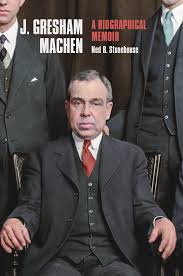
J. Gresham Machen: A Biographical Memoir by Ned Stonehouse

book gresham machen.jpg

Banner of Truth bolsters their impressive array of Christian biographies with this reprint of Ned Stonehouse’s biography of J. Gresham Machen. While I was aware of Machen’s reputation as a stalwart defender of conservative Christianity, I really didn’t know much about his life. Perhaps my not being a Presbyterian had me more out of the loop on Machen’s impressive career, though I had read some of his works with profit before. Don’t worry if your beliefs don’t exactly line up with that of a reformed Presbyterian, because his contribution to the faith extends to all who hold unwaveringly to the veracity of the Bible and a vibrant personal relationship with Christ.

Stonehouse was a colleague of Machen over the last years of Machen’s life when they served together at Westminster Theological Seminary. Without a doubt, Stonehouse is as sympathetic a biographer as you could have and clearly reveres his subject. I realize that can derail some biographies, but I felt I knew Machen so well by the time I finished this volume and Stonehouse proved to be an excellent biographer. If you find the first few chapters on the Gresham and Machen families a little slow, just hang on because I promise the life of Machen proves enjoyable reading.

I’d be tempted to describe Machen as a man born with a silver spoon in his mouth, but there was enough spirituality, particularly in his mother, to have greatly strengthened Machen for his extensive ministry. There was enough money in the family, however, for him to get whatever level of education he wanted and he made the most of it. His time in Germany and the wrestling of his faith was extremely interesting as all the learned names of Germany in that generation popped up in the story. When his faith became more settled, he had as much struggle determining his career path. In both these cases, the sympathetic biographer did an outstanding job opening up these facets of Machen’s life. Since many people wrestle with similar issues, this was powerful spiritual reading.

After he got on his feet at Princeton and was ordained to the ministry, World War I came up. That part of his life story though he was neither a soldier nor an actual chaplain was absolutely riveting. It was so unusual and yet it really helped the reader to understand Machen’s character. As a side note, after proving so adept with both the German and the biblical languages, I was amazed to see that he gave some theological lectures in French before he left France!

His ongoing career and his book writing showed an upward career path with outstanding literary accomplishment. The demise of Princeton’s allegiance to orthodoxy could almost serve as a parable of religious corruption. This same battle has played itself out in so many cases and places. You might find this portion of his life as a blueprint for how to stand when everyone around you wants to run away from God and his word. The ultimate step of creating Westminster showed the thoroughness of his dedication. He wisely saw that orthodoxy in missions was as important as orthodoxy at the academy and he fought valiantly on that front as well. His early death in an unexpected place and way was sad history but interesting biography.

This book holds attention throughout. Perhaps all it lacked was an appendix of all his literary works, but it was thorough without ever falling victim to being boring. The book itself is another of those exquisitely produced hardback editions that we so appreciate from Banner. This book was insightful on how to deal with corruption, spiritual on how one man so well lived the Christian life, and interesting as a biography. I must say that I really enjoyed this book!

I received this book free from the publisher. I was not required to write a positive review. The opinions I have expressed are my own. I am disclosing this in accordance with the Federal Trade Commission’s 16 CFR, Part 255.
Ecclesiastes: Life in a Fallen World by Benjamin Shaw

book ecc shaw.jpg

Benjamin Shaw finds a helpful message in Ecclesiastes that he delivers in this book. Since most modern works on Ecclesiastes tell us that we can find nothing more than a dark, depressing diatribe on its pages, this book is a breath of fresh air! In my view, though I readily admit both a need and use of modern exegetical commentaries, I’m convinced that works of this sort are equally needed. Whether you fully agree with Mr. Shaw or not, you will have to love how he opens up the positive possibilities of Ecclesiastes.

In the brief forward, Mr. Shaw makes us feel that we are trusty hands. He has no doubt about Ecclesiastes place in the canon of Scripture, he has no trouble seeing a clear message on its pages, and he has no disdain to say that Solomon is its author. If you survey works on Ecclesiastes, you will soon discover how difficult it is to find works that abide by these three simple, conservative viewpoints. By default, this book’s going to give you some helpful things that some books many times larger have no hope of delivering.

As the subtitle suggests, he sees Ecclesiastes as a book that will help the believer live in a fallen world. I might quibble with a few of his observations, but feel he provides insights in all 22 of his chapters of the most helpful nature. Whether it be pastors preparing messages, Sunday School teachers working out lessons, or any Bible student just attempting to dig out the Word of God, you can’t go wrong with this book.

I received this book free from the publisher. I was not required to write a positive review. The opinions I have expressed are my own. I am disclosing this in accordance with the Federal Trade Commission’s 16 CFR, Part 255.
Genesis (TOTC) by Andrew Steinmann

book gen totc

Prolific commentator Andrew Steinmann has produced this replacement volume on Genesis in the Tyndale Old Testament Commentary (TOTC) series. As with several of these replacement volumes, they are a little thicker than those they replaced. In this case, Steinmann has replaced Derek Kidner, who is the master of the briefer commentary. That being said, Steinmann has proven to be more conservative and dependable at key points even if Kidner’s pithiness may never be matched. As great as Kidner was, I’m not sure if I ever liked him on Genesis as much as I did on other books that he wrote on anyway. As for Steinmann, this is my first foray into his works. Though he has written massive commentaries on Ezra and Nehemiah, Proverbs, and Daniel, they were part of the Concordia Commentary series of which I am not familiar. In any event, Steinmann did prove adept at matching the TOTC style.

He begins his Introduction describing the foundational place of Genesis in the Old Testament. He well explains the traditional view of the Pentateuch as being the work of Moses including his marshaling of the witness of the New Testament. To meet scholarly demands, he well describes the Documentary Hypothesis too. Though he was gentle, it’s so easy to see that that hypothesis should be relegated to the trash heap of history. He does a fine job discussing literary features and addressing the historical and archaeological issues that so often plague studies of the Book of Genesis. He uses a few helpful tables and charts before he gets into the theological themes of the book. Fortunately, he doesn’t hesitate to highlight the messianic promise of Christ. He provides a lengthy outline for analysis as well.

The commentary was conservative and wonderful. He knew how to succinctly overview scholarly thoughts before giving some guidance without pushing the book beyond reasonable length requirements. I worked through his commentary on the creation of man and the Fall and felt his comments were ideal for what this series is trying to accomplish. Pastors will love this book and it could easily be the best volume now to put in the hands of the serious Bible students in our congregations.

I received this book free from the publisher. I was not required to write a positive review. The opinions I have expressed are my own. I am disclosing this in accordance with the Federal Trade Commission’s 16 CFR, Part 255.
 

The Pastor of Kilsyth by Islay Burns–A Nice Biography

book pastor kilsyth

So you’re never heard of W. H. Burns? Neither had I. Before I began reading this lovely biography, I noticed that the publishers put out an advertising blurb about this being a great biography for our celebrity-driven age. It’s clear what they meant. I can be challenged by a biography of a Christian celebrity to some degree, but not in the sense that I can ever do what they have done or will be what they have been. This biography is of a simple believer who was a pastor whose faithful life though unknown to the world gave off a glory that redounds unto the Lord Jesus Christ. That you and I can do. And that is why this biography is of the stripe that is especially needed today.

W. H. Burns was a pastor from the heralded Scottish orbit of outstanding preachers. That Iain Murray called this one of the best Scottish ministerial biographies we have carries much weight as his own biographies that are so often unassuming still have more impact than so many modern biographies.

Not only will you trace faithful ministry, but this volume can also be placed in your revival literature. God blessed Kilsyth with revival. I don’t know about you, but I always am blessed by that type of reading. Later chapters even give insight on what is needed for revival, though the perspective that revivals come from God is never denied. There are descriptions of how the revivals were carried out as well that can be insightful. The book even ends with four sermons that are imbibed with a revival atmosphere.

Banner of Truth is one of the modern Christian publishers that most takes publishing books seriously. Their hardbacks are of a quality that has surpassed most others and their dust jackets are always attractive. They still produce books that your grandchildren can own. I’m glad not everyone has caved to the idea that digital will own the future. I believe there still is a market and a future for books like this one. This book is a great biography for pastors and Christian families!

I received this book free from the publisher. I was not required to write a positive review. The opinions I have expressed are my own. I am disclosing this in accordance with the Federal Trade Commission’s 16 CFR, Part 255.
Romans [Second Edition] (BECNT) by Thomas Schreiner

Book Romans BEC

Thomas Schreiner’s volume on Romans in the Baker Exegetical Commentary on the New Testament (BECNT) series has been one of the top-rated commentaries on this pivotal doctrinal book of the New Testament since its release in 1998. That the publishers would ask for a second edition rather than a new contribution is of no surprise at all. Don’t miss his preface to the second edition as he explains the major contributions that have come out since his original work and the passages (Romans 2:14-15, 5:12, 7:13-25) where he has altered his conclusions. He describes these changes as “a different direction in defining the righteousness of God”. Works he has released during the intervening 20 years between these two editions have already revealed that he has moved to an even stronger reformed position, particularly on the subject of justification. Most second editions don’t kindly point out where to expect changes as he has done in this preface, so I believe he should be congratulated. As for these changes themselves, those of a more reformed persuasion will only like this new edition better while those who are not as much of that persuasion will not find enough passages involved to downgrade the commentary. At the end of the day, no matter where you fall on that spectrum, this is still an outstanding work in a respected series by a major scholar.

Since I had the first edition on hand to compare, I can let you know that the Introduction is not majorly changed. The layout is better, there’s occasional editing, and most of the new content is near the end on rhetoric and structure. Still, it doesn’t seem dated, especially as he adds new references to more recent scholarly works, and because he tackles the key issues that introductions ought to address rather than esoteric scholarly preoccupations that often sound ridiculous 20 years later. Without question, this commentary would still be one of the places I would turn to consult introductory issues.

The commentary is clear and helpful, up to anyone’s scholarly requirements, and insightful where needed. He does better than most at putting what should be in footnotes in their proper place so the commentary itself flows better. Even if you aren’t as reformed as he is, you can get a clear explanation of those viewpoints in those passages where it’s most debated. The BECNT format is helpful to the reader and he follows it well. Without being overly verbose, he gives Romans the meaty treatment it deserves.

This second edition is so well done that I predict it will easily remain near the top for another 20 years.

I received this book free from the publisher. I was not required to write a positive review. The opinions I have expressed are my own. I am disclosing this in accordance with the Federal Trade Commission’s 16 CFR, Part 255.

Original Sin (NSBT) by Henri Blocher

book orig sin

The New Studies in Biblical Theology (NSBT) series covers such a wide array of fascinating theological subjects. Of those I’ve read so far, I would see them as indispensable on the theological subject they address. This volume considering Original Sin by Henry Blocher is no exception. Blocher has turned out several penetrating works by this point and always strikes me as an original thinker. I don’t always agree with his ideas about Creation, but he really knows how to jazz up your thinking and make you see other sides of issues. While I wouldn’t call this title exhaustive in its coverage, what it does address is as insightful as any I’ve read recently while doing an extended study of the doctrine of sin.

Chapter 1 lays out the parameters of the extent of Original Sin. Chapter 2 steps back to the place of the arrival of sin in Adam’s day. You will not have to agree with his take on Creation to find this information intriguing. Chapter 3 tackles the most prominent New Testament passage on the subject in Romans 5. There is fine exegesis here, outstanding representation of varying viewpoints, all followed by his own suggestion. Once again, you will not have to agree with his final conclusion to be greatly enriched by this chapter. The last two chapters look more broadly at the relation of Original Sin to human experience and evil and pain in our world. As for a recommendation, since I have been deeply in the study of sin recently, I’m sure glad I found this little jewel. What better recommendation could I give it?

I received this book free from the publisher. I was not required to write a positive review. The opinions I have expressed are my own. I am disclosing this in accordance with the Federal Trade Commission’s 16 CFR, Part 255.