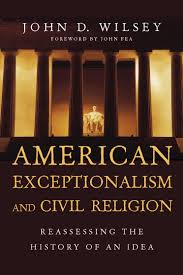
American Exceptionalism and Civil Religion by Wilsey

american ex

Have you ever read about a subject that you have known for a long time that you needed to have deeply thought about, but had not? That is the experience I have had in this unique volume. I am a Christian and consider myself first and foremost a follower of Jesus Christ. At the same time, I am one of those old-fashioned patriotic types who can get a lump in my throat in a whole variety of patriotic settings. Mr. Wilsey forced me to reconcile some things where I had never done so before.

He clearly had a Bible first and patriotism second attitude of which I agree. I even saw the traces of that same patriotic background in his life. I could show you several sentences and paragraphs in this volume, and even some historical assessments where I could not agree, but he gave me the tools to evaluate this issue. My final conclusions were not far from his when I finished.

He distinguishes throughout the book a helpful “open exceptionalism” and a “closed exceptionalism” that conflicts with Christianity. His categories may not always divide as neatly as they do in his mind, but his point is well made.

I intend to use what I learned in this volume going forward. It’s scholarly and helpful throughout.  I know of no other book quite like it and I highly recommend it.

I received this book free from the publisher. I was not required to write a positive review. The opinions I have expressed are my own. I am disclosing this in accordance with the Federal Trade Commission’s 16 CFR, Part 255.

Joshua (Apollos Old Testament Commentary) by Pitkanen

joshua apollos

The Apollos Old Testament Commentary series continues to develop into an important, major commentary series. This entry is a 450 page contribution on the sometimes controversial book of Joshua is another worthwhile contribution. Though it might not be as in-depth as the new 2-volume set in WBC, I imagine pastors will find it more useful. Don’t misunderstand, though, as it will still be in scholarly discussions.

The first 100 pages are an Introduction. I must confess that he has uniquely organized introductory matters. He is kind almost to a fault with liberal authors, but he well shows the plausibility of conservative conclusions on issues like the text and dating. I do not think this Introduction is as good as, say, Firth on Samuel or Petterson on the last three Minor Prophets in the same series, but it is still a valuable contribution.

I loved his explanation that the NT also discusses that unbelievers are punished, and so Joshua is not out of sympathy with the rest of the Bible. After sharing that fine observation, though, he runs amok in the next 15 or so pages. He gets completely sidetracked on current political issues. I will not as a reviewer penalize him for having a different political persuasion than me, but I do highly question why he would bring it in at all.

After that diversion, he settles back in to delivering a fine commentary in the Apollos style. I recommend it as a real help in the study of Joshua.

I received this book free from the publisher. I was not required to write a positive review. The opinions I have expressed are my own. I am disclosing this in accordance with the Federal Trade Commission’s 16 CFR, Part 255.
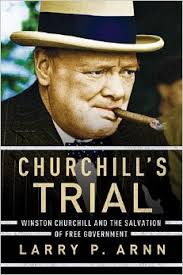
Churchill’s Trial by Larry Arnn

churchill

Here is a book designed to take history and teach today vital lessons. Winston Churchill and his nuanced life is the fodder for those lessons. Larry Arnn, one of the most informed scholars on Churchill, writes from the reservoir of his deep understanding of Churchill.

The book is divided in three parts: war, empire, and peace. The idea is to take what Churchill said, and to a lesser extent, did, and apply it to free government. That approach entails Churchill facing Nazism, communism, and finally socialism in his own country. Arnn views Churchill as statesmen and guide for us in these troubling days for freedom.

Churchill truly was a once-in-a-generation statesman. What he has to say is so worth listening to, is unique and enjoyable, and so Arnn often lets Churchill do the talking. Arnn succeeds in making the case for free government through the lens of Churchill’s life. He believes that Churchill was a success because we would be much worse off were it not for the contribution he made. My miss is that we a statesman like Churchill today who could as effectively make the case–it’s sorely needed.
I received this book free from the publisher. I was not required to write a positive review. The opinions I have expressed are my own. I am disclosing this in accordance with the Federal Trade Commission’s 16 CFR, Part 255.
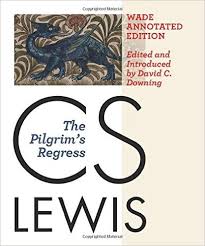
The Pilgrim’s Regress by C. S. Lewis–New Wade Annotated Edition

cs lewis

Although Lewis wrote this volume years ago, and Lewis needs no recommendation from me, this is a publishing milestone in this freshly annotated edition by David C. Downing. The Lewis volume, perhaps his toughest to penetrate, is opened up to us in such a greater way.

As for the book itself, it is an allegory in the vein of John Bunyan, yet in the style of Lewis. His Pilgrim takes quite a journey! Puritania captures legalism quite profoundly. Lewis fans will love it while new readers will enjoy taking in on.

The thing that stands out to me is how much I would have missed without Downing’s notes. I must confess that I would not have known most of what he shared had he not given this help. Downing has successfully taken a book that sounds well but would likely lose the reader and makes it more able to stand on the shelves as an equal to his other volumes. I imagine even Lewis himself would appreciate this edition.

It comes in a lovely hardback and includes original illustrations. All in all, this is a keepsake that I highly recommend.

I received this book free from the publisher. I was not required to write a positive review. The opinions I have expressed are my own. I am disclosing this in accordance with the Federal Trade Commission’s 16 CFR, Part 255.
The Faithful Creator by Ron HighfieldHighlights

faithful

This volume tackles the tough questions, as the subtitle “Affirming Creation And Providence In An Age Of Anxiety” suggests. It is scholarly (I would guess graduate level), yet highly readable even if this is not your specialty. Dr. Highfield gives evidence of deeply thinking on everything involving these issues.

The book is in three parts: Creation, Providence, and the Problem of Evil. By the time you finish you will see that the problem of evil is where your beliefs on creation and providence are tested. I was genuinely impressed with the author’s presentation, logic, and fairness. Though he was a strong Bible believer and conservative in theology, he did not write to support one theological persuasion as much as addressing the hardest questions we Christians will ever hear or think.

Highlights include his explanation of the glory of God (pg. 111), his interaction with evolutionary biology (pg. 159), his description of reading the OT christologically (pg. 206), his phenomenal discussion of foreknowledge (pg. 226 ff), and his majestic handling of the problem of evil.

This volume will get the most prominent place on my shelves for this subject. I highly recommend it!

I received this book free from the publisher. I was not required to write a positive review. The opinions I have expressed are my own. I am disclosing this in accordance with the Federal Trade Commission’s 16 CFR, Part 255.
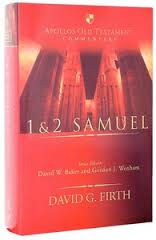
1 & 2 Samuel (Apollos Old Testament Commentary) by David Firth

samuel firth

This commentary on two of the more exciting books of the Bible is a real asset to pastors and Bible students. Firth is becoming quite the prolific commentator of late and tackles here another historical book of the Bible (since he rightfully argues the two are one book).

His Introduction is sufficient, and at 48 pages for a larger Bible book, it is quite succinct. While he writes well on genre and purpose, I couldn’t follow his thinking on authorship or sources–in fairness, it wasn’t radical. His explanation on narrative was insightful, but his discussion on central themes were spot on and the best the Introduction had to offer.

The commentary was by the far the best value in the book. He followed the standard Apollos setup with translation, notes on the text (just the right coverage for pastors), form and structure (with enough detail to explain its short discussion in the Introduction), comment (thought-provoking), and explanation (where he well ties it together).

I looked at several passages and enjoyed what he shared. He took extra care in the most famous passages (David and Goliath, for example). I had read criticism before I received this volume on his analysis of David with Bathsheba, and while I might fully agree with him there, he argued his point well. David did, as he said, not completely hide his sin from those he sent to get Bathsheba. He feels that David was more interested in getting Uriah out of the way to get the child than to hide his sin. I doubt that is true, but it does make you think!

This is a fine volume. As a point of comparison, this volume is fair superior to the well known Word Biblical Commentary volumes covering the same material. I highly recommend it.

I received this book free from the publisher. I was not required to write a positive review. The opinions I have expressed are my own. I am disclosing this in accordance with the Federal Trade Commission’s 16 CFR, Part 255.
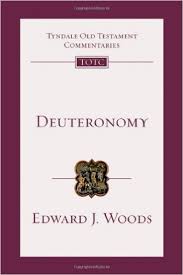
Deuteronomy (TOTC) by Edward Woods

deuteronomy

Here is another replacement volume in the venerable Tyndale Commentary series. This volume replaces the 1974 volume by Thompson and is superior to it. This bodes well for the Tyndale series holding its high place among commentaries.

Woods gives a lengthy, for this type series at least, Introduction. My favorite part is that the author’s love for Deuteronomy shines throughout. These type make the best commentary reading. His case for Deuteronomy being pivotal is well done and convincing. His discussion on authorship touches the scholarly bases without falling for their excesses.

His description of literary features is illuminating. His comparison to law codes may seem a little overdone, but too many scholars discuss it for him not to mention it. His expansion of comparing Deuteronomy, and particularly the Ten Commandments in Deuteronomy, to the rest of the Pentateuch was helpful. Finally, his discussion of theology was the best part of the Introduction. It really helped put Deuteronomy in perspective.

The Commentary proper was helpful, thoughtful, and never trite. This will be a fine volume to consult for years to come. I highly recommend it.

I received this book free from the publisher. I was not required to write a positive review. The opinions I have expressed are my own. I am disclosing this in accordance with the Federal Trade Commission’s 16 CFR, Part 255.
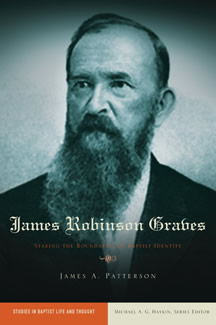
James Robinson Graves by James Patterson

j r graves

Here is a man probably not known by many today, but who had an incredible impact on Baptist thought in America. This biography tells us of the man and we see the development of Baptists clearly as well. He particularly molded the early Southern Baptist Convention. His career was mostly as a Baptist editor and he spent his life battling for his views.

Mr. Patterson, a Baptist professor, dug deep to make this scholarly contribution. Though the scholarly style may repel some, his contribution is likely to always be the definitive volume.

He also traces the actual viewpoints that still show up in some circles that are called Landmarkism. Though Graves picked up thoughts in several places, it was his writings that put Lankmarkism on the map. Very few people believed his view on Baptist succession and rigid church and baptism beliefs before he popularized them.

Patterson shows that these beliefs matched the political thinking of the times. As a biographer, he went to great pains to be fair to Mr. Graves. The problem was, however, that Mr. Graves makes that hard to do. Mr. Graves was so rigid and harsh he failed to keep the testimony he should have held to have the ear of so many.

Frankly, the book is fascinating if you have ever been part of the Baptist world. In fact, I don’t know how we could understand Baptists accurately today if we did not know what this biography told us. I highly recommend it.

I received this book free from the publisher. I was not required to write a positive review. The opinions I have expressed are my own. I am disclosing this in accordance with the Federal Trade Commission’s 16 CFR, Part 255.

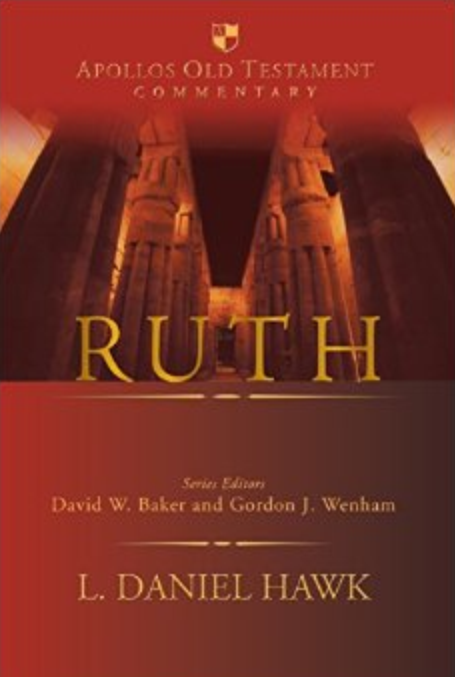
Ruth (Apollos Old Testament Commentary) by L. Daniel Hawk

Here in the latest of the fine Apollos Old Testament Commentary series published by IVP we find a surprising volume solely on the little book of Ruth. Though often attached to Judges in the commentary world, this book is often more loved and well known than its larger companions. Most Christians love studying Ruth. Daniel Hawk gives us a thoughtful volume on Ruth that, in my judgment, takes its own track. In analyzing structure he reads ethnicity as a key component to understanding Ruth. While there are theological points to the Israel versus Moab points of the story and the ironic turn of events, I cannot personally elevate that as highly as he does as the crux of understanding Ruth. Still, it highlights points other commentaries miss.

His Introduction covers the normal territory and he well summarizes what scholarship has so far thought. His discussion on how some classify the book—true story, idyll, novella, folk tale—only reminds me that such discussions would never have arisen had not scholarship decided to attack the historicity of the Bible in generations past. While I agree with his assessment that Ruth “resists classification”, I wish he had given a stronger word on its complete veracity.

What is valuable is the perceptive observations he often makes that you can use as a takeoff to study. For example, he says, “While the narrator begins and ends with males, the first and last characters to speak in the story are women.” I found myself underlining many such observations in both the Introduction and the Commentary itself.

This volume would not be my first choice on Ruth, but I count it a helpful additional resource and well worth having. The Apollos continues to shape up as a fine series.

I received this book free from the publisher. I was not required to write a positive review. The opinions I have expressed are my own. I am disclosing this in accordance with the Federal Trade Commission’s 16 CFR, Part 255.

The First American Evangelical: A Short Life Of Cotton Mather

mather

Have you fallen prey to the prevalent misconception that Cotton Mather was the moralistic, harsh perpetrator of the Salem Witch Trials? If that is the case, you do not really know the man. Author Rick Kennedy takes us to the heart of the man and Mather is, in fact, a man worth knowing. Kennedy succeeds in a short biography at what some massive tomes can’t even deliver—a winning biography that is enjoyable to read and brings life to the subject.

I must confess that I came to greatly admire Mather by the end of this book. His faith was real. Though he worked at scholarly efforts on many occasions, he never lost his full confidence in God’s Word. He was in no way a fake. He was sincere in his home and ministry. The members of his church loved him and stood by him all his days. His faith was tested and stood as he buried 13 of 16 children and 2 of 3 wives.

Kennedy makes a good case that Mather is not the last American Puritan, but rather the first American Evangelical. He had only a cursory involvement in the Salem Witch Trials, but has had his reputation altered by a disreputable rival.

You will see just how good this book is in the first chapter entitled “The Pastor’s Study”. While that title may bore you, I have never come to know someone better in the first chapter before. The scene he draws is vivid and makes the study a vibrant place.

He doesn’t hide Mather’s weak points. He almost took his thoughts on angels too far. He relentlessly promoted his own books. His last marriage had problems and he always had trouble managing his own finances. All these things only made him real. The fine man remained. I simply loved this book!

I received this book free from the publisher. I was not required to write a positive review. The opinions I have expressed are my own. I am disclosing this in accordance with the Federal Trade Commission’s 16 CFR, Part 255.