Did The Devil Make Me Do It? –A Book Review

How would you like a down-to-earth volume that would make sense of the Devil and demons? One without bizarre extremes but still fully believed in demonic reality? Then you need this volume by Mike McKinley and published by The Good Book Company in its Questions Christians Ask series.

He gives background on the issue and even tells how African Christians laugh at Westerners who disbelieve the reality of demons. He strikes the right balance between understanding what we need to know about such things without getting obsessive or too deep into it. He respects that The Lord has told us what we need to know and asks us to be simple concerning evil beyond that.

He tells us of the origin of Satan and explains the names of Satan. He describes him as trying to destroy God’s creation as his vigilant motivation. He outlines the tactics Satan uses against us while remembering that the Devil is not all-knowing.

He talks about what he feels demon possession really is, and he distinguishes it from mental illness. Demonic strongholds are discussed without them seeming as insurmountable as some present them. He offers sane advise if you feel you come in contact with demonic activity.

The book is helpful and aimed at laymen. I might disagree on a few small points, like his
explanation of Isaiah 14, but I still recommend this volume.

I received this book free from the publisher. I was not required to write a positive review. The opinions I have expressed are my own. I am disclosing this in accordance with the Federal Trade Commission’s 16 CFR, Part 255 .
20130714-220138.jpg

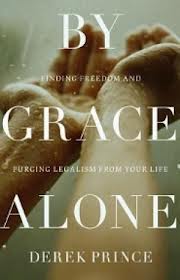
By Grace Alone by Derek Prince–A Book To Help Purge Legalism In You And Me

by grace alone

This book isn’t what you think, though it may likely be what you need. You would imagine that a witch hunt for who should be labeled a legalist would be what you would find, but that is not the case at all. No, what you have is what grace really is and what it could never be.

The tone is respectful throughout, but the issue is faced head on. He doesn’t try to ditch the Law of God, but use it as the Lord intends. Here is the irrefutable fact: Christ is the end of the Law for righteousness.  Christ, of course, fulfills the Law, but He ends it as a source of righteousness for you and me.

Most Christians I know grasp that as it pertains to salvation. The problem is that we think the opposite when we try to live the Christian life. We try to earn God’s favor, we think we must be worthy of His love. The problem is that we are as in need of grace as before. As Mr. Prince so ably points out it can’t be both. You may get to the Lord through grace or the Law–it is one or the other, now and always!

Here is his definition of legalism: “the attempt to achieve righteousness with God by keeping a set of rules.” Well, that definition alone makes it folly. I once believed that legalism was a concept that only applied to salvation, but I was wrong. Like the foolish Galatians, I can go back as a believer and live as an ardent legalist!

The purpose of the Law is not for the purpose we use it. A teacher, yes; a deliverer, never. In fact, the Law only brings condemnation. Liberty comes from Christ.

He shows how when a Holiness lady, who may love the Lord, doesn’t wear makeup and holds that up as her approval with the Lord, she makes this error. (He kindly never mentions we Independent Baptists who have a few of these ourselves). He does show how this is exactly the same as the orthodox Jew who won’t eat ham.

What really makes this book so valuable is how Mr. Prince teaches in the latter chapters how to receive God’s grace in your life and how to apply it.

If you have been hearing all the debate about legalism and you are at a loss for how to process the debate, I highly recommend this book. If you just want to straighten out your own thinking, then I recommend it even more. 

I received this book free from the publisher. I was not required to write a positive review. The opinions I have expressed are my own. I am disclosing this in accordance with the Federal Trade Commission’s 16 CFR, Part 255 .

Believe and Belong by Clarence Sexton

believe and belong

Here’s a timely subject where you wonder why more hasn’t been written on it before. In this volume entitled Believe and Belong by Pastor Clarence Sexton the subtitle says it all: “The Joy of Church Membership.”

It is a needed corrective to the prevailing notion that church membership is irrelevant at best and unbiblical at worst. It is born of our excessive personal independence that scorns even the most gentle accountability. The interdependence that is inherent to the idea of the local church is just too much for many. No doubt, the loss is truly theirs.

As a pastor, I appreciate his emphasis as this is a battle we all face in dealing with folks. Pastor Sexton writes with the intensity and candor you might expect from someone who has been in it over 40 years.

He makes a good case for membership as well as what a church really is. That is foundational to the local church ever being both what it can be and what The Lord intended it to be. His discussion on God’s Word being our guide is critical in a day when many forget that our cry should be sola scriptura (“by the Scriptures alone”).

He actually covers most of the things found in a discussion on the local church: baptism, the Lord’s Supper, prayer, the pastor. He warns of “grievous wolves” and ends on a push for the Great Commission. Along the way comes out strongly for soul liberty and the priesthood of the believer, which, strangely, is rare among Baptist pastors today. Yes, that was Baptist people’s most unique feature in previous generations.

This book is fine for new Christians as well as seasoned Christians who need to consider a subject they have thought little of in the past. Pastors, we will find ideas here of how we might present this truth. I recommend this book.

DISCLAIMER: Unlike other books I have reviewed on this blog, I know this author. While that could be some bias, I still feel this a truly helpful book.

clarence sexton

Humble Orthodoxy by Joshua Harris

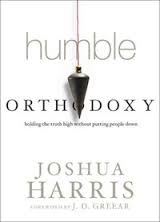
humble orthodoxyWhich one do we need: orthodoxy or humility? Both says Joshua Harris! In fact, we don’t have the luxury to choose one at the expense of the other. Or as the subtitle of this volume published by Multnomah says, we should be “holding the truth high without putting people down.” So what does that leave as the goal? What he calls humble orthodoxy.

This is actually a reworking of the last chapter of his Dug Down DeepIf I were  forced to choose I would prefer that volume to this one as I really enjoyed reading it. Still, this book has something to say and I need to hear it.

Our tendency to be a Pharisee, our latent idolization of self,  our propensity to be so impressed with who we are and what we know, he exposes with care. He says, “The message of Christian orthodoxy isn’t that I’m right and someone else is wrong. It’s that I am wrong and yet God is filled with grace.” Ouch!

He demonstrates how at our core we are about God being on our side. That is a world of difference than wanting to be on God’s side. If it is about God being on my side, then I will argue and fight till my last breath. Sadly, at that point our lives are no longer about God and His glory. We live for what he calls “the tiny kingdom of self.” In that setting, of course, “Knowledge puffeth up.”

We have the wrong focus to make correct theology, as critically important as it is, the goal. Our Lord is the goal. Any other goal is inferior and little more than misspent effort. If correct theology is the goal I can so easily look down on others who I know has less theology than me. I know I have fallen in that trap before and am glad I had Mr. Harris to take me to task for it.

He attacks “arrogant orthodoxy” as actually falling short on the orthodoxy scale rather than the other way around. He sees true theology as telling me that repentance must start with me. Well, he has us there!

He sees a interlocking link between orthodoxy and humility. More orthodoxy leads to more humility and more humility leads to more orthodoxy. When our pride grows, what, then, does that tell us about our orthodoxy? That is a painful, yet particularly helpful, insight.

As much as I want to have my theology right, there is enough remaining sin in me to keep me humble, he says. You can speak for yourself, but that really describes me. A critical spirit, though a spirit quite at home in our age, is pure nonsense in a sinner like me. I must defend my faith without reducing myself to a critical spirit that denies on many levels the very faith I defend.

He also says: “Friend, the truth is not about us. It’s not self-determined. It’s not an accessory. It is about God.” That will help us not develop a Christian subculture with all the weirdo that can accompany it. He also says: ” In eternity we’ll see the silliness of self-righteousness and quarreling over the nonessentials.” That sums it nicely for a book well worth your time to read.

I received this book free from the publisher. I was not required to write a positive review. The opinions I have expressed are my own. I am disclosing this in accordance with the Federal Trade Commission’s 16 CFR, Part 255 .
Bound Together by Chris Brauns

Bound Together

I hesitate to tell you that this book tackles with verve the theological ideas of original sin and union with Christ. I can hear the groans–another theology tome. Please reroute your thinking as this volume is so much more than academic exercise. In Bound Together by Chris Brauns and published by Zondervan we have so much more!

There’s real life questions here. In discussing how we are tied to others in both good and horrifying ways, we find the questions tough. We all know on some level, and are actually glad about it, that blessings have come our way over the choices of some. But when someone’s choice rips our family down the middle, or the choice of a leader lands the whole nation in peril, well, that is another matter. The deeper question is why the Lord designed our world so. Like it our not, He did.

Mr. Brauns uses the analogy of the rope. We are tied together. In some ways if one goes over the cliff, we all will. While that is not true on some levels (personal accountability), it definitely is on others. He shows that what happened to us when Adam fell demonstrates this very thing. Before we sink in despair, we should see the upside of the rope. CHRIST!

We are now tied to Him and as he triumphs over sin He literally pulls us up out of or own sin. You see, the rope rescued us. If you could remove the rope from God’s Universe, you would do yourself far more harm than good. So we praise Him for the rope even if on occasion it appears unfair. He also explains that the new rope in Christ is far stronger than our old rope tied to Adam.

No, he explains, this doesn’t extinguish personal responsibility. I can’t just blame the rope, but I can trace how my choices have the potential to pull up or down. In his one chapter on marriage you see how the home might be the greatest length of the rope. Any idea that I am just my own person and can do as I please is absurd. There are too many hurting children in our world, for example, for this to be true.

He offers hope to hurting families too. He uses Rahab as an illustration. The rope can be used by me for good. She made a daring decision and her entire family was spared. This may not always work out so, but at least it is a shot.

In the latter parts of the book he explains how something so valued in our culture, and truly good on some levels, could be the very thing that is destroying us. That thing is individualism.

He pulls off the theology too. By the book’s end you will add to your obvious knowledge that your personal sin affects you and others as well as the truth that original sin affects you too. That affect is only overcome through Jesus Christ. This is a great book.

I received this book free from the publisher. I was not required to write a positive review. The opinions I have expressed are my own. I am disclosing this in accordance with the Federal Trade Commission’s 16 CFR, Part 255.

Tower of Babel by Bodie Hodge

Tower of Babel
How would you like a book that addresses parts of the Bible that you have always found difficult to get anything out if? How about, for example, genealogies? How about questions on the races and languages of our world and how exactly the Tower of Babel episode really played out and shaped the world we know today? Then you might really enjoy The Tower of Babel by Bodie Hodge and published by Master Books.

I’ll confess some of the material may be too narrow in its appeal your taste. Discussing how to pronounce “Babel” may not be a question you have had a burning desire to have answered, but I assure your other parts like chapter 13 entitled ” What about Extra-Biblical Tables of Nations and Genealogies That Go Back to Noah?” are riveting. Finding the names of the Biblical genealogy is exciting. I didn’t need that discussion to believe myself, but that doesn’t mean I don’t enjoy reading it.

Mr. Hodge is good at seeing what is really at stake. The authority of God’s Word is, as always, the heart of the issue for these type discussions. When he shares what might at best be esoteric knowledge at least he confesses when he is speculating and he faithfully brings us back to core issues.

He may at times revisit subjects that we thought we had a handle on, like the division of the continents being in Peleg’s day or the dating of the Book of Job, but whether you agree with him or not, you will be given substantial food for thought. There may also be places that are too detailed, like an in-depth analysis of the genealogy as it relates to today, but it still makes a wonderful reference to pull off the shelf. Too bad there isn’t an index.

The last chapter is short but ends where it should: Christ. In other words how does this fit in the big picture? How does it fit in me? Put this down as a fun read.

I received this book free from the publisher. I was not required to write a positive review. The opinions I have expressed are my own. I am disclosing this in accordance with the Federal Trade Commission’s 16 CFR, Part 255.

Find here

Advise For Seekers by Charles Spurgeon

Can anyone really share the Gospel like Charles Spurgeon? He had a way of dissecting the human heart and finding the chasm needing Christ that dwells within. Excuses? He could anticipate the best of them and slay them before they could hardly be off your tongue. In other words, he excelled in understanding the human heart. That is one of the reasons he was such a great preacher as well as why when he wrote his Advise For Seekerse should listen with care. As a nice bonus, Attic Books has reprinted this jewel in a small, attractive hardcover volume.

He begins where we most err–this delusional idea that we can save ourselves. He says:

The self-righteous man knows that what he is doing cannot satisfy God, for it cannot satisfy himself; and though he may perhaps drug his conscience, there is generally enough left of the divine element within the man to make him feel and know that it is not satisfactory.

We know he is dead on no matter what we would like to believe. It is such a dead-end road that we must turn toward Christ.

He spoke to of the best healing available in Christ:

Jesus can heal you of your pride; he can deliver you from anger; he can cure you of sluggishness, he can purge you from envy, from lasciviousness, from malice, from gluttonly, from every form of spiritual malady.

How’s that for putting the good back in the good news of the Gospel?

While he could write with devastating accuracy of our sinful hearts, he could also write with such beauty the love of Jesus. O how He wants to save us despite all we have done. In later chapters he writes of Jesus as one who says “come”!

This book is from the 1800s so of course it is the language and punctuation of that day, but I suspect you will be little at a loss. Whether you are a seeker yourself, or one who works with seekers, you will find this book, as with any Spurgeon title, a real treasure.

Reasons For Belief – Book Review

reasons for belief

To believe in God must we believe against reason? Not on your life! Sometimes many of us feel at a loss to answer the tough questions that the world can throw our way. We believe but sometimes can’t quite grasp the way to explain what our hearts know to be true. On the other hand, there are some out there who want to believe but are not quite sure what to think. In either case, this fine volume by Norman Geisler and Patty Tunnicliffe and published by Bethany House will be of immense help.

The design of the book is ideal in that you could grasp its contents if this were your first time to wrestle with these issues while the widely-read Bible student will love it too. The book is laid out in addressing the 10 most challenging objections you will hear. Things like does real truth exist or is it just what is truth to you. The idea of relative truth has done incredible damage to our society. Beyond just saying it is wrong, learn here just how pathetically illogical the whole concept is.

He covers beautifully in the next 3 chapters the challenges involving the existence of God. I assure you the intellectuals of our day don’t have a corner on the market of logic on these issues. In fact, you might find them fully bankrupt when you finish reading here.

When you get settled on the reality that God simply must exist, then there are challenges on if the God of the Bible is the true God. He explains carefully and guides us to Christ. Whether the issue be the trustworthiness of the biblical manuscripts, or the existence of miracles, or the Resurrection, he guides us with the skilled hands of a master worker.

I’ve enjoyed reading Mr. Geisler since I was a freshman in a public university. He meant a great deal to me then, and he still has his touch. I love it and highly recommend this book.

I received this book free from the publisher. I was not required to write a positive review. The opinions I have expressed are my own. I am disclosing this in accordance with the Federal Trade Commission’s 16 CFR, Part 255.

Altar Ego by Craig Groeschel — Book Review

altar egoIt’s a purposeful play on words. We already possess an ego, and most of us in Jekyll-and-Hyde fashion have something of an alter ego. Mr. Groeschel proclaims that we Christians need an altar ego transformed by Christ.

He begins by discussing how we focus on our reputation. In most cases, that is not who we really are, nor who the Lord wants us to be. We have worked so hard at maintaining what he calls our “false self.” This, he says, must be sacrificed to our new identity in Christ. He explains this in 4 chapters.

This is helpful in that the Lord knows we aren’t what we project, and deep down, we know it too. It makes for a public and a private life. This is not what we were made for. As he says repeatedly, “You are not yet who you are supposed to be.” Galatians 2:20 backs up his premise that Christ lives in me and that is the real me now. Let’s live in that light!

He explains that we we may have to shed labels that have attached themselves to us in the life we have lived. He speaks of being labeled “tightwad” and easy it is to fall back into old ways with the excuse “that is just who I am.” I suppose the labels we put on ourselves are the most damaging. Christ, we must always remember, changes everything.

At times I thought he was going to run to the power-of-positive-thinking mantra, but he pulled it back to our being overcomers in Christ. His discussion of how we are God’s ambassadors was a challenging perspective.

Part 2 on “Sacrificing Cultural Relativity for Eternal Values”, also done in 4 chapters, really calls for us to have more character in terms of patience, integrity, honor, and gratitude. This section doesn’t really deal with Christ transforming us as much as moral teaching and enticements to be more of the person we should be.

Part 3 encourages us to be bold in behavior, prayers, words (really good), and obedience. This succeeds in some measure in tying together the other 2 parts.

The book is an easy read that you can digest quickly. Some might think he tells too many stories that make him look like a really great Christian, but that would be a matter of taste. Still, this book could be a help to people.

I received this book free from the publisher. I was not required to write a positive review. The opinions I have expressed are my own. I am disclosing this in accordance with the Federal Trade Commission’s 16 CFR, Part 255.

A Book Every One In Ministry Needs To Run And Buy!

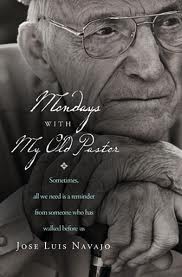
mondays with my old pastorYou think I’m exaggerating when I tell you to run and buy Jose Luis Navajo’s Mondays With My Old Pastor, but I assure you I have never more thoughtfully made such a statement. My friend, Ryan Hayden, gave me the book telling me it had such an impact on him. I looked forward to reading it, but never dreamed it would so move me. It is certainly one of the top 2 or 3 ministry books I now possess.

Don’t let its laid-back format fool you. It wraps you up in a story to deliver its gold, but it is more than a story as it touches all the places we need as Christ’s servants. Particularly if the strain of that service weighs on you.

It apparently has a few things working against it on the surface, yet those things vanish with every turn of the page. First, it is written by an unknown Spanish- speaking pastor. The translation is so good, however, that you never think of it. Plus it can help abolish the ridiculous thinking that the Lord can’t use others in another culture on the same level as us. Second, you may not know this pastor, but you will want to walk his steps and feel every throb of his heart. Third, the old pastor he learns from is unknown too. But you will have the most incredible vision of what an entry into Heaven this old man must have had. He could join Paul and Spurgeon and make quite a team. He was of their ilk.

In the book Mr. Navajo is sinking under the weight of ministry and decides to look up his old pastor for counsel. As the book goes along we learn the old pastor is dying, but he is energized to share with this protege of his. He goes every Monday for a meeting with the old pastor and the pastor speaks from accumulated wisdom, extraordinary stories, and power from a dynamic walk with God. The chapters are the discussion on each Monday.

Every chapter is a field of diamonds scattered all over the ground. If you can’t be helped by this book, take off your work boots and leave the gospel field–there’s no help left for you. But if you want to see–I mean really see–read with your senses fully engaged. You will find yourself craving the fellowship of your Lord! You will want to stay in the field, with your head now on straight and your heart running at full capacity.

The book boils down to 15 key principles. The list is amazing as is the journey to get to them. There are so many lessons, so many corrections and reproofs, and so much hope. I’m not going to mention even one of the principles in this review as I wouldn’t want to rob you of the journey. There are a thousand greats quotes in the book as well, but I will let you do your own digging too.

Thank you Mr. Navajo for taking us on your journey by writing it down for us. Thank you old pastor for your sage counsel–we will never forget it!

RELATED POSTS:

Leading on Empty

Dangerous Calling