The Good Dad by Jim Daly

Well, who wouldn’t want to be? If you are like me, you wonder often if you are a good Dad. Jim Daly, president of Focus on the Family, is one I would want to hear talk on the subject. We need all the help we can get.

I’ll admit that I did not exactly expect what I read here. First, this wasn’t just straight principles. It wasn’t just a list of what you had better do either. It was Mr. Daly telling what he had learned from the three father figures in his life–his real father, his stepfather, and his foster father. They all bombed out and were gone from his life by the time he was twelve, with each one being progressively worse. Coupled with the death of his kind mother, these men inflicted great trauma in his life. It was the kind of trauma that speaks to what is at stake in being a father.

He quoted a few of the horrific statistics on “vanishing dads” and the far-reaching effects upon our society, but he clearly came from another direction overall. He explained how he felt when the Dads failed him. One on the football field when his Dad was the only one not there, later when his father was drunk at his baseball game, or when his stepdad left after his mother’s funeral, all the way to when his stepdad made a wild and false accusation, we felt the pain with him.

Why was this book helpful? He made us realize perfection was not ours to have. That viewpoint is more likely to make us throw up our hands and walk away. But we can figure out what is most important. We can focus there. We can learn to yell less, to stop overreacting and remember kids go through phases, and to make a big deal of only what is really big. We can decide which rules are important and let the others go.

His explanation on page 93 on four types of parenting styles–uninvolved, permissive, authoritative, and authoritarian–was profound. Three of the four are no good. Like the little bear’s porridge was just right, so is an authoritative parenting style. We Dads ever battle crossing over to the authoritarian mode, or maybe it’s just me!

This book succeeds because in a roundabout way it keeps grace and the gospel from being swallowed up in harsh law. Though it challenged me, it made me feel better instead of worse. That is a tall order for a book to Dads!

I received this book free from the publisher. I was not required to write a positive review. The opinions I have expressed are my own. I am disclosing this in accordance with the Federal Trade Commission’s 16 CFR, Part 255 .

20140425-234756.jpg

The Best Bible Atlas of All–The Carta Bible Atlas

0039363_carta_bible_atlas_5th_edition_300


If you could only own one Bible Atlas, what would be your choice? The Carta Bible Atlas, 5th Edition, by Carta would be my recommendation for pastors like me and serious Bible students.  I make that recommendation as a Bible Atlas nut who owns almost every one out there. It has one claim to fame that allows it to outpace the pack–It has the most maps for specific Bible events. They are unrivaled for accuracy.

Carta maps are the preeminent ones out there today. They publish larger atlases for scholars like The Sacred Bridge as well as more popular ones for general audiences. This one, now updated, however,  has been the standard for years. Originally called The MacMillian Bible Atlas and a pastor’s favorite since the 1960s, five updates have only made it better.  I have used an older edition for years, but I love the maps that have since been added with all my old favorites still there too. I guess my son will get my older edition so he will have a great start on a Bible atlas

The additions supplement world history among the Bible maps. They put Bible history in the larger context. The world around God’s people is important to the narrative and are part of the story in many cases. The maps are better for the Old Testament than the New, but the New Testament section is improved from previous editions.

The maps are not as vivid or colorful as those in some other atlases. There are occasions where a conclusion on Bible history or chronology is more liberal than I could accept. Still, even with those caveats, this volume is the best. Read your biblical passage and turn to the appropriate Bible map in this volume and you will see for yourself. Better still, what you are given is not beyond what would be benefical to a pastor or teacher unlike the larger volumes designed for scholars.

There are extra features like a list on all the archaeological sites in Bible lands in an appendix as well as great indexes of persons and places for cross study. You might want two or three other Bible Atlases, for great color graphics and pictures, but this is the one you must have for rich Bible study.

This volume is available at most online book retailers. Check out the Carta website to see all the fine products they put out.

I received this book free from the publisher. I was not required to write a positive review. The opinions I have expressed are my own. I am disclosing this in accordance with the Federal Trade Commission’s 16 CFR, Part 255.
Check out my article on Bible Atlases in general here.


Salvation By Crucifixion by Philip Graham Ryken

How is that for a theme? You could hardly think of one more significant! In this slim, yet powerful volume published by Christian Focus, we find a treasure trove of thoughts. Based on sermons from a weekly evangelistic lunchtime outreach in the city of Philadelphia, we can only imagine how special those meetings must have been.

As you read you can tell you are in the hands of an accomplished expositor. Though this book could be passed out for outreach, preachers will find it suggestive and enjoyable. Even his illustrations are above average. Great thoughts on how one might preach on this topic are found in these pages.

You get the cross from several vantage points: 1) The Necessity of the Cross, 2) The Offense of the Cross, 3) The Peace of the Cross, 4) The Power of the Cross, 5) The Triumph of the Cross, 6) The Humility of the Cross, and 7) The Boast of the Cross. He never stretched texts to get these points–they are there!

The humility of the cross on Philippians 2:8 was my favorite while the boast of the cross on Galatians 6:14 was the most enlightening for me. It is so pleasant and helpful to linger at the foot of the cross again.

I received this book free from the publisher. I was not required to write a positive review. The opinions I have expressed are my own. I am disclosing this in accordance with the Federal Trade Commission’s 16 CFR, Part 255.
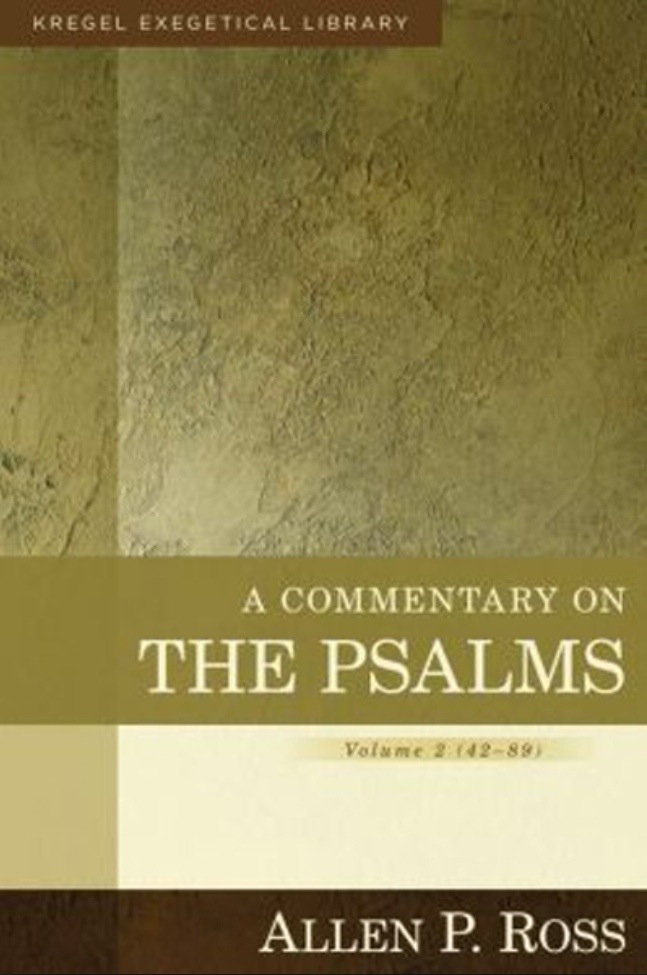
This one is a dandy!

20140410-091033.jpg

Building A Ministry Of Spiritual Mentoring by Jim Grassi

_240_360_Book.1149.cover


Would you like some practical help on discipling men? Most pastors, including me, are alarmed at the falling away of men in our churches today. We want to address the issue and we have help in this volume published by Thomas Nelson. Mr. Grassi has written on these issues before, but here he gives us the nuts and bolts of a mentoring ministry with just enough background to make sure we see the gravity of the situation today.

He succinctly rehearses the urgency in our society that churches must face. The absence of fathers have well nigh destroyed our culture. Amid the wreckage we find ineffective churches. We have in Jesus Christ what men need. Are we reaching out to give it?

If you are like me, you scratch your head wondering how to do it. That is where this book is valuable as the practical implementation makes up the bulk of the book. He begins by making sure we understand the concept of what mentoring really is, that we avoid the misconceptions, and that we put in place a solid team to carry it out. I appreciate his explaining that neither a pastor nor any other man can handle this ministry alone. It would be overwhelming and likely crash the ministry.

His guidelines for assessing where men can productively fit in to make the ministry thrive are outstanding. I can see easily see using them exactly as he gives them. It gives men an opportunity to show where their strengths really lie. There is a place for every man!

Whether it be ideas of things to do, how to be intergenerational, how to foster real relationship, or assessing when things are off, he has the bases covered. For what it is, this is a great volume!

I received this book free from the publisher. I was not required to write a positive review. The opinions I have expressed are my own. I am disclosing this in accordance with the Federal Trade Commission’s 16 CFR, Part 255.
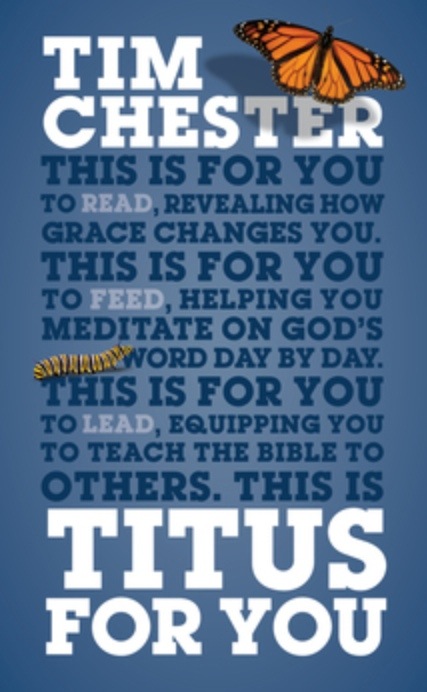


KJV Illustrated Bible Handbook–An Awesome Visual Reference!

As a pastor, I have discovered a book here I would love to see all church members have to use in their personal Bible study. There is a chapter on every book of the Bible to give an overview of what you will be reading. Those who are visual learners will find a feast in this attractive volume. This hardback volume by B & H Publishing meets a real need!

I congratulate the publishers for having the insight to see what some might call a niche market–KJV users. In light of World Magazine’s recent article stating the KJV was the preferred translation for 55% of Americans (April 5, 2014, pg. 68), perhaps it is more than a niche market after all. In any event, kudos to B & H Publishing.

This book not only gives a good overview, but it suggests lines of thought for Bible students. For example, a key text is given for each book. You might not agree with their choice, but that is a great thought process in studying a book of the Bible. Key terms are vital and those are discussed briefly too. Things like purpose and occasion give real insight and the section called “First Pass” launches us into our reading. The section on finding Christ in the book keeps us Gospel focused too. I enjoyed the smaller books of the Bible (we can need extra help on some of the smaller books like those in the Minor Prophets) getting equal time.

The section on reliability will be the least useful to many, but they usually come down on the conservative point of view. You might find a point to disagree on here and there, but overall the volume is really solid. There was a statement giving credence to “Q” in the formation of the Synoptic Gospels, but such statements are rare.

The maps in the book are taken from Holman maps and they are outstanding and sharp. The selection of photos and charts add real value as well. The claim “a complete visual reference” by the publishers is not an exaggeration.

As a bonus, you get two fascinating articles on the KJV. There are interesting ones on the Canon of the OT and the NT respectively as well. Each article is written on a level even beginning Bible students can grasp, but with real detail too.

My best recommendation for this book: I am a pastor and I am going to encourage the dear folks I pastor to get this volume and enrich their own personal Bible study.

I received this book free from the publisher. I was not required to write a positive review. The opinions I have expressed are my own. I am disclosing this in accordance with the Federal Trade Commission’s 16 CFR, Part 255.
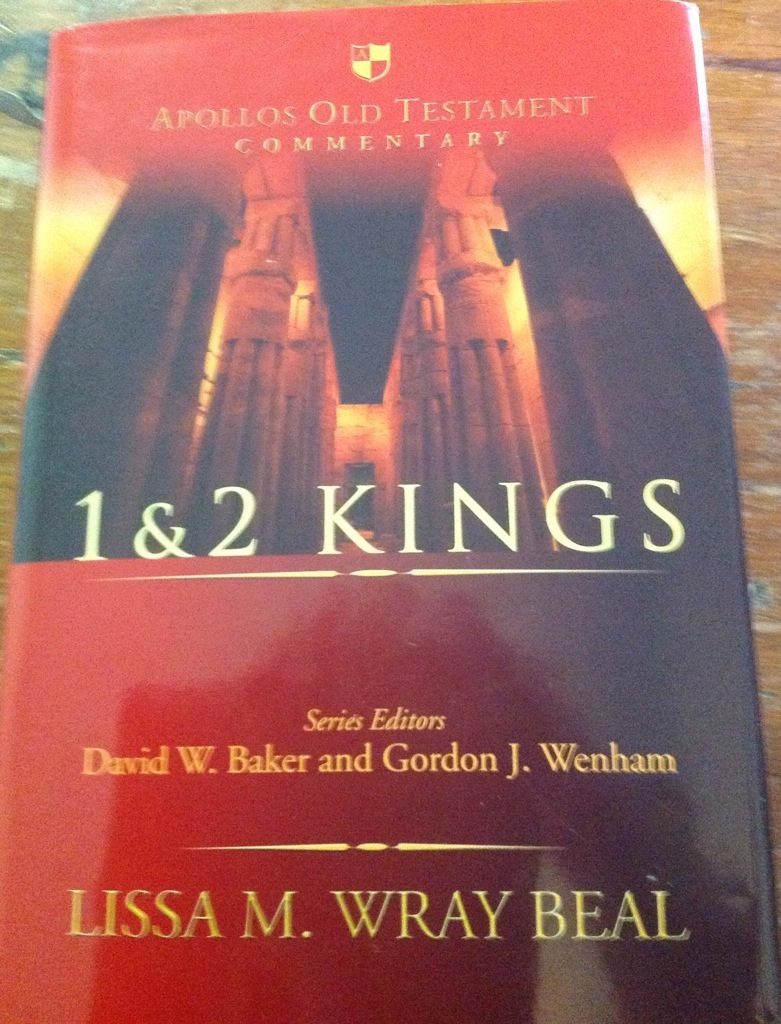
20140331-110655.jpg

When Did You Die? –A Book Review with Observations

Here is a volume for when you seriously want to consider your spiritual life. The careless or unconcerned will not be able to stand reading it. As you might imagine by the title, the book addresses the concept of “dying to self.”

Crown Publications has brought this fine volume back in print. Its claim to fame is that it is the book that changed Lee Roberson’s life. As one of the prominent leaders of the Twentieth Century for Independent Baptists, many are fascinated by this practically lost volume. I actually had one the old copies that was more like a pamphlet. I read it several years ago, but was challenged in reading it again. In this lovely reprint, you actually get a bonus volume entitled “How To Die Daily”, also by B. McCall Barbour. An introductory chapter on Lee Roberson along with the volume’s appealing look makes this a fine addition to any library.

There has been some debate in recent years over the theology of these type writings. Particularly the phrase “let go and let God” has been under scrutiny (The phrase was mentioned in this volume). Some have thought to say “let God” implies giving God permission! But in this context it is about what you and I are going to do, not what the Lord may do.

Half way through my reading of this book, I did an online search and came across R. C. Sproul’s website that had an article on this phrase and theology. He raised a few points worthy of consideration. Some taught it as the “second blessing” and that is actually more than the Bible teaches. To make it all about one exact point in time rather than an ongoing process of sanctification is a mistake. If you remember that it is still a process, though with possible great breakthroughs, this volume will enrich your spiritual life. I see Mr. Sproul’s point to some degree (he seemed most concerned, sadly, only about adherence to confessional reformed theology), but no doubt there are special seasons of God’s dealings too. When that happens your self life is going to take some blows! Don’t be lulled into thinking you have crossed a threshold and now are safe, or beyond certain things. You could hardly be in a more dangerous place. Be cautious about thinking you are in the advanced Christian group–that is not the point of dying to self.

This is not a short cut to spirituality, but the real business of the Christian life. The idea of reckoning what Christ has done has sure helped me in some problem areas in my life. You will be helped by this volume’s discussion of that subject. No matter what anyone wants to criticize theologically, the subject of the self life fills many pages in the New Testament. It is worthy of our attention and revolutionary to our spiritual lives.

You can find this volume here.

20140326-233601.jpg

Rose Then and Now Bible Map Atlas–A Review

Would you like a fine Bible Atlas written by someone who has been immersed in the lands of the Bible? Then the Rose Then and Now Bible Atlas is a great option for you. Substantial at 272 pages, yet accessible even for newer Bible students, we have a real asset here.

Perhaps you saw the earlier Rose Then and Now Bible Maps. I always felt it was more of a Sunday School item than one for the serious Bible student, though the modern overlays are a brilliant idea. Frankly, there were just too few of them and I would have preferred a different scale at times. There are about the same number of overlays, but we have a fine atlas too. Really, the overlays are just a nice addition to the atlas itself.

What we have now is Rose Publishing joining the big boys in the atlas world. What is unique to this volume among the atlases out there is the historical detail given. Paul Wright does a great job of relating the biblical narrative as he progresses incorporating well the geographic details. The history begins with the Patriarchs. There is no mention of Adam or Genesis 1-11, pro or con. My guess is that there is little real geographic knowledge of those times.

Still, Scripture pervades the volume. In the chapter on Jesus, He is described as God in human form. The entire atlas takes a historical approach. There are no sections on parts of the Bible like, say, the Minor Prophets. Their time period is covered in the historical flow, just not the books themselves. Most atlases take the other approach, but I am glad to have one from this distinct vantage point.

The maps themselves are from Carta, which is the gold standard of Bible maps. The pictures are satisfactory and the maps plentiful enough to go along with a rich text. Most people just try to get one quality Bible Atlas. This volume is a contender for the Bible Student.

I received this book free from the publisher. I was not required to write a positive review. The opinions I have expressed are my own. I am disclosing this in accordance with the Federal Trade Commission’s 16 CFR, Part 255.
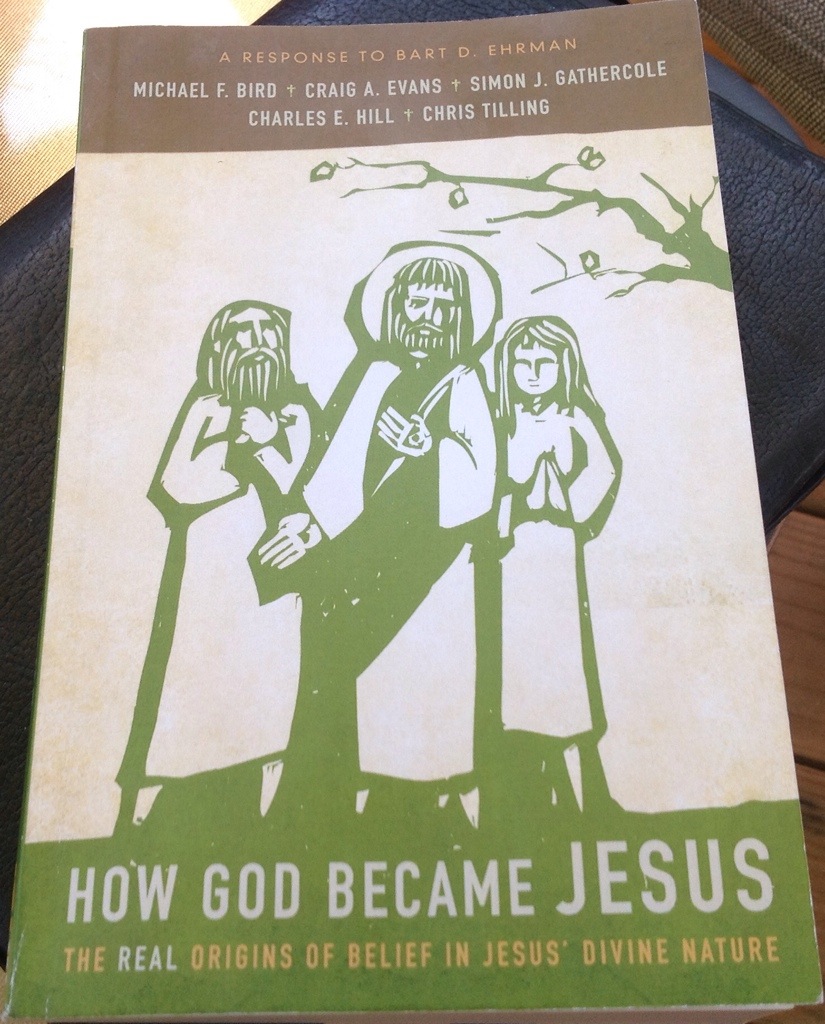
Check it out here.

Related Post:
Bible Atlas-Finding the Right One

20140323-175139.jpg

I Am A Church Member–A Book Review

Church membership is suffering in our day. The selfishness of our times has been a corrupting influence. We see church as something that should meet our needs rather than a place to serve Christ and others. Now church, in so many cases, falls below the model presented in the New Testament.

Enter the tonic of I Am A Church Member by Thom S. Rainer and published by B&H Books. In 6 short, really helpful chapters, he brings us back to reality on the matter of what it really means to be a church member. He shows us New Testament reality versus country club mentality. We want to get something out of our church membership, but we can only get it in serving and functioning as a real member. It is not getting taken care of, but taking care of others.

He hits on the critically important issue of actively pursuing unity in the church. Can you imagine the benefits of unity if we all made this our job? He explains how we degenerate into making church just be about my preferences and desires. How many churches have died this very way?

I would love to see this book in the hands of every church member. ( Look for $5 deals). It is good, yet short enough that those who don’t particularly enjoy reading can get through it easily. There is a pledge to sign at the end of each chapter that makes you wrestle with these issues. We had better do something as church membership is in such decline.

20140320-232044.jpg

Thought in the Absence of Certainty–A Review

We have here a book that purports to “lay the groundwork for perspectives…that raise important questions concerning religion, Scripture and even our Creator.” The book no doubt raises several questions, though I am not satisfied with all the answers. It seems the author, Mr. Gordon Dye, felt he could help make God plausible from a philosophic point of view. Perhaps he did that much, but the human heart needs more.

On the plus side, he explained many terms of philosophy and rhetoric well as he tried to stick to principles of logic. On that level he succeeded. It had a textbook feel to it, but it could serve as either an introduction or as a refresher.

On the negative side, the writing was dull. Mr. Dye is obviously a brilliant man, but his style of writing did not match that of his understanding of complex issues. He lacked passion as he worked so hard to explain. He too often filled pages with meta discourse as he spent too much time telling us what he was going to write about instead of just writing about it. He also tried to harmonize God and science where believers like some of us need no harmonization. In fact, for a sincere believer he would seem to be raising doubts. Perhaps he would be help to an agnostic, but his conclusions are too weak to really draw someone to God.

His case never gets beyond a theistic conclusion. He can only get us to god, whomever He or She may be. The book, then, would be of no more value to a Christian than, say, a Muslim. He says he was raised by ordained Evangelical Christians and that he got beyond their thought system without “rejecting his faith.” I will not propose to speak for him, but his faith made no mention of Christ. He did not preclude Christ necessarily, but He was at best lumped with all the options for God in this world. The Christian faith says you cannot reach God other than through Jesus Christ! So the book has, in my, perhaps, biased opinion, a fatal flaw.

You could argue that this is a work of philosophy, not Christian apologetics. In truth philosophy has often been an esoteric pursuit that could only raise brilliant questions that it could never quite answer. It found its readers among those with enough leisure to think long and slow. I mean slow because we could never get where we were going. The common people found little time for it because their lives throbbed with emptiness that needed filling and their hearts craved real answers. That is why apologetic works are so superior to philosophic ones, and Christ so superior to all those other gods Mr. Dye gave credence to. For example, if his logic proves the verbal inspiration for other religious books as much as the Bible (chapter 6), then it proves nothing at all.

Again, Mr. Dye is intelligent, but I can’t really recommend this book.

I received this book free from the publisher. I was not required to write a positive review. The opinions I have expressed are my own. I am disclosing this in accordance with the Federal Trade Commission’s 16 CFR, Part 255.
20140310-101459.jpg

Christian Faith in the Old Testament: The Bible of the Apostles–A Review

When the Apostles turned to their Bible, what was it for them? In clear, accessible style, Gareth Lee Cockerill shows us that it is what we call the Old Testament. More than that, he rescues the Old Testament from the oblivion that some would banish it to. He discusses it with gusto because he believes it is critical for Christians today. Unlike many scholars, he follows what the New Testament told Christians to do with the Old Testament–1 Corinthians 10:11 “Now all these things happened unto them for ensamples: and they are written for our admonition, upon whom the ends of the world are come.“–that is, mine its pages for great spiritual treasure! Thank you Mr. Cockerill.

This book succeeds on every level. It accomplishes its goal of reigniting passion for the Old Testament. In reading it you get a good overview or even an Old Testament survey. Even better, you get it without the dryness that some scholars are ever handicapped to write with. As a substantial bonus, and what separates this book from many competitors, there is real application for the Bible student or pastor scattered all along the way. The Charts added real value as well. They actually taught something. I was particularly blessed as seeing the parts and the whole in a better way.

The Appendix on “Why are these books in our Old Testament?” was exceptional. With all the critical questions on the Canon being thrown around today, I can hardly think of a more succinct presentation. He lands where many of us believe. In a small compass you really got the help you need.

I enjoyed reading this volume straight through, now it will find its way onto my shelves for reference when I begin study of a new book. Such books have always proven a great boon to me.

I read this book thinking I wish more scholars wrote this way. On every page I felt that Mr. Cockerill believes– he really believes! That is more of a problem in the scholarly world than some realize. I know he is a respected scholar because he has recently released a major commentary on Hebrews (that makes sense) in the prestigious NICNT series. I want to get that book now too.

A+ all the way here. I recommend it for Bible teachers and pastors, but studious layman can handle it too. Master this volume’s contents and a better Bible understanding you will have.

I received this book free from the publisher. I was not required to write a positive review. The opinions I have expressed are my own. I am disclosing this in accordance with the Federal Trade Commission’s 16 CFR, Part 255.
20140307-123814.jpg